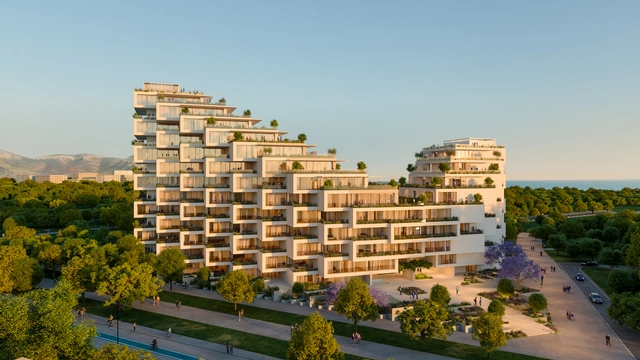
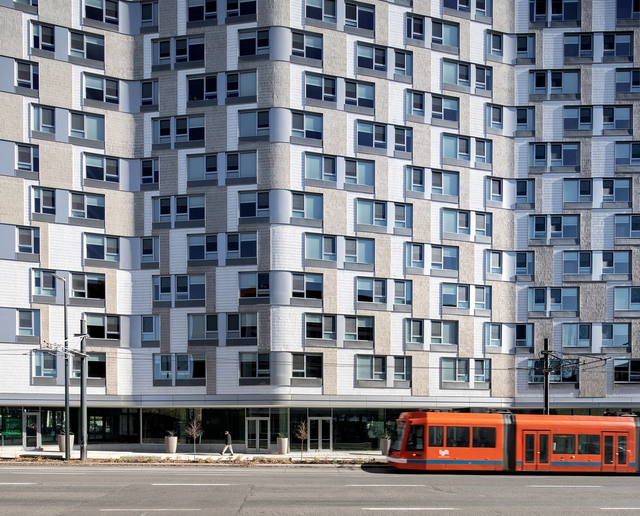
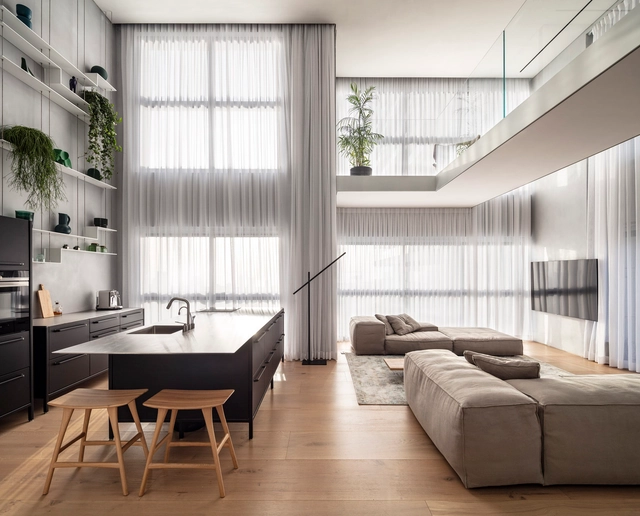
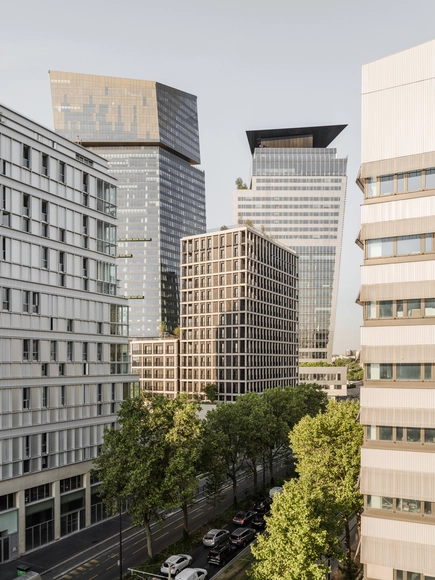
Bjarke Ingels Group has revealed the design of Park Rise residences, a new development the Little Athens neighborhood of Ellinikon, featuring modern homes, greenspace, retail, office, and hospitality. The Ellinikon is an ambitious urban regeneration project that reimagines the grounds of Athens' old international airport and transforms it into a 6.2 million-square meter smart city. Within this development, the Little Athens neighborhood aims to become an integrated part of Ellinikon's smart urban ecosystem and bring over 1100 new residences to the northwestern coastline of the development.
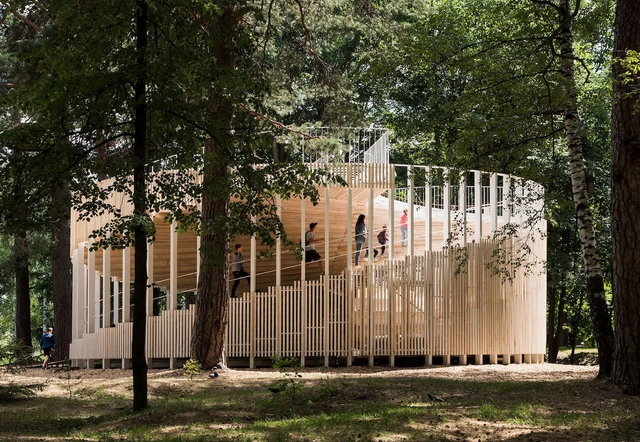
Throughout the modern era, pavilion architecture has consistently reflected cutting-edge architectural trends. These temporary or semi-permanent structures, often featured in exhibitions, fairs, cultural events, and sports gatherings, provide a platform for exploring new materials and design concepts. Pavilion designs are intended for easy assembly and disassembly and are typically used for short durations, making it crucial to consider reducing environmental impact without sacrificing aesthetics and innovation. In this endeavor, wood emerges as a key ally.
Despite the bad reputation of public housing in the United States, organizations, planners, and architects in Portland, Oregon are determined to create affordable housing that does not sacrifice quality or aesthetic appeal. While Portland has developed a bad reputation regarding its homelessness problem, in the past four years resources have flowed in the right direction, and designers have taken this in stride to design livable and striking buildings, within very restrictive budgets. Through innovative and creative approaches to construction and design, these organizations and designers have utilized federal, state, and city resources to make these types of projects a reality.
The phrase “Demography is destiny” is repeated more than once in Smaller Cities in a Shrinking World (Island Press). This new book by noted urban researcher Alan Mallach tackles, in meticulous and fascinating detail, the “wicked problem” of shrinking cities in the U.S. and across the globe. But it’s not only our cities that are shrinking—the countries that contain them are, too. I spoke with Mallach about the imperative of planning for this new demographic reality.
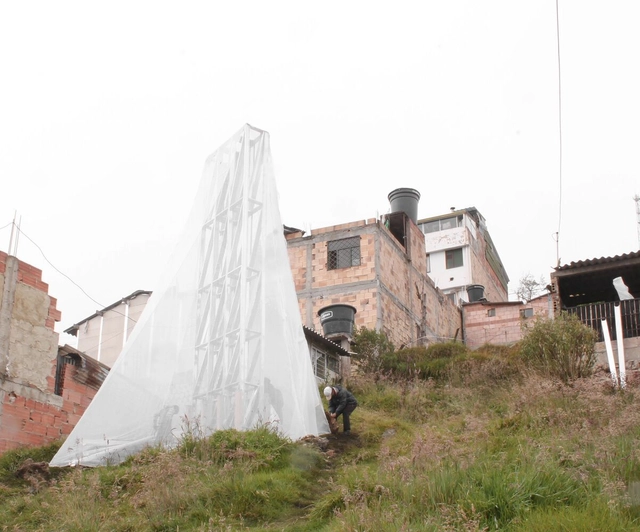
San José De Nueva Venecia School School refurbishment enabling flexible community use in Sitio Nuevo, Colombia, by FP Arquitectura. Image Courtesy of Holcim Foundation for Sustainable Construction
The Holcim Foundation for Sustainable Construction has unveiled the list of 20 finalists for the Holcim Awards 2023 competition. The jury, composed of five independent expert panels worldwide, has selected the projects to showcase contextual and practicable approaches to sustainable construction, exemplifying a diverse range of scales, budgets, geographies, and forms. The ranking of the nominees will be announced at the Holcim Awards 2023 Ceremony scheduled for November 18 in Venice, Italy during the final weeks of the Biennale Architettura 2023 - 18th International Architecture Exhibition.
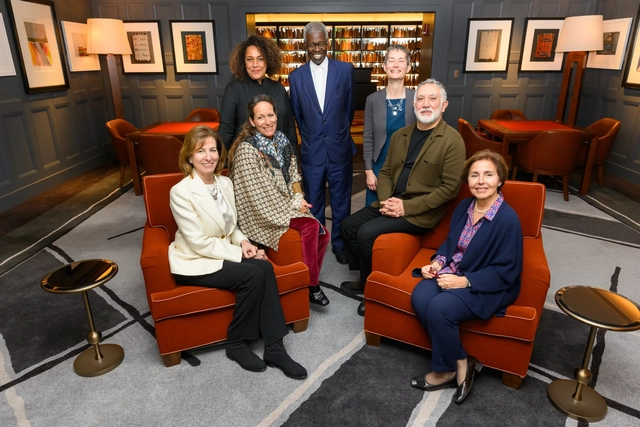
Courtesy of AKAA | Under Fair Use | Princess Zahra Aga Khan with the 2025 Steering Committee
Last night, the Aga Khan Award for Architecture announced the constitution of its new Steering Committee for the 2023-2025 cycle. Composed of 5 primary jurors, this selection plays a pivotal role in the governance of the world-renowned award. Initially established in 1988, the award is internationally recognized as a leading award celebrating architecture projects that set a new standard of excellence in various practices, including architecture, planning practices, historic preservation, and landscape architecture. The award is also most known for its emphasis on applauding projects that use local resources and respect the contextual surroundings.
Chaired by His Highness Aga Khan, the Steering Committee for the 2023-2025 cycle comprised members from very diverse backgrounds. These members include Meisa Batayneh from Amman, Jordan; Souleymane Bachir Diagne from New York, USA; Lesley Lokko from Accra, Ghana; Gülru Necipoğlu from Cambridge, USA; Hashim Sarkis, also from Cambridge, USA; and Sarah M. Whiting, also affiliated with Harvard University in Cambridge, USA. Each individual is well-established in their respective practice, and together, they steer the Award, establishing eligibility criteria for different project submissions. The Committee provides thematic direction for the Award and plans for the institution's future. Finally, their most critical task involves selecting an independent Master Jury, which subsequently chooses award recipients.
In many cases, when working on a renovation project within an old building, architects often encounter segmented floor plans, spaces without natural light, and complex layouts that hinder the seamless flow required in modern living. Consequently, architects typically opt for targeted demolition, removing specific walls during renovations. This solution can address several of the problems encountered but demands meticulous planning to ensure the structural integrity of the building. When it comes to scenarios like these, structural reinforcement is one of the most commonly employed methods.
The layout of interior spaces has been in constant evolution since the very first residential project. For many years, functionality dictated how they're are organized, but soon after, cultural, social, and economical changes influenced the way people design their living space, bringing about the spacious and versatile open floor plan. A lot has been written - and critiqued - about the open floor plan: who introduced it, how it was developed, its benefits, and/or lack thereof. During the past couple of decades, open floor plans were perhaps among the most requested interior design concepts, but today, architects are leaning towards the opposite.
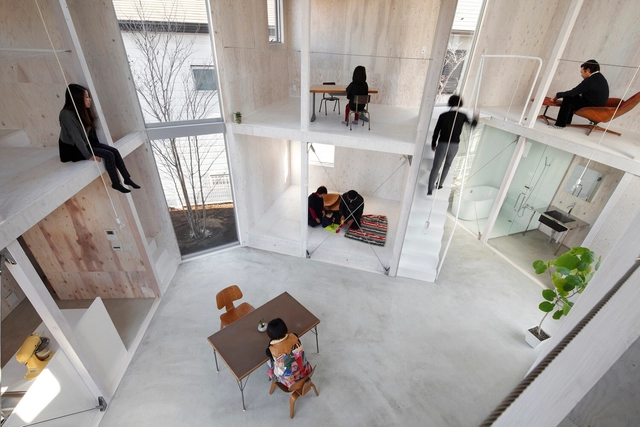
House in Kashiwa / Yamazaki Kentaro Design Workshop. Image Courtesy of Naoomi Kurozumi Architectural Photographic Office
Similar to a chameleon that changes color to blend in with its environment, architecture must constantly evolve and adapt to changing demands. A few decades ago, homes used to be associated solely with private life and rest, while workspaces were exclusively designed for just that: work. It was common for each use to be separated into its own room, making enclosed, rigid spaces the standard norm for architects to follow. That is, of course, until new living and working patterns blurred these boundaries to respond to contemporary trends.
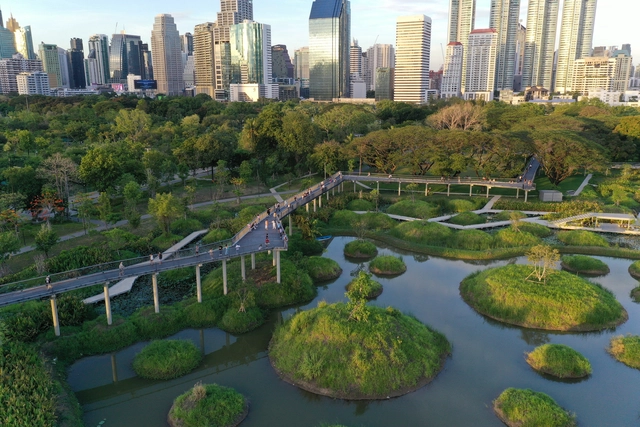
Beijing-based landscape architect Kongjian Yu has been announced by the Cultural Landscape Foundation as the recipient of the 2023 Cornelia Hahn Oberlander International Landscape ArchitecturePrize (“Oberlander Prize”). Kongjian Yu has gained international recognition for his concept of “sponge cities,” a measure to address and prevent urban flooding in the context of accelerated climate change. The concept was adopted as a national policy in China in 2013, prioritizing large-scale nature-based infrastructures such as wetlands, greenways, parks, canopy tree and woodland protection, rain gardens, green roofs, permeable pavements, and bioswales. Yu has been selected by the international jury of the Oberlander Prize, recognizing him as “a force for progressive change in landscape architecture around the world.” Organized biannually, the prize aims to recognize and give visibility to landscape architecture and the ways in which it can address issues of climate change and sustainability.
From October 21st, 2023, to March 3rd, 2024, the Vitra Design Museum is hosting a retrospective exhibition featuring the work of Iwan Baan. Known for his world-renowned architecture photography, “Iwan Baan: Moments in Architecture” provides a comprehensive overview of Baan’s extensive portfolio. At its core, it showcases the artist’s ability to capture the essence of contemporary architecture, along with the urban and social contexts associated with it and the people who inhabit these various spaces.
Alsar Atelier, led by Alejandro Saldarriaga, is an architecture and design studio based in Boston and Bogotá. Their practice focuses on the planning and creation of public facilities with an emphasis on social benefit, as well as small-scale residential projects. The studio employs a design approach that prioritizes the use of sustainable materials, cost-effective strategies, and active community collaboration.
For these reasons, Alsar Atelier was selected by ArchDaily as one of the best new architecture practices of 2023. Below, we bring you an interview with Alejandro Saldarriaga to get a closer look at his inspirations, working processes, and future projects.
Will Artificial Intelligence replace architects in their roles? In the May 2023 edition of Building magazine, Thomas Lane suggests that AI has the potential to automate up to 37% of the tasks typically carried out by architects and engineers. This automation, though, is likely to target routine and less creative tasks, allowing professionals to concentrate on more strategic and imaginative aspects of their work.
Just as Revit and 3D software did not replace architects but only transformed their workflows, the same principle holds for AI tools. AI is poised to bring about new tasks, such as AI management, alongside existing responsibilities, signaling a shift in how architects work.
Oana Stănescu is a Romanian architect, designer, writer, and educator, based in New York and Berlin, with a diverse portfolio of interventions around the world. Selected as part of 2023 New Practices by ArchDaily, the young architect recognizes the value of architecture as a discipline, but nevertheless acknowledges that architecture cannot single-handedly resolve the complex challenges of our world. “Architecture is most powerful when recognized as part of a larger system, rather than being solely self-serving”, she adds in her conversation with ArchDaily’s Managing Editor, Christele Harrouk. In this way, Oana views architecture as a key player in a broader context, working to address significant societal issues.
With several ongoing projects, from the rehabilitation of an existing industrial infrastructure in Romania, to an integrated house within its natural environment in Canada, Oana’s creative process is centered on a commitment to serve people. Watch the full interview and discover below key insights from the conversation.
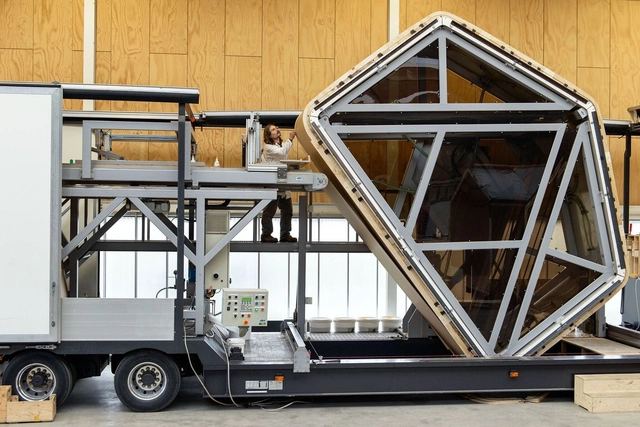
Modular Eco-Housing . Image Cortesia de Yvonne Witte
When we talk about technology, we often think of robots, supercomputers, data centers or smartphones. But technology also refers to the invention of the first chipped stone tools or the development of the steam engine, which brought about the first Industrial Revolution. The term comes from the combination of the Greek words techne (art, craft) and logos (word, speech) and is nothing more than the application of knowledge to achieve goals in a specific and reproducible way, for practical purposes. In the construction industry, which moves large amounts of resources and people, more technology means incorporating new methods, tools, automation and software that can improve efficiency. As a historically innovation-resistant industry, the construction sector has a huge impact on the environment due to its carbon emissions and exploitation of raw materials. However, as it turns to the digital world, builders have seen technology as a means to optimize practices and identify, build, and manage their projects.
In Paris’ thirteenth arrondissement, the architecture office Moreau Kusunoki has completed Le Berlier, a 50-meter-tall timber tower housing residential units along with various other amenities. Situated at the intersection of multiple urban flows, networks, and scales, the project aims to find the middle ground between innovation, monumentality, and domesticity. The new residential center expresses its structural system through the grid of the façade, rendered in charred and pre-weathered wood.