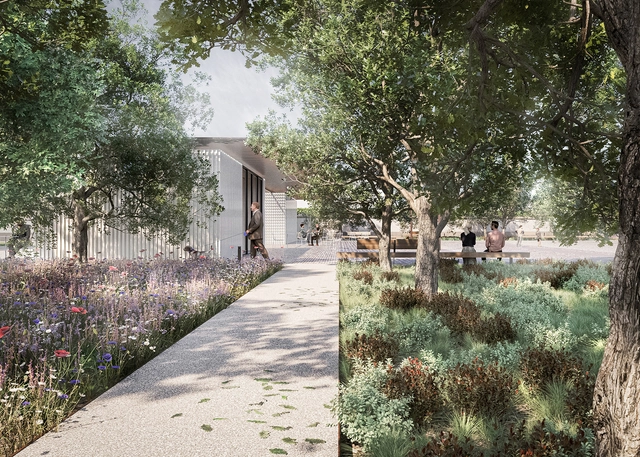
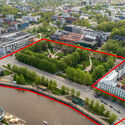
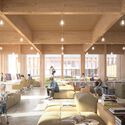
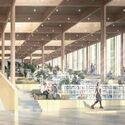
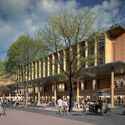
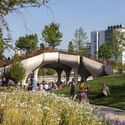
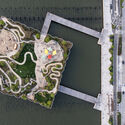
Ghisellini Architects, in collaboration with Lucrezia Alemanno and Paolo Beniamino De Vizzi has unveiled the redevelopment and complete redesign project for the new Piazza Francesca Cabrini in Livraga, Italy. Located about 45 kilometers southeast of Milan, the municipality of Livraga set out to transform the currently degraded public space and transform it into an attractive gathering place with site-specific environmental and landscaping features. Construction is expected to begin in August 2023 and is scheduled for competition in 2024.
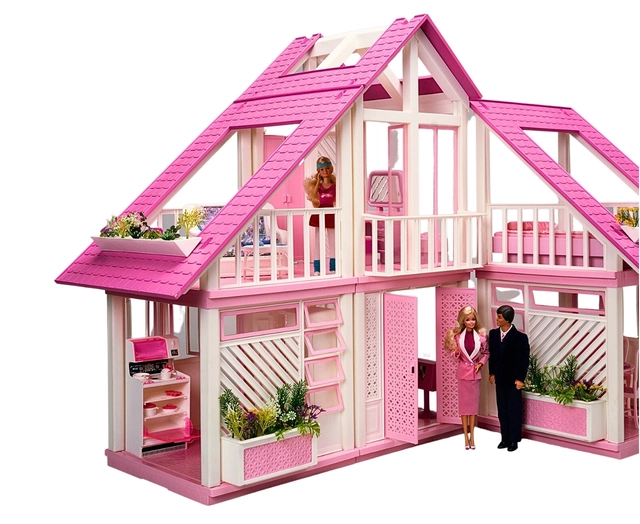
In her 1959 debut by Mattel, Barbie became a doll that transformed the toy industry and has been a popular culture icon ever since. 3 years later, the first accompanying Barbie Dollhouse was created, a home for Barbie representing her domestic, habitual, and day-to-day life. Over the past 60 years, Barbie Dreamhouses have changed and evolved, each iteration adopting the architectural and design fads of the eras in which they were produced. In fact, each dollhouse is an artifact of the unique blend of history, politics, popular culture, trends, and design styles that define architecture as we know it.
The Second Studio (formerly The Midnight Charette) is an explicit podcast about design, architecture, and the everyday. Hosted by Architects David Lee and Marina Bourderonnet, it features different creative professionals in unscripted conversations that allow for thoughtful takes and personal discussions.
A variety of subjects are covered with honesty and humor: some episodes are interviews, while others are tips for fellow designers, reviews of buildings and other projects, or casual explorations of everyday life and design. The Second Studio is also available on iTunes, Spotify, and YouTube.
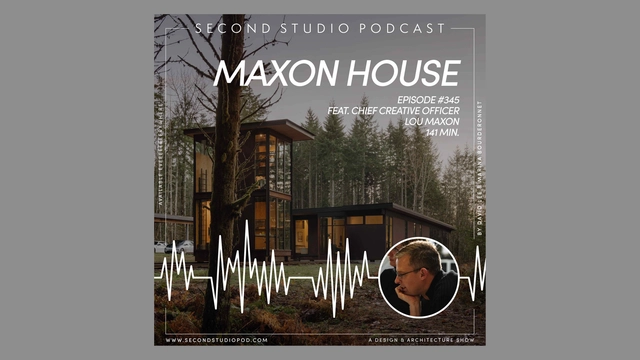
This week David and Marina of FAME Architecture & Design are joined by Lou Maxon, Founder of Maxon House, to discuss his story as a client; the process of building a house; hiring Olson Kundig as their architect; working with contractors; building a studio on railroad tracks; tips for being a client; and more!
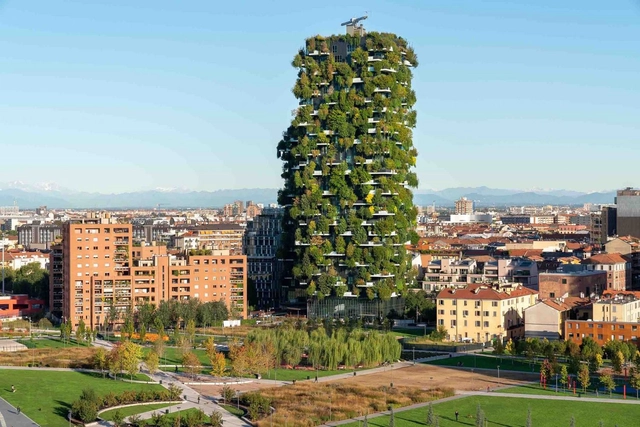
Milan’s urban fabric has long been defined by change. In a city known for its historic monuments, from the Piazza Duomo and Milan Cathedral to works like Velasca Tower, contemporary architecture must balance many existing contexts. Emerging as a global center for design and culture, Milan has become home to new buildings and structures addressing this condition as iconic landmarks and expressive forms. Actively building upon its legacy, Milan has turned its attention to the sky.
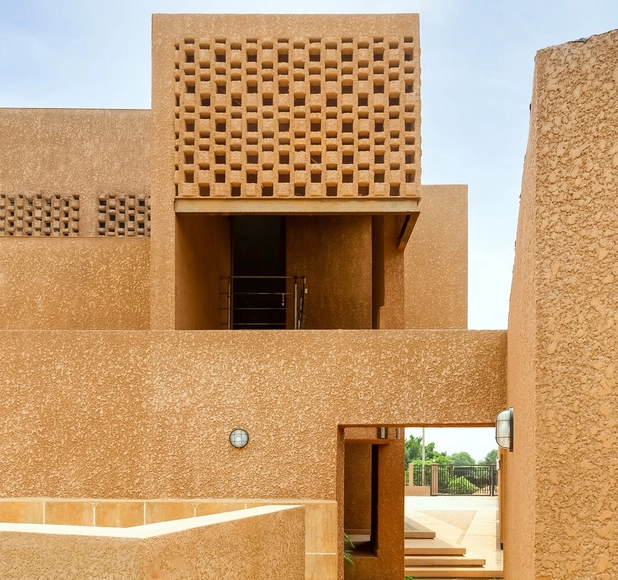
In Lagos, a city with a complex urban fabric that includes historical buildings and vast interpretations of contemporary architecture, lies PatrickWaheed Design Consulting (PWDC). This design practice, Co-led by Adeyemo Shokunbi, aims to contribute to a Nigerian architectural language through the renaissance of local materials. Through explorations anchored in local laterite, they have developed the material as a modern finishing technique, investigated its potential as a natural dye, discovered new ways to employ its thermal properties, and now build the research prospect of other local materials. I had the opportunity to speak with Architect Shokunbi, who discussed the initial inspirations and investigations during the construction of two building projects (Mad House & Abijo Mosque) in Lagos. These projects brought the Laterite finishing technique to life and now help build the case for a Nigerian architectural language.
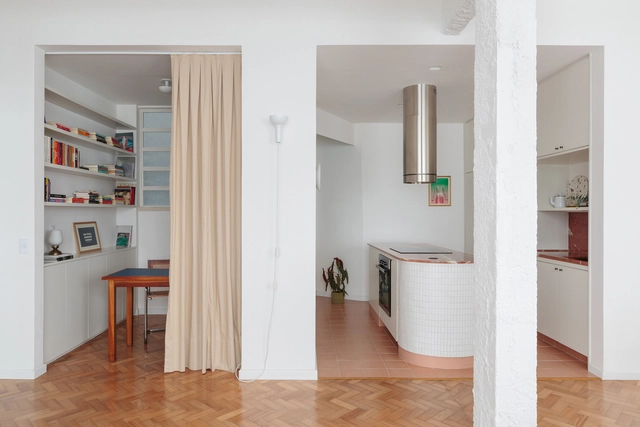
Nowadays, homes are built in increasingly smaller spaces in densely populated cities. The kitchens, which today serve not only to prepare meals but also as meeting spaces where we receive guests, are the places that have undergone the most transformations in recent decades. Whether by integrating with other living areas or by the super functional design of a single counter, there is an increasing search for innovation in this fundamental part of a home.
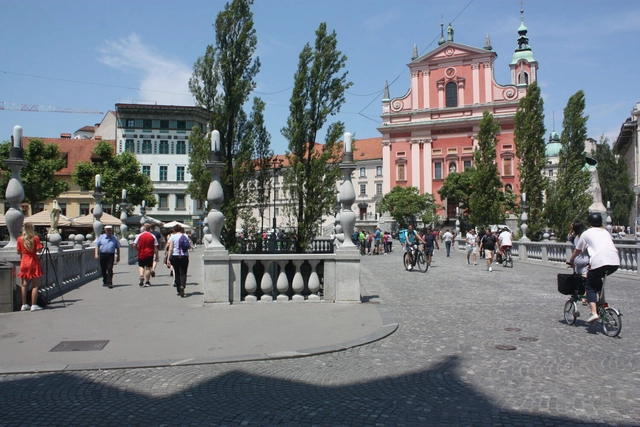
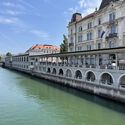
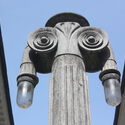
Recently I traveled to Ljubljana, Slovenia, in search of the religious architecture of the celebrated (but largely unknown in the U.S.) Slovenian architect Jože Plečnik (1872–1957). I write a lot about the architecture of spirituality, and I was curious about Plečnik’s churches and chapels—what the architect’s idiosyncratic form of classicism said about faith in a Modern age. What I didn’t expect to find was the universal nature of Plečnik’s work as an urbanist: a re-maker of the Slovenian capital that holds lessons for us today.
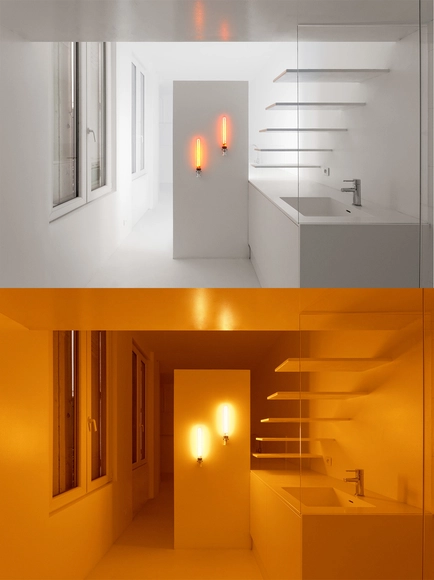
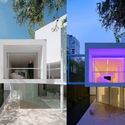
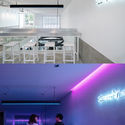
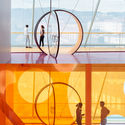
Light is a key feature in architecture. Centuries ago, the sun and fire were the only sources of illumination, but in today's technology-driven world, artificial lighting and cutting-edge optical technologies have found ways to mimic the qualities of natural light, making it possible to have a naturally-lit-looking space within four walls. LED technologies have even made it possible to embed lighting in furniture, interior surfaces, and facades, altering their intensities and hues to make light a main feature in the architecture's storytelling.
If used effectively, lighting can become a lot more than just an illuminator; it becomes a mood setter, a symbol of a specific emotion the architect is trying to convey. For instance, indirect lighting becomes a floater, levitating the walls from the ground and making the space seem lighter in weight, whereas orange light manipulates the space's temperature, creating the illusion that the users are walking into an intense, overheated room.
The climate crisis has made heatwaves more likely and more intense around the world. Record-breaking high temperatures are being reported across the world. According to international data, the first week of July 2023 was the hottest week on record, putting millions of people in danger. All throughout this summer, recurring heatwaves have been affecting large portions of Asia, Europe, and the United States, priming the land for fires in places like Greece, Spain, and Canada, triggering unhealthy air warnings, evacuations, and heat-related deaths. The increasingly threatening effects of the climate crisis are also felt in cities worldwide, as extreme heat proves to be a rapidly growing health risk to millions of urban dwellers.
Cities are on the front lines of this public health emergency. People living in urban areas are among the hardest hit when heatwaves happen, partly because of urban heat islands. This is a phenomenon that occurs when cities replace the natural land cover with dense concentrations of surfaces that absorb and retain heat, like pavements and buildings. Heat risk levels also vary by neighborhood, with less affluent and historically marginalized sectors being the most affected due to the density of the population, limited access to cooling systems, and the limited availability of green urban spaces.
The UIA World Congress of Architecture 2023 is an international invitation for architects worldwide to explore the future of the built environment. The event this year that brought together 6,000 participants worldwide, focusing on “Sustainable Futures – Leave No One Behind”, was set on discovering how architecture influences the 17 UN Sustainable Development Goals (SDGs), ranging from Climate Adaptation, Rethinking Resources, Health, Inclusivity, and more. While visiting this year’s edition in Copenhagen, the ArchDaily team had the chance to sit down with Jan Gehl, the father of people-centered design. The discussion revolved around 50 years after the launch of his world-renowned book, Cities for People, the first publication to reflect on how to properly develop cities on the human scale. Moreover, the interview followed his keynote speech at the UIA 2023, “Cities for People – 50 Years Later."
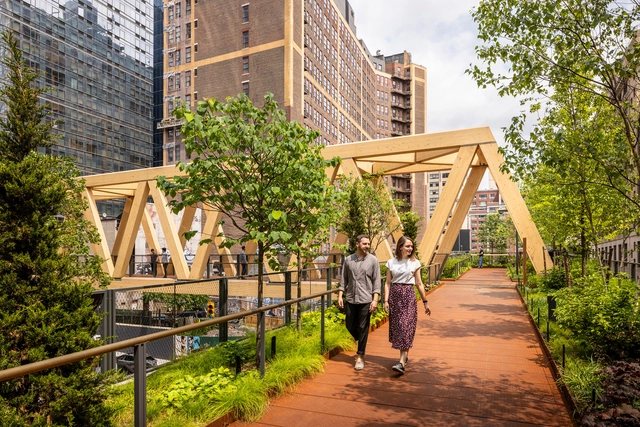
In midtown Manhattan, the street crossings surrounding the entrance to the Lincoln Tunnel were once some of the most challenging in the city. A mess of highway ramps, missing sidewalks, and concrete barriers made the corner of Dyer Avenue and 30th Street an area to avoid.
Now with a new $50 million elevated connector, pedestrians can safely move 30 feet above the intersections using a 600-foot-long L-shaped bridge from the High Line to Moynihan Train Hall.
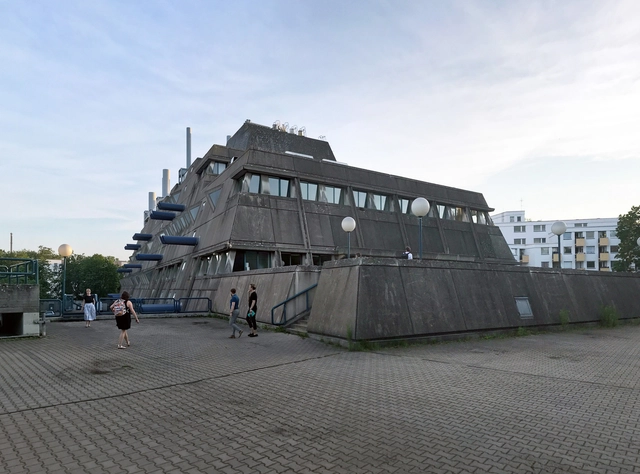
The former animal laboratories of the Charité in Lichterfelde, also known as the Mäusebunker building, have now been placed under monument protection, saving it from the threat of demolition that has been slated since 2010. The brutalist structure was designed by architects Gerd and Magdalena Hänska and built from 1971, and put into operation in 1982. While its strong image, combined with its function as a laboratory for animal tests, resulted in the general public’s distaste for it, the Brutalist building slowly gained acceptance and even a cult status among brutalist fans.
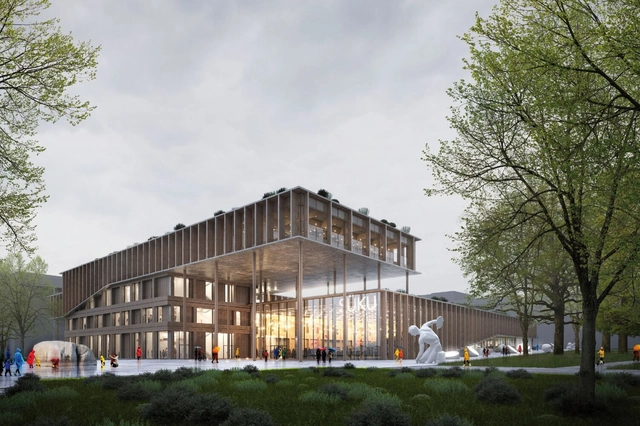
Estonian studio OÜ Kolm Pluss Üks won the international architecture competition for the Tartu Cultural Center. Selected out of a total of 107 proposals, the winning project titled “Paabel” is set to become the cultural heart of the city center, capturing the competition's main goal and developing an outdoor space solution. Kadarik Tüür Arhitektid OÜ took the second position for their design of “Tarte Tatin”, while the third place went to Denmark-based architectural studio Atelier Lorentzen Langkilde Aps.
Designing a bathroom requires careful attention to detail to remain beautiful and organized. The amount of hygiene and health products typically stored in this environment requires functional cabinets and other strategies. Increasingly, we see the solution of using niches to create a recess in the wall. This allows optimizing the available space and, as a bonus, makes the environment more aesthetically pleasing. That's why we bring you some examples of bathroom niches and tips for their installation. In addition, we bring you other examples beyond traditional soap dishes.
Landscape architecture is having a moment. The latest proof: last week, the US Department of Homeland Security decided to accredit the field with its prestigious STEM designation. As part of the science, technology, engineering, and mathematics (STEM) educational disciplines that fall under this category, landscape architecture students can now spend an additional 24 months seeking employment and training post-graduation in the United States after an initial period of a year granted to all graduates. The title also promises more prestige, higher entry salaries, and additional career flexibility. Torey Carter-Conneen, CEO of the American Society of Landscape Architects (ASLA), calls the development a significant advancement for 'landscape architecture education and practice, and that is great for America and the global community.'
The news corresponds to a growing emphasis on landscape architecture as a pivotal practice around the globe in recent years – one that is closely connected to notions of public health, environmental design, biophilia, sustainability, and re-wilding. It also underlines the intimate relationship between technology and the discipline. Landscape proposals increasingly rely on advanced science and technology to predict how ecological interventions might alter an existing terrain and determine what measures will yield the highest benefit for both humans and nature. The contemporary ideal of wild meadows and biodiverse forests may exist free from external influence, but the path to get there requires assistance.
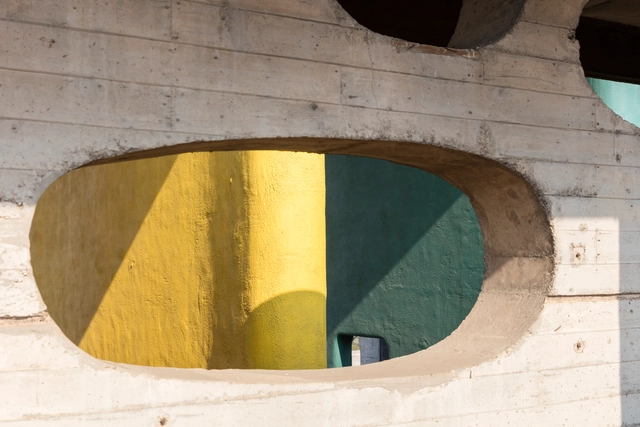
The work of the French-Swiss architect Charles-Édouard Jeanneret is, among many other adjectives, comprehensive. Le Corbusier explored a wide range of scales in his work, from furniture design to urban planning for entire cities. His diverse portfolio also encompassed painting, varied projects, and writing books. One thing that isn't talked about as much, however, was the color theory he developed and applied to several of his architectural designs and artistic endeavors. Deeply rooted in his belief that color plays a significant role in evoking emotions and creating spatial illusions, Le Corbusier's color theory was described in his book "PolyChromie Architecturale" (polychrome architecture), published in 1931. There, he introduced his concept and a carefully curated range of colors that were intended to be used in specific architectural contexts.
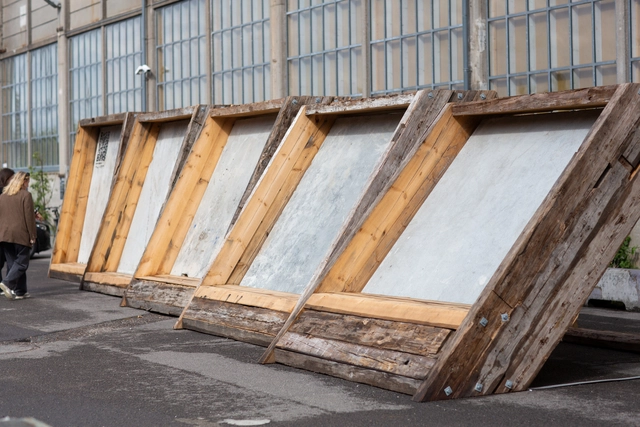
Developed by GXN for the 2023 UIA World Congress of Architects in Copenhagen, The (P)RECAST Pavilion explores the possibility of reusing precast concrete elements from existing buildings to promote circularity and reduced carbon emissions in the construction industry. The pavilion showcases salvaged concrete elements alongside 200-year-old timber beams, highlighting their aesthetic and structural value. Following the same motivation but through a different approach, MEE Studio has developed The Regenerative Cabin. Located in Copenhagen, the structure explores the applied use of regenerative biogenic materials to reduce the carbon emissions associated with the building materials.