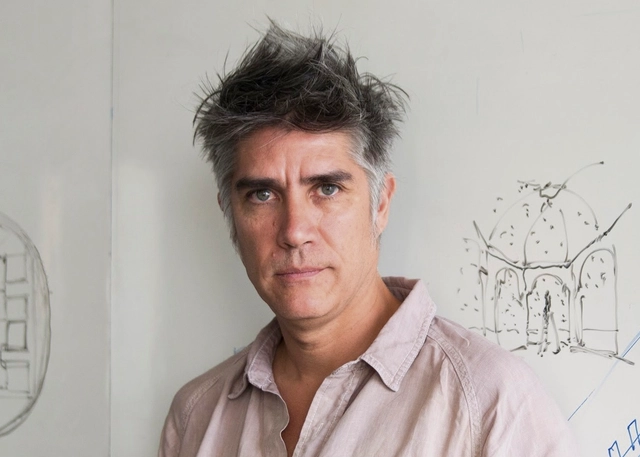
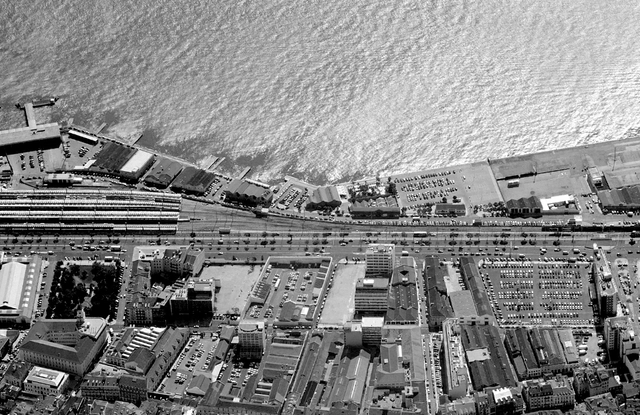
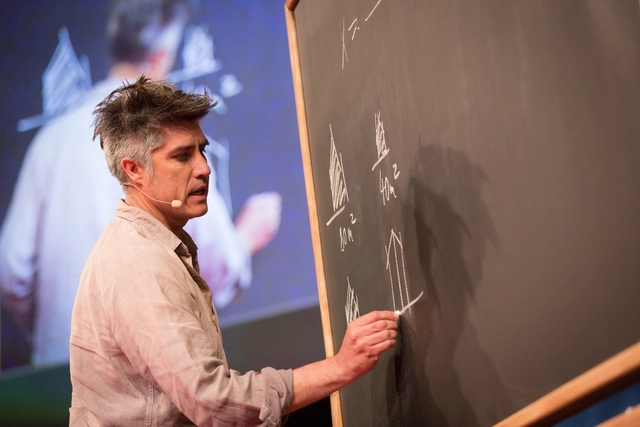
The Pritzker Prize, architecture’s highest honor, has just announced the appointment of Alejandro Aravena as Chair of the Pritzker Architecture Prize Jury as of March 2021, in time for the award’s 43rd year. Moreover, the announcement also designated Manuela Lucá-Dazio, the Executive Director of the Department of Visual Arts and Architecture of La Biennale di Venezia, as an advisor to the Prize and the next Executive Director.
Jarahieh Refugee School. Image Courtesy of CatalyticAction
For the past few months, the architecture community has been trying to bring its contribution to the fight against the pandemic. The global spread of this crisis might have triggered a coordinated, and thus a more visible effort, but this isn’t the first time professionals step up in crises. Over the years, natural disasters and emergencies have determined several architects to get involved in disaster relief initiatives, as well as a wide range of humanitarian actions. In this article, we take a look at different occasions various architects and practices made a significant contribution to, helping affected communities overcome hardship.
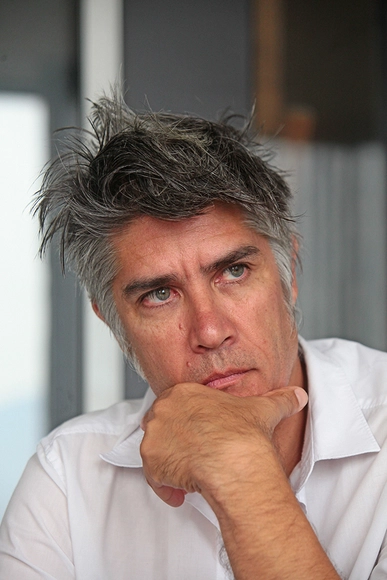
As founder of the “Do Tank” firm ELEMENTAL, Chilean architect Alejandro Aravena (born on June 22, 1967) is perhaps the most socially-engaged architect to receive the Pritzker Prize. Far from the usual aesthetically driven approach, Aravena explains that “We don’t think of ourselves as artists. Architects like to build things that are unique. But if something is unique it can’t be repeated, so in terms of it serving many people in many places, the value is close to zero.” [1] For Aravena, the architect’s primary goal is to improve people's way of life by assessing both social needs and human desires, as well as political, economic and environmental issues.
In a new video released by Louisiana Channel, Pritzker Prize winner Alejandro Aravena shares his advice to young architects. The acclaimed Chilean architect directs those just starting out to be as nerdy, free, and rebellious as possible. By absorbing and understanding as much as you can and then using that knowledge to approach a project with freedom from convention or imagined constraints, Aravena states that it’s a cycle that continually feeds itself. Listening, and particularly listening with an open mind and without preconceptions, is Aravena’s second major piece of advice. “We are not consultants, we are authors...That means to take the risk of doing proposals,” Aravena continues, describing the practice of architecture.
Chilean architect Alejandro Aravena shares the fundamentals of his design philosophy in a documented interview titled “To Design is to Prefer.” The Pritzker Prize winner founded his practice in 2001, committed to exploring socially conscious design practices. His firm, Elemental, first gained international recognition for its work creating social housing projects in Chile, but its portfolio continues to expand to include work from museums, universities, transportation, and urban infrastructure.
This video highlights the mental process behind Aravena’s personal practices and insights into Elemental’s unique approach to design. The interview begins discussing Aravena’s introduction to architecture as a teen and how architecture, a rather obscure phenomenon to the young Aravena, became his passion. Throughout the film, Aravena flips to the pages of his sketchbooks, illustrating the raw hand of the architect.
Try as we might to inure ourselves to the opinions of others, recognition is a powerful thing. It brings with it a captive (and expectant) audience, not just of admirers but of kingmakers - or, cynically, those who see an opportunity to capitalize. For architects, this can be both a blessing and a curse. Many practices start with the motivation to pursue an idea or concept; as recognition becomes diluted to labels it becomes harder to understand what was distinguishing in the first place. This week saw the announcements of a numerous significant awards - and an interview with a practice determined to shake off the labels that come with recognition. Read on for this week’s review.
https://www.archdaily.com/902136/this-week-in-architecture-being-recognizedKatherine Allen
Chilean architect Alejandro Aravena and founder of ELEMENTAL has been named the 2018 laureate of Royal Institute of British Architect's (RIBA) Charles Jencks Award. The prize is given in recognition of an individual's exceptional contributions to the field of architecture, both in built and theoretical works. Aravena will receive the prize and give a lecture at RIBA's London headquarters on 15 October.
Six years ago Susan Szenasy and I had the honor of interviewing Supreme Court Justice Stephen Breyer for Metropolismagazine. While he was a federal appeals judge in Boston, Breyer played a key role in shepherding the design and construction of the John Joseph Moakley United State Courthouse, designed by Pei Cobb Freed & Partners. In 2011 Justice Breyer joined the jury of the Pritzker Prize. Given his long involvement with architecture, I thought it would be fun to catch up with him. So, on the final day of court before breaking for the summer recess, I talked to Justice Breyer about his experience as a design client, how to create good government buildings, and why public architecture matters.
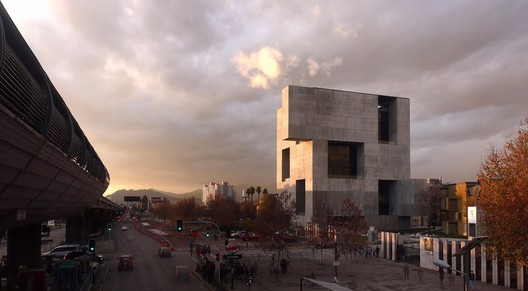
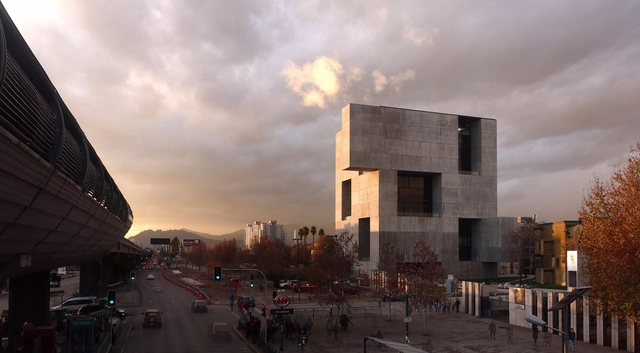
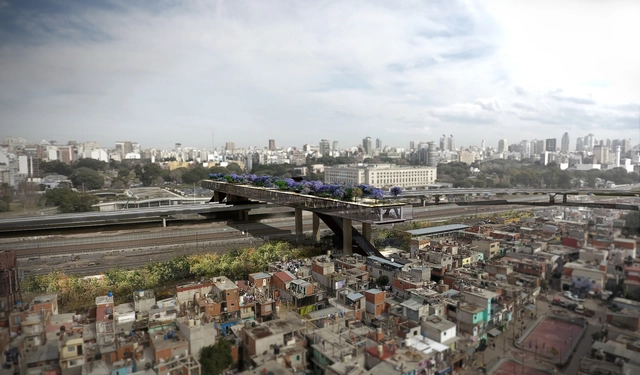
ELEMENTAL, the architecture office led by Alejandro Aravena, has proposed a solution to the physical integration of Villa 31 in the city of Buenos Aires. The building includes a raised linear park that aims to be the new headquarters for the Southern Cone of the Inter-American Development Bank Group and to facilitate access of the residents of the neighborhood to other areas of the city.
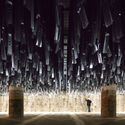
After making a trip to Doha (Qatar), Alejandro Aravena spoke with Chilean newspaper El Mercurio and shared details about this project. "One of the things we set out to do is to make this endure for the next 1,000 years," explains the 2016 Pritzker Prize winner. "When you look at industrial facilities, especially silos, archaeological ruins are the kind of things that remain," he adds.
This interview with the winner of the 2016 Pritzker Prize, Alejandro Aravena, was published last year in Issue 31 of Revista AOA, a Spanish-language magazine published by the Association of Architecture Offices of Chile. The interview was conducted by the editorial committee of Revista AOA—represented by Yves Besançon, Francisca Pulido and Tomás Swett—and is accompanied by photographs by Álvaro González. Aravena's openness and warmth allowed them to deliver a profound questionnaire about his thoughts and architectural projections, especially in light of Aravena's Venice Biennale which took place last year.
In all but the most optimistic architect's career, there will be moments you come across doubts and insecurities about our profession. It is in these moments where the wisdom of the greats who have come before us can help provoke the inspiration needed to face the challenges proposed by architecture and urbanism.
Last month the Norman Foster Foundation, created to promote "interdisciplinary thinking and research to help up-and-coming architects, designers and urbanists to anticipate the future," coincided the opening of its new Madrid-based headquarters with an international conference. Future is Now pulled together a broad collection of professionals—including Sir Jonathan Ive, Marc Newson, Olafur Eliasson, Maya Lin, Alejandro Aravena, and Luis Fernández-Galian—who addressed an audience of 1,800 (including 1,100 students) in the Spanish capital's Royal Theater.
Watch the conference in its entirety, or read a summary, after the break.
https://www.archdaily.com/873070/norman-foster-foundation-includes-aravena-ive-2017-future-is-now-conference-madrid-spainAD Editorial Team
2016 Pritzker Prize winner Alejandro Aravena has been selected as the 2017 recipient of the Gothenburg Prize for Sustainable Development, an international award that recognizes an individual or group for “outstanding performance and achievements towards a sustainable future. Given annually since 2005, the prize has previously been awarded to environmentalists, scientists, engineers and political advocates – Aravena is the first architect to receive the honor.
At the end of 2016 Portuguese architect João Luis Carrilho da Graça was invited to design a hotel to support the EDP's new facilities and refurbishment of its existing spaces. Carrilho da Graça is also responsible for the urban plan of the area in which the projects will be developed and built--the Zona da Boavista Nascente, between Santos and the Cais do Sodré
Chilean architect Alejandro has been selected as one of "28 creative geniuses who defined culture in 2016" by the New York Times, in a list that includes personalities such as First Lady of the United States Michelle Obama, singer Lady Gaga, photographer William Eggleston and designer Junya Watanabe.
This week the 2016 Venice Architecture Biennale—Reporting From the Front—will close. Six months have passed and hundreds of thousands of architects, urbanists, designers and tourists have perused both the National Participations (of which more were represented this year than ever before) and the central exhibition curated by Alejandro Aravena – the first South American to direct the most prestigious event on the architectural calendar. ArchDaily has compiled our most extensive coverage of the event and, as the 15th incarnation of Biennale shuts its gates for the last time, our collection of articles, interviews and publication excerpts remains permanently accessible.
https://www.archdaily.com/800063/2016-venice-architecture-biennale-reporting-from-the-front-6-months-in-5-minutesAD Editorial Team
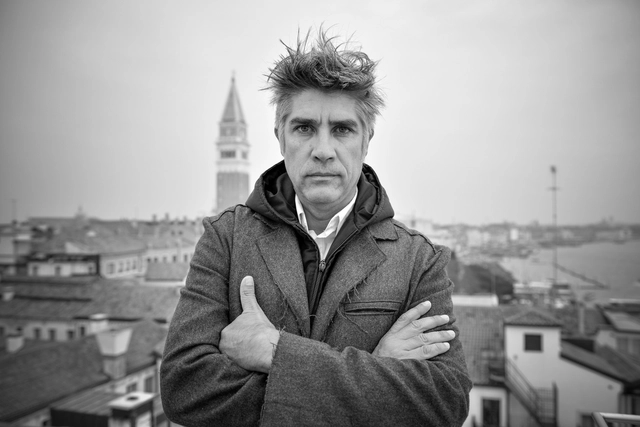





_Malcolm_Reading_Consultants_and_Elemental.jpg?1517319937&format=webp&width=640&height=580)


_Malcolm_Reading_Consultants_and_Elemental.jpg?1494852304&format=webp&width=640&height=580)