Google and La Biennale di Venezia have teamed up to release an online catalogue of the 2016 Venice Biennale. Hosted on Google’s Arts and Culture platform, the digital archive contains over 3700 images and videos from the 15th International Architecture Exhibition “Reporting From The Front”, curated by Alejandro Aravena, and a selection of National Pavilions and ancillary events.
In architecture, perhaps the most remarkable change heralded by the 20th was the radical rethinking of housing provision which it brought, driven by a worldwide population explosion and the devastation of two world wars. Of course, Modernism’s reappraisal of the design and construction of housing was one part of this trajectory, but still Modernism was underpinned by a traditional process, needing clients, designers and contractors. Arguably more radical were a small number of fringe developments, such as mail-order houses in the US and Walter Segal’s DIY home designs in the UK. These initiatives sought to turn the traditional construction process on its head, empowering people to construct their own homes by providing materials and designs as cheaply as possible.
In the 21st century, the spirit of these fringe movements is alive and well, but the parameters have changed somewhat: with a rise in individualism, and new technologies sparking the “maker movement,” the focus has shifted away from providing people with the materials to construct a fixed design, and towards improving access to intellectual property, allowing more people to take advantage of cheap and effective designs. The past decade has seen a number of initiatives aimed at spreading open source architectural design--read on to find out about five of them.
In two lectures delivered by Bart Lootsma, Professor and Head of Institute for Architectural Theory and History at the University of Innsbruck, the 2016 Venice Biennale—Reporting From the Front—is dissected, unpicked and evaluated through the national participations (pavilions) and Alejandro Aravena's central exhibitions. Lootsma, who has broadcast the lectures as publicly available resources on architecturaltheory.eu, is the co-curator of the 2016 Pavilion of Montenegro.
https://www.archdaily.com/791670/bart-lootsma-dissects-unpicks-and-evaluates-the-2016-venice-biennaleAD Editorial Team
It’s the Chilean architect Alejandro Aravena’s habit to look at architecture as a way to help people, and not to simply dazzle them with form. The ethos and practice of Aravena’s Santiago-based firm, Elemental, is essentially the blueprint for each national pavilion at this year’s Venice Architecture Biennale (through Nov. 27), which he is directing. His brief, “Reporting from the Front,” asks a simple question, one that’s increasingly difficult to address: How can the advancement of architecture, given physical needs and local contexts, actually improve the quality of people’s lives?
The question is central to how Aravena approaches his own work. Before he puts pen to paper, the economic, environmental, political, and social dimensions of the built environment are fully taken into account.
In an exclusive half-hour interview with Alejandro Aravena, Monocle's Josh Fehnert questions the recent Pritzker Prize-laureate on Chilean architecture and urbanism, why he considers simple design as the key to alleviating the world's biggest woes, and the conception and ultimate result of his 15th International Architecture Exhibition – La Biennale di Venezia.
https://www.archdaily.com/791596/alejandro-aravena-on-design-venice-and-why-he-paused-his-career-to-open-a-barAD Editorial Team
The XV International Architecture Exhibition at the Venice Biennale opened its doors last month. Under the directorship of Chilean Pritzker Prize-winner Alejandro Aravena, “Reporting the front” asked architects to go beyond “business as usual” and investigate concealed built environments – conflict zones and urban slums, as well as locations suffering from housing shortage, migrations and environmental disasters. Clearly, the aim of this Biennale is to open the profession to new fields of engagement and share knowledge on how to improve people’s quality of life.
This stance that has been highly criticized by Patrik Schumacher, director of Zaha Hadid Architects, who believes that architects “are not equipped to [address these issues]. It’s not the best value for our expertise.” But is this a view shared by the rest of the design world and its critics? What are the limits and benefits of this “humanitarian architecture”? Read on to find out critics’ comments.
The Center for Architecture, in collaboration with CONSTRUCTO, will present the exhibition EXTRA-ORDINARY: New Practices in Chilean Architecture, opening on Wednesday, June 22 at 5:30 pm, curated by CONSTRUCTO foundersJeannette Plaut and Marcelo Sarovic. The opening will begin with a roundtable discussion between Plaut, Sarovic and MoMA Director Glenn Lowry and will be followed by a presentation by architect Smiljan Radic.
As director of the 2016 Venice Biennale, Alejandro Aravena has sought to shift the very grounds of architecture. Rather than an inward-looking interrogation of the profession's shortcomings, as Rem Koolhaas undertook in 2014, the Chilean Pritzker Prize-winner asks us to gaze in the opposite direction—to the vast swathes of the built horizon that traditionally lay beyond the profession's purview: urban slums, denatured megacities, conflict zones, environmentally compromised ports, rural villages far off the grid.
"We believe that the advancement of architecture is not a goal in itself but a way to improve people’s quality of life," states Aravena in his introduction to event. In other words, his biennale does not ask what architecture ought, yet often fails, to be, but rather what it could, yet often forgets, to do.
As the first South American selected to curate the Biennale, Alejandro Aravena was excited as he delivered the latest news on “Reporting from the Front,” the XV International Architecture Exhibition at the Venice Biennale, which opened its doors to the public on May 28:
“The Biennale, the invited architects, as well as the curators, did not intend to do anything other than open a debate in which architecture can be used to improve quality of life through the sharing of knowledge. This debate holds more significance since we are speaking at the Presidential Palace because it conveys the message that these issues are important. Thank you so much for the opportunity and the chance to be here.”
The President’s presence at an event like this is a symbol that consolidates a chapter of progress and achievements in Chilean architecture. In the last two decades, Chilean architecture has positioned itself in the world as a force to be recognized, and Chilean architects are now obtaining international recognition, which would have been unimaginable a few years ago.
https://www.archdaily.com/788468/from-chile-to-the-world-reporting-from-the-venice-biennale-2016Pola Mora
"Scrutinizing the horizon and looking for a new perspective" is what Alejandro Aravena has encouraged in the 2016 Venice Biennale, Reporting From the Front. "[He] has staged one of the most socially charged Biennales," Gillian Dobias reports, by "exploring the different ways that design can add value." In this, the first of two film reportages from the Biennale, Monocle talks to Aravena about his hopes for stimulating the debate on improving quality of life in the built environment, and tour the Central Pavilion and the Arsenale to uncover what's on show.
There is an enormous intensity of information, knowledge and ideas on display at this year's Venice Architecture Biennale, Reporting From the Front. With all the Executive Editors and Editors-in-Chief of ArchDaily's platforms in English, Spanish and (Brazilian) Portuguese in Venice for the opening of the 2016 Venice Architecture Biennale—plus co-founder David Basulto and European Editor-at-Large James Taylor-Foster, who curated this year's Nordic Pavilion—we've pooled together twelve of our initial favourite exhibitions and must-see shows.
https://www.archdaily.com/788809/12-things-you-need-to-see-at-the-2016-venice-biennale-reporting-from-the-front-selection-oneAD Editorial Team
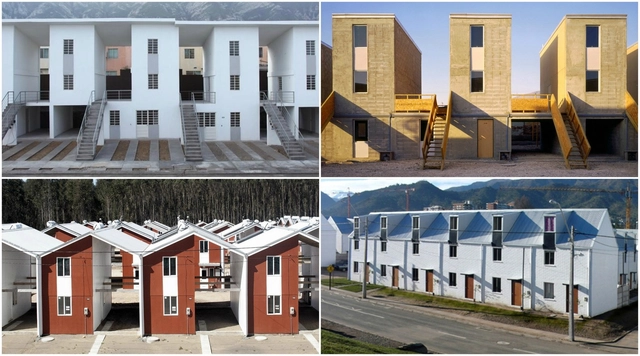
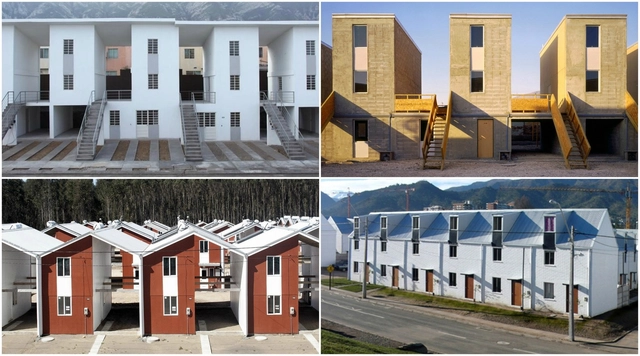
Earlier this year, we reported that 2016 Pritzker Prize winnerAlejandro Aravena announced that his practice, ELEMENTAL, released four of their social housing designs available to the public for open source use. A recent article published by Urbanisms in beta discusses what exactly “open source use” means to the architecture world, and how we may see these designs applied to projects in the future.
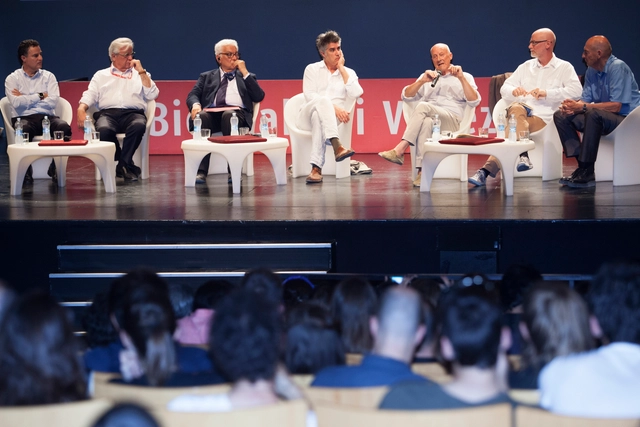
On May 28th, a selection of participants of the 2016 Venice Architecture Biennale, including Rem Koolhaas and Norman Foster convened for the first of Alejandro Aravena's "Meetings on Architecture," a series of talks that will take place throughout the Biennale. Under the theme of INFRASTRUCTURE, each invited speaker was given the chance to explain stories behind their participating projects in the Biennale, and the floor was also opened up for questions from the audience.
However, as Aravena explains about the talks, “we have organized them around themes, but architecture by nature always integrates more than one dimension. These Meetings will thus be a way to get from the authors themselves the richness and complexity of the built environment, and what it takes to get things done.” While highlighting unique projects, topics at the first Meeting converged around the focus on shaping the urbanization of emerging economies and the socio-political process and effect of realizing each project. The rest of the speaking panel was comprised by Joan Clos, Andrew Makin and Grupo EPM.
"Architecture is about giving form to the places where we live. It is not more complicated than that, but also not easier than that." - Alejandro Aravena
On the first day of the vernissage 15th International Architecture Exhibition at La Biennale di Venezia, ArchDaily is pleased to show you a preview of the exhibitions and installations that were hand selected by Alejandro Aravena and his firm Elemental. Separate from (but in dialogue with) the National Pavilions, "Reporting From the Front" celebrates work that "address[es] a problem that matters and for which quality architecture made a difference."
In an exhibition whose aim is to share the "success stories" where architecture is making a difference, Alejandro Aravena has convened offices and practitioners from across the globe to show—"in the simplest possible terms (without trivializing)"—projects that demonstrate innovation, resolve and quality problem-solving abilities.
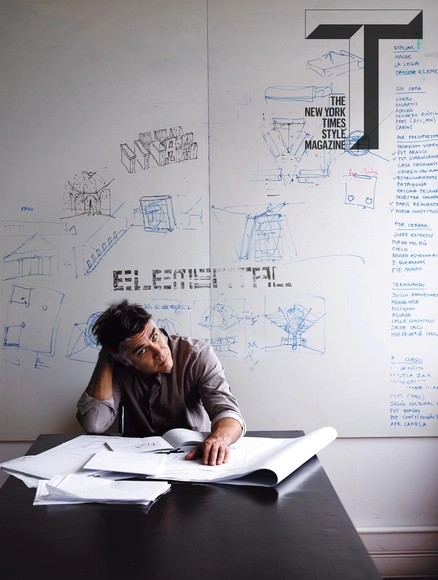
On the eve of the Venice Biennale, The New York Times’ Michael Kimmelman sits down with Alejandro Aravena in an intimate profile for T Magazine’s Beauty Issue. Visiting a number of projects by the architect and his office, Elemental, Kimmelman experiences socially minded architecture in an age of informal growth, income inequality, and mounting threats linked to climate change, all while learning about Aravena’s own path and growth as a practitioner. Although told by colleagues that he might be standoffish, Kimmelman finds Aravena to be “earnest, open, a little nerdy –– and deadly serious.”
The Board of Directors of La Biennale di Venezia, upon recommendation from Alejandro Aravena, have announced the jury for the forthcoming Venice Biennale who will award the Golden Lion for Best National Participation, the Golden Lion for Best Participant in the International Exhibition Reporting From the Front, and the Silver Lion for a Promising Young Participant in the International ExhibitionReporting From the Front. They will also have the opportunity to award one special mention to National Participations and two special mentions to the participants in the International Exhibition.
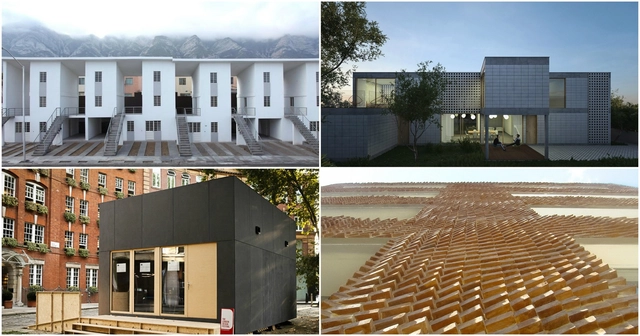
Through the work of his firm Elemental, Aravena is known for his interest in incremental, participatory housing design: a common-sense way of working within financial restraints and a cornerstone of Elemental’s studio work. The motto—focus first on what is most difficult to achieve, what cannot be done individually, and what will guarantee the common good in the future—resulted in a “half a house.” First introduced over a decade ago, the model consists of an expandable 40 square-meter (431 square-feet) container with basic infrastructure (partitions, structural and firewalls, bathroom, kitchen, stairs, a roof) built-in and added to over time. It is not only an achievement from a conceptual and project management standpoint, but also an aesthetically open and diverse project. From this one idea stemmed 100 variations.



.jpg?1469542883&format=webp&width=640&height=580)


.jpg?1466786438&format=webp&width=640&height=580)
.jpg?1466786438 "The \"Reporting the Front\" exhibition/ curated by Alejandro Aravena at the 2016 Venice Biennale. Image © Laurian Ghinitoiu")
.jpg?1466786448 "Gabinete de Arquitectura at the 2016 Venice Biennale. Image © Laurian Ghinitoiu")
.jpg?1466786425 "NLÉ's Makoko Floating School at the 2016 Venice Biennale. Image © Laurian Ghinitoiu")
.jpg?1466786407 "\"OUR AMAZON FRONTLINE\" / curated by Sandra Barclay and Jean Pierre Crousse. Peruvian Pavilion at the 2016 Venice Biennale. Image © Laurian Ghinitoiu")
.jpg?1466786438)


.jpg?1465854467&format=webp&width=640&height=580)
.jpg?1465854457 "The \"Reporting From the Front\" exhibition. Image © Laurian Ghinitoiu")
.jpg?1465854487 "Gabinete de Arquitectura's contribution to the \"Reporting From the Front\" exhibition. Image © Laurian Ghinitoiu")
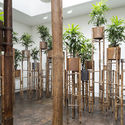
.jpg?1465854604 "The Spanish Pavilion. Image © Laurian Ghinitoiu")
.jpg?1465854467)
.jpg?1464275383)



.jpg?1464273616 "© Laurian Ghinitoiu")
.jpg?1464273639 "© Laurian Ghinitoiu")
.jpg?1464273508 "© Laurian Ghinitoiu")
.jpg?1464273743 "© Laurian Ghinitoiu")
.jpg?1464273296)