Nico Saieh

Architectural Photographer based in Santiago, Chile

BROWSE ALL FROM THIS PHOTOGRAPHER HERE

AD Round Up: Classics in Brick

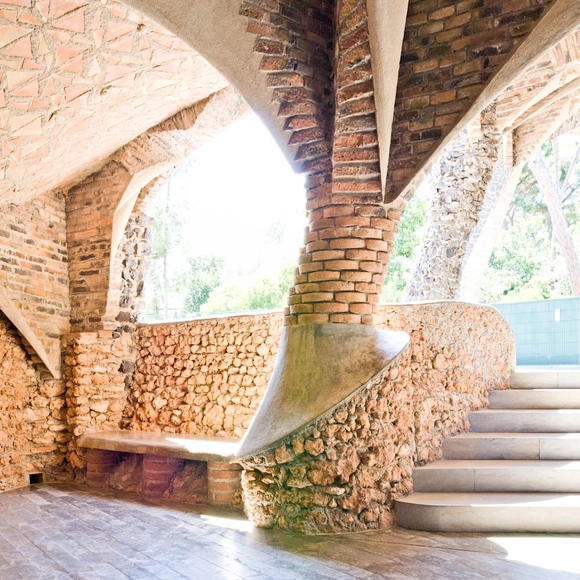
As one of the most ubiquitous forms of construction, it can sometimes be easy to overlook the humble brick. However, this prosaic building method can also be one of the most versatile materials available to architects, thanks to the experimentation of countless architects who, for centuries, have worked to create new forms of expression with the simple material. In this round up, we celebrate architects who, with their architectural classics, have expanded the possibilities of brick craft: Antoni Gaudí's fantastical vaulting at Colònia Güell and Alvar Aalto's experimental brick patterning at his house in Muuratsalo; the powerful brick piers of Kevin Roche and John Dinkeloo's Knights of Columbus Building and the Catalan vaults of Porro, Garatti and Gattardi's National Arts School of Cuba; and finally, what brick round up would be complete without the brick-whisperer himself - Louis Kahn and his all-brick fortress for the Indian Institute of Management.

AD Round Up: Classics in Brick - Image 6 of 4

AD Round Up: Classics in Brick - More Images+ 2

MVRDV and Interior Urbanism: An Interview With Winy Maas

Subscriber Access | 

In the late 20th and early 21st centuries, one of the major changes within cities around the world has been the rise of so-called "privately-owned public space," a development which has attracted the attention of many urbanists and is still being widely debated. However, for MONU Magazine, the increasing prevalence (and arguably, acceptance) of such privately owned spaces for public use gives us an opportunity to discuss another aspect of public space: interior urbanism. With the rise of the shopping mall and the increasingly diverse functions required by buildings such as libraries, interior spaces now resemble exterior public spaces more and more.

The following interview is an excerpt from the 21st issue of MONU Magazine, in which MONU's Bernd Upmeyer and Beatriz Ramo interview MVRDV founder Winy Maas, discussing the concept of interior urbanism in the work of MVRDV, in particular in their Rotterdam Markthal, Glass Farm and Book Mountain projects.

MVRDV and Interior Urbanism: An Interview With Winy Maas - More Images+ 8

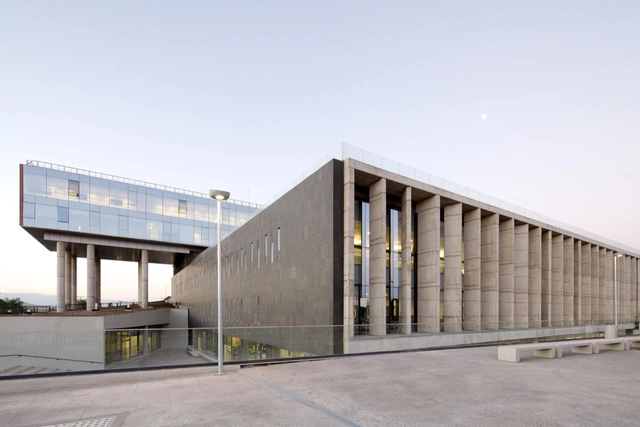
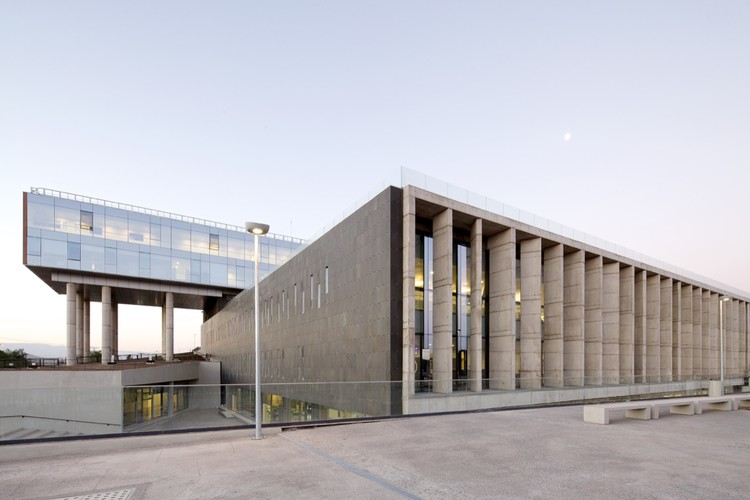
El Carmen Hospital Maipu / Murtinho+Raby Arquitectos (Pedro Murtinho, Santiago Raby) + BBATS Consulting & Projects SLP (Silvia Barbera, Jorge Batesteza, Cristóbal Tirado)

El Carmen Hospital Maipu / Murtinho+Raby Arquitectos (Pedro Murtinho, Santiago Raby) + BBATS Consulting & Projects SLP (Silvia Barbera, Jorge Batesteza, Cristóbal Tirado) - More Images+ 19

Maipú, Chile

The Work of SelgasCano, the 2015 Serpentine Pavilion Designers

The latest designer of the prestigious Serpentine Gallery Pavilion has been named as SelgasCano, the Spanish practice known for their use of the latest synthetic materials and new technology. The Serpentine Pavilion, which has grown to become one of the most visited annual architecture attractions in the world, aims to provide architects who have never built in the UK their first chance to do so. In the past, this has led to pavilions by globally-recognized names such as Frank Gehry, Zaha Hadid, Rem Koolhaas, Oscar Niemeyer, and Peter Zumthor, but in recent years the Serpentine Gallery seems to have changed course a little, instead bringing lesser-known, emergent stars to a much wider audience. This was true of Smiljan Radić and his 2014 pavilion, and will likely prove true for the duo of José Selgas and Lucía Cano.

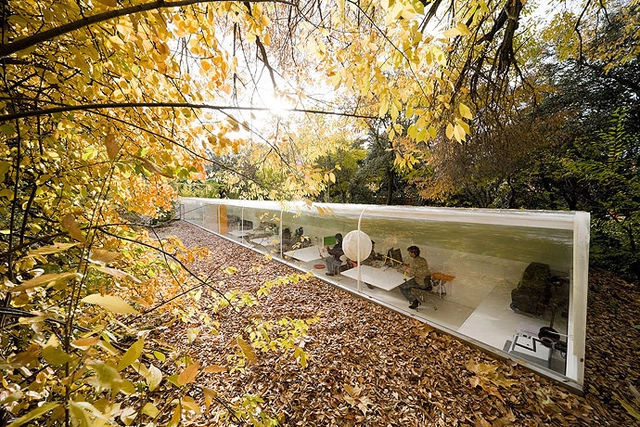
Although designs for the 2015 pavilion will not be released until February, SelgasCano have promised "to use only one material... the Transparency," adding that "the most advanced technologies will be needed to be employed to accomplish that transparency." This coy description perhaps calls to mind the design of their own office, a partially sunken tube of a building with one side made entirely of curved glass, which won them widespread recognition in 2009.

To give a better idea of the design style that SelgasCano will bring to the 2015 Serpentine Pavilion, we've rounded up a number of their major projects for your viewing pleasure, after the break.

The Work of SelgasCano, the 2015 Serpentine Pavilion Designers - More Images+ 22

The 2014 Venice Biennale, Socially Ranked

At a time when everyone is constantly interacting with the digital social universe, it's becoming increasingly easier to gather informal data on how well received, recommended, liked (or disliked) an event or exhibition is. Compiled as a series of diagrams for Domus, Maria Novozhilova examines the 'social ranking' of the 2014 Venice Biennale by dissecting the three core exhibitions (Fundamentals, Monditalia and Absorbing Modernity) and revealing the apparent 'winners and losers' as far as social engagement is concerned. Noting that "it is only by starting from the end and working backwards, like a salmon swimming against the current, that we can see more exhaustively how things went,", Novozhilova's visualisations reveal a number of fascinating results. See all the diagrams here.

Reflections on the 2014 Venice Biennale

Fundamentals, the title of the 2014 Venice Biennale, will close its doors in a matter of days (on the 23rd November). From the moment Rem Koolhaas revealed the title for this year’s Biennale in January 2013, asking national curators to respond directly to the theme of ‘Absorbing Modernity 1914-2014’, there was an inkling that this Biennale would be in some way special. Having rejected offers to direct the Biennale in the past, the fact that Koolhaas chose to act not only as curator but also thematic co-ordinator of the complete international effort, was significant. This announcement led Peter Eisenman (one of Koolhaas' earliest tutors and advocates) to state in one interview that “[Rem is] stating his end: the end of [his] career, the end of [his] hegemony, the end of [his] mythology, the end of everything, the end of architecture.”

AMO Invites Dutch Architects to Discuss their Future at the Venice Biennale

On November 20-21, AMO is hosting a discussion event at the Venice Biennale focusing on the past, present and future of Dutch architecture in which 30 young architects will be invited to present their agenda for architecture in the Netherlands for the next 10 years. Over the course of the two days, each participant will present will deliver a 7-minute presentation looking at architecture in 2024 to answer the question "where will you be and will you be doing?" Find out more about the event, and how you can be a part of it, after the break.

Markthal Rotterdam / MVRDV

Markthal Rotterdam / MVRDV - Market
© Daria Scagliola+Stijn Brakkee

Markthal Rotterdam / MVRDV - More Images+ 30

  • Architects: MVRDV
  • Year Completion year of this architecture project Year:  2014
  • Manufacturers Brands with products used in this architecture project
    Manufacturers:  Laufen, Acor, Aldowa, Easy Drain, Guardian Glass, +3

First Look: MVRDV Completes Largest Covered Market in the Netherlands

First Look: MVRDV Completes Largest Covered Market in the Netherlands - Featured Image
© Nico Saieh

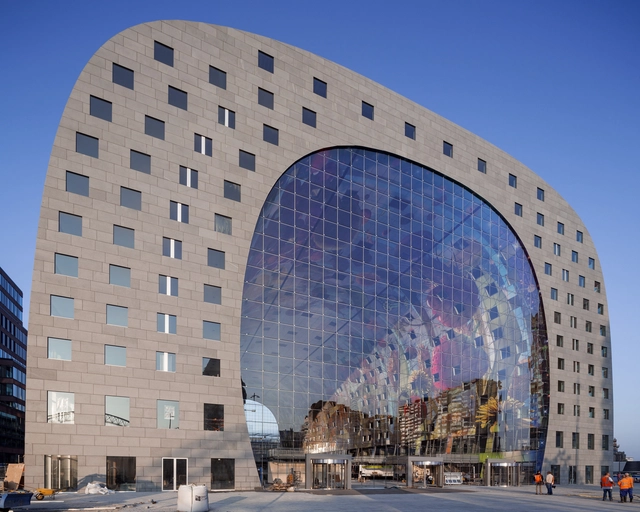
Rotterdam’s very own, MVRDV has completed the Netherlands’ first covered market: the Markthal Rotterdam. Unlike any other market in the world, the Markthal presents a new urban hybrid that unites a market hall with housing.

Within the hollow core of the 228-unit, “horseshoe-shaped” residential building is an expansive, 40-meter-tall public market, offering 96 fresh food stalls, 8 restaurants and supermarket. Colorful murals cover the arch’s vaulted interior, peering through the largest single glazed cable net facades in Europe, which enclose the market. 

This sense of transparency and openness was key, as the Markthal is the driving force to the rejuvenation of the Laurenskwartier area and hopes to attract thousands of visitors each year.

A look inside, after the break.

First Look: MVRDV Completes Largest Covered Market in the Netherlands - More Images+ 27

JustPeople / Cristián Olivi

JustPeople / Cristián Olivi - Offices Interiors, Beam, Table, Chair
© Nico Saieh
Las Condes, Chile
  • Architects: Cristián Olivi
  • Area Area of this architecture project Area:  1100
  • Year Completion year of this architecture project Year:  2014
  • Manufacturers Brands with products used in this architecture project
    Manufacturers:  Multicarpet, Spatii
  • Professionals: Contract Workplaces, Docevolts

JustPeople / Cristián Olivi - More Images+ 24

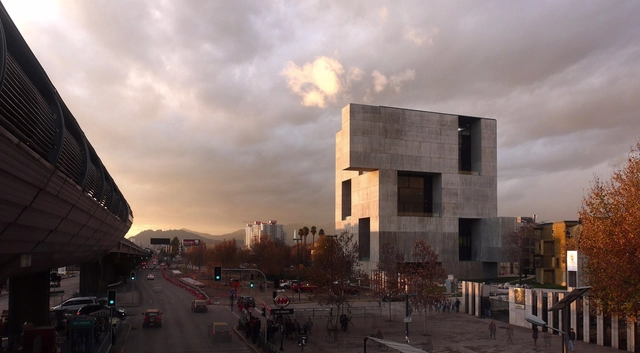
Innovation Center UC - Anacleto Angelini / Alejandro Aravena | ELEMENTAL

Innovation Center UC - Anacleto Angelini / Alejandro Aravena | ELEMENTAL - More Images+ 17

Santiago, Chile
  • Area Area of this architecture project Area:  8176
  • Year Completion year of this architecture project Year:  2014
  • Manufacturers Brands with products used in this architecture project
    Manufacturers:  Dermetall, Hunter Douglas, Nuprotec
  • Professionals: Sirve S.A.

MO House / Gonzalo Mardones V Arquitectos

MO House / Gonzalo Mardones V Arquitectos - More Images+ 42

Zapallar, Chile
  • Year Completion year of this architecture project Year:  2014
  • Manufacturers Brands with products used in this architecture project
    Manufacturers:  ABA Andrés Barriga, Gasco, J. M. Alemparte, MK, Melón Hormigones, +1
  • Professionals: Ruiz y Saavedra

Beyond Starchitects: An Architectural Revolution at the 2014 Venice Biennale

"The Biennale reveals that modernism was never a style. It was a cultural, political, and social practice," says Sarah Williams Goldhagen in her recent article for New Republic, The Great Architect Rebellion of 2014. This year, the Venice Biennale dissects the notion of modernism by providing a hefty cross-section of architectural history in the central pavilion. However contrary to Koolhaas' prescriptive brief, the 65 national pavilions show modernism was not just a movement, but a socially-driven, culturally attuned reaction to the "exigencies of life in a rapidly changing and developing world." Unexpected moments define the 2014 Venice Biennale: from Niemeyer's desire to launch Brazil into the first world through architectural creation, to South Korea's unveiling of a deep modernist tradition with influence across the nation. This Biennale proved to be truly rebellious - read Goldhagen's article from New Republic here to find out why.

The Conflict Between the Global North and South at the 2014 Venice Biennale

Subscriber Access | 
The Conflict Between the Global North and South at the 2014 Venice Biennale - Featured Image
A view from the floor of the Latvian pavilion. The sheets of paper carry images of Modernist buildings; the ceiling asks, "There is no Modernism in Latvia", commenting on the lack of historical scholarship. Image © NRJA

“Absorbing Modernity: 1914-2014 is an invitation to the national pavilions to show, each in their own way, the process of the erasure of national characteristics in architecture in favor of the almost universal adoption of a single modern language and a single repertoire of typologies.” In this article, originally published on Metropolis Magazine as "Whose Modernity?", Avinash Rajagopal investigates the conflict this mandated theme at the 2014 Venice Biennale unintentionally created between the Northern and Southern pavilions - with Northern pavilions tending to declare sole ownership over Modernism and many Southern pavilions denying that their countries were passive recipients of the North's globalization. For more on how the Southern pavilions challenged the typical conveyance of architectural history, continue reading after the break.

How OMA's Monditalia Paints A Dynamic Portrait of Italy

The component parts of Monditalia, the 41 projects that line the vast corridor of the Arsenale, provide contextualization for architecture operating within larger systems, be it politics, media, border control, religion, etc. When we spoke to Ippolito Pestellini Laparelli of AMO, Monditalia's head curator, he stressed that "the exhibition is a method, more than anything. This idea of the scanning through the country, selecting case studies, selecting another way to represent the case studies…it's a method that can be applied also elsewhere."

Monditalia mobilizes the other sectors of the Venice Biennale -- Cinema, Dance and Music -- in order to capture a "polyphonic" portrait of a European country with what Laparelli describes as "extreme conditions." Infographics produced in preparation for the exhibition demonstrate the statistical disparities between Italy and other nations. The scan of Italy begins from the south and continues to the north, allowing "different topics to collaps[e] or collid[e] onto each other, such as you would find when you travel through a real territory."

Monditalia's events have been programmed to take place between June and November in conjunction with a series of 21 Weekend Specials that allow further exploration of the issues/topics/case studies brought forth in the exhibition at large.

Watch Ippolito Pestellini Laparelli explain Monditalia in the video above, read on after the break for the curatorial statement, and see the rest of ArchDaily's Biennale coverage here.

How OMA's Monditalia Paints A Dynamic Portrait of Italy - More Images+ 40

Inside "Arctic Adaptations" - Special Mention Winner at the Venice Biennale 2014

UPDATE: Our interview with Lateral Office is now up!

For this year's Venice Biennale, the Canadian Pavilion explored the ways modernity was absorbed in the extreme environment of Nunavut, Canada. As Nunavut is the newest, northernmost, and largest territory (with an area of over 2 million square kilometers) in Canada, Lateral Office hoped to shed on light on what Mason White called "modernity at an edge." Wowing the jury with their research and design, Arctic Adaptaptions: Nunavut at 15 garnered Mason White, Lola Sheppard, Matthew Spremulli, and their team a Special Mention during Saturday's awards ceremony.

The geographic and cultural "edgeness" of Nunavut is examined over different parts of the exhibition in three mediums: a recent past, a current present and a near future. Matthew Spremulli explained that Arctic Adaptions sought to "look beyond standards" to see how the fundamentals of architecture are impacted in an area like Nunavut. Given the specific and acutely unique challenges to building and designing in an environment that, understandably, resists being colonized by southern models, the curators presented a case for adaptation.

Inside Arctic Adaptations - Special Mention Winner at the Venice Biennale 2014 - More Images+ 20

Center of Traditions Lo Barnechea / Gonzalo Mardones V Arquitectos

Center of Traditions Lo Barnechea  / Gonzalo Mardones V Arquitectos - More Images+ 37

Infrastructure, Data and Progress: Ireland's Pavilion at the 2014 Venice Biennale

The Irish pavilion's response to the theme of the 2014 Venice Biennale captures the tumultuous history of the Ireland's past hundred years through ten infrastructural projects which highlight the country's progress. Ireland's relationship to the theme of "Absorbing Modernity" was colored by their independence from the United Kingdom in the early 1920s, with modernism and infrastructure seen as the way to leave this past behind. The pavilion examines the outcomes of this approach, with Ireland treated as "a launch-pad and testing ground" for everything from concrete infrastructure to data centers. Read the curators' take on their pavilion after the break.