
-
Architects: Pelletier De Fontenay, SOA Architekti
- Area: 10515 m²
- Year: 2024

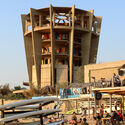
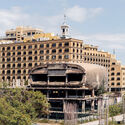
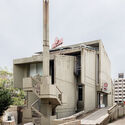
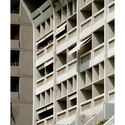
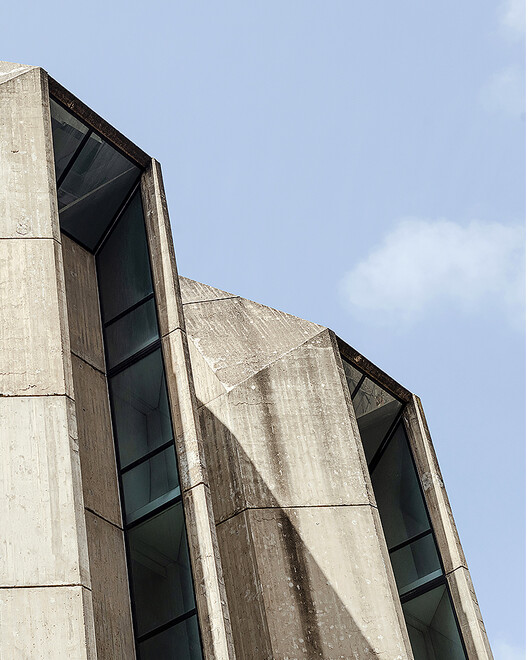
The history of Brutalism has largely been written from a Western perspective. Brutalist Asia by Blue Crow Media offers a different view, examining how architects across Asia adopted, questioned, and transformed the architectural language associated with the movement in response to radically different political, climatic, and cultural conditions. Spanning 28 countries, from Japan and Southeast Asia through South and Central Asia to the Middle East, Iran, and Lebanon, the book brings together 140 buildings and more than 150 photographs, placing internationally recognized works by architects including Kenzo Tange, Paul Rudolph, Balkrishna V. Doshi, Raj Rewal, Charles Correa, Kim Swoo Geun, Leandro V. Locsin, and Le Corbusier alongside important but lesser-known works that expand our understanding of post-war architecture across the continent.
Within this broader geography, one particular history unfolds in Lebanon, where the ambitions of Modernism became inseparable from a country undergoing profound social, political, and urban transformation. Read on for an excerpt from ArchDaily Editor-in-Chief Christele Harrouk's chapter in Brutalist Asia, tracing the rise of Brutalism in Lebanon, the architects and buildings that gave it a particular local expression, and the rupture that left this Modernist project unfinished.

Sustainability in architecture is often discussed as though it were a universal standard—and, in principle, it should be. Buildings are increasingly evaluated through energy performance, embodied carbon, certification systems, material efficiency, biodiversity, and whole-life impact. Yet the rules determining what must actually be done remain highly local. A project designed in London, New York, or Copenhagen may be shaped by stringent energy codes, environmental review, disclosure requirements, planning controls, and increasingly ambitious carbon targets. The same practice working elsewhere may encounter a very different regulatory landscape.
This creates a difficult question for international architecture: when sustainability is not enforced to the same degree by law, what standards should architects carry with them?


Architecture this week turns toward the question of what the built environment can make possible, and what it asks in return. Discussions around democracy and public space consider how architecture can support participation, equity, and collective life, while new housing and cultural projects explore how buildings can respond to changing social needs through adaptability, shared space, and the reuse of existing structures. These concerns extend into the exhibition space, where the Tallinn Architecture Biennale examines the less visible costs of construction and the Buenos Aires Architecture Biennial looks at the many ways architecture shapes inhabitation. Across these different contexts, architecture emerges as a way of negotiating access, resources, community, and the long-term value of the built environment.


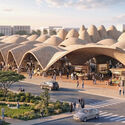
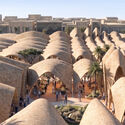
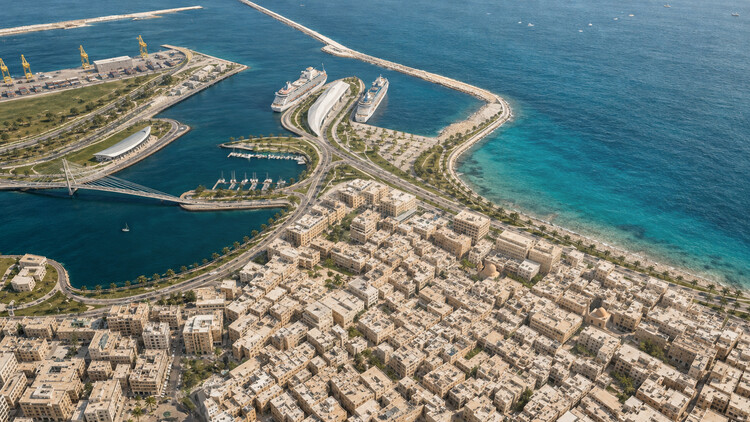
A team composed of ZHA, A&O TEC, Prior + Partners, Homa, Buro Happold, Systematica, and Fichtner recently unveiled its concept proposal for the "Next Generation City Plan" for Benghazi, Libya. The project aims to bring together the historic port city's identity-defining features with the planning technologies required to guide its development toward 2050, in a context of rapid urbanization. The proposal, developed for A&O TEC, includes a Vision and Spatial Strategy, which consists of an interpretation of the city's character and collective memory translated into an adaptable framework for development, and a Digital Planning Hub, an evidence-based model mapping the city to identify its potential and the phenomena shaping its growth.

Every evening when we get home, without ceremony, we perform a small rite. We arrive at a door, we open it, and we step through into a space that belongs to us in a way no other space does. It is such a mundane act that we rarely notice it has a structure at all, and yet philosophers and anthropologists have written entire books describing these psychological structures. Interestingly, visual works such as the animated worlds of Studio Ghibli seem to reflect this dynamic to create worlds which contain architecture and layouts that provide a path to escape by tapping into our memories in a legible yet enchanted form.


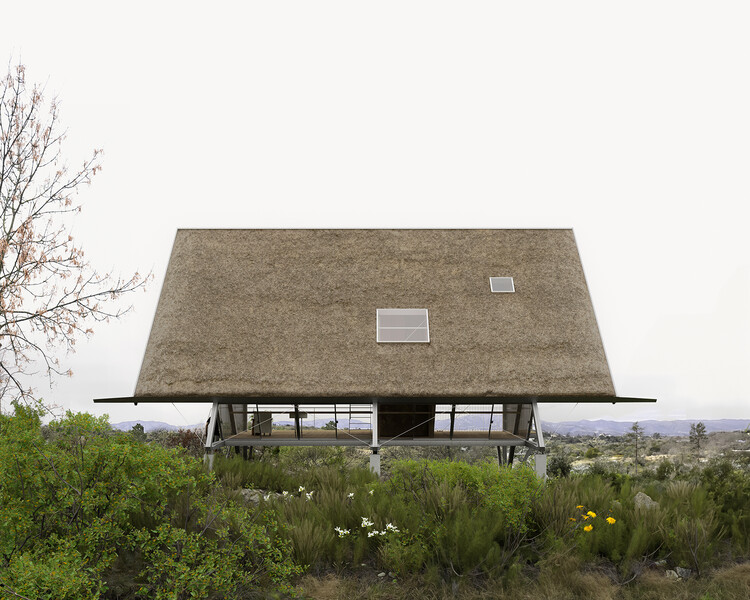
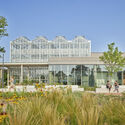
Botanical gardens bring the landscape, design, community, and scientific inquiry into close conversation. Emerging from medicinal gardens and private collections that were dedicated to classifying plants, botanical gardens were developed into institutions where specimens gathered across regions and climates could be cultivated and presented to public audiences. Their evolving position in society produced a distinct architectural repertoire, from greenhouses and conservatories to herbaria and laboratories and, eventually, visitor centers and hospitality spaces. Architecture remains integral to the botanical garden as an instrument of cultivation and a framework for organizing and studying the field of botany.