I attended graduate school, in geography, in Tucson, Arizona, in the late 1990s. Tucson draws fame from a number of things, including its Mexican-American heritage, its chimichangas, its sky islands, and its abundant population of saguaro cacti.
Plenty of things about Tucson, though, are perfectly, achingly ordinary.
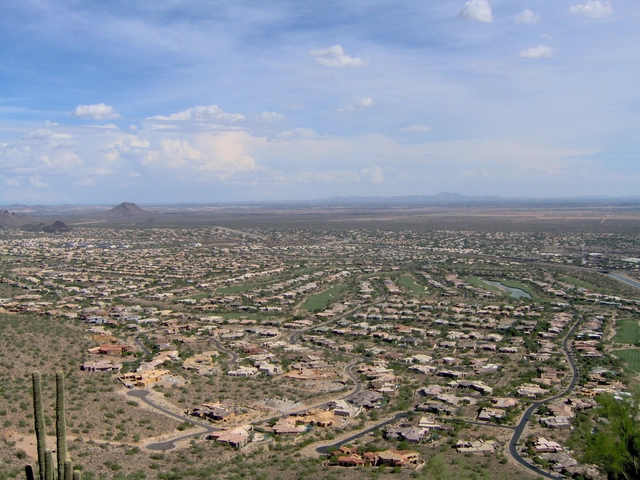
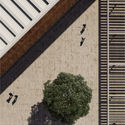
Perhaps the most ordinary thing about Tucson led me to develop something halfway between a hobby and an academic pursuit. On occasion, whether for sport or research, friends and I used to go “sprawl-watching.” We were not exactly, say, Walter Benjamin strolling through the arcades, embracing the human pageantry of Paris. But we did our best to plumb Tucson’s depths.
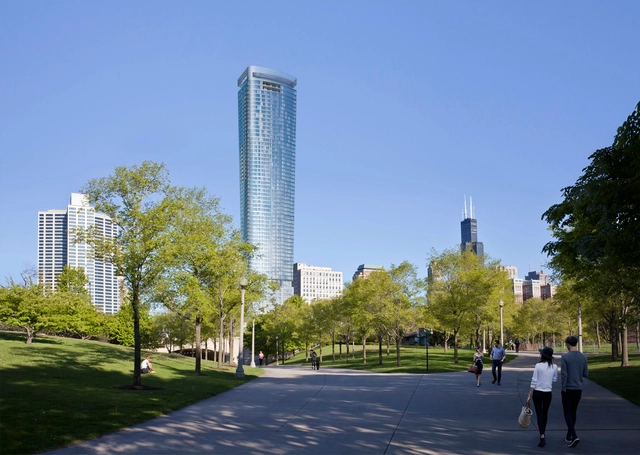
Updated renderings have been revealed for renowned architect Helmut Jahn’s1000M, an upcoming 832-foot skyscraper that will take the place of a currently vacant lot on Chicago’s historic Michigan Avenue. Accommodating 323 luxury residences and over 40,000 square feet of amenities, the building will be clad in a green and blue glass curtainwall, with horizontal metal spandrels running across and dividing it. The roof terrace is covered by a hovering metallic mesh crown, which is shown in the new renderings.
https://www.archdaily.com/877168/new-renderings-revealed-for-helmut-jahns-upcoming-832-foot-skyscraper-in-chicagoOsman Bari
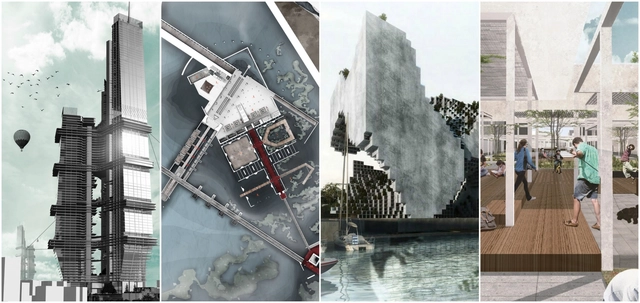
Architecture platform Rethinking the Future (RTF) has announced the winners for their annual “Rethinking the Future Awards,” collecting over 500 entries from 30 countries. Established in 2012 in New Delhi, India, RTF aims to create a “new window on international trends in architecture and design” by considering “radical solutions for the present day problems facing the domain.”
“Each of these projects represents the best of architecture and design across the globe, where innovation and creativity are intersecting,” says RTF on the 18 winning entries covering projects ranging from residential to cultural architecture. The competition was open to both students and professionals and drew a diverse collection of built and unbuilt works.
In this film produced by Vice, Eyal Weizman—director of London-based research agency Forensic Architecture—explains how his team have developed methods of investigating bombings in areas of conflict across the globe. Using cellphone footage, examining floor plans, and utilising road maps, Weizman brings together scientists, journalists, and graphic designers in order "to analyze destroyed buildings for evidence of human rights abuses."
https://www.archdaily.com/877388/watch-eyal-weizman-explain-forensic-architectures-pioneering-investigatory-methodsAD Editorial Team
Life as an architect can sometimes be trying. These stickers, designed by Jeremy Nguyen for The New Yorker, are designed to pep you up in your work day with a motivational boost, or a celebratory pat-on-the-back. Did you behave well during a Skype call? There's a sticker for that. Did you finish that presentation before 1am? There's a sticker for that, too. There's even a little badge of honor for which you can self-decorate once you've sent that final, final... final draft to your Project Manager for review.
https://www.archdaily.com/877336/16-achievement-stickers-to-motivate-freelance-architectsAD Editorial Team
Videos
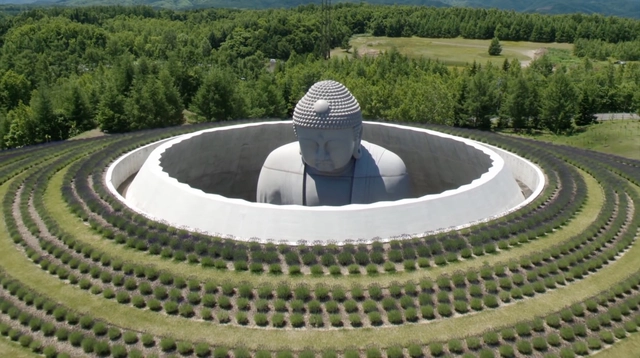
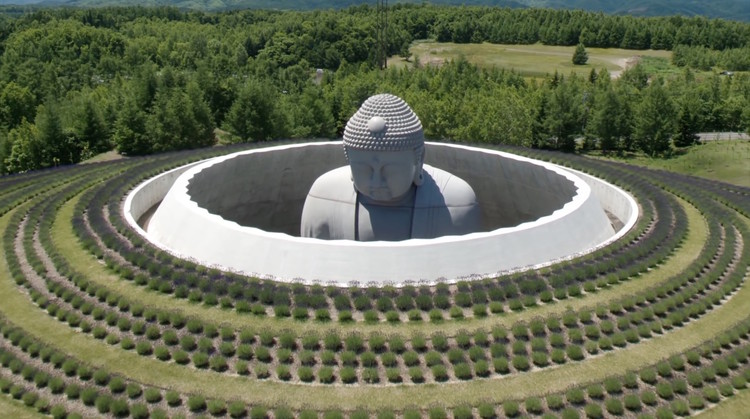
Screenshot of video courtesy Hokkaido Fan Magazine
Pritzker Prize-winning architect Tadao Ando has designed a monumental lavender-covered temple enveloping a giant statue of Buddha at the Makomanai Takino Cemetery in the northern Japanese city of Sapporo.
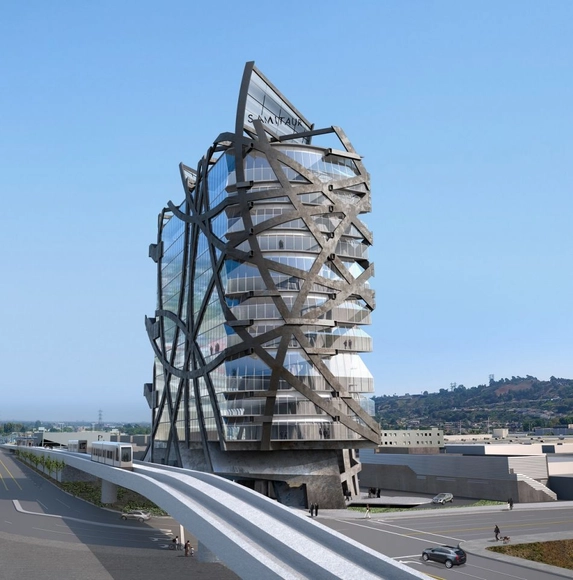
After starting and stopping for nearly 20 years, a 17-story Deconstructivist tower by Eric Owen Moss Architects seems to finally be underway in Los Angeles’ Culver City neighborhood after construction permits were approved earlier this year. Originally known as the Glass Tower, the project has been revived as (W)rapper, a nod to the structure’s enveloping steel exoskeleton.
A new flythrough video of the project shows the inside and out of the 230-foot tower, including its double-height and mezzanine office levels, as well as a spacious rooftop terrace. In total, the building will offer 160,000 square feet of office space and two levels of underground parking. Located adjacent to the Expo Line’s LA Cienega/Jefferson station, the project was originally envisioned as a multi-tower development in the late 90s, before being reduced to its current form.
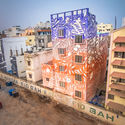
Last month, ArchDaily had an opportunity to speak with Akshat Nauriyal, Content Director at Delhi-based non-profit St+Art India Foundation which aims to do exactly what its name suggests—to embed art in streets. The organization’s recent work in the Indian metropolises of Delhi, Mumbai, Hyderabad, and Bengaluru, has resulted in a popular reclamation of the cities’ civic spaces and a simultaneous transformation of their urban fabric. Primarily working within residential neighborhoods—they are touted with the creation of the country’s first public art district in Lodhi Colony, Delhi—the foundation has also collaborated with metro-rail corporations to enliven transit-spaces. While St+Art India’s experiments are evidently rooted in social activism and urban design, they mark a significant moment in the historic timeline of the application of street art in cities: the initiative involves what it believes to be a first-of-its-kind engagement between street artists and the government.
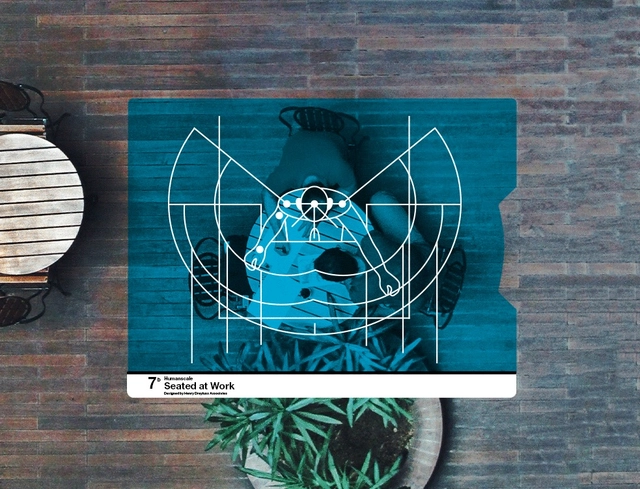
Put away the Neufert manual and pixelated Internet searches, because scaling people just got a whole lot easier. The Chicago-based design consultancy IA Collaborative has launched a Kickstarter campaign for the reissue of Humanscale – a set of ergonomic design templates that contain over 60,000 measurements adjusted to humans of all ages, sizes and, yes, even situations.
In the past decade or so, smartphones and social media apps have revolutionized our culture's relationship to images. From Instagram to Facebook to Pinterest to Youtube, photographs and videos are now so ubiquitous that they have become literally disposable, with apps such as Snapchat trading on their promise to delete your images after a certain period of time. But while smartphones are a very visible driver of this change, what is often forgotten are the huge developments in image-editing software that have supported this revolution—from the HDR built into your smartphone's camera to the wide range of filters provided by Instagram.
Now, as reported by MIT News, Google and MIT's Computer Science and Artificial Intelligence Laboratory may have created another cosmic leap forward: an algorithm that can provide automatic, professional-level image retouching so quickly that you can see a preview before even snapping the photograph.
The Destruction of the Temple of Solomon, by Maarten van Heemskerck. From Freemasonry and the Enlightenment, by James Stevens Curl (Public Domain). Image
In a world in which the "happy" architectural image feels all-pervasive, the British architect and academic Dr. Timothy Brittain-Catlin reveals its darker side suggesting why, and how, we might come to celebrate it. You can read Brittain-Catlin's essays on British postmodernism here, and on colorful architecture, here.
"Contemporary buildings celebrate openness, light and free-flowing movement," says the President of the Royal Institute of British Architects (RIBA) in the March 2017 issue of the Institute’s journal. This is what at my school we call an "announcement", rather than a statement of fact. Indeed, all architects and architecture students hear these words all the time. But are they true? Should they be?
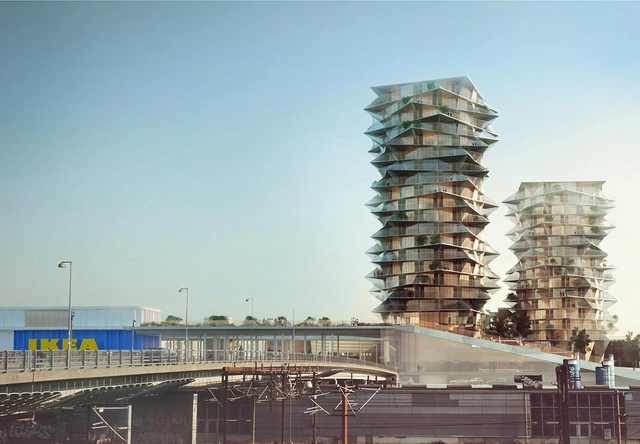
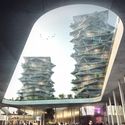
A new project in central Copenhagen will see two Danish practices—Bjarke Ingels Group (BIG) and Dorte Mandrup Architects—create a new urban IKEA store, a budget hotel, and housing linked together by green space. Set to open in 2019, the area—which sits adjacent to Kalvebod Brygge, close to the railway lines that pass through the city core—will be master-planned by Dorte Mandrup while two striking high-rise residential towers, dubbed "Cacti", will be designed by BIG.
Fairy Tales 2017 Competition Winner: Last Day / Mykhailo Ponomarenko. Image Courtesy of Blank Space
When you’re used to the grind of architecture school, breaks can hit you like rain on a warm day—cool at first, but terribly annoying soon enough. While the first few days breeze past as you catch-up on lost sleep and binge-watch Game of Thrones, you realize before long that you’re going insane with nothing to absorb all your new-found energy.
This is where architectural competitions come in handy. They provide a constructive outlet while being deeply engrossing, thus keeping you from hopelessly refreshing Youtube to see if Buzzfeed uploaded a new video. Also, the fact that you’re no longer constrained by the direction of your studio-leader or school program enables you to experiment creatively. With diverse international competitions running at any given time, you can take your pick, depending on your individual interests and the amount of time you want to devote. However, the sheer number of available competitions can be deeply confusing as well. Here we shortlist seven of the most prestigious annual architectural competitions open to students:
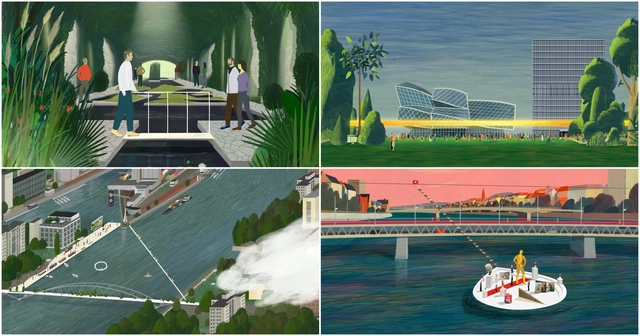
Emerging international architecture office KOSMOS has unveiled 6 projects exploring potential collective spaces in the city of Basel, Switzerland. Unveiled during Art Basel, the speculative projects were featured in the Forum Basel exhibition curated alongside Museum Director Andreas Ruby and Stéphanie Savio, and emerging Chilean practice Plan Común. Held at the Swiss Architecture Museum (S AM), the architecture exhibition was held “in reaction to the increasing commodification of urban space today” and dedicated itself to investigating new possibilities for public space in Basel. Check out the projects, with descriptions from KOSMOS, below.
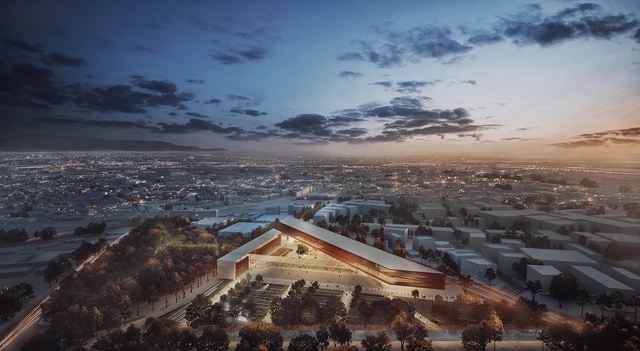
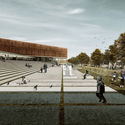
Responding to a competition brief for a new archaeological museum in Nicosia, the divided capital of Cyprus, a proposal submitted by Greek architects Alkiviadis Pyliotis and Evangelos Fokialis uses the traditional elements of the line, atrium and stoa to inform the composition of the envisioned landmark. Titled "Trigonica Simplicitas," the design of the museum is intended to form a new central hub, celebrating Cypriot history and culture through the synthesis of indoor and outdoor spaces on various levels to rethink the function of a museum.
“This place is really Instagrammable, you’ll see what I mean.”
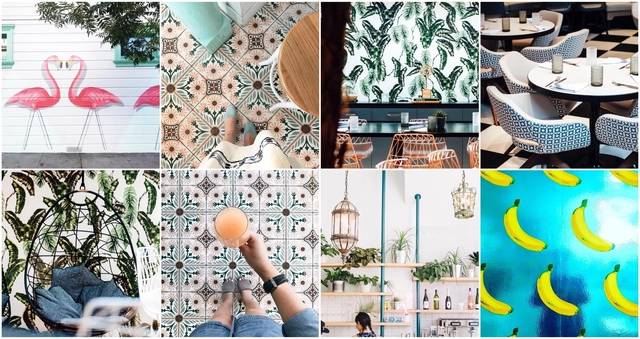
Walking into a tiled entryway and catching a glimpse of the cocoon-shaped swings, I saw fast. Planta, located on a busy street in Downtown Toronto is an Instagram magnet. And they know it. Opened last fall, Planta’s geotagged posts grow daily, with several of the restaurants’ key spaces photographed again and again. With jungle-inspired wallpaper, graphic tiling and a solid 14k following on their own account, the plant-based eatery means business.
Instagram’s parent-company Facebook announced it made $9.1 billion in earnings this quarter on advertising, retaining its longstanding rule over digital advertising alongside with Google’s Alphabet ($26 billion). With Instagram absorbing competitor Snapchat’s story features and increasing the number of sponsored posts it shows this year (yeah, we noticed), it’s not a stretch to say that the social media giant sits at the center of food and beverage trends. But what happens to interior spaces when restaurants set out to be “Instagrammable”?
We love construction details! That's why this week's photos highlight the art of the synthesis of materials and the varied photographic products we can obtain by looking closer. Photographers like Joel Filipe, Marie-Françoise Plissart and Adria Goula, give us precise and beautiful exposure to wooden joints, steel structures, concrete details, curtain walls and more.
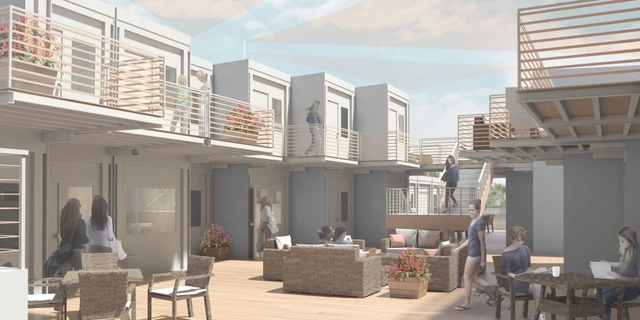
Aggravated by limited upward mobility and a dire housing crisis, LA County’s homeless population has shot up 23 percent to nearly 58,000 in the past year alone, according The Los Angeles Times. Their increased visibility recently guilted voters into passing (by a two-thirds majority) a sales tax increase (Measure H) and a $1.2 billion bond initiative (Measure HHH) to provide housing and amenities. With the city now better financially equipped to tackle the problem, a new issue arises: what to build?
10 Design were announced as the winners of a competition to build an incubation center for start-up companies in the Jinwan Aviation District in Zhuhai, China. The Research & Development Center will accompany 10 Design’s other winning schemes for an International Commerce Center (twin tower with 127,000 square meters of office and hotel space) and Cultural Center (performance and exhibition space house in a 27,500 square meters building). The projects will be a part of Jinwan Aviation City, an ambitious development initiative to create a hub for major industry in Zhuhai, a city that is currently experiencing unprecedented growth.
Berlin is city in which the past and the present often collide – a phenomenon particularly acute when it comes to the built environment. In this project by Japanese architect and artist Riku Ikegaya, the interior of St. Elisabeth-Kirche (Church of St. Elizabeth)—designed by Karl Friedrich Schinkel—is transformed by means of a structural installation. Consisting of a scale model of Schinkel’s plans for the Rosentaler Vorstadt Church, the artist has composed a "three-dimensional architectural sketch."
https://www.archdaily.com/876738/riku-ikegaya-constructs-a-series-of-nested-spaces-in-a-berlin-church-designed-by-karl-friedrich-schinkelAD Editorial Team
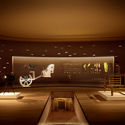
Theoni Xanthi of XZA Architects has been selected as the winner in the competition to design the new archaeological museum in Cyprus. Composed of three layers corresponding to Memory, the City, and the River, Xanthi's proposal took first place in a competition that sought a new urban space to celebrate Nicosia’s history and archaeology. The project is situated in close proximity to the medieval city walls, enabling it to play a key role in altering and upgrading the existing urban and green spaces that surround it.
In #donotsettle’s latest video, architects and vlogging provocateurs Wahyu Pratomo and Kris Provoost provide breathtaking footage of one of Shanghai’s most curious projects, M50. The 300,000-square-meter Heatherwick Studio building is an undulating mass of mixed use urban topography.
A new challenger has stepped into the ring of home solar batteries, and it’s a name you may recognize: global furniture retailer IKEA.
A competitor to Tesla’s now-available Powerwall home battery and solar roof system, IKEA’s home battery will be first sold in the UK, where owners of solar-powered homes can typically only sell excess energy produced back to the national grid at a loss. The battery pack will instead allow that power to be stored for later use, helping homeowners reduce their electricity bills by as much as 70 percent.
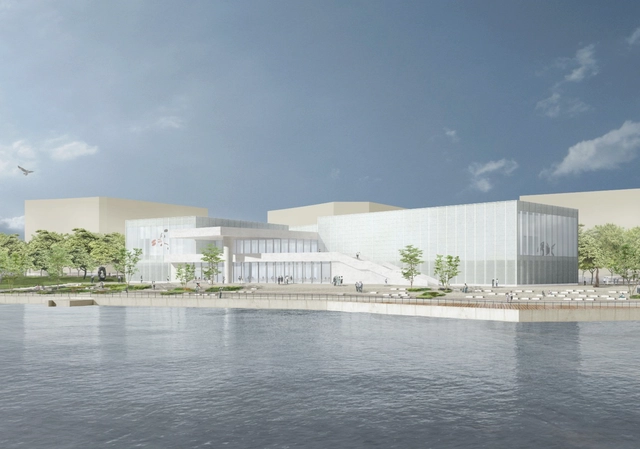
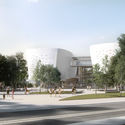
David Chipperfield Architects has revealed the design of the newest home of the Centre Pompidou, the West Bund Art Museum in Shanghai. The Parisian institution revealed the details with the announcement of a 5-year deal with the West Bund Group to stage exhibitions in the museum beginning in 2019. Approximately 20 exhibitions – including a focus on contemporary Chinese art – will be included in the deal, described by the Centre Pompidou as "the most important long-term cultural exchange project” between France and China.



.jpg?1500514399 "Architectural Icon")
.jpg?1500514578 "Shi-An")
.jpg?1500514532 "Out of the Box")
.jpg?1500514613 "XO Skeleton")






__Anpu_Varkey___photo_by_Akshat_Nauriyal.jpg?1501258835 "Gandhi Mural by Hendrik Beikirch and Anpu Varkey, Delhi. Image © Akshat Nauriyal")





















.jpg?1501737244&format=webp&width=640&height=580)


.jpg?1501737244)