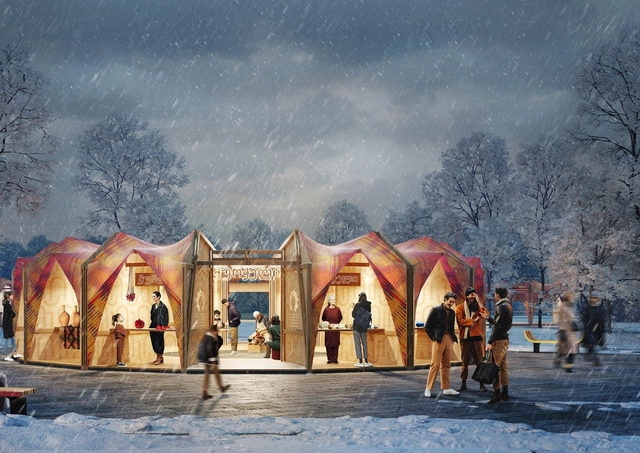
The Initiatives for Development of Armenia (IDeA) Foundation has announced the winners of the Friendship Park competition for Gyumri, Armenia. Based on results of the second round, the jury selected 19 finalists in three categories. Located in the northern part of the city, the renovated park aims to become the first modern green area for locals and tourists alike through a series of design interventions.
Videos
First Place: Cristián Fernández. Image Courtesy of Fundación Engel
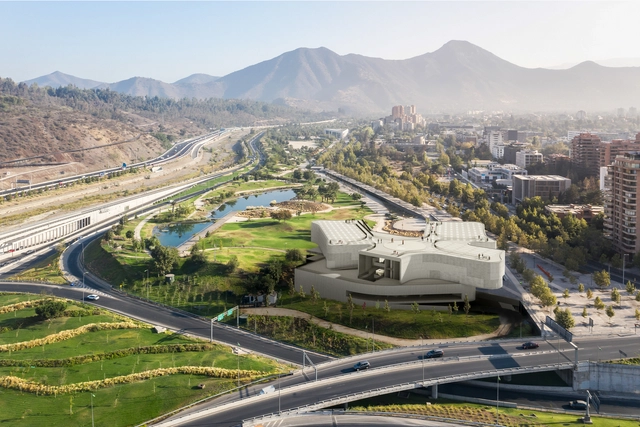
The team led by Chilean architect Cristián Fernández has won the National Architecture and Landscaping Competition for the New Museum of Santiago (NUMU, Nuevo Museo de Santiago), a cultural project that will house the Fundacion Engel art collection in the Bicentennial Park in Santiago, Chile.
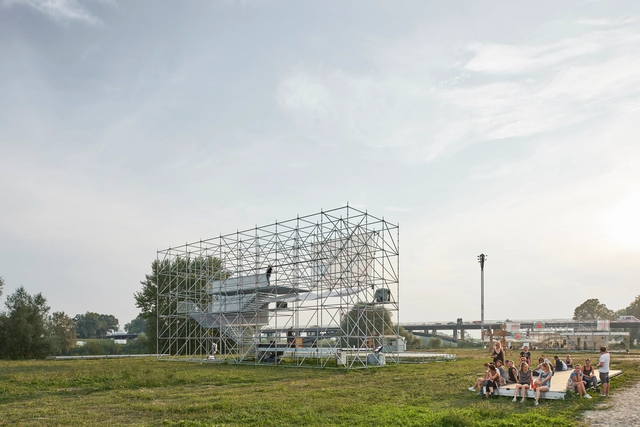
Little has been said about the contribution of scaffolding to the history of construction. These structures are generally treated as mere equipment and, as a result, their records are very scarce. Without scaffolding, however, it would be almost impossible to construct most of the buildings we know. Scaffolding allows workers to reach and move materials at difficult points in a construction, providing safety and comfort. But in addition to its role as a support structure for buildings, we have also seen that scaffolding can be used for mobile, temporary, and even permanent structures. Below, we explain its history and possibilities for use.
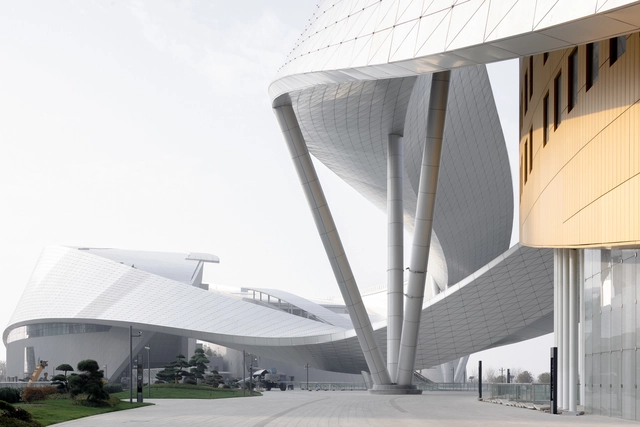
The Suzhou Bay Cultural Center is part of a series of emblematic projects initiated by the city's Wujiang Lakefront Masterplan. Located on the shores of Lake Tai, the deserted plain was discovered by Christian de Portzamparc in 2013, while rethinking the future city. It was then built so quickly, that the architect never ceased to be amazed after every visit. Alive, it is like a real Manhattan of towers organized through a grid of streets and avenues, bordering a central pedestrian axis that heads towards the lake. It was clear that the meeting of this pedestrian axis and the great lake would generate an exceptional place, and it was on this site, on each side, that the cultural center was to be implanted in the architecture competition.
https://www.archdaily.com/953441/suzhou-bay-cultural-center-is-a-coexistence-of-large-and-small-scales-interview-with-christian-de-portzamparc韩双羽 - HAN Shuangyu
It is difficult to start any retrospective text on 2020 without sounding too cliché. While facing an invisible enemy that changed everyone’s lives, this past year has taught us that humanity is more fragile than we ever imagined. At Archdaily, it’s our job to synthesize how the buildings and the world we live in will be impacted by COVID-19 not only in the short term but in the distant future as well. Has our perception of the built environment changed this year? And has our relationship with the tectonics of buildings changed with all of the obstacles we’ve faced along the way?
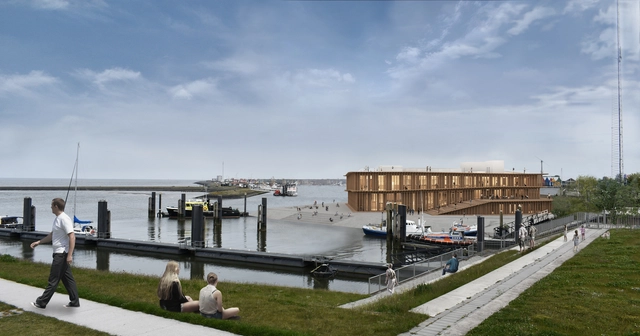
After the Wadden Sea Center in Denmark and the Trilateral Wadden Sea World Heritage Partnership Center in Germany, the Wadden Sea World Heritage Center marks Dorte Mandrup’s third project in this unique environment. Created as a spiraling movement upwards and around, rising from the harbor, the Wadden Sea World Heritage Center is a “working field station that wants to engage visitors and aims at making them active participants”.
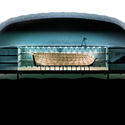
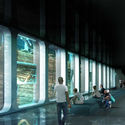
ZJA Architects has designed a project for an underwater museum around a ship previously beached in the English town of Hastings. The proposal would see the shipwreck preserved and moved to the city of Amsterdam, its namesake, within a fully enclosed dock with transparent windows. The proposal would allow researchers to investigate the wreck, and at the same time, the public could experience the ship and treasures within.
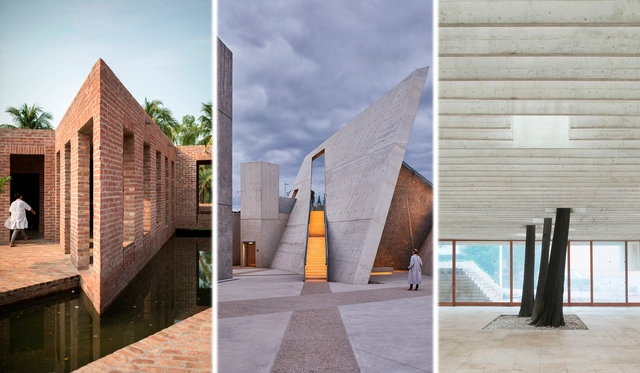
Human Rights Day is celebrated every year on the 10th of December. After visiting numerous sites that commemorate the scenes of regrettable crimes against humanity and violence, one common observation can be made: the place of memory is not only a building. In fact, it is more about the encounter, the appropriation, and the gesture.
Architecture is inherently defined by its cultural and environmental context. From the climate crisis and questions of exurbanism to architecture’s role in rural and remote communities, broader conditions shape how we design. Embracing these dynamics, architect Lola Sheppard of Lateral Office has created a body of work that directly responds to the demands of the 21st century. Through critical and deft interventions, she is exploring new typologies made possible by an architecture that brazenly confronts today.
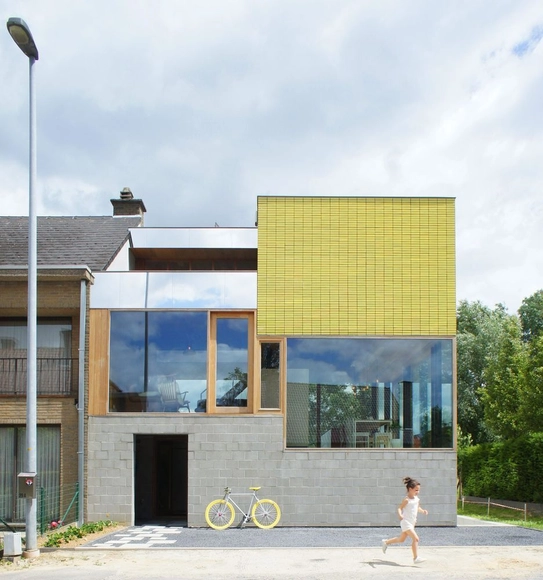
Stephanie & Kevin / Atelier Vens Vanbelle. Image Courtesy of Atelier Vens Vanbelle
On December 9, Pantone announced its color(s) of the year for 2021: PANTONE 17-5104 Ultimate Gray and PANTONE 13-0647 Illuminating. Selecting two colors for only the second time in 22 years, Pantone described the chosen yellow and gray as independent but complementary, representing a theme of unity and mutual support. Whereas PANTONE 13-0647 Illuminating is bright and vivacious, PANTONE 17-5104 Ultimate Gray is firm and dependable, the marriage of which represents strength, optimism, and fortitude following a markedly challenging year. In architecture, this palette combining playfulness and solemnity has been used in social spaces, domestic spaces, care spaces, and more to communicate similar themes of resilience and positivity.
Below are 14 examples of projects using Pantone’s 2021 colors of the year.
https://www.archdaily.com/953768/pantones-color-of-the-year-2021-yellow-and-grey-in-architectureLilly Cao
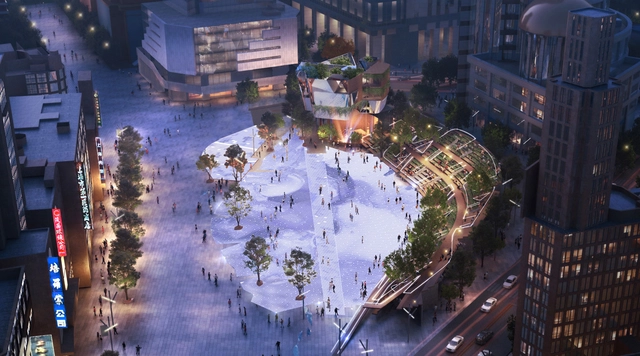
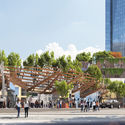
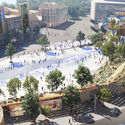
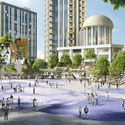
Miralles Tagliabue EMBT studio, led by Benedetta Tagliabue, has won an international competition to transform Century Square into a new green landmark in Shanghai, China. The first prize proposal, won against David Chipperfield Architects, offers to renovate the plaza located in one of the busiest commercial areas in the world, “re-naturalizing” the city center and introducing green spaces to improve the urban microclimate.
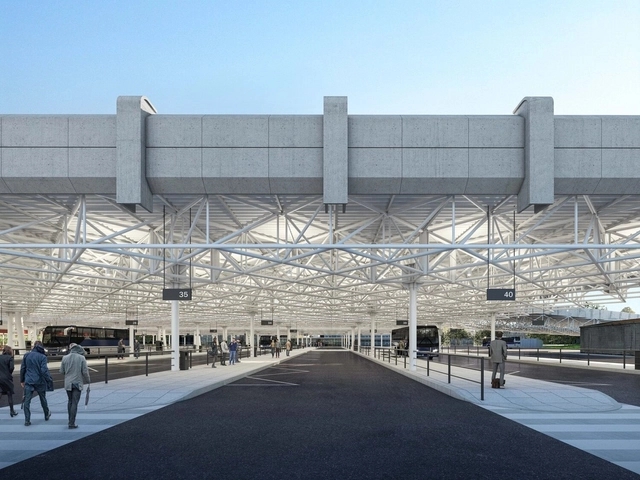
Architects and urban designers CHYBIK + KRISTOF have announced the ground-breaking of their redesign of Brno’s Zvonařka Central Bus Terminal in the Czech Republic. Self-initiated by the architects in 2011, the project involved preserving the existing Brutalist heritage structure while addressing the need to rethink the terminal for contemporary needs. The project reimagines an iconic landmark and its role within the city.
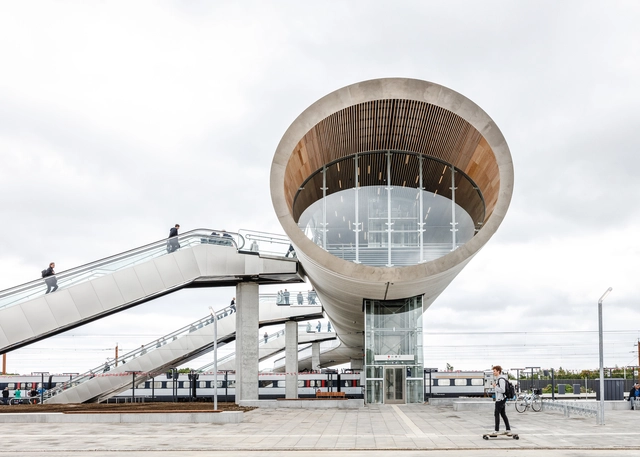
The annual Prix Versailles awards, created in 2015 to promote a better interaction between the cultural and the economic, announced the 2020 world winners celebrating 24 projects in the categories of Airports, Campuses, Passenger Stations, Sports, Shops & Stores, Shopping Malls, Hotels, and Restaurants.
Videos
Neoscape NYC / Chaos Vantage. Image Courtesy of Chaos Group
This year, real-time became really important. For architects and arch-viz artists, the ability to explore and design interactively is nothing short of game-changing, drastically shortening project life cycles and making it easier to present and discuss ideas with co-workers and clients. With remote collaboration becoming a normal part of day-to-day life, real-time views of projects have become invaluable.
Cities would be nothing without the sense of experimentation and the future-forward push to always break the status quo in demand of a better urban life. As many successful urban designs and strategies as there have been, the world has also seen some not-so-successful ones, that have been pushed to the sidelines becoming a forgotten memory over time. While we look ahead and speculate about what the future of cities could and should be, maybe it’s time to take the lessons learned from these failed projects and pay homage to their misfortunes, so that history’s mistakes aren’t repeated in the present day.
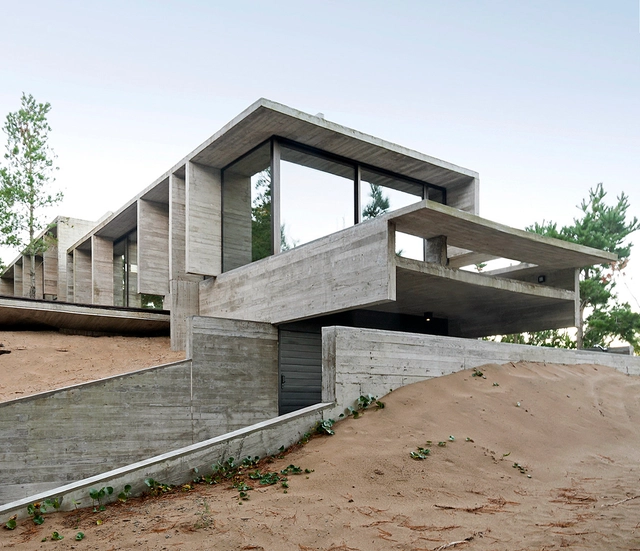
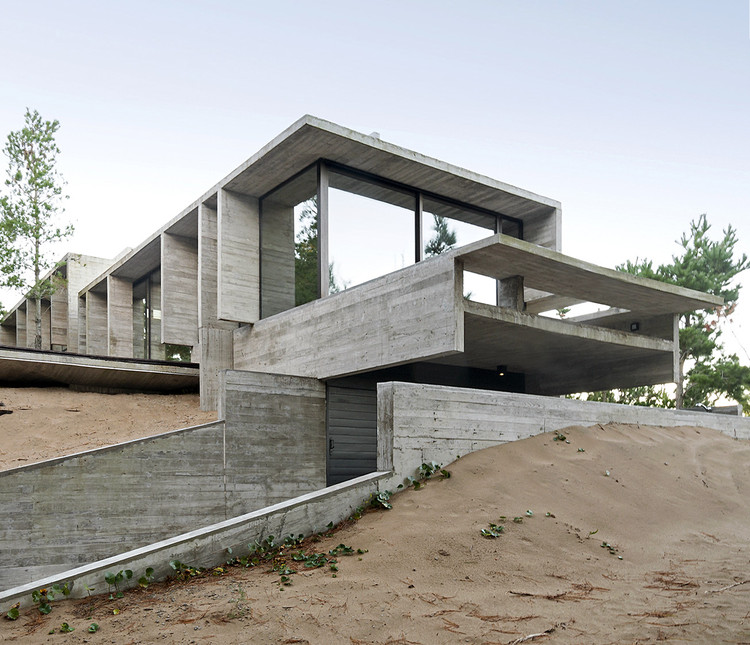
Thanks to its aesthetic qualities and malleability, concrete is the darling of the world's builders and architects. In Argentina in particular, concrete's durability and adaptability to a range of climatic conditions makes it one of the most sought after construction materials, demonstrated by, not only the country's countless museums, hotels, hospitals, but by its residential and smaller-scale buildings as well.
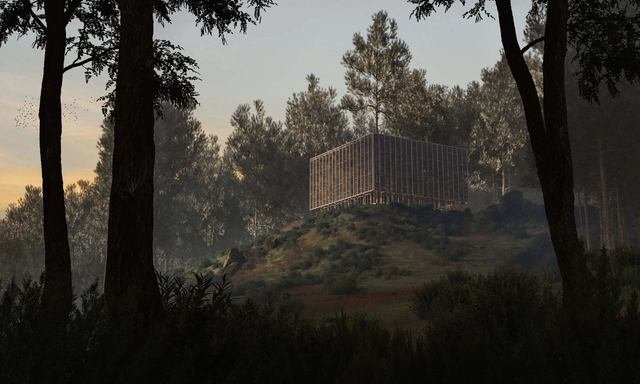
Tucked beneath the dense trees of Al-Ozer Forest in Mount Lebanon, Byblos-based architects and visual artists of JPAG Atelier created a secluded retreat away from humans and the chaos of the urban life. The Earth Chapel is a unique sanctuary that lets its visitors experience both the simplicity of the architecture and the richness of the surrounding landscapes, all at once.
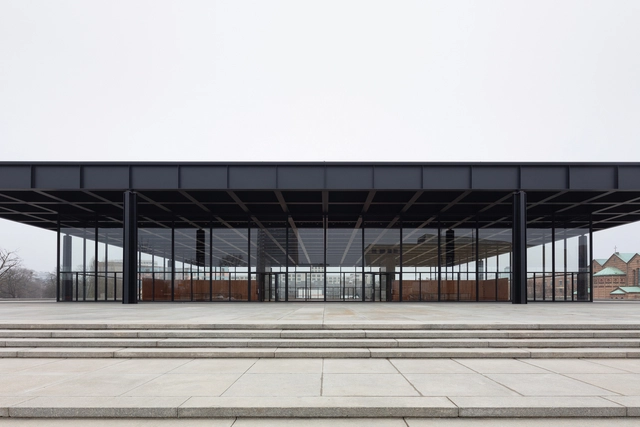
Renovation works of Mies van der Rohe’s Neue Nationalgalerie in Berlin are in their final phase. Overseen by David Chipperfield Architects, the restoration was much needed after almost 40 years. Set to reopen in the summer of 2021, the concrete, steel, and glass landmark, dedicated to culture and the fine arts, is in fact Mies van der Rohe’s only work in Germany after World War II.
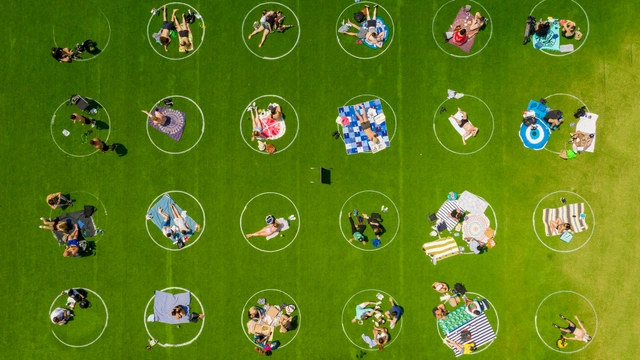
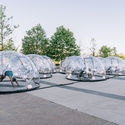
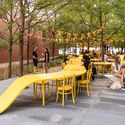
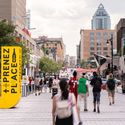
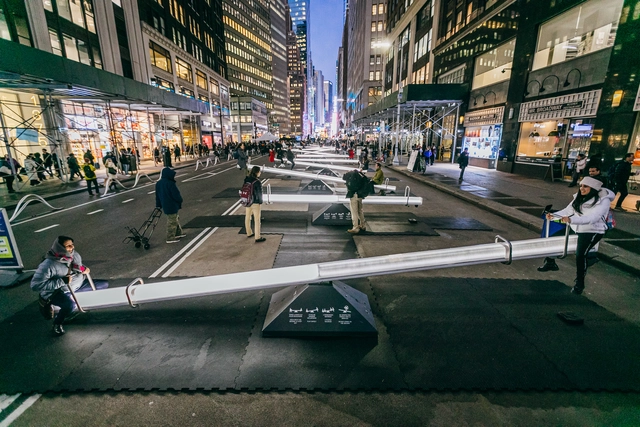
The pandemic provided a unique circumstance for city-scale experiments regarding mobility, while immediate responses showed the transformative power of tactical urbanism. In many cities, the measures meant to ensure social distancing are to be kept in place post-pandemic, paving the path towards recovery with less traffic and more outdoor activities. How did the pressure of rethinking streets, functions, and transportation systems transform public space in 2020?
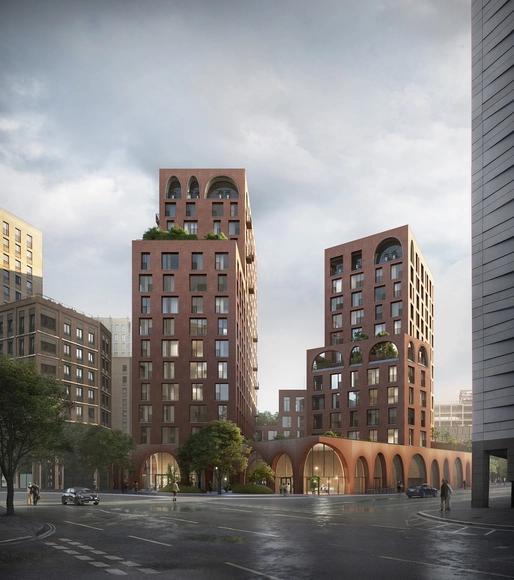
Alison Brooks Architects has created a landmark structure in the emerging area of Kings Cross in London, part of its Central Masterplan. The proposed mixed-use urban block containing 158 dwellings will reinforce the neighborhood’s “unique sense of place and celebrate its emerging and historic contexts”.
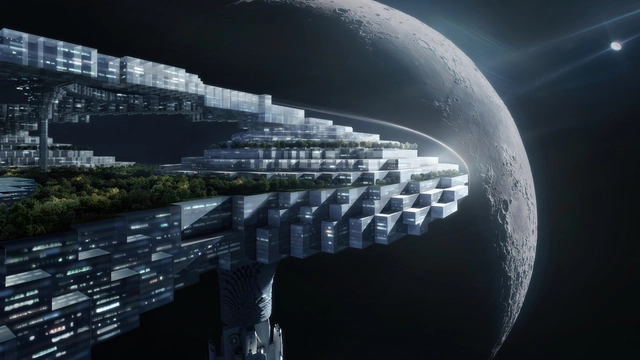
Lego China has teamed up with CAA Architects to create a vision for a modular city in space. Designed by Liu Haowi, the city is made with a spacecraft below and a larger urban center above surrounded by an artificial gravitational field controlled by AI. Called "Crystal Space City", the project is constructed by modules and combines a city, oasis and an energy power system all together.
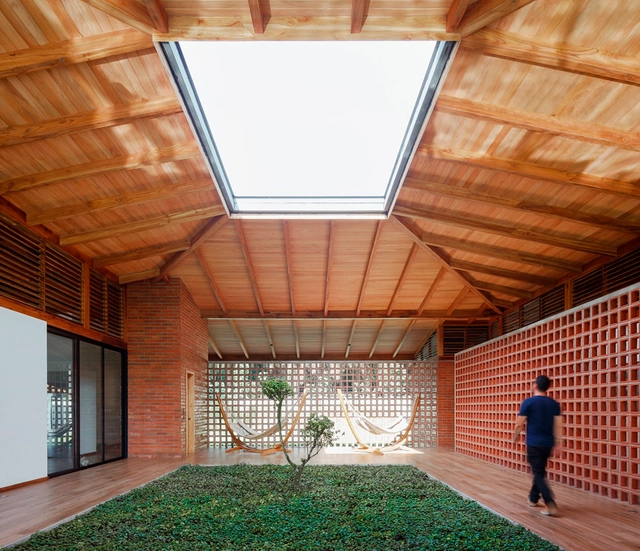
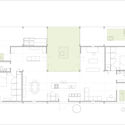
Inner courtyards and gardens can provide many benefits, such as natural light, better ventilation, and increased contact with nature without losing privacy.
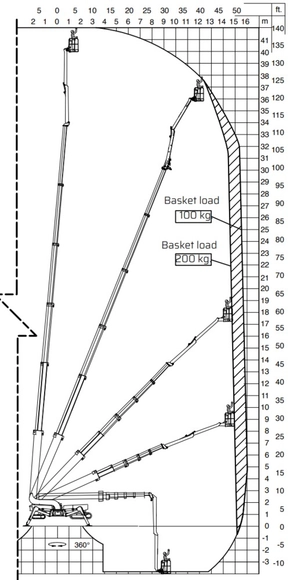
Diagram of Falcon Lift's Falcon FS 420C. Image Courtesy of Falcon Lift
For companies or leasers that own large buildings, building maintenance can seem daunting, costly, or even superfluous, particularly when building functions appear to be running smoothly. But proper and consistent building maintenance is imperative for a number of reasons. Buildings inherently function less effectively over time due to natural causes such as climate, daily occupant use, mechanical obsolescence, and more. When left unresolved, these issues can devalue user experiences, create dangerous and unhealthy environments, and even incur costs higher and more sudden than consistent building maintenance costs.
https://www.archdaily.com/928044/why-is-building-maintenance-importantLilly Cao
In a year marked by physical distance, social networks have gained an even greater dimension in the ways of relating to people and getting informed. Our channel on Instagram has surpassed its number of reach and brought to the public the best of what we publish on our page: projects, articles, interviews, and news from the world of architecture, inspiring new ideas and tools for a better future to our cities.











.jpg?1608057697&format=webp&width=640&height=580)