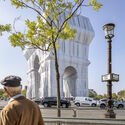
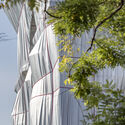
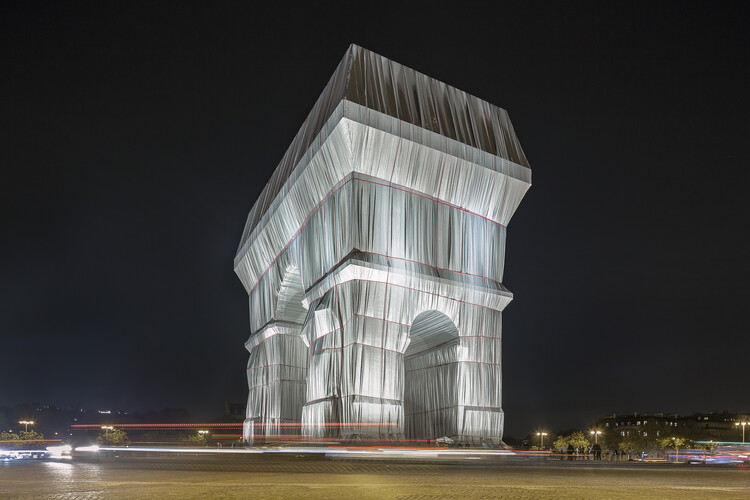
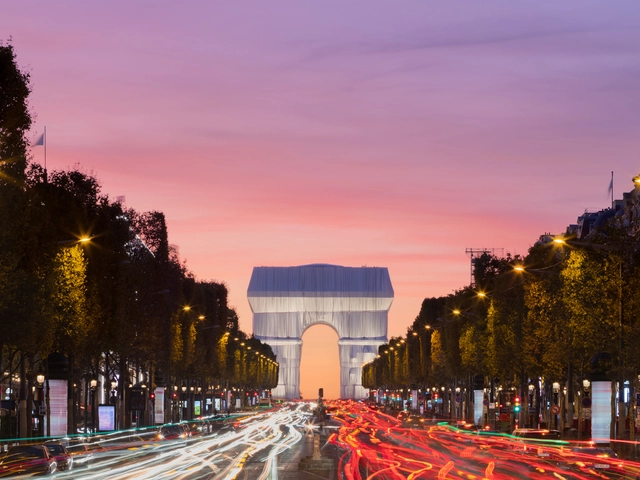
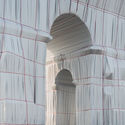
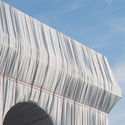
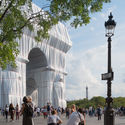
After almost 60 years of its initial ideation, Artists Christo and Jeanne-Claude’s temporary installation, the complete wrapping of L’Arc de Triomphe in Paris has opened to the public on September 18th, attracting thousands of tourists and locals. In this new photoseries, photographer Jared Chulski captures the wrapped monument, focusing on the details of the temporary intervention and how it compliments the city's urban fabric.
The Aga Khan Award for Architecture announced the Master Jury that will select the 2020-2022 cycle winners. The jury, among which are Anne Lacaton, Francis Kéré, Nader Tehrani, or Amale Andraos, will look for projects that respond to the cultural aspirations of their social context and show innovative use of local resources and building technologies. Founded in 1988 by Aga Khan IV, the award covering three-year cycles aims to highlight projects of relevance and positive impact for Islamic communities.
The construction industry is known to be one of the most polluting industries on the planet, but we often find it difficult to associate the role of the architect and urban planner with this industry, thus avoiding the responsibility of being involved in one of the most harmful production chains in the world. Therefore, it is imperative to emphasize the importance of questioning not only the materials used in the projects but also the manufacturing systems involved.
Edificio ZETA en Buenos Aires, diseñado por ODA. Image Cortesía de ODA
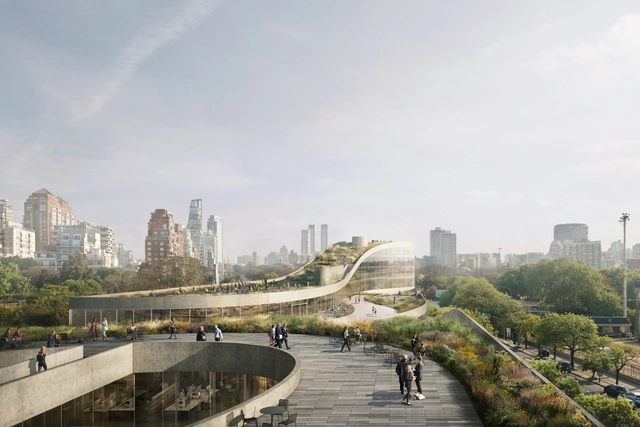
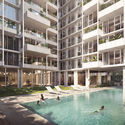
ODA, the New York-based architecture office, has recently unveiled its design for Paseo Gigena, a former parking lot that will be transformed into a mixed-use project and a public park in Buenos Aires. Around the same time, ODA has also announced the beginning of the construction phase of its first residential venture in the same city: The ZETA building.
Located in the Belgrano neighborhood, next to the modern structure of the University of Belgrano and facing the historic mansion that houses the Australian Embassy, the 126-unit project seeks to "reimagine the language of residential buildings in Buenos Aires", according to the architects.
Part of Shakúff’s new Bloom collection, the Bloom chandelier features bud-like glass pendants and a central adjustable reading light blossoming from an elegant brass rod. Image Courtesy of Shakúff
‘All of sudden, a robot is coming to my desk,’ says Shakúff founder and creative director Joseph Sidof. The video-equipped automaton can be virtually controlled by existing clients and potential new customers, allowing them to (carefully) navigate around the brand’s Brooklyn showroom and even ask for advice. This kind of robot is more usually on duty in hospitals, making it possible for family members to communicate with isolated Covid-19 patients. Sidof thought they might serve another useful purpose.
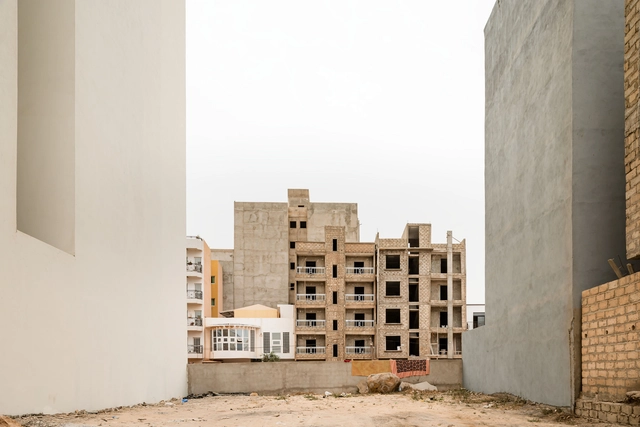
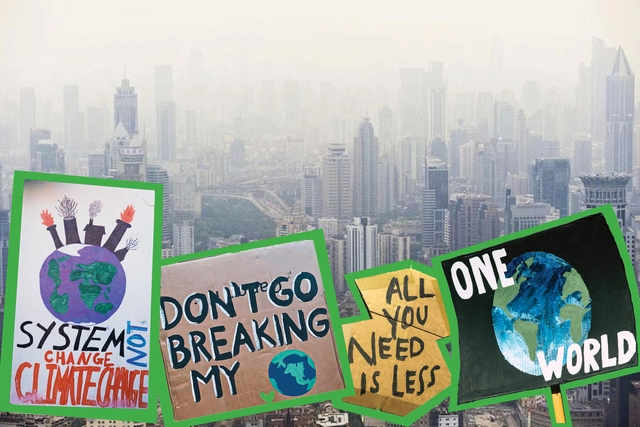
The impact that the climate crisis has had on the globe over the last decade is a critical influence on how architects and urban planners design future cities. It’s clear that both at an individual and corporate level, it’s important to take action and protect the earth before the negative impacts change our familiar environments forever- and time is running out fast. When it comes to creating ways to save our cities from “the next big one”, whether it be a hurricane, flood, snowstorm, or fire, the way that we design the preventative infrastructure neglects a significant number of people. Climate change doesn’t just impact the wealthiest places in the world, it actually has greater effects on the most impoverished.
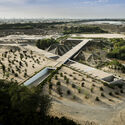
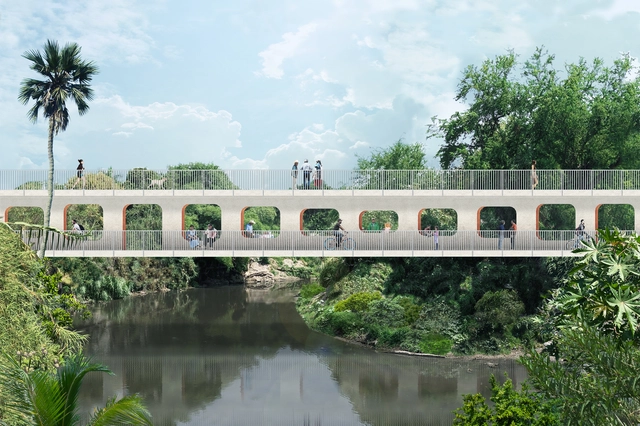
OMA New York has designed a new 145-meter pedestrian bridge over the Apatlaco River in Jojutla de Juárez, Mexico, as part of a larger reconstruction effort by Infonavit (National Workers’ Housing Fund Institute) following the 2017 earthquakes.
Videos
Slow House Model. Image Courtesy of Stewart Hicks
Welcome to the Slow House, Diller and Scofidio’s (now Diller, Scofidio and Renfro) first building commission for Long Island, in NY. The crescent-shaped slug doppelganger, was a pivotal design for the firm — and architecture at large — when it was first revealed in 1990. However, the building was never built, living only through its extensive catalog of models and drawings. In this video, the Slow House is digitally reconstructed, analyzed and explored to discover unique elements lurking in its design that can only be revealed through a first-person experience. From delayed million-dollar views, to CCTV feeds of the water, to dozens of operable plywood doors and shades, the house is truly a machine for viewing. And now, you can view it for yourself.
Zaha Hadid Architects has ranked first in a design competition for the redevelopment of the Vilniusrailway station complex and surrounding area in Lithuania, with its ‘Green Connect’ proposal. Generating an integrated transportation hub for the 21st century with new civic spaces enveloped by nature, ZHA’s project is aligned to the city’s ongoing sustainability agenda.
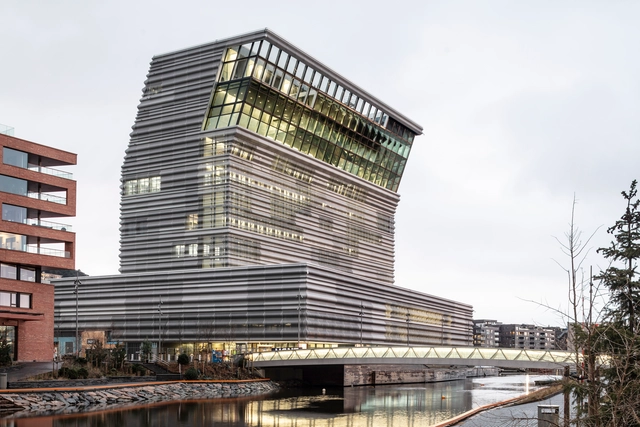
After being awarded with the top prize at the Munch Museum Competition in 2009, Spanish architecture firm Estudio Herreros has finally completed the construction of the museum and will open its doors on October 22, 2021. The long-awaited museum will showcase a rich collection of Norwegian heritage and culture and thousands of artworks by artist Edvard Munch, as well as present a contemporary museum concept that highlights architecture's urban role and historical responsibility of Oslo and the nation as a whole.
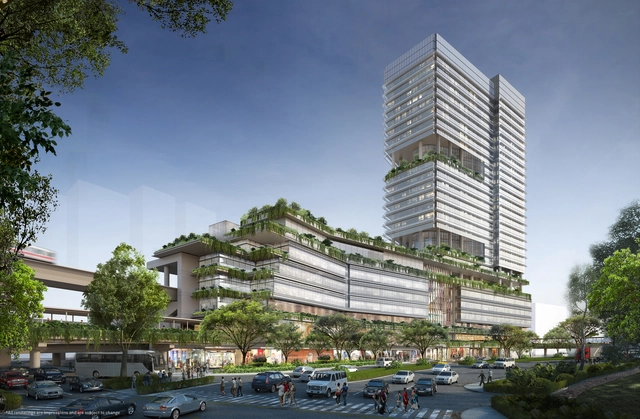
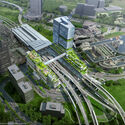
Aedas revealed the design for the Jurong East Integrated Transport Hub, a development merging work environment and recreation located within a vibrant commercial area outside of Singapore’s city centre. Featuring a transport interchange station and an office tower, together with community-oriented amenities, the project is designed as a catalyser for the emergence of a second financial district in the western part of the city.
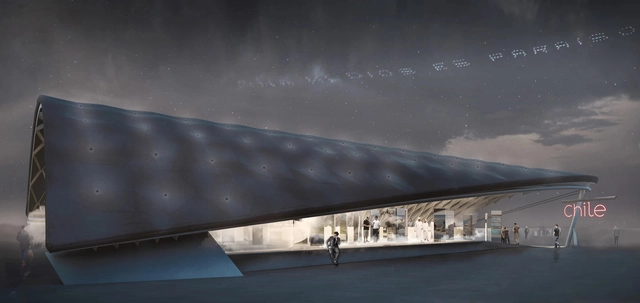
The proposal consisted of traveling a modular oak lamella shed to Dubai, originally built in Chile back in the mid-twentieth century. At the time of its official presentation in 2019, the architects defined the project as "a primitive mark on the ground, as nomadic tribes have done for centuries in this now globalized desert [Dubai]. This physical and cultural dimension is necessary to adapt the pavilion as a friendly and austere space."
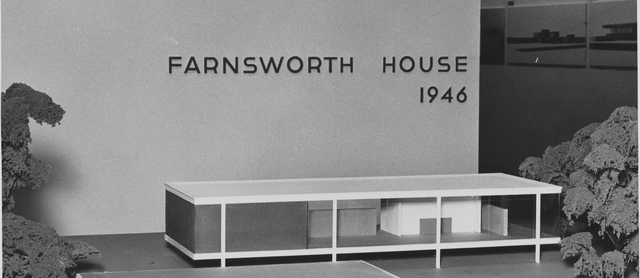
In this week's reprint, author Mark Alan Hewitt talks about models and their importance. "For those of us lucky enough to have grown up during the 1950s and ’60s, models were hot stuff—and not just the kind that statement may bring to mind", he states. Going back to the realistic models of the 70s, similar to today's virtual renderings, this essay retraces their history and the artists that produced them.
https://www.archdaily.com/969074/the-allure-and-importance-of-architectural-modelsMark Alan Hewitt
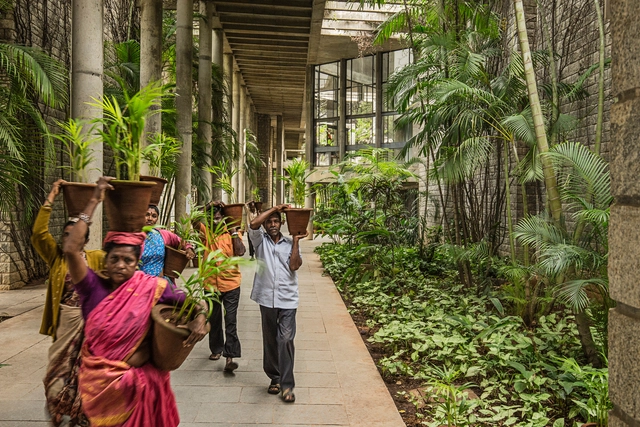
Indian Institute of Management, Bangalore, photo by Vinay Panjwani. Image Courtesy of Vitra Design Museum
The COVID-19 Pandemic is a disruptive moment for our world, and it’s poised to spur transformative shifts in design, from how we experience our homes and offices to the plans of our cities. The webcast series Design Disruption explores these shifts—and address issues like climate change, inequality, and the housing crisis— through chats with visionaries like architects, designers, planners and thinkers; putting forward creative solutions and reimagining the future of the built environment.
Paseo Gigena, diseñado por ODA. Image Cortesía de ODA
The old structure called Playa Gigena, in honor of the equestrian of the same name, located between the hippodrome and the Rosedal de Palermo in Buenos Aires, will now be converted by ODA into a Class A office building and a public park including cafes, restaurants, shops, and a covered parking lot. The partial demolition of the old parking lot has begun on June 28th.
Designed by the American architecture office ODA, the next Paseo Gigena will be the firm's first mixed-use project in the city of Buenos Aires city. The team involved in the process also includes the participation of Aisenson studio, Inscape Landscape, Coinsa, and the developer BSD Investments, to which the government has granted the concession of the property known as Ámbito Gigena, for a period of 15 years.
Contemporary Egyptian architecture draws from a rich history. As a cradle of civilization, the transcontinental country has influenced diverse building styles and design cultures. Home to some of the earliest urban developments and centralized governments, Egypt is defined by its geography and its multicultural background. Today, its modern architecture must contend with a legacy of building that spans millennia.
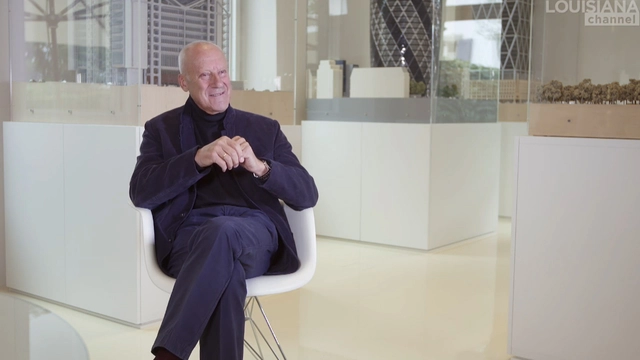
The Royal Institute of British Architects (RIBA) has announced that Pritzker Laureate Lord Norman Foster will chair the 2021 Stirling Prize jury. The jury will also include Simon Allford, RIBA President, architect Annalie Riches, 2019 RIBA Stirling Prize winner, and artist Dame Phyllida Barlow, advised by architect and sustainability expert Mina Hasman.
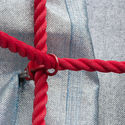
Artists Christo and Jeanne-Claude’s temporary installation, the L’Arc de Triomphe, Wrapped, opened to the public on September 18th. Twenty-five thousand square meters of recyclable silvery-blue fabric held together by 3,000 meters of red rope currently cloak the Parisian landmark transforming the urban setting, and photographer Jad Sylla captured the completed installation.
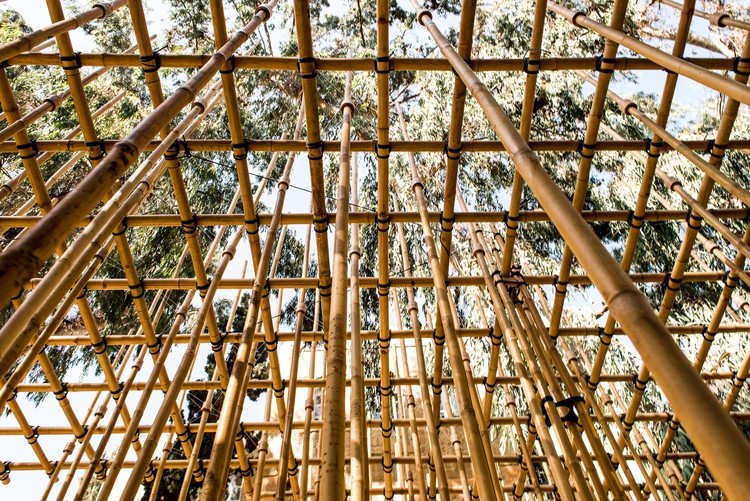
In Mendoza, Argentina, the digital fabrication research lab Node 39 FabLab created a frame loom structure made of digitally cut wood to help indigenous people in the central region of the country weave and create their traditional patterns. In the state of Ceará, northeast Brazil, a study entitled "Artífices Digitais" (Digital Artisans) by the Federal University of the State of Ceará used digital fabrication tools, namely 3D printing, to produce digital models, like digital prosthetics, to restore the damaged parts of an altarpiece of the high altar of the Mother Church in the city of Russas.
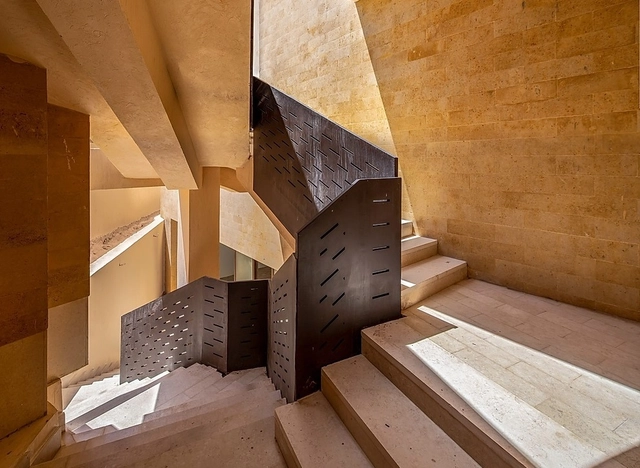
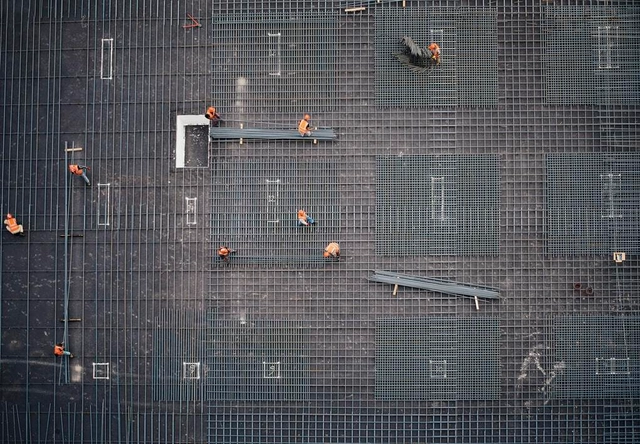
Every year on August 19th, we celebrate World Photography Day. This year, to encourage our readers who are passionate about this art, we published an open call inviting people – both amateur and professional photographers – to submit their images of architecture and the city.
We received over 400 photographs of buildings, interiors, and public spaces in various locations and contexts, captured by more than 130 participants from all over the world, including India, Brazil, Pakistan, Mozambique, Italy, and the United States. Our editorial team pre-selected 50 photographs and then voted on the 25 most compelling images. Here is the selection, listed in alphabetical order by the names of the authors.
https://www.archdaily.com/968717/the-best-architectural-photographs-submitted-by-our-readers-in-2021Equipe ArchDaily Brasil
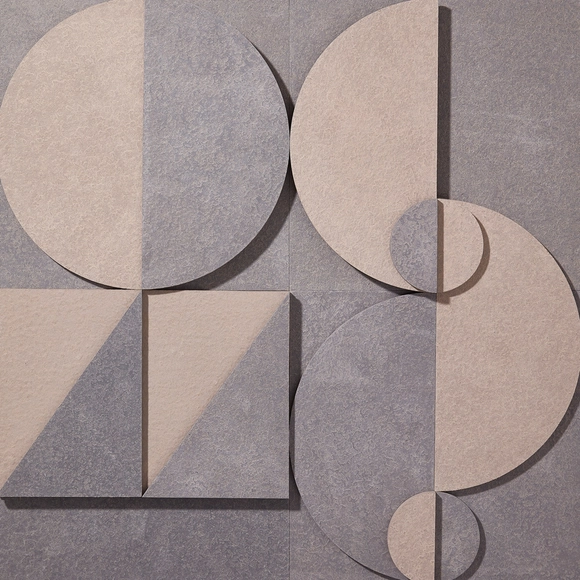
With the increasing availability of space travel on the rise, living with access to the Moon may no longer be a science fiction fantasy. For decades, Equitone has gathered inspiration for the future by the appearance and raw materials of Earth. Now, reflecting the fascination with what lies beyond our own atmosphere, its new Lunara façade panels appear both otherworldly and yet natural at the same time. Its unique surface, covered with tiny irregular elevations and depressions, is reminiscent of the cratered landscape of the Moon and invites architects and planners to design visionary building envelopes.
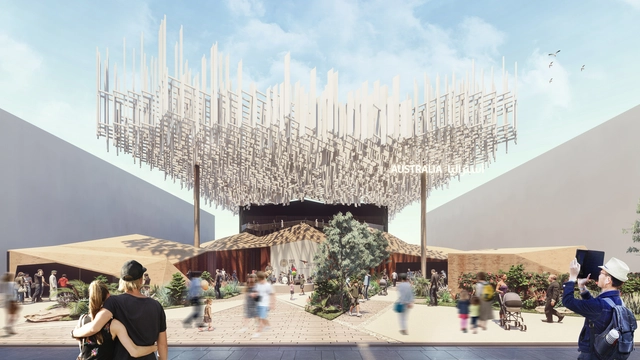
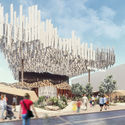
Brisbane-based architecture firm bureau^proberts has unveiled its design for the Australian Pavilion at Expo 2020 in Dubai, UAE. The pavilion serves as a cultural contribution with large social space that translates Australia’s distinctive landscape and skies through a cloud-like form suspended over folding timber. The structure "captures the local sensibility" by highlighting the welcoming and warm nature of the Australians through the central and sheltered gathering area.
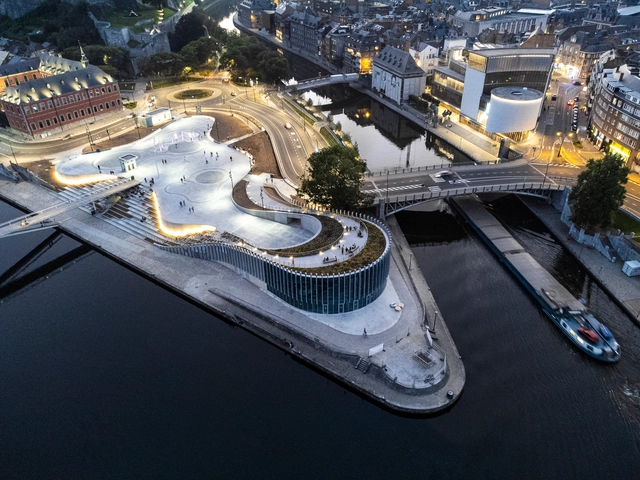
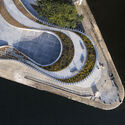
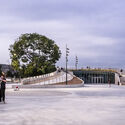
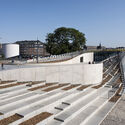
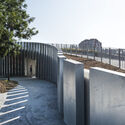
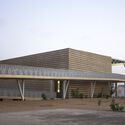
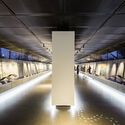
3XN has recently completed the Grognon exhibition space dedicated to the history of digital technologies. Located in Namur, Belgium, at the confluence of two rivers and neighbouring the Roman citadel, as well as the Wallonian Parliament, the project inserts itself within the protected historical setting as a new topography, a landscape that flows along the site weaving together the context and the new programme.














.jpg?1632473481&format=webp&width=640&height=580)
.jpg?1632473680 "© Negativ")
.jpg?1632473515 "© Negativ")
.jpg?1632473524 "© Frontop")
.jpg?1632473481)