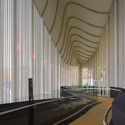
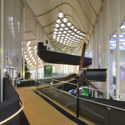
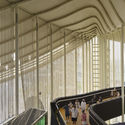
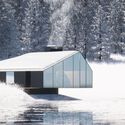
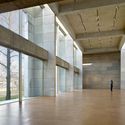
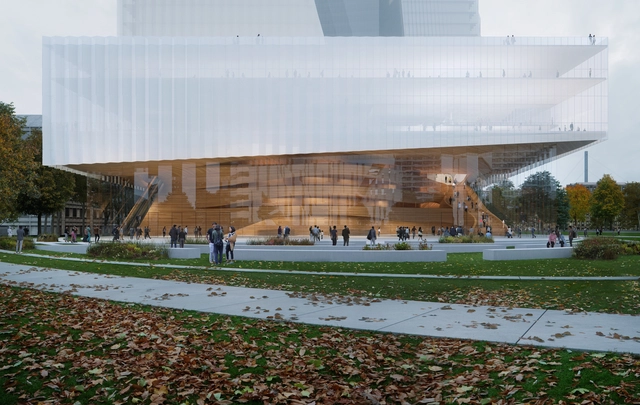
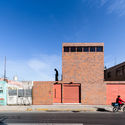
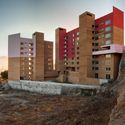
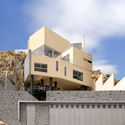
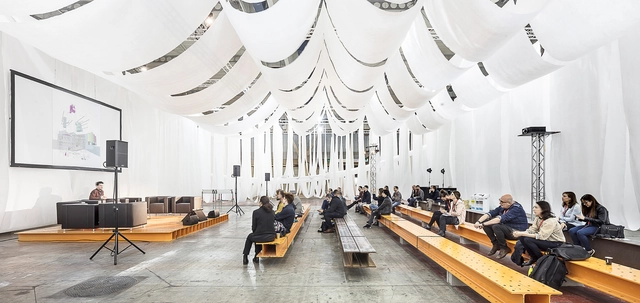
Josep Ferrando is an architect based in Barcelona. He is the Dean of the La Salle Higher Technical School of Architecture (ETSALS), as well as Director of the Obert d'Arquitectura Center of Barcelona and of the Department of Culture of the College of Architects of Catalonia (COAC). Combining his academic career and his frequent lectures, his office develops projects that explore different scales and materials, experimenting with constructive systems and innovative solutions. We talked with him about the importance of materials in architecture, and about the synergies he finds between practice and teaching.
Ollie, the inviting new armchair from Porto-based Hamilton Conte, is available in a range of fabrics and leathers as well as bespoke finishes. Image Courtesy of Hamilton Conte
In a post-Covid period of reinvention, Porto-based furniture brand Hamilton Conte is embracing modularity, new shapes and above all, comfort.
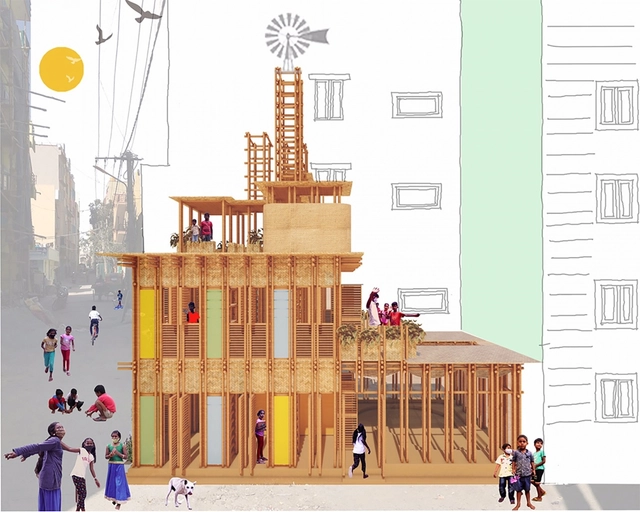
Architecture-in-Development (A--D) is proud to announce the six finalists of the 2021 Global Challenge. A--D will partner with these six teams in a 6-month accelerator programme aiming to match potential partners, collaborators and resources to each project’s critical needs - giving the teams the opportunity to build the necessary capacity to bring their projects to life.
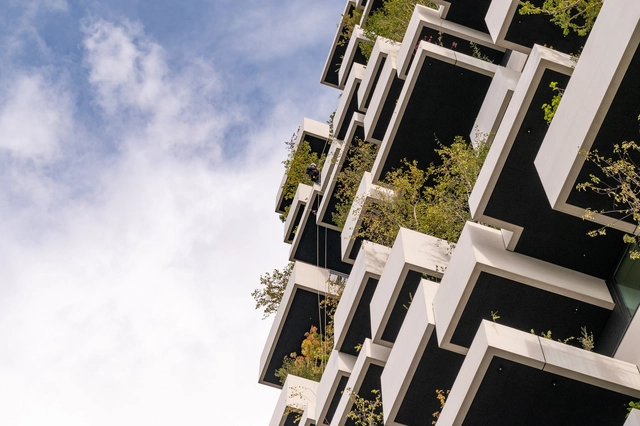
“Designing a house for trees”, as he puts it, Stefano Boeri is working across the planet, exporting his approach with trees from Mexico to Shenzhen. Building a whole ecosystem, rather than just a green facade, the architect understands the need to redefine our relationship with nature, especially in cities.
ArchDaily’s Christele Harrouk had the chance to interview the architect in Eindhoven, during the inauguration of the Trudo Tower, Stefano Boeri’s first social housing project, in collaboration with Francesca Cesa Bianchi, his partner at Stefano Boeri Architetti, Laura Gatti, botanist and plantation consultant, and Paolo Russo, Project leader. Discussing mainly his approach with nature, the environmental quality, and his exported perspective around the world, the conversation also tackled the 4 ongoing vertical forests in West Europe: A first that has just started in Utrecht, a second in Brussels, a ready to go building in Eindhoven and a last one in Antwerp.
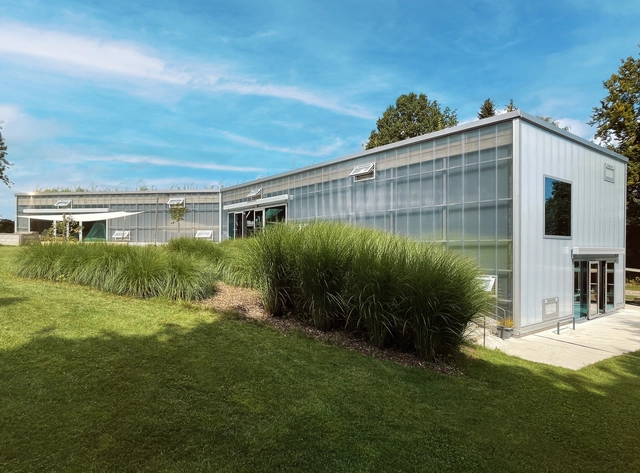
Climate and resource protection are some of the most pressing issues in regards to our future world. This is not a singular issue, but a complex one that affects every sector of humanity including mobility, architecture, sustainable living, and learning. There is a common misconception that building materials - such as polycarbonate translucent panels - cannot be sustainable. Plastic as a material has such an enormous impact on the world, and has drawn negative attention which makes it difficult to break away from the generalization that plastic is fundamentally "bad." Companies such as Rodeca, for example, in the plastics production space have engineered translucent building materials that are capable of enduring for many years as an integral construction material, and do not have to be quickly disposed of. As a producer of polycarbonate panels, Rodeca is always looking ahead to the future of sustainability.
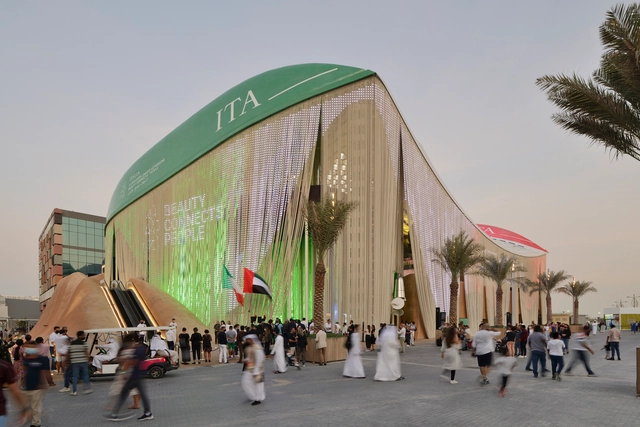
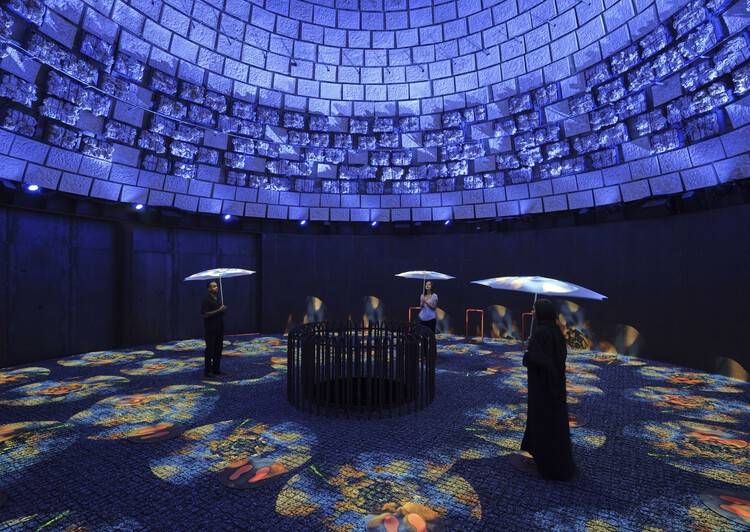
CRA-Carlo Ratti Associati and Italo Rota Building Office, along with Matteo Gatto and F&M Ingegneria designed the Italian Pavilion at the Expo 2020 Dubai with a focus on reconfigurable architecture and circularity. The architects used orange peel, coffee ground, algae, and sand as construction materials, along with recycled plastic for the façade's ropes and boat hulls for the roof. The architectural design of the pavilion and the materials used create a natural climate mitigation system that substitutes for air conditioning.
Italian architecture practice Spacelab designed an energy self-sufficient shelter for temporary use, a parametric project that can be built without foundations on any site, leaving no trace and no damage to the site at the end of its life cycle. Named Zero in reference to the lack of waste during construction or removal and its zero-emissions operation, the structure can be demounted and reassembled multiple times, tapping into issues of circular economy, impermanence and reuse.
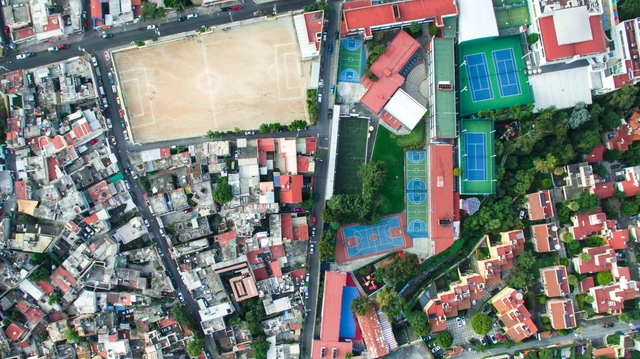
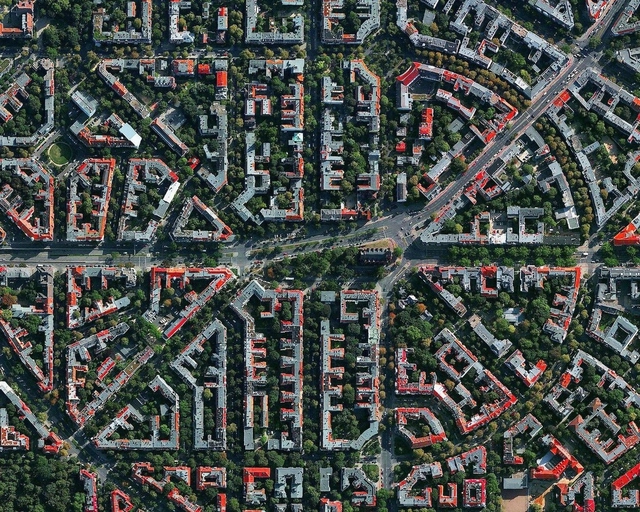
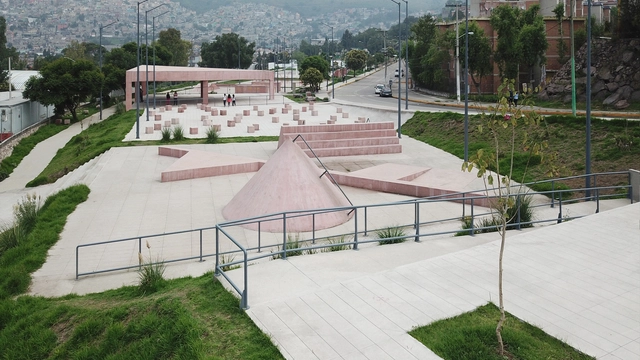
The concept of equity is different from equality; equity means everyone needs support, but not necessarily in the same way. Therefore, the concept of urban equity allows us to preserve the uniqueness of each region of a municipality, protecting diversity and richness without overlooking infrastructure needs, which directly affect the quality of public space and the basic services required for a private residence - it allows us to design and invest in the city fairly, regardless of the region.
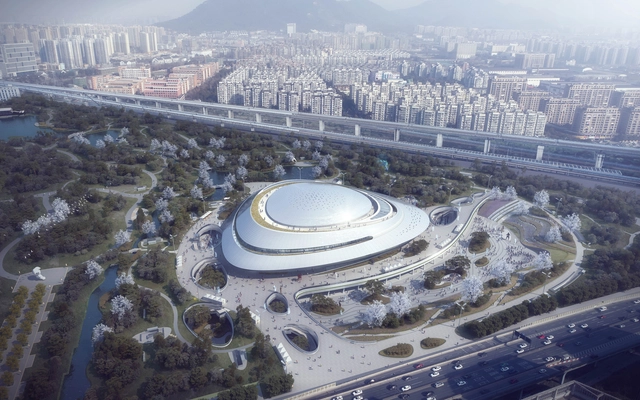
Hangzhou E-sports Ecological Park and E-sports Stadium. Image Courtesy of CSADI
This week’s curated selection of Best Unbuilt Architecture highlights competition-winning projects submitted by the ArchDaily Community. From art museums to memorials, this article explores cultural functions and commercial spaces, and presents projects submitted to us from all over the world.
Featuring commercial spaces that honor the historic architectures of Ukraine and Romania, and a public plaza inspired by the topography between the coastal line and the urban square of Usküdar, this roundup explores how architects have designed monumental structures that cater to the needs of the public while respecting the surrounding topography. This round up also includes a collection of competition-winning proposals in Spain, China, Thailand, India, Israel, Iran, Kosovo, and Hungary, each responding to different contexts, spatial needs, and geographies.
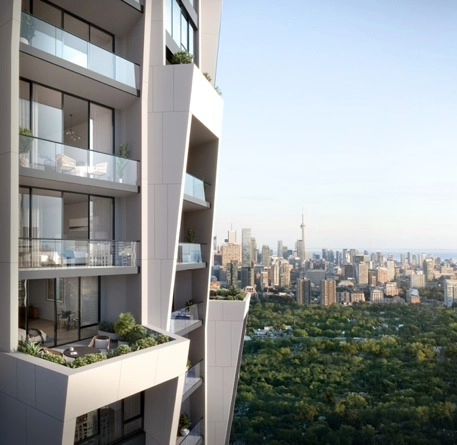
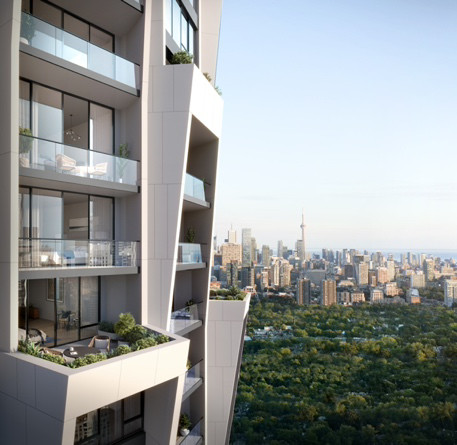
Studio Gang has designed a honeycomb-shaped residential building, titled One Delisle that offers residents an all-year-round outdoor patio overlooking Toronto, Canada. The project is designed as a windbreaker inspired by a German beach chair known as the Strandkorb. The tower will include up to 47 floors, with each distinct penthouse spanning one-third or one-half of the 16-sided building, and will offer residents hotel-style amenities.
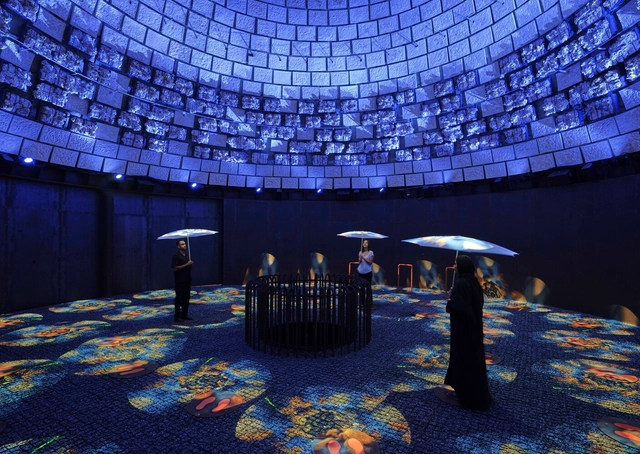
The Netherlands Pavilion at Expo 2020 Dubai proposes a circular climate system that harvests water, energy, manufactures rain and produces food, creating a temporary biotope that embodies the fusion between art, architecture and technology. Designed by V8 Architects, with a visitor experience curated by Kossmanndejong, the pavilion creates a multi-sensory narrative around natural phenomena. Industrial materials like metal sheets, steel tubes, ducts and pipes blend unexpectedly with vegetation and textile fabrics to create a spatial journey culminating in a centrepiece that provides a tranquil stop amidst the bustle of the Expo.
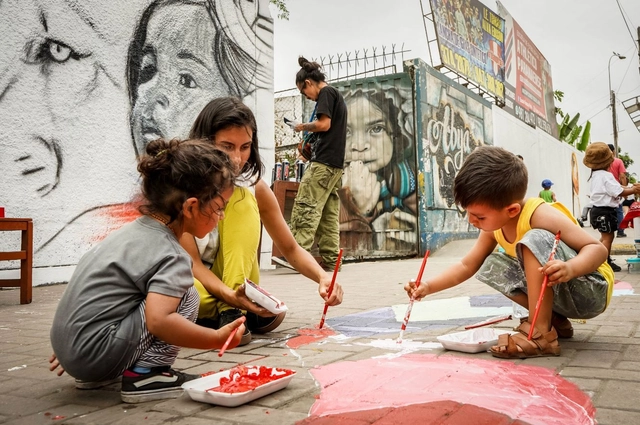
Lucía Nogales is the general coordinator of Ocupa tu Calle (Occupy your Street) —an UN-Habitat, Avina Foundation-supported initiative promoted by Lima Como Vamos— which focuses on 'citizen urbanism' for inclusive and resilient cities in Latin America.
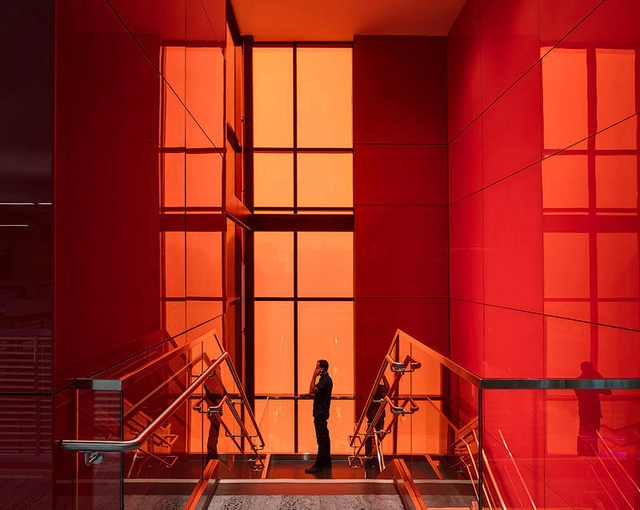
Polyvinyl Butyral (PVB) is a resin known for its strength, flexibility, and optical clarity. When inserted and bonded between two panes of glass, the combination —known as laminated glass— provides a tough, acoustic, glare-, UV- and solar-protective barrier with no loss of transparency. So much so, that its main use is in car windscreens.
By inserting and layering various sheets of colored PVB, glass can be transformed with a kaleidoscope of color and a range of opacity. The whole effect gives interiors specifiers a palette of light and color tools when adding personalities to interior environments. Here are six examples of projects that use PVB-laminated glass to great effect:
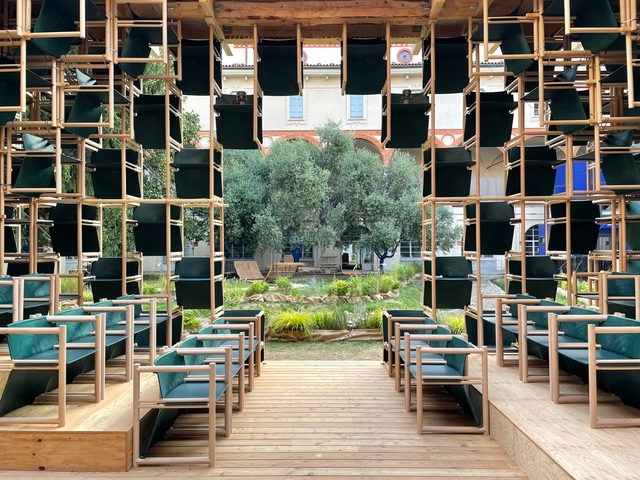
Lendager Group was founded with the explicit goal of becoming the leading sustainable architectural office in Denmark. Exploring the concept of Design for Disassembly (DfD for short), their recent project in Milan is grounded in the growing concern around resource consumption and low recycling rates within the construction industry. Expanding on themes of the circular economy, their work was designed utilizing chairs made of ocean plastic and the pavilion was designed for disassembly.
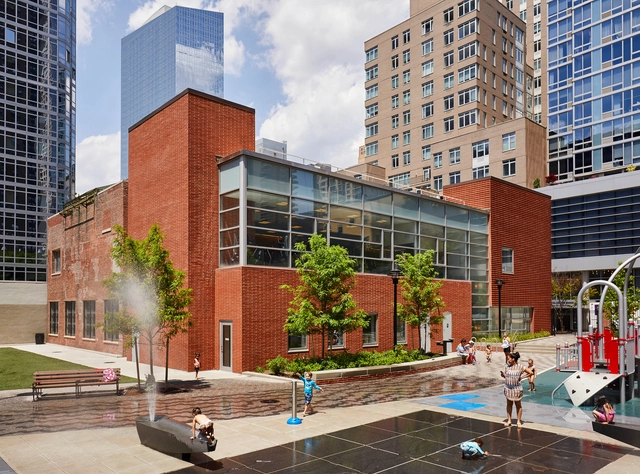
Belmont (Monty) Freeman (b. 1951) founded his New York-based, currently eight-person practice, Belmont Freeman Architects in 1986. Its active projects are half institutional and half residential, with a special focus on adaptive reuse, predominantly in New York and nearby states. Among the firm’s most exemplary projects are the LGBT Carriage House on the University of Pennsylvania campus, a series of restorations at the Four Seasons restaurant in the Seagram Building, renovations at the Yale Club in Manhattan, and the renovation of the Ezra and Cecile Zilkha Gallery at Wesleyan University in Connecticut, designed by Kevin Roche. Current projects include an expansive but minimalist residential compound on Martha’s Vineyard, branch library renovations in New York City, and redevelopment of a former meatpacking building into a new Innovation Hub for Columbia University’s Business School.
With Agrob Buchtal's striking new Canyon facade tile, facades can be structured either vertically or horizontally. Through light and shadow, its parallel lines are emphasised in ever new ways. Image Courtesy of Agrob Buchtal
The new Kaijo and Canyon surfaces by designer Markus Bischof for Agrob Buchtal may differ significantly in form, but both create striking, geometric facades.
Snøhetta revealed its design for Duett Düsseldorf, a new opera house set to become the German city’s new cultural destination. Stemming from the horizontal volume containing the new music venue are two sloping towers containing a hotel, restaurants, office spaces and residential units, creating a multi-layered development serving the arts and culture scene of Düsseldorf. Neighbouring the historic Hofgarten park and the Rhein river, the project’s ground-level blurs the boundaries between indoor and outdoor, with a glass façade revealing a cultural wood wall within the foyer, welcoming users to the opera house.
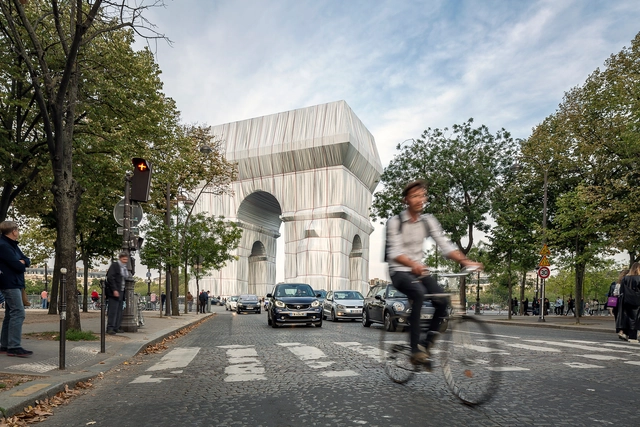
Andreas Ruby, Director of the Swiss Architecture Museum shares his thoughts on the wrapped Arc de Triomphe installation by Christo and Jeanne-Claude, in a 3 part essay, converting a monument glorifying war into a monument of decolonization. The temporary installation opened to the public on September 18, 2021, and will be dismantled starting October 3, 2021.
This year both organizations have defined themes related to improving the quality of life and reducing the effects of the climate crisis by taking action in the built environment. While the International Union of Architects' 2021 World Architecture Day theme is "Clean Environment for a Healthy World", UN-Habitat's World Habitat Day has announced "Accelerating Urban Action for a Carbon-Free World" as their topic.
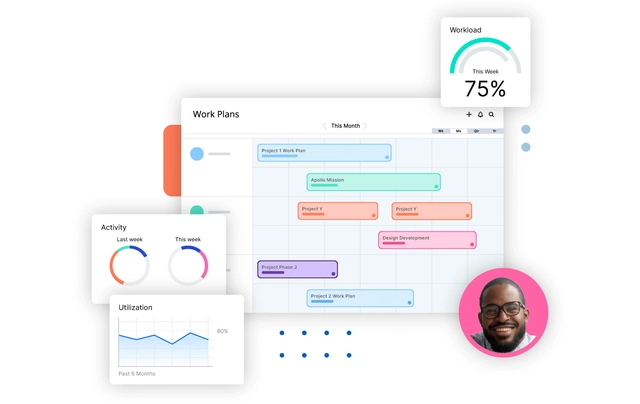
Working smarter, not harder is the goal of every business; but in architecture, where margins can be thin, it’s an imperative. So how do firms work smarter without spending tons of time wising up? By leveraging artificial intelligence—or AI.
Put simply, AI analyzes huge datasets to solve the historically unsolvable. AI unburdens people from time-consuming activities, like planning projects and work. Our brains aren’t wired to manage dozens of conflicting schedule dates, projects, and staff. But Mosaic—AI-powered resource management software—is here to help architects effectively plan.
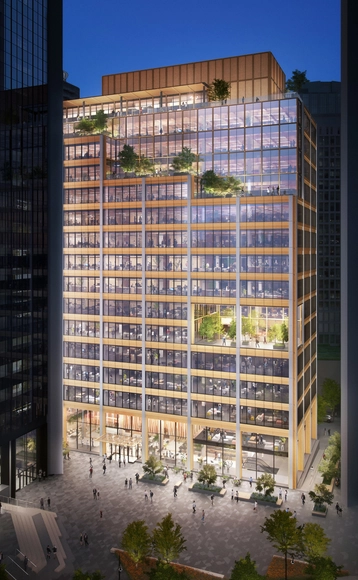
Kohn Pedersen Fox Associates has released images of its latest project, the Burrard Exchange, a hybrid mass timber office building at the Bentall Centre in Vancouver, Canada. The structure will be the first timber project designed by the architecture firm and is set to be one of the tallest of its type in North America.
The Finnish Pavilion for Expo 2020 Dubai showcases the country's deep connection with nature and sustainability, contributing to its high quality of life. Titled "Snow Cape", the pavilion designed by JKMM Architects subtly evokes Finnish natural settings through materiality and atmosphere while embodying the principles of circular economy championed by the Nordic country. The structure with its tent-like entrance creates a point of commonality, reminding of Finland's nomadic heritage, as well as the Arabic text.
There are several reasons why the Estado de Mexico (a state, not the country) is important not only at the national level but also because of its intrinsic relationship with Mexico City since 59 of its municipalities are considered part of the Metropolitan Area of the Valley of Mexico. In this area, there are a large number of industrial plants. In addition, it houses some of the most visited archaeological sites such as Teotihuacán, Tetzuco, Azcapotzalco, Chalco, and Amaquemecan.
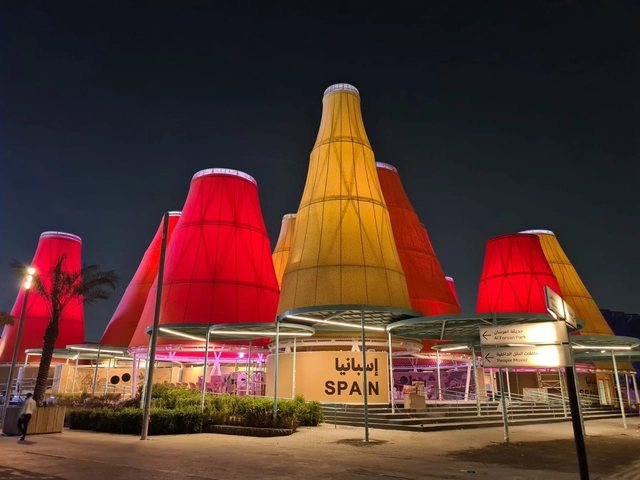
Under the motto of 'Intelligence for life', the Spanish Pavilion at the 2020 Expo in Dubai seeks to synthesize "our ingenuity, our creativity and our innovative capacity as essential tools to preserve life and biological diversity as well as to build a sustainable future". The architectural project entrusted to the studio Amann-Cánovas-Maruri is located in the "Sustainability" thematic area, close to what will undoubtedly be one of the largest meeting points: Al Wasl Square and the UAE Pavilion designed by Santiago Calatrava.



.jpg?1633431403 "Palazzo Verde . Image © Stefano Boeri Architetti")
.jpg?1633431510 "Palazzo Verde . Image © Stefano Boeri Architetti")