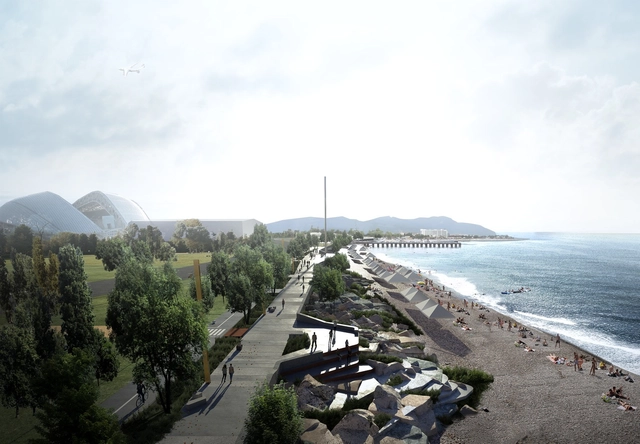
Landscape architects and urban planning team LandLAB was selected as the winner of the international competition for the seafront promenade development in Sirius federal territory. The New Zealand-based team was chosen among 68 practices and 48 countries for offering the most "efficient use of the limited space available and respecting the distinctive features of the area". The winning proposal blends the Olympic heritage with the landscape, and transforms the area into a dynamic interface that provides a stimulating environment for residents and visitors.
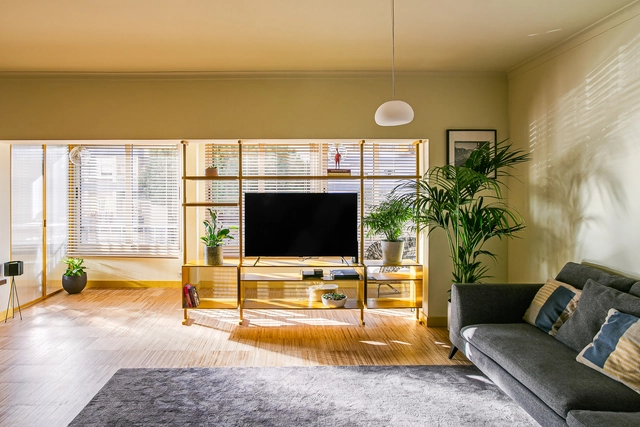
The TV is one of the main elements that make up the living room, especially in most Brazilian homes, where the living room is the place both for receiving visitors and for enjoying rest and leisure. However, it is not always easy to position this equipment, which varies so much in size and especially to combine it with the rest of the space.
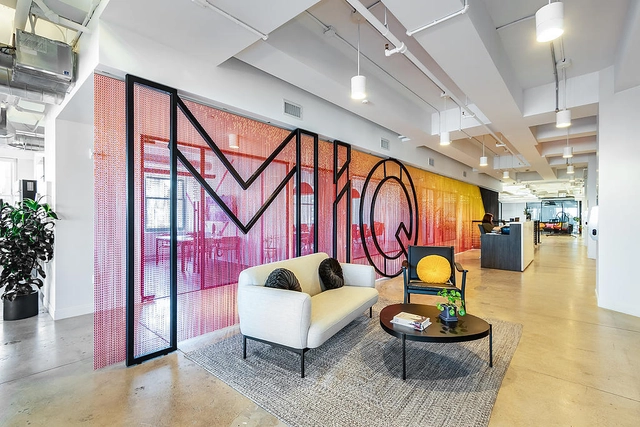
Space partitioning can often be dismissed as a bland, acoustic-only solution. But projects show how space can be artfully divided while adding color, character, and personality.
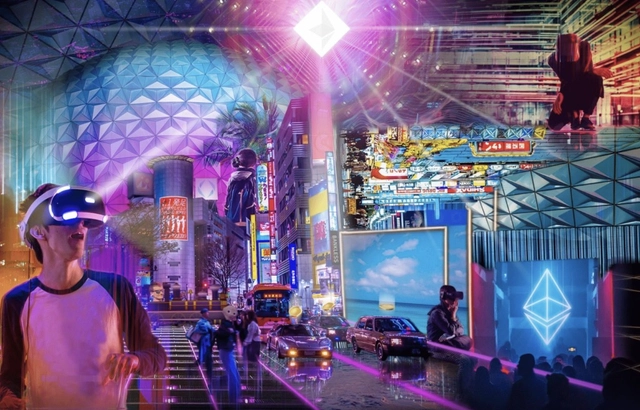
All aspects of society today are becoming increasingly more digital. Our interconnectedness and speed at which we are able to search and transfer information have made us more accustomed to exploring new ways that technology can impact our lives. Over the last few years, the rise of bitcoin, blockchain, and now the metaverse, has caused architects and designers to reconsider the notion of physical and virtual space. But beyond that, there’s an “in-between” of spaces that will be designed to support the technological escapism that the metaverse and web3 offer. While these virtual worlds are on the frontier of the digitization of everything, architects will play a huge part in designing the real-world physical spaces that can support them.
It has been a vibrant few days of voting for the Building of the Year Awards. With more than 100,000 votes, gathered up till now, this prize has shown to be, one of the most relevant and democratic in the architecture community.
Until February 9th at 00:01 (EST), you have the chance to reward the architecture you love. It is your collective intelligence that will filter over 4,500 projects down to just 75 finalists.
The 2022 Building of the Year Awards is brought to you thanks to Dornbracht, renowned for leading designs for architecture, which can be found internationally in bathrooms and kitchens.
Many believe that lighting is of little importance beyond its aesthetic function, considering primarily the appearance of light fixtures and ensuring only that they produce at least an adequate amount of light. However, there is a strong consensus among architects that good lighting design can vastly improve the comfort of interior spaces, adding an enormous aesthetic, functional, and environmental value. In addition, the choice of lighting system may contribute to improved efficiency and sustainability within the building as a whole.
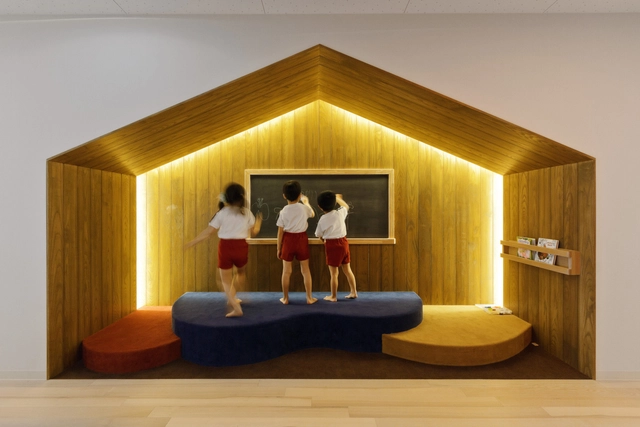
As for the needs of children, it is essential to pay attention to the quantity, quality, and type of lamp for every different environment, whether it be a space to sleep, play, or learn. Below, we delineate more specific considerations.
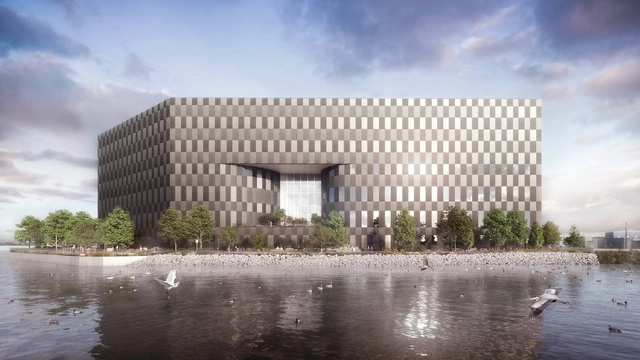
BIG's Wildflower Production Studio has received its building permit from the Department of Buildings (DOB), indicating that the project’s construction will now commence. In late 2019, American actor, producer, and director Robert De Niro’s Wildflower Development Group and BIG revealed the first images of their 650,000 square foot (approx. 60,400 sqm) production studio design proposal, located in the Astoria neighborhood of northwest Queens, New York. Once complete, the project is set to become the first vertical commercial film, television, and creative studio in the world.
Videos
The Lakehouse. Image Courtesy of Next Step Group and Snøhetta
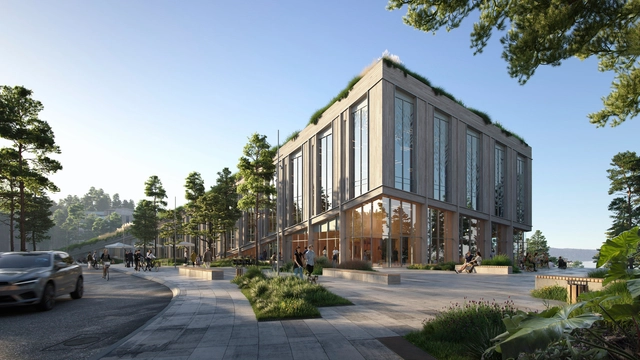
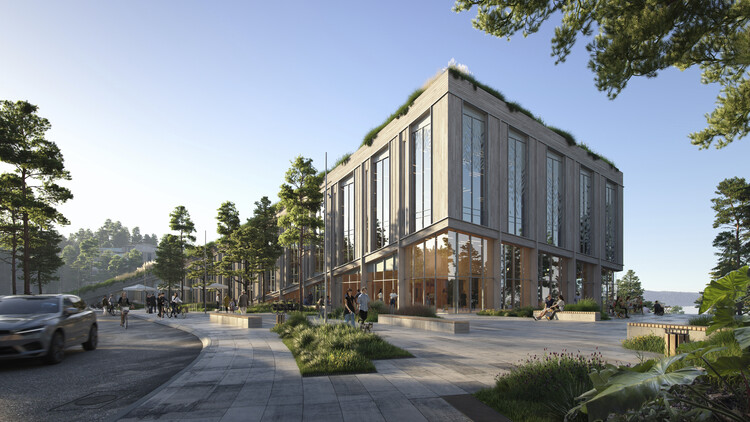
Construction broke ground on the Wendelstrand residential development that will transform an old quarry outside Gothenburg into an environmentally friendly and socially sustainable neighbourhood. Developed by Next Step Group and designed by Snøhetta and White Arkitekter, together with Tham & Videgård, Andreas Martin-Löf Architects and Liljewall, the project will feature 1000 homes of various typologies and a series of amenities. The first stage of the development debuts with the Snøhetta-designed Lakehouse, a communal building that blends with the landscape.
How can the quality of architecture be protected, promoted and encouraged? A question on which progress was made today in Spain. On the 18th of January, the Council of Ministers approved the Draft Law on Quality in Architecture for its subsequent submission to the Spanish Parliament, thus initiating its parliamentary procedure.
This is a new legislative proposal, promoted by the Ministry of Transport, Mobility and Urban Agenda, currently under the direction of Minister Raquel Sánchez Jiménez, who aims to protect, promote and encourage architectural quality as an asset of general interest, promoting links that encourage the rapprochement of architecture with society.
Testimonial Spaces, the theme of Chile's pavilion at the recent Venice Biennial 2021, opened to the public on the 18th of January at Santiago's Museum of Contemporary Art.
Curated by architects Emilio Marín and Rodrigo Sepúlveda, Testimonial Spaces brings together 525 paintings based on testimonies and everyday stories from the José María Caro neighbourhood in Santiago, in line with "How will we live together?", the theme of the biennial curated by Lebanese architect Hashim Sarkis.
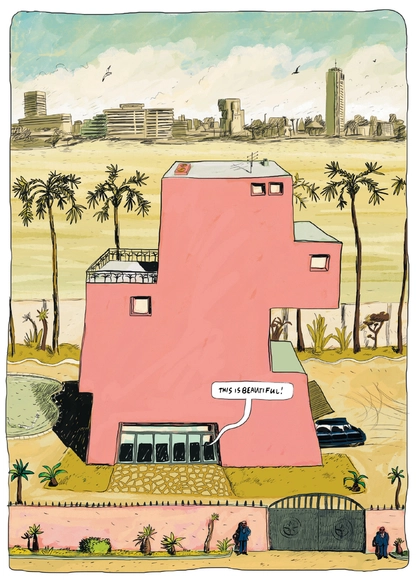
Modernist House - From Aya: Life in Yop City by Marguerite Abouet and Clément Oubrerie, translated by Helge Dasche. Image Courtesy of Drawn & Quarterly
The comic strip, la bande dessinée, the graphic novel. These are all part of a medium with an intrinsic connection to architectural storytelling. It’s a medium that has long been used to fantasise and speculate on possible architectural futures, or in a less spectacular context, used as a device to simply show the perspectival journey through an architectural project. When the comic strip meshes fiction with architectural imagination, however, it’s not only the speculation on future architectural scenarios that takes place. It’s also the recording and the critiquing of the urban conditions of either our contemporary cities or the cities of the past.
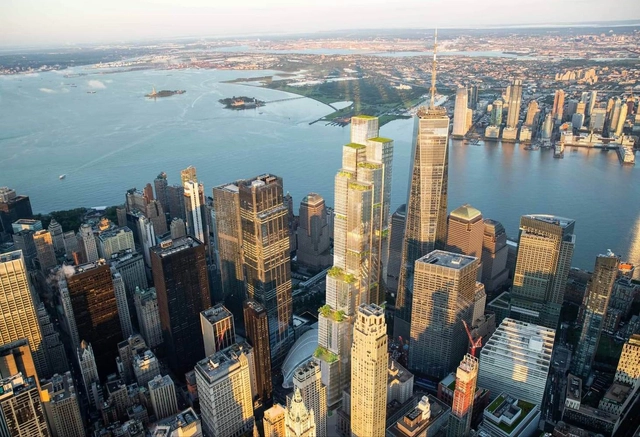
The new design for Foster + Partners’ Two World Trade Center tower builds in the footprint of its original design, but has scrapped a fractal diamond crown for staggered volumes and green roofs. The tallest roof will reach about 1,350 feet. . Image Courtesy of Visualhouse
Is the third time truly the charm for Two World Trade Center? New renderings spotted by New York YIMBY on February 1 seem to reveal the long-delayed tower’s new look, a marked departure from what was first unveiled by Foster + Partners back in 2005.
That’s not too much of a surprise. Although Foster + Partners was awarded the project 17 years ago and the foundation was laid in 2013, work has been proceeding at a slow clip and the original team was replaced by BIG in 2015 after developer Silverstein Properties decided to take a more contemporary approach and position the tower as the future home of Rupert Murdoch’s News Corporation and 21st Century Fox.
For many design teams, logging into multiple applications a day to access BIM information is the norm. Yet the information contained in each of these applications tends to be siloed, making it difficult for project teams to make informed decisions, collaborate, and share information.
According to a recent research carried out by RIBA in partnership with Microsoft, called "Digital Transformation in Architecture", 87% of architecture firms agreed that digital technologies are transforming the way they work and most of them have already embarked on their digital transformation journey. The study shows that professionals in the Architecture field are easily embracing digitalization with the adoption of 3D computer-aided design, and moving fast towards Building Information Modeling (BIM) and the Internet of Things (IoT).
https://www.archdaily.com/976269/marketing-to-architects-in-the-digital-era-how-to-showcase-your-brand-worldwidePola Mora
Architecture education is not only about learning how to design and construct buildings but it gives a whole new perspective on our built environment and on how design can contribute to create quality spaces and experiences. Moreover, a big percentage of this design thinking can be used by professional architects as a resource to create other spatial configurations that vary from the traditional building, opening up to a diverse world of possibilities in terms of spatiality and materials.
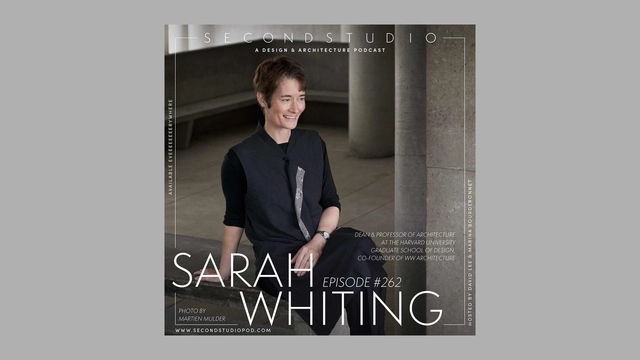
The Second Studio (formerly The Midnight Charette) is an explicit podcast about design, architecture, and the everyday. Hosted by Architects David Lee and Marina Bourderonnet, it features different creative professionals in unscripted conversations that allow for thoughtful takes and personal discussions.
A variety of subjects are covered with honesty and humor: some episodes are interviews, while others are tips for fellow designers, reviews of buildings and other projects, or casual explorations of everyday life and design. The Second Studio is also available on iTunes, Spotify, and YouTube.
This week, David and Marina are joined by Sarah Whiting, Dean and Josep Lluís Sert Professor of Architecture at the Harvard University Graduate School of Design; Co-Founder of WW Architecture to discuss her early interests in architecture, communicating the value of architecture to the public, the GSD, social and environmental issues in architecture, the future of architecture practice, movements in architecture, and more.
https://www.archdaily.com/976077/the-second-studio-podcast-interview-with-sarah-whitingThe Second Studio Podcast
‘’The delight I get out of doing buildings is to say: Screw you, it can be built’’ says Architect Peter Cook in conversation with Louisiana Channel, where he discusses his determination to communicate ideas through vivid Architectural drawings and the skepticism he has faced in regards to his ambitious design proposals and their outlandish appearance.
This video explores the case for understanding buildings as non-human creatures. While this might sound absurd at first, the concept has a long history and potentially very positive tangible outcomes. Buildings need to be cultivated like a garden; they require maintenance and care. If they are alive, the need for this care becomes more obvious and second nature. This conceit also prompts us to empathize with the people that conceived of and built the building, treating the human labor of its construction with admiration and reverie.
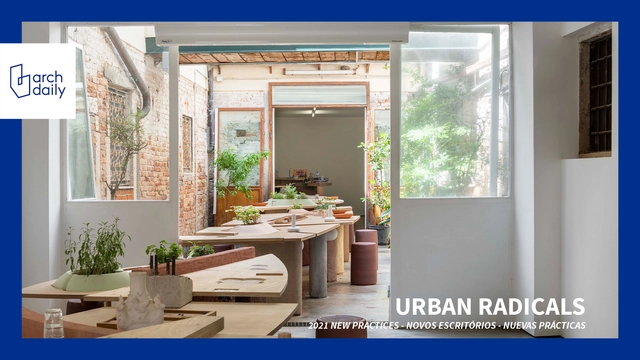
Urban Radicals is a design collective based in London, founded in 2019 by Era Savvides and Athanasios Varnavas. The practice operates at the intersection of multiple disciplines, exploring public space and the notion of collectivity across a variety of scales, contexts and design expressions. One of Archdaily's Best New Practices of 2021, Urban Radicals shrinks and grows organically through the projects, dissolving the boundaries between diverse fields of knowledge and circumventing traditional office structure to integrate a multiplicity of perspectives within architecture.
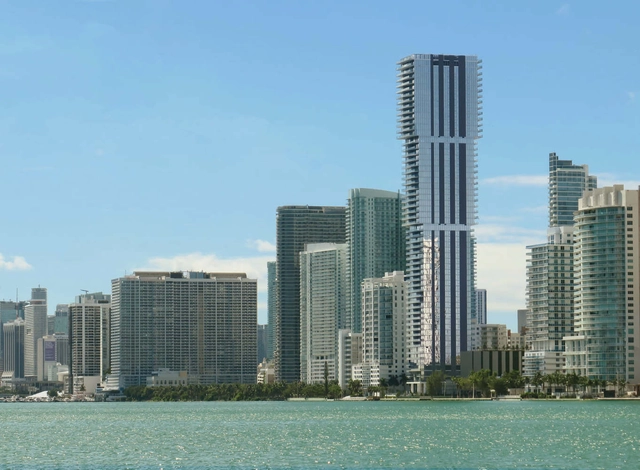
Miami’s long-awaited landmark, the Elysee Edgewater has finally reached construction completion. Designed by Arquitectonica, the 649-foot-tall glass tower features 57 storeys of luxury residences, as well as recreational and fitness amenities across its tiered floors. Architectural photographer Paul Clemence released images of the newly-completed tower, which now sits as the tallest residential building in the Edgewater district.
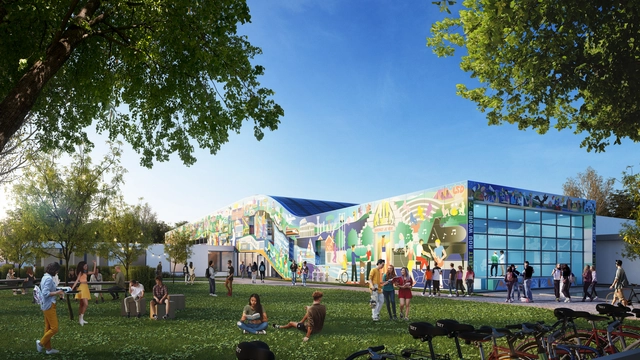
MVRDV founding partner Winy Maas and Theobert van Boven of Van Boven Architecten, two alumni of Gymnasium Beekvliet, are leading the transformation of their former highschool in the Dutch village of Sint-Michielsgestel. In addition to the renovation of the existing building, the design features a flowing, colourful extension accommodating a new auditorium, as well as art and culture facilities providing students with an engaging learning environment. The new structure features a printed façade showcasing artwork by Canadian visual artist Ian Kirkpatrick that provides a record of the school's 200 years of history while creating a new focal point for the school and region.
Over the years, interior design has evolved according to the needs that arise, but above all to the experiences that it seeks to provoke in the user. In the last two years, we have witnessed a radical change and a special interest in this subject because the pandemic forced us to pay specific attention to the configuration of the places we inhabit. This brought about much more holistic designs that cater to the wellbeing of the user, combining colours, sensory experiences, technology and natural elements that promote health.
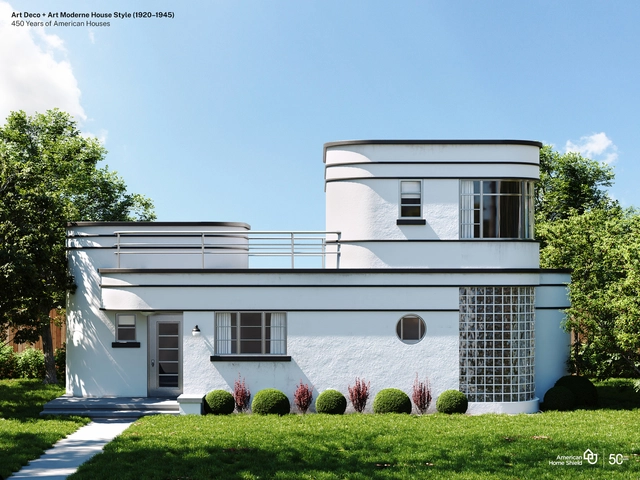
Art Deco + Art Moderne (1920–1945). Image Cortesía de American Home Shield
The history of architecture is made up of demographic, cultural, and social changes. In its relatively short history, American architecture has evolved with changes in the country, representing the catalog of various cultural influences that make up the United States as a whole. Many elements of American home design have remained intact over the past 450 years, reflecting longstanding American traditions and values that have stood the test of time.
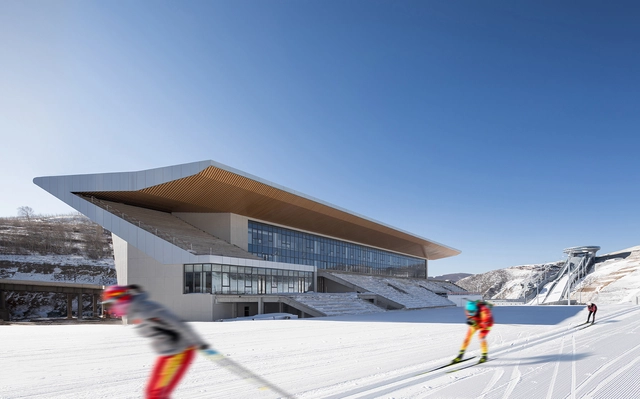
Beijing 2022 Winter Olympic Games and Paralympic Games have officially opened on February 4, 2022. The Winter Olympics made a brave move by adding two snow zones in Zhangjiakou and Yanqing to the ice zone in Beijing, creating an unprecedented three-zone system for the Winter Olympics.
Architectural Design & Research Institute of Tsinghua University (THAD), has led the planning and architectural design of the whole and all venues in Zhangjiakou Zone and Shougang Venue in Beijing Zone. Planning and Venue design for Yanqing Zone was elaborated by the China Architectural Design & Research Group. Chinese architects took the initiative to create while serving the principle of sustainable development and closely integrating architectural planning methodologies and architectural design during the approximately six-year construction cycle. They proposed the design framework of "full-scale spatial intervention" based on the "General Plan, Regulatory Plan, Urban Design, Architecture Design and Equipment System Design," completing the Chinese practice of sustainable Winter Olympics.


























.jpg?1643919127)