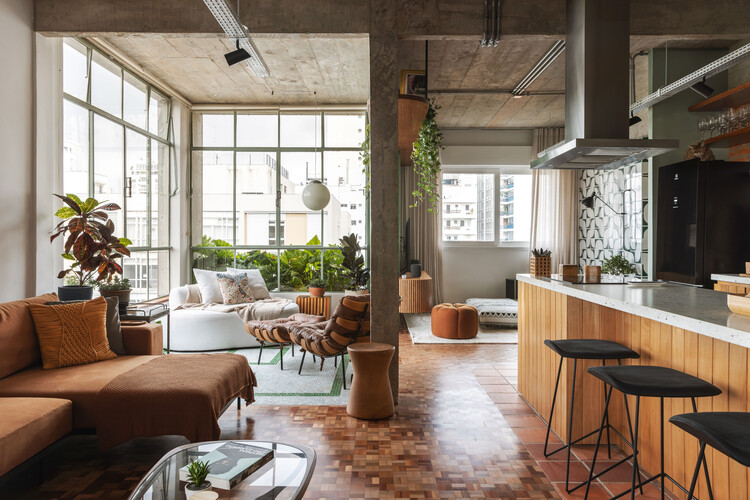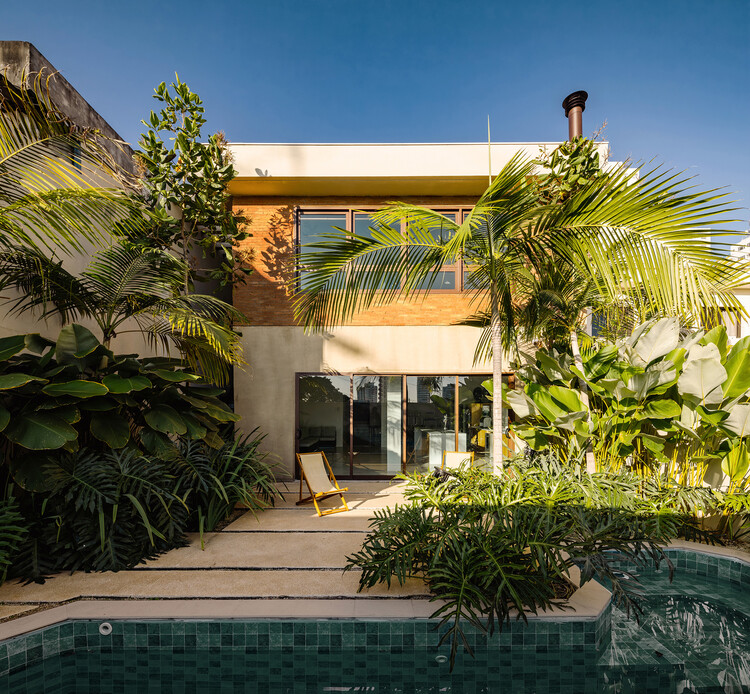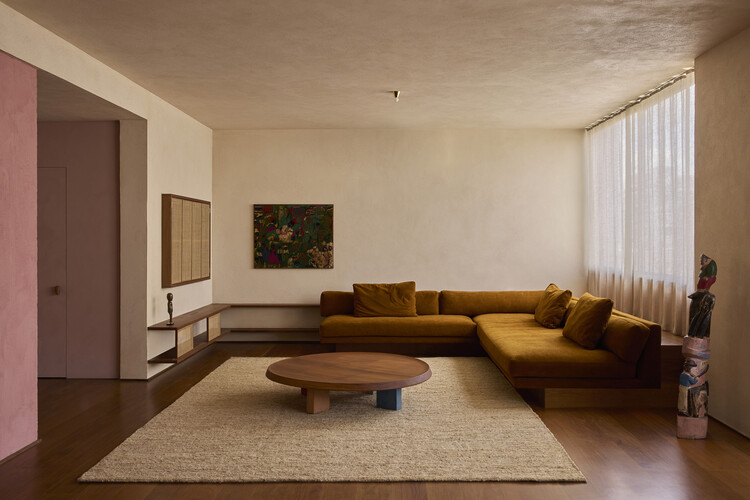
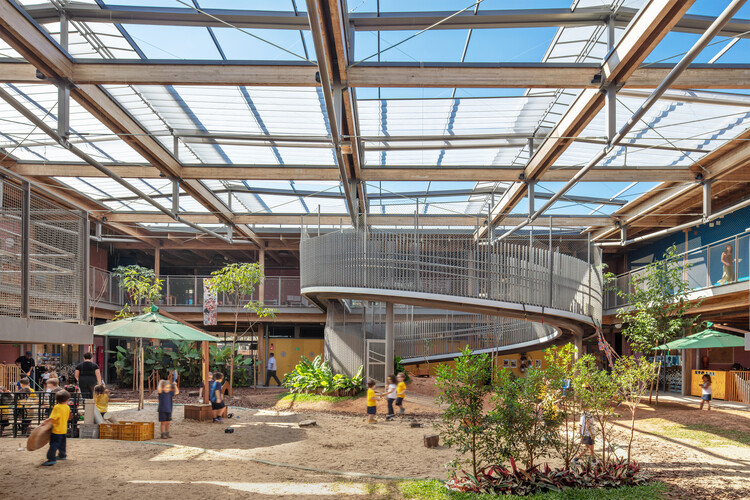
-
Architects: Andrade Morettin Arquitetos Associados
- Area: 3417 m²
- Year: 2026


Filippo Brunelleschi and the dome of Santa Maria del Fiore, completed in 1436 in the Italian city of Florence, represent an important chapter in the history of architecture, often associated with the growing distance between drawing and building. This separation, gradually consolidated over time, finds a decisive turning point in the Renaissance. Drawing becomes an instrument for anticipating and asserting authority over construction. The building site, once a space for invention and decision-making, came to be understood primarily as a place of execution.
Over the following centuries, this distance becomes increasingly pronounced, particularly with modern construction. Industrialization, technical specialization, and corporate organization fragment the building process into increasingly distinct stages. Those who design rarely build; those who build do not always participate in decision-making; those who finance, manage, and inhabit occupy positions that are even further removed from one another. The efficiency of this model made it possible to build at scale, but it also concentrated knowledge and decision-making power in the hands of certain agents.

In an era where digital fabrication and automation are increasingly present in architectural practice, manual craft is often seen as a luxury item—restricted to high-end projects whose clients can afford extended deadlines and collaborative processes requiring constant dialogue with artisans. This scenario might have sounded contradictory a few decades ago, when Lina Bo Bardi denounced that a process of "deculturation" was underway and that an appraisal of "popular" Brazilian civilization was urgently needed to confront totalizing universalisms and *folklore*—the latter viewed by her as an instrument of state alienation designed to neutralize the subversive and transformative character of popular culture:


In 2021, the IBGE (Brazilian Institute of Geography and Statistics) released a survey regarding the number of cultural and social facilities in Brazil's cities. The findings were alarming: only 29.6% of Brazilian municipalities had cultural and social facilities such as museums, while theaters and concert halls were present in only 23.3% of cities. This overview speaks volumes about the scarcity of such spaces in Brazilian cities. In this context, when a women's cooperative in Maranhão or a volunteer group in Bahia decides to build their own cultural and community facility, the gesture not only fills a material gap but reclaims, on their own initiative, a right that should be guaranteed by public policy.