1. ArchDaily
  2. Public Space

Public Space: The Latest Architecture and News

What Happens When Public Spaces are Without Public Restrooms?

Subscriber Access | 

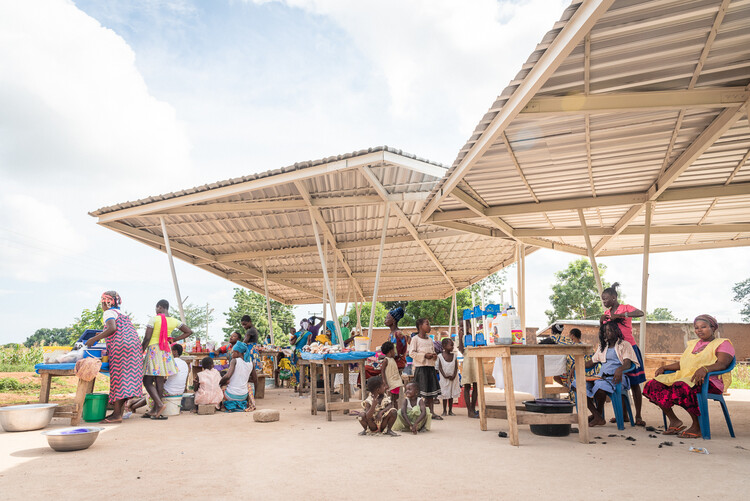
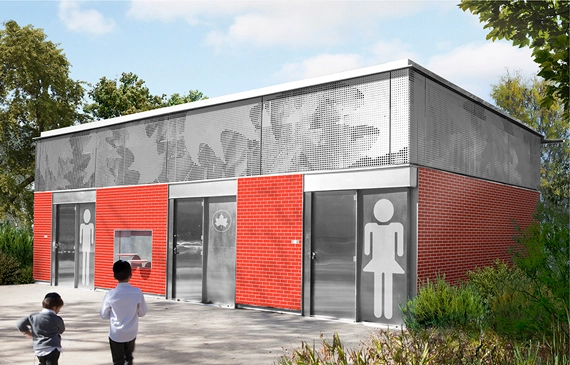
In the realm of design, we often talk about ensuring that there are enough public spaces to serve a community. We discuss the need for public parks so that people have access to outdoor spaces. We think about public transportation, and how our dwindling reliance on cars will help to ensure that we have a healthier planet. But what about the public spaces we lack? What happens when we don’t have enough public restrooms?

Why We Should Create Cities for Children

Subscriber Access | 
Why We Should Create Cities for Children - Featured Image
Image © Hiroyuki Oki

In the book Design of Childhood, architect and researcher Alexandra Lange states that children were considered nonpersons throughout almost the entire history of ancient and modern architecture, being excluded from the process of creating urban and interior spaces. This process has caused and is still causing several problems when children reach adulthood, since these children grew up being constantly watched by fear of movement and the eyes of adults.

Profit Above the Public: The Logic of the Concession of Use in the City of São Paulo

Subscriber Access | 

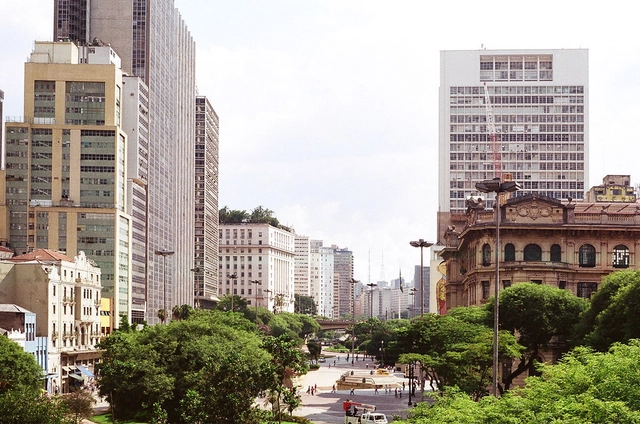
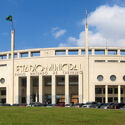
Recently, the city of São Paulo witnessed two events involving spaces that were previously public and are now under private concession. The already renowned Virada Cultural Paulistana took place again after the initial years of the covid-19 pandemic, and had as one of its stages the new Vale do Anhangabaú. In addition, the Pacaembu complex - which recently ceased to be a public facility, became a concession and has been undergoing a series of renovations and transformations - hosted the ArPa Fair, an event that brought together a series of important galleries for exhibition, purchase and sale of artworks. Despite the different nature of these events, their processes arouse reflections upon the privatization model we are experiencing in cities today.

Profit Above the Public: The Logic of the Concession of Use in the City of São Paulo - Image 1 of 4Profit Above the Public: The Logic of the Concession of Use in the City of São Paulo - Image 2 of 4Profit Above the Public: The Logic of the Concession of Use in the City of São Paulo - Image 3 of 4Profit Above the Public: The Logic of the Concession of Use in the City of São Paulo - Image 4 of 4Profit Above the Public: The Logic of the Concession of Use in the City of São Paulo - More Images

How Gender Inclusion Is Influencing Urban Design

In the 1970s, in Berkeley, California, a group of disability rights activists called the Rolling Quads began dismantling curbs and improvising sidewalk ramps, demanding access for wheelchair users. But what people did not expect was that wheelchair users would not be the only ones to benefit from the intervention. Soon, pedestrians with baby strollers, heavy suitcases or simply with reduced mobility started using the ramps. Likewise, a gender-inclusive city works better for everyone. A city where all gender minorities of different ages and abilities can move around easily and safely, participate fully in the workforce and public life, live healthy, sociable and active lives, is a city that improves everyone's lives.
How Gender Inclusion Is Influencing Urban Design - Image 1 of 4How Gender Inclusion Is Influencing Urban Design - Image 2 of 4How Gender Inclusion Is Influencing Urban Design - Image 3 of 4How Gender Inclusion Is Influencing Urban Design - Image 4 of 4How Gender Inclusion Is Influencing Urban Design - More Images+ 2

Placemaking through Play: Designing for Urban Enjoyment

Subscriber Access | 

Humane cities center around the relationships between people and places. Communities thrive on shared resources, public spaces, and a collective vision for their locality. To nurture happy and healthy cities, designers and the public apply methods of placemaking to the urban setting. Placemaking—the creation of meaningful places—strongly relies on community-based participation to effectively produce magnetic public spaces.

Placemaking through Play: Designing for Urban Enjoyment  - Image 1 of 4Placemaking through Play: Designing for Urban Enjoyment  - Image 2 of 4Placemaking through Play: Designing for Urban Enjoyment  - Image 3 of 4Placemaking through Play: Designing for Urban Enjoyment  - Image 4 of 4Placemaking through Play: Designing for Urban Enjoyment  - More Images+ 2

Homomonument: The Importance of a Representative Space in the City

Subscriber Access | 
Homomonument: The Importance of a Representative Space in the City - Featured Image
Homomonument in Amsterdam. Photo: Geert-Jan Edelenbosch, CC BY-SA 4.0 , via Wikimedia Commons

While walking through the city, have you ever felt afraid to be yourself? As strange as the question may sound to some, it is a reality for most LGBTQIA+ people, who at some point have been victims of hostility when they were noticed performing outside the "heteronormative standards" of public spaces. If violence comes from social layers that go beyond the designed space, this does not exempt the importance of thinking about projects that can integrate the physical sphere and insert a symbolic or representational factor to include and educate its citizens. This is the case of Homomonument, which for more than three decades, has become a platform for queer celebration and protest in the heart of Amsterdam.

Homomonument: The Importance of a Representative Space in the City - Image 1 of 4Homomonument: The Importance of a Representative Space in the City - Image 2 of 4Homomonument: The Importance of a Representative Space in the City - Image 3 of 4Homomonument: The Importance of a Representative Space in the City - Image 4 of 4Homomonument: The Importance of a Representative Space in the City - More Images+ 4

Join 3rd International Placemaking Week in Chattanooga this October

The 3rd International Placemaking Week is an intimate, four-day-long global gathering of public space practitioners, researchers, and advocates that combines hands-on learning, public space activations, and innovative social events. Sign up before the regular registration rate ends on August 30!

Temporary Plazas: 13 Public Spaces that Activate the City

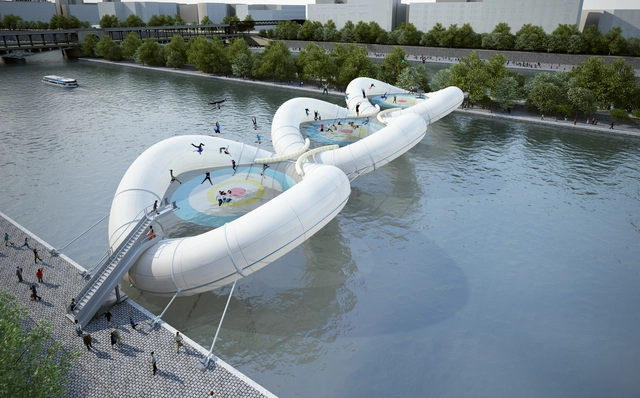
Temporary Plazas: 13 Public Spaces that Activate the City - Image 1 of 4Temporary Plazas: 13 Public Spaces that Activate the City - Image 2 of 4Temporary Plazas: 13 Public Spaces that Activate the City - Image 3 of 4Temporary Plazas: 13 Public Spaces that Activate the City - Image 4 of 4Temporary Plazas: 13 Public Spaces that Activate the City - More Images+ 9

Normally the efforts of the construction industry are aimed to design permanent and durable spaces. However, on some occasions creating temporary spaces can be of great help, not only when providing fast assembly infrastructure after the effects of a natural disaster, but also when activating residual or abandoned spaces in our cities. To exemplify the potential of these interventions, we present thirteen successful temporary public spaces.

Plaza Life Revisited: Field Guide Release

Join us for the release of Field Guide to Life in Urban Plazas.

The guide outlines a research effort focused on New York City, the primary location of urbanist William H. Whyte’s “Street Life Project,” which formed the basis for his seminal book and film The Social Life of Small Urban Spaces (1980). The new guide seeks to understand how different types of public spaces have changed some 40 years later. What’s changed about how people use the public realm, and what makes for successful spaces?

10 Examples of Public Spaces from the Beaches to the Cities of Mexico

Subscriber Access | 

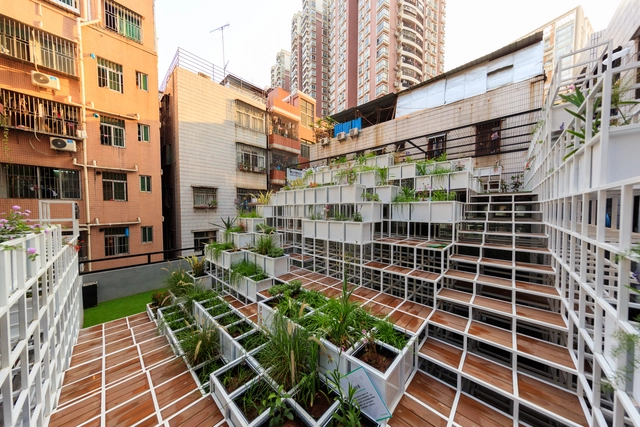
10 Examples of Public Spaces from the Beaches to the Cities of Mexico - Image 1 of 410 Examples of Public Spaces from the Beaches to the Cities of Mexico - Image 2 of 410 Examples of Public Spaces from the Beaches to the Cities of Mexico - Image 3 of 410 Examples of Public Spaces from the Beaches to the Cities of Mexico - Image 4 of 410 Examples of Public Spaces from the Beaches to the Cities of Mexico - More Images+ 7

Urban design is a branch of design intimately related to urban planning and landscape architecture; it focuses broadly on interpreting the form and public space with physical-aesthetic-functional criteria. Different experts in the field such as Jane Jacobs, Denise Scott Brown, Robert Venturi, Jaime Lerner, Jan Gehl, Kevin Lynch have devoted themselves to studying the needs of urban societies within the common spaces to give adequate responses to different contexts. These questions are renewed with new generations and the public space is transformed according to technological advances but what always remains is the sense of belonging of these sites that are only successful when users adopt them as own.

By the People, For the People: What is Public Architecture, According to our Readers

By the People, For the People: What is Public Architecture, According to our Readers - Featured Image
Aarhus Harbor Bath / BIG. Image: © Rasmus Hjortshøj

Last week, we asked our social media followers, "What does public architecture mean to you?" These thoughts are intrinsic to the architectural debate and come into play in various types of projects, especially in those related to the planning of common-use spaces in cities.

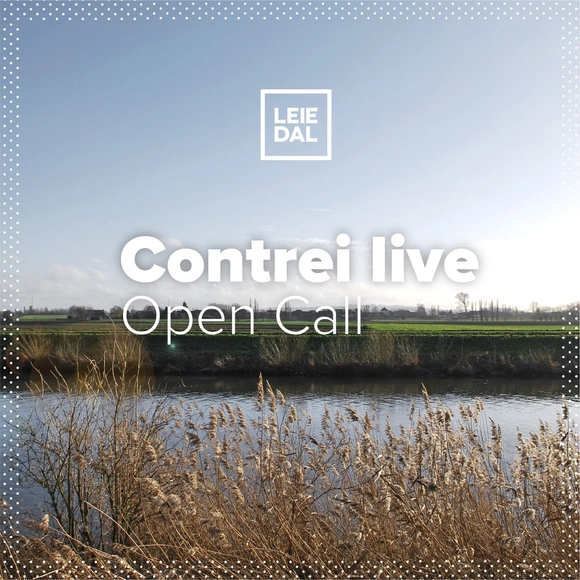
Open Call for Proposals: Contrei live land art festival

Open Call for Proposals
Artists, (environmental) Architects, Designers & Makers

Shade Structures for Outdoor Spaces: 6 Tips to Incorporate Into Your Next Project

Subscriber Access | 

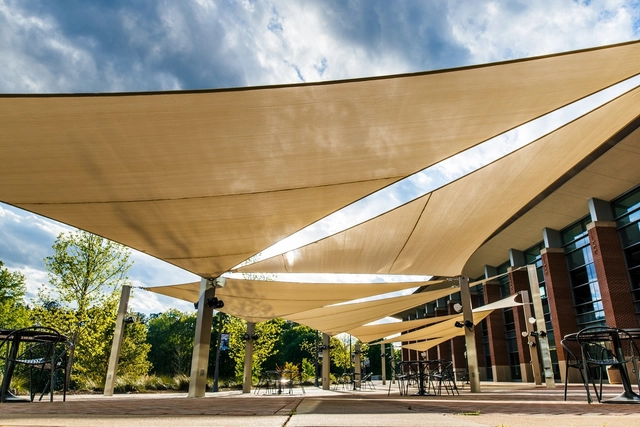
In any successful architectural project, it is essential to provide users with a comfortable outdoor space. At any time of the year, modular shade structures can create spaces that protect from wind, dust, sun, rain, snow, and noise in a light, flexible and aesthetically pleasing way.

With this in mind, what should we look for when choosing shade structures for outdoor spaces? Below, we've provided you with Superior Recreational Products's top recommendations.

Shade Structures for Outdoor Spaces: 6 Tips to Incorporate Into Your Next Project - Image 1 of 4Shade Structures for Outdoor Spaces: 6 Tips to Incorporate Into Your Next Project - Image 2 of 4Shade Structures for Outdoor Spaces: 6 Tips to Incorporate Into Your Next Project - Image 3 of 4Shade Structures for Outdoor Spaces: 6 Tips to Incorporate Into Your Next Project - Image 4 of 4Shade Structures for Outdoor Spaces: 6 Tips to Incorporate Into Your Next Project - More Images+ 28

Why Public Spaces are the Safest Investment for Secure Cities

Why Public Spaces are the Safest Investment for Secure Cities - Image 1 of 4Why Public Spaces are the Safest Investment for Secure Cities - Image 2 of 4Why Public Spaces are the Safest Investment for Secure Cities - Image 3 of 4Why Public Spaces are the Safest Investment for Secure Cities - Image 4 of 4Why Public Spaces are the Safest Investment for Secure Cities - More Images+ 15

Architecture is powerful, and like nuclear energy, it all depends on how it is used. While it can create uninhabitable municipalities, it can also create safer cities that improve quality of life.

In various examples, urban design has provided a response to deteriorated or abandoned public spaces. It has shown that distribution and lighting are essential, but that it is also necessary to consider who will be using the space and how to make it an environment that generates community.

Janet Echelman’s Moving Sculpture Creates a “Living X-Ray” of Philadelphia

Artist Janet Echelman has unveiled her latest site-specific work of public art, with the activation of the first phase of “Pulse” in Philadelphia’s Dilworth Park. Pulse seeks to reshape urban space “with a monumental, fluidly moving sculpture that responds to environmental forces including wind, water, and sunlight.

Inspired by the square’s history as a water and transportation hub, Echelman’s work traces the paths and trolley lines of the subway beneath, with four-foot-tall curtains of colorful atomized mist traveling across the park’s fountain surface in response to passing trains underneath.

Janet Echelman’s Moving Sculpture Creates a “Living X-Ray” of Philadelphia - Image 1 of 4Janet Echelman’s Moving Sculpture Creates a “Living X-Ray” of Philadelphia - Image 2 of 4Janet Echelman’s Moving Sculpture Creates a “Living X-Ray” of Philadelphia - Image 3 of 4Janet Echelman’s Moving Sculpture Creates a “Living X-Ray” of Philadelphia - Image 4 of 4Janet Echelman’s Moving Sculpture Creates a “Living X-Ray” of Philadelphia - More Images+ 9

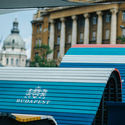
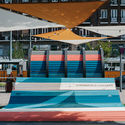
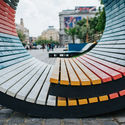
Hello Wood's POP-UP Park Adds a Splash of Color to an Underused Square in Budapest

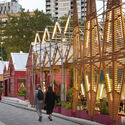
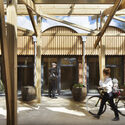
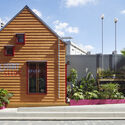
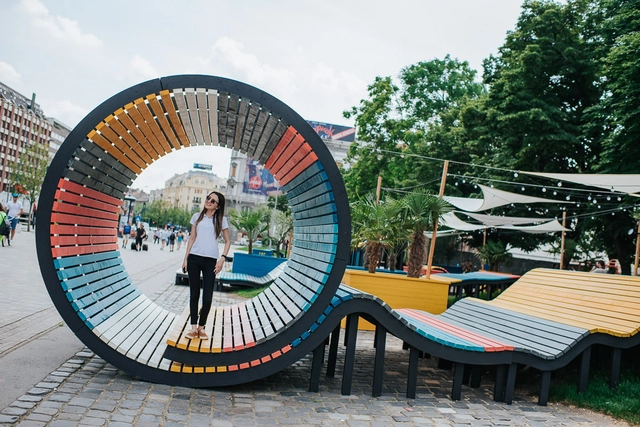
Hello Wood has revived its highly-successful POP-UP Park, bringing a touch of vibrancy to an underused square in downtown Budapest. Having built the structures in the summer of 2017, the park has returned one year later to provide “a democratic space for all social groups embedded within the everyday movement of the city.”

Open 24 hours per day, the park acts as a free-to-use space for people from all walks of life. Supported by the Municipality of Budapest, the scheme is situated in a frequented though empty spot beside the Budapest City Hall.

Hello Wood's POP-UP Park Adds a Splash of Color to an Underused Square in Budapest - Image 1 of 4Hello Wood's POP-UP Park Adds a Splash of Color to an Underused Square in Budapest - Image 2 of 4Hello Wood's POP-UP Park Adds a Splash of Color to an Underused Square in Budapest - Image 3 of 4Hello Wood's POP-UP Park Adds a Splash of Color to an Underused Square in Budapest - Image 4 of 4Hello Wood's POP-UP Park Adds a Splash of Color to an Underused Square in Budapest - More Images+ 20

Foster + Partners' Milan Apple Store Opens to the Public With Dramatic Waterfall Entrance

Apple’s Piazza Liberty Store, designed by Foster + Partners, has opened to the public in Milan, Italy. The scheme is located under an existing piazza close to the Corso Vittorio Emanuele, one of the most popular pedestrian streets in Milan.

The store is defined by a dramatic waterfall which surrounds the entrance while forming the backdrop to a large outdoor amphitheater. Piazza Liberty is the first Apple Store to be constructed in Italy following their retail design collaboration with Foster + Partners.

LOLA, L+CC, and Taller Architects Design "Romantic" Forest Trail for Forgotten Sports in Shenzhen

LOLA Landscape Architects, Taller Architects, and L+CC have released images of their competition-winning design for a 600-hectare forest and sports park in Guang Ming, Shenzhen, China. Commissioned in response to the exploding technology industry in the Shenzhen metropolitan area, the park will place an emphasis on health, sports, and nature to offer an ecological counterpoint to dense urban surroundings.

The winning collaboration saw off competition from JCFO, SWA, and TCL, with the competition jury praising the scheme for its “fresh approach and [for] being highly attentive to local ecology [while] meanwhile incorporating romantic techniques and realistic urban visions.”

LOLA, L+CC, and Taller Architects Design "Romantic" Forest Trail for Forgotten Sports in Shenzhen - Image 1 of 4LOLA, L+CC, and Taller Architects Design "Romantic" Forest Trail for Forgotten Sports in Shenzhen - Image 2 of 4LOLA, L+CC, and Taller Architects Design "Romantic" Forest Trail for Forgotten Sports in Shenzhen - Image 3 of 4LOLA, L+CC, and Taller Architects Design "Romantic" Forest Trail for Forgotten Sports in Shenzhen - Image 4 of 4LOLA, L+CC, and Taller Architects Design Romantic Forest Trail for Forgotten Sports in Shenzhen - More Images+ 16