1. ArchDaily
  2. Urban Installation

Urban Installation: The Latest Architecture and News

Concéntrico Festival 2026 Unveils 24 Urban Installations Across Logroño, Spain

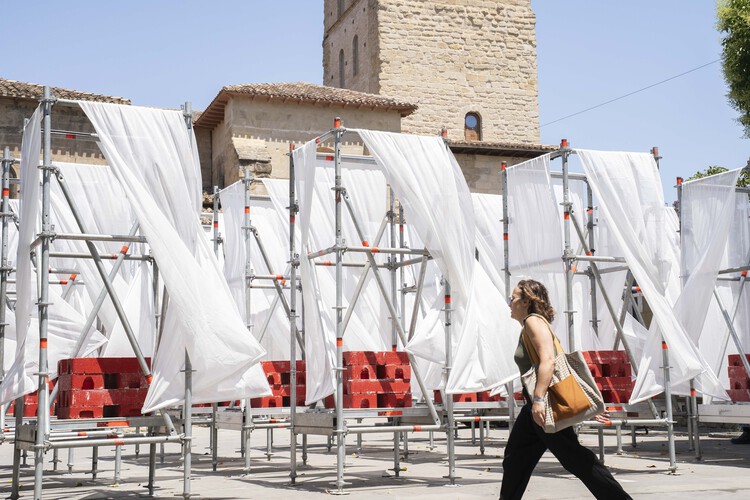
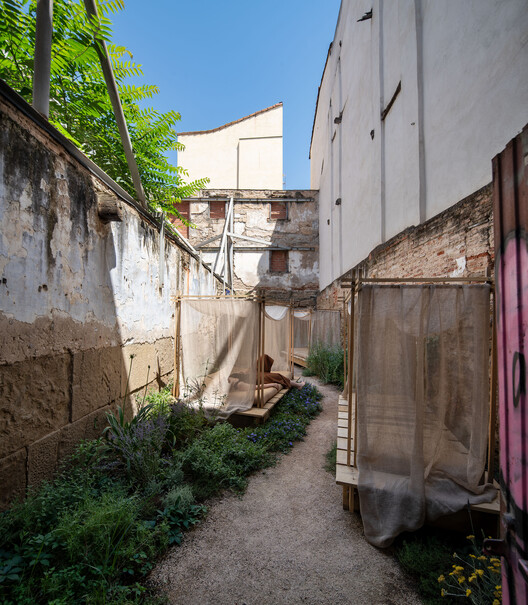
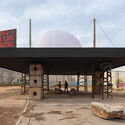
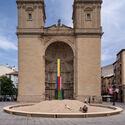
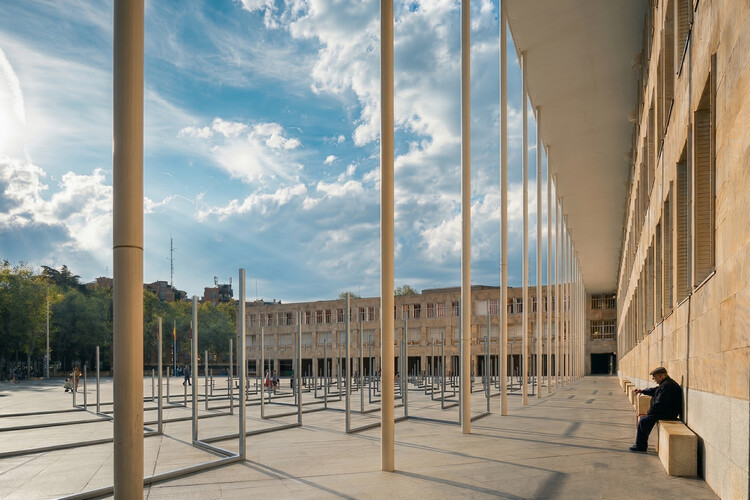
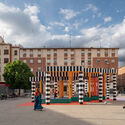
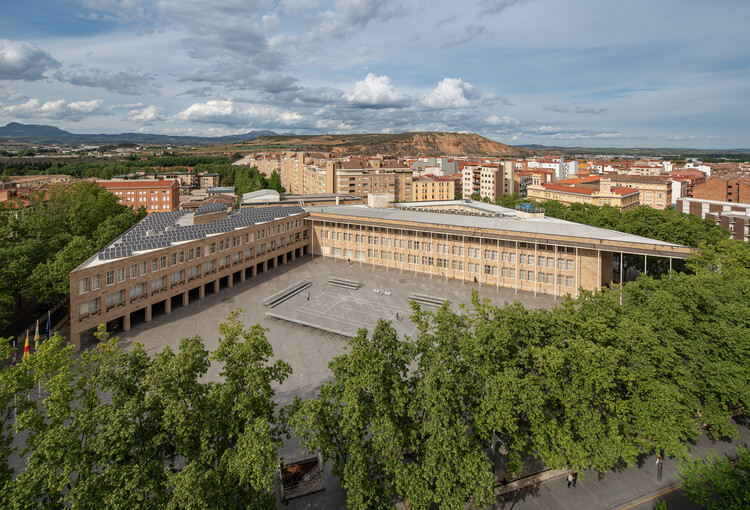
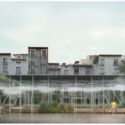
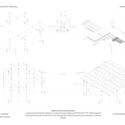
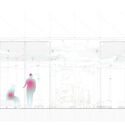
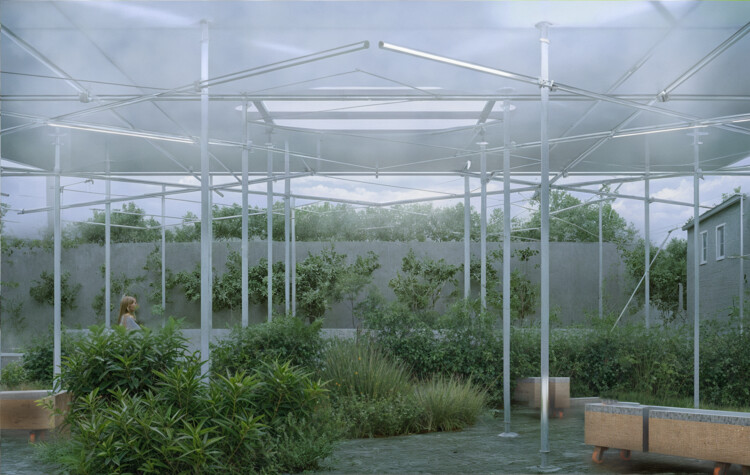
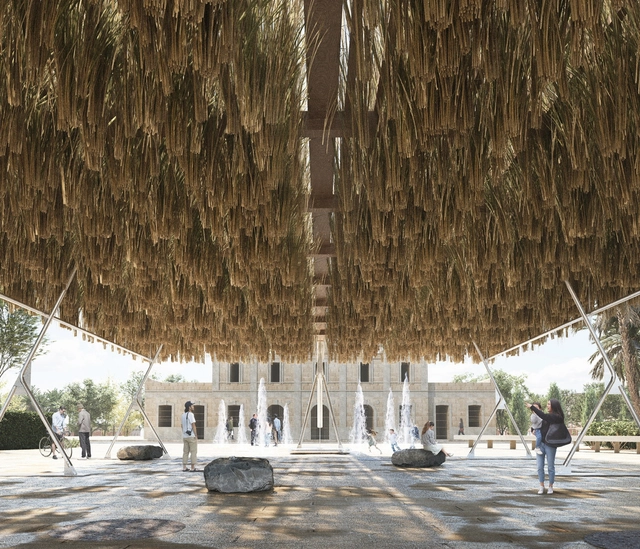
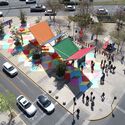
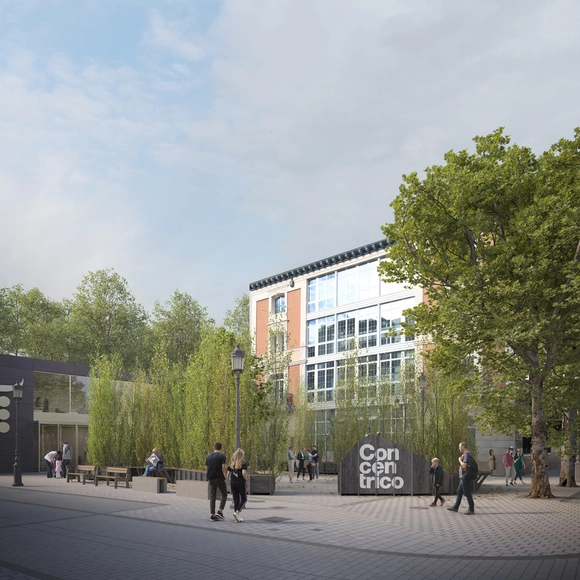
Concéntrico Festival 2026 will take place in Logroño, Spain, from June 18 to 23, transforming the city into a large-scale laboratory for architecture, design, and urban experimentation. Over six days, more than twenty interventions will be distributed across squares, vacant plots, streets, bridges, and emblematic spaces throughout the city, bringing together leading studios, researchers, and creators from the international scene, including Chilean architect Smiljan Radić, the raumlabor collective, Matilde Cassani, AAU Anastas, and Sahra Hersi, among others. This edition introduces a shift towards more collective, festive, and performative practices in public space, with a strong emphasis on sonic experiences and projects linked to accessibility, inclusion, and urban transformation. The programme is structured around three thematic axes: Identity and Fiction, Urban Ecologies, and Ephemeral Agents, ranging from architectures that understand public space as ritual or celebration to experimental approaches exploring materials, sound, and processes of reuse.

Concéntrico Festival 2026 Unveils 24 Urban Installations Across Logroño, Spain - Image 1 of 4Concéntrico Festival 2026 Unveils 24 Urban Installations Across Logroño, Spain - Image 2 of 4Concéntrico Festival 2026 Unveils 24 Urban Installations Across Logroño, Spain - Image 3 of 4Concéntrico Festival 2026 Unveils 24 Urban Installations Across Logroño, Spain - Image 4 of 4Concéntrico Festival 2026 Unveils 24 Urban Installations Across Logroño, Spain - More Images+ 36

Curatorial Work as City-Making: Design Trust’s Marisa Yiu on Exhibitions and Spatial Agency

Subscriber Access | 

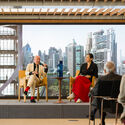
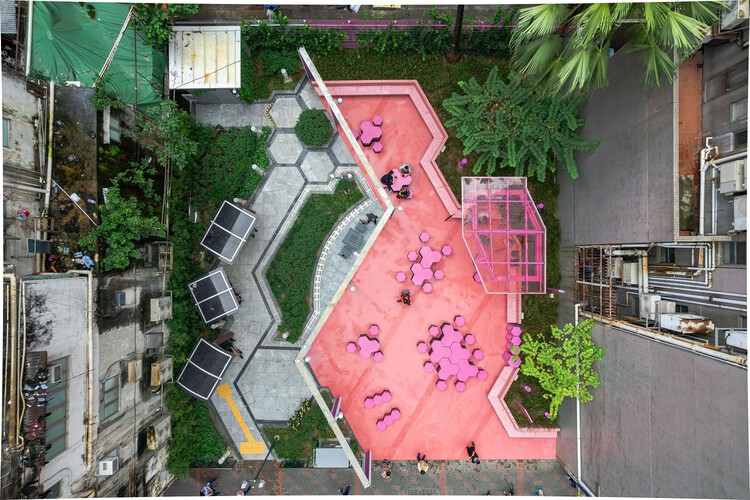
In Hong Kong, where architecture is often driven by real estate logic, infrastructure, and accelerated development, the space for bodily-scaled civic experimentation can be surprisingly narrow. This is where Design Trust has become distinctive. As a grant-making and project-enabling platform, it supports spatial interventions that sit between architecture, research, and public programming—work that is often too modest, collective, or uncertain to fit conventional client–architect pipelines.

At the center of this work is Marisa Yiu, whose leadership positions Design Trust as both an enabler and a cultural actor. Through initiatives such as Micro-Parks Hong Kong, alongside exhibitions and public programs, the organization treats discourse and prototyping as forms of spatial agency, linking designers, communities, institutions, and policy conversations while foregrounding questions of stewardship, maintenance, and the "afterlife" of public space.

Curatorial Work as City-Making: Design Trust’s Marisa Yiu on Exhibitions and Spatial Agency - Image 1 of 4Curatorial Work as City-Making: Design Trust’s Marisa Yiu on Exhibitions and Spatial Agency - Image 2 of 4Curatorial Work as City-Making: Design Trust’s Marisa Yiu on Exhibitions and Spatial Agency - Image 3 of 4Curatorial Work as City-Making: Design Trust’s Marisa Yiu on Exhibitions and Spatial Agency - Image 4 of 4Curatorial Work as City-Making: Design Trust’s Marisa Yiu on Exhibitions and Spatial Agency - More Images+ 19

When Architecture Moves: Kinetic Design and the Rituals of Space

Subscriber Access | 

For centuries, architecture has been defined by unmoving permanence. A building is assumed to be fixed, its walls and foundation immobile in space. A growing number of architects are now challenging this assumption by incorporating movement into the very fabric and tectonic structures of buildings.

When roofs hinge, walls slide, and entire structures respond to their occupants, something remarkable happens: the architectural spaces become an active component of daily rituals. These moments of opening, closing, shifting, and translating spaces ground buildings in the present moment and demand active engagement from users. The architecture becomes less of an object or a monument and more of a choreography of participation.
When Architecture Moves: Kinetic Design and the Rituals of Space - Image 1 of 4When Architecture Moves: Kinetic Design and the Rituals of Space - Image 2 of 4When Architecture Moves: Kinetic Design and the Rituals of Space - Image 3 of 4When Architecture Moves: Kinetic Design and the Rituals of Space - Image 4 of 4When Architecture Moves: Kinetic Design and the Rituals of Space - More Images+ 36

Street Artist JR Installs an Inflatable Cave on Paris' Pont Neuf in Tribute to Christo and Jeanne-Claude

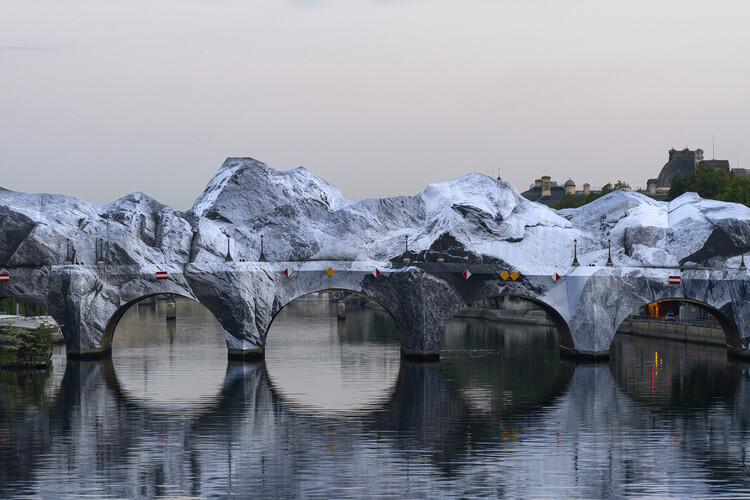
On May 21st, a realistic cave took shape on Paris' Pont Neuf, the oldest standing bridge across the Seine. The inflatable artwork was designed and built by French photographer and street artist JR, along with an extensive multidisciplinary team. La Caverne du Pont Neuf was conceived in honor of Christo and Jeanne-Claude's 1985 work The Pont Neuf Wrapped, an environmental artwork in which the artists wrapped the historic bridge in sandstone-colored fabric for two weeks. The structure creates a trompe-l'œil effect that mimics a textured rock formation through photographic printing in tones of white, black, and gray. The shape of the exterior already gives the public the optical illusion of the artwork, while paving the way for the final stage of the interior design.

Street Artist JR Installs an Inflatable Cave on Paris' Pont Neuf in Tribute to Christo and Jeanne-Claude - Image 1 of 4Street Artist JR Installs an Inflatable Cave on Paris' Pont Neuf in Tribute to Christo and Jeanne-Claude - Image 2 of 4Street Artist JR Installs an Inflatable Cave on Paris' Pont Neuf in Tribute to Christo and Jeanne-Claude - Image 3 of 4Street Artist JR Installs an Inflatable Cave on Paris' Pont Neuf in Tribute to Christo and Jeanne-Claude - Image 4 of 4Street Artist JR Installs an Inflatable Cave on Paris' Pont Neuf in Tribute to Christo and Jeanne-Claude - More Images+ 17

Concéntrico 2026 Features Smiljan Radić Installation and 26 Urban Interventions in Logroño, Spain

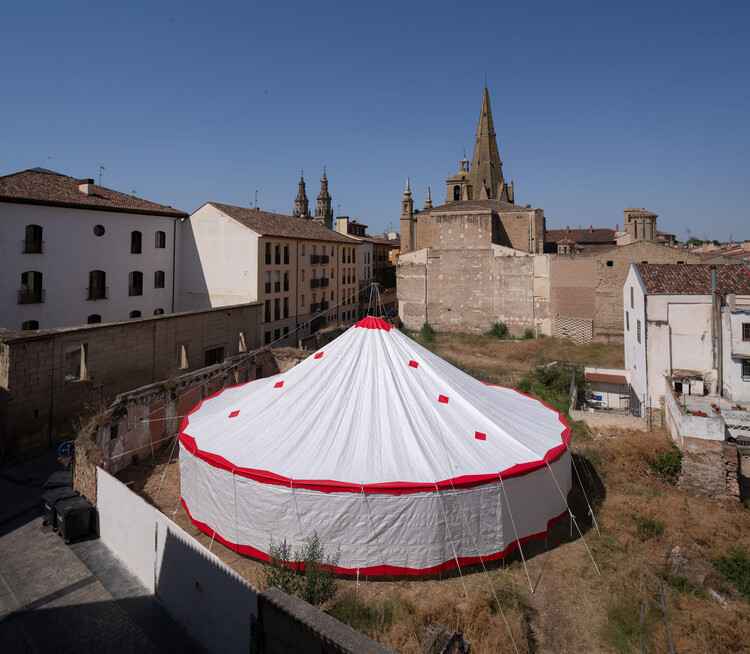
Concéntrico, the Spanish laboratory for urban innovation exploring new ways of inhabiting public space through temporary urban installations, presented the program for its upcoming edition on March 17th, along with its main lines of work for the 2025–2026 season. The festival invites architects, designers, artists, and researchers from different geographies to propose interventions that activate squares, streets, riverbanks, and vacant spaces in the city. This year's edition includes the participation of Smiljan Radić, the recently awarded Pritzker Architecture Prize laureate, who will develop a light, foldable, and temporary structure built from industrial plastic fabrics following the concept of a "poor circus." Another 26 teams, including three practices selected through the festival's international open calls, will intervene in Logroño's public space from June 18 to 23, 2026, with projects ranging from climate-responsive structures to ephemeral public space activations.

Concéntrico 2026 Features Smiljan Radić Installation and 26 Urban Interventions in Logroño, Spain - Image 1 of 4Concéntrico 2026 Features Smiljan Radić Installation and 26 Urban Interventions in Logroño, Spain - Image 2 of 4Concéntrico 2026 Features Smiljan Radić Installation and 26 Urban Interventions in Logroño, Spain - Image 3 of 4Concéntrico 2026 Features Smiljan Radić Installation and 26 Urban Interventions in Logroño, Spain - Image 4 of 4Concéntrico 2026 Features Smiljan Radić Installation and 26 Urban Interventions in Logroño, Spain - More Images+ 3

Festival Concéntrico 2026 Announces Three Selected Urban Installations From Its International Open Calls

Concéntrico is an urban innovation laboratory that invites reflection on the city through architecture and design. Since 2015, it has carried out more than 180 interventions in Logroño, Spain. The new 2025/2026 season of the festival expands on this experimental spirit with three international calls for proposals that bring the ideas in the book Concéntrico: Laboratorio de Innovación Urbana (Park Books, 2025) into action. Through these calls, the organization seeks to explore further three lines of research, the ephemeral, the ecological, and the symbolic, to imagine different ways of inhabiting the city. The winning projects from this edition's calls for entries will be developed, built as urban installations, and presented in the exhibition during the festival, taking place in Logroño from June 18–23, 2026.


Festival Concéntrico 2026 Announces Three Selected Urban Installations From Its International Open Calls - Image 1 of 4Festival Concéntrico 2026 Announces Three Selected Urban Installations From Its International Open Calls - Image 2 of 4Festival Concéntrico 2026 Announces Three Selected Urban Installations From Its International Open Calls - Image 3 of 4Festival Concéntrico 2026 Announces Three Selected Urban Installations From Its International Open Calls - Image 4 of 4Festival Concéntrico 2026 Announces Three Selected Urban Installations From Its International Open Calls - More Images+ 14

Playgrounds as Political Spaces: Negotiating Risk, Space, and Childhood

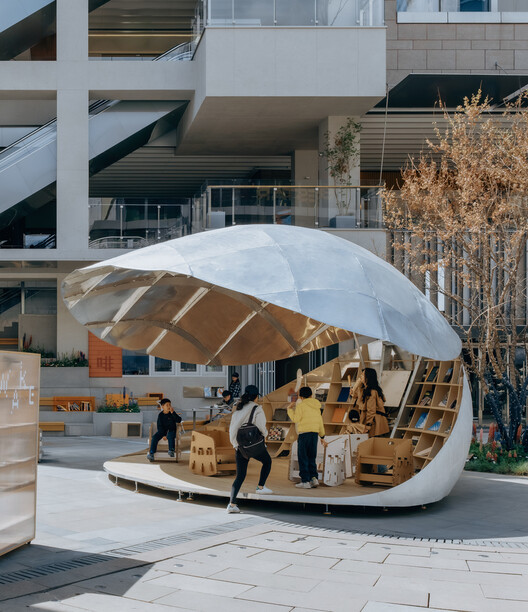
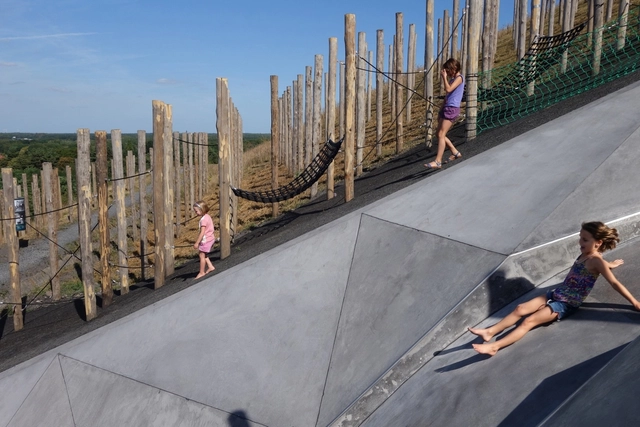
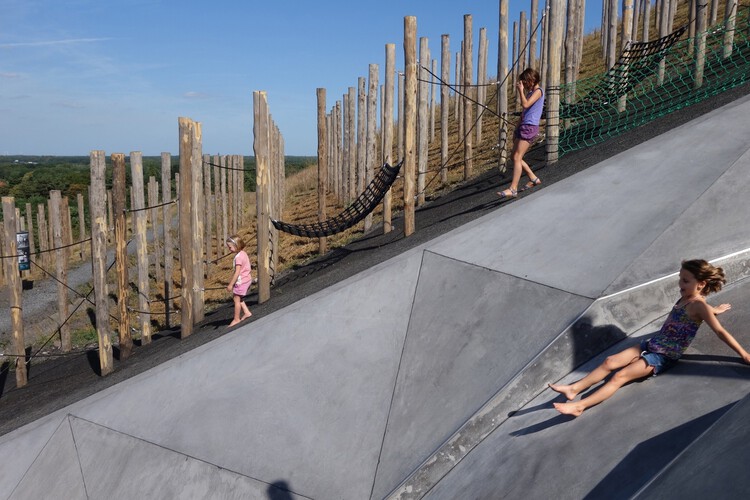
Playgrounds are spatial instruments through which society projects its expectations on childhood, testing the boundaries between control and autonomy, exposure and protection. They regulate how children relate to space, to others, and their bodies — encoding, often invisibly, social norms, fears, and aspirations. In this sense, playgrounds are not peripheral spaces of leisure; they are political constructs shaped by specific ideologies about what childhood is and how it should unfold. Since 1989, the right to play has been formally recognised in the United Nations Convention on the Rights of the Child, affirming that play is a fundamental part of human development. To design a playground is not only to draw lines on a plan or to install equipment in a park; it is to define the conditions under which play is permitted, imagined, or constrained.

Playgrounds as Political Spaces: Negotiating Risk, Space, and Childhood - Image 1 of 4Playgrounds as Political Spaces: Negotiating Risk, Space, and Childhood - Image 2 of 4Playgrounds as Political Spaces: Negotiating Risk, Space, and Childhood - Image 3 of 4Playgrounds as Political Spaces: Negotiating Risk, Space, and Childhood - Image 4 of 4Playgrounds as Political Spaces: Negotiating Risk, Space, and Childhood - More Images+ 21

TAC! 2025 Urban Architecture Festival: Winning Pavilions Celebrate Local Materials and Coastal Culture in Spain

The TAC! Urban Architecture Festival is held annually in Spain with the aim of bringing contemporary architecture closer to the public through installations in various cities, including Granada, San Sebastián, Valencia, Vigo, and San Fernando. Organized by the Ministry of Housing and Urban Agenda in collaboration with Fundación Arquia, the festival seeks to promote experimentation in architecture by constructing temporary pavilions for cultural events and gatherings. The 2025 edition of the festival will take place in two locations: Casa Mediterráneo in Alicante and Plaza Stagno in Las Palmas de Gran Canaria. The pavilions are selected each year through an open call for young architects up to 45 years old. This year's winners have already been announced: the ESPARTAL project by ELE Arkitektura, GA Estudio, Florencia Galecio, and Juan Gubbins; and DE ROCA MADRE by Alejandro Carrasco Hidalgo, Eduardo Cilleruelo Terán, Alberto Martínez García, and Andrea Molina Cuadro.

TAC! 2025 Urban Architecture Festival: Winning Pavilions Celebrate Local Materials and Coastal Culture in Spain - Image 1 of 4TAC! 2025 Urban Architecture Festival: Winning Pavilions Celebrate Local Materials and Coastal Culture in Spain - Image 2 of 4TAC! 2025 Urban Architecture Festival: Winning Pavilions Celebrate Local Materials and Coastal Culture in Spain - Image 3 of 4TAC! 2025 Urban Architecture Festival: Winning Pavilions Celebrate Local Materials and Coastal Culture in Spain - Image 4 of 4TAC! 2025 Urban Architecture Festival: Winning Pavilions Celebrate Local Materials and Coastal Culture in Spain - More Images+ 14

Navigating Milan Design Week 2025: Key Venues, Events and Architectural Installations to Experience

Subscriber Access | 

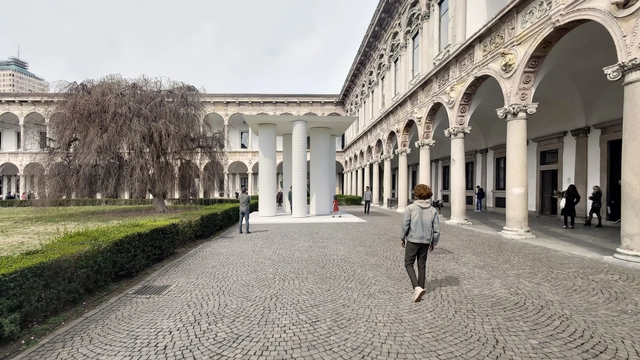
Milan Design Week 2025 is one of the most significant events in the design world, taking place from April 8 to April 13. Following in the previous years' tradition, the city of Milano will host a variety of exhibitions, installations, and discussions throughout its diverse districts, each offering a unique atmosphere and thematic focus. Alongside the renowned Salone del Mobile 2025 at the expansive Rho Fiera exhibition grounds, numerous activities and initiatives will be featured, all coordinated under the Fuorisalone agenda. This article will help navigate the many events by highlighting key venues and installations, ranging from the major fair to vibrant design districts and distinctive locations, such as historic courtyards and revitalized industrial spaces.

Navigating Milan Design Week 2025: Key Venues, Events and Architectural Installations to Experience - Image 1 of 4Navigating Milan Design Week 2025: Key Venues, Events and Architectural Installations to Experience - Image 2 of 4Navigating Milan Design Week 2025: Key Venues, Events and Architectural Installations to Experience - Image 3 of 4Navigating Milan Design Week 2025: Key Venues, Events and Architectural Installations to Experience - Image 4 of 4Navigating Milan Design Week 2025: Key Venues, Events and Architectural Installations to Experience - More Images+ 26

Revitalizing Urban Spaces: 10 Interventions for Transforming Unused Areas

Subscriber Access | 

Cities constantly undergo infinite changes, leaving many spaces within the urban fabric forgotten and unused. Historic buildings are refurbished, and adaptive reuse explores new possibilities, but what happens with public spaces? Small interventions using simple resources and innovative solutions are the perfect way to bring these neglected alleys, plazas, and highways back to life and reincorporate them into the city.

Revitalizing Urban Spaces: 10 Interventions for Transforming Unused Areas - Image 23 of 4Revitalizing Urban Spaces: 10 Interventions for Transforming Unused Areas - Image 18 of 4Revitalizing Urban Spaces: 10 Interventions for Transforming Unused Areas - Image 15 of 4Revitalizing Urban Spaces: 10 Interventions for Transforming Unused Areas - Image 14 of 4Revitalizing Urban Spaces: 10 Interventions for Transforming Unused Areas - More Images+ 23

Tideland Studio Applies Architectural Technologies to Create a Sensorial Understanding of Environmental Changes

While it is undeniable that the surrounding environment is changing due to human activity, the effects can be difficult to perceive directly, as they are often illustrated with unrelatable pictures of far-away places or overused graphics and statistics. Danish office Tideland Studio aims to change this. Through their work, they aim to bring forth a new type of sensible understanding of the changes happening around us. They work across disciplines, melding research, art, and architecture while employing the newest survey and fabrication technologies to give presence to the abstract phenomena that shape our planet. Because of their practical approach to research and the new perspectives that they open toward extreme environments affected by climate change, ArchDaily has selected Tideland Studio as one of the 2023 New Practices. The annual survey highlights emerging offices that use innovation and forward-looking processes to rethink the ways in which we practice architecture.

Tideland Studio Applies Architectural Technologies to Create a Sensorial Understanding of Environmental Changes - Image 1 of 4Tideland Studio Applies Architectural Technologies to Create a Sensorial Understanding of Environmental Changes - Image 2 of 4Tideland Studio Applies Architectural Technologies to Create a Sensorial Understanding of Environmental Changes - Image 3 of 4Tideland Studio Applies Architectural Technologies to Create a Sensorial Understanding of Environmental Changes - Image 4 of 4Tideland Studio Applies Architectural Technologies to Create a Sensorial Understanding of Environmental Changes - More Images+ 8