This article was originally published by The Architect's Guide.
So I won't make you wait for the answer. The best time to look for an architecture job is...

This article was originally published by The Architect's Guide.
So I won't make you wait for the answer. The best time to look for an architecture job is...

The Oscars for building performance have returned! The 2018 UK Passivhaus Awards are free to enter for all certified Passivhaus & EnerPHit schemes that not only have architectural ambition, but can also prove their impeccable eco credentials.
Continuing their Time-Space-Existence series of monthly videos leading up to this year’s Venice Biennale, PLANE—SITE have released a new conversation with architect and former Harvard GSD chair of architecture Toshiko Mori. Each video highlights the ideas that drive the work of well-known designers, with this episode focusing on Mori’s philosophy of visual communication, dialogue with history and considering the future in her work.
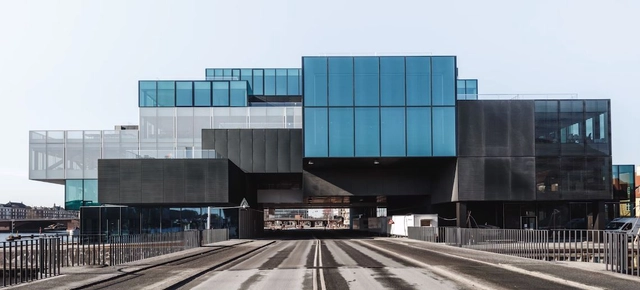
Louisiana Channel has released a new video interview with Ellen van Loon, the Dutch “design duchess” of OMA. In the interview, available to watch below, van Loon discusses the concept of “architectural contamination” behind OMA's new mixed-use "BLOX" scheme, home of the Danish Architecture Center in Copenhagen.
Van Loon discusses the process of “re-invention” needed for the scheme’s realization, in terms of both function and location. Situated on an old brewery site, the scheme seeks to embed architects and visitors in their own field of study, “placing them in the center of the building, which meant they would contaminate all other functions.”
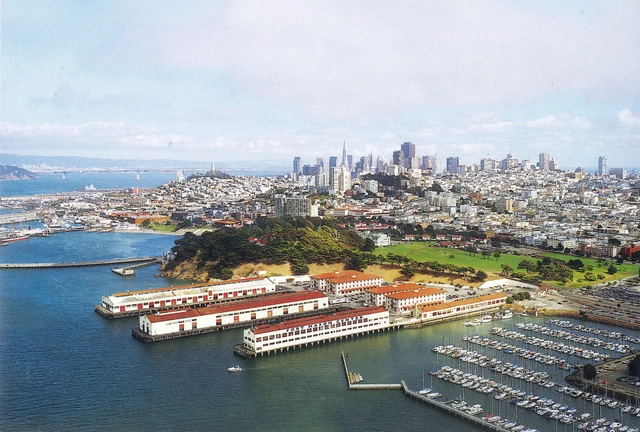
The American Institute of Architects (AIA) and the Committee on the Environment (COTE) have announced the winners of the COTE Top Ten Awards, the highest honor for buildings that exemplify great design and sustainable performance. The award, now in its 22nd year, celebrates 10 projects that meet COTE’s rigorous standards for 10 criteria in several areas of design including economic, social, and ecological value. The winners will be honored in June at the AIA Conference in New York City.
Read about the 2018 winners after the break.

Mercer released their annual list of the Most Livable Cities in the World last month. The list ranks 231 cities based on factors such as crime rates, sanitation, education and health standards, with Vienna at #1 and Baghdad at #231. There’s always some furor over the results, as there ought to be when a city we love does not make the top 20, or when we see a city rank highly but remember that one time we visited and couldn’t wait to leave.
To be clear, Mercer is a global HR consultancy, and their rankings are meant to serve the multinational corporations that are their clients. The list helps with relocation packages and remuneration for their employees. But a company’s first choice on where to send their workers is not always the same place you’d choose to send yourself to.
And these rankings, calculated as they are, also vary depending on who’s calculating. Monocle publishes their own list, as does The Economist, so the editors at ArchDaily decided to throw our hat in as well. Here we discuss what we think makes cities livable, and what we’d hope to see more of in the future.

Sand is the most-consumed natural resource in the world after water and air. Modern cities are built out of it. In the construction industry alone, it is estimated that 25 billion tons of sand and gravel are used every year. That may sound a lot, but it’s not a surprising figure when you consider how everything you’re surrounded with is probably made of the stuff.
But it’s running out.
This is a scary fact to think about once you realize that sand is required to make both concrete and asphalt, not to mention every single window on this planet. The United Nations Environment Programme found out that from 2011 to 2013, China alone used more cement than the United States had used in the entire 20th century and in 2012, the world used enough concrete to build a wall around the equator that would be 89 feet high and 89 feet thick (27 by 27 meters).
_-_The_Mastaba_(Project_for_London__Hyde_Park__Serpentine_Lake)_(1).jpg?1522847854&format=webp&width=640&height=580)
Artist Christo has released images of his proposed temporary sculpture for Hyde Park, London, to become his first major outdoor public sculpture in the United Kingdom. Titled “The Mastaba (Project for London, Hyde Park, Serpentine Lake)," the sculpture will consist of 7,506 horizontally-stacked barrels floating on the Serpentine Lake throughout the summer of 2018.
“The Mastaba” will coincide with an exhibition of Christo and Jeanne-Claude’s work at the Serpentine Galleries, featuring sculptures, drawings, collages and photographs spanning more than 60 years. Supported by Bloomberg Philanthropies, the exhibition will be the artists’ first in a UK public institution since 1979 and will showcase their long-running exploits with barrel forms, chosen initially for their sculptural effect and low cost.

How can the future design and configuration of cities promote greater sustainability in the conditions of urban life? Dust to Dust: Redesigning Urban Life in Healthy Soils is an urban design ideas competition, supporting the UN Sustainable Development Goals.
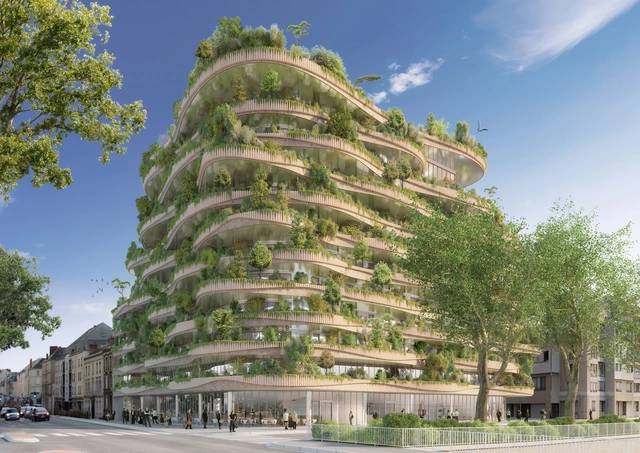
For the "Imagine Angers" international design competition, Vincent Callebaut Architectures worked in collaboration with Bouygues Immobilier group to submit a proposal for the French city at the intersection of social and technological innovation, with a focus on ecology and hospitality. Named Arboricole, meaning “tree” and “cultivation,” this live-work-play environment gives back as much to the environment as it does its users. Although WY-TO prevailed in the competition, the Callebaut scheme succeeded in winning the public vote.
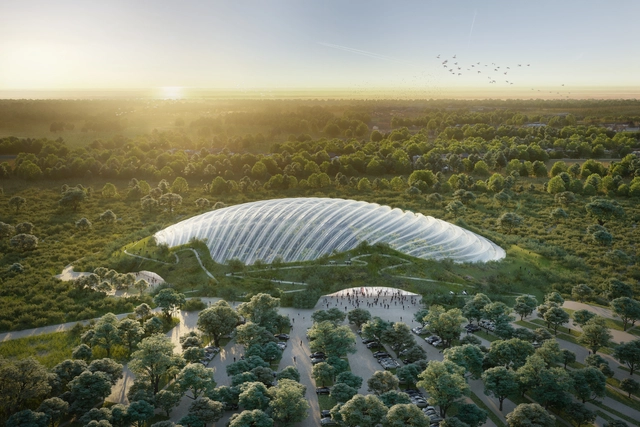
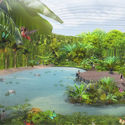
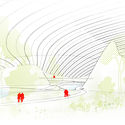
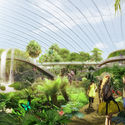
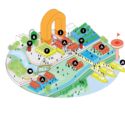
French firm Coldefy & Associates has unveiled images of their design proposal for the world’s largest tropical greenhouse under one roof. Situated in Pas-de-Calais, France, “Tropicalia” will cover an area of 215,000 square feet (20,000 square meters) featuring a tropical forest, turtle beach, a pool for Amazonian fish, and a one-kilometer-long walking trail. The biome aims to offer a “harmonious haven” where visitors are immediately immersed in a seemingly natural environment under a single domed roof.

Within a week of its successor being awarded the Silver Lion at the 2016 Venice Biennale, the original Makoko Floating School collapsed. Designed by Nigerian architect Kunlé Adeyemi of NLÉ Architects, the school was located in the Lagos Lagoon in Nigeria. Now, almost two years later, Lagos-based writer Allyn Gaestel has investigated the vulnerable coastal community and architect behind the project in a remarkable narrative nonfiction piece, "Things Fall Apart."
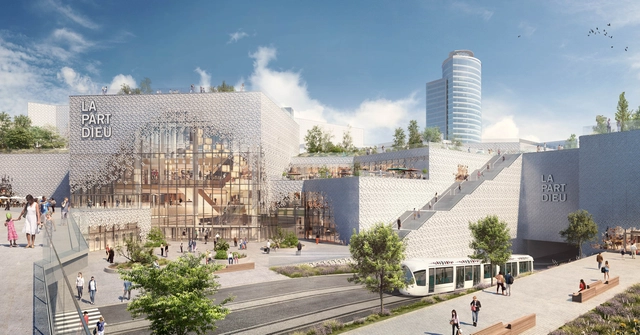
In the 3rd Arrondissement of the French city of Lyon, construction has begun on Lyon Part-Dieu, an MVRDV-designed scheme seeking to transform the city’s main shopping center. Featuring partly-transparent glass and a public green roof, the MVRDV scheme will revitalize and integrate what was formerly an introverted complex built for an era dominated by the car.
At 166,000 square meters, Lyon Part-Dieu is the largest downtown shopping center in Europe, built in 1975. In order to improve the existing outdated complex, MVRDV worked with co-architects SUD to produce a design that offers a contemporary update to the existing façade and a re-organization of the interior program.

Guangzhou-based multidisciplinary firm O-office Architects specializes in refurbishment projects. Founders Jianxiang He and Ying Jiang are known for exploring what architecture can do within the contemporary Chinese context, including a recent project in which they transformed an abandoned Shenzhen factory into a dynamic cultural and community center.
In this interview with ArchDaily, the founders of O-office speak about their philosophies regarding refurbishments and the current state of architecture in China.
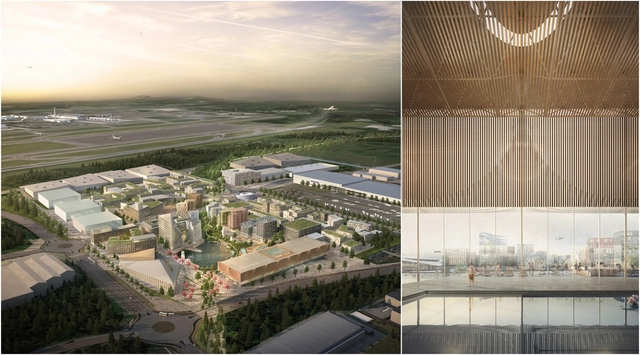
In an era defined by globalization, and ‘speed-driven economies,’ urban environments are becoming more entwined with airports, giving rise to an architectural phenomenon of the ‘Aerotropolis’ across the world. In Oslo, Norwegian firms Haptic Architects and Nordic Office of Architecture have aimed higher, seeking to design the world’s first energy-positive airport city for the Norwegian capital.
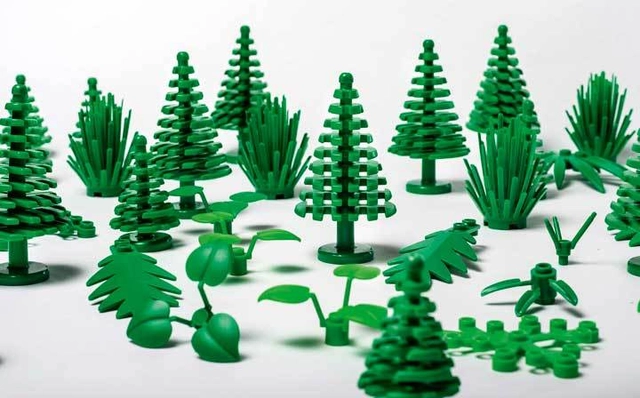
LEGO is going green. The Danish company has announced that they have begun production on a range of pieces made from a plant-based plastic sourced from sugarcane.
As a nod to their plant-based origins, the first sustainable pieces will take the form of LEGO botanical elements such as leaves, bushes and trees.
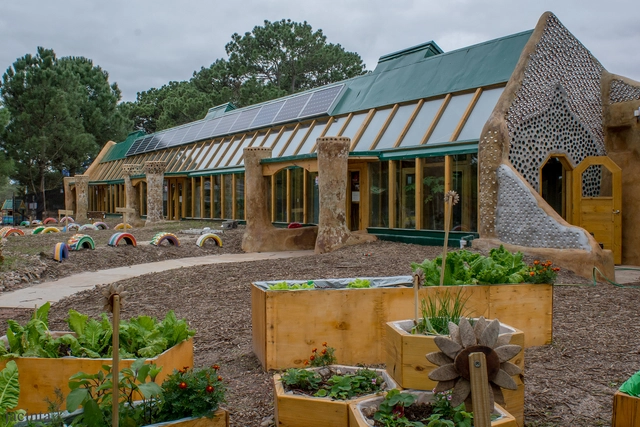
After a successful project in Uruguay—the first in Latin America—it's now Argentina's turn to build its first sustainable public school. The design will use the recycled materials of "garbage warrior" Michael Reynolds, the founder of Earthship Biotecture, and will be constructed as part of the program "A Sustainable School" in the unique biosphere of Mar Chiquita, in the Province of Buenos Aires, from March 1 to 28.
Read on for more information about the new project.
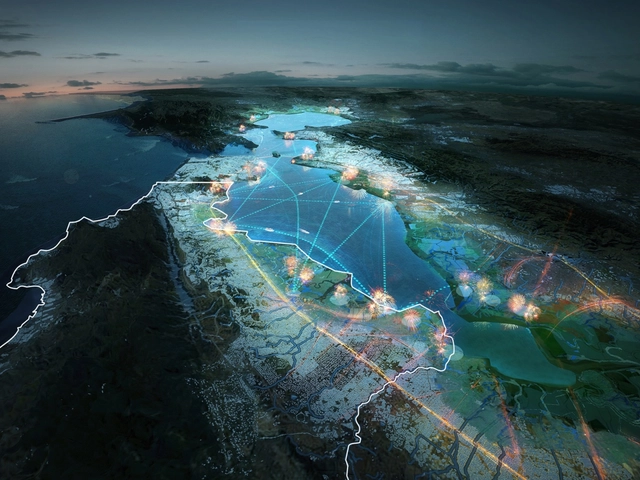
Following recent natural disasters including the Northern California wildfires, the HASSELL + team have been inspired to reimagine the San Francisco Bay Area as a vibrant community hub, equipped to provide temporary facilities in an emergency. As part of the competition Resilient by Design, the ten teams were asked to provide solutions for the waterfront through site-specific conceptual design and collaborative research projects.


_-_The_Mastaba_(Project_for_London__Hyde_Park__Serpentine_Lake).jpg?1522848242 "Courtesy of Christo")
_-_The_site_of_The_Mastaba_in_Serpentine_Lake.jpg?1522848328 "Courtesy of Christo")
_-_The_Mastaba_(Project_for_London__Hyde_Park__Serpentine_Lake)_(5).jpg?1522848162 "Courtesy of Christo")
_-_The_Mastaba_(Project_for_London__Hyde_Park__Serpentine_Lake)_(4).jpg?1522848063 "Courtesy of Christo")
_-_The_Mastaba_(Project_for_London__Hyde_Park__Serpentine_Lake)_(1).jpg?1522847854)