1. ArchDaily
  2. Architectural Education

Architectural Education: The Latest Architecture and News

Building Knowledge, Not Just Structures: Redefining the Architect’s Role in Times of Uncertainty

Aristotle is credited with the proverb "One swallow does not make a summer." In nature, the arrival of these migratory birds often announces the change of seasons, a universal symbol of renewal and hope. Yet it is only when many take flight that the true warmth of summer begins. The same can happen in architecture: an isolated project, however exemplary, rarely changes a reality on its own. When, however, a work teaches, inspires, and can be replicated, it becomes the harbinger of something greater.

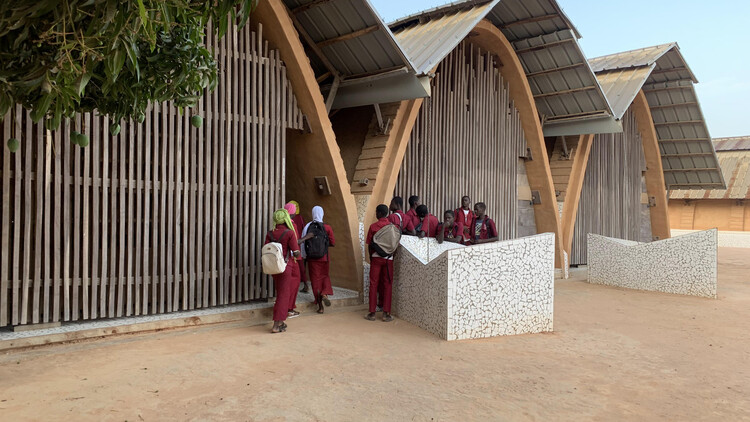
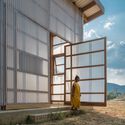
Initiatives that combine simple technologies, local materials, and participatory processes show how building can also be an act of learning. Structures and bricks shape places of mutual teaching, where architects and residents share knowledge and build together, multiplying skills and strengthening bonds. These projects point to the possibility of a collective summer, a future in which knowledge spreads as widely as the walls that shelter it.

Building Knowledge, Not Just Structures: Redefining the Architect’s Role in Times of Uncertainty - Image 1 of 4Building Knowledge, Not Just Structures: Redefining the Architect’s Role in Times of Uncertainty - Image 2 of 4Building Knowledge, Not Just Structures: Redefining the Architect’s Role in Times of Uncertainty - Image 3 of 4Building Knowledge, Not Just Structures: Redefining the Architect’s Role in Times of Uncertainty - Image 4 of 4Building Knowledge, Not Just Structures: Redefining the Architect’s Role in Times of Uncertainty - More Images+ 10

The Architect as a Scientist: New Materials Emerging Between Science and Design

What is architecture? For some, its traditional role is to bring together imagination, technical knowledge, and problem-solving, allowing architects to design and construct while balancing ideas with the means to realize them. From the stone and wood of early buildings to the steel and concrete of the 20th century, each era demanded not only an understanding of form but also of the properties and potential of the materials in use. This grasp of materials has always been a core part of the creative process, though its scope was limited by the know-how and technologies available.

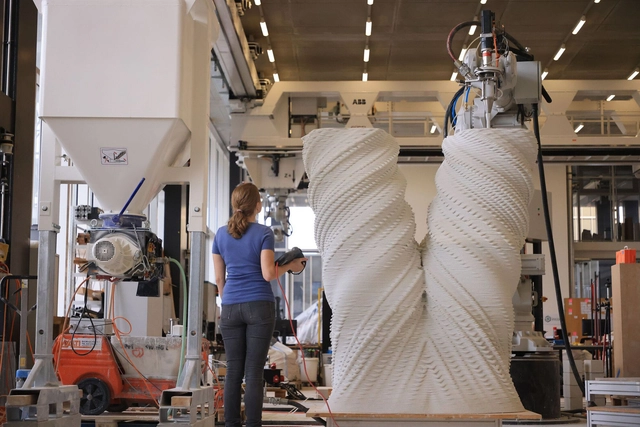
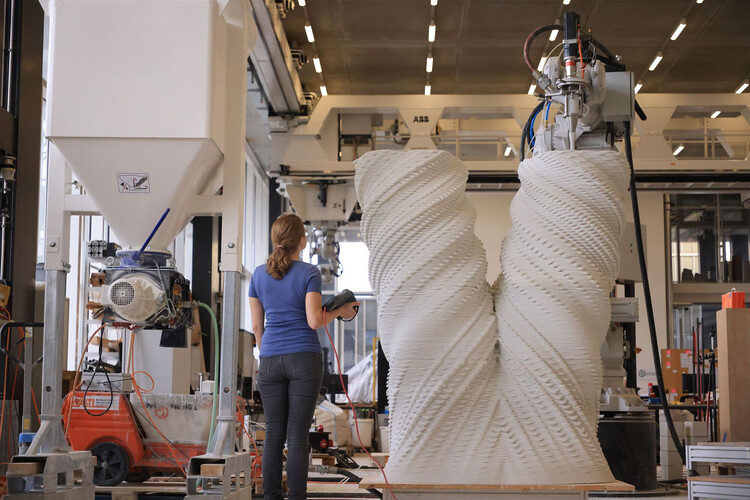
Over time, that balance has begun to shift. Architects have moved from merely using materials to actively designing them, applying scientific principles and experimenting with biological, chemical, and computational processes. This evolution has expanded the possibilities of architecture, intersecting nature, technology, and art, while pushing the role of the architect into a more experimental, science-driven dimension, where the manipulation and creation of materials becomes central to the creative act rather than merely a means to achieve forms or structures.

The Architect as a Scientist: New Materials Emerging Between Science and Design - Image 1 of 4The Architect as a Scientist: New Materials Emerging Between Science and Design - Image 2 of 4The Architect as a Scientist: New Materials Emerging Between Science and Design - Image 3 of 4The Architect as a Scientist: New Materials Emerging Between Science and Design - Image 4 of 4The Architect as a Scientist: New Materials Emerging Between Science and Design - More Images+ 11

The Architect as Writer: Expanding the Discipline Beyond Buildings

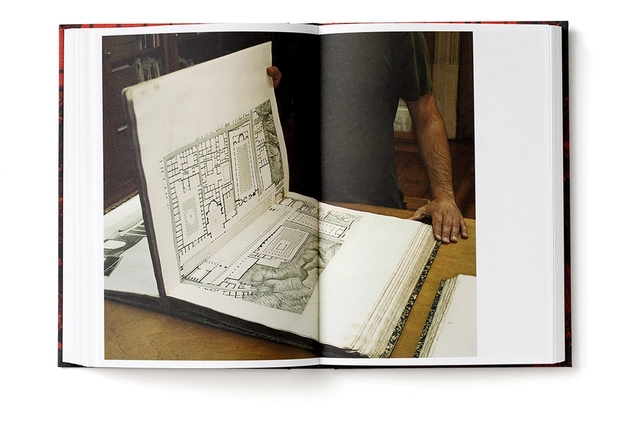
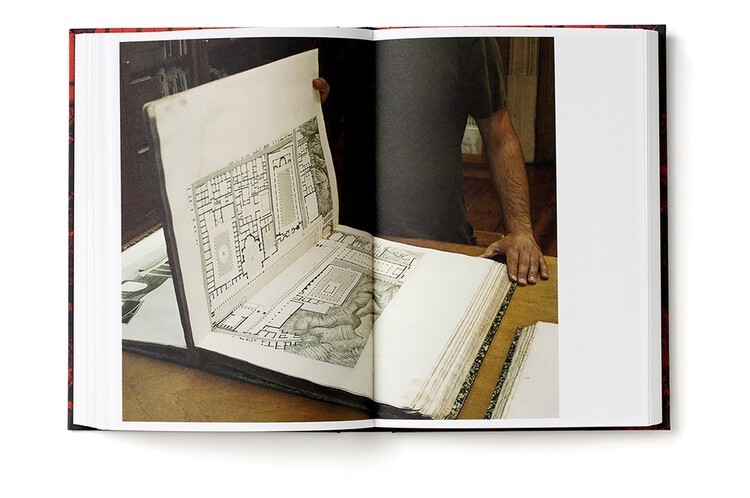
Architecture has always been more than bricks and mortar. It is equally constructed through words, ideas, and narratives. From ancient treatises to radical manifestos, from technical manuals to poetic essays, the written word has served as a spatial, pedagogical, and political tool within the field. Writing shapes how architecture is conceptualized, communicated, and critiqued — often long before, or even in the absence of, physical construction.

Historically, figures such as Vitruvius, Alberti, and Palladio employed writing to codify principles, project ideals, and legitimize architecture as a discipline. In the modern era, Le Corbusier, Adolf Loos, and Lina Bo Bardi wrote prolifically to expand the scope of architecture beyond form and function, often using publications as tools for persuasion and experimentation. The postwar period gave rise to new editorial strategies, as evident in the manifestos of Archizoom and Superstudio, and the polemical publications of Delirious New York and Oppositions, where writing served as both critique and project.

The Architect as Writer: Expanding the Discipline Beyond Buildings - Image 1 of 4The Architect as Writer: Expanding the Discipline Beyond Buildings - Image 2 of 4The Architect as Writer: Expanding the Discipline Beyond Buildings - Image 3 of 4The Architect as Writer: Expanding the Discipline Beyond Buildings - Image 4 of 4The Architect as Writer: Expanding the Discipline Beyond Buildings - More Images+ 31

International Youth Day: Three Educational Initiatives for Community-Led Urban Change

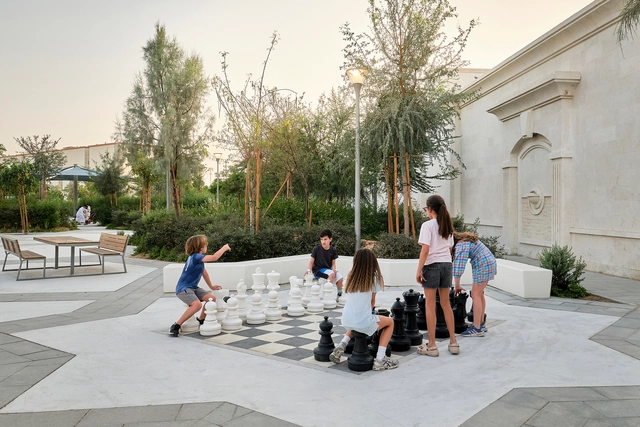
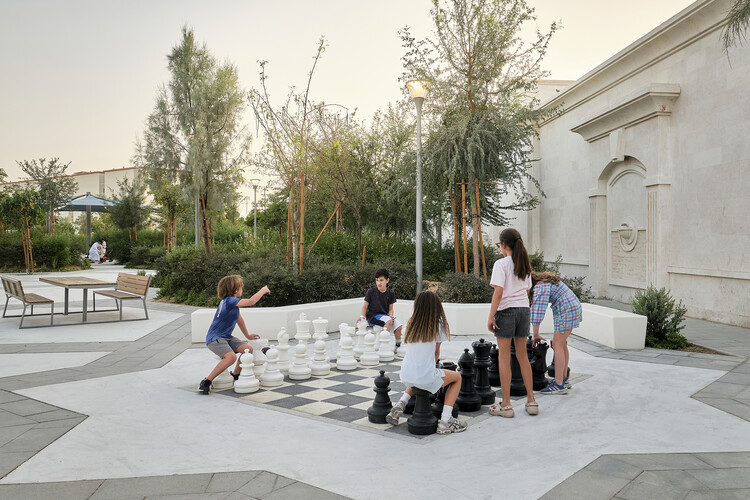
August 12, designated by the United Nations as International Youth Day since 1998, was conceived as an occasion to bring youth issues to the forefront of the international agenda and to celebrate the contributions of young people to today's global society. Each year, the observance focuses on a specific theme. In 2025, it is "Local Youth Actions for the SDGs and Beyond," emphasizing the role of youth in transforming global ambitions into community-driven realities. The aim is to highlight how young people help implement the Sustainable Development Goals (SDGs) within local contexts and bridge the gap between policy and practice. In this spirit, we present three educational programs, in Romania, the United Kingdom, and the United States, that empower youth to deepen their understanding of the built environment and envision a more sustainable, people-friendly urban future.

International Youth Day: Three Educational Initiatives for Community-Led Urban Change - Image 1 of 4International Youth Day: Three Educational Initiatives for Community-Led Urban Change - Image 2 of 4International Youth Day: Three Educational Initiatives for Community-Led Urban Change - Image 3 of 4International Youth Day: Three Educational Initiatives for Community-Led Urban Change - Image 4 of 4International Youth Day: Three Educational Initiatives for Community-Led Urban Change - More Images+ 1

“Even If You Want to Be a Gardener, Study Architecture”: Archigram Co-Founder Sir Peter Cook on Boldness, Creativity, and Architectural Education

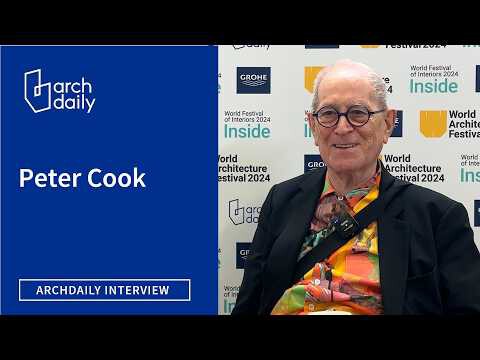
Sir Peter Cook is an English architect, professor, and writer, and a founding member of the neo-futuristic design group Archigram, alongside Warren Chalk, Ron Herron, David Greene, and Michael Webb. Beyond the group's radical urban concepts and visionary imagery, he co-founded CRAB Studio (Cook Robotham Architectural Bureau) with David Robotham in 2006, where they have developed built, conceptual, and speculative projects. He recently designed the Play Pavilion, located next to Serpentine South in Kensington Gardens, which opened on World Play Day, June 11, 2025. He is also known for the BIX Light and Media Façade at MoMA and for his series of drawings and collages that explore spaces, building elements, and organic landscapes.

Returning for his second interview with ArchDaily, Sir Peter Cook sat with Editor in Chief, Christele Harrouk, at the World Architecture Festival 2025. While the first conversation focused on his advice for young architects, this one followed his presentation during WAF on the forthcoming book, Archigram Ten, an editorial project reviving the spirit of the original magazine with founding members and contemporary designers. Building on those themes, he reflects on artificial intelligence, the impact of COVID-19 on his own practice, and current architectural pedagogies.

“Even If You Want to Be a Gardener, Study Architecture”: Archigram Co-Founder Sir Peter Cook on Boldness, Creativity, and Architectural Education - Imagem 1 de 4“Even If You Want to Be a Gardener, Study Architecture”: Archigram Co-Founder Sir Peter Cook on Boldness, Creativity, and Architectural Education - Imagem 2 de 4“Even If You Want to Be a Gardener, Study Architecture”: Archigram Co-Founder Sir Peter Cook on Boldness, Creativity, and Architectural Education - Imagem 3 de 4“Even If You Want to Be a Gardener, Study Architecture”: Archigram Co-Founder Sir Peter Cook on Boldness, Creativity, and Architectural Education - Imagem 4 de 4“Even If You Want to Be a Gardener, Study Architecture”: Archigram Co-Founder Sir Peter Cook on Boldness, Creativity, and Architectural Education - More Images+ 2

Beirut to Madrid: Global Education Programs from Zaha Hadid, Norman Foster, and SOM Foundations

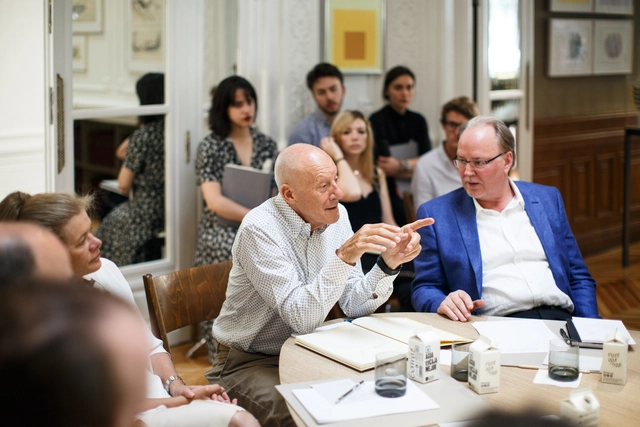
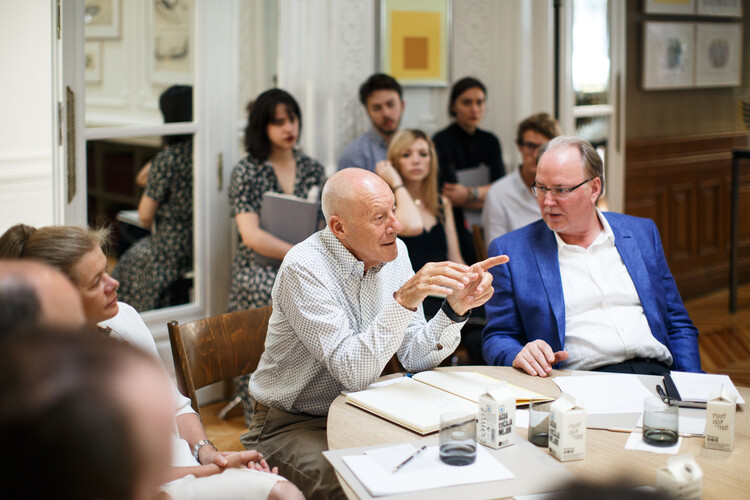
Foundations established by architects have increasingly become involved in architectural education through scholarships, fellowships, and interdisciplinary academic programs. These initiatives often aim to support students, promote research, and facilitate broader engagement with architecture and the built environment. Some architect-initiated foundations, such as the Zaha Hadid Foundation, which recently launched the Zaha Hadid Scholars Program at the American University of Beirut, along with the Norman Foster Foundation and the SOM Foundation, have introduced educational programs connected to their missions. While these programs differ in structure and focus, they commonly seek to extend the legacies of their founders by addressing contemporary challenges in design education. Their activities range from localized scholarship offerings to global research collaborations, reflecting a diverse approach to nurturing emerging talent and advancing architectural discourse.

Beirut to Madrid: Global Education Programs from Zaha Hadid, Norman Foster, and SOM Foundations - Image 1 of 4Beirut to Madrid: Global Education Programs from Zaha Hadid, Norman Foster, and SOM Foundations - Image 2 of 4Beirut to Madrid: Global Education Programs from Zaha Hadid, Norman Foster, and SOM Foundations - Image 3 of 4Beirut to Madrid: Global Education Programs from Zaha Hadid, Norman Foster, and SOM Foundations - Image 4 of 4Beirut to Madrid: Global Education Programs from Zaha Hadid, Norman Foster, and SOM Foundations - More Images+ 3

Architecture in the Age of Platforms: What Role Does Software Play in Practice Today?

Subscriber Access | 

How many software tools and platforms are involved today in developing a contemporary project? From designing a single-family house to a public library, relying on just one or two programs is no longer common. Instead, multiple tools combine, overlap, and interact throughout various stages, including analysis, design, rendering, coordination, and construction. This widespread use of software in the virtual world reflects not only the technical complexity of today's practice but also a more subtle yet equally significant shift: software has become less a specific tool and more an environment that accompanies and even challenges the process.

Forming a Distinct Identity: How Brutalism Shaped American Architecture Education

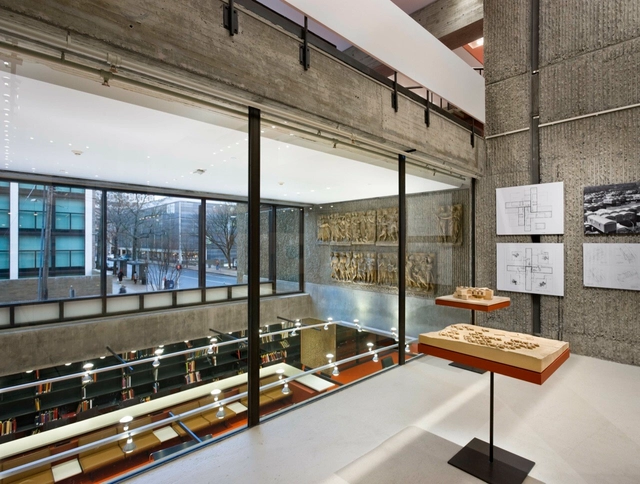
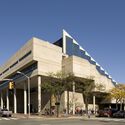
By the mid-nineteenth century, American universities began to distinguish architecture from civil engineering and the applied sciences formally. Architecture was emerging as a discipline defined by both technical competence and conceptual inquiry, spatial imagination, and cultural agency. As this disciplinary identity evolved in the postwar decades, its built expression coalesced into the emerging architectural language of Brutalism.

Forming a Distinct Identity: How Brutalism Shaped American Architecture Education - Image 1 of 4Forming a Distinct Identity: How Brutalism Shaped American Architecture Education - Image 2 of 4Forming a Distinct Identity: How Brutalism Shaped American Architecture Education - Image 3 of 4Forming a Distinct Identity: How Brutalism Shaped American Architecture Education - Image 4 of 4Forming a Distinct Identity: How Brutalism Shaped American Architecture Education - More Images+ 12

Léon Krier, Influential Voice in New Urbanism, Passes Away at 79

Léon Krier, the Luxembourg-born architect and urban theorist renowned for his critical stance against modernist planning and his influential role in the New Urbanism movement, passed away on June 17, 2025, at the age of 79. Known for his uncompromising critique of modernist planning and his vision for human-scaled, walkable communities, Krier leaves behind a substantial body of built work, theoretical writing, and educational influence.

Over a career spanning several decades, Krier advocated for a return to classical architecture and human-scaled urbanism, positioning himself as a leading critic of sprawling suburban development and high-rise modernism. His advocacy for walkable, mixed-use neighborhoods and his insistence on the cultural and social value of architecture challenged the prevailing norms of late 20th-century urban planning.

Léon Krier, Influential Voice in New Urbanism, Passes Away at 79 - Image 1 of 4Léon Krier, Influential Voice in New Urbanism, Passes Away at 79 - Image 2 of 4Léon Krier, Influential Voice in New Urbanism, Passes Away at 79 - Image 3 of 4Léon Krier, Influential Voice in New Urbanism, Passes Away at 79 - Image 4 of 4Léon Krier, Influential Voice in New Urbanism, Passes Away at 79 - More Images+ 5

Discover the World's Best Universities to Study Architecture in 2025, Based on QS Rankings

Every year, the QS World University Rankings by Quacquarelli Symonds (QS) releases an updated list of best university programs worldwide. In the field of Architecture and the Built Environment, the list includes 250 institutions. The ranking evaluates institutions across all continents. This year, The Bartlett School of Architecture (part of UCL) maintains its position in first place, as the top 10 list sees a reorganization of the selected universities, with no new entrants. Tsinghua University is the only one among them to improve its position since last year, rising from eighth to joint seventh.

Discover the World's Best Universities to Study Architecture in 2025, Based on QS Rankings - Featured ImageDiscover the World's Best Universities to Study Architecture in 2025, Based on QS Rankings - Imagen 1 de 4Discover the World's Best Universities to Study Architecture in 2025, Based on QS Rankings - Imagen 2 de 4Discover the World's Best Universities to Study Architecture in 2025, Based on QS Rankings - Imagen 3 de 4Discover the World's Best Universities to Study Architecture in 2025, Based on QS Rankings - More Images+ 3

Lesley Lokko Launches Nomadic African Studio to Lead Architecture Workshops Across Africa

Lesley Lokko, the Scottish-Ghanaian architect, curator of the 18th Venice Architecture Biennale, and the first Black woman to receive the RIBA Royal Gold Medal, has recently launched Nomadic African Studio, an educational program for young architects. The initiative is organized by Lokko's African Futures Institute (AFI) and is inspired by her experience establishing the Biennale College Architettura in 2023, a program for graduate students, recent graduates, early-career academics, and emerging practitioners to explore new possibilities for architectural education, which has also been continued for the 2025 edition. Nomadic African Studio consists of a series of fully funded, month-long studios across the African continent, "basing locations on themes, rather than places." The first edition is set to begin in July 2025, in Fez, Morocco.

Lesley Lokko Launches Nomadic African Studio to Lead Architecture Workshops Across Africa - Image 1 of 4Lesley Lokko Launches Nomadic African Studio to Lead Architecture Workshops Across Africa - Image 2 of 4Lesley Lokko Launches Nomadic African Studio to Lead Architecture Workshops Across Africa - Image 3 of 4Lesley Lokko Launches Nomadic African Studio to Lead Architecture Workshops Across Africa - Image 4 of 4Lesley Lokko Launches Nomadic African Studio to Lead Architecture Workshops Across Africa - More Images+ 2

25 Years Prototyping the Future: Inside IAAC’s Master in Advanced Architecture

 | Sponsored Content

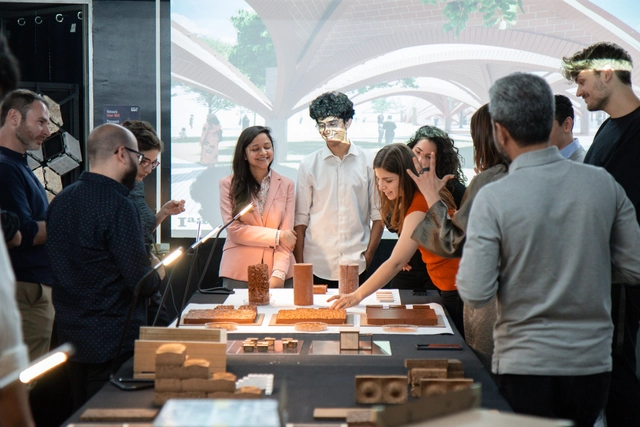
The Master in Advanced Architecture at IAAC celebrates its 25th anniversary as one of the most forward-looking programs in architectural education. Founded in 2000 in Barcelona, the program was created as a space for experimentation—where design meets technology, ecology and critical thinking, far from the conventions of traditional architectural training.

Over the years, the program has welcomed more than 1,000 students from over 80 countries. This international mix is no accident; it reflects IAAC's understanding of innovation as something that grows through dialogue, diversity and shared ambition. The result is a network of professionals working at the intersection of design, research, and systemic change.

Three Continents, One Mission: Rethinking the Future of Cities with the Norman Foster Institute

 | Sponsored Content

The Master's Programme on Sustainable Cities blends hands-on experience with academic insights from the Norman Foster Foundation's global network of experts. Co-directed by Norman Foster, President of the Foundation, and Professor Kent Larson, Director of the City Science Group at MIT Media Lab, the programme places students at the forefront of urban innovation. Each year, students immerse themselves in three pilot cities, engaging directly with local planners and managers to address urgent urban challenges.

Following the success of this year's pilot cities in Africa, the 2026 edition of the programme expands its geographical horizons to span three continents: Asia, Europe and Latin America. The pilot cities will be announced in the upcoming months.

"A Building Can Happen Intuitively After the Drawing Has Emerged:" Steven Holl On His Watercolors Exhibition in Berlin

"Steven Holl – Drawing as Thought," an extensive exhibition of the American architect's original watercolors, is now on view at the Tchoban Foundation Museum for Architectural Drawing in Berlin. It reveals insights behind some of Holl's key projects and design methodology. The selected drawings range from early unbuilt winning competition entries to some of the latest visions now under construction in Europe and the United States. Occupying the museum's two levels, the show opened on February 6 with a conversation between Holl and the museum's founder and architect Sergei Tchoban, as well as addresses by Kristin Feireiss, the exhibition's curator and founding director of the next-door Aedes Architecture Forum, and Diana Carta, an architect and scholar from Rome. The show, which can be visited until May 4th, is accompanied by a catalog that states, "The work of internationally renowned US architect Steven Holl is distinguished not only by his extraordinary buildings, with a focus on cultural and public structures such as museums, art centers, concert halls, libraries and universities worldwide, but also by his artistic oeuvre, which today comprises more than 50,000 sketches, black-and-white drawings, and watercolors. […] While exhibition visitors will only encounter a small portion of his extensive body of work, each drawing should be explored and studied individually, in keeping with Holl's intent."

"A Building Can Happen Intuitively After the Drawing Has Emerged:" Steven Holl On His Watercolors Exhibition in Berlin - 1 的图像 4"A Building Can Happen Intuitively After the Drawing Has Emerged:" Steven Holl On His Watercolors Exhibition in Berlin - 2 的图像 4"A Building Can Happen Intuitively After the Drawing Has Emerged:" Steven Holl On His Watercolors Exhibition in Berlin - 3 的图像 4"A Building Can Happen Intuitively After the Drawing Has Emerged:" Steven Holl On His Watercolors Exhibition in Berlin - 4 的图像 4A Building Can Happen Intuitively After the Drawing Has Emerged: Steven Holl On His Watercolors Exhibition in Berlin - More Images+ 23

Hannes Meyer: Exploring the Legacy of a Former Bauhaus Director

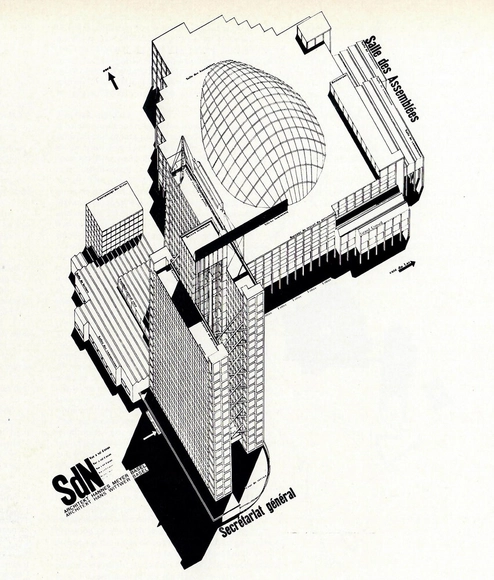
In March 2025, the actor Adrian Brody rose to the stage to collect his Academy Award for playing the role of László Toth in the acclaimed film, The Brutalist. The film is about a Bauhaus-educated architect who escaped Nazi Germany in the 1930s for the United States. Whilst the story is fictional, it reflects the lives of several émigré architects who left Central Europe in search of better working and intellectual conditions. These included the first three directors of Bauhaus, the renowned German school of design established in 1919. The first and third directors of the school, Walter Gropius and Mies van der Rohe respectively, ended up in the US where their careers in teaching and building both flourished. Lesser known is the second director, Hannes Meyer, who took a different path from his colleagues.

Hannes Meyer: Exploring the Legacy of a Former Bauhaus Director - Imagen 1 de 4Hannes Meyer: Exploring the Legacy of a Former Bauhaus Director - Imagen 2 de 4Hannes Meyer: Exploring the Legacy of a Former Bauhaus Director - Featured ImageHannes Meyer: Exploring the Legacy of a Former Bauhaus Director - Imagen 4 de 4Hannes Meyer: Exploring the Legacy of a Former Bauhaus Director - More Images+ 6

International Women’s Day 2025: The Diverse Approaches of Emerging Woman-Led Architecture Practices

Subscriber Access | 

This International Women's Day, we celebrate the contributions of women in architecture, a field traditionally dominated by men. While dominant narratives may overlook their significant impact, as the history of architecture is replete with examples of women subtly but powerfully shaping the profession. When limited to a draftsman position, Ester McCoy took a step back not to disengage but to better observe. She became the first architectural critic and historian to notice the unique flavor of Modernism developing along the West Coast during the 1950s, bringing names such as Richard Neutra, or Luis Barragan to the forefront of architectural discussions. Similarly, the name Aline Louchheim may not be a widely recognized one among architects, but, because of her, the name Eero Saarinen surely is. The profession of architectural publicist also emerged through this collaboration. These stories remind us that recognizing women's achievements in architecture is not about celebrating gender, but about acknowledging a historical bias that has hindered the entire field's progress.

International Women’s Day 2025: The Diverse Approaches of Emerging Woman-Led Architecture Practices - Image 1 of 4International Women’s Day 2025: The Diverse Approaches of Emerging Woman-Led Architecture Practices - Image 2 of 4International Women’s Day 2025: The Diverse Approaches of Emerging Woman-Led Architecture Practices - Image 3 of 4International Women’s Day 2025: The Diverse Approaches of Emerging Woman-Led Architecture Practices - Image 4 of 4International Women’s Day 2025: The Diverse Approaches of Emerging Woman-Led Architecture Practices - More Images+ 5

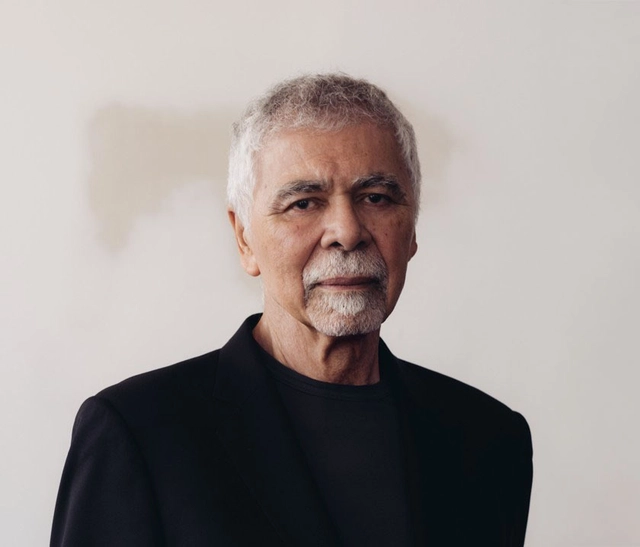
Ricardo Scofidio, Co-Founder of Diller Scofidio + Renfro, Passes Away at 89

Ricardo Scofidio, a distinguished figure in the world of architecture, passed away on March 6, 2025, at the age of 89. Born in New York City in 1935, Scofidio co-founded the influential architecture firm Diller Scofidio + Renfro (DS+R) with his partner Elizabeth Diller in 1979. Together, they brought to the profession a conceptual art sensibility, influencing the design of globally recognized cultural landmarks and public spaces. Among their most notable projects are the High Line in Manhattan and the transformation of Lincoln Center, each reflecting the studio's ambition of challenging conventional architectural premises.

Ricardo Scofidio, Co-Founder of Diller Scofidio + Renfro, Passes Away at 89 - Image 1 of 4Ricardo Scofidio, Co-Founder of Diller Scofidio + Renfro, Passes Away at 89 - Image 2 of 4Ricardo Scofidio, Co-Founder of Diller Scofidio + Renfro, Passes Away at 89 - Image 3 of 4Ricardo Scofidio, Co-Founder of Diller Scofidio + Renfro, Passes Away at 89 - Image 4 of 4Ricardo Scofidio, Co-Founder of Diller Scofidio + Renfro, Passes Away at 89 - More Images+ 2

“The Kind of Architecture I Try to Achieve Is a Rainbow:” In Conversation With Kengo Kuma

In my 2008 interview with Kengo Kuma in Manhattan—the Tokyo-based architect was in town for a lecture at Cooper Union and to oversee the construction of a house renovation in nearby Connecticut— he summarized the intention of his work for me, "The closest image to the kind of architecture I try to achieve is a rainbow." The architect designs his buildings as a chef would prepare a salad or a florist arrange a bouquet of flowers—by carefully selecting ingredients according to their size, shape, and texture. He then tests whether they should touch, overlap, or keep a distance to let the airflow pass through. The process is closer to a trial-and-error scientific experiment rather than an artistic exercise in projecting visionary forms and images. Although his buildings surely look strikingly artistic and utterly breathtaking. They are both precise and loose, primitive and refined, material and transient. The architect's fascination with materiality is startling, and despite having completed many dozens of buildings all over the world over the course of his distinctive career, in our conversation last month over Zoom, Kuma told me, "I stand at the beginning of a long process of material exploration."

“The Kind of Architecture I Try to Achieve Is a Rainbow:” In Conversation With Kengo Kuma - Image 1 of 4“The Kind of Architecture I Try to Achieve Is a Rainbow:” In Conversation With Kengo Kuma - Image 2 of 4“The Kind of Architecture I Try to Achieve Is a Rainbow:” In Conversation With Kengo Kuma - Image 3 of 4“The Kind of Architecture I Try to Achieve Is a Rainbow:” In Conversation With Kengo Kuma - Image 4 of 4“The Kind of Architecture I Try to Achieve Is a Rainbow:” In Conversation With Kengo Kuma - More Images+ 27