The discipline of architecture has undergone considerable change, primarily driven by advancements in the application of technology. Architects, long viewed as the futurists of the constructed world, are now utilizing progressive techniques and resources and expanding the use cases of technologies such as Augmented Reality (AR) and Virtual Reality (VR). This transition extends beyond professional practices into architectural education, bringing opportunities to redefine the approach of architects toward their craft.
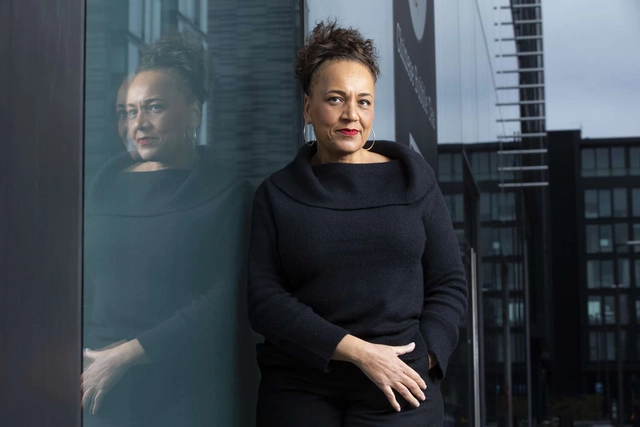
Ghanaian-Scottish architect, academic, and curator Lesley Lokko has been announced as the recipient of the 2024 Royal Gold Medal by the Royal Institute of British Architects (RIBA), becoming the first African woman to receive the award. Lokko is not a practicing architect, but as a teacher, writer, and curator she has fought to widen access to the profession and to bring forward voices that have been disregarded for far too long. As the curator of the 2023 Venice Architecture Biennale, she has shifted the focus to Africa and its diaspora, exploring the complex themes of decolonization and decarbonization. For all her contributions to the profession, Lesley Lokko will be formally presented with the medal in May 2024 by Muyiwa Oki, RIBA’s first black president.
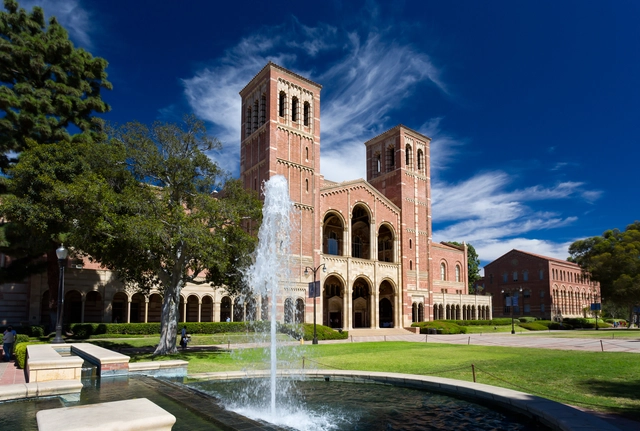
LOS ANGELES, CA/USA, Royce Hall on the campus of UCLA. Royce Hall is one of four original buildings on UCLA's Westwood campus.. Image via Shutterstock | Ken Wolter
The annual BAM ranking of International Master’s Programs in Architecture aims to assist architects and students in identifying the top international Master’s programs globally. Assessing programs from various leading architecture schools, it evaluates degrees through a comparative approach developed by a panel of 15 professors and international experts. For this edition, different Architecture and Built Environment programs have been selected to be part of the BAM Ranking 2023, and 18 Universities worldwide were featured in the 2023 edition of the BAM Ranking.
Similar to the past few years, Harvard University, Columbia University, and Universidad Politécnica de Madrid maintained their position at the top of the ranking. MIT has made the list with two programs, one focused on urbanism and the other on design. Moreover, Tsinghua University in Beijing, China, made the list with their English Program for Master in Architecture. The ranking also features TUDelft (Netherlands), TUM (Munich), and TUBerlin (Berlin) in Europe.
Interactive virtual game environment- SCI-Arc summer BS Design Workshop. Image Courtesy of SCI-Arc
The Bachelor of Science in Design* (BS Design) program at SCI-Arc is a 4-year degree preparing students for interdisciplinary creative careers in cinematic design, gaming, and data-based urban planning and design, using architecture as a platform for exploration.
In this fourth feature, we met with co-chairs ofdesign for Health architectArif Hasan, former Visiting Professor NED University Karachi and member of UNs Advisory Group on Forced Evictions, and architectChristian Benimana, Senior Principal and Co-Executive Director atMASS Design Group
For those considering a career in environmental design –as an architect, landscape architect, urban designer, or city planner–, an immersive summer program in architecture and sustainable design might be the way to go before making a more long term commitment. Intensive summer programs are a great way to explore a career interest in architecture and environmental design. The College of Environmental Design at the University of California, Berkeley offers a variety of immersive summer courses, emphasizing hands-on studio design and teaching a multitude of relevant foundational design skills. By attending these programs, students gain professional clarity, competency, an increased network of peers and experts, and an empowering experience.
Rahul Mehrotra is a practicing architect based in Boston and Mumbai and he has been teaching at Harvard’s GSD where he is currently Chair of the Department of Urban Planning and Design and Director of the Master in Architecture in Urban Design Degree Program. Born in 1959, Mehrotra grew up in Lucknow, a city in Northern India and an important cultural and artistic hub. His father was a manager at a large machine tool company. The family moved a lot following Mehrotra senior’s frequent promotions, which led to changing residences owned by his company. Besides a few years in Lucknow and Delhi, they lived in different neighborhoods within Mumbai.
Lesley Lokko by Jacopo Salvi. Image Courtesy of La Biennale di Venezia
On Friday, King Charles III has released the New Year Honours List 2023, recognizing those in the UK who have demonstrated exemplary service or achievements in their fields. Ghanian-Scottish architect, academic, and novelist Lesley Lokko is among those who have been named an Office of the Order of the British Empire (OBE) for her services to architecture and education. In December 2021, Lesley Lokko was announced as the Curator of the 18th International Architecture Exhibition - La Biennale di Venezia, which will be held from Saturday, 20 May to Sunday, 26 November 2023.
The Second Studio (formerly The Midnight Charette) is an explicit podcast about design, architecture, and the everyday. Hosted by Architects David Bruce Lee and Marina Bourderonnet, it features different creative professionals in unscripted conversations that allow for thoughtful takes and personal discussions.
A variety of subjects are covered with honesty and humor: some episodes are interviews, while others are tips for fellow designers, reviews of buildings and other projects, or casual explorations of everyday life and design. The Second Studio is also available on iTunes, Spotify, and YouTube.

This week David and Marina answer two questions from listeners: How to cope with the feeling of failure in architecture school and whether or not architecture is hard and stressful. The two cover why freshmen often have false expectations of success, embracing failure, not seeking approval from teachers or clients, dealing with ‘dumb’ design assignments, overcoming paralysis, the main reasons why being an architect is challenging, and more!
https://www.archdaily.com/992767/the-second-studio-podcast-overcoming-failure-in-architecture-schoolThe Second Studio Podcast
In order to help architects and students to get to know the best International Master’s available in the world, BAM’s annual ranking compares and evaluates programs, from the best schools of architecture, through a comparative and objective methodology, developed by 13 international experts. For the 2022 edition, different Master’s Degree Programs from the recent QS Ranking – Architecture / Built Environmenthave been selected to take part in BAM’s Ranking.
Similar to previous years, in 2022, Harvard and Columbia maintained their leading positions in first and second place. MIT made a comeback to the list with two master's programs, in the fourth position, the Master of Science in Architecture Studies in Urbanism (SMArch Urbanism), and in the sixth position, the Master of Science in Architecture Studies in Design (SMArchS Design). Universidad Politécnica de Madrid and ETH Zurich were both ranked third, offering the best master’s program in Europe. Pontificia Universidad Católica in Chile occupied the 18th position, presenting a top master's degree in South America, followed closely in the 20th position by the Universidade de São Paulo.
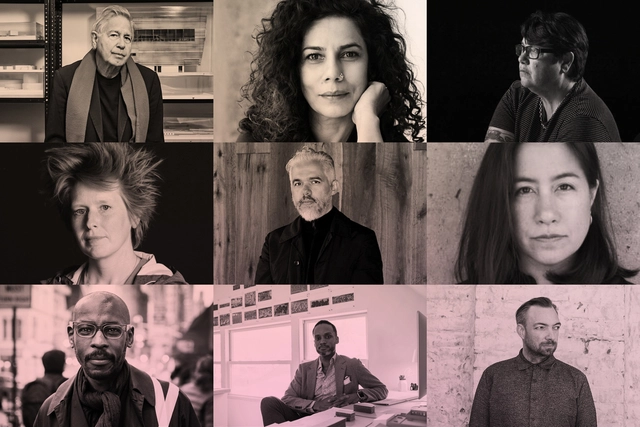
Top left to right: Bernard Tschumi, Anupama Kundoo, Catherine Opie. Middle left to right: Erin Besler, Héctor Esrawe, Ana María León. Bottom left to right: Mario Gooden, Sekou Cooke, Liam Young. Image Courtesy of SCI-Arc
SCI-Arc (Southern California Institute of Architecture) was created in 1972 and based on the concept of a "college without walls". Its original name was New School, which symbolized a paradigm shift in teaching architecture, focusing on a horizontal relationship between teachers and students and on experimentation, making it one of the few independent architecture schools in the world. In 2022, the institution turns 50 and has planned a calendar full of events and projects to take place throughout the year.
In this week's Common Edge piece, Duo Dickinson explores his personal journey from teaching to practice to teaching again, and the differences he perceived. Stating that "no one today believes that school can fully prepare students for what architecture will become in 10 years", the author explains how architectural education has been evolving and questions what could be the best ways to ensure that education remains relevant.
CAMBRIDGE, USA - December 01, 2016: Massachusetts Institute of Technology (MIT) Dome - Cambridge, Massachusetts, USA. Image via Shutterstock/ By Diego Grandi
Every year in March, the QS World University Rankings reveal the top universities to study each profession, covering 51 different subjects. Grading schools based on academic reputation, employer reputation, and research impact, the annual QS- Quacquarelli Symonds has unveiled that for the second year in a row, in the 2021 Architecture/ Built Environment division, the Massachusetts Institute of Technology (MIT) is still in the first position.
The following text was drafted in response to the first prompt in AN’s “Post-Pandemic Potentials” series. Two previous responses, by Mario Carpo and Phil Bernstein, reflected on the mostly seamless transition of architectural education from physical to virtual settings. Read more about the series here.
Michel Foucault’s famous account of the plague described the partitioning of the medieval city, the confinement of its citizens, and the accounting for and distribution of resources. Those foundational actions, according to his thesis, led to the disciplining of people and institutional bodies in space and time. Similarly, the field of medicine, consolidated by the Flexner Report of 1910 (and followed soon after by the founding of the Association of Collegiate Schools of Architecture, or ACSA, in 1912), was further formalized in the aftermath of the 1918 influenza outbreak that exposed the need for greater surveillance and diagnostics required in epidemiology.
Architectural Education is still largely living in the mid-20th century, where the studio model is both wonderful, limited and alive and well. Students are offered two stark pedagogies: either getting a fine arts education or applying a glorified trade school regimen towards being a technocrat. Artificial Intelligence (AI) might just eliminate architecture as a career for those who are not versed in the things that only humans can do: synthesize, channel, invent, craft. Beyond imitation. By its new nature, architecture could be becoming inhuman.
Videos
Peter Eisenman, Patrik Schumacher, and Alisa Andrasek among the speakers that participated at Digital Futures. Image Courtesy of Digital Futures
Like most functions in recent months, this year’s Digital FUTURES, which is held annually since 2011 at Tongji University in Shanghai, had to move online due to the pandemic. The organizers took this as an opportunity to give the event a global dimension, turning the festival into what they rightfully call the most significant worldwide event for architectural education ever staged, with a 24/7 display of workshops, lectures and panel discussions involving some of the most prominent architects and educators. Here is an overview of the festival, together with a selection of lectures from Digital FUTURES World.
Carlo Scarpa working on the design of the Banca Popolare di Verona, with his associates, Arrigo Rudi and Renato Scarazzai. Photo courtesy of George Dodds.
This essay is an excerpt from the final chapter of Draw in Order to See: A cognitive history of architectural design, which outlines recommendations for reforming architectural education and practice. It uses the theory of embodied cognition—the science behind how our brains take in the built environment—to underscore the need for designers to reject the alienating legacy of Enlightenment rationalism that has pushed architects away from artisanal literacy since the industrial revolution. Although some of these practices and methods are already employed by individual educators and included in some curricula, they are neither widespread nor (more important) mandated in NCARB standards.
https://www.archdaily.com/941809/12-ways-to-reform-architectural-educationMark Alan Hewitt