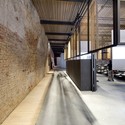
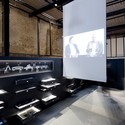
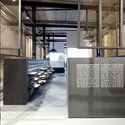
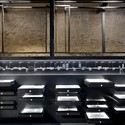
Radio Broadcasting Station, Detroit by Knud Lonberg-Holm. Image Courtesy of Metropolis Magazine
In one of his final interviews, Knud Lonberg-Holm quipped, "I've always been annoyed by rummaging through the past; the future interests me much more." Not one to promote himself, the modernist architect all but disappeared after retirement, seemingly taking his contributions to architecture with him. After years of neglect, investigative research has finally unearthed just how influential Lonberg-Holm was. To learn about how he shaped information design (among many other things), continue reading Paul Makovsky's exclusive article on Metropolis Magazine.
Hotel Fjord is the most visible big structure that was conceived and built during the Yugoslav period in Kotor and which is now waiting for more intense use again. Next to it there is at least four major sites and structures in a wide range of different material conditions, but all in a state of minimal use, which can be described as a programmatic void in the center of Kotor.
Focusing on recent acquisitions in MoMA’s Department of Architecture and Design, Conceptions of Space addresses how contemporary architects continue to embrace spatial creation as a fundamental focus of their work. The exhibition reveals how, beyond formal traits and functional needs, the conception and articulation of architectural space still defines architecture as an artistic endeavor, and a response to wider cultural issues.
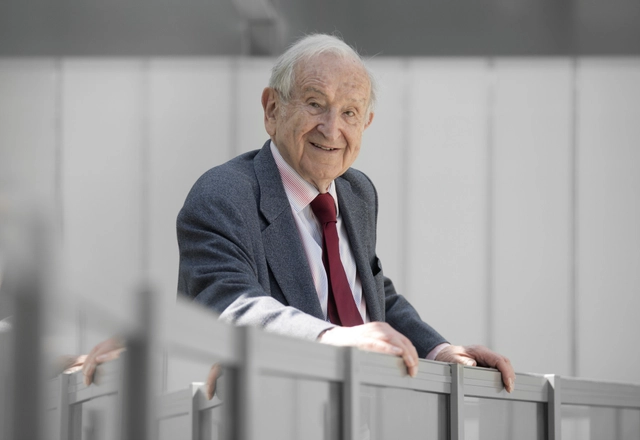
Architecture critic Joseph Rykwert has been rewarded for his services to criticism by the Queen, receiving a CBE in this year's birthday honours list. The honour continues a good year for Rykwert, after being awarded the RIBA Gold Medal in September. Also included on the birthday honours list were Alan Stanton and Paul Williams, founders of the 2012 Stirling Prize-winning Stanton Williams, who each received an OBE.
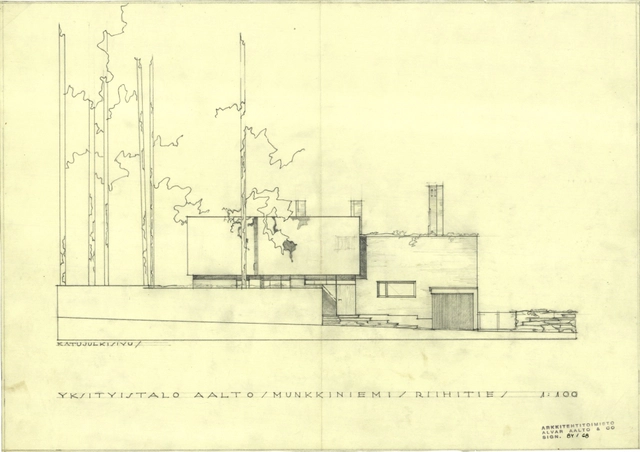
This summer, the art, architecture and design of Finland will be celebrated in London. Reason & Intuition - Alvar Aalto & Ola Kolehmainen in Soane is a new exhibition bringing together the finest works of an acknowledged great of international modernist architecture and design and three collections of images by an acclaimed Finnish photographer.
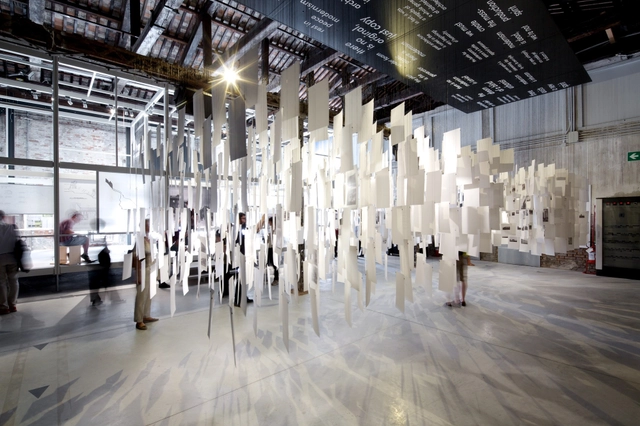
From the Curators. Responding to the theme ‘Absorbing Modernity: 1914-2014’ set by the curator of the 14th International Architecture Exhibition, Rem Koolhaas, ‘Lest We Forget: Structures of Memory in the United Arab Emirates,’ presents the seminal findings of a larger initiative to archive the history of architectural and urban development in the UAE over the past century. With a concentrated emphasis on the 1970s-1980s, the exhibition examines how public and residential architecture, built within a rapidly expanding urban context, shaped the newly established federation and prepared the foundation for its emergence on a global stage.
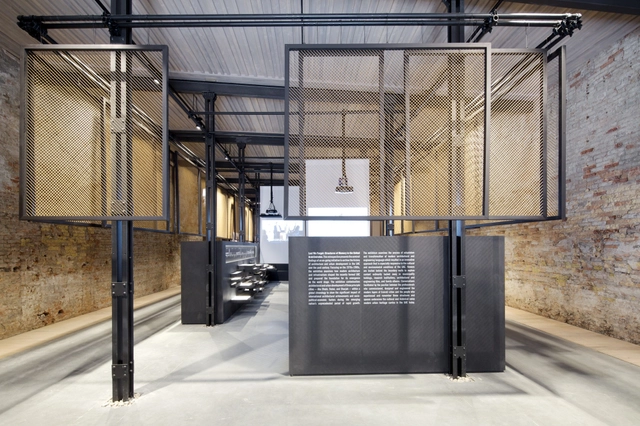
From the Curators. The exposition with the project title Unwritten highlights issues regarding the perception, research, and conservation of Latvian post-War architecture. Unwritten chronicles, in fact, inexistent research on this.
Workers in Chengdu, China, assemble the Hualin Temporary Elementary School, designed by the Japanese architect Shigeru Ban after the 2008 Sichuan earthquake. Image Courtesy of Forgemind ArchiMedia
British writer Tim Abrahams finds Shigeru Ban's architecture "kooky, Middle Earthy, Hobbity" – an opinion which earns him the title of "idiot" in the eyes of newly appointed Architecture for Humanity Executive Director Eric Cesal. In an article for the Boston Review, Stephen Phelan uses the pair's opposing opinions to illustrate the Pritzker Prize winning architect's perceived failures and successes. Read his very engaging take, here.
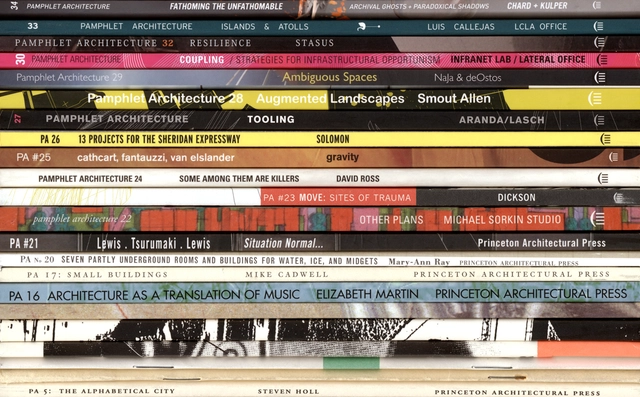
Following the success of the inaugural call for entries, which produced the Pamphlets 23–30, Pamphlet Architecture, with renewed support from the National Endowment for the Arts, announces the 2014 competition.
The annual RIBA Stirling Prize is set to regain its £20,000 cash prize following a year of no prize money in which Witherford Watson Mann scooped the accolade for Astley Castle. Considered to be the UK’s most prestigious architecture award, the Stirling Prize is presented annually to the “building that has made the greatest contribution to the evolution of architecture in the past year”. Brockton Capital have agreed to support the prize for the next three years starting from 2015, after which the prize will be known as the RIBA Brockton Stirling Prize. The lack of prize money in 2013 raised questions about the significance of the award.
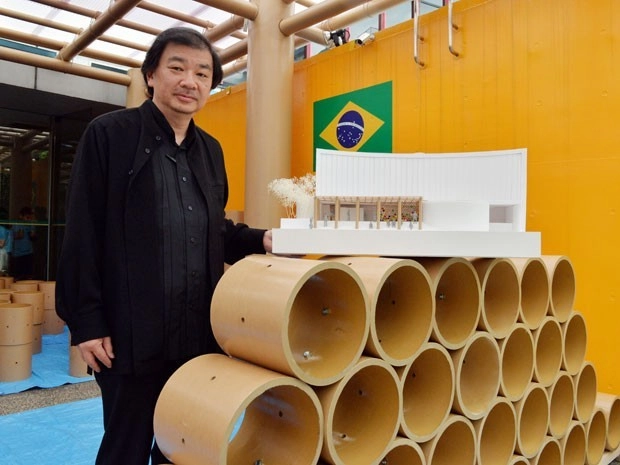
In honor of the World Cup (which starts today), the Brazilian Embassy in Tokyo, Japan, has invited Shigeru Ban, this year's Pritzker Laureate, to build a temporary pavilion.
Located at the entrance of the embassy, the three foot tall, 120 m² temporary structure will be a place where people can meet after the games since, due to the time difference, the games will not be broadcast on site.
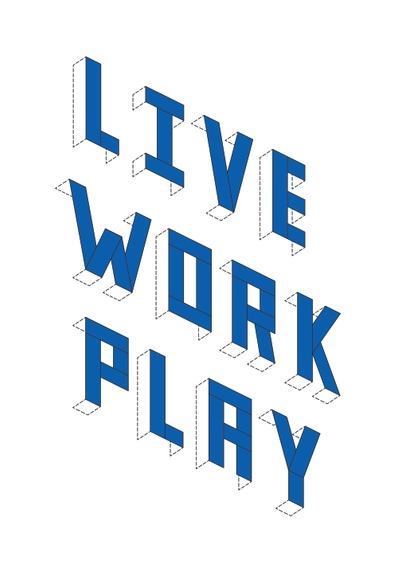
Live Work Play, an exhibition organised as part of the Hampshire Festival of Architecture 2014 (UK), showcases over 100 projects from "within the country, the UK, and beyond." Featuring a range of "thoughtful, robust, elegant and ingenious designs", the show will include designs from local practices such as PAD Studio, Design Engine, AR Design Studio, Design ACB and John Pardey Architects. The exhibition will be open seven days a week between the 14th June and the 16th July. Find out more from RIBA Hampshire.
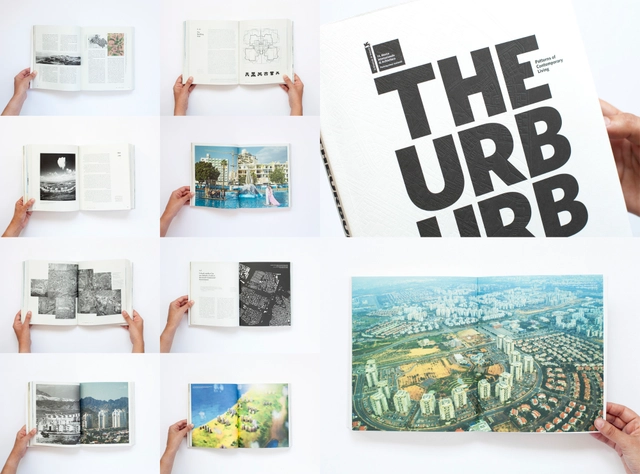
Written to accompany the minimal exhibition of the Israeli Pavilion at the Venice Biennale, “The Urburb - Patterns of Contemporary Living” tells the story of the Urburb, a built condition which is neither urban nor suburban, that dominates the contemporary Israeli landscape. Edited by Architect Ori Scialom and Dr. Roy Brand, the book brings together architectural photography and photographs of the installation interspersed amongst theoretical texts and short stories which address the cultural, political, and social aspects of the “Urburban” way of life. Learn more about the book, published by Sternthal Books,here.
Natural systems offer architects and designers significant potential as alternative, ecologically performative architectonic strategies. The d3 Natural Systems competition invites architects, designers, engineers, and students to collectively explore the potential of analyzing, documenting, and deploying nature-based influences in architecture, urbanism, interiors, and designed objects.
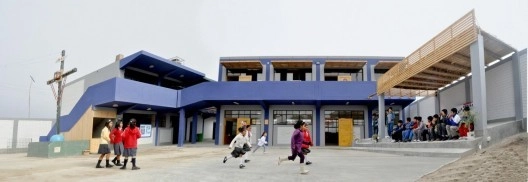
The Maria Auxiliadora School in Peru, designed/built with help from Architecture for Humanity Design Fellow, Diego Collazo, and with funding from the Happy Hearts Fund and the SURA Group. Image Courtesy of Maria Auxiliadora School
Architecture for Humanity, the non-profit responsible for propagating designers and designs around the world that "give a damn," has named its latest Executive Director. After co-founders Kate Stohr and Cameron Sinclair announced their decision to step down in September of last year, the organization began a global search for the person who would replace them. Today, the Board of Directors has announced the appointee: Eric Cesal, an experienced designer and author of the memoir/manifesto Down Detour Road: An Architect in Search of Practice who first joined Architecture for Humanity in 2006 as a volunteer on the Katrina reconstruction program and later established and led Architecture for Humanity’s Haiti Rebuilding Center in Port-au-Prince from 2010 to 2012.
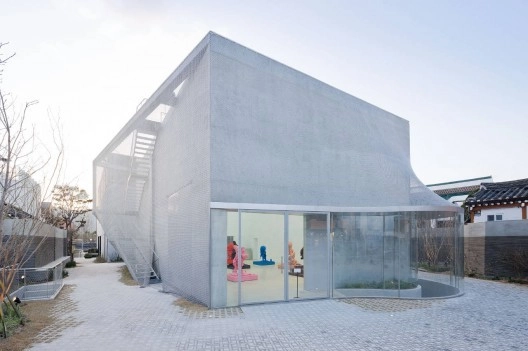
The Parrish Art Museum is pleased to present Soft Footprints: Works by SO – IL as the fourth installment of Architectural Sessions—an ongoing series co-presented with AIA Peconic that explores the connection between art and architecture, and how both disciplines elicit conversation about space, form, materials and aesthetics. On June 6, host architect Maziar Behrooz, AIA, will moderate a discussion with SO – IL co-founders Florian Idenburg and Jing Liu about their design philosophy, inspiration, and interdisciplinary approach to architecture and designing spaces for art.
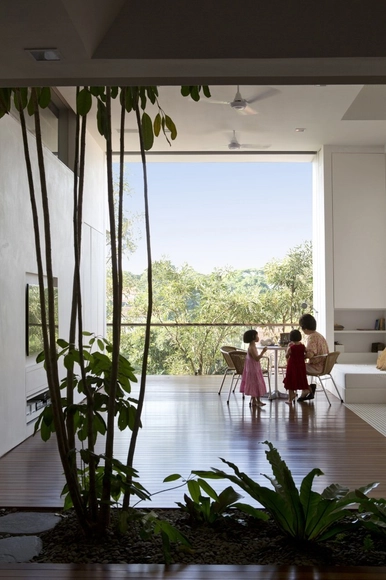
Multigenerational homes are nothing new. But with life expectancy increasing, young people staying longer in their childhood homes, and Baby Boomers aging, children, parents, and grandparents under the same roof might soon become the norm. To explore this possibility, Metropolis Magazine asked four design firms to consider what multigenerational living might look like in the future. Check out each unique take on sharing resources and space by reading the article here.
.jpg?1403035475&format=webp&width=640&height=580)