Francesco Veenstra, one of six partners at the Dutch practice Mecanoo and Lead Architect on a number of major projects in the United Kingdom, recently spoke to Mies. UK about the practice's approach to design and their unique take on sustainability. Having recently completed a major public building in Birmingham (which was put to the vote and won the AJ's 2013 Building of the Year), and with more in the pipeline, the practice's international outlook is growing. How has the practice's design methodology and core ideas influenced this success? Read more after the break.
Editor's Choice
Mecanoo's Francesco Veenstra on "Sustainability as Social Responsibility"
https://www.archdaily.com/461691/mecanoo-s-francesco-veenstra-on-sustainability-as-social-responsibilityJames Taylor-Foster
Norman Foster-Designed Scheme Aims to Transform London into “Cycling Utopia”

Foster + Partners has unveiled a scheme that aims to transform London’s railways into cycling freeways. The seemingly plausible proposal, which was designed with the help of landscape firm Exterior Architecture and transportation consultant Space Syntax, would connect more than six million residents to an elevated network of car-free bicycle paths built above London’s existing railway lines if approved.
"SkyCycle is a lateral approach to finding space in a congested city," said Norman Foster, who is both a regular cyclist and the president of Britain's National Byway Trust. "By using the corridors above the suburban railways, we could create a world-class network of safe, car free cycle routes that are ideally located for commuters."
https://www.archdaily.com/463363/norman-foster-designed-scheme-aims-to-transform-london-into-cycling-utopiaKarissa Rosenfield
AD Interviews: Ben van Berkel, UNStudio on London's Canaletto Tower

ArchDaily recently spoke to Ben van Berkel, co-founder and principal architect at UNStudio, an international network of specialists in architecture, urban development and infrastructure based in the Netherlands. The office, which was founded in 1988, has completed projects around the world ranging from Rotterdam’s Erasmus Bridge to the Mercedes-Benz Museum in Stuttgart. With over 81 built projects, and 54 currently in progress (including Raffles City in Hangzhou and Scotts Tower in Singapore), London’s Canaletto Tower (which is due to be completed in 2015) marks the practice’s first major project in the UK.
https://www.archdaily.com/463301/ad-interviews-ben-van-berkel-unstudio-on-london-s-canaletto-towerJames Taylor-Foster
ArchDaily: What Happened in 2013, and What is Coming for 2014!
.jpg?1388522487&format=webp&width=640&height=580)
Dear readers,
https://www.archdaily.com/463229/archdaily-what-happened-in-2013-and-what-is-coming-in-2014David Basulto
The 20 Best Articles of 2013
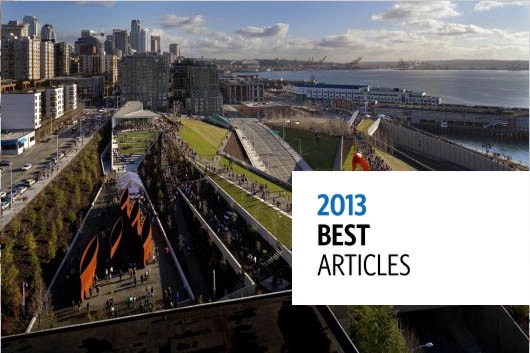
The following 20 articles are what we at ArchDaily consider the Best of 2013. They may not have received the most traffic, but they posed fascinating theories about the state of architecture and urbanism today, they gave us insight into the creative processes of innovative architects (from Bjarke Ingels to Peter Zumthor) and, most of all, they provoked us to question: What does architecture mean? For us architects, and for the world?
https://www.archdaily.com/462213/the-20-best-articles-of-2013Vanessa Quirk
The Ten Most Watched Interviews of 2013
.jpg?1388503603&format=webp&width=640&height=580)
Our mission is to provide inspiration, knowledge and tools to the architects who will have the challenge to face the urban growth of the next 40 years.
We understand that each of the thousand of projects that we feature every year can transfer knowledge from the firms to other architects around the world, through the photos, details, diagrams and their own descriptions.
But we feel that there is a very important structural layer in these projects that can only be understood by actually knowing the architects behind them. And that’s why we started our interview program when we launched ArchDaily in 2008.
During this year we have had the opportunity to interview an incredible group of architects, ranging from Toyo Ito -an exclusive interview the same day he was announced as the 2013 Pritzker Laureate-, Wolf D. Prix, Iñaki Ábalos and Reiner de Graaf, to young upcoming firms from all over the world. But we have also interviewed business men who influence cities, synthetic biologists who are thinking in the future of architecture, sociologists analyzing the future of the urban world, and curators of the most influential museums of the world.
Here you will find the list of the ten most watched (or read) interviews of 2013.
And be ready for 2014, as we have some great interviews lined up for next year!
https://www.archdaily.com/463174/the-ten-most-watched-interviews-of-2013David Basulto
The Ten Most Read Articles of 2013
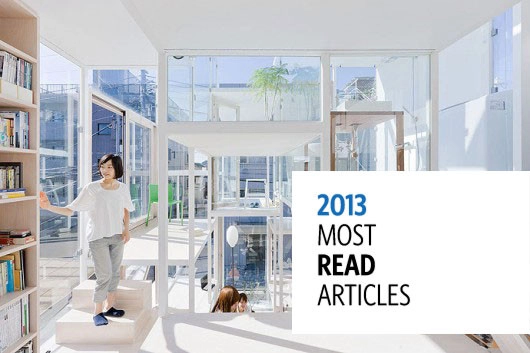
It's that time of year again! The time when we round-up what you, our dear readers, most enjoyed this year. The following ten articles - from fun lists (30 Architecture Docs to Watch in 2013) to thought-provoking looks into the state of the architecture profession (Are Renderings Bad for Architecture?) - caught your attentions and provoked some great comments. See them all - including our record-breaking #1 article - after the break.
https://www.archdaily.com/458935/the-ten-most-read-articles-of-2013Vanessa Quirk
Roger Stephenson: "Using Craft in a Contemporary Way"
Mies. UK recently spoke to Roger Stephenson OBE, Managing Partner at Manchester based stephenson:ISA Studio, about his award winning practice's approach to "using craft in a contemporary way". The office most recently completed an addition to Chetham's School of Music, winning the 2013 RIBA Regional Building of the Year Award, RIBA National Award, and the RIBA Regional Award. This project is the latest in a long list of innovative buildings that are part of a "rigorously coherent, contextually progressive architecture" that has made the practice one of best known regionalist design offices in the UK.
Read the interview in full, and watch a three minute tour of Chetham's School of Music, after the break.
https://www.archdaily.com/462781/roger-stephenson-using-craft-in-a-contemporary-wayJames Taylor-Foster
Call for Classics Interns for Spring 2014

ArchDaily is in need of an architecture-obsessed, history buff to delve into the world of ArchDaily Classics for Spring 2013 (January 15th – May 15th)! If you want to spend your days researching/writing about the best architecture around the globe – and work for the world’s most visited architecture website – then read on after the break…
https://www.archdaily.com/457067/call-for-classics-interns-for-spring-2014Vanessa Quirk
Seasons Greetings from the Architects!
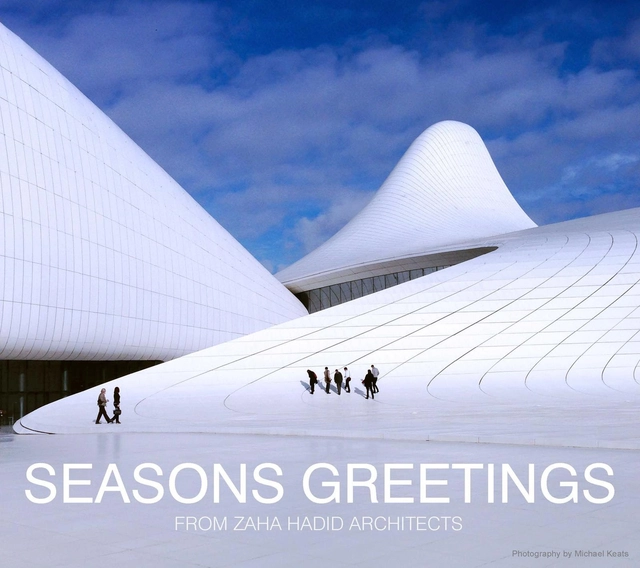
Every year architects from around the world share their holiday greetings with us, applying their architectural creativity to an e-card format. Here we share some of our favorites from this year.
Happy holidays from all of us at ArchDaily to you!
https://www.archdaily.com/462117/seasons-greetings-from-the-architectsDavid Basulto
INTERIORS: The Yeezus Tour

Interiors is an online film and architecture journal, published by Mehruss Jon Ahi and Armen Karaoghlanian. Interiors runs an exclusive column for ArchDaily that analyzes and diagrams films in terms of space. Their Official Store will carry exclusive prints from these posts.
The Yeezus Tour, Kanye West’s solo tour, which coincides with his sixth studio album, Yeezus, kicked off in Seattle, Washington on October 19, 2013 and ends in Toronto, Canada on December 23, 2013.
The show is theatrical, cinematic and operatic in its structure. It merges together all of Kanye West’s interests in the the visual and performance arts, creating a powerful experience that transcends the concert format.
https://www.archdaily.com/461103/interiors-the-yeezus-tourINTERIORS Journal
The Ongoing Battle to Preserve Midcentury Modernism
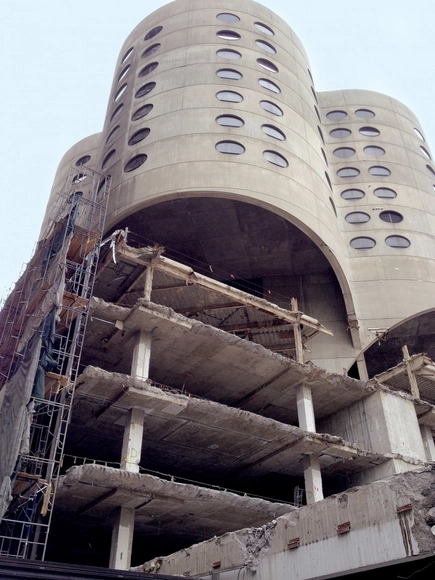
This article by Fred A Bernstein originally appeared in Metropolis Magazine as "Worth Preserving". Bernstein tracks the preservation battles fought, won and lost in 2013, unearths their root cause (money), and questions: was preservation better off in recession?
“It’s the old adage: location, location, location,” says Linda Dishman, executive director of the Los Angeles Conservancy. Dishman isn’t talking real estate, but historic preservation. In California, a midcentury house on a modest lot may find a buyer willing to maintain it. But the same modernist house on a large lot in Brentwood or Pacific Palisades, is practically wearing a “tear me down” sign. (How does a 1,200-square-foot house stand a chance in a neighborhood where 12,000 is the new normal?) “Small houses on large lots are the greatest concern,” says Dishman.
The Conservancy won a victory this year when ten of the surviving Case Study Houses—including the celebrated Stahl House by Pierre Koenig—were added to the National Register of Historic Places. But listing doesn’t stop the houses from being demolished—it simply triggers additional reviews before bad things can happen to good buildings, the kind of red tape that doesn’t always deter the super-rich. Money, especially big money, can be the enemy of preservation.
Read on about preservation's fight with big money after the break.


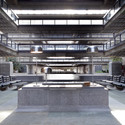
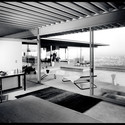

https://www.archdaily.com/455999/the-ongoing-battle-to-preserve-midcentury-modernismFred Bernstein
Urban Living Award Winners Announced
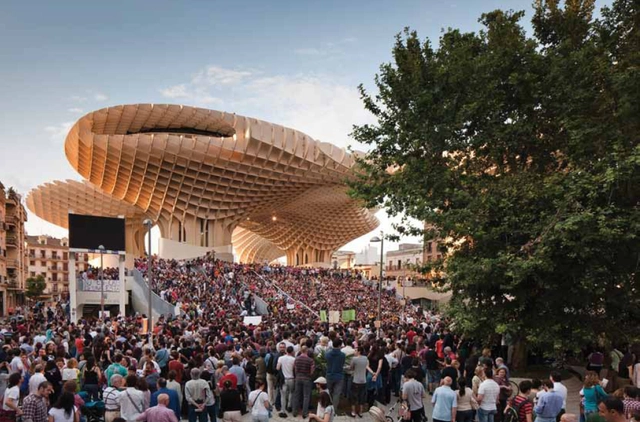
The winners of 2013 Urban Living Awards, a joint effort between the Senate Department of Urban Development and the Deutsche Wohnen AG, have been announced.
The competition aims to inspire architects to improve the quality of urban life through design, while also stimulating urban cooperation. Though it was only founded in 2010, it has already become one of the most respected competitions in the world. Indeed, the 240 contributions in 2013 hailed from over 20 European countries - a huge expansion from previous years.
Read more for the winners...
https://www.archdaily.com/461117/urban-living-award-winners-announcedKatherine Allen
Shenzhen Biennale: The Value Factory and the Urban Border
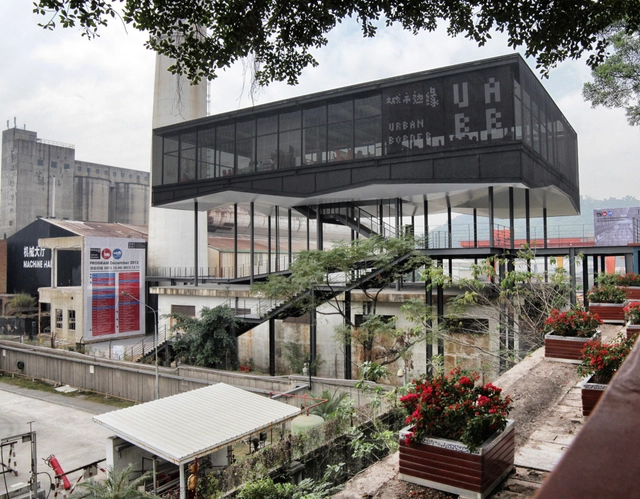
Now in its 5th edition, the Bi-City Biennale of Urbanism / Architecture (UABB) is the only biennial exhibition in the world to be based exclusively on the themes of urbanism and urbanization. The Biennale is co-organized by Shenzhen and Hong Kong, two of the most intensely urban cities in the world, where political and economical contexts have shaped unique urban dynamics.
A few days ago we had the chance to attend the opening of the Shenzhen Biennale, curated by Creative Director Ole Bouman together with Academic Directors Li Xiangning and Jeffrey Johnson. The Biennale, focused on “Urban Borders,” is split between two venues that will be open until Feb 28th, 2014.

Right next to the Shenzhen Ferry Terminal, where thousands of people commute every day between Hong Kong, Macau and Chinese cities along the Pearl River Delta, the Border Warehouse displays a series of projects -including the national pavilions- that deal with border issues, from projects that mediate Shenzhen and Hong Kong; the 3,154km long border between Mexico and the US, to transit stations and border checkpoints designed by contemporary architects. Participating include Enrique Walker, Juerguen Mayer, Aterlier Bow Wow, Joseph Grima, Teddy Cruz, Abalos + Sienkiewicz, MAD, among many others.
"Cities are filled with numerous – and at first sight invisible – borders. Between rich and poor, between ethnic groups, between high and low, between dense and sprawl, in short, between center and periphery. But who and what define these borders?" -- Ole Bouman
But perhaps the most interesting part of the Biennale takes place at the main venue: The Value Factory.
More information about the Value Factory and a complete photo report after the break:
https://www.archdaily.com/460421/shenzhen-biennale-the-value-factoryDavid Basulto
Stonehenge Visitor Centre Opens its Doors
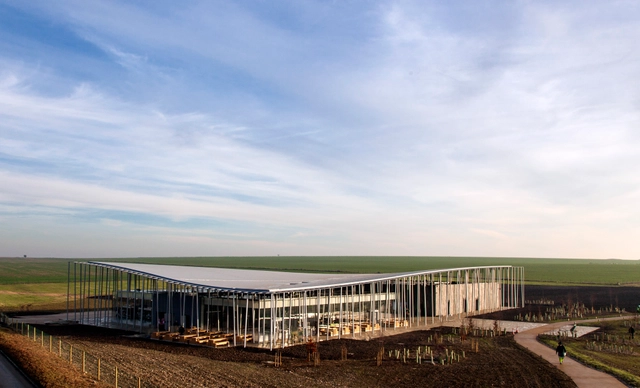
After a tortuous 21-year process Stonehenge, the stone circle that is one of the world's most important neolithic artifacts, finally has the visitor centre it deserves. Denton Corker Marshall's design, situated 2.5 km (1.5 miles) to the west of the UNESCO World Heritage Site, has opened its doors and is preparing to deal with the site's nearly 1 million annual visitors.
The new design features a museum, educational facilities, a cafe, shop and a ticket office. These spaces are brought together by a perforated oversailing roof supported on 211 narrow angled columns.
Read on for more about the new Stonehenge Visitor Centre
https://www.archdaily.com/460780/stonehenge-visitor-centre-opens-its-doorsRory Stott
BIG, OMA, Büro-OS To Compete for New Media Campus in Berlin
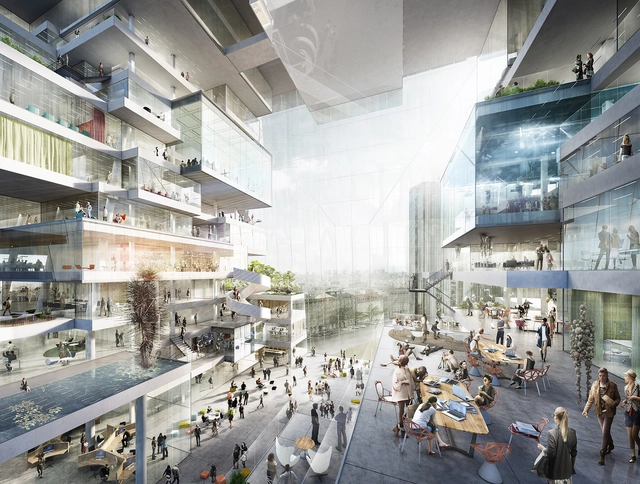
UPDATE: OMA has provided more information and images of their proposal, see them after the break.
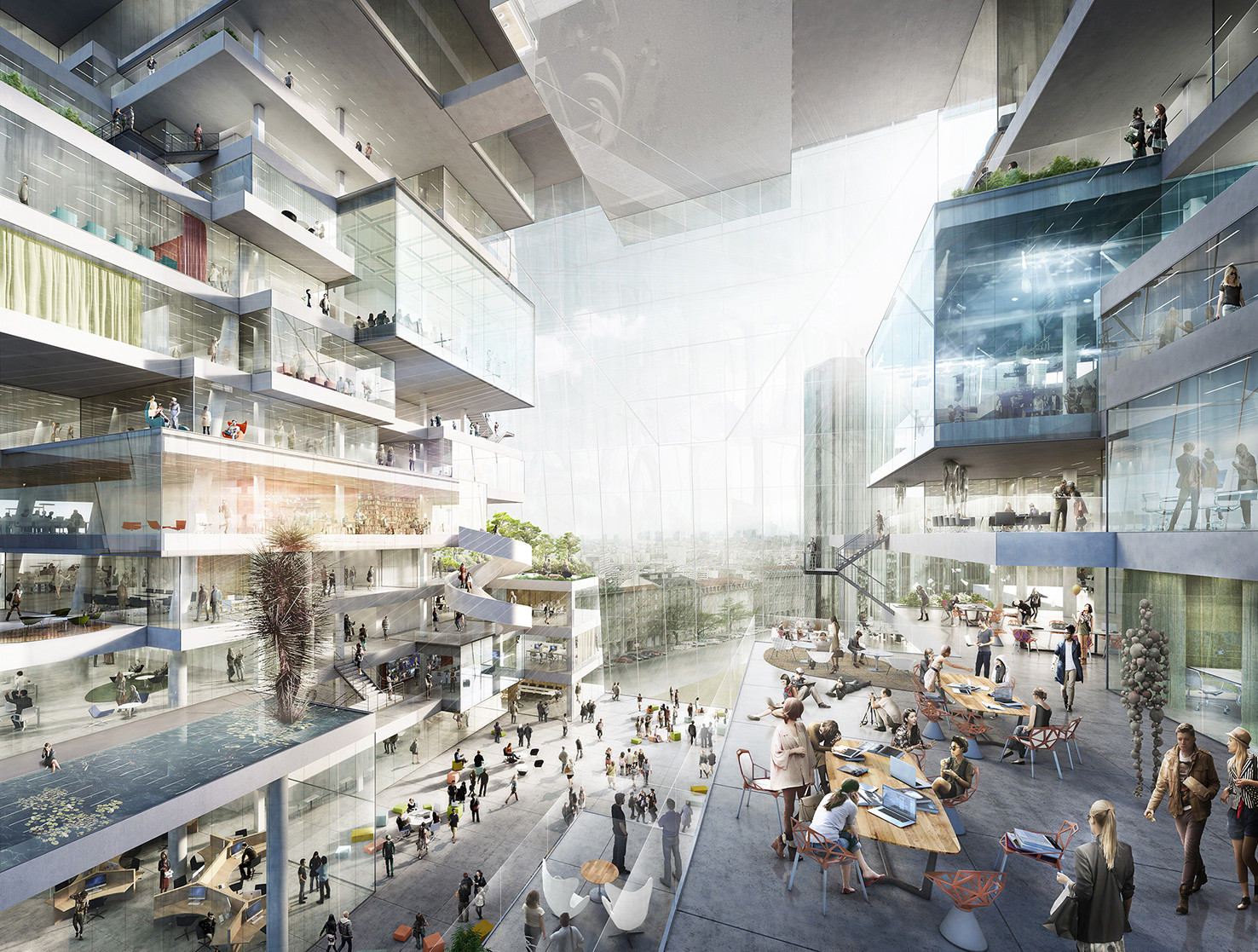
BIG, Büro Ole Scheeren, and OMA have been announced as the three finalists in the competition to design the new Media Campus for AXEL SPRINGER SE in Berlin, Germany, beating out Kuehn Malvezzi and SANAA. The final ranking will be released in January.
The new campus will be located on the historic site of the former Berlin Wall, what was once a no-man’s land. All three proposals address this contentious history as well as the demands of a 21st century workplace. President of the jury, Prof. Dr. Friedrich von Borries, proclaimed that: "All three projects show how fascinating architecture can be today. No matter which of the three proposals will be realised: The competition is already an enrichment of Berlin's building culture." See all three proposals, after the break...



https://www.archdaily.com/459281/big-oma-buro-os-to-compete-for-new-media-campus-in-berlinVanessa Quirk
Solo Houses: When Architects Are Given Carte Blanche
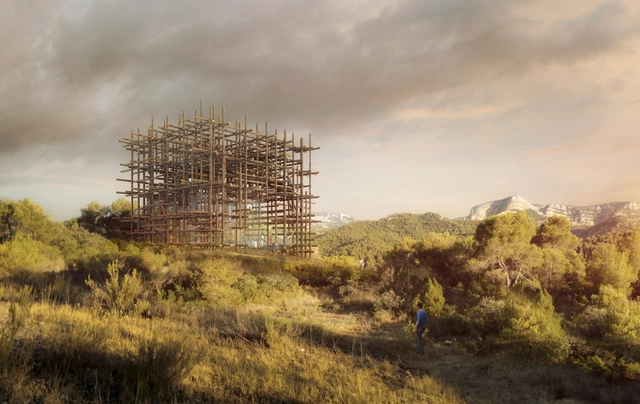
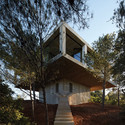
French developer Christian Bourdais has enlisted eight architects to develop vacation homes on a 50-hectare nature reserve about two hours south of Barcelona. So far, so normal. However, each participant in the "Solo Houses" experiment was given what every architect dreams of (and hardly ever receives): carte blanche. The results, from the likes of Sou Fujimoto, Pezo von Ellrichshausen, and more, are stunning. See them all after the break...




https://www.archdaily.com/459808/solo-houses-when-architects-are-given-carte-blancheVanessa Quirk
Architecture Marketing: At What Cost?

In an era of heavily marketed brands, relentless advertising and all pervasive social media, just how far should architects market themselves to stand out from the crowd? Laura Iloniemi, expert in architecture media, explores the tricky issue of how practices can use marketing without losing integrity.
Marketing companies and publicists working for architects have certainly adapted to increasingly hard-nosed commercial trends. They have embraced, for example, the latest trade shows, no matter how brash, along with high-profile international property conferences and moneymaking awards events (with apparent relish), hoping to place their clients in front of new, and ever more commercial, audiences.
But marketing folk sell only what they know from their own experience - experience that may or may not be relevant to architectural practice. If they do not have an intuitive or trained eye for architecture itself, or a feel for its rightful place in our culture, they can never produce a worthwhile strategy for ensuring its true relevance in society.
https://www.archdaily.com/457977/architecture-marketing-at-what-costLaura Iloniemi