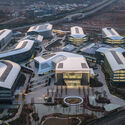
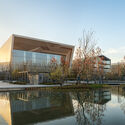
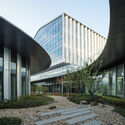
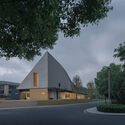
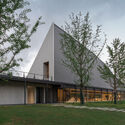
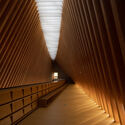
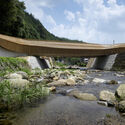
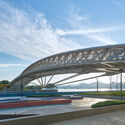
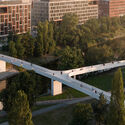
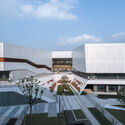
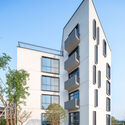
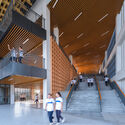
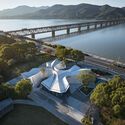
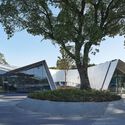
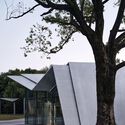
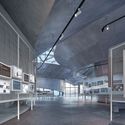
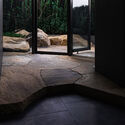
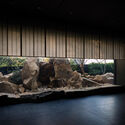
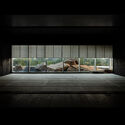
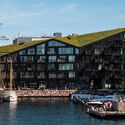
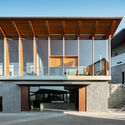
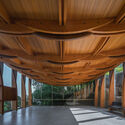
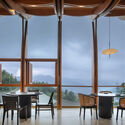
Xixi Artist Clubhouse / AZL Architects

Architects: AZL Architects
Location: Hangzhou, Zhejiang, China
Architect In Charge: Zhang Lei
Project Team: Zhang Lei, Qi wei, Zhong Guanqiu, Zhang Guangwei, Guo Donghai
Collaborator: Architectural Design Institute, ZJIU
Area: 4,000 sqm
Year: 2011
Photographs: Yao Li
XiXi Learning Community / Atelier Fronti

Architects: Atelier Fronti
Location: Hangzhou, China
Architect: Wang Yun
Area: 59,830 sqm
Year: 2010
Photographs: Courtesy of Atelier Fronti
Yuguandi – Sales Pavilion & Gallery / BLVD International

Interior Designers: BLVD International
Location: Hangzhou City, China
Design Team: Honglei Liu, Jiang Min, Zongmao Lin, Haijun He, Yijun Lin
Area: 11,302 sq ft
Year: 2012
Photographs: Sun Xiangyu
Xixi Wetland Art Village / Wang Weijen Architecture

Architects: Wang Weijen Architecture
Location: Hangzhou, Zhejiang, China
Client: Xixi Wetlands Park Construction Headquarter
Area: 4500.0 sqm
Year: 2011
Photographs: Courtesy of Wang Weijen Architecture
Kengo Kuma Designs New Museum at China Academy of Art in Xiangshan

To further the promotion of art education, the China Central Academy of Fine Arts in Beijing and China Academy of Art in Xiangshan have announced plans to construct a new university within the hilly suburbs of Hangzhou by the Spring of 2014. Designed by Kengo Kuma & Associates, the Museum at the China Academy of Art will harmonize with the lush topography and resist modifying any existing slopes to accommodate the 4,936 square meter facility. Instead, the museum’s configuration will mimic the lozenge shaped pattern that was discovered within the contour lines, generating a fluid exhibition space with linear and altering floor levels buffered by partially external galleries.
In addition, Kengo Kuma is investigating the possibility of reusing clay tiles and stones from Hangzhou’s old house district so the body of the museum may appear as if the “soil of the tea gardens” were “transformed into architecture”.
More images after the break.
‘Made With Bamboo: Architecture, Arts & Crafts’ Event
Hosted by the faculties of Architecture and of Inter-Media at the China Academy of Arts in Hangzhou, the ‘Made With Bamboo: Architecture, Arts & Crafts’ event will take place Monday, October 29th at 6:30pm. The aim of this presentation is to grow the appreciation of this wonder grass and the most outstanding architects, designers and craftsmen working with bamboo by celebrating their works. The architecture section concentrates first on structural solutions mainly as developed in Colombia and than on aesthetic solutions. The main emphasis of the arts & crafts section is the exceptional Japanese basketry. More information after the break.
One Taste Holistic / CROX International

Architects: CROX International
Location: Hangzhou, China
Head Designers: Tsung-Jen Lin, CROX International Director
Design Team: Ying-xiuLin ,Ben-tao Li
Year: 2012
Area: 360.0 sqm
Clients: One Taste Holistic Health Club
Photographs: Black
EXPO Booth / Design Initiatives

The EXPO Booth, designed and built by Design Initiatives, presented their Not Just a Chair furniture collection which was displayed at the Outdoor Lifestyle Hangzhou Fair from March 21-24 of this year. Two wings curve out of the advertising wall with the company’s logo – the lower one becomes a platform to showcase the furniture objects, the upper one light up the exposed objects. The lower platform can be multi-functionally used as a meeting table. More images and architects’ description after the break.
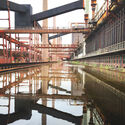
Urban Constellation – Museum of Contemporary Architecture Exhibition Scheme / K/R Architects

Our overall planning concept by K/R Architects is composed of three interrelated parts. First, their intention is to create exhibits that define the Urban Constellation Museum of Contemporary Architecture (UC-MoCA) as an institution that consistently reflects and promotes contemporary urban culture. Second, architectural exhibits should educate through experience which is the most effective and memorable way to reach multiple audiences. Thirdly, their goal is to develop our planning concept in such a way that it harmoniously respects the importance of the historic industrial shed, the requirements of the definitive program and the architect’s concept design documents. More images and architects’ description after the break.
Headquarters of Zhejiang Wuchan Group / gmp architekten

Architects: gmp architekten
Location: Hangzhou, Zhejiang, China
Architect in Charge: Meinhard von Gerkan
Project Manager: Volkmar Sievers
Project Year: 2010
Project Area: 12,700 sqm
Photographs: Hans-Georg Esch
CLIC Headquarters / WILCOTER Architects

WILCOTER Architects shared with us their first prize winning proposal in the international competition to design a group of buildings as the headquarter of China Life Insurance (Group) Company in the Qianjiang New City of Hangzhou. The concept is to create a ‘Tree of Life’, which means supplying a cover or shelter for the life, which is strong and safe to rely on. More images and architects’ description after the break.
Hangzhou South Railway Station / gmp Architekten

Following their success in winning first prize in an international competition, gmp Architekten hs been commissioned to design the new southern railway station in Hangzhou, China. The project involves the conversion and extension of the station in the Xiao Shan district to the south of the Qiantang river; after the eastern and main railway stations it will be the third largest railway station of this metropolis. More images and architects’ description after the break.
Update: Hangzhou Gateway Tower / JDS Architects

Back in June, we shared JDS‘ winning mixed use project for Hangzhou, China. Conceptualized as the iconic link that fuses two prominent parts of the city, the Hangzhou H project is a dynamic experiment of formal expression. The tiered volume opens pedestrian connections at the ground level, and supports a generous landscape that functions as a rain water retainer on the roof level. The young firm has just received the necessary building permits, and will begin construction in March of 2012. We’ll keep you covered on the building’s progress, and be sure to view our previous coverage of the winning competition proposal here.
Hangzhou Waves / JDS

JDS has just been awarded first prize for their Hangzhou Waves scheme – a competition entry that called for the design of not one, but two buildings for the financial district of Hangzhou Xintiandi of Hangzhou, China. The two sloping volumes offer different exterior expressions and hold different programmatic entities (a hotel and an office building); yet, the forms are guided by similar attitudes regarding sunlight, green roofs, an active ground plane, etc, which immediately creates a strong relationship between the pair.
More about the winning competition entry after the break.
LYCS Architecture Office / LYCS Architecture

The new office of LYCS Architecture is a renovation design of a tower penthouse in downtown Hangzhou, with a panorama view of the West Lake World Heritage. The original space with is an non-professional add-on storage room to the tower roof composed of elevator mechanical room, fire escape doors and slanted drainage surfaces. The idea of this design is to create the juxtaposition of this abandoned storage space and the new office, through the material homogeneity to heterogeneity and temporal attenuation of space.
Architect: LYCS Architecture
Location: Hangzhou, China
Project Team: Hao Ruan, Xu Li, Peng Wang
Project Year: 2011
Project Area: 350 sqm
Photographs: Courtesy of LYCS Architecture
Facade Planning for the Hangzhou Congress Center / Peter Ruge Architekten

After perennial design and construction phase the congress center of the new city administration of Hangzhou, China is completed. The concept and design of the facade was made by Peter Ruge Architekten in collaboration with Prof Wang Xiaosong from DBH GmbH. Completed images of the facade and a brief description from the architects is available after the break.
Hangzhou Gateway Tower / JDS Architects

As the first prize winner in the Hangzhou Gateway Competition, JDS Architects shared with us their building concept, which is to create a gateway that is neither closing-off or dividing the city. The 15-story tower features offices, restaurants, post office, a terraced roof garden and a sunken passage that leads through a shopping center. More images and architects’ description after the break.
MVRDV wins competition for Comic and Animation Museum in China

Hangzhou urban planning bureau has announced MVRDV winner of the international design competition for the China Comic and Animation Museum (CCAM) in Hangzhou, China. MVRDV won with a design referring to the speech balloon: a series of eight balloon shaped volumes create an internally complex museum experience of in total 30.000m2. Part of the project is also a series of parks on islands, a public plaza and a 13.000m2 expo centre. Construction start is envisioned for 2012, the total budget is 92 million Euro.
More images and architect’s description after the break.
Xintiandi Factory / Peter Ruge Architekten

Berlin based design team of Peter Ruge Architekten has shared with us their project, an adaptive reuse of Xintiandi Factory saturated with new program. Supplemental images of the project and a narrative from the architects is available after the break.
Foster + Partners’ CITIC Bank Headquarters Tower Breaks Ground

Construction is underway for the sustainable landmark CITIC Bank headquarters tower. Foster + Partners design for the 100 meter high skyscraper in Hangzhou, China intends to establish and iconic presence for the Bank in a prominent location within the new central business district situated adjacent to the Qian Jiang River.
Resonating with elements of traditional Chinese culture, the tower’s form draws inspiration from the shape of the ancient ‘dou’ or ‘ding’ vessel, a traditional symbol of wealth, dignity and stability. The facade of the diagonally-braced structure pulls inwards near the base to form a symmetrical V-shape across the south-facing elevation. Wrapped in a diagrid lattice, the floor plates widen as the tower rises expanding to provide panoramic views of the river and the surrounding public plaza.