Indian architecture, primarily established through historical and cultural influences, is most recently a conversation about how best to modernize. India's architecture has to mediate rapid urbanization with respecting its climate, culture, and tradition. Questions of cultural preservation are especially pertinent in post-independence India after the dominance of western influences. India's architecture is highlighted in this page through interviews, news, and projects that look forward to a new revitalized urban landscape.
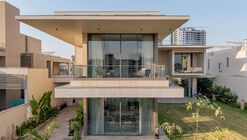
The Prestige University by Sanjay Puri Architects in Indore, India, has been declared the World Building of the Year at the 2026 World Architecture Festival (WAF). The ultimate accolades of World Building of the Year, World Interior of the Year, and Future Project of the Year were announced as hundreds of architects from across the world convened at a grand finale Gala Dinner at the Broward County Convention Center in Florida. A host of Special Prizes, including the American Beauty Prize sponsored by RFACT, were also announced at the closing event to celebrate the nineteenth edition of the festival. The announcement follows the final day of WAF, in which prize winners across all 42 categories have been competing for the winning titles.
Conventional construction often begins with a specification: a particular brick, concrete mix, manufactured panel or finish selected for a proposed building. What changes when the design process begins with a material that has already been recovered, produced or made available? Today, projects approach material resources through different processes: recovery, recycling and the engineering of locally sourced bamboo. Taken together, the varied approaches will show how material sourcing and processing can influence architectural decisions before a product reaches the building site.
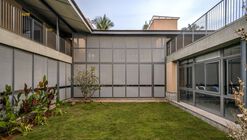
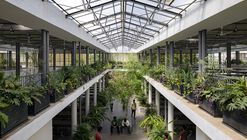
Multigenerational homes, educational buildings, and workplaces raise different questions about how architecture accommodates everyday life in India. Across the projects featured in Built99, these questions inform decisions about spatial organization, relationships with the landscape, daylight, and materials.
A new capital is usually introduced through its principal buildings: the assembly, the secretariat and the ceremonial spaces that give a seat of government its public image. In Amaravati, India's Andhra Pradesh, that image of a new capital sits within an older landscape of cultivated fields, villages and established routes. Before the capital project, the region was already occupied by agricultural villages, local roads and settlements connected to the Krishna River and its water systems. The capital project is reorganizing this agrarian territory into a planned administrative city, bringing existing settlements and land ownership into the process of urban development. Its architectural identity will depend on how the new buildings, infrastructure, and public spaces relate to the settlements and landscapes already there.
Architecture has treated water either as a backdrop or a problem: a view to be framed, a hazard to be drained, or a utility to be connected. In contemporary India, a more consequential relationship takes shape. Water remains a shared ecological resource, yet the land and infrastructure around it are increasingly financed and defended as economic assets. Coastlines are extended to carry traffic and lake edges become lucrative development zones. The decision to do so passes through multiple institutions with different vocabularies, thereby challenging who determines how water and its surroundings are used, and who faces the consequences.
Aerial view of Mumbai’s coast. Image via Shutterstock
Along India's coast, the boundary between land and sea is not always a line of concrete. In places, it is a forest of tangled roots, tidal channels, and sediment, a landscape that changes character with the water. Mangroves influence how water moves, how shorelines evolve, and how coastal communities experience flood risk. Their role in coastal protection depends on the width and condition of the forest, the movement of tides, and the accumulation of sediment.
As cities change, so do our expectations of them. People are asking for more caring spaces: public places open to all ages and genders, nature within reach of every social class, and settings that foster connection. Few design intentions hold these together as well as spaces for children. This selection of unbuilt projects submitted by ArchDaily readers showcases different approaches to care-based architecture. Schools, daycare centers, a library, a youth center, and a new model for orphanages take on the mission of providing a safe and stimulating environment for children at every stage of their development. Not yet built but carefully designed, these proposals offer a glimpse into spaces for play, learning, and calm that fuel creativity in design for people of all ages.