Currently, nearly 65 million people worldwide have been forced to flee their homes due to conflicts unfolding across the globe, leaving behind their belongings, years of personal history, and years of hard work to find themselves adrift. Many of these families are forced to cross oceans and diverse terrains in search of a promising future to start from scratch. These journeys often lead to informal settlements where many perish due to rampant disease and shortages of medicine, food, and clean water.
The new workplace paradigm, driven by digital transformation, is introducing significant changes to employee profiles and the roles people perform within their work environments. At Actiu, these shifts represent an opportunity to turn workspaces into strategic levers of change, allowing organizations to align their transformation goals with the well-being and satisfaction of their workforce.
To demonstrate this and reflect on how much we and our readers have learned—especially regarding the roles of representation, academia, cities, technology, and architecture itself—we have selected the 20 best interviews published on ArchDaily throughout the year.
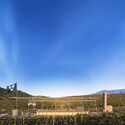
In the fall of 2017, a 7.1-magnitude earthquake struck at least nine states in Mexico, leaving several areas severely affected across Mexico City, Puebla, Morelos, Oaxaca, Veracruz, Tlaxcala, Guerrero, and the State of Mexico. Jojutla, a municipality located in Morelos, was one of many reduced to ruins after the earthquake shook Mexico on September 19, leaving much of its infrastructure damaged. Consequently, through an initiative by Infonavit, a master plan was launched to reconstruct the municipality's primary public buildings.
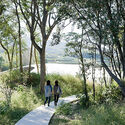
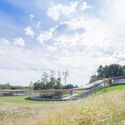
The project emerged as an opportunity to increase accessibility to Buenos Aires's Hipódromo de San Isidro—currently privately managed—through minimal interventions. By creating a linear park around the perimeter, the proposal makes this urban green lung more inclusive, transforming it into a social hub that enhances both the environment and quality of life.
UFMG Services Plaza – view of one of the access points to the balconies (Loggias). Source: Technical Information Center of UFMG, 2018 / Photo: Junia Mortimer, 2012
When we understand architecture as the activity of modifying a natural site and transforming it into an environment suitable for human coexistence—whether through a building or the urbanization of a territory—we can understand the architect's work as something that must serve the community. In this sense, the historical concept of humanism and republicanism is invoked—the public affair, in Latin.
Street market pastel in São Paulo. Photo: Anthony Ling
Anyone who has ever been to the beaches of Rio de Janeiro has certainly seen vendors selling grilled *queijo coalho* (curd cheese) or grilled shrimp, sweet mate tea, and Globo biscuits—classic snacks of the Rio shoreline. In São Paulo, open-air markets serve sugarcane juice and fried *pastel*, a local adaptation of a dish originally brought by Chinese immigrants and popularized by Japanese immigrants. In Minas Gerais, there is *pão de queijo* (cheese bread) and pastel, also filled with cheese. In Salvador, it is impossible not to mention *acarajé* (with or without hot sauce), which has been declared an intangible cultural heritage asset by IPHAN. The capital of Bahia even has its own Street Food Guide, reflecting the immense culinary diversity found in the city.
Gentrification has been one of the main points of debate regarding the project that aims to transform the Minhocão into a linear park. Image: Felipe Rodrigues
Urban transformation and development processes can often lead to side effects or unintended consequences when these movements are organic and unplanned. These outcomes are not always positive and can trigger phenomena like gentrification, which can become a major social problem, directly impacting low-income populations. Nonetheless, it is also clear that certain transformations typically associated with this phenomenon can bring improvements and reactivate underutilized spaces in urban centers; the threshold between this scenario as a virtue or a detriment remains a subject of ongoing debate among architects and urban planners.
Edifício Niemeyer em Belo Horizonte. Image Cortesia de Carlos Alberto Maciel
As part of our monthly topic (travel), we invited several Brazilian and Portuguese architecture firms to suggest buildings and public spaces in their respective cities that are well worth a visit. In Brazil, projects in Brasília, Rio de Janeiro, Olinda, Fortaleza, Belo Horizonte, and Porto Alegre will inspire our readers to get to know the country better—or cross the Atlantic to visit works in the Portuguese cities of Guimarães, Porto, and Lisbon.
According to Flávio Kiefer, museums are as old as human history itself. They have existed ever since humans began collecting and storing valuable objects in rooms built specifically for that purpose. Today, museums are more than environments that organize history: their programs are diverse and complex, their spaces flexible, and innovations are constant in the conservation, exhibition, and lighting of artworks. This week's Arquicast spoke with architect and specialist Carlos Eduardo Ribeiro about museum architecture and the entire debate surrounding this prestigious architectural program.
The visual stimulus that triggered this research[1] was the suggestive ambiguity of the letter m/h. Less glamorous than roadside motels, these motel-hotels are an affordable invitation to sexual fulfillment. To capture both their material and intangible complexity, the work is structured as a fiction. In doing so, the narrator imagined within these motel-hotels the potential to reveal other component parts of herself—as if these places, in their ambiguity and anonymity, could facilitate this encounter. In a simultaneous process of liberation and frustration, the multiple narrators find agency.
https://www.archdaily.com/1121538/motels-hotels-between-strangeness-and-familiarityMarian Rosa van Bodegraven
LED bulbs have become ubiquitous due to their low energy consumption, durability, and increasingly affordable prices. However, our need for illumination can work against us if we do not understand the effects of this type of light on the body.
While we have previously addressed light temperatures, warm and cool lighting, and the dangers of blue light regarding sleep cycles and eye strain, we must now also consider the phototoxicity of blue light.
Among the various programs within architectural and urban planning practice, projects for public spaces are perhaps those that most encourage professionals to build a rich narrative, drawing upon the multidisciplinarity inherent to the craft. Designing spaces destined for everyday public use and appropriation reflects how architects envision urban life, opening up a platform for collective dialogue on the subject.
It is well known that our cities are increasingly saturated by automobile use; mobility has therefore become a key element in any discussion on urban living, particularly in large Brazilian cities. This premise prompts us to examine and better understand which aspects of urban commuting we can prioritize for intervention, moving toward approaches where car use is less necessary. An important step in this dialogue is understanding just how time-efficient cars actually are. Mapping Lab conducted a visual analysis of 27 Brazilian capital cities using data from the here.com platform.
The book Sustainable Tropical Cities, published by the Institute of Tropical Architecture (San José, Costa Rica) in 2006, gathers the conclusions its authors compiled over years of observation and study. Bruno Stagno and Jimena Ugarte, both architects and immigrants enamored with the tropics, aimed to demonstrate the specific characteristics that cities located in the tropical belt possess—or should possess—while introducing an unprecedented topic.
The recent tragedy that resulted in the partial destruction of the Notre-Dame Cathedral has prompted reflection on the value of our architectural heritage. Stirring events such as this bring highly relevant issues to the fore, inviting us to consider the role of architecture in shaping a city's collective memory.
VIMOB Project (Arch. Felipe Lerma) - Superboard. Visit our website www.etex.com.co to learn more about eco-friendly dry construction.
The concept of sustainability dates back to the 1980s, when the chairperson of the United Nations World Commission on Environment and Development, Gro Harlem Brundtland, authored the report titled “Our Common Future.” This document questioned the negative environmental consequences of development and globalization, raising the need to advance toward “Sustainable Development.”
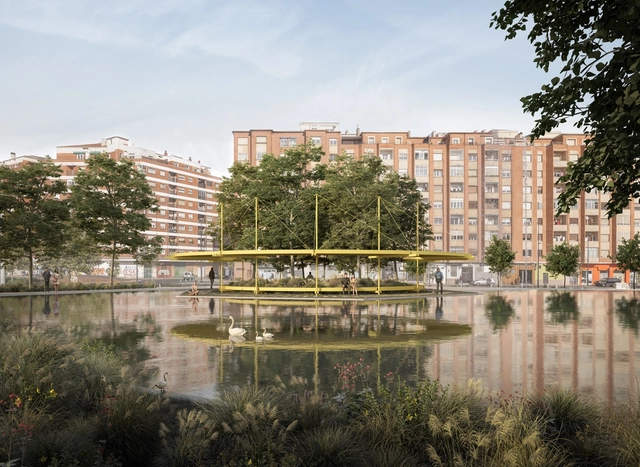
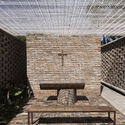
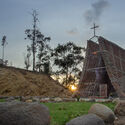
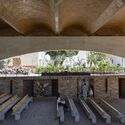
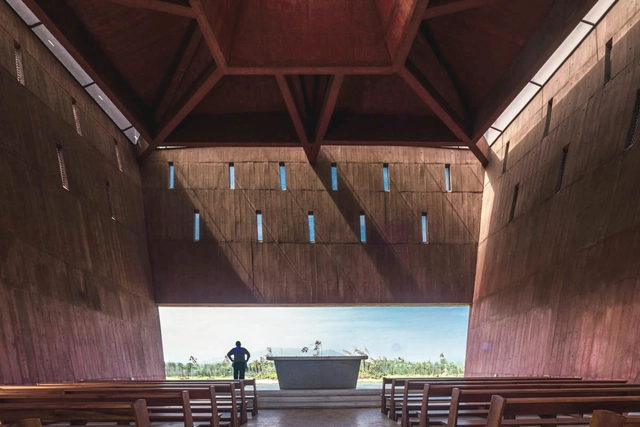
The following story takes place during the twenty-seventh edition of the Latin American Encounter of Architecture Students (ELEA) in Ciudad del Este, Paraguay, where nearly 800 students from Latin America gathered for a collective experience of participation, integration, and learning. Among other activities was the construction of two wooden structures in two distinct locations: the "Lake Pavilion" in the backyard of the Virgen de Fátima school—separated from a private school by a polluted creek—and "The Cloud" in an unmaintained public square in the Don Bosco neighborhood on the outskirts of the city.
ArchDaily is working with CityMakers to publish a series of articles, conversations, and interviews with the key figures in urban co-production behind the Barcelona CityMakers Lab 2019, an event taking place from October 14 to 20, 2019.
On this occasion, we feature Jokin Santiago Elorriaga, director of Leku Studio, who will lead a masterclass at the Barcelona CityMakers Lab 2019. Jokin is the founding architect of Leku Studio and was responsible for the design and transformation of the Sant Antoni Superblock.
Grigri Projects defines itself as a platform dedicated to cultural research, creation, and production, focusing its work on participatory design, urban intervention, and transdisciplinary community processes through collaboration with other collectives and agents at local and international levels.
As part of a series of articles developed by Nikos A. Salingaros, David Brain, Andrés M. Duany, Michael W. Mehaffy, and Ernesto Philibert-Petit on the study of social housing in Latin America, this installment reviews examples of design strategies for its construction. Read all previous publications and the new article below.
https://www.archdaily.com/1121071/design-strategies-for-social-housing-in-latin-americaNikos A. Salingaros, David Brain, Andrés M. Duany, Michael W. Mehaffy & Ernesto Philibert-Petit
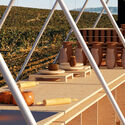
The traditional brickmaking technique is fundamentally based on molding a mixture of clay and water, placing it in a kiln, and firing it to achieve its characteristic strength. Architect Octavio Mendoza Morales decided to employ this technique to build a unique home, constructed not from individual bricks but as a single, 500-square-meter ceramic piece designed to withstand weathering.
The daily routine of psychologist and CAPS* (Psychosocial Care Center) coordinator Antoniella Santos Vieira centers on listening and walking: during the day, she listens to the stories of people experiencing homelessness, those struggling with alcohol and drug abuse, among other challenges. It is this challenging territory – half urban, half rural – that she traverses, showing that the center offers a range of services – such as yoga and pilates – in addition to psychological support.
Rio de Janeiro. Photo: Jaime Spaniol, via Unsplash. CC License
In the book “Order Without Design”, Alain Bertaud mentions that indicators are crucial in urban management to give cities a real-time view of what is happening within them. One interesting indicator related to housing affordability is the so-called “Price/Income Ratio.” This is essentially the average home price in a city divided by the average resident's income. It is a highly generic indicator that does not account for differences between properties, such as location, nor does it address rental housing (still a minority in Brazil). Nonetheless, it provides a general overview of housing affordability in a city.