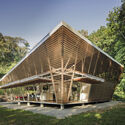
Is architecture the thinking of spaces? Is it science and art applied to places? What if someone said that architecture is designing time?

Is architecture the thinking of spaces? Is it science and art applied to places? What if someone said that architecture is designing time?

The Cruel Pedagogy of the Virus – The pandemic has a tragic power of revelation. It exposes a series of paradoxes that were previously obscured or underestimated. In this sense, like any moment of crisis, it carries an educational dimension. Undoubtedly, given so many deaths—many of them preventable—this is a "cruel pedagogy of the virus," in the words of Portuguese sociologist Boaventura de Sousa Santos. Amidst the suffering, debates and proposals have proliferated through livestreams, articles, reports, petitions, research papers, action agendas, guides, denunciations, solidarity networks, and even self-governance initiatives in semi-abandoned peripheries. These discussions focus particularly on the Brazilian tragedy, which combines multiple crises tied to structural issues (such as inequality and racism) with a mounting crisis of reason—or simple common sense—shaping a macabre landscape of social regression, hatred, obscurantism, and genocide.
The way you experience the city, the urban infrastructure provided in the areas you frequent, and even the job opportunities that come your way are all, to some extent, shaped by the color of your skin. These themes unfold across multiple layers to discuss racial segregation in the urban environment in the seminar "The City and Racial Subjection," organized in 2018 by the Laboratory of Race and Urban Space Studies (Labraça) at FAUUSP.

As it celebrates its 60th anniversary, Brasília has an opportunity to draw inspiration from the anti-racist and anti-colonial movements worldwide that have challenged the monumentality of official history, confronting the memorialization of colonialism within its own urban landscape. Rather than celebratory events that reiterate official narratives, marking the city as a *bandeirante* milestone of national modernity, we should pause—a pause moreover imposed by the pandemic—to reflect on how certain memories are eternalized while others are erased, and thus trace new memorial cartographies onto the urban fabric of the capital.

During the pandemic, major cities became some of the most vulnerable environments; moreover, the global health crisis validated remote work and called into question the necessity of living in dense urban centers. Consequently, the urban exodus is likely to remain a constant theme in the near future, sparking major discussions within the fields of architecture and urban planning on how to manage this shift.

One of the most iconic selection tools for architecture and urban planning projects in Brazil is the design competition. Firmly established in the country's architectural culture, they provide, on the one hand, an environment of stimulation, opportunity, and revitalization for both practice and the debate of ideas—an important condition for reaffirming a democratic and horizontal approach to choosing winning proposals. On the other hand, they are the subject of heated debate due to how they have evolved, their evaluation methods, and, above all, because they frequently award proposals that reiterate a certain type of architecture linked to a modern formal vocabulary, neglecting proposals that seek some form of renewal of this formal imagery.

Today, August 8, marks World Pedestrian Day. The date is famous for the iconic photo of the Beatles crossing Abbey Road in 1969. It is now 2020—more than fifty years later—and we still face immense challenges as pedestrians in our cities. How many times have you faced the hazard of crossing the street? Or had to navigate narrow, poorly lit sidewalks?

Twenty-first-century urbanism will be marked by an increase in both the number and scale of global megacities—urban agglomerations with over 10 million inhabitants, according to the UN—alongside a geographical shift. By 2100, African metropolises such as Lagos (Nigeria) and Kinshasa (Democratic Republic of the Congo) are projected to exceed 80 million residents. The rise of these new, larger metropolises, especially in Africa and Asia, compounded by the urgent need to address the ongoing climate crisis, demands immediate changes in the discourse surrounding urban mobility.

The public transit system in large Brazilian cities was already in crisis long before the coronavirus pandemic. Transit operators have seen passenger demand steadily decline over recent decades, driven by a combination of factors: urban policies that incentivize private vehicle use; urban sprawl, which dilutes economies of scale when serving peripheral areas; rising congestion; transit routes increasingly disconnected from actual urban mobility patterns; a growing need for transfers along passenger routes; deteriorating fleets and service quality; rising incomes leading to alternative choices like private cars, motorcycles, and ride-hailing services; and, above all, steadily rising fares.

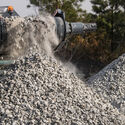
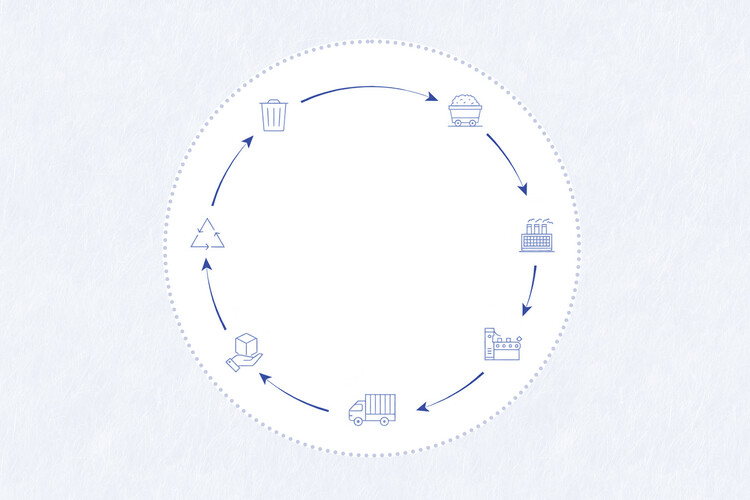
While the architecture and construction industry has been advancing in new fields for years, it remains one of the most lagging in terms of automation and efficiency. And indeed, while many of these innovations never progress past the experimental stage, we face a sobering reality: the sector is one of the largest producers of pollutants and waste worldwide. How can we reverse this trend?

Movable doors, windows, and panels operate through various mechanisms that determine not only how they open and close, but also their classification and terminology. Among the array of systems used for operable architectural elements—ranging from the simplest to the most ingenious—the mechanism found in folding or bifold doors and windows is frequently adopted to blend aesthetics and functionality.

Concrete is a key symbol of a highly celebrated era in Brazilian architecture. To this day, it remains one of the preferred materials for architects and designers seeking to explore the flexibility and expressiveness it brings to their work. Although primarily associated with building structures, concrete can also take center stage due to its materiality, thermal feel, color, and other qualities that transcend its structural role. When left exposed, concrete imparts a striking character to interiors, establishing a dialogue with the other elements that shape the space.

The interfaces establishing the relationship between inside and outside in architectural design play a fundamental role in reinforcing or denying the potential degrees of this connection. To this end, a central factor in facade design is the opacity of its materials, which can create vastly different conditions regarding light, views, and atmospheric quality within a space. Translucent materials and elements offer a compelling strategy for mediating between interior and exterior. They evoke a diaphanous, ethereal effect, introducing a touch of mystery through surfaces that allow light to filter through while obscuring any sharp, distinct images for the observer.

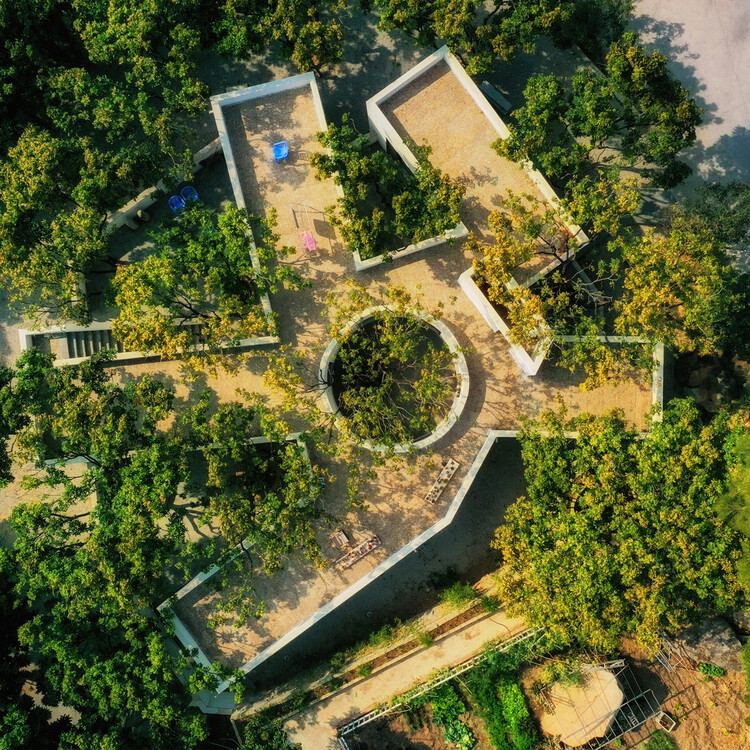
While modern metropolises have verticalized our way of life, creative solutions are continually emerging to reclaim and redefine urban space. Rooftops are already widely used for events and leisure, and now, growing plants and crops on them is becoming increasingly common. In Paris, a massive 14,000 m² urban farm has just opened on a building's rooftop. Although cultivation does not yet cover the entire area, once fully completed, it will be considered the largest in Europe and, perhaps, the world.

The inequality that shapes our society is reflected in urban space. Consequently, fully experiencing the city is a reality for only a fraction of the population, challenging the notion of public space as a genuinely democratic realm.
This reflection underscores the urgent need to introduce proposals for more welcoming cities into contemporary architectural and urban planning debates.

In architecture, when designing physical and tangible spaces, ephemeral and intangible aspects are essential considerations in the design process. One of the most important elements in this regard is natural light, which is crucial for ensuring comfort, quality of life, and health for its occupants.

Cities have been implementing temporary bike lanes to enable safe commuting during the COVID-19 pandemic and prevent public transit users from switching to cars and motorcycles. Gradually, this practice is gaining ground across Latin America, including Brazil. This represents a golden opportunity to boost bicycle urban mobility—but to succeed, emergency interventions must incorporate road safety best practices.

Many factors influence people's well-being, but few have power as great as the quality of sleep. Adults spend, on average, a third of their day (and their life) sleeping. In the case of young children, this proportion is even higher. According to a study published by the WHO in 2019, babies (4 to 11 months) should sleep between 12 and 16 hours/day; and children up to 4 years old should sleep between 10 and 13 hours/day.
Quality sleep acts directly on the child's brain development, especially during his first and second childhood (from birth to 12 years old). During the rest period, the body releases the hormones necessary for growth and learning, and this is directly related to physical, motor, emotional, and cognitive development. It is also known that the environment where one sleeps interferes with the quality of that sleep, and some important aspects must be considered when designing sleeping spaces for children and babies.