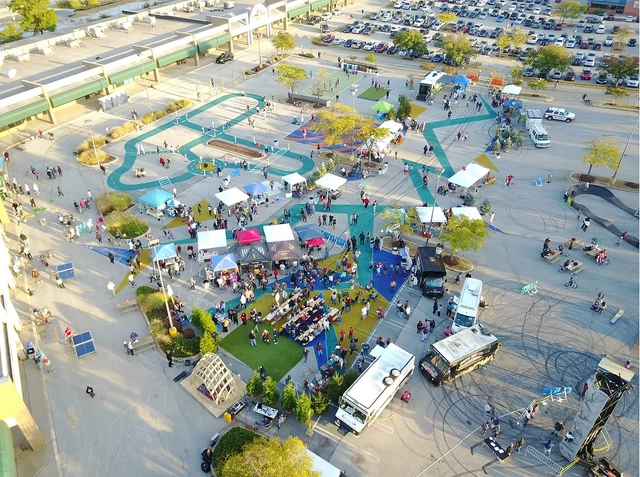
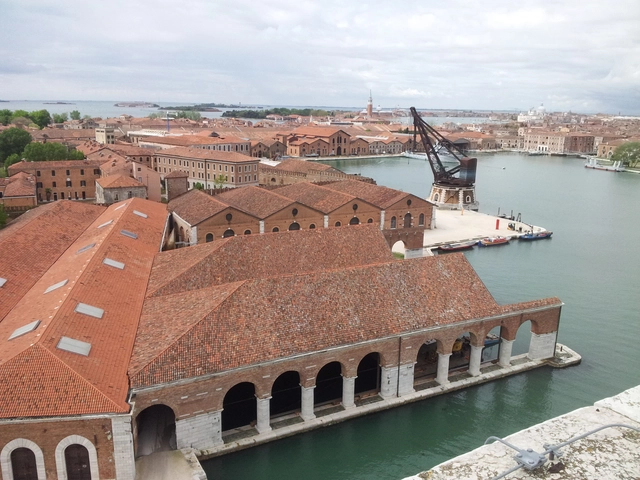
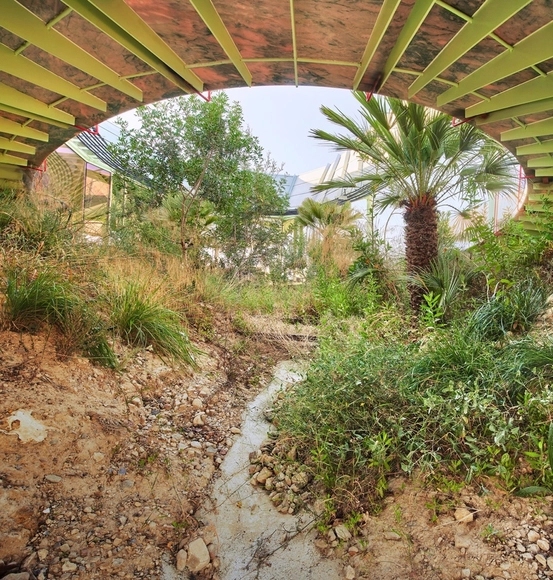
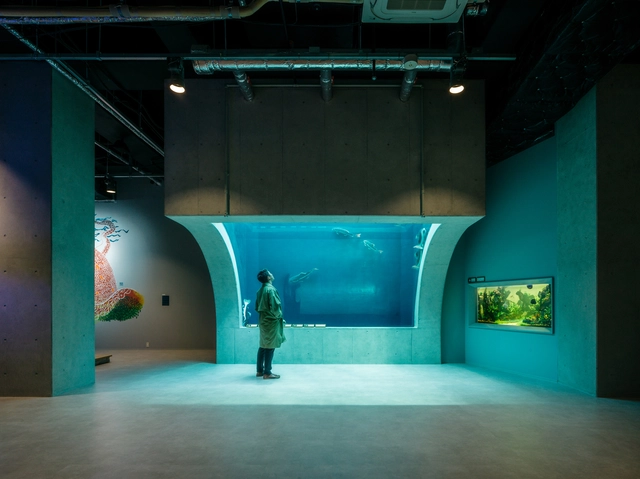
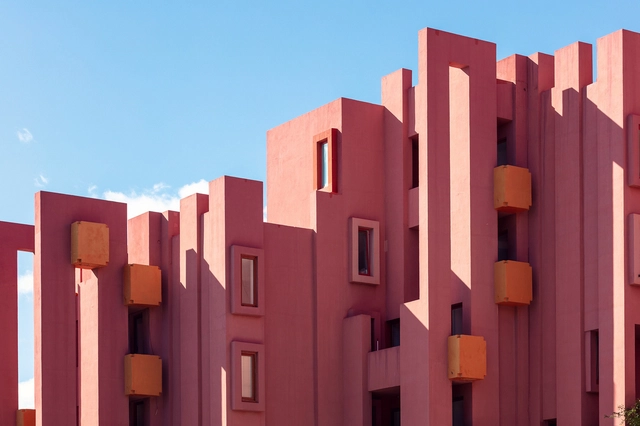
When streets lay empty, sidewalks untouched, and shutters hung heavy, the city seems lost of life. When businesses close, offices go remote and economic activity declines, the mechanisms that operate a city are idle. Vacant space and land are often perceived as “failed”, reflecting urban decline and economic blight. Emptiness, however, holds hope for possibilities and change. When urban voids are at the brink of transformation, what happens in the meanwhile?
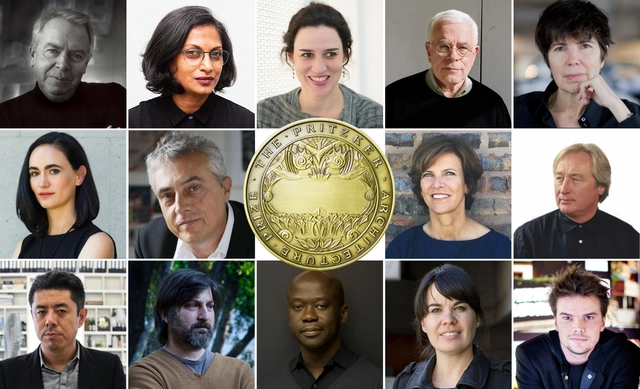
Once the Pritzker family of Chicago through the Hyatt Foundation has revealed the announcement date of the 2023 Pritzker Prize Laureate, the speculation has begun to swirl around which architect or architects will be honored with "the profession’s highest honor."
Since the foundation does not allow public nomination nor disclosure of its selection methodology, the architecture and design community speculates who can be the laureate. If you take a look at the list of architects who have won already, you might realize that anything is possible.
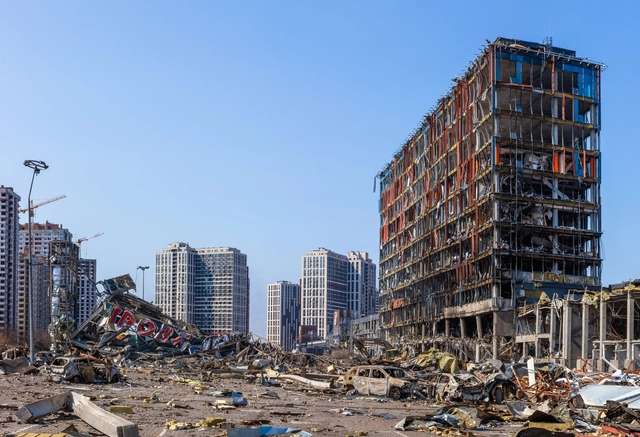
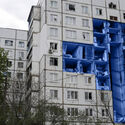
On 24 February 2022, Russia invaded Ukraine, a major escalation of the conflict dating since 2014. Now, a year later, the war is still ongoing. Both soldiers and civilians have fallen victim, while millions of others have become refugees, fleeing to safer areas across Europe or within Ukraine. What was instilled was a severe humanitarian and refugee crisis. The hostilities have also threatened Ukraine’s cultural and architectural heritage, as museums, monuments, and historical landmarks have become targets.
The implications are also reaching Europe and globally, as energy resources and food supplies become scarcer, damaging some economies. Still, Western countries remained unified in their support of Ukraine, as reported by international news outlets. Despite the economic difficulties, international support was mobilized through various initiatives in hopes of helping displaced people, protecting cultural heritage, and mapping a plan for reconstruction.
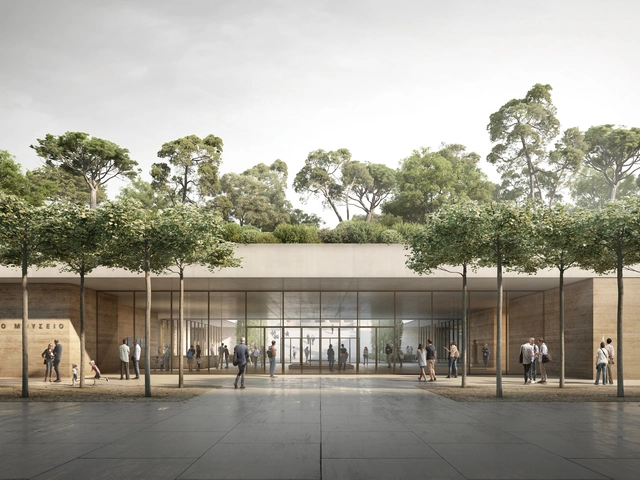
Selected from a shortlist of 10 proposals, David Chipperfield’s design won the competition for the National Archaeological Museum in Athens, Greece. Housing one of the world’s most important collections of prehistoric and ancient art, the National Archaeological Museum, will undergo refurbishment and extension works, including a subterranean addition with a roof garden. The proposal was developed together with Wirtz International, Tombazis & Associate Architects, wh-p ingenieure, Werner Sobek, and Atelier Brückner.
On February 15, 2023, the Living Places / Simon Architecture Prize 2023 award ceremony was held in Barcelona. An initiative by Simon, with the support of the Fundació Mies van der Rohe, the prize seeks to recognize excellence in architecture from the perspective of the inhabitant. In fact, "it distinguishes those works which strengthen the ability of adaptability of spaces to reach comfort and well-being to its residents".
Mies Crown Hall Americas Prize (MCHAP) Director Dirk Denison and 2023 MCHAP Jury Chair Sandra Barclay (Barclay & Crousse) have just announced the six finalists for the 2023 Americas Prize. The award recognizes the best-built works of architecture in the Americas completed between December 2018 and June 2021. This represents the latest stage of the fourth cycle of the MCHAP, launched in Venice, Italy, in August 2021. On March 24, 2023, the jury will announce the winners of the the 2023 Americas Prize. The authors of the winning project are set to receive a $50,000 fund for research along with a publication.
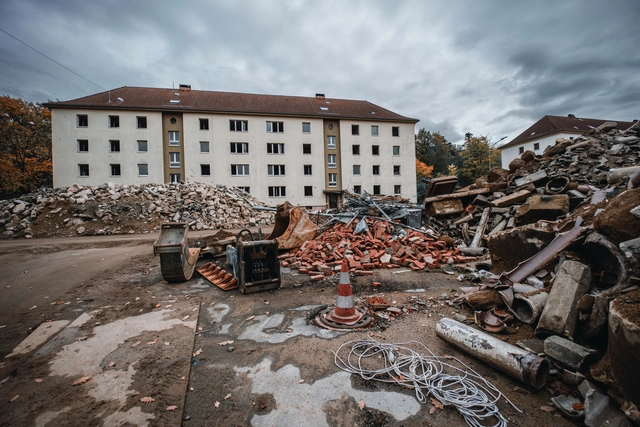
A major 7.8 magnitude earthquake hit central Turkey and north-west Syria this Monday, February 6, with a second 7.4 magnitude quake reported a few hours later in the same region, according to reports from the Guardian. Among the most affected areas is Gaziantep, located 150 miles from the border with Syria and 50 miles from the earthquake’s epicenter in Kahramanmaraş. Tremors were felt as far away as Lebanon, Greece, Israel, and the island of Cyprus. Authorities are still assessing the number of victims, as local and international rescue teams have been deployed to search for survivors. Early estimates report that over 1,700 buildings have collapsed or have been critically damaged, as confirmed by Turkey's Vice President Fuat Oktay.
As we dive into 2023 and start the Year of the Rabbit, we share with you a few thoughts of what the past year brought to us, and how we prepare for this new season.
During the past year we expanded our network as part of DAAily platforms, and with the future of the built environment as our mission, we became more aware on how to bring it to our daily content, considering how most of the challenges we are facing are converging into it. From the housing and energy crisis, to inequality, migration and war, everything is converging into the built environment, and we cannot abstract ourselves from it.
As architecture becomes a wider issue and more people not only become interested, but want to engage with it in an active way, we took the responsibility to open its black box and build bridges through knowledge by answering the challenging question of What is Good Architecture? in our first book, “The ArchDaily Guide to Good Architecture” together with gestalten.
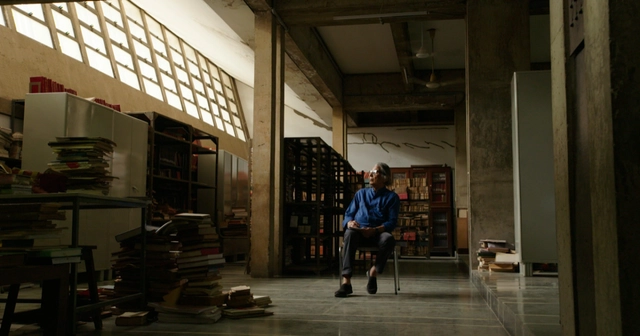
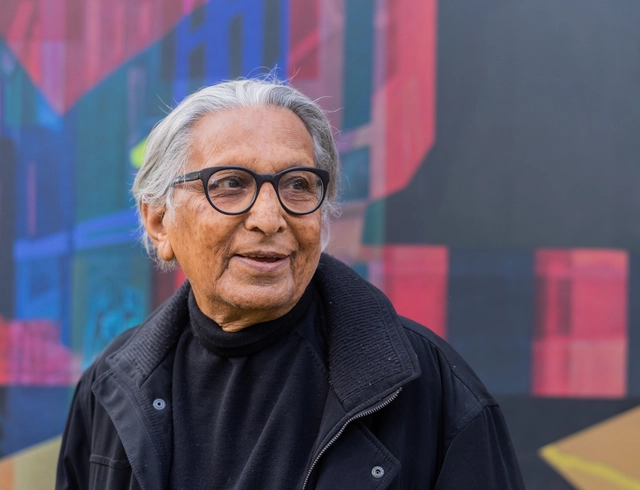
“I am not an architect,” he says with a sparkle in his eyes, “I am merely a person seeking out their destiny.” To the late pioneer of Indian modernism, Balkrishna Vithaldas Doshi, architecture was a practice of self-discovery. The veteran’s stellar works of poetic functionality resulted from a humanist philosophy bearing the influence of modernist principles, Mahatma Gandhi, and Indian spiritual texts. Doshi believed that architecture was synonymous with life - a vehicle for constant celebration; a medium for heightened experiences. His greatest contribution to the architecture community was his powerful words of wisdom that echo the timelessness of his structures.
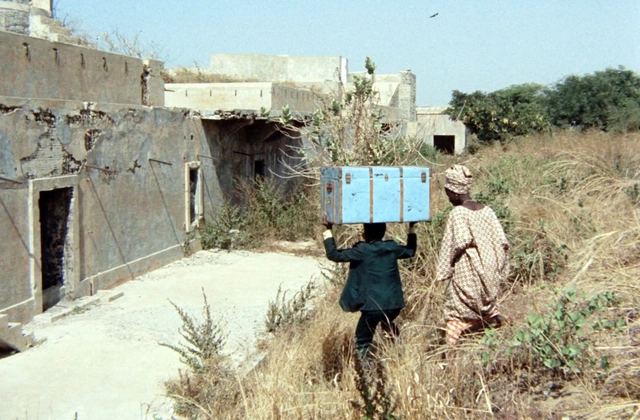
Abandoned house in "Touki Bouki". Image Courtesy of Janus Films
Simultaneously gripping, disconcerting, and chaotic, Djibril Diop Mambéty’s Touki Boukiis an exhilarating cinematic ride. The 1973 drama — the first full-length film by the Senegalese director — is the fantastical narration of a young couple in Dakar, eager to escape the Senegalese capital for the allure of Paris. It’s a character-driven film in many ways, primarily centered on the couple’s adventures, but it is also a subtle visual examination of the urbanism of post-independence Dakar, where the city and its architecture are essential fixtures in a surreal storyline.
Balkrishna Vithaldas Doshi, master architect, urban planner, educator, 2018 Pritzker Prize Winner, and 2022 Riba’s Gold Medal has passed away at 95, in Ahmedabad, India on Tuesday the 24th of January 2023, as reported by several Indian outlets and Architectural Digest India on their Instagram page. One of the most renowned Indian architects that shaped the architecture of India and its adjacent regions, Doshi, who was inspired greatly by the works of Le Corbusier and Louis Kahn, has “combined pioneering modernism with vernacular”. Known especially for his urban planning and social housing projects, as well as his academic work as a visiting professor at various universities worldwide, Balkrishna Doshi has designed, over his 70-year career, some of the most iconic buildings in India.
Architecture has the power to emotionally engage with its occupants. Tactfully crafted spatial moments extend architecture into experience design - a growing need in the experience economy. Through sensorial and intellectual stimulation, spaces can deeply connect with their occupants to result in memorable instances. The orchestration of an experience requires not only an understanding of spatial principles but also how the service of the space is designed.
For the Prada Fall Winter 2023 menswear show, AMO, OMA's research and design branch, has conceived a scenography that transforms the Deposito hall at Fondazione Prada while the audience is attending the show. As part of the show, the ceiling rises slowly, revealing imposing chandeliers that slowly illuminate the space and expose the industrial materiality of the hall. It then withdraws again to its initial position, creating a seamless transition between a dark-low ceiling room to a monumental space and back again.
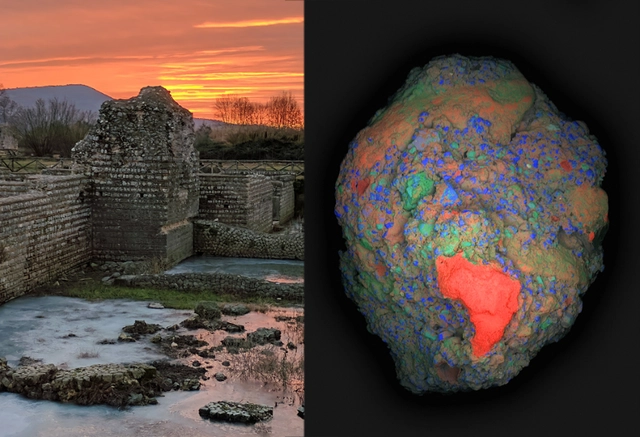
A large-area elemental map (Calcium: red, Silicon: blue, Aluminum: green) of a 2 cm fragment of ancient Roman concrete (right) collected from the archaeological site of Privernum, Italy (left). A calcium-rich lime clast (in red), which is responsible for the unique self-healing properties in this ancient material, is clearly visible in the lower region of the image. Image Cortesia de the researchers (MIT)
Roman aqueducts built more than 2,000 years ago are still in operation. The Pantheon in Rome remains the largest dome made of unreinforced concrete in the world, with a diameter of 43.3 meters. At the same time, it is not unusual to see structures less than a decade old collapsing. Understanding why Roman structures remain standing has been the subject of studies by many researchers around the world. Why, even in hostile environments such as coastlines or seismic zones, do these structures remain intact? Is there some miraculous material or method that has been lost in history? An international group of researchers led by the Massachusetts Institute of Technology (MIT) has shed light on these questions, discovering that these structures had a previously overlooked capacity for self-healing, and the potentially huge environmental impact it can have, to create more durable concrete structures in the future.
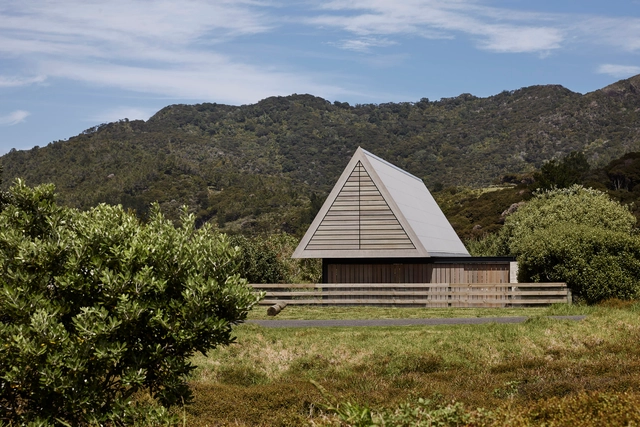
Cities are inseparable from fast-paced lifestyles. Rising rents and “not-that-small” apartments characterize urban environments, perpetuating the chase for “bigger, faster, and more”. As economies develop and human needs grow, buildings are erected at alarming rates to rush toward progress. The risks of urban living are gradually being exposed, raising questions about more intentionally-driven actions. One way to return to slower lifestyles is by returning to slow architecture.
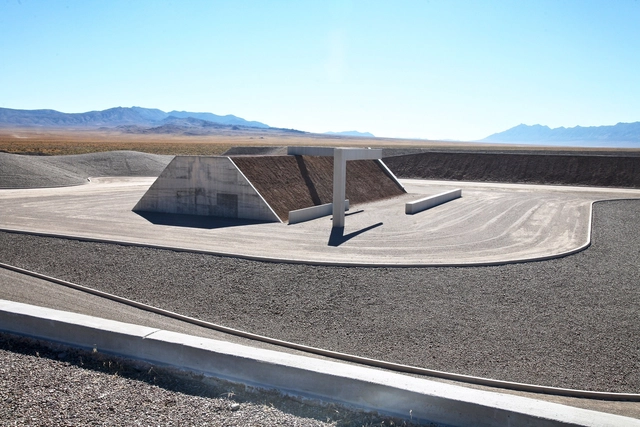
Artists are frequently inspired by land — be it painter Robert S. Duncanson’s renditions of American landscapes, or William Kentridge’s subversions of colonial-era British paintings depicting African vistas. Some artists, though, have preferred to work directly with the land, creating structures that sit on landscapes, or carving into the land itself. This art style — formally termed as Land Art — gained prominence in 1960s and 70s United States, in the context of the rise of the environmental movement amidst civil rights and antiwar protests, and as artists looked to separate themselves from the art market.
The profession of architecture is often marked by those individuals who employ their talent and resources to enable change and bring forth a vision for a better future. While some of them began their careers with bold gestures that captured the attention of the architectural world and changed paradigms, others worked in a more quiet manner, shifting the focus to the users of the space and asking themselves how they can best contribute to enriching the lives of those around them.
As the new year begins, we pause to look back to the architects who have passed away over the course of the last year but whose legacy and contribution to architecture outlive them. Among them, we remember Pritzker Prize laureate and pioneer of the High-Tech Richard Rogers, Post-Modern icon Ricardo Bofill, the thoughtful Gyo Obata, advocate and innovator Doreen Adengo, social housing pioneer Renée Gailhoustet and the many-sided Pritzker Prize laureate Arata Isozaki.