Star Wars (1977) is more than a film. It’s a worldwide phenomenon. The Star Wars saga is its own universe, and with such distinct characters and mythology, even talking about Star Wars: Episode IV - A New Hope as a standalone film (which is part of such a larger whole) is a fascinating exercise. It’s quite remarkable that for a film that takes place in space, in worlds outside of ours, it still holds up, architecturally.
The resulting conversations from our readers touched on everything from the coherence of London’s future skyline to Will Alsop’s design lineage. Read on to find out what they had to say in the latest installment of our "ArchDaily Readers Debate" series.
In "People, Place, Purpose," the latest monograph of her Delft-based firm Mecanoo, Francine Houben explores the unique work which has enabled the firm to take their place among the world-renowned pantheon of Dutch architects. In the following excerpt from the book, Herbert Wright presents an introduction to the monograph and the themes running through Mecanoo's work in general, breaking down an architecture that is defined not by style or ego but by three overarching responsibilities - and perhaps a dash of color.
On a computer screen, architects can move virtual walls around with just a few clicks, but surely only superheroes can shift an actual wall around physically with their bare hands? So it was quite a surprise, while standing in the Saint Mary of the Angels Chapel in Rotterdam, to see Francine Houben, founding partner of Mecanoo, do precisely that. After some gentle fussing and tidying around the lectern and candles where the priest conducts ceremonies, she walks to a wall, and puts her hands firmly to it. It recedes to let in the sound of tree branches swaying in the wind passing through the cemetery outside.
Venice, Berlin and New York City are the first to be featured in LEGO®'s new Architecture Skyline Collection. Unlike its single-building series, these new kits will allow you to recreate famous skylines by constructing up to 5 of each city's most iconic buildings.
New York City's skyline will be represented by the One World Trade Center, Empire State Building, Chrysler Building, Statue of Liberty, and Flatiron Building. Venice will feature the Rialto Bridge, St. Mark’s Basilica, St. Mark’s Campanile, St. Theodore and the Winged Lion of St. Mark, and the Bridge of Sighs. And Berlin's skyline will include the Reichstag, Victory Column, Deutsche Bahn Tower, Berlin TV Tower, and Brandenburg Gate.
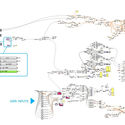
We’ve always been a profession of hackers. Every building is a one-off made up of countless elegant hacks, each bringing disparate materials and systems together into a cohesive whole. But when it comes to the software that designers have come to rely on, most of us have been content with enthusiastic consumerism, eagerly awaiting the next releases from software developers like Autodesk, McNeel (Rhino) and Bentley (MicroStation).
It’s been 5 years since we officially launched our research program at the Yazdani Studio of Cannon Design, and during that period we’ve come to understand the evolution of our process reflects the larger, changing relationship architects have with their means of production. Specifically, we've noticed that in late 2007 something changed. McNeel introduced a visual programming plugin called Grasshopper, and more and more architects began to hack their tools as well as their buildings.
Still searching for the perfect gift for that hard to please architect in your life? No need to look any further, we've compiled a list of items any architect would love to receive. Read on to see ArchDaily’s top 16 gifts for architects!
Until recently, the only options for providing clients and the public with visualizations of what a prospective building would look like were almost exclusively hand drawn renderings, or scale models built by hand. Both of these practices are still in use today, but now there is a much wider range of options with 3D modeling software providing the bulk of renderings, the growing presence of 3D printing, and even video fly-throughs with special effects that rival the latest Hollywood action movie. This 16mm film created by architecture firm Skidmore, Owings & Merrill (SOM) in 1984, and digitized by illustrator Peter Little, reminded us of what the early days of digital 3D modeling looked like.
Santiago Calatrava has been commissioned to design a trio of bridges in the Chinese city of Huashan, east of Wuhan. The three steelbridges - Xihu, Xianbi and Lincong - will span 1.5 kilometers of the city's new Yangtze River canal, providing access to pedestrians, cyclists and vehicles.
“Architecture is one of the art forms best able to improve and revitalize cities both artistically and functionally,” said Calatrava. “The Huashan project is a clear example of how an urban element, key to the successful growth of the city, can at the same time improve the quality of life for its citizens, thanks to an integration of all three bridges and the creation of boulevards on the banks of the canal.”
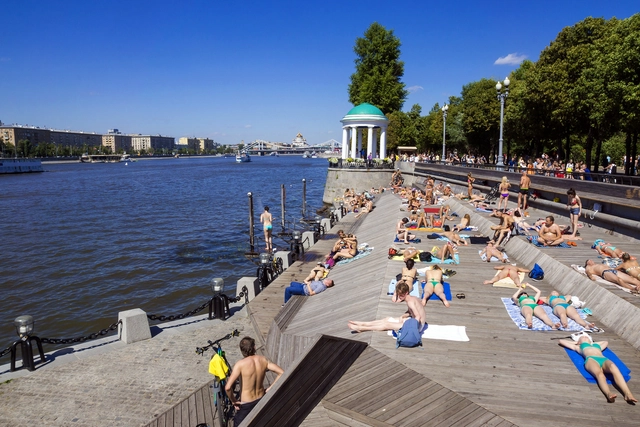
In 2010, following the election of a new mayor, the Moscow city government began to work towards a comfortable urban environment in which citizens would feel like residents rather than mere users of the city. The emphasis was on creating public spaces in which Muscovites could fulfill their potential and feel that the city was their home.
Gorky Park was at the forefront of the changes. During the 1990s, the "Central Park of Culture and Leisure" accumulated a collection of fairground rides and became a sort of amusement park popular principally among visitors from other cities; Muscovites hardly went there. Three years ago, the city government made it their mission to overturn the park's image and bring Moscow's residents back. A full-scale reconstruction and restoration began in spring 2011.
Today, Gorky Park is a new level of urban space – one centered around people and boasting a scrupulously conceived infrastructure. All of the changes were aimed at creating a comfortable environment for life - for strolling and sport, work and study, culture and leisure. Moreover, in a short time the park has developed an effective economic model whereby it receives one half of its budget from the city and generates the other half itself.
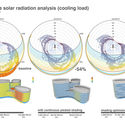
It’s a topic that cannot be avoided for any longer. The ongoing Paris Climate Conference has seen an unprecedented amount of participation - even before the summit began, over 150 countries submitted national plans of action to the United Nations - and there seems to now be a global consensus that we must cut back on our energy use and reliance on carbon polluting fossil fuels, or risk causing irreversible damage to our planet. By the end of the conference, an agreement will likely outline energy-reducing strategies by which all countries must abide. For architects, this means fundamentally changing the ways we design buildings and determine their success. Traditional building and construction methods consume large quantities of natural resources and account for a significant portion of the greenhouse gas emissions that affect climate change. In the United States, the building sector accounts for 41 percent of the country’s energy usage, according to the U.S. Green Building Council.
But this information is hardly new, and thankfully, our profession has been preparing for this change for some time. In 2006, the American Institute of Architects became the first adopters of the 2030 challenge, a call for all new buildings, developments, and major renovations to reach carbon-neutrality by 2030, with milestone goals of reduced dependence at 10-year intervals along the way. Each year, the AIA releases a progress report outlining the current standing of energy consumptions and take-aways from their findings. This year’s key conclusion? We must start integrating energy modeling techniques earlier into the design process.
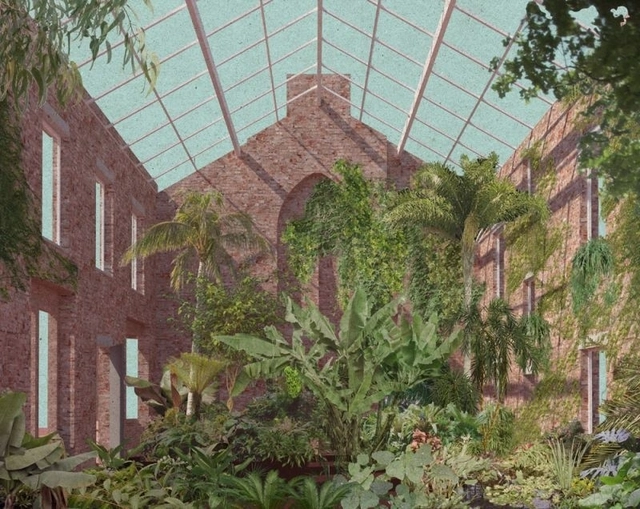
Design for a winter garden in a derelict home in Granby Four Streets. Image Courtesy of Assemble
Assemble, a London-based collective who "work across the fields of art, design and architecture to create projects in tandem with the communities who use and inhabit them," have been announced as the winners of the 2015 Turner Prize – Europe’s most prestigious contemporary visual art award. Their nomination was a surprise to many, not least because an architect (or architecture collective, in this case) has not been shortlisted before. Previous winners—some of whose work has intersected with the world of architecture—include Gilbert & George, Anish Kapoor (known for the Orbit at the 2012 London Olympic Games), Antony Gormley, Damien Hirst, Gillian Wearing and Grayson Perry (a collaborator on FAT's final built work).
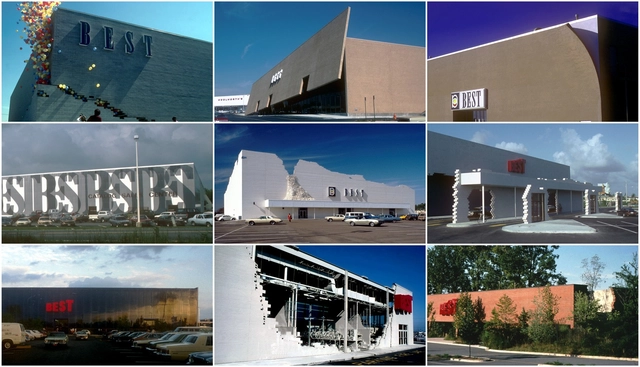
According to one survey, images of the BEST Products Showroom in Houston, Texas, designed by SITE (Sculpture in the Environment), appeared in more books on 20th-century architecture than any other building. The intentionally crumbling brick at that Houston store, known as “Indeterminate Façade,” and the eight other showrooms SITE designed, were simultaneously iconic and controversial, and most importantly for BEST, they brought in customers. Although SITE-founder James Wines never considered himself a Postmodernist architect, his designs for BEST, completed between 1972 and 1984, steeped in whimsical social commentary, came to symbolize the essence of Postmodernism. Today, all but one of the BEST showrooms have been demolished or altered beyond recognition, but they set a lasting precedent, and continue to influence the use of architecture in corporate branding today.
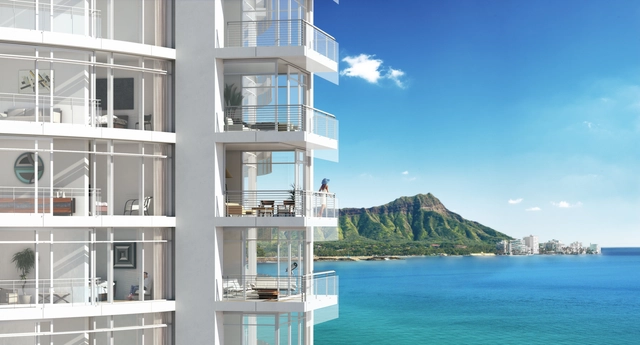
It's become a familiar sight: glossy renderings from big-name architects promoting new luxury condo towers. But in this case the setting is unexpected, rather than New York, Chicago, or Los Angeles, these new towers are cropping up in a gentrifying area of Honolulu known as Kaka'ako, nestled between the resorts of Waikiki, and the Downtown business district. For its latest offering, Ward Village, one part of a massive redevelopment plan for the entire Kaka'ako neighborhood, has enlisted Prizker Prize-winner Richard Meier, and Bohlin Cywinski Jackson (best known for the Fifth Avenue Apple Store in New York), to design iconic towers that will no doubt attract premium prices to match their architects' celebrity cachet. And while most people celebrate the influx of new housing units in a region of limited supply, some may be wondering who these new condos are really for.
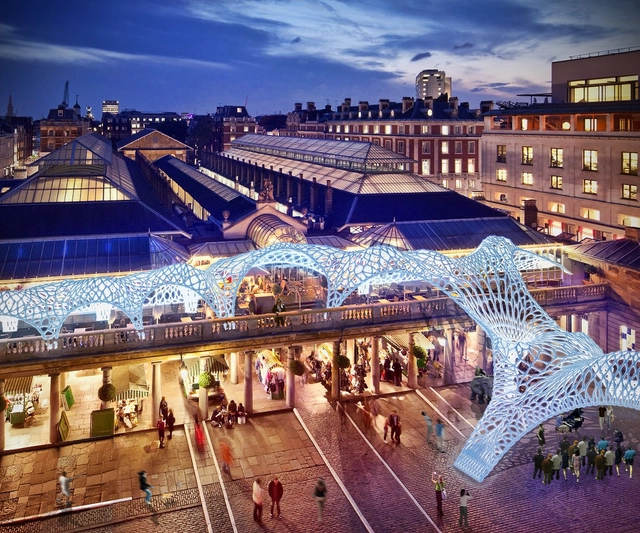
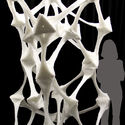
Architecture can be built with compressive elements and with tensile elements, but few materials have the ability to be stretched and also retain compressive strength. In a new project from Architectural Association DRL students Soulaf Aburas, Maria Velasquez, Giannis Nikas, and Mattia Santi, one of those materials, Polycaprolactone, a biodegradable polyester, is used to create framework from temporary pavilions and installations. Constructed using programmable robotic arms, the resulting product is a joint-less, self-supporting mono-material that shares a visual similarity to the structure of bones - giving the project its name, Osteobotics.
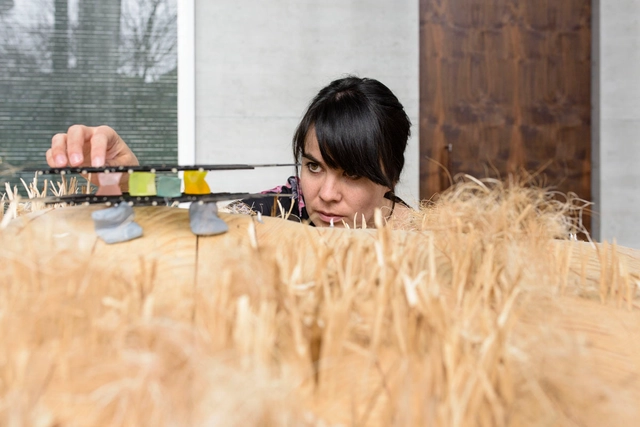
Cabral examines a model of the tea chapel. Image Courtesy of Gloria Cabral and Peter Zumthor/Rolex Mentor and Protégé Arts Initiative
In May last year, the Rolex Mentors & Protégés initiative announced a surprising partnership in its name: Paraguayan architect Gloria Cabral was to spend a year working alongside the famously elusive Swiss master Peter Zumthor. The differences between the two architects - from the languages they spoke to the age of their respective careers - were obvious from the outset. But as explored in this article by Paul Clemence, originally published by Metropolis Magazine as "Intuitive Connection," over the past year they've been discovering that the things that they have in common run far deeper.
It was an unlikely pair. He is a well-established architect with a long career, working out of a small town tucked deep in the mountainous Graubünden canton in Switzerland; she is at the beginning of a promising career in Asunción, Paraguay’s capital and largest city. They did not even share a common language, yet they connected through something more binding than the spoken word: an intuitive sense of space—and their work ethic.
Earlier today in Shenzhen the 6th Bi-City Biennale of Urbanism/Architecture (UABB) opened its doors to public. Under the overall theme "Re-Living the City," curators Alfredo Brillembourg and Hubert Klumpner of Urban Think Tank headed up the "Radical Urbanism" exhibit in the main venue. Brillembourg and Klumpner invited the exhibition participants to show how we can learn from ad-hoc and "bottom-up" initiatives for alternative urban solutions. In the following essay - originally printed in the UABB 2015 catalogue - the curators call for us to "rethink how we can operate within the city, learn from its emerging intelligence and shap[e] its outcomes to radical and tactical ends."
The notion of a radical urbanism draws us unavoidably into the realm of the political. Imagining a more equitable and sustainable future involves an implicit critique of the spatial and societal conditions produced by prevailing urban logics.[1] As such, we are not only reminded of Le Corbusier’s famous ultimatum, “architecture or revolution,” but its generational echo in Buckminster Fuller’s more catastrophic pronouncement, “utopia or oblivion.”[2] Both were zero-sum scenarios born of overt social disjuncture, whether the deprivations and tensions of the interwar period, or the escalating conflicts and ecological anxiety of the late 1960s. While the wave of experimental "post utopian" practices that emerged in the early 1970s positioned themselves explicitly in opposition to perceived failures of the modern movement, these disparate groups shared a belief – however disenchanted – with their predecessors in the idea that radical difference was possible, as well as a conviction that a break was necessary.
Last year Kevin J Singh, an Associate Professor of Architecture in the School of Design at Louisiana Tech University, adapted one of his lectures giving advice to students as they embark upon a new career into an article. That article, titled "21 Rules for a Successful Life in Architecture" and published on ArchDaily in September 2014, was a runaway success, becoming our second most-read post of 2014 and among our most visited articles of all time.
As a result of his article's success, this year Singh has taken his 21 rules as a framework for a new ebook, "Beginning Your Career in Architecture: Candid Advice for Emerging Professionals." The ebook not only elaborates on the 21 rules from the original article, but also offers questions to the reader that lead to actionable goals, giving them the nudge they need to start out on the right track. In the following excerpts from the book, Singh addresses voicing your opinions, finding - or rather creating - the role that suits your skills, and making the world a better place.
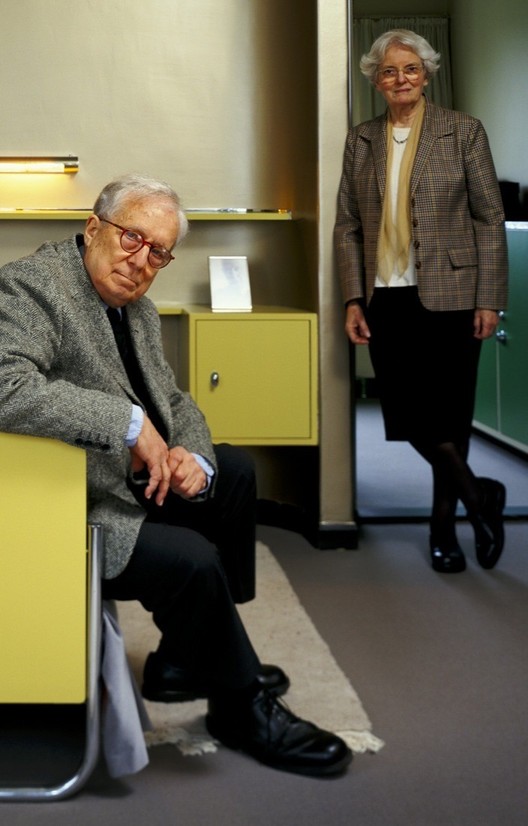
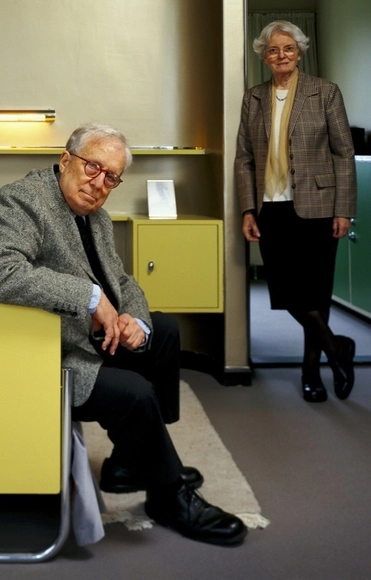
The American Institute of Architects (AIA) has announcedDenise Scott Brown, hon. FAIA and Robert Venturi, FAIA, as joint winners of the 2016 AIA Gold Medal. The AIA cited the duo for their "built projects as well as literature that set the stage for Postmodernism and nearly every other formal evolution in architecture." Scott Brown and Venturi are the first ever pair to receive the Gold Medal, after the AIA approved a change to its bylaws in 2013 that allowed the award to be presented to up to two individuals working together.









.jpg?1449771318)



















.jpg?1449161851 "Best Products Showroom, Langhorne, Pennsylvania (1978). Image © Tom Bernard")
.jpg?1449161803 "Episcopal Academy Chapel, Newtown Square (2008). Image © Matt Wargo")
.jpg?1449161873 "Franklin Court, Philadelphia (1976). Image © Mark Cohn")
.jpg?1449161910 "Vanna Venturi House (1964). Image © Rollin LaFrance")