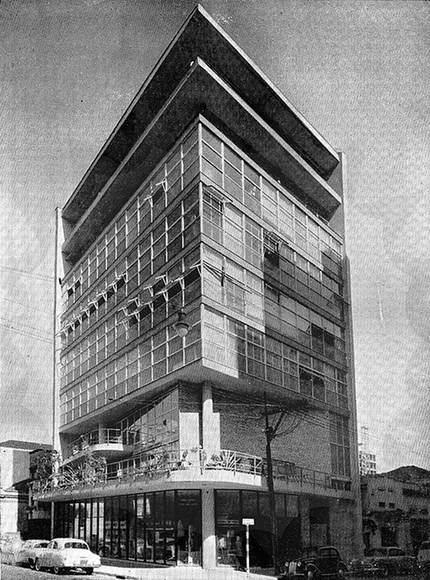
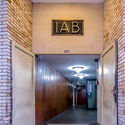
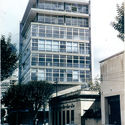
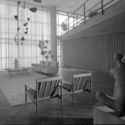

In November 1943—with a year and a half still remaining before the end of the great tragedy of the twentieth century, World War II, and the same amount of time before the end of the Estado Novo dictatorship here in Brazil—a group of prominent architects from the city of São Paulo, led by Vilanova Artigas, founded the Institute of Architects of Brazil, São Paulo Department (IAB-SP). Pooling their resources, they purchased a 300-square-meter plot at the corner of Bento Freitas and General Jardim streets, two blocks from the Praça da República metro station—the new downtown of São Paulo, which succeeded the old colonial center on the other side of the Anhangabaú Valley. In 1945, they organized the First Brazilian Congress of Architects, held in the city. Following this, their next extraordinary endeavor was the construction of their headquarters building. The first step was a competition held in October 1946, which received thirteen submissions. The jury—composed of Rio de Janeiro architects Oscar Niemeyer, Firmino Saldanha, and Hélio Uchoa, with the collaboration of Gregori Warchavchik and Fernando Saturnino de Brito—decided to merge the teams behind the three best proposals: those led by Rino Levi, Miguel Forte, and Abelardo de Souza. Modern architecture projects in the city that predated the IAB-SP headquarters included the Esther (1935), Prudência (1944), and Louveira (1946) buildings, as well as the headquarters of the newspaper O Estado de S. Paulo (1946).