Former ArchDaily's Managing Editor. BA in Architecture from Newcastle University, and interested in how overlooked elements of architectural culture —from the media to competitions to procurement processes can alter the designs we end up with.
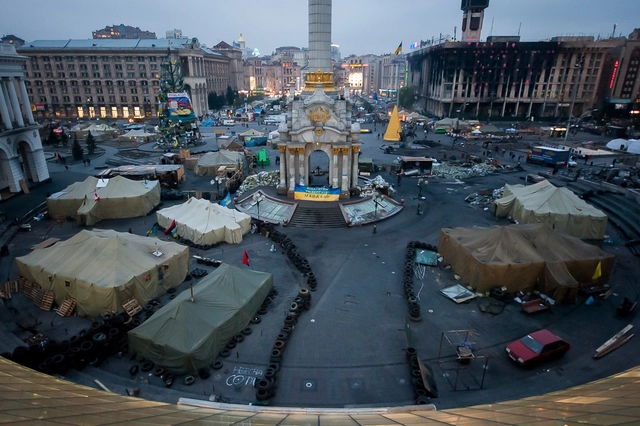
In a fascinating article for the Guardian, Owen Hatherley visits Maidan Nezalezhnosti (Independence Square) in Kiev, the public square at the heart of the Ukranian revolution that ironically was designed under Stalin as a Baron Hausmann-style weapon against uprisings. Hatherley examines how elements of the public space were utilized by protesters, and how different areas of the square are now hosting a variety of political factions. You can read the full article here.
Building on the success of their first Winter school in 2010, ManTownHuman's "Critical Subjects" school returns this summer. The week-long event that will serve as a platform to debate vital architectural questions as diverse as "what is 'nature'?"; "whatever happened to the avant garde?"; and "what is architecture for?" Applications are currently open - 30 of the UK's keenest architecture students will be chosen for their critical and innovative thought.
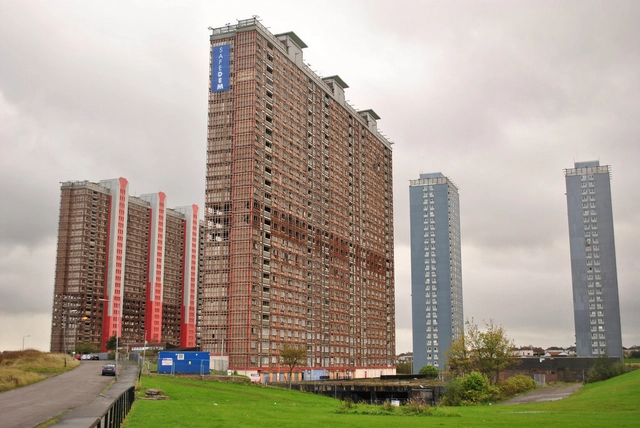
UPDATE: The Guardian reports that the plans to demolish the Red Road Flats during the Commonwealth Games have been scrapped due to concerns over public safety. The following news was originally published as "Glasgow to Demolish Iconic Modern Towers in Europe's Largest Demolition" on April 10th, 2014.
To mark the arrival of the Commonwealth Games in July, Glasgow is planning a twist on the usual opening ceremony: the customary fireworks are going to be replaced with explosives of an altogether different kind, as the demolition of all but one of the remaining Red Road Flats buildings will be broadcast live into the stadium.
The demolition of the five 30-story buildings will take 15 seconds and will be the largest ever attempted in Europe, according to the organizers. According to Games Organizer Eileen Gallagher, including the demolition as part of the opening ceremony shows that Glasgow is "a city that is proud of its history but doesn't stand still, a city that is constantly regenerating, renewing and re-inventing itself."
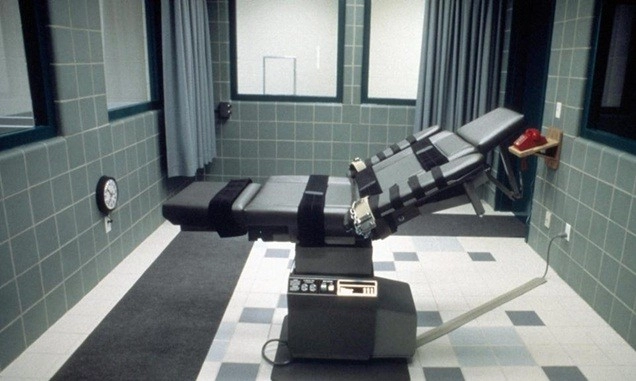
We think of architectural regulations as being there to ensure that buildings are safe for the public. But what if a building’s harm is not caused by unexpected structural failure but by the building performing exactly as intended? Can a building designed to facilitate human rights violations amount to a violation in itself? And what is the responsibility of the architects involved? These are the questions at the centre of the current debate in America around the architectural profession’s involvement in prison design.
Read on for more on the ethics of prison design after the break
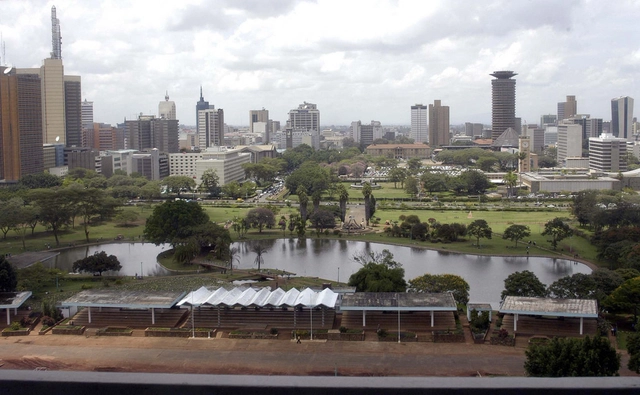
As reported by Kenya's Daily Nation newspaper, a group of Chinese investors has revealed plans for a new city in Kenya that will "match the splendour of Dubai". Though the investors are still resolving details with the Kenyan government, the city is planned for an area in Athi River, around 30km south-east of Nairobi, and is billed as a Chinese-controlled economic zone. At this early stage, the plans feature at least 20 skyscrapers. You can find more details of the proposal here.
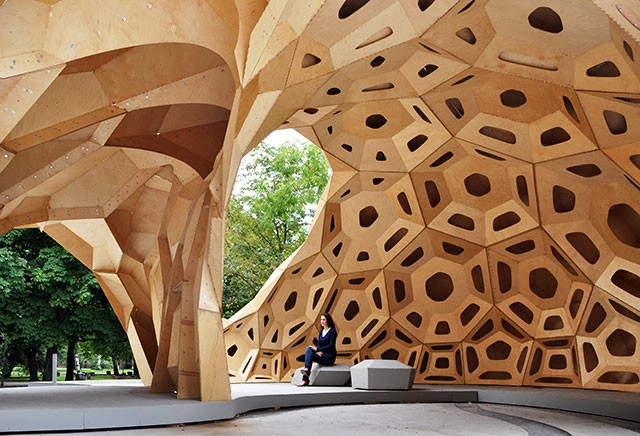
In this article, originally appearing on the Australian Design Review as "Tolerance and Customisation: a Question of Value", Michael Parsons argues that the complex forms made possible by digital fabrication may soon be victims of their own popularity, losing their intrinsic value as they become more common and the skill required to make them decreases.
The idea of tolerance in architecture has become a popular point of discussion due to the recent mainstreaming of digital fabrication. The improvements in digital fabrication methods are allowing for two major advancements: firstly, the idea of reducing the tolerance required in construction to a minimum (and ultimately zero) and secondly, mass customisation as a physical reality. Digital fabrication has made the broad-brushstroke approach to fabrication tolerance obsolete and now allows for unique elements and tolerance specific to each element. The accuracy that digital fabrication affords the designer, allows for the creation of more complex forms with greater ease and control. So far, this has had great and far reaching implications for design.
Read on to find out how this ease of form-making could diminish the success of complex forms.
The history of Johannesburg's Ponte City Apartments is a provocative one: built in 1975 and designed by Manfred Hermer as the height of luxurious (white-only) living in South Africa, the continent's tallest residential building soon became a notorious vertical slum, filled with crime and poverty, its signature hollow core re-purposed as a trash dump and a suicide drop.
The syn chron space by Carsten Nicolai was designed to combine experiences of sound and light. Image Courtesy of artcentron.com
In this interesting article in the New York Times, Allison Arieff highlights the often unconsidered importance of sound in architecture (outside of theaters and museums at least). She profiles the work of Acoustic Engineers at ARUP who have begun to work inschools and hospitals, taking into account the effects poor sound environments can have on us in our everyday lives. You can read the full article here.
With an emphasis on collaborative environments, relaxing atmospheres, and quirky branding, it's always interesting to take a peek into the offices of tech companies, often found in the sprawling, multi-colored campuses of Silicon Valley. But how does this particular brand of interior design transfer to the more cramped spaces of a Manhattan office block? This video by Internet Week NY takes us behind the scenes at Tumblr, About.com and Fueled Collective to find out.
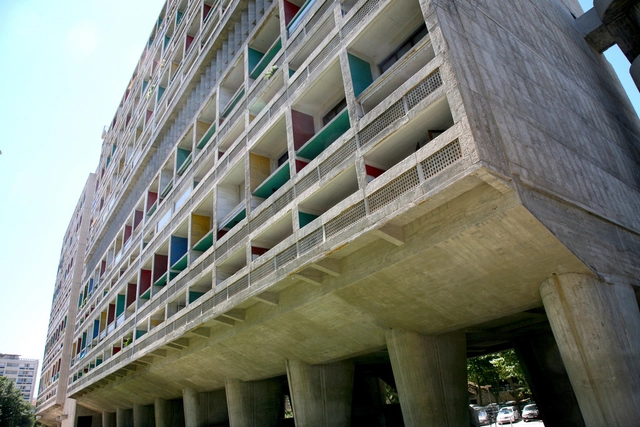
With Le Corbusier casting a long shadow over the last century of France's architectural history, it is not surprising that, faced with Rem Koolhaas's theme of 'absorbing modernity' at the 2014 Venice Biennale, the country might have a unique reaction.
Jean-Louis Cohen's initial proposal for the French Pavilion, titled "Modernity: Promise or Menace?" reflects this history: “since 1914 France has not so much 'absorbed' modernity as it has shaped it with significant contributions made by French architects and engineers in order to meet the requirements of different segments of society. As is the case in many countries, modernity has had to come face to face with social reform and by doing so it has made great dreams such as quality housing and community services for all partially come to fruition. But this encounter has come about in a original way, also generating considerable anxiety.”
Read on after the break for more about the themes explored by the French Pavilion
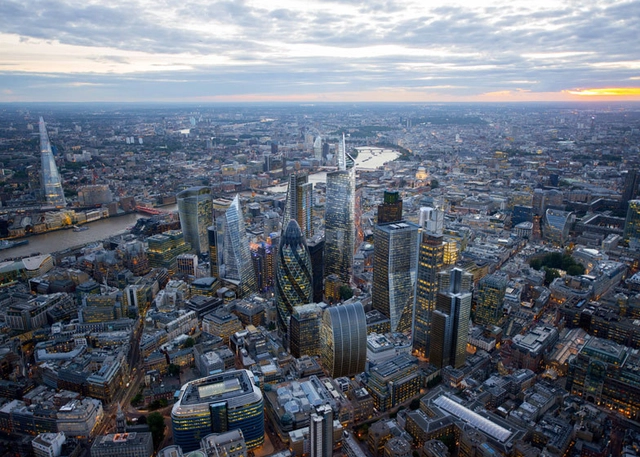
In response to the recent study by New London Architecture, which found that there are currently over 230 tall buildings either planned or under construction in London, an argument is brewing over the UK capital's sudden, seemingly uncontrolled, growth.
The most vocal reaction to all of this has come from Rowan Moore, architecture critic for The Observer, who has teamed up with the Architects' Journal to launch a campaign calling for more rigorous planning and public consultation when it comes to tall buildings. The campaign has support from 80 signatories, a list that reads like a 'who's who' of British architecture, including architects, planners, politicians, developers and artists as well as a range of civic societies.
Read on for more reaction to London's tall building boom.
After a year of gathering evidence and consultation, Sir Terry Farrell's review of UK architecture has finally been released. The review, commissioned by Culture Minister Ed Vaizey, includes 60 proposals to improve the quality of the UK's built environment, targeting a wide range of groups including education, planning, government and developers.
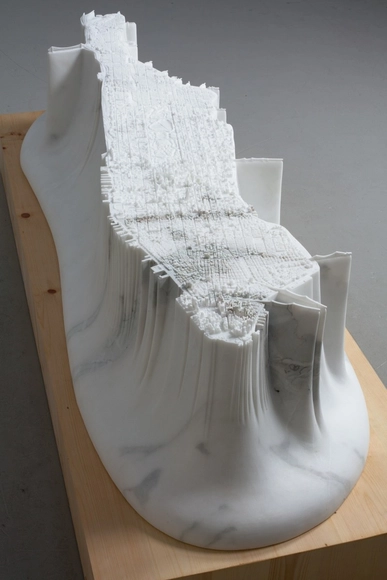
You've never seen Manhattan quite like this: Metropolis Magazine's Komal Sharma takes a look at "Little Manhattan", a sculpture by Yutaka Sone which renders the famous island in 2.5 tons of solid marble. The power of the artwork lies in the play with scale: the initial impression of a huge marble block contrasts with the tiny, intricately detailed skyline forming a mere skin on top; the subsequent realization that this skin corresponds to the familiar vertical city brings you to a more complete understanding of Manhattan's scale. You can read the full article here.
In this delightful article on Metropolis Magazine, Christopher Hawthorne recounts his meeting with Deborah Sussman, the one-time protégé of Charles and Ray Eames whose work breaks the boundaries between graphic design and architecture. From her collaboration with Frank Gehry to her iconic designs for the 1984 LA Olympics, Sussman has come to define a curiously Californian style. You can read the full article here.
The UIA (International Union of Architects) is inviting architecture students to enter its "Healthcare Otherwhere" competition, part of their World Congress in Durban, South Africa this summer. Against a backdrop of poor health outcomes caused by poverty, the competition challenges students to propose how architecture might be involved in promoting good health by designing a building in the Warwick Junction area of Durban. Registration has been extended to April 17th. You can register here.
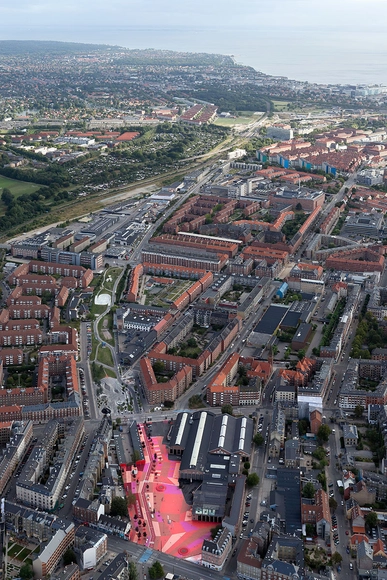
In an enlightening interview on Future Cape Town, the Lord Mayor of Copenhagen Frank Jensen discusses what it is that makes Copenhagen, and Denmark as a whole, such a green-focused society. The key it seems goes beyond simple politics, stemming from a combination of early adoption, a robust and widely appreciated welfare system and a culture of collaborative innovation. You can read the full interview here.