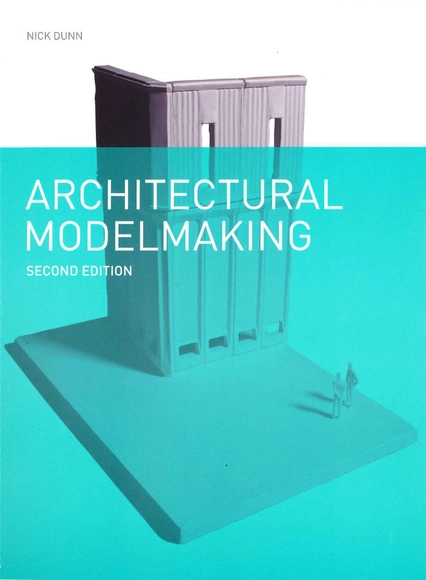
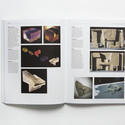
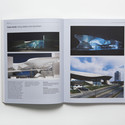
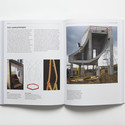
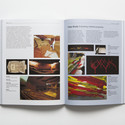
Why do we make models? From sketch maquettes and detail tests to diagrammatic and presentation models, the discipline of physically crafting ideas to scale is fundamental to the architect's design process. For architect and educator Nick Dunn, architectural models ultimately "enable the designer to investigate, revise and further refine ideas in increasing detail until such a point that the project's design is sufficiently consolidated to be constructed." In Dunn's second edition of his practical guide and homage to the architectural model, the significance and versatility of this medium is expertly visualised and analysed in a collection of images, explanations, and case studies.
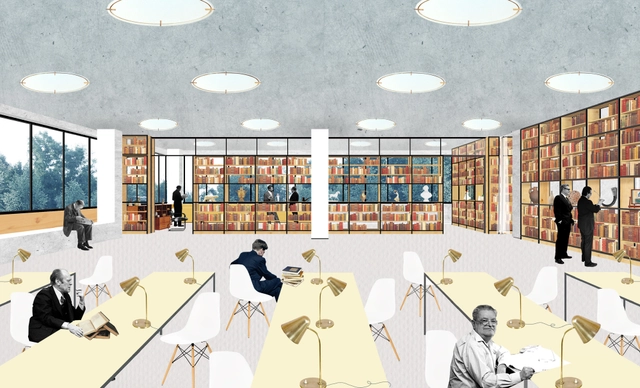
SVESMI, an unassuming studio based in central Rotterdam, is at the center of a dauntingly complex project that may eventually see the renovation of 448 dilapidated and disused branch libraries in Moscow. Architects Anastassia Smirnova and Alexander Sverdlov balance their time between Rotterdam, which acts as their design studio, and Moscow from which, alongside architects Maria Kataryan and Pavel Rueda, they oversee the project at large. Faced by the potential challenge of reimagining over 450 public 'living rooms' spread across the Russian capital and demanding unusually high levels of spatial articulation and social understanding, the Open Library project is also unwinding the hidden narrative of Moscow’s local libraries.
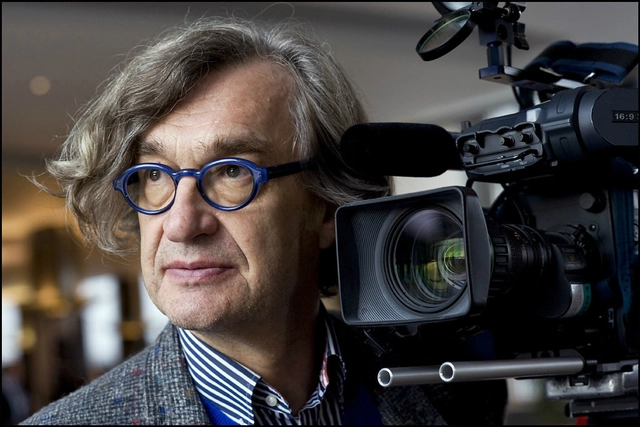
The highly anticipated 3D film series Cathedrals of Culturehas now opened around the world. Directed by Wim Wenders and a team of five other acclaimed directors (Robert Redford, Michael Glawogger, Michael Madsen, Margreth Olin and Karim Aïnouz), the collection - according to The Guardian's Oliver Wainwright - "feels more like a series of vapid promotional videos." Arguing that in most of the films (with the exception of Michael Madsen's) the narrative is lost in favour of cinematic shots, "Cathedrals of Culture presents a limited and internalised view of what architecture is, a fault perhaps driven by the obsession with the 3D camera. [...] It has a self-satisfied, sometimes cultish, air that makes you feel like you’re taking part in some collective brainwashing exercise." Wainwright concludes that Living Architectures is the best place to go. See some of their films featured in ArchDaily's 40 Architecture Docs to Watch in 2014.
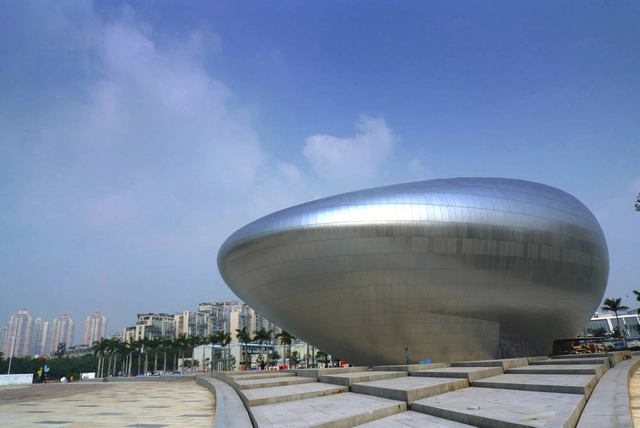
Oct Design Museum (Shenzhen) / Studio Pei-Zhu. Image Courtesy of Studio Pei-Zhu
In an article for the Financial Times, Edwin Heathcote asks "what are design museums actually for?" Noting that we are living through a "boom time" for the typology, Heathcote argues that when we are overwhelmed by design in our day to day lives, what will fill these spaces? London's Victoria & Albert Museum sprouted from the legacy of the 1850 Great Exhibition, where the concept of a design museum originated, as an attempt to "display the fruits of Britain’s industrial revolution." Ironically in the very same museum in 2013, curator Kieran Long acquired a print of the world's first 3D printed gun for the permanent collection. Will the ubiquity of 'design' soon negate the need for dedicated spaces? Read Heathcote's conclusions in full here.
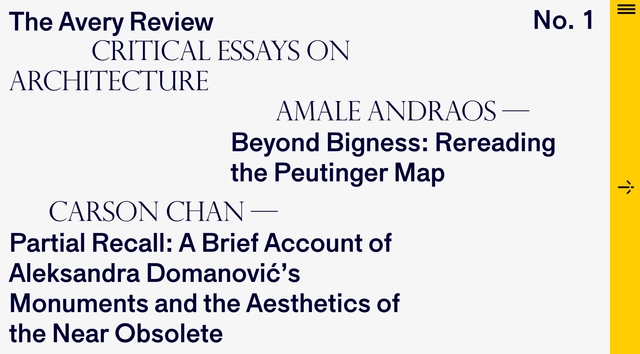
The Avery Review(AR), a new online journal dedicated to thinking about books, buildings and other architectural media, seeks to utilise the potential in the critical essay and repackage it for the digital realm. A project of the Office of Publications at Columbia University's Graduate School of Architecture, Planning and Preservation, the AR's responsive website (designed by Nothing in Common) perfectly matches the exceptional quality of the content. Featuring essays from Owen Hatherley and Amale Andraos, among others, the overarching aim of the review is to "explore the broader implications of a given object of discourse" whether that be "text, film, exhibition, building, project, or urban environment."
Find out more from editors Caitlin Blanchfield and James Graham after the break.
In June of this year seven architecture students came together to film the vernissage of the Venice Biennale. Undaunted by the unrelenting Venetian sun and the prospect of being faced by some of the world's greatest living architects and curators, the team - spanning four nationalities - spent three days feverishly talking to anyone and everyone (in between pasta and espresso breaks). Having built up a comprehensive picture of the opening days of the Biennale in a series of short, uninhibited filmed interviews, Mies. TV proudly presents their alternative, slightly shaky coverage of the 2014 Venice Biennale.
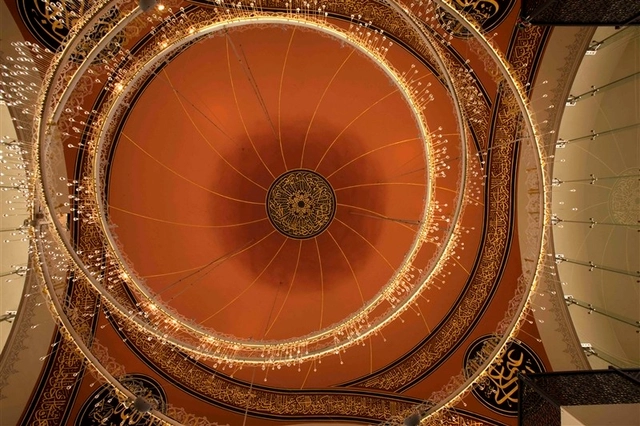
As part of CNN's Leading Women series, Sheena McKenzie explores the work of Turkish architect Zeynep Fadillioglu - perhaps the first female architect to design a mosque, now on her third. In buildings where men and women are traditionally separated for worship, and women are often given a smaller space, Fadillioglu "purposely placed the women's section in one of the most beautiful parts of the light-flooded dome" in Istanbul'sSakirin Mosque. McKenzie concludes that although "Fadillioglu might have made a name for herself designing mosques, you don't needn't be religious to admire their beauty."
RoomScan is an app for iOS which draws floor plans in minutes - touching your device to a wall is the only input required. Using the iPhone's internal sensors, RoomScan recognises a sequence of flat vertical surfaces, measuring the distance in between and creating impressively accurate plans. When you come to a door, you just tap the phone to the door frame and continue. Claiming that measurements are accurate to the nearest 10cm (or 6 inches), this app - the basic features of which are available for free - is not only great fun to play with, but also considerably useful in every day situations.
The Basilica of the Sagrada Família in Barcelona have laid out their planned milestones for the forthcoming year, visualising it in a short film that begins to piece together Antoni Gaudí's incredible vision. The Sacristy and Raking Cornice will be constructed between this year and next, while new stained glass windows will be installed flooding the interior spaces with evermore coloured light.
I was recently at a lecture at Rotterdam’sNieuwe Instituut in which Dirk van den Heuvel mediated a discussion between Kenneth Frampton and Herman Hertzberger. Talking of those who contributed to the Dutch Structuralist movement, Hertzberger lamented the fact that so many have faded into obscurity: “if you make the mistake of not writing" he said, "you’re bound to be forgotten.” Accompanying design with the written word is at the core of good practice, not only because it lends design an elevated meaning by cementing it into a wider discourse, but also because it often uncovers the subconscious significance of the process of architecture.
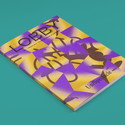
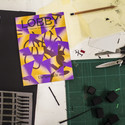
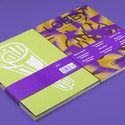
LOBBY is an attempt from students of London’s Bartlett School of Architecture to anchor in-house research and external contributions in words, “creating both a space we lack and an action we desire.” Their new journal is also a response to the school’s current in-between state as they await their new building in temporary studio spaces. As such, LOBBY will serve as a platform for exchange and discussion in lieu of a physical lobbying space. The first issue explores the theme of Un/Spectacle, offering different layers, approaches, readings and perspectives on the topic of the '(un)spectacle' of the everyday.
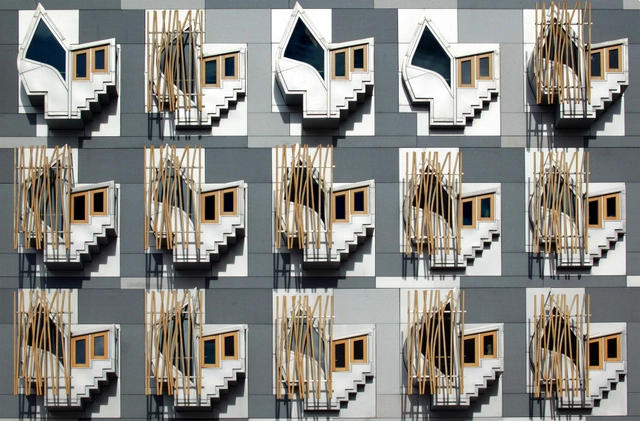
Arguably there are only two architects in history that have become almost completely synonymous with one particular city - Charles Rennie Mackintosh for Glasgow and Antoní Gaudi for Barcelona. Indeed, a Catalonian architect, Enric Miralles, designed the Scottish Parliament Building in Holyrood, Edinburgh. The fact that both of these cities are part of large enclaves who are seeking, or have sought, independence is perhaps just a coincidence. Architecture, often used as a symbol for the identity of nationhood, will certainly be part of a wider dialogue about the Union of the United Kingdom following yesterday's referendum.
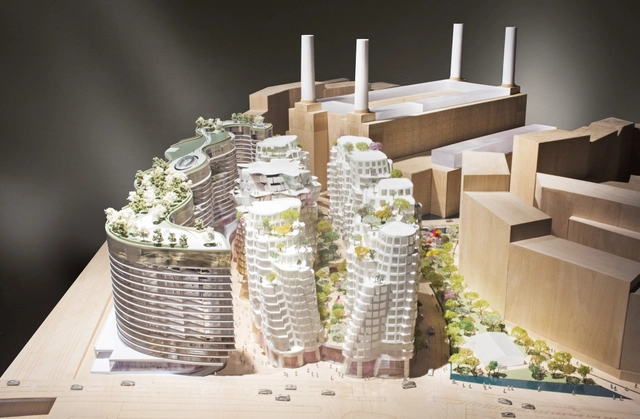
Phase 3, Battersea Power Station redevelopment (London). Image Courtesy of Foster + Partners / Gehry Partners
Alongside a number of recent articles that explore the rise of the urban property developer and the subsequent "threat" to the built environment, Oliver Wainwright of The Guardian explores at length how developers are "exploiting planning authorities and ruining our cities." In discussion with Peter Rees, former Chief Planning Officer for the City of London and responsible for the financial district's monuments of today, Wainwright discusses the lack of accountability of the vast majority of urban developers. While local councils attempt to secure the next iconic development for their area many planners, authorities and developers are locked in a battle over the built fabric of our cities. Read the article in full here.
Combo Competitions, an organisation founded by Swedish, London based architect Per Linde, organises international idea competitions for architects, designers and students. With a gentle emphasis on the ideas presented in proposals, rather than aesthetics alone, their main driver is to promote design concepts "where everything comes together to form a whole that is larger than the sum of its parts."
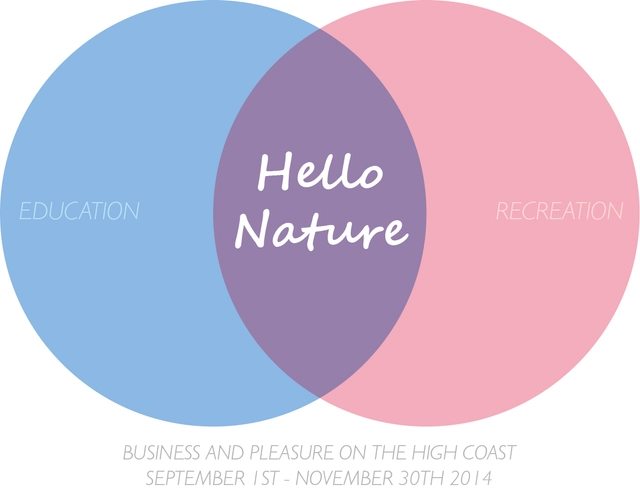
With the increasing ease in producing "amazing renderings and images," underling concepts can often be lost - or hidden by - a seductive final image. Combo Competitions seeks to reverse this trend by rewarding an emphasis on "well advised concepts" alongside appearance and presentation. Their latest competition, entitled Hello Nature, invites participants to explore a way of re-introducing nature into people’s consciousness.
Find out more about the competition and hear from Per Linde after the break...
LaMIPA, a non-profit "architectural exchange platform" dedicated to exhibiting art and culture, will be part of the 2014 Beijing Design Week (BJDW) with a launch event on September 25th 2014 and following events on the 26th and 28th. Exhibiting seventy documentaries by Spanish and Portuguese architects, and organised in conjunction with the Spanish and Portuguese Embassies to China, the unique audiovisual LaMIPA collection will be part of the main section of the Beijing Design Week festival. Alongside the exhibition a series of lectures from a number of renowned practices including Souto de Moura and OAB Ferrater will also be taking place.
In this extended interview between Bernard Tschumi and The Architectural Review's Paul Finch, the pre-eminent Swiss-born architect discusses his education, writing, design and wider critical position. Speaking candidly, Tschumi explains how a visit to Chicago when he was seventeen years old sparked a life-long passion for architectural design - something that had been somewhat repressed due to his father who was, at that time, one of the world's most highly respected architects. His friendship with British architect and theorist Cedric Price led to the start of a career that saw his proposals for Paris's Parc de la Villette foreshadow the age of Deconstructivism. Ending with his take on the future of the profession, Tschumi also offers advice to students and young practices looking to make their mark.
Open House 2014, a concept developed in London twenty two years ago which has now spread to cities across the world, will throw open the doors to some of the UK capital's most inspiring spaces and interiors this month. "Revealing", the theme of this year's Open House, intends to "shed light on issues that are relevant to local communities." In this way, the scheme hopes to examine how the built environment is evolving. Exploring the role of architects, engineers and contemporary design in revitalising places and spaces, the festival hopes to show above all "how good design can make London a more livable, vibrant and enjoyable city."
BLOCK is a video game that "will breach the digital with the physical" and allow anyone to become an active participant in the future of Los Angeles. Described by FAST Co.Existas "Minecraft for real life" the gameplay, which also bears similarity to The Sims, is founded on understanding the interdependencies of city entities such as housing, shops, parks and infrastructure. The objective of the game is to both educate people and to generate user data for design patterns for the Los Angeles of 2050, producing the first database of a future city. BLOCK allows the player to understand the ecology of the urban realm (focusing on resources such as money, waste, and social capital) ultimately encouraging entrepreneurship "through the design of an ecological urbanism." Fundamentally, it allows for new opportunities to be conceived in the city.
More than 500 years after it was built, Filippo Brunelleschi's dome of Santa Maria del Fiore in Florence, Italy, remains the largest masonry dome ever built. Leaving no plans or sketches behind, some of the secrets of its construction that Brunelleschi pioneered are still an enigma today. This short animation, presented by National Geographic and created by Fernando Baptista and Matthew Twombly, gives an idea of how the dome of the Duomo might have been built. Demonstrating the complexity of the task, made harder due to poor construction prior to Brunelleschi's commission, this film serves as a reminder of just how long it can take to create something timeless.