Daniela Andino

Daniela Andino is an Ecuadorian architect and designer, graduated from Syracuse University. Her work explores the intersections between architecture, technology, and culture through writing, research, and creative practice. IG: @daniandinoo

BROWSE ALL FROM THIS AUTHOR HERE

Environmental Comfort as an Interior Condition in South American Architecture

Subscriber Access | 

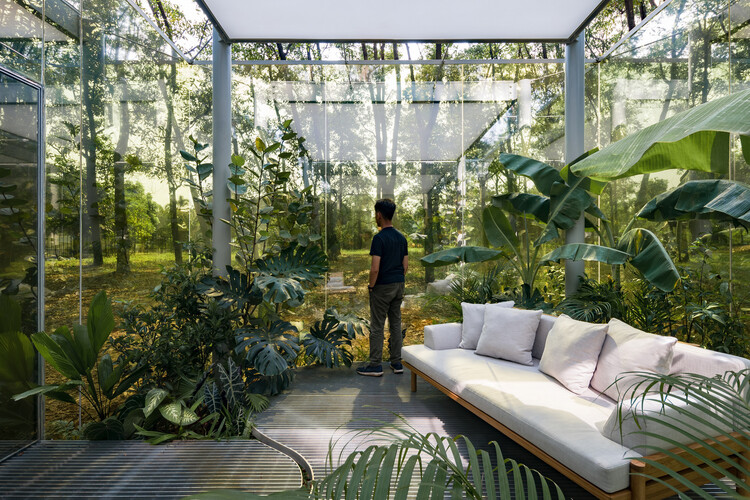
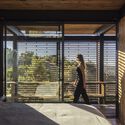
Across South America, environmental comfort is understood not as an interior condition, but as one shaped through space. In regions marked by heat, humidity, intense sunlight, and seasonal variation, architecture has long relied on spatial decisions to moderate climate and support daily life. Comfort emerges from how interiors are opened, shaded, ventilated, and inhabited over time.

Rather than isolating interior spaces from their surroundings, many contemporary projects across the region cultivate comfort through depth, porosity, and intermediate zones. Light is filtered rather than maximized, air is guided through aligned openings and voids, and thresholds become active spaces of use rather than residual edges. These strategies do not seek uniform environmental control, but produce interiors that remain temperate, adaptable, and closely attuned to changing climatic conditions. In this context, environmental comfort becomes inseparable from spatial experience.

Environmental Comfort as an Interior Condition in South American Architecture - Image 1 of 4Environmental Comfort as an Interior Condition in South American Architecture - Image 2 of 4Environmental Comfort as an Interior Condition in South American Architecture - Image 3 of 4Environmental Comfort as an Interior Condition in South American Architecture - Image 4 of 4Environmental Comfort as an Interior Condition in South American Architecture - More Images+ 12

Designing for Presence: When Architecture Invites Us to Stay

Architecture is increasingly asked to do less, not more. In environments shaped by constant movement, noise, and expectation, spaces that allow people to stay, pause, and be present have become both rarer and more necessary. Many public and semi-public places are designed to keep people moving, consuming, or reacting, leaving little room for lingering, observation, or simply being without a reason.

In response, a growing body of work is shifting attention away from activation and toward presence. Rather than asking users to interact or participate, these spaces create conditions that support staying. Comfort, continuity, and openness allow people to remain without pressure or obligation, making presence a spatial quality rather than an activity.
Designing for Presence: When Architecture Invites Us to Stay - Image 1 of 4Designing for Presence: When Architecture Invites Us to Stay - Image 2 of 4Designing for Presence: When Architecture Invites Us to Stay - Image 3 of 4Designing for Presence: When Architecture Invites Us to Stay - Image 4 of 4Designing for Presence: When Architecture Invites Us to Stay - More Images+ 25

Leisure Architecture: 13 Projects Shaping Togetherness Across Generations

Leisure spaces are often where different generations cross paths. Without formal programs or assigned roles, they allow people to move, pause, and remain together, each engaging space in their own way. In a built environment increasingly shaped by specialization and separation, these shared spatial grounds have become less common, giving leisure-oriented architecture a renewed relevance.

Discussions around public space have repeatedly pointed to the value of openness and flexibility in supporting collective life. As architect Herman Hertzberger has noted, "the more a space can be interpreted in different ways, the more people it can accommodate." Rather than attempting to create interaction, architecture shapes the conditions that make togetherness possible.

Leisure Architecture: 13 Projects Shaping Togetherness Across Generations - Image 1 of 4Leisure Architecture: 13 Projects Shaping Togetherness Across Generations - Image 2 of 4Leisure Architecture: 13 Projects Shaping Togetherness Across Generations - Image 3 of 4Leisure Architecture: 13 Projects Shaping Togetherness Across Generations - Image 4 of 4Leisure Architecture: 13 Projects Shaping Togetherness Across Generations - More Images+ 10

When Eating Becomes Spatial: 14 Projects Built Around Shared Meals

In recent years, food has taken on a renewed role within architecture, not simply as a program or typology, but as a shared spatial practice. Beyond restaurants or dining design, communal eating spaces are increasingly understood as environments where presence, ritual, and time intersect, allowing people to gather, stay, and coexist. In these settings, eating does not just happen within space; it actively shapes it, temporarily transforming ordinary, borrowed, or improvised environments into places of exchange.

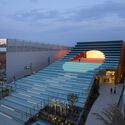
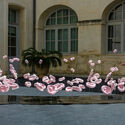
This shift is visible across a wide range of built projects, installations, and community spaces that use shared meals as a way of bringing people together. Initiatives such as Fondo Supper Club frame dining as a social platform, using food to connect artists, designers, and local communities through conversation and collaboration. Similarly, sit.feast, presented during Milan Design Week 2024, approached the table as a spatial installation, one where sitting and eating together became the primary means of collectively producing space.
When Eating Becomes Spatial: 14 Projects Built Around Shared Meals - Image 1 of 4When Eating Becomes Spatial: 14 Projects Built Around Shared Meals - Image 2 of 4When Eating Becomes Spatial: 14 Projects Built Around Shared Meals - Image 3 of 4When Eating Becomes Spatial: 14 Projects Built Around Shared Meals - Image 4 of 4When Eating Becomes Spatial: 14 Projects Built Around Shared Meals - More Images+ 16

Architecture in Rhythm with Time: Designing Through Solar, Lunar, and Biological Cycles

Subscriber Access | 

As the solstice marks the shortest day of the year in the Northern Hemisphere, it also draws attention to something architecture has long negotiated but often overlooked: time. Beyond form or function, buildings and spaces are continuously shaped by cycles of light and darkness, seasonal shifts, and environmental rhythms that affect how they are inhabited.

In recent years, a growing number of architectural projects have begun to work explicitly with these cycles. Rather than designing spaces to function in a single, fixed way, architects are creating environments that change throughout the day, across seasons, or in response to natural phenomena such as the sun's path, lunar phases, wind patterns, or circadian rhythms. These projects operate in dialogue with time, appearing, transforming, and activating differently depending on environmental conditions.

Architecture in Rhythm with Time: Designing Through Solar, Lunar, and Biological Cycles - Image 1 of 4Architecture in Rhythm with Time: Designing Through Solar, Lunar, and Biological Cycles - Image 2 of 4Architecture in Rhythm with Time: Designing Through Solar, Lunar, and Biological Cycles - Image 3 of 4Architecture in Rhythm with Time: Designing Through Solar, Lunar, and Biological Cycles - Image 4 of 4Architecture in Rhythm with Time: Designing Through Solar, Lunar, and Biological Cycles - More Images+ 11

Renovation and Everyday Life: How Latin American Architecture Reinvents Existing Spaces

Subscriber Access | 

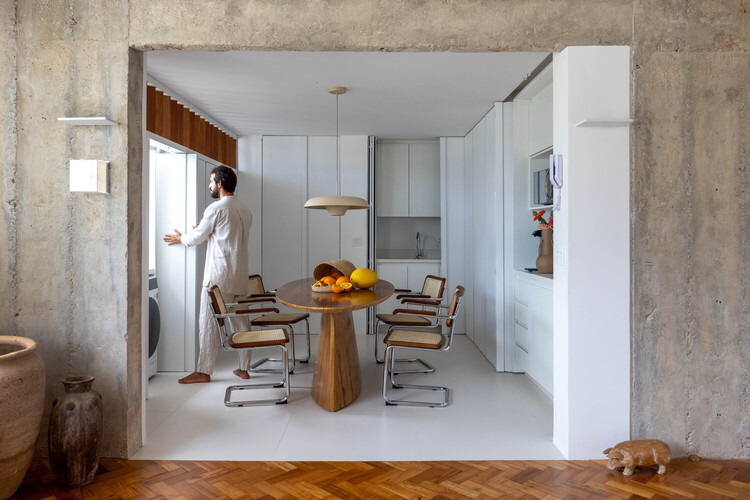
Across Latin America, renovation has become less about preservation alone and more about responding to changing ways of living. Rather than freezing buildings in time, many contemporary projects work with existing structures to adapt them to new domestic routines, social dynamics, and spatial needs. Through strategic changes in materials, composition, color, and light, these interventions reinterpret everyday spaces while maintaining a strong connection to their original context.

In this process, houses and apartments become sites of transformation where flow, continuity, and shared spaces are carefully reconsidered. Renovation operates as a precise architectural tool, one that prioritizes natural light, openness, and flexibility to support daily life as it evolves. Instead of imposing new forms, these projects repurpose what is already there, aligning spatial decisions with the habits and rituals of those who inhabit them.

Renovation and Everyday Life: How Latin American Architecture Reinvents Existing Spaces - Image 1 of 4Renovation and Everyday Life: How Latin American Architecture Reinvents Existing Spaces - Image 2 of 4Renovation and Everyday Life: How Latin American Architecture Reinvents Existing Spaces - Image 3 of 4Renovation and Everyday Life: How Latin American Architecture Reinvents Existing Spaces - Image 4 of 4Renovation and Everyday Life: How Latin American Architecture Reinvents Existing Spaces - More Images+ 22

From Ecologies to Everyday Life: Reflecting on Architectural Exhibitions in 2025

This past year marked a period of introspection for architecture. As 2025 unfolded, the discipline, confronted with evolving environmental and social realities, entered a broader turning point in how it understands its role and how users engage with it. Throughout the year, exhibitions shifted focus away from buildings as isolated objects toward a broader understanding of relationships between ecology, equity, everyday life, and collective imaginaries. Across institutions and cities, they operated less as showcases and more as discursive platforms: places where architecture was not only presented, but also imagined, questioned, and collectively redefined.

While exhibitions have long functioned as sites of discourse, politics, and community, this role became more explicit in 2025. As Carlo Ratti noted in an ArchDaily interview during the pre-opening of the Venice Architecture Biennale 2025, exhibitions today can "hybridize the way that people come together," an ambition that echoed across cities and institutions as exhibitions evolved into spaces for debate, experimentation, and collective reflection. Exhibitions are places where architects and designers meet, where conversations unfold openly with the public, and where ideas emerge through spontaneous exchanges among passersby. Exhibitions became spaces where architectural discourse extended beyond professional circles, opening conversations to broader publics through everyday encounters, shared experiences, and informal exchanges.

From Ecologies to Everyday Life: Reflecting on Architectural Exhibitions in 2025 - Image 1 of 4From Ecologies to Everyday Life: Reflecting on Architectural Exhibitions in 2025 - Image 2 of 4From Ecologies to Everyday Life: Reflecting on Architectural Exhibitions in 2025 - Image 3 of 4From Ecologies to Everyday Life: Reflecting on Architectural Exhibitions in 2025 - Image 4 of 4From Ecologies to Everyday Life: Reflecting on Architectural Exhibitions in 2025 - More Images+ 35

Beyond Universal Models: The Turn Toward Situated Architecture

Subscriber Access | 

Specificity has re-emerged as a central language in architectural discourse. In an increasingly globalized field, where projects often follow familiar models regardless of context, architects are now turning toward approaches rooted in the particularities of each site. This renewed attention to context reflects broader social, climatic, and political pressures: cities are facing extreme heat, ecological challenges, shifting demographics, and new forms of collective life that demand responses grounded in their immediate conditions.

Situated architecture describes this shift. It refers to design approaches in which form, program, and materiality emerge from the specific environment that produces them: its microclimates, cultural structures, and everyday rituals. Rather than beginning with universal templates, these practices start with observation, prototyping, and direct engagement with local dynamics. This logic is visible in the climatic and material experiments of TAKK in Spain, such as Portable Garden and 10k House, which operate as lightweight prototypes tuned to thermal and ecological gradients; in Studio Ossidiana's Art Pavilion M, shaped by layered soils and ecological cycles in the Netherlands; in Izaskun Chinchilla's reinterpretations of vernacular objects and her later experiments with 100 Sillas and 3 Salones Urbanos; in the narrative-driven domestic spaces explored by Common Accounts; and in Raumlabor's urban interventions that respond directly to the specificities of post-industrial Berlin.

Beyond Universal Models: The Turn Toward Situated Architecture - Image 1 of 4Beyond Universal Models: The Turn Toward Situated Architecture - Image 2 of 4Beyond Universal Models: The Turn Toward Situated Architecture - Image 3 of 4Beyond Universal Models: The Turn Toward Situated Architecture - Image 4 of 4Beyond Universal Models: The Turn Toward Situated Architecture - More Images+ 56

Architecture in Ecuador: 16 Projects Rooted in Territory, Craft, and Collective Practice

Subscriber Access | 

Between the Andes, the coast, and the Amazon, Ecuador's architecture has evolved as a reflection of its layered geography, a place where climate, topography, and culture unite. Throughout the territory, architecture has been an act of adaptation: from vernacular traditions rooted in collective labor and local materials to the colonial and modernist influences that reshaped its cities. This diversity has produced distinct constructive systems, from bamboo and cane structures along the coast to earth and stone constructions in the Andes, forming an archive of adaptive design that continues to influence contemporary practice.

Yet in the past decade, Ecuadorian architecture has undergone a quiet but deep transformation. New academic programs and international references have encouraged a growing awareness of climate and social justice. Emerging architects are redefining practice through workshops, collective studios, and on-site experimentation that blurs the line between design and activism. No longer focused on architecture as an object, a new generation of architects is approaching design as a process. One focused on collaboration, sustainability, and cultural identity. Their questions have shifted the design language from what to build to with whom.

Architecture in Ecuador: 16 Projects Rooted in Territory, Craft, and Collective Practice  - Image 1 of 4Architecture in Ecuador: 16 Projects Rooted in Territory, Craft, and Collective Practice  - Image 2 of 4Architecture in Ecuador: 16 Projects Rooted in Territory, Craft, and Collective Practice  - Image 3 of 4Architecture in Ecuador: 16 Projects Rooted in Territory, Craft, and Collective Practice  - Image 4 of 4Architecture in Ecuador: 16 Projects Rooted in Territory, Craft, and Collective Practice  - More Images+ 12

Designing with Empathy: From Smart to Sensitive Cities

Subscriber Access | 

The future of cities has long been defined by intelligence: networks of sensors, data, and engineered systems. From traffic-flow algorithms to climate dashboards, the smart city promised to make urban life optimized, measurable, and predictable. Yet amid this technological abundance, something essential feels absent: sensitivity. Cities are becoming increasingly equipped to process information but less able to perceive atmosphere, emotion, or care.

As recent global debates on urban innovation reveal, the next challenge is not about adding more devices but cultivating new forms of awareness. A sensitive city listens to its climate, adapts to its inhabitants, and responds to the subtle rhythms of the environment. In this shift from computation to perception, architecture and urban design are rediscovering intelligence as a form of empathy.

Designing with Empathy: From Smart to Sensitive Cities - Image 1 of 4Designing with Empathy: From Smart to Sensitive Cities - Image 2 of 4Designing with Empathy: From Smart to Sensitive Cities - Image 3 of 4Designing with Empathy: From Smart to Sensitive Cities - Image 4 of 4Designing with Empathy: From Smart to Sensitive Cities - More Images+ 14

Beyond Human-Centered Architecture: Designing Spaces with Other Species

Subscriber Access | 

As architecture moves beyond human-centered design, new practices are rethinking coexistence as an ethical and ecological framework. From political infrastructures to habitats, these approaches invite us to imagine architecture as a shared living system.

Modern architecture has long been written through an anthropocentric lens, placing the human at its center and rendering other species invisible. Yet this paradigm continues to shift, as architects and researchers redefine the role of design in more-than-human worlds. Studios such as Office for Political Innovation, Studio Ossidiana, and Husos Architects are questioning human-centered narratives and reframing design as a shared practice between species. In this context, architecture is no longer a tool of control but a medium for coexistence, a discipline that mediates between species, environments, and cultures.

Beyond Human-Centered Architecture: Designing Spaces with Other Species - Image 6 of 4Beyond Human-Centered Architecture: Designing Spaces with Other Species - Image 10 of 4Beyond Human-Centered Architecture: Designing Spaces with Other Species - Image 23 of 4Beyond Human-Centered Architecture: Designing Spaces with Other Species - Image 4 of 4Beyond Human-Centered Architecture: Designing Spaces with Other Species - More Images+ 23

Community-Centered Architecture: Redefining the Role of Architects in South America

Subscriber Access | 

Across South America, architecture is increasingly being understood as a collective act. Rather than imposing external views, many studios and designers are building with and for communities, learning from their local practices, materials, and ways of inhabiting. These projects are repositioning the architect's role from an author to a facilitator, transforming design into a participatory process that centers collaboration, care, and mutual respect.

What unites these efforts is not style or scale, but a shared belief: architecture emerges from collective dialogue, not imposition. From rural Ecuador to the urban peripheries of Brazil, Colombia, and Paraguay, these projects reveal how social engagement and local making produce spaces that are sustainable not only environmentally but also socially. They respond to inequality not through top-down solutions, but through co-authorship, offering spaces that reflect the needs, knowledge, and agency of the people who use them.

Community-Centered Architecture: Redefining the Role of Architects in South America - Image 1 of 4Community-Centered Architecture: Redefining the Role of Architects in South America - Image 2 of 4Community-Centered Architecture: Redefining the Role of Architects in South America - Image 3 of 4Community-Centered Architecture: Redefining the Role of Architects in South America - Image 4 of 4Community-Centered Architecture: Redefining the Role of Architects in South America - More Images+ 15

From Concrete to Cultivation: How AI and Robotics Are Rewriting Architecture’s Material Logic

Subscriber Access | 

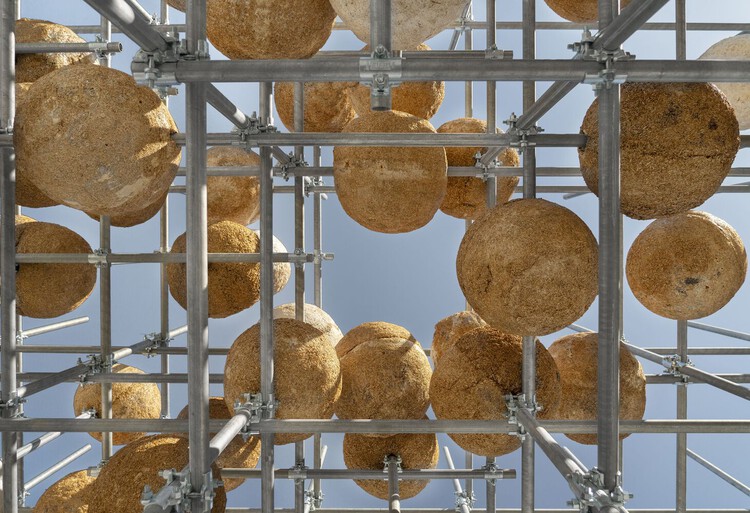
Architecture has entered a pivotal moment. As cities continue to grow under the weight of climatic and social pressures, the materials and systems that shape them are being redefined. Artificial intelligence and robotics, once used to accelerate construction processes, are now being rethought as tools for cultivation. Printed structures that grow, breathe, and decay. Cultivation, in this context, refers to designing with biological materials, where growth and decay are active parameters, merging digital precision with ecological intelligence. This evolution shows the shift from efficiency to empathy, where architecture becomes an agent of active repair. The introduction of mycelium and other natural materials into 3D printing presents a new paradigm in architecture: the logic of the living. A place where computation and fabrication meet biological adaptability.

AI and robotics, once associated with industrial efficiency, are now opening new ways of designing. Early examples, such as ICON's 3D-printed housing prototypes, focused on speed and automation but offered little response to their surroundings. Newer projects, such as the MycoMuseum at the 2025 Venice Architecture Biennale, reinterpret these tools through a biological lens. Instead of shaping concrete, they cultivate living materials, marking a shift from pure optimization toward regeneration.

From Concrete to Cultivation: How AI and Robotics Are Rewriting Architecture’s Material Logic - Image 1 of 4From Concrete to Cultivation: How AI and Robotics Are Rewriting Architecture’s Material Logic - Image 2 of 4From Concrete to Cultivation: How AI and Robotics Are Rewriting Architecture’s Material Logic - Image 3 of 4From Concrete to Cultivation: How AI and Robotics Are Rewriting Architecture’s Material Logic - Image 4 of 4From Concrete to Cultivation: How AI and Robotics Are Rewriting Architecture’s Material Logic - More Images+ 9