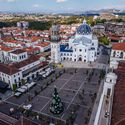
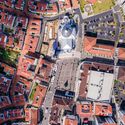
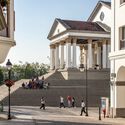
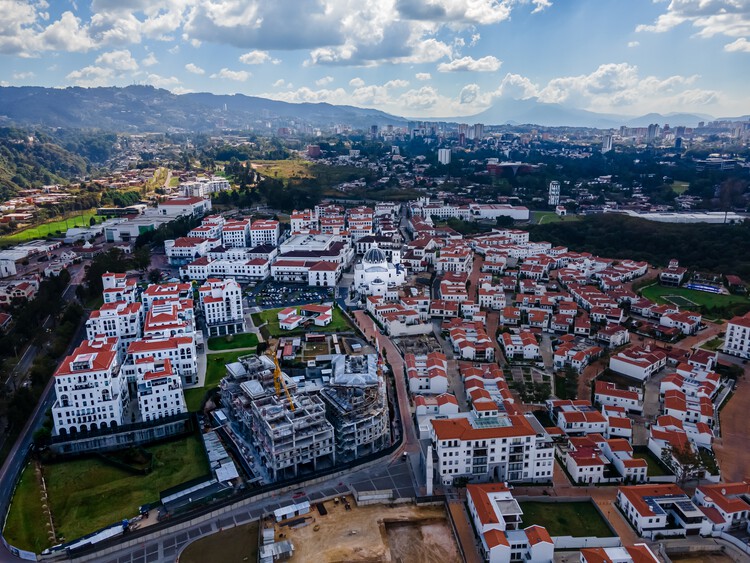
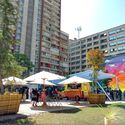
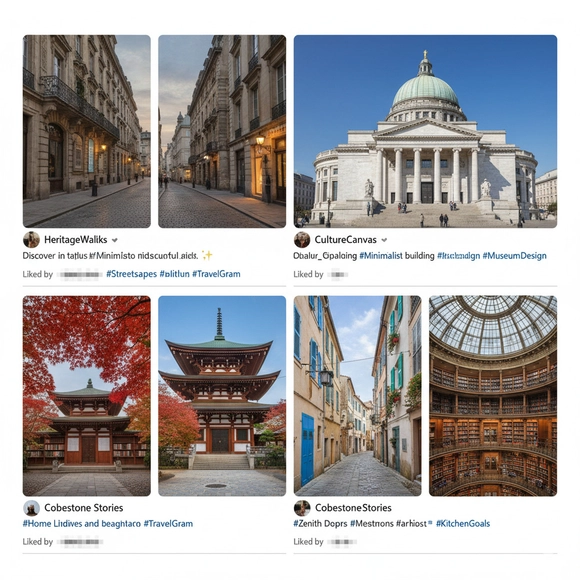
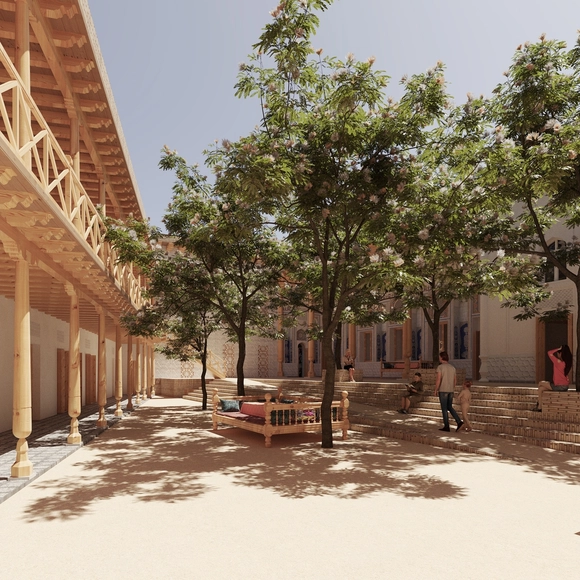
Ciudad Cayalá, a privately developed, mixed-use community on the outskirts of Guatemala City, is often described as a "theme park" of white lime-washed walls, red tiles, and cobbled plazas. A closer examination, however, reveals a more complex urban narrative. Its significance, however, lies in its capacity to create a safe and well-managed public space, proposing a modern reinterpretation of historic urban principles that mark the region's architectural and urban heritage. Behind the Antigua-style façades lies an urban experiment: a modern re-engagement with architectural elements like arcades, courtyards, and open plazas, which propose a privately-managed public space as a solution to urban challenges in the region.
Like the famous Russian Matryoshka doll, opening a package often feels like uncovering endless layers. Inside a cardboard box, there might be molded Styrofoam, then several plastic air pillows, and finally, individual plastic wrapping around each piece. Even a small product can leave behind a trail of plastic waste far larger than its size. Now imagine this logic applied to a construction site where every component, every delivery of materials, often arrives wrapped in multiple layers of protection. What already seems excessive in retail becomes monumental when repeated daily on large construction projects.
Open architectural competitions have long been regarded as gateways for new ideas. They level the playing field by proposing a single call, a clear set of rules, and an evaluation based on the quality of the work, conducted anonymously. For organizers, like cities, institutions, or companies, they represent a way to gather relevant proposals in a transparent public forum, backed by a competent jury. Unsurprisingly, competitions have marked decisive moments in the history of the discipline, such as the Centre Pompidou competition in Paris, which brought Renzo Piano and Richard Rogers to prominence with their "inside-out building," or the one for Brazil's new capital, won by Lúcio Costa with the Pilot Plan that synthesized the city into two intersecting axes, interpreted as either an airplane or a cross.
So, why do competitions still matter in architecture today? Beyond their historic role in shaping iconic projects, they continue to serve as testing grounds for fresh ideas, talent, and innovation. In the following sections, we explore competitions from three angles: the motivations that keep architects returning to them, the reasons organizers continue to launch them, and a practical playbook of strategies to help you approach your next competition with clarity and purpose.
Peace of mind is essential when selecting tapware for a commercial project. As a global leader in premium architectural fixtures and fittings, ABI Interiors is committed to delivering sustainable, design-led solutions that meet architects' practical and creative needs across commercial, residential, and large-scale developments.
When Archigram published their fanatical vision for pneumatic cities and walking megastructures in the 1960s, they seemed to be designing buildings. Beneath the surface, the avant-gardeists were pushing culture through radical alternatives to lifestyles and forms of organizing in the city. Laboratories found themselves between the lines of copy on Domus or Casabella magazines, propositions doubling as blueprints for the civilizations to come. From Gropius's Bauhaus in 1919 to Arcosanti's desert experiments in the 1970s, architecture operated as a form of cultural prophecy. Built form was the argument. The drawing was the vision. Today, we live in a world that remarkably resembles what the starchitects of the 1900s imagined - modular construction, interconnected digital cities, and automated systems. Yet contemporary architecture rarely proposes culture with the same totalizing confidence.
Videos
1st Prize Winner: Our Light. Image Courtesy of Buildner
Buildner has announced the results of its fourth annual Hospice - Home for the Terminally Ill international architecture ideas competition. This global call for ideas continues to explore how architecture can support end-of-life care with empathy, dignity, and contextual sensitivity. The competition invited architects and designers to move beyond clinical requirements and envision spaces that offer emotional warmth, social connection, and a profound sense of place.
Olivia Poston's architectural perspective is deeply rooted in her upbringing amid the post-industrial landscapes of Tennessee's foothills, where she developed an early fascination with the complex relationship between urban environments and ecology. This formative experience shaped her view of architecture not just as building, but as a lens to explore social, cultural, and environmental systems in flux. Olivia's work bridges research, writing, and editorial practice, focusing on how cities across diverse climates evolve and adapt in response to increasing environmental challenges.
She is particularly drawn to collaborative design strategies that integrate insights from architects, planners, and engineers to foster resilience and equity within the built environment. Her editorial approach prioritizes projects that engage critically with climate risk while maintaining a sense of optimism and possibility. She values content that offers both reflection and practical pathways forward, serving as a platform to highlight innovative responses to the pressing demands of sustainability.
Architecture—one of the few cultural artifacts made to be publicly lived with, preserved, and often capable of standing for centuries—contributes significantly to the cultural identity of places and people. Historically, buildings have expressed institutional attitudes, influence, and power; they are clear demonstrations of culture. Yet longevity complicates preservation: when a structure is rebuilt, repaired, or entirely reassembled, in what sense is it still the same building?
There's the classic Ship of Theseus puzzle from Plutarch. if a ship's planks are replaced one by one over time, is it still the same ship? Thomas Hobbes adds a twist—if the original planks are reassembled elsewhere, which ship is "the original"? The paradox tests what grounds identity: material fabric, continuous use and history, or shared recognition. In architecture and conservation, it reframes preservation as a choice among keeping matter, maintaining form and function, or sustaining the stories and practices that give a place meaning.
The island of Taiwan presents a varied natural and topographical context, characterized by a land area of 36,197 square kilometers and a high population density of 644 people per square kilometer. Its geological location, situated on the edges of the Eurasian and Philippine Sea plates, has resulted in a predominantly mountainous and rugged topography. While this forces the majority of the 23 million residents to inhabit large urban centers on the western coastal plains, the island maintains an active agricultural sector, with approximately 22% of its land allocated to farming.
Historically—like other cultural forms—architecture has been documented, shared, and promoted primarily through print. Books, journals, and magazines carried the discipline's arguments and images, and because architectural practice relies so heavily on visual communication, printed journals created a bridge between academic publications and commercial magazines. Through the postwar decades, beautifully produced volumes curated a collective point of view, signaling what the field broadly considered discussion-worthy or exemplary.
Across major cultural centers, a handful of publications shaped this discourse: Their perspectives were typically sophisticated, professional, and carefully edited—distilling an unruly global output into a small constellation of remarkable projects. The system arguably privileged certain practices and geographies, but it also amplified architecture for wider audiences. Buildings began to lodge in public imagination; cultural travel—journeys taken expressly to experience architecture—moved from rarity toward ritual.
The habit of sitting at the table and sharing a specific moment with other people has been present for centuries in the most diverse cultures. The Greek Symposium, Roman Convivium, Medieval Feasts and Banquets, and Parisian Salons are just a few examples of how this custom was historically built and has been relevant in social and political negotiations, intellectual discussions, and philosophical debates.
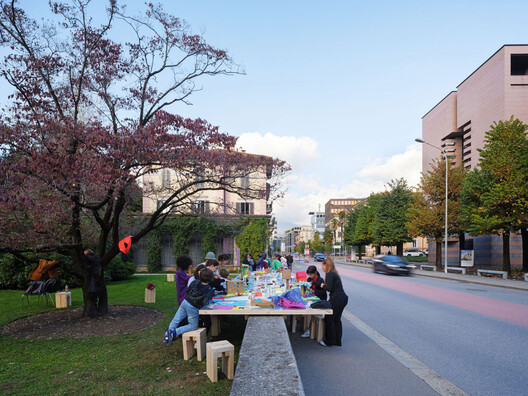
Commensality often serves as a ritual for bonding, negotiation, and celebrating important events. In many Spanish-speaking cultures, the stretch of time after the meal when the entire family stays seated and talks is so present that there is a word for it: sobremesa — literally translated as "upon the table" (though in Spanish it more accurately means "dessert" or "after-meal conversation"). But, despite often being associated with sharing a meal, the table can be considered a flexible platform open to many possibilities for appropriation and interaction.
While a book or piece of music can be easily set aside if it doesn't capture our interest, architecture is different. A building endures for decades, and it shapes the landscape and influences the lives of its occupants for years to come. This permanence brings with it a unique set of challenges: architects must design spaces that impact collective life, often under tight deadlines, limited budgets, and significant pressure. In addition to navigating complex regulations and coordinating construction, architects face the misconception that design is simple, or that anyone could do it. The constant balancing act between quality, cost, and speed often leads to sacrifices — whether in time, health, or the integrity of the project itself. This cycle not only wears down the profession but diminishes society's understanding of the true value of design.
The well-known "good, fast, and cheap" triangle is rarely resolved without the architect sacrificing their own time, health, or even the quality of the project. Repeated for decades, this equation fuels a cycle of wear that not only undermines the profession but also depreciates the value of design in society, even diminishing the role of such a beautiful and important discipline.
Across geographies and generations, architects are rethinking the idea of home, balancing personal expression, contextual sensitivity, and material clarity. These contemporary residential proposals, submitted by the ArchDaily community, reveal how the house continues to evolve as both an architectural statement and an intimate landscape for living. From the sculptural and futuristic to the grounded and vernacular, they explore how built form balances between identity, environment, and lifestyle in an increasingly complex world.
There are places in the world where temperatures already exceed fifty degrees, and others where water levels rise meters above expected levels. Meanwhile, in the heart of São Paulo, architects, researchers, artists, and communities come together to ask: how can we inhabit the Earth in times of extremes? This question drives the 14th International Architecture Biennial of São Paulo, held at the Oca in Ibirapuera Park, focusing on the theme Extremes: Architectures for a Hot World. More than an exhibition, it is a call to confront the climate crisis, social inequality, and the urgent need to reinvent ways of living.
Unlike previous editions, which were spread across multiple locations in the city, curators Clevio Rabelo, Jera Guarani, Karina de Souza, Marcella Arruda, Marcos Certo, and Renato Anelli chose to concentrate this year’s edition under a single roof, allowing the curatorial narrative to unfold clearly and directly. The entire journey is there, organized into sections that weave together ancestral practices and emerging technologies, material experiments and critical perspectives, local projects and global debates. The Oca thus becomes a crossroads: a space where diverse architectural visions overlap, offering a platform for collective reflection on society and the environment.
Communicating an idea using only the essentials is a far greater challenge than it often appears. From Japanese haikus to the refined sculptures of Constantin Brâncuși, many artistic expressions have sought to condense the maximum meaning with the minimum of elements. This economy of form is not a sign of scarcity, but of intensity: every stroke, every word, every silence gains weight. There is something intrinsically appealing in what presents itself as simple and well-resolved, whether it is a text that wastes no words, a tennis player who moves with purposeful gestures, or a melody that is both direct yet unexpectedly profound.
That same principle, which transcends various artistic languages, resonates deeply in contemporary design. When reduced to the essential, furniture or everyday objects reveal a form of beauty that arises from precision and transcends their function. This is exemplified by HUM, the new collection of taps developed by designer Philippe Malouin for QuadroDesign, in which a simple gesture is transformed into a complete language.
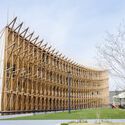
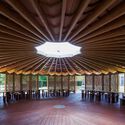
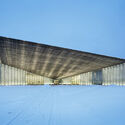
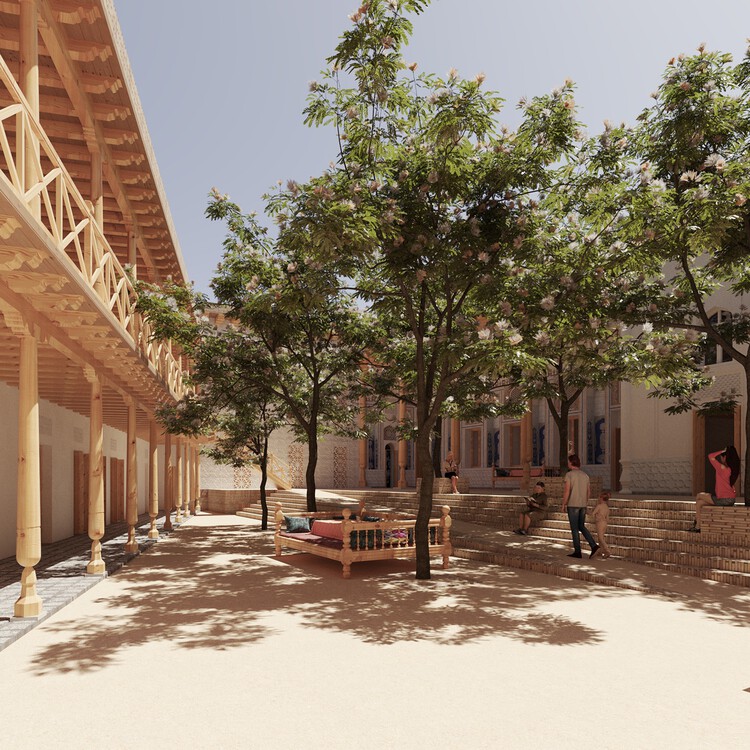
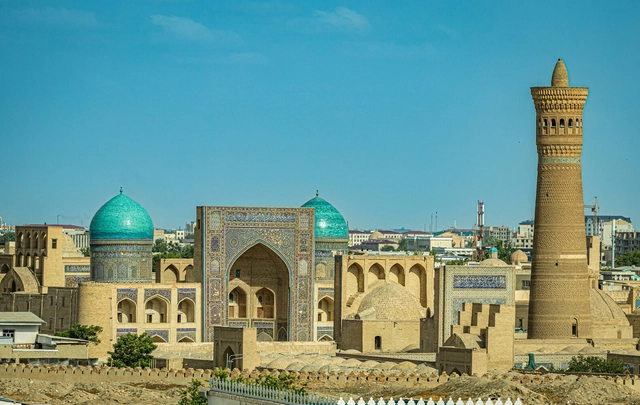
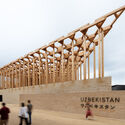
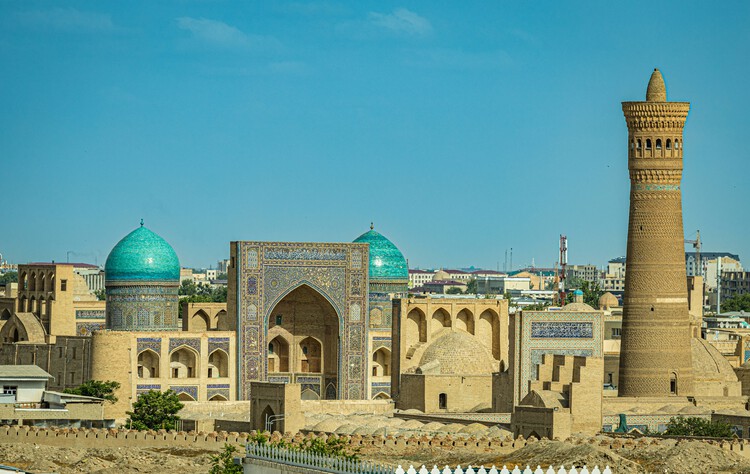
Uzbekistan's architectural and artistic heritage reflects a layered history shaped by centuries of cultural exchange along the Silk Road. From the monumental ensembles of Samarkand and Bukhara to the scientific and educational institutions of the Timurid era, architecture has long been a vessel of identity and knowledge across the region. In the twentieth century, Tashkent emerged as a new urban laboratory, where modernist ideals met local craft traditions and environmental pragmatism. The city's reconstruction following the 1966 earthquake became a defining moment, fusing Soviet urbanism with regional aesthetics to produce a distinctly Central Asian expression of modernity, one that translated cultural continuity into concrete, glass, and light.
Every act of building begins with the transformation of raw materials, energy, and land, and this inevitably entails environmental impact. This encompasses all the changes a process triggers in the natural world: from resource extraction to pollutant emissions, from energy consumption to biodiversity loss. Measuring this is complex, as it spans multiple dimensions. Carbon has emerged as the common metric, translating these effects into greenhouse gas emissions (CO₂ equivalent) directly linked to global warming. This standardization has made it omnipresent and comparable across materials, systems, and sectors. Reducing carbon emissions, therefore, means addressing the root of global warming, which is a particularly urgent task in the construction industry, responsible for about 39% of global emissions. In response to this challenge, MVRDV NEXT, the innovation and digital tools division of the Dutch architectural firm, launched CarbonSpace, a free, open platform that brings carbon accounting to the architect's desk, right at the napkin sketch stage.
Architecture goes beyond its fundamental function of defining spaces and providing protection; it shapes the user experience, influencing sensations of comfort, spaciousness, and well-being. Among the many elements that make up a building, openings play a crucial role in connecting the interior and exterior, balancing privacy with transparency, and allowing the entry of natural light and ventilation. In particular, natural light transforms environments, defines atmospheres, and enhances architectural details, making spaces more dynamic and inviting.
India carries an ancient lineage of tradition that has long shaped the very conception and crafting of its cities. Vastu Shastra is one such tradition, more a science than a belief, intimately woven into the principles of architectural design. The practice remains widespread and highly regarded, with 93% of homes designed to align with Vastu principles. As India urbanizes at an unprecedented pace, projected to add 416 million city dwellers by 2050, Vastu Shastra continues to influence billions of real estate decisions amid the trials of modern city living. How might an 8,000-year-old spatial science evolve to guide the design of cities housing millions?
Buildner, in partnership with the Government of Dubai, has announced the results of the 2024/25 House of the Future competition. Following the success of its inaugural edition in 2023, this second edition invited architects and designers worldwide to develop an affordable, expandable, and forward-thinking prototype home tailored to the evolving needs of Emirati families.
Organized in collaboration with the Mohammed bin Rashid Centre for Government Innovation and the Sheikh Zayed Housing Programme, the competition offered a total prize fund of €250,000 (1 million AED). Winning entries are now being reviewed for potential inclusion in the UAE's national catalogue of housing designs, which provides citizens with a selection of pre-approved, innovative home models.
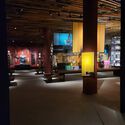
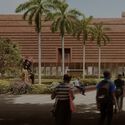
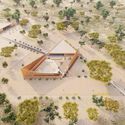
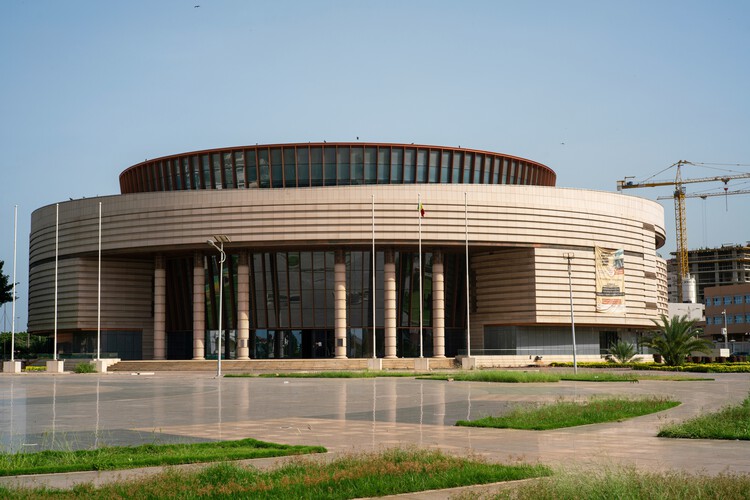
As countries in Africa emerged from colonialism in the mid-twentieth century, many expressed their independent identities through architecture. This process continues several decades later, exemplified by several new museums in West Africa, recently completed or in planning. Although varying in purpose and form, they have some common goals: addressing the need for restitution of many artifacts taken during colonialism and mostly kept in European museums; and defining a museum with local identity as opposed to a non-contextual import.
The museum and gallery visit has long been a highly curated experience. Visitors are guided through a carefully orchestrated sequence of rooms, with hand-picked works arranged to tell a specific narrative, supported by signage, graphics, scenography, and calibrated lighting. Even the rarely changed exhibitions - the permanent collections, also typically rely on a strong curatorial voice— led by noted artists or curators—to set institutional stance and shape interpretation.
At the same time, storage areas for museums and galleries are typically kept separately—often within the same building but under tightly controlled access, and not infrequently off-site in dedicated facilities, such as the Louvre Conservation Centre. These zones have long been understood as highly controlled spaces not only in terms of access, but also in relation to climate, humidity, archival order, handling protocols, maintenance, and repair. For fear of thefts and that the spatial, environmental, and sequencing requirements of the archive could be disturbed, storage has traditionally been somewhat secretive and primarily serves academic researchers and art practitioners by request. Rarely does the general public gain a comprehensive picture of the works safeguarded by any given institution.