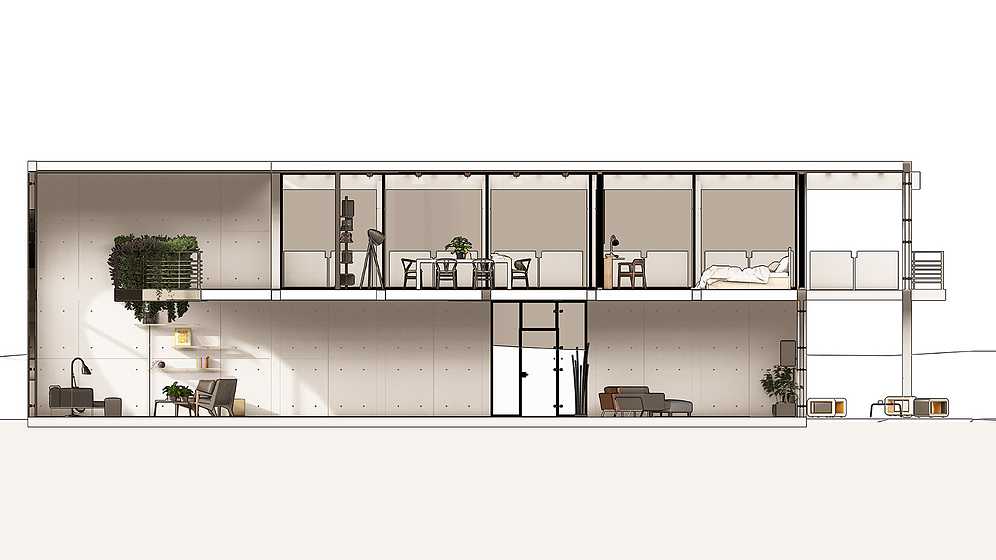
Produce personalized presentation boards that distill complex concepts into simple visual representations with a few helpful tools and effects.


Produce personalized presentation boards that distill complex concepts into simple visual representations with a few helpful tools and effects.
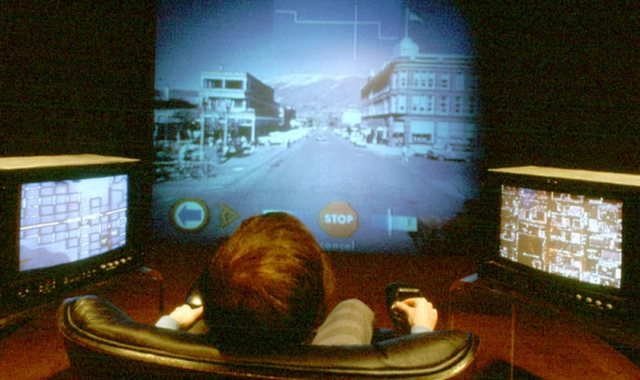
The following essay by Pierre Cutellic was first published by Volume Magazine in their 49th issue, Hello World! You can read the Editorial of this issue, Going Live, here.
The relevant revolution today is the current electronic one. Architecturally, the symbol systems that electronics purveys so well are more important than its engineering content. The most urgent technological problem facing us is the humane meshing of advanced scientific and technical systems with our imperfect and exploited human systems, a problem worthy of the best attention of architecture's scientific ideologues and visionaries.
—Robert Venturi, Denise Scott Brown, Steven Izenour, Learning from Las Vegas

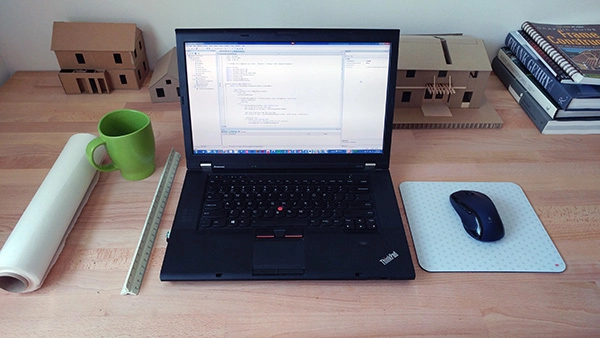
Macros are one of the easiest ways to Automate Revit. They let you get under the hood of your software and put it to work for you. Macros do not require any additional software other than Revit and are a great way for beginners to learn programming.
So what exactly is a macro? A macro is a user-created command that is coded using Revit’s API. Macros are run directly inside of Revit and are saved in the project file. Other applications, like MS Office, provide the ability to record macros directly from your actions on the screen. Unfortunately, Revit does not have this functionality. You must code your Revit macros directly.

This article was originally published by Archipreneur as "How to Grow Your Architecture Firm Through Marketing."
Marketing is not simply an expense reserved for already established architecture firms. Small businesses in particular can benefit from a smart marketing strategy by aligning their operations with some of marketing’s most basic premises and concepts.
Architects in general have a tendency to underestimate the importance of marketing in creating and running a successful business. Even those who claim to understand the role of marketing in acquiring clients and building relationships often fail to fully utilize its potential. Principals of small architecture firms often get caught up in trying to keep their practices afloat and end up treating marketing as a luxury that they will be able to afford once they achieve stability--thus missing the true role of marketing as being a catalyst for growth. Architects need to apply marketing to their practices from the onset and treat it with the same amount of dedication as they do with their floor plans, sections and 3D models of their building designs.

Team Rambo, also known as Ramboland, is a project born from the need of Ron Rambo, born with Cerebral Palsy, for a home that can support his disability and increase his quality of life. However, Ramboland doesn’t just stop there. LEED Fellow Max Zahniser, has used his experience with Green Architecture to combine Ron’s social vision with an environmental one that can benefit the entire community. The meeting of these objectives has been defined by the goal “to design a project that will actually increase the vitality of life and life-support systems in every way possible,” using architecture to make a difference.
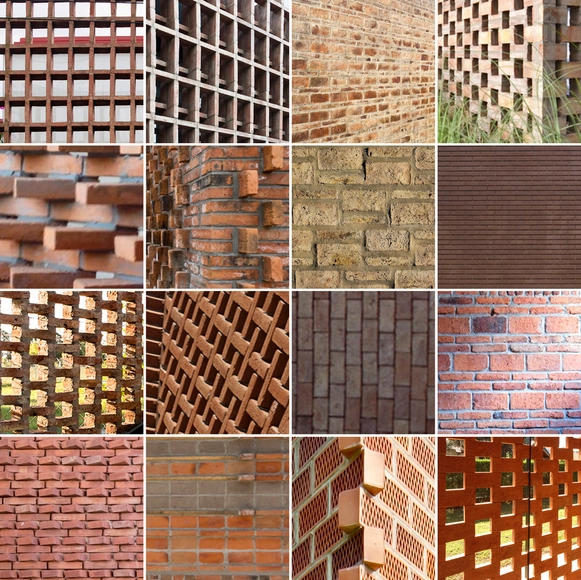
The wide range in which pieces of masonry can be arranged allows for multiple spatial configurations. Born in a furnace, the brick adorns and reinforces, protects and—to various degrees—brings natural light into spaces that need slight, natural illumination.
Throughout history, traditional brick-laying consisted of predetermined arrangement of parts, and lines of rope to guide the consistency and placement of each individual brick. But there are many other ways to exploit this multi-faceted, timeless material, so we've selected 16 projects that demonstrate the potential of the humble brick.
Below find 16 construction details from projects that use bricks in ingenious ways.

This article originally appeared on guggenheim.org/blogs under the title "Nine Guggenheim Exhibitions Designed by Architects," and is used with permission.
Exhibition design is never straightforward, but that is especially true within the highly unconventional architecture of Frank Lloyd Wright’s Guggenheim Museum. Hanging a painting in a traditional “box” gallery can be literally straightforward, whereas every exhibition at the Guggenheim is the reinvention of one of the world’s most distinctive and iconic buildings. The building mandates site-specific exhibition design—partition walls, pedestals, vitrines, and benches are custom-fabricated for every show. At the same time, these qualities of the building present an opportunity for truly memorable, unique installations. Design happens simultaneously on a micro and macro scale—creating display solutions for individual works of art while producing an overall context and flow that engages the curatorial vision for the exhibition. This is why the museum’s stellar in-house exhibition designers all have an architecture background. They have developed intimate relationships with every angle and curve of the quarter-mile ramp and sloping walls.
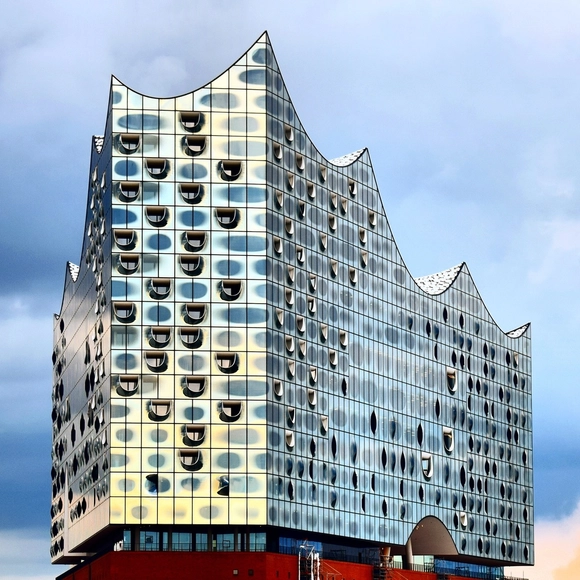
Even as modernism promoted the transparency of glass architecture, many within the movement were conscious of the monotony of large glass facades, with even Mies van der Rohe using elements such as his trademark mullions to break up his facades. But in the years since, countless uniform structural glazing skyscrapers have emerged and bored urban citizens. In response to this, unconventional reinterpretations of facades have gained interest.
Accompanied by the belief that light and brilliance could help in creating iconic architecture and a better human world, glass and metal have been innovatively transformed to create crystalline images. As a result, the locus of meaning in architecture has shifted from the internal space-form towards the external surface.

This article was originally published on Redshift as "Go Your Own Way: 8 Tips for a Sole-Practitioner Architect to Build Credibility."
If you’re a sole-practitioner architect, you’ve probably already thought long and hard about the pros and cons of working solo, and don’t feel the burning desire to work in a bustling office environment with large-scale projects and constant collaboration. There are plenty of upsides to running your own practice. “I have it pretty good as a sole practitioner,” says Portland, Oregon architect Celeste Lewis. “I love the flexibility it provides with having a child, parents who are ill, and my passion for being involved in the community.”
But along with the benefits come challenges. One of the biggest is proving you’re worth your salt in a competitive marketplace alongside larger, bigger-reputation firms. Here are eight tips to help sole practitioners—who make up nearly 25 percent of AIA-member firms—build credibility.

“Writing about music is like dancing about architecture”
This well-known quote, most often attributed to comedian Martin Mull, compares attempting to explain music’s complex auditory intricacies with words to trying to interpret architectural forms through the motion of the human body – the underlying implication, of course, that it’s fruitless.
But take a closer inspection of the analogy. Music and writing may be media for disparate senses, but, at their height, dance and architecture share a realm of space and light; both perform as formal exercises that relate to the human proportion of the body. Must dancing about architecture truly be an exercise in futility?
A year after premiering at the 2015 Chicago Architecture Biennial, last week Steven Holl and dance choreographer Jessica Lang’s “Tesseracts of Time” made its New York debut at the City Center mainstage. The 21-minute performance, designed as a part of Holl’s ‘Explorations of IN’ project, explores the relationship between performance and environment through four phases, which the designers liken to the passing of the four seasons.

Well-known architects are easy to admire or dismiss from afar, but up close, oddly humanizing habits often come to light. However, while we all have our quirks, most people's humanizing habits don't give an insight into how they became one of the most notable figures in their field of work. The following habits of several top architects reveal parts of their creative process, how they relax, or simply parts of their identity. Some are inspiring and some are surprising, but all give a small insight into the mental qualities that are required to be reach the peak of the architectural profession—from an exceptional work drive to an embrace of eccentricity (and a few more interesting qualities besides).

One of the ways that architecture must be integrated into its natural context is by maintaining the sensory experience of the place itself. This can be achieved by assigning value to a site's spatial qualities, textures, and even by generating contrasts, to enhance and differentiate existing elements from man-made ones.
This month we want to highlight Secondfloor Architects, who turn their focus towards the interior of their project and invite us to experience the natural environment as something that is above architecture. They do this not only by designing a building that is settled in the plot, but also by creating a central element which relates to the verticality of the existing trees, while the building's horizontal elements offer a powerfully contrasting material expression.
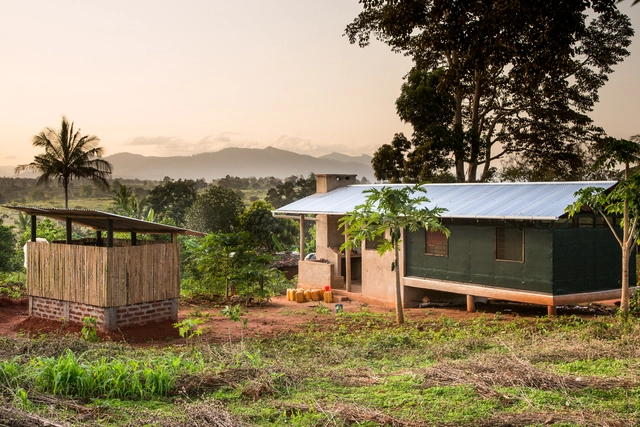
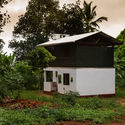
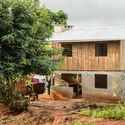
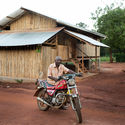
Architecture firm Ingvartsen Architects has turned their gaze towards “cultural exchange architecture”—not with the aim of exploring identity or experimenting with aesthetics, but with a practical purpose in mind: to minimize the spread of diseases. The Magoda Project combines Asian elements with traditional rural African building methods in the village of Magoda, in the Tanga region of Tanzania, taking shape in the form of eight prototype homes. The design goes to show that cultural exchanges in design and architecture can make great contributions towards problem solving for a humanitarian purposes, not only to improve health and hygiene, but also comfort and happiness.
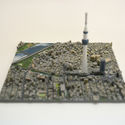
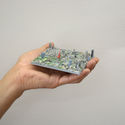
Have you ever wanted to look over an entire city from the comfort of your own desk? Do you have a sentimental relationship with the city of Tokyo? If you answered "yes" to these questions, iJet Inc, a 3D print solutions company, along with DMM.com Ltd, have launched a Kickstarter that might be for you.
One Hundred Tokyo is a project aiming to reproduce Tokyo’s urban landscape in the form of one hundred ten by ten centimeter 3D printed models. All of the data and equipment needed to gather visual information of the city has been provided by ZENRIN Co Ltd, who traveled around the landscape in specialized vehicles. The 3D models created by this process are then printed on 3DSystems printers, using gypsum powder that is coated in a special resin in order to harden, and then coated once again in resin paint to achieve the full-color skyline.


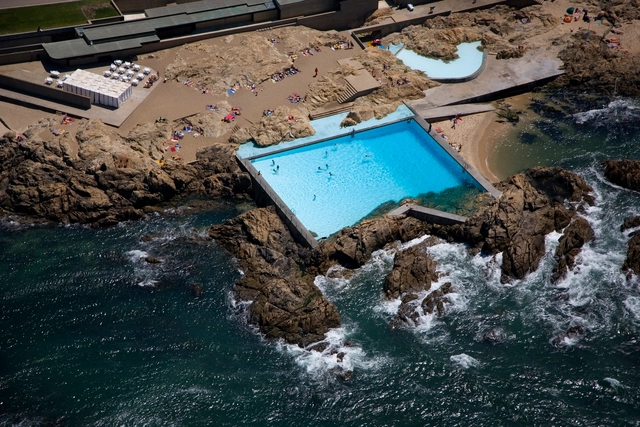
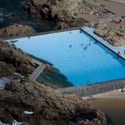
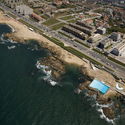
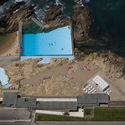
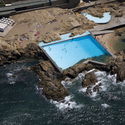
To commemorate the 50th anniversary of Alvaro Siza Vieira’s Piscinas de Marés (Pools on the Beach) in Leça de Palmeira, Portugal, photographer Fernando Guerra shared an interesting photo shoot project with us.
The young Álvaro Siza Vieira, then 26, was called to make salt water pools along the shore at Leça da Palmeira in Matosinhos, Portugal. The facility, which was completed in 1966, is made up of changing rooms, a café and two pools- one for adults and one for children - and became one of Siza Vieira’s most recognized projects, classified as a National Monument of Portugal in 2011.

As part of a masterplan along the Chicago River, the River Beech Tower is a residential high-rise which, if built, would be taller than any existing timber building. The collaborative team behind River Beech consists of architects Perkins+Will, engineers Thornton Tomasetti and the University of Cambridge. Currently a conceptual academic and professional undertaking, the team state that it could potentially be realized by the time of the masterplan’s final phases.

The FutureLand Express departs once daily—three times on Sunday—in front of FutureLand, the information center of the latest extension of the Port of Rotterdam. The bus tours Maasvlakte 2, as the area is called, for seventy-five minutes, showing visitors 2,000 hectares of artificial ground for port activities and ‘nature’. The dredging of 240 million cubic meters of sand for land reclamation was just beginning in 2008; back then, this was, literally, future land. However, FutureLand’s promise of witnessing the future through a bus window goes beyond sightseeing record-breaking civil engineering works. Maasvlakte 2 is also home of the two most technologically advanced container terminals in the world.


Late last year the New York Times published a thought-provoking article about the importance of workplace culture. Adam Grant, professor of management and psychology at the Wharton School of the University of Pennsylvania, explains
When it comes to landing a good job, many people focus on the role. Although finding the right title, position and salary is important, there’s another consideration that matters just as much: culture. The culture of a workplace — an organization’s values, norms and practices — has a huge impact on our happiness and success.
What aspects of workplace culture do our readers most value? What are the elements of office culture that are important to you and push you to be more creative and efficient?
Since 2009, Mario Carvajal has captured amazing panoramic photographs from his hometown in Colombia as well as top destination spots around the globe. He has climbed the Empire State Building in New York and Colpatria Tower in Bogota, Colombia. Carvajal has captured the geographical beauty of Iceland as well as the intensity of Paris at night.
As Carvajal mentioned in an interview with ArchDaily, images in 360 degrees "allow the viewer to dive into an attractive and interesting 'virtual world' to experience immersive sensations". Of course, with the new surge in popularity these types of pictures have experienced with the hardware becoming more readily available and these images being shared more and more every day through Facebook, Carvajal's work reaches new levels, allowing thousands of people to see the world from above.
Below, we invite you to see his best shots of iconic buildings and landscapes around the world. For a complete experience, we recommend using Google Cardboard.
Cars have reshaped cities across the world, largely at the cost of everyone outside of a private vehicle. In recent years the "grid city" of Barcelona has been suffering from clogged roads and choked air quality, with urban traffic contributing to the 3500 premature deaths caused by air pollution each year. Beginning in the district of Eixample, proposals laid out in the 2014 Urban Mobility Plan aims to diffuse traffic congestion and reduce air pollution in the city. In a recent film Vox have picked up on one of a number of potential schemes: the Superblock concept (known as superilles in Catalan). According to Salvador Rueda, the Director of the Urban Ecology Agency of Barcelona who developed the plan, these are "grid[s] of nine blocks [in which] the main mobility happens on the roads around the outside, [...] and the roads within are for local transit only."

The Nolli Map made history when it was created in 1748, largely because of its focus on public spaces. With it, Giambattista Nolli highlighted the fact that public places don’t exclusively exist in the forms of streets and parks, but also in enclosed spaces. Yet the importance of our communal areas is constantly being undermined. Our public areas exist to promote inclusion and equal opportunities, but despite that they are being forgotten and abandoned, debilitating their ability to bind communities together.
Given that the main goal of Studio Gang’s newly released, free, downloadable booklet, Reimagining The Civic Commons has been to “help communities everywhere activate their civic commons,” then, it is unsurprising that the booklet includes graphic maps reminiscent of Nolli’s visual aim. The booklet, which arose from work funded by the Kresge Foundation and Knight Foundation, focuses on the advancement of 7 types of “existing assets”: libraries, parks, recreation centers, police stations, schools, streets and transit. Since the start of Studio Gang's research, a larger, $40 million initiative has begun—funded by the JPB Foundation, The Knight Foundation, The Kresge Foundation and The Rockefeller Foundation along with a multitude of local donors—with plans taking shape in Philadelphia, Chicago, Detroit, Memphis and Akron. The graphic guide is designed to offer adaptable, cost-effective and flexible approaches to these spaces, so that it can be implemented over time and in a variety of different communities. Read on for our summary of the report’s 7 strategies for improvement.
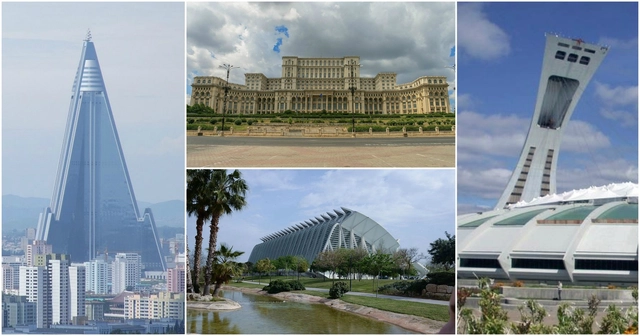
Not every piece of architecture can be an economic and social success. But there is one dreaded term reserved for only the mot wasteful of projects: "white elephants." The term comes from a story of the kings of Siam, now Thailand, who would reportedly gift sacred albino elephants to courtiers they didn't like. Refusing the gift from the king would have been unacceptable, but being sacred, these animals were forbidden from work, leading the courtier to financial ruin—a fact the kings knew all too well.
Of course, in architecture the term "white elephant" is used frequently to disparage certain projects, and whether a project is deserving of such infamy is usually a matter of perspective. Often eyesores or reminders of poorly spent funds, these projects refuse to be forgotten despite few wanting to remember them. Dotted around the world and across history, they all have the same thing in common: although they may (or may not) have once looked good on paper, they probably should have just stayed on paper.
Simply put, metamaterials are materials that behave according to their structure, rather than their base material composition. By manipulating their internal microstructures, metamaterials can exhibit properties that would not otherwise be found in a naturally occurring material.
To date, the term has mostly been used to refer to materials which can manipulate electromagnetic waves with an unnatural refractive index. But recently, a different way of looking at metamaterials has been studied by a team at the Hasso Plattner Institute (HPI), who suggest that “so far, metamaterials were understood as materials – we want to think of them as machines.” A series of objects created by HPI that perform mechanical functions through their metamaterial configuration demonstrate this concept of “metamaterial mechanisms.”
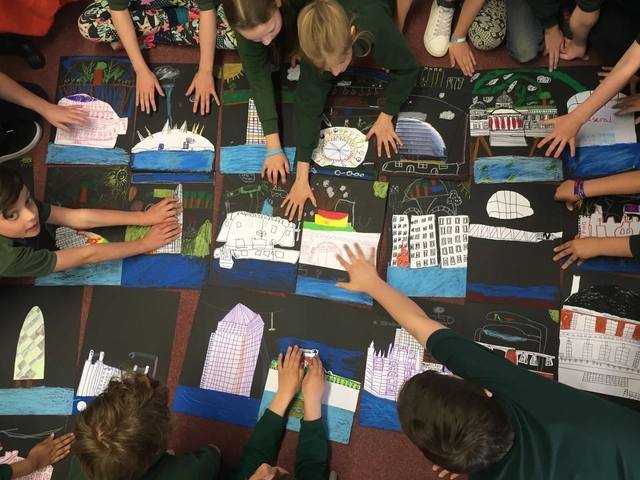
Little Architect is a program at the Architectural Association School of Architecture in London. Created in 2013, the program is focused on teaching architecture to primary school-age children, obtaining amazing results with more than 2,400 children from different backgrounds receiving architectural lessons. They are especially focused on running their program in low-income areas and state schools in London.
"Our responsibility as architects is not just to design but also to bring architecture to society and to create an awareness about urban issues and contemporary architecture within the people who inhabit it," says Dolores Victoria Ruiz Garrido, author and director of the program.
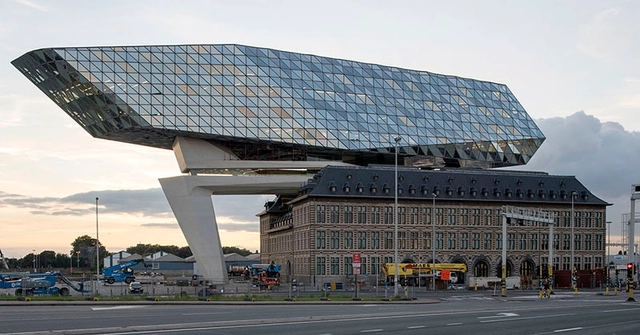
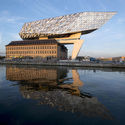
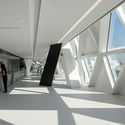
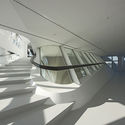
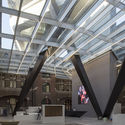
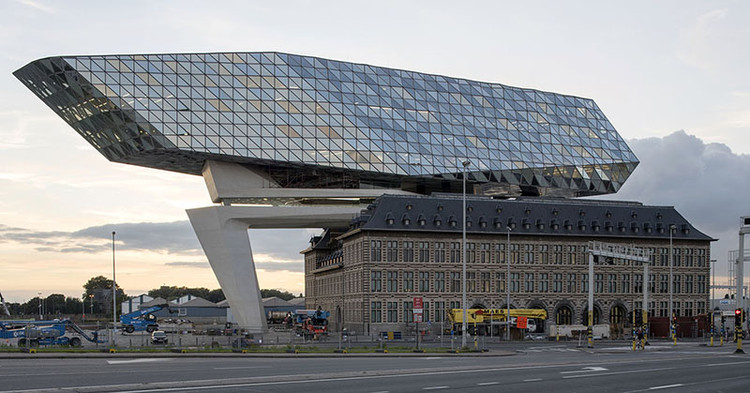
Opening to much fanfare earlier this week, Zaha Hadid Architects' Port House holds a commanding presence over the port of Antwerp. The design combines a listed and formerly derelict fire station, which was restored as part of the project, with an eye-catching glass extension which rises out of the older building's courtyard and thrusts itself towards the water in a dramatic cantilever. In the context of the port, where large infrastructure and colossal machines form the backdrop to everyday functions, the building boldly stakes its claim as the operational centerpiece, providing a space for the Port of Antwerp's 500 employees. Photographer Thomas Mayer visited the building, capturing its striking external presence and investigating how its structural gymnastics translate to the building's internal space.