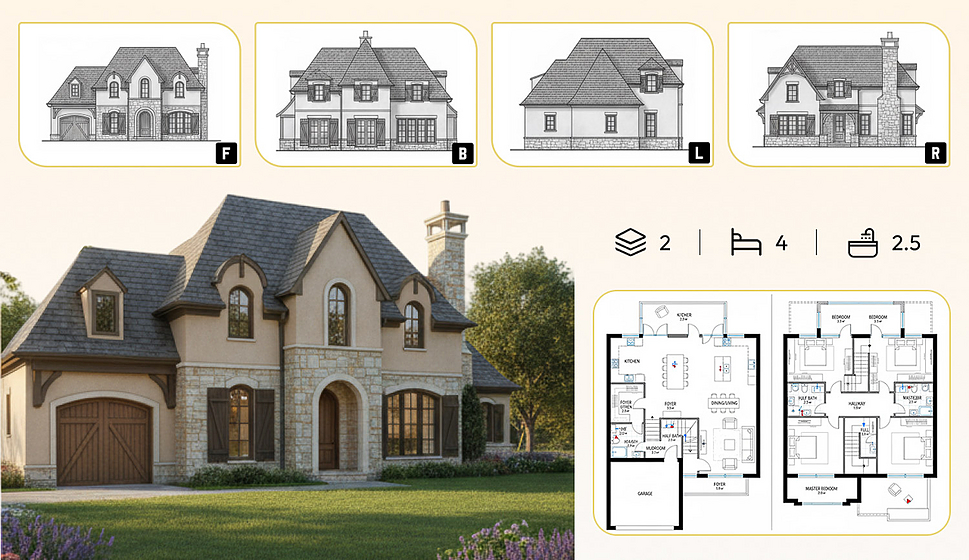
This guide covers a workflow that moves from project parameters to generated floor plans, 3D perspective views, exterior design exploration, and site context visualization, using AI tools in place of preliminary CAD and rendering work.
This guide covers a workflow that moves from project parameters to generated floor plans, 3D perspective views, exterior design exploration, and site context visualization, using AI tools in place of preliminary CAD and rendering work.

What transforms a space of living into a home? Beyond ownership or shelter, a home is tied to a quieter sense of certainty: the feeling that one can retreat, rest, and momentarily step away from the world's unpredictability. Homes are where routines accumulate, memories settle into spaces and objects, and where personal identity takes physical form through occupation and everyday rituals. Yet this sense of belonging depends on another condition that often goes unnoticed until disrupted: security. To feel "at home" implies a condition of comfort and stability. When domestic environments fail to provide this, spaces designed for rest become sources of unease, subtly affecting routines and well-being.

How can daylight tackle global challenges? This question lies at the heart of Light of Tomorrow by VELUX, a global student competition that encourages architecture students to explore the future potential of daylight in the built environment. In its 12th edition, the competition received hundreds of responses from around the world, culminating in eight finalist projects presented to an international jury at the UIA World Congress of Architects in Barcelona. The 2026 global winner, Sun the Quilt, developed by students from Xi'an University of Architecture and Technology in China, was chosen for its strong concept, design thinking, and innovative use of daylight that transforms an everyday domestic ritual into an innovative facade system shaped by daylight, climate, and care.

Throughout the history of architecture, the circle has been associated with multiple meanings—from the cosmic geometry of ancient temples and the oculus of classical buildings to the rose windows of Gothic cathedrals and the portholes of ships. However, in the 20th century, the circle acquired a new cultural meaning. As aviation, space exploration, and technological innovation transformed the way society imagined the future, circular forms began to evoke machines, spacecraft, capsules, and even new forms of habitation.

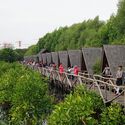
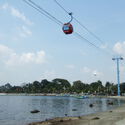
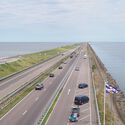
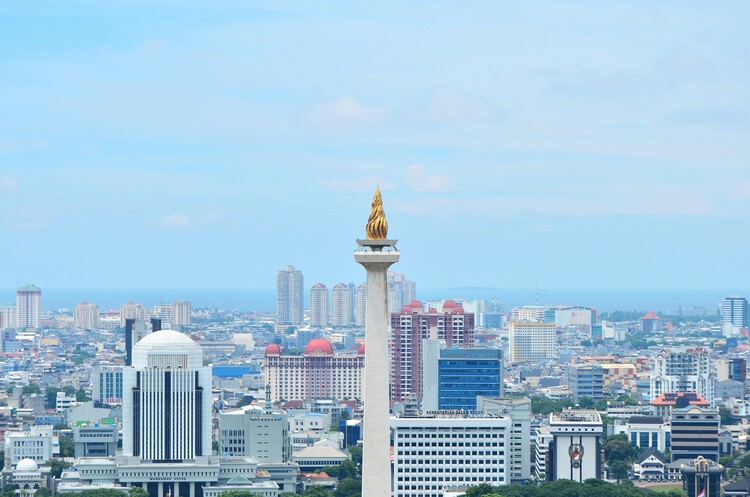
At one point, Jakarta's future coastal defense took the form of a giant Garuda rising from the sea. The mythical bird, Indonesia's national symbol, gave form to a vast coastal intervention intended to protect the sinking capital from floods while creating new territory offshore. It was an extraordinary image: a seawall transformed into a city. The Great Garuda is revealing because it shows what happens when climate adaptation begins to overlap with urban development. Once protection infrastructure also creates valuable land, defending a city and remaking it can become difficult to separate.

The original promise of BIM (Building Information Modeling) went far beyond the three-dimensional representation of a building. Its ambition was to turn the model into a coordinated information structure, in which geometry, components, systems, and data remained connected as the project evolved. Changes to one element could be reflected across corresponding plans, sections, elevations, and quantities; clashes between different disciplines could be identified before construction; and information associated with building components could follow the project through different stages of its life cycle.

Since the 2008 crash, a scatter of small practices (none more than fifteen years old and none large enough to need a manifesto in the traditional sense) have arrived, independently of one another, at some version of the same refusal: to sound too certain, too soon, in a discipline that had spent the previous decade selling confidence as a finish. They would probably resist being filed under one heading, but the coincidence itself is that something about practising architecture after 2008 made innocence look like the only posture worth trying.
At least from 2019 onwards, Fala has circulated a two-word description of itself, repeated verbatim across dozens of architecture outlets: a "naïve architecture practice." No footnote, no irony, just an office, founded in 2013, that built a decade of houses, birdhouses and institutional commissions on a term architecture had spent a century trying to outgrow. The question the phrase raises is not whether the buildings are any good (as they generally are) but what it means for a practice to choose innocence as a public position. Where does post-irony end and marketing begin?

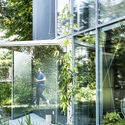
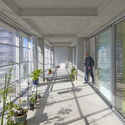
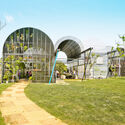
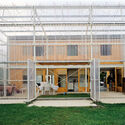
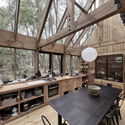
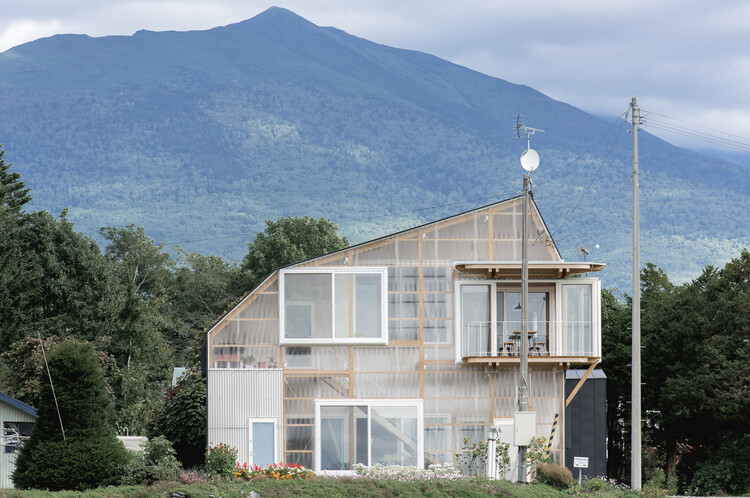
A greenhouse is a building designed to create one climate inside another. By controlling sunlight, heat, and ventilation through its enclosure, it produces conditions that differ from those outside. Traditionally, that controlled environment was designed around plants. In housing, the same principle is increasingly being used to shape spaces for people.
Bringing greenhouse construction into a house offers more than additional enclosure. It can create sheltered spaces without conditioning them like conventional interior rooms, capture solar heat when it is useful, provide ventilation when temperatures rise, and extend the periods of the year when certain areas of the home remain comfortable to occupy.

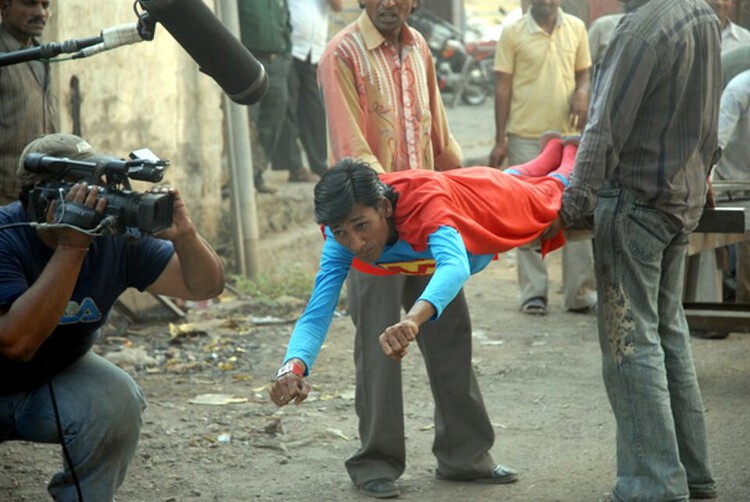
Some of India's most convincing architectural worlds have never existed outside a film set. Courtyards, palaces, streets and even entire neighbourhoods have been constructed, lit and framed for the camera, then dismantled when filming ends. Their images remain. For millions of viewers, these spaces become references for how cities look, how wealth is displayed and how particular neighbourhoods or versions of India are remembered. Cinema constructs spatial worlds, compressing complex histories into images that audiences can recognise almost instantly. Those images can later shape how physical places are understood.

The spatial consequences of urban form are revealed when health outcomes are mapped over neighborhoods. Neighborhoods that support walking, daily errands, social interaction, and access to essential services create opportunities to incorporate physical activity into routine tasks. Places that are organized around long distances and automobile travel suppress this opportunity. Physical activity and the motivation to incorporate it into daily life are shaped by the distance to a grocery store, the safety of a pedestrian crossing, the frequency of public transportation, the width of a sidewalk, and the quantity of services within walking distance.

Since its launch in 2020, the ArchDaily Next Practices Awards have spotlighted forward-thinking architecture practices that are redefining the boundaries of the discipline. Over five editions, the initiative has recognized 105 practices from 44 countries, amplifying voices from around the world and fostering a global conversation about architecture's evolving role in society. Across the winning practices, recurring values emerge: contextual sensitivity, sustainable material use, co-creation with communities, experimental and interdisciplinary approaches, memory and heritage, social responsibility, and human-scale interventions.
The program reflects what is next: the ideas, practices, and projects that should be brought forward. 'Next' embodies practices that find solutions to today's urgent challenges while anticipating the needs of tomorrow. By spotlighting these practices, we hope to illuminate the paths that can lead to a more meaningful and resilient future for architecture and beyond.
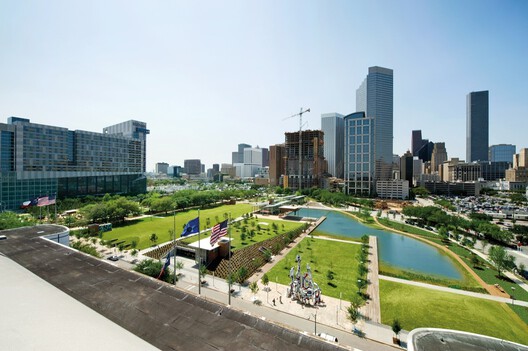
Every housing crisis eventually becomes a land question, and every land question eventually becomes a values question. The United States' West Coast has arrived at that point. As cities from Los Angeles to Seattle search for parcels to build the affordable housing they have promised for years, they keep landing on the same answer: the park or the greenbelt. What looks like a zoning decision is a referendum on which form of wellbeing a city is willing to sacrifice for another.

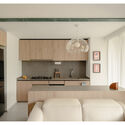
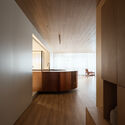
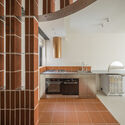
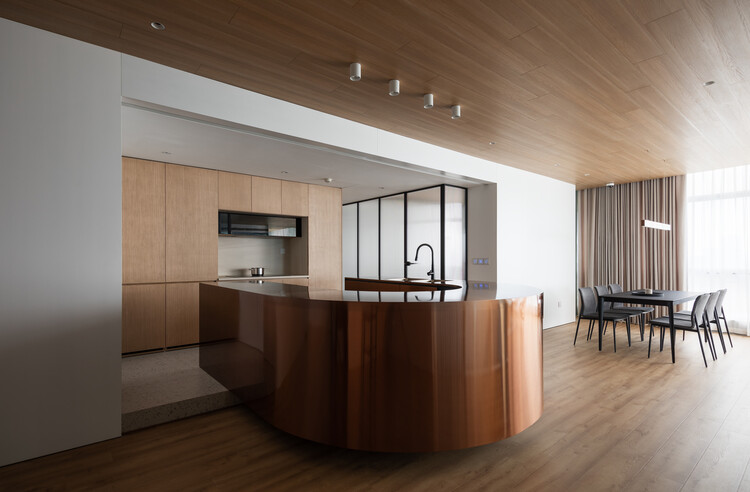
In compact homes, the kitchen is rarely only a room for cooking. It often operates as an edge: a service wall or a boundary between domestic work and social life. Its importance lies not only in food preparation, but in how it organizes the rest of the home, particularly due to limitations of plumbing and ventilation requirements. Before a living room can feel open, the kitchen often has to absorb the practical intensity of daily life: water, heat, smell, appliances, groceries, and storage.
This is especially visible in dense East Asian interiors, where domestic space is frequently shaped by limited area, changing family structures, hybrid work, and the cultural specificity of cooking. The open kitchen may be framed as a lifestyle feature, but in many apartments it is also a planning problem. It has to negotiate domestic labor, support informal gathering, and sometimes, as space-saving strategies, replace the hallway or foyer. More than a design gesture, the kitchen edge is therefore a spatial agreement between service and living.
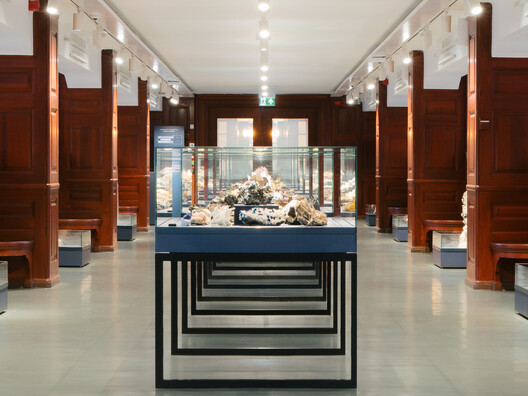
Designing a museum interior means negotiating between the needs of the collection and those of the visitor: objects must be protected and carefully displayed, while spaces need to remain accessible, legible, and engaging. Scale, circulation, security, lighting, structure, and technology all become part of the design, often working quietly in the background so that the exhibits remain the focus. So, how do you fit 4.5 billion years of Earth's history into a museum interior? The renovation of the Natural History Museum Oslo, home to one of the largest geological and anthropological exhibitions in the Nordic countries, offers a clear example of how these demands can come together within an existing architectural framework.

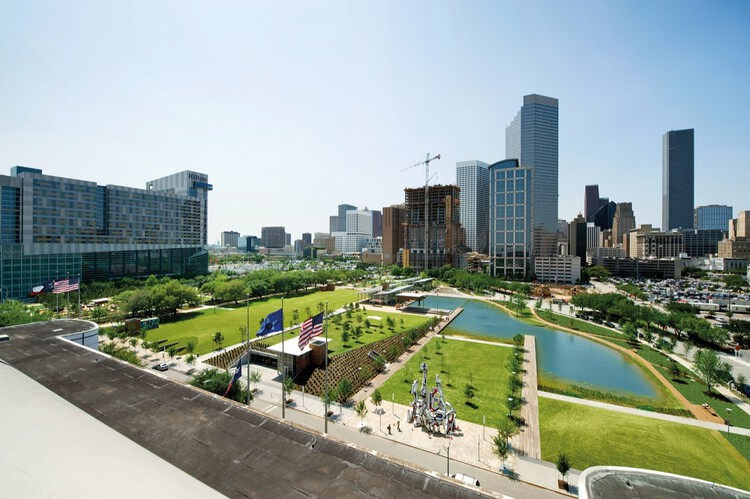
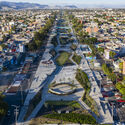
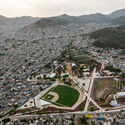
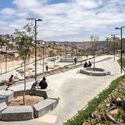
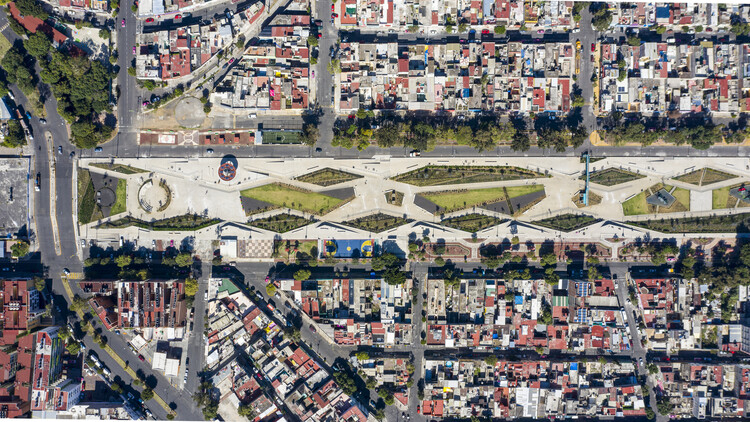
Mexico's rapid urban growth over recent decades has left many cities struggling with fragmented neighborhoods, high crime rates, and severe shortages of quality public spaces. In many low-income urban areas, informal development occurred alongside raw infrastructure like drainage canals, rail lines, and steep ravines, dividing communities and creating hazardous vacant zones. To address this spatial segregation and lack of civic amenities, public agencies and architects across Mexico are intervening in these abandoned buffer zones to construct public parks. By converting former physical barriers into accessible pedestrian corridors, these projects rejoin separated neighborhoods, re-establish safe visual sight lines, and provide spaces for community gathering and daily recreation.

As a fundamental human right, inclusion requires that all people—regardless of their backgrounds, abilities, or circumstances—are recognized and respected, with equal access to the same resources and opportunities. For many people with disabilities and their caregivers, accessible washrooms still fail to provide what is most essential: a safe, private, and dignified place for assisted changing. While many facilities comply with ADA and ICC accessibility standards, conventional washroom layouts often do not accommodate users who require additional space, time, and support from caregivers. This gap has contributed to the growing adoption of adult changing facilities, which extend accessibility beyond conventional washroom requirements and respond to needs that standard fixtures cannot address.

Across architecture and the building industry, women contribute to a wide range of fields, from design practice and construction to research and leadership. Their work reflects different approaches to some of the profession's most pressing questions, including environmental performance, adaptive reuse, and the creation of healthier and more responsive spaces. However, disparities remain visible in areas that influence professional recognition. For example, women continue to be significantly underrepresented in architecture in the United Kingdom. According to the Architects Registration Board, only about 31% of registered architects are women.

Applications for this year are now closed.
ArchDaily was born within a university, founded by two architecture students who believed that architectural knowledge should reach further than it did at the time. Eighteen years later, that conviction remains unchanged — but perspectives, tools, and opportunities have grown. We launched the Student Ambassador Program to give the next generation of architects a direct role in bridging their universities with the global architectural conversation.

Applications for this year are now closed.
ArchDaily started inside a university, with two architecture students who believed that architectural knowledge should travel further than it did. Eighteen years later, that conviction hasn't changed — but the insights, the tools, and the opportunities have grown. We are launching the Student Ambassador Program to give the next generation of architects a direct role in bridging their university and the global architectural conversation.

Applications for this year are now closed.
ArchDaily was born within a university, founded by two architecture students who believed that architectural knowledge should flow more freely. Eighteen years later, that conviction remains unchanged—yet our insights, tools, and opportunities have expanded. We have launched the Student Ambassador Program to give the next generation of architects a direct role in connecting their universities with the global architectural conversation.

Applications for this year are now closed.
ArchDaily began on campus, founded by two architecture students shortly after graduation who believed that ideas in architecture and design should be accessible to all, reaching far and wide. Eighteen years later, while our tools have advanced, our horizons broadened, and our opportunities expanded, our core mission remains unchanged. ArchDaily is now officially launching the Student Ambassador Program, empowering the next generation of architects to play an active role in connecting their campus to the global architectural discourse.

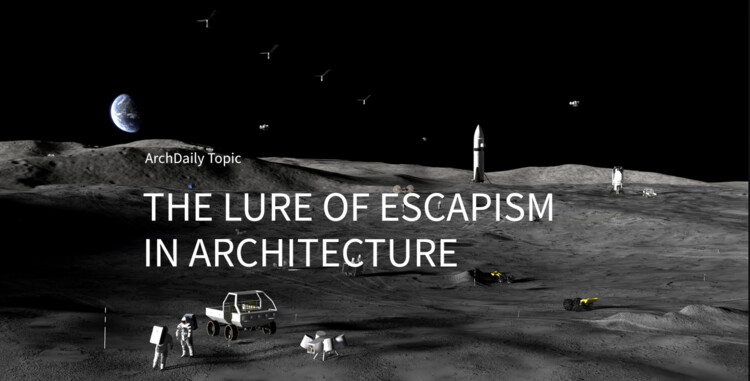
At a moment when architects across the globe are revisiting earthen construction, reassessing vernacular technologies, and forging visceral connections between communities and the land beneath their feet, others are sketching habitats for the Moon and designing the built environments of a Martian colony. Architecture firms, engineers, and space agencies are investing serious intellectual effort into structures that would need to be raised from scratch on another world. Two impulses, one returning to the soil, the other reaching for the stars, are unfolding simultaneously within the same discipline. And the tension between them raises an uncomfortable question: what, exactly, are we trying to escape?
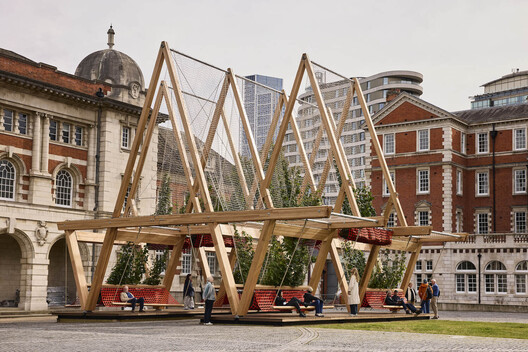
Water management, air quality, and heat mitigation are usually planned through systems much larger than the spaces where people actually experience them. Drainage networks sit below the street. Air pollution is measured across entire cities. Yet these conditions are felt much closer to the body: while waiting for a bus in the sun, walking through a flooded street, crossing an exposed plaza, or looking for somewhere to sit when the air itself feels difficult to breathe.
Heat makes this question especially urgent. As cities become warmer, streets, parks, transit areas, and other public spaces are increasingly becoming sites where design can reduce exposure through shade, planting, airflow, and water. For architecture, that brings part of climate adaptation into the spaces people use every day.

ArchDaily is looking for Social Media Collaborators to join our content team. Our Social Media Teams transform ArchDaily's content into engaging, high-performing digital formats for various social media channels.
Your role involves hands-on content creation and repackaging, as well as a high degree of collaboration and creativity to amplify architectural ideas to a global audience.

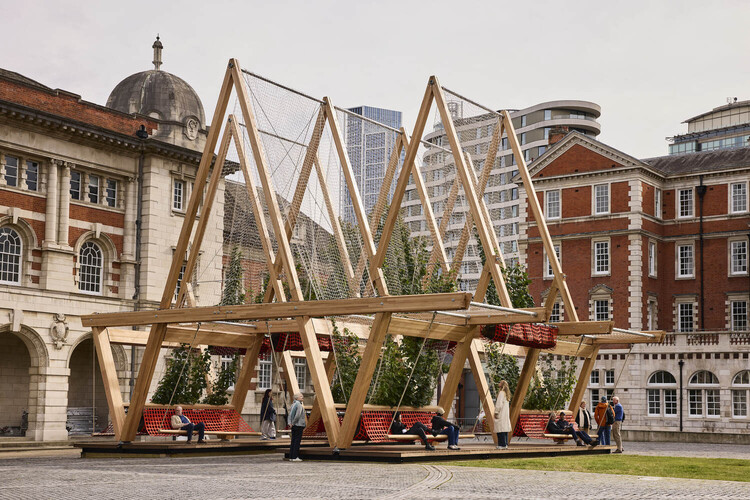
What narratives do materials carry, and how can the visible "traces" of artisans engage in a dialogue with manufacturing processes and industrialization? Between design and construction, the act of thinking through making can become a guiding principle for a design philosophy. Combining wood, industrial materials, and reused objects, Atelier CRAFT's approach is rooted in reversible architecture, guided by its manifesto: "Transform design through making." Based in Saint-Ouen, Paris, the practice explores the relationships between humans and materials, the act of making, and manufacturing processes.