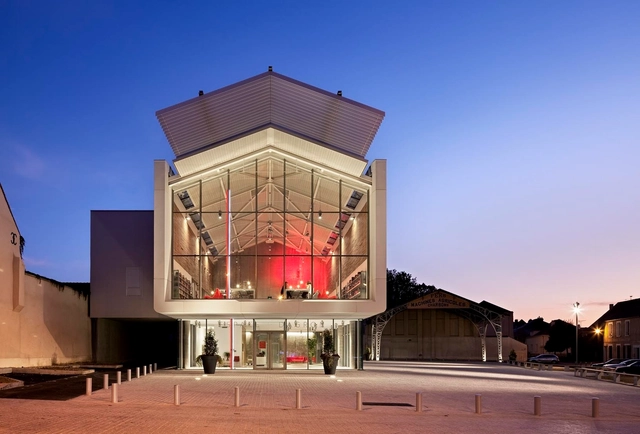
Designers have created civic institutions, governmental centers, public plazas, and many other spaces as testaments to individual and shared values. As spaces for gathering and exchange are necessary elements to urban life, architecture can also act as a vehicle to encourage understanding. Advocating knowledge while empowering the public, libraries celebrate ideas, curiosity and empathy.
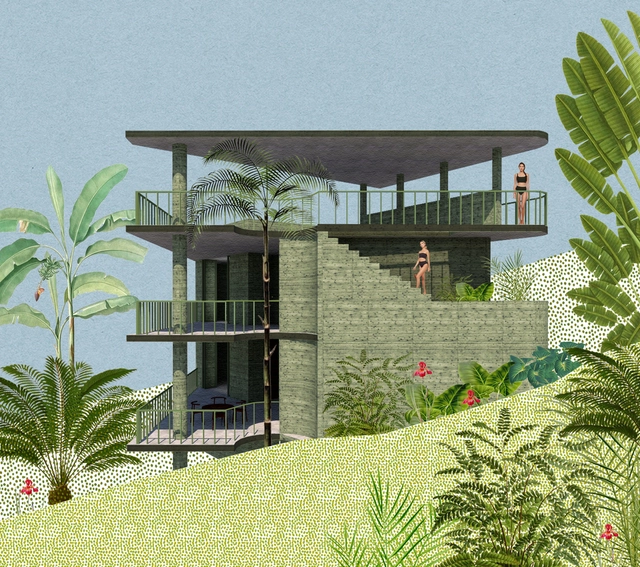
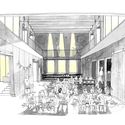
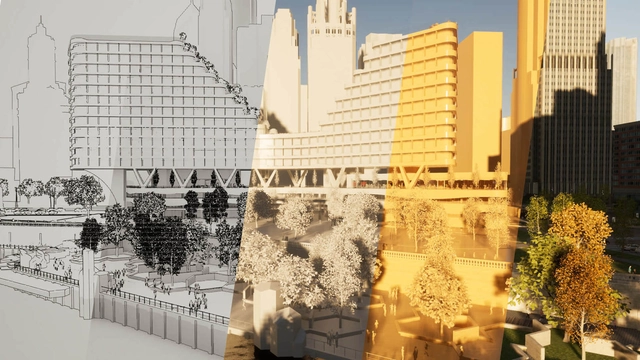
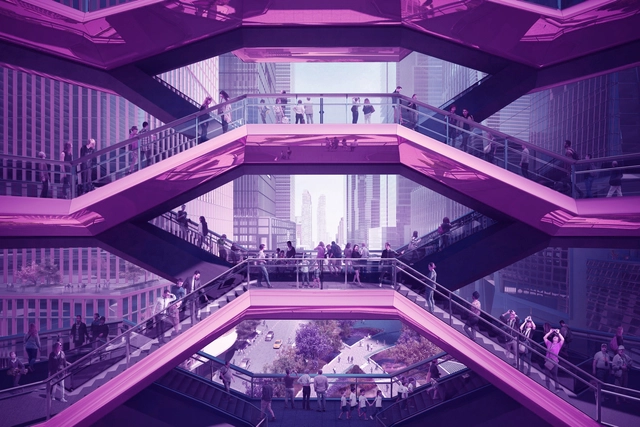
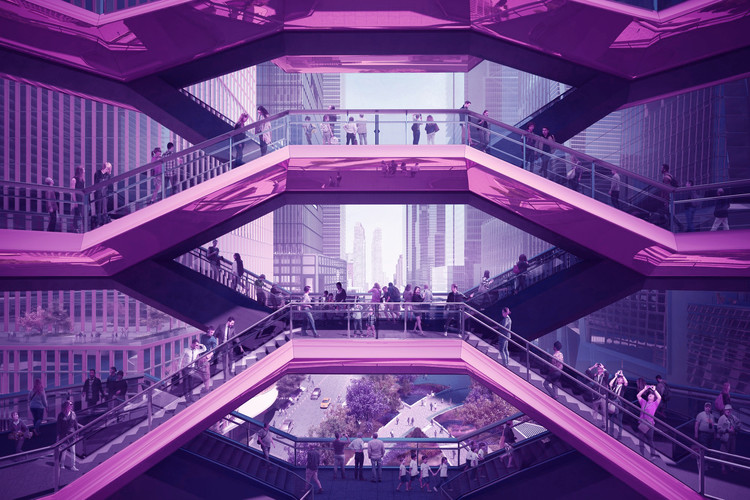
Renders are representations that can convey the three-dimensional aspect of a design through two-dimensional media, i.e., an image, providing a preview of how the project will look in the future. However, unlike what people often imagine, rendering is not always a realistic visualization of architecture.
Since it is a tool for visual communication, renderings can have different styles depending not only on the project itself but also on the specific targeted audience and, above all, on the identity of the architect or architectural firm responsible for the design.
According to the United Nations’ latest report on populations in cities, by 2030, “urban areas are projected to house 60 percent of people globally and one in every three people will live in cities with at least half a million inhabitants”. Growing in both size and number, cities are hubs of government, commerce, and transportation, and in 2021, the world’s 20 largest cities are home to half a billion people. In fact, one in five people worldwide lives in a city with more than 1 million inhabitants.
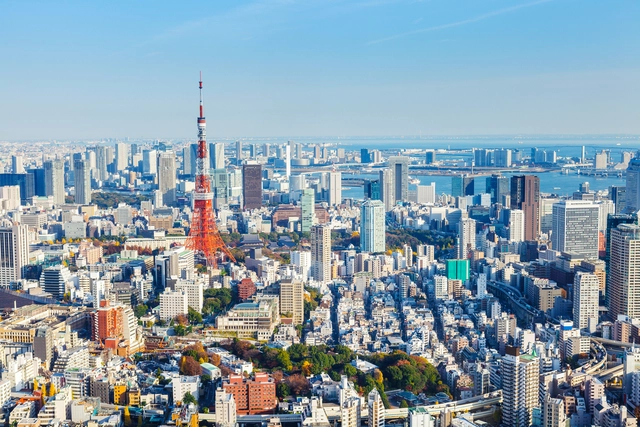
Below, we have rounded up the top 20 megacities in the world of 2021, according to the number of people that live in their metropolitan area. While Tokyo is the largest city on a global level, with a total of more than 37 million residents, the majority of the most populous cities in the world are in the two most populated countries, China and India. Among these, we have 5 metropolises in China, Shanghai, Beijing, Chongqing, Tianjin, and Guangzhou, and 3 in India, Delhi, Mumbai, and Kolkata. The largest city in the American continent is Sao Paulo in Brazil with 22 million people, followed by Mexico City and Buenos Aires in Argentina. Istanbul takes the 13th position with one part of the city lying in Europe and the other part in Asia.
In a 2016 survey of 400 employees in the U.S., Saint-Gobain found that office building occupants commonly complained about poor lighting, temperature, noise, and air quality, leading the company to deduce a need for improved lighting and thermal comfort in buildings while also maintaining low energy consumption and freedom of design for architects and clients. Their solution was SageGlass, an innovative glass created first in 1989 and developed over the course of the past three decades. The glass, which features dynamic glazing protecting from solar heat and glare, simultaneously optimizes natural light intake. A sustainable and aesthetic solution, SageGlass’ adaptability to external conditions dispels the need for shutters or blinds.
https://www.archdaily.com/957605/more-daylight-but-less-glare-and-heat-how-does-automatically-tintable-glass-workLilly Cao
Working remotely throughout the past year has accelerated the introduction of new approaches to real-time rendering, and with it, a new necessity was born: how can a person feel physically present inside a space, without actually being there? Ultimately, designers resorted to the virtual world, a vast realm of interactive built environments that can be accessed from the comfort of one's home. Even the tools utilized, such as headsets and goggles, have become more accessible to the vast majority of the public and are being sold at a lower price than they initially were. We have become accustomed to build, modify, and navigate between different environments, going back and forth between what is real and what isn't. Truth is, virtual has become the new normal.
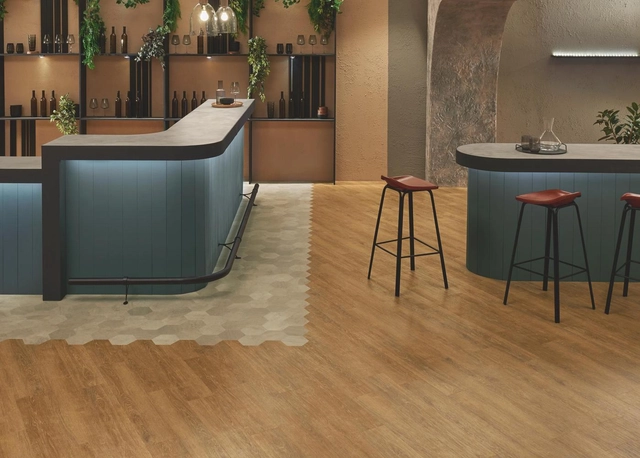
Warm wood look – but more robust: All Amtico product families are designed to give the impression of natural colours, surfaces and grains so they feel deceptively real – in the best sense of the word. Image Courtesy of Amtico
Amtico’s flooring products not only look like the real thing, they’re also more robust than the natural materials which they imitate, offering architects versatile surface solutions and greater planning freedom.
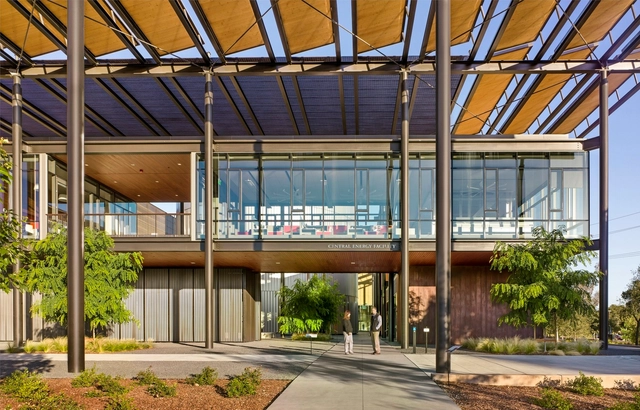
Solar design in contemporary architecture is rooted in the profession's sustainable turn. The relationship between architecture and energy is tied to both passive strategies and performance via more recent innovations in technology. As one way to begin addressing the global climate crisis and greenhouse gas emissions, solar design is reshaping cities and architecture around the world.
The ‘Trolley’, developed by next125, the premium brand of the kitchen manufacturer Schüller, invites us to bring more movement into our everyday lives. Image Courtesy of next125
Premium kitchen brand next125’s award-winning ‘Trolley’ brings multifunctional mobility beyond the kitchen and into other increasingly connected home spaces.
Many of us have already lived, are living, or will live in a shared student house - a good mix of cheap housing and intense socializing with friends and school mates. For a reasonable price, it is possible to have a single private room and share common spaces. In fact, not only university students are living this way nowadays. The concept of co-living is becoming more and more an attractive and effective solution.
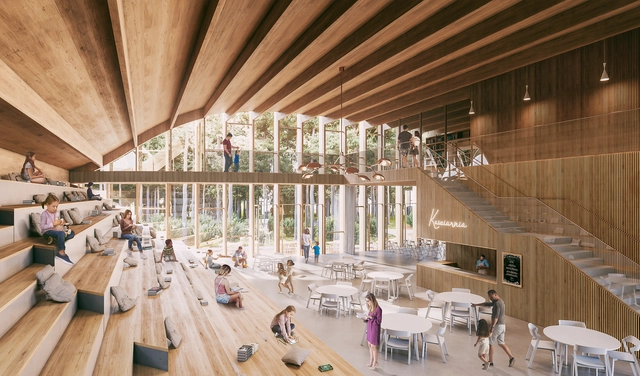
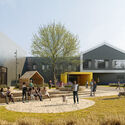
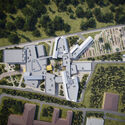
This week’s curated selection of the Best Unbuilt Architecture focuses on projects related to learning, research and culture submitted by the ArchDaily Community. From kindergartens to libraries and universities, the article explores how different spaces of knowledge around the world are designed to inspire their users.
Featuring an array of scales and architectural programs, the list of projects includes a circular library in South Korea, a bridge-like kindergarten in Poland, as well a university in Tel Aviv that creates a series of opportunities for unmediated interactions and unscripted learning. The following are architectural programs that cater to the dissemination of knowledge in all its forms and to all age and social groups.
Videos
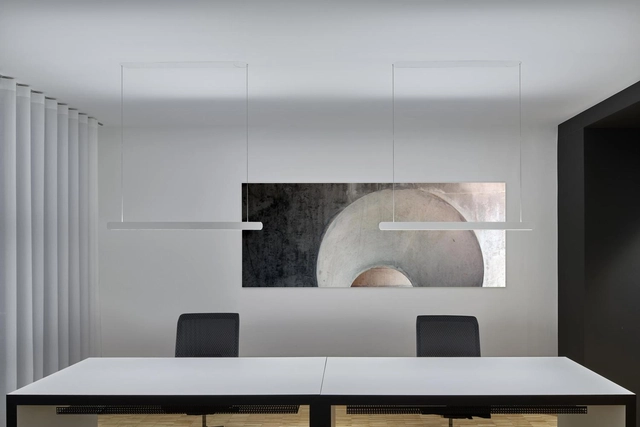
Thanks to a mounting plate for hollow ceilings, the Mito volo pure pendant luminaire’s canopy disappears almost invisibly into the ceiling. Image Courtesy of Occhio+
Occhio+ represents a broadening of the Occhio product portfolio into the larger contract sector, and, as such, is aimed explicitly at architects and planners.
Collage by Matthew Maganga. Image Courtesy of Forbes Massie-Heatherwick Studio
Fifty-one years ago, in 1970, a Japanese roboticist named Masahiro Mori came up with the concept of the “Uncanny Valley”. Around the same time, architectural renderings done using analog methods were still in vogue – collages and photomontages used to get ideas across to clients. A decade later, personal computers came along, and that saw the emergence of CAD and the wider adoption of digital rendering. Today’s architectural renderings are almost imperceptible from reality, with the increase in sophistication of rendering sofware. We struggle to tell the difference between what is a rendering and what is not – or rather we are able to tell a slight difference and it leaves us slightly uncomfortable, which brings us to Mori’s uncanny valley.
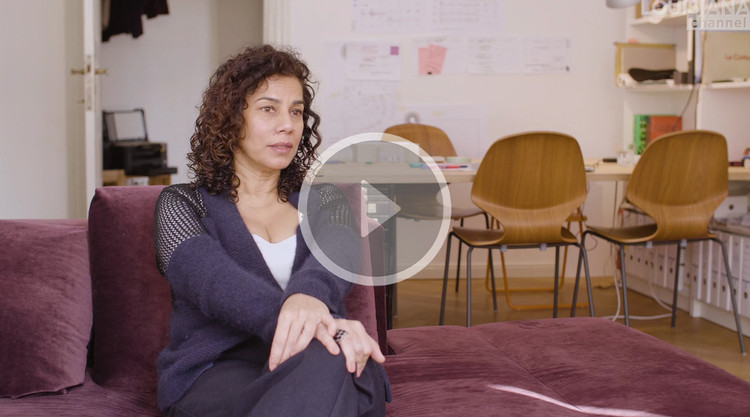
In Louisiana Channel's latest interview, Indian architect Anupama Kundoo shares her thoughts on the importance of balancing between traveling and being in solitude with oneself. "I think travel is important, but if you're not rooted yourself, you will go to a hundred places and not see anything", explained the architect, "traveling helps you step back from what you take for granted".
This episode of Architecture w/ Stewart explores the only five ways of organizing the plan of a building, at least they are the only ones according to Francis Ching as listed in the canonical text Form, Space, and Order. Each of the five: central, linear, radial, clustered, and grid, offer unique benefits and opportunities to architects, clients, or visitors. Some of the strategies are reserved for formal ceremonial buildings, while others are better for providing less rigid and more organic exploration by occupants. Some yield complete and autonomous forms while others can shrink or grow at ease. However, every single building is, in some way, a combination of these five basic strategies. Using paper cutout shapes, plastic human figures, and representative examples from history and recent constructions, Stewart demonstrates the value and possibilities of each organizational strategy.
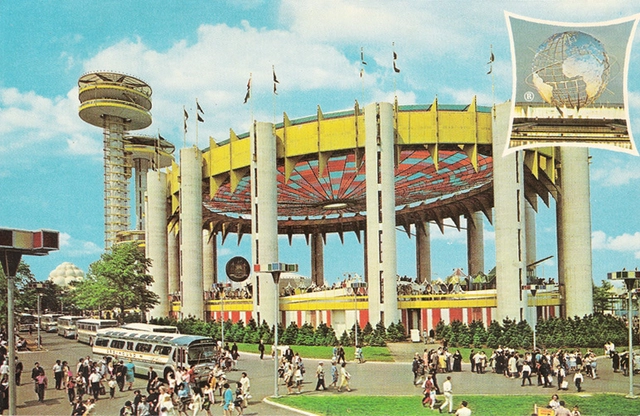
1964 World's Fair held in New York City. Image Courtesy of Abandoned NYC
World’s Fairs seem to be a memory of the distant past. These mega-scale events once brought us culinary staples, technological advancements, and introduced some of the most notable examples of architecture and landmarks that impact how we think about design and construction even in the present day. Throughout the numerous fairs and expos that were held, architectural discourse itself significantly advanced and the pomp and circumstance that surrounded these muscular flexes of international innovation reimagined what life would be like in the decades to come.
Summer Palace Digital Restoration. Image Courtesy of Yuan Ming Yuan (2006 Documentary)
Heritage buildings are precious treasures passed down to us by our ancestors. They are also intangible cultural gifts for all mankind, a discovery of the past. Nevertheless, as time changes, ancient Chinese architecture, either destroyed by the forces of wars or nature, is gradually losing its original glory, making the protection and restoration of ancient buildings an urgent matter in this contemporary world.
I am on the edge. Not emotionally or psychologically—although this could be the case—but literally, physically, spatially, geographically. As I write this, I am sitting on the balcony of a hotel room in Miami Beach, overlooking the Atlantic Ocean. Behind me is the whole State of Florida and, indeed, the entire North American continent. In front of me: the boardwalk, a narrow beach, and then a lot of water—and not much else between here and Mauritania, a distance of more than 4,400 miles.
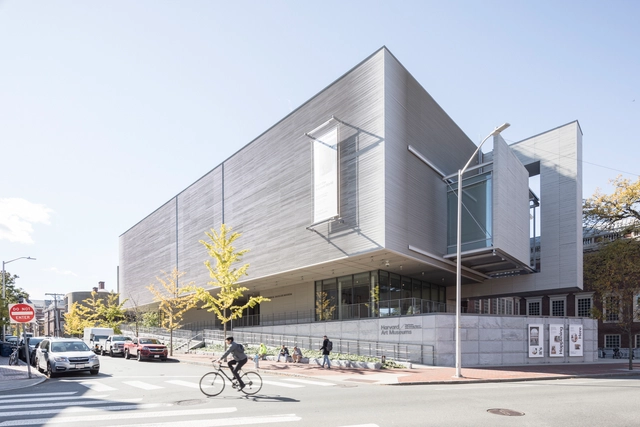
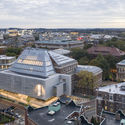
As the oldest institution of higher learning in the United States, Harvard has emerged as one of the world's most well-known universities. Organized into ten academic faculties and the Radcliffe Institute for Advanced Study, it is spread across 200 acres and centers on Harvard Yard in Cambridge. Developed along the Charles River adjacent to the Allston neighborhood of Boston, Harvard has the largest financial endowment of any academic institution. This has supported a number of different campus building projects across the university’s history.
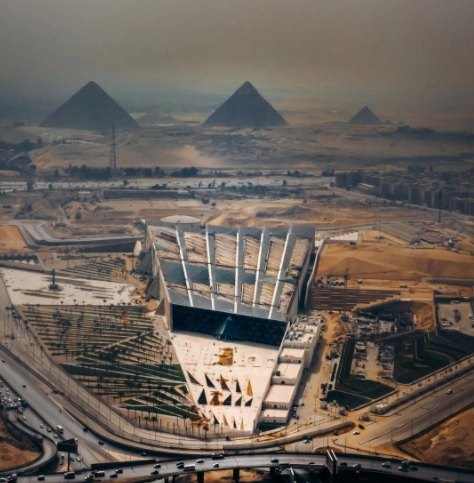
Designed by Irish architecture firm Heneghan Peng, the long-awaited Grand Egyptian Museum devoted entirely to Egyptology is set to open this summer, sitting on the edge of the Giza Plateau, 2 km away from the Pyramids. Considered as the largest museum in the world dedicated to one civilization, the cultural complex will accommodate about 100,000 ancient artifacts, and will include 24,000m² of permanent exhibition space, a children’s museum, conference facilities, educational areas, a conservation center, and extensive gardens inside and around the museum's plan.
Ventilation serves two main purposes in a room: first, to remove pollutants and provide clean air; second, to meet the metabolic needs of the occupants, providing pleasant temperatures (weather permitting). It is well known that environments with inadequate ventilation can bring serious harm to the health of the occupants and, especially in hot climates, thermal discomfort. A Harvard University study demonstrated that in buildings with good ventilation and better air quality (with lower rates of carbon dioxide), occupants showed better performance of cognitive functions, faster responses to extreme situations, and better reasoning in strategic activities.
It is not difficult to see that ventilation plays a vital role in ensuring adequate air quality and thermal comfort in buildings. We have all felt it. But when we talk about ventilation, a light breeze from the window might come to mind, shifting through our hair and bringing a pleasant aroma and cooling temperature that brings fresh air and comfort. In mild climates, this experience can even be a reality on many days of the year. In harsh climates or polluted spaces, it could be quite different.
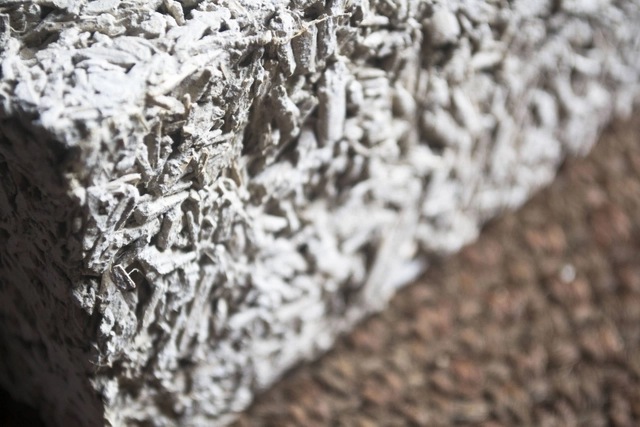
Hemp is one of the oldest crops domesticated by humans. With its wide variety of uses and applications, it’s easy to understand why it’s been a desirable product throughout history. Hemp seeds and flowers are used in health foods, medicines, and organic beauty products; the fibers and stalks of the hemp plant are used in clothing, paper, and biofuel. Today even a waste product of hemp fiber processing, so-called hemp shives, is being utilized to create sustainable building materials like hempcrete.
WeTransfer recently released its 2020 Ideas Report, which showcases the effects COVID-19 has had on creativity. At a time when the economy, employment rates, and overall morale were down, the report found a reason for hope—nearly half (45.3 percent) of the 35,000 creatives polled claimed that they experienced more creative ideas during the pandemic than before.
Which begs the question: How do we replicate the good that has come out of the pandemic and keep it going for the industry over the long term? ThinkLab sat down with business leaders within—and outside—the interiors industry to understand the shifts companies made to remain relevant in these changing times.
Continuing our quest to redefine how architecture is perceived nowadays and exposing the different notions out there, ArchDaily gave space for its users to answer four fundamental questions: "What is architecture? What can architecture do? What is your architectural position? What is your design method?" With around 200 entries per interrogation, gathered from all over the world, the ideas shared are mostly complementary and non-conflicting, underlining a general understanding of the role and essence of this field.
Just before the global lockdowns began in response to the spread of the widely discussed COVID-19, we met with Saint Gobain experts at their new headquarters in Paris to discuss an extensive investigation conducted in 2019, with the aim of understanding the transformations that architecture and construction have experienced in recent years. After an interesting exchange of ideas, we chose the most relevant topics to be analyzed in depth by our team of editors, resulting in a series of articles that combined the trends identified with the unexpected events that occurred during 2020, connecting them directly to architectural design.
Now, entering an uncertain but promising 2021, we took the time to stop and reread these articles carefully. How many of these trends are still valid and how much have they evolved? What new trends are likely to develop in the coming years?





.jpg?1617889198 "Courtesy of BIG")

























.jpg?1618071837 "Courtesy of BIG")
.jpg?1618071843 "Courtesy of Alexis Christodoulou")
.jpg?1618576449 "Wall House. Image © Javier Callejas")

.jpg?1618576436 "Wall House. Image © Javier Callejas")