Produce personalized presentation boards that distill complex concepts into simple visual representations with a few helpful tools and effects.


Produce personalized presentation boards that distill complex concepts into simple visual representations with a few helpful tools and effects.
Why is 3D-printed architecture on the rise?
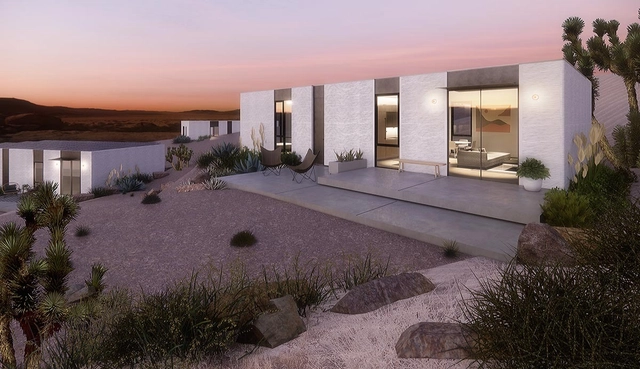
According to a July 2021 report by Grand View Research, the global 3D construction market is set to grow by an incredible 91% between 2021 and 2028. And, why is printed architecture seeing such rapid growth? Firstly, 3D printing is emerging as a possible solution to some of the challenges currently facing architecture, engineering, and construction (AEC) – it can provide affordable housing, shelters for disaster-hit regions, and an answer to sustainable construction. Alongside these, one of the main advantages is the lower construction costs. It’s far easier to calculate the actual volume of construction material required, resulting in less waste.
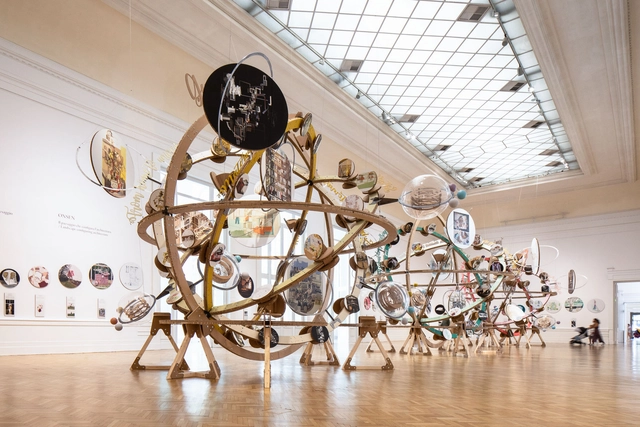
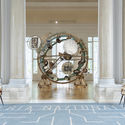
Curated by Spanish architect Izaskun Chinchilla Moreno, Cosmowomen. Places as constellations is an exhibition currently open at La Galleria Nazionale di Roma, Italy. Reflecting on the incorporation of women into architecture, Cosmowomen displays a series of projects developed by 65 Bartlett School of Architecture-alumni women architects from over 20 different nationalities.

Few cities combine history and contemporary culture like Prague. The so-called "Mother of all Cities" was spared from widespread destruction during World War II, and as a result, its diverse architecture dates back over a millennium. As a political, cultural and economic center of Europe, the city has become a significant metropolis balancing both its past and future as one of the world's most beautiful cities.
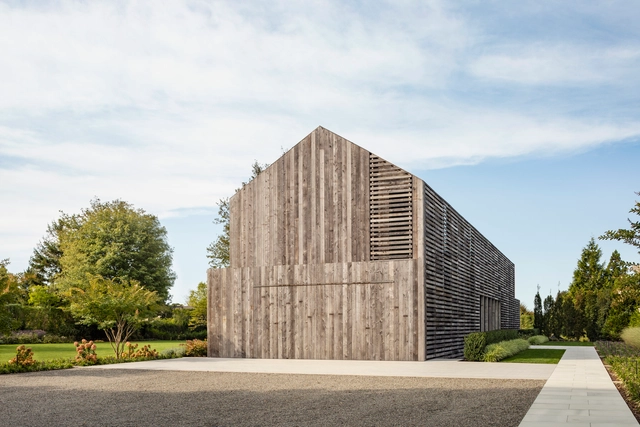
American architect Brian Mac grew up near Detroit. He graduated from the Architecture School at the University of Detroit in 1988 and for the next five years worked for a preservationist firm, Quinn Evans Architects in Ann Arbor. There he learned to love historic architectural detailing, and, while working at the firm, in 1992, became a licensed architect. Then followed a short period of disillusion with the profession and moving to Ohio to work in a residential treatment center for adolescent felony offenders.


As material technology becomes more advanced and the importance of health and wellbeing is taken more seriously, sculpting sound is now a consistent part of specifiers’ briefs in all sectors, from echo-free hospitality to clear and functional meeting rooms, and even transforming home offices or music rooms into headache-free sound vaults.
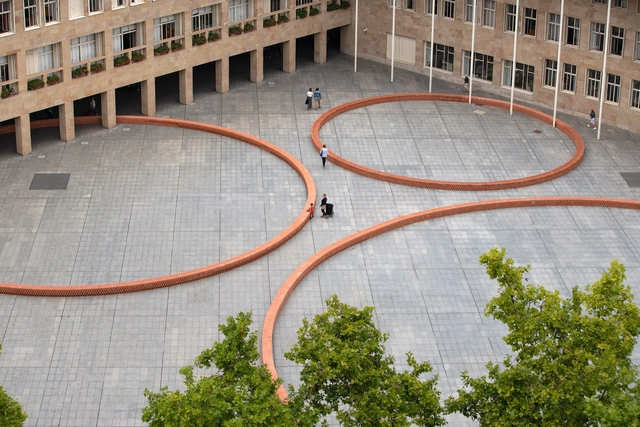
The 7th edition of the International Architecture and Design Festival Concéntrico proposed new readings of public space through a series of temporary installations that re-imagined various places throughout the Spanish city of Logroño. Emerging architecture practices and artists from around the world shared their perspectives on the public realm and the spaces of social interaction by exploring various themes and experimenting with new ways of understanding urban spaces.

Five emerging architecture studio profiles from Switzerland, France, the Netherlands, Austria, the UK, and Slovakia have been chosen by New Generations, a European platform that analyses the most innovative emerging practices at the European level, providing a new space for the exchange of knowledge and confrontation, theory, and production. Since 2013, New Generations has involved more than 300 practices in a diverse program of cultural activities, such as festivals, exhibitions, open calls, video interviews, workshops, and experimental formats.

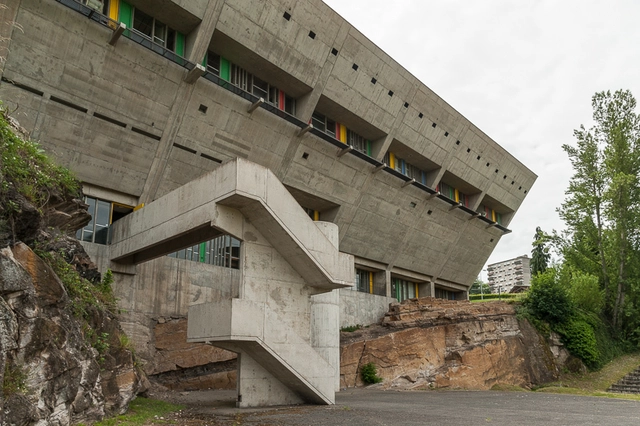
Le Corbusier was a pioneer of the Modernist Movement in architecture. Throughout his career, he undertook an array of projects all around the world. See below for 17 of his works that have been named World Heritage Sites by UNESCO, as well as many more of his other popular pieces. Hopefully, someday you get to go and see them yourself!
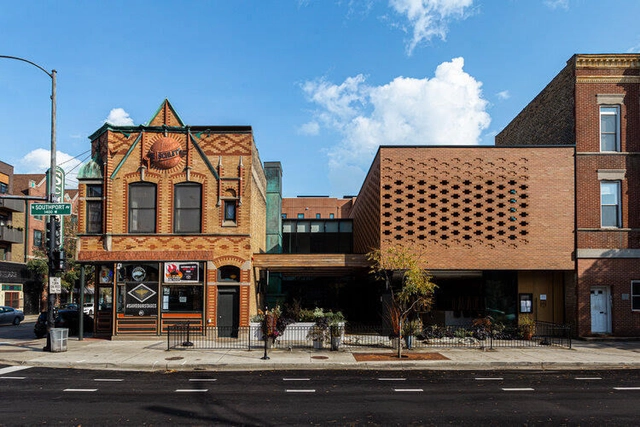
In this video, Will Quam of Brick of Chicago takes us around the American city to question Louis Kahn’s adage that all bricks are motivated to be arches. Here, in the Logan Square neighborhood, we find bricks of all sorts, that — in addition to arches — take on other configurations and metaphors to describe their qualities; textile bricks and diapering, brushstrokes of a painting, butter joints and glazes, soldiers and bullnoses.
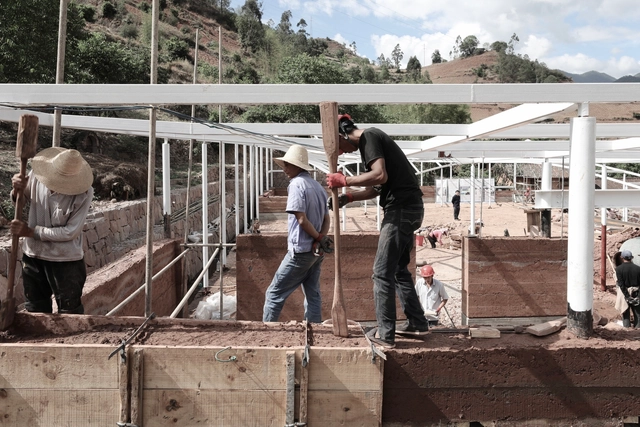
Vernacular techniques and local materials are becoming more and more relevant in architecture, but is it possible to bring these concepts to large urban areas?
In 1984, the Amazonian architect Severiano Porto had already pointed out the need to make architecture more connected to its location. Using local materials and techniques is becoming more important each day, considering the impacts of the commodity chain of building construction on the planet. Not surprisingly, the number of projects that use this approach is growing every day, as Severiano has already mentioned in his work since the 1980s.
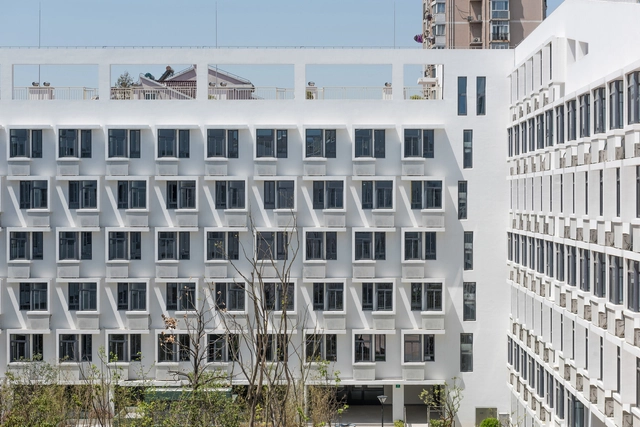
Saskia Sassen, the Robert S. Lynd Professor of Sociology at Columbia University, predicts in her co-authored book “The Quito Papers and the New Urban Agenda” that, in the future cities will become our crucial battlefield as we continue to fight against gentrification and growing degree of isolation in our communities. Sassen argues that, “Cities should be an inclusive space for both the affluent and the poor. Nevertheless, in reality our cities never achieved equality for all, because our cities were never designed that way. Still cities ought not to be a place that tolerates inequality or injustice”.
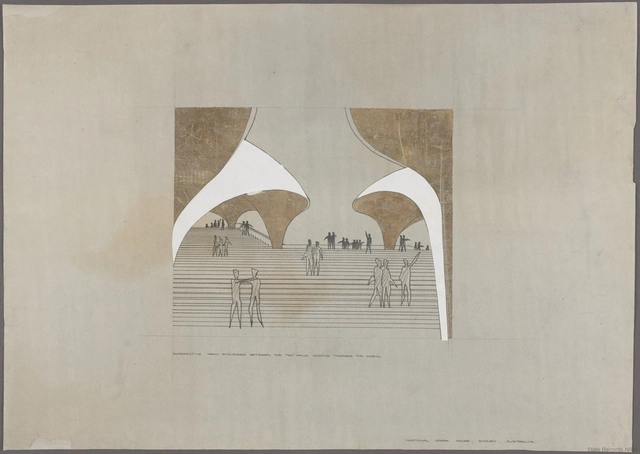
This short essay, written by the author and critic Jonathan Glancey, coincides with the launch of the inaugural Architecture Drawing Prize – a competition curated by the World Architecture Festival, the Sir John Soane's Museum, and Make. The deadline for the award is the 17th of September 2021.
“Is graphicacy a word?” asks Ken Shuttleworth, founder of Make Architects and instigator of The Architecture Drawing Prize. It is. “Like literacy”, he says, “, it’s certainly what I’m interested in when looking at and judging drawings. It’s about a fluency in making and understanding them.” The Architecture Drawing Prize is in its fifth year now. “We tend to see very few hand drawings by young architects - they mostly use computers - and, today, most architectural students come from more of a maths and physics than an art background. I still believe, though, that hand drawing is very important.”
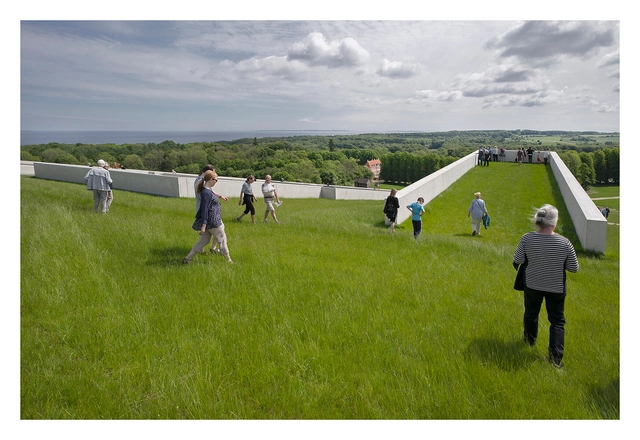
Researchers credit the Hanging Gardens of Babylon as the first examples of green roofs. Although there is no proof of its exact location and very little literature on the structure, the most accepted theory is that King Nebuchadnezzar II built a series of elevated, ascending terraces with varied species as a gift to his wife, who missed the forests and mountains of Persia, their local land. According to Wolf Schneider [1] the gardens were supported by brick vaults, and under them, there were shaded halls cooled by artificial irrigation of the gardens, with a much milder temperature than the outside, in the plains of Mesopotamia (present-day Iraq). Since then, examples of green roofs have appeared all over the world, from Rome to Scandinavia, in the most diverse climates and types.
Nevertheless, inserting plants on roofs is still viewed with suspicion by many, as they are thought to be costly and difficult to maintain. Others, however, argue that the high implementation costs are quickly offset with savings in air conditioning and especially that occupying the building's fifth façade with vegetation is, above all, a rational solution. In any case, the question remains as to how green roofs can really help with climate change.
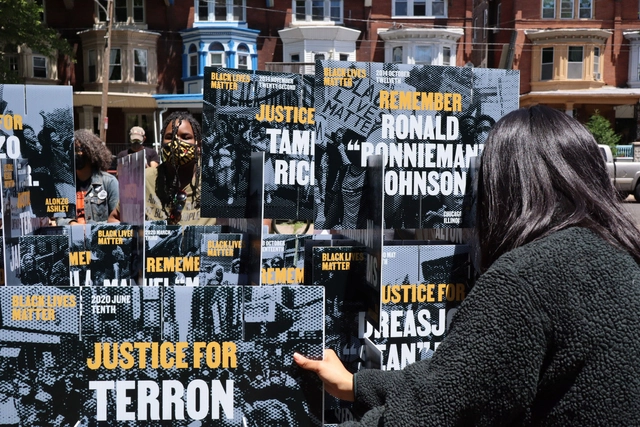
In this week's reprint from Metropolis, author Leilah Stones explores how across the globe, architects, designers, and planners are redefining what it means to be an advocate in the design profession, listing 6 initiatives that practice design justice.

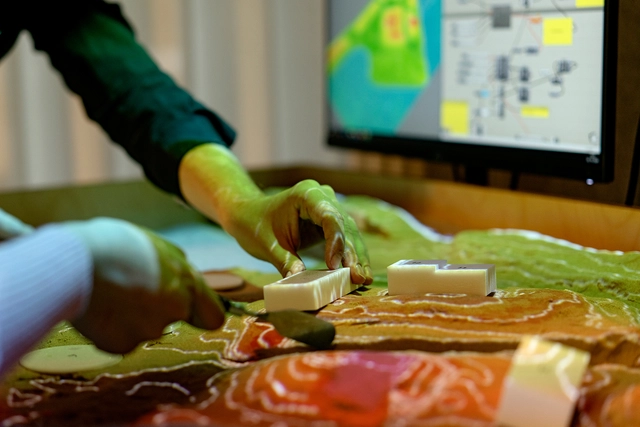
Henning Larsen has been creating projects that address cross-cultural design, tackle diverse climatic zones, and try to achieve ambitious sustainability objectives. All of this wouldn’t be possible without the use of technology and specially crafted digital and generative design tools that allow architects to treat any element as a parameter in design.
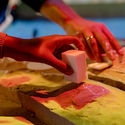
In a special interview with ArchDaily, Jakob Strømann-Andersen, Partner and Director of Henning Larsen’s Innovation and Sustainability Department talks about digital tools and their incorporation in the design process. Focusing specifically in this conversation on Sandworm, a new modeling program that uses sandboxes, Anderson explains how they have achieved to scan and directly transfer manipulated landscapes into a 3D model.

In an effort to create a high-impact solution during the current global pandemic, the Peru-based Grupo LAMOSA decided to generate a line of ceramics with antiviral properties of Copper Nanoparticles (NanCu). The team decided to kick-off the distribution of BIO-C29 technology through its range of BIO-CER products. This solution was achieved through a collaboration between Mauricio Méndez (Industrial Director) and Jenny Morales (LATAM Technical Manager) from Cerámica San Lorenzo-Grupo LAMOSA, in conjunction with Nano Quantum Group SpA. The result is a capable protective layer that considerably eradicates infectious agents, creating disinfected architectural spaces free of health hazards.
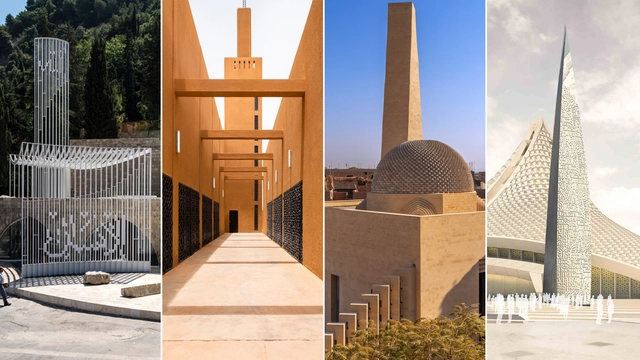
Islamic architecture has long been acknowledged as one of the most significant and influential typologies that translates the religion's core teachings and beliefs into structures. One of the most striking characteristics of architecture in the Islamic world is the focus on interior spaces. Whether it is a methodical organization of interior layouts to make use of natural light and ventilation, or the intricate detailing of ornamentation through carvings and paintings, the contrast between exterior and interior is palpable. However, one particular architectural feature defies the norms of modest facades, and stands as a strong visual statement of the presence of Islam. The minaret's distinctive structure strengthened its presence as a focal point, guiding people towards the religion's holiest space. In this article we will explore the reason behind the use of minarets and how its function has evolved culturally and architecturally.
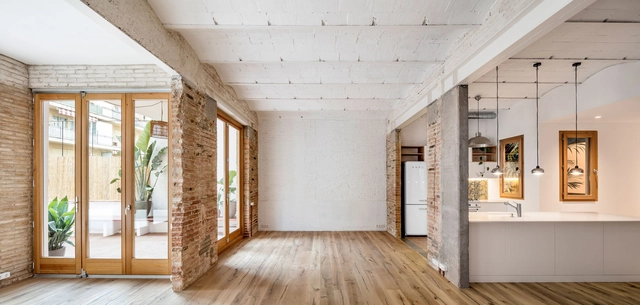
The choice of Lacaton & Vassal to receive the 2021 Pritzker Prize was, above all, emblematic. Under the mantra “never demolish, never remove or replace, always add, transform and reuse”, the French duo built a career focused on renovating buildings, providing them with spatial quality, efficiency and new programs. Their approach contrasts with most of the architecture we are used to honoring: iconic, imposing and grandiose works. It also contrasts with the notion of the tabula rasa, of building and rebuilding from scratch, so well represented in Le Corbusier's Ville Radieuse, and which has fascinated architects and urban planners ever since.
Whether because of the sustainability demands currently in vogue, or simply because there are already enough buildings around the world, the task of rehabilitating spaces and buildings has been seen as an important driver of change. The focus is generally to center efforts on interior spaces, paying special attention to the environmental quality and comfort of the inhabitants, in addition to adapting the uses to contemporary demands. The main question revolves around how to update (and even automate) the buildings of the past to adapt to new needs for efficiency, sustainability and well-being.
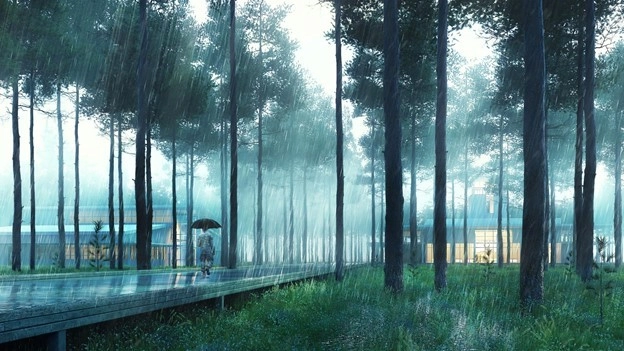
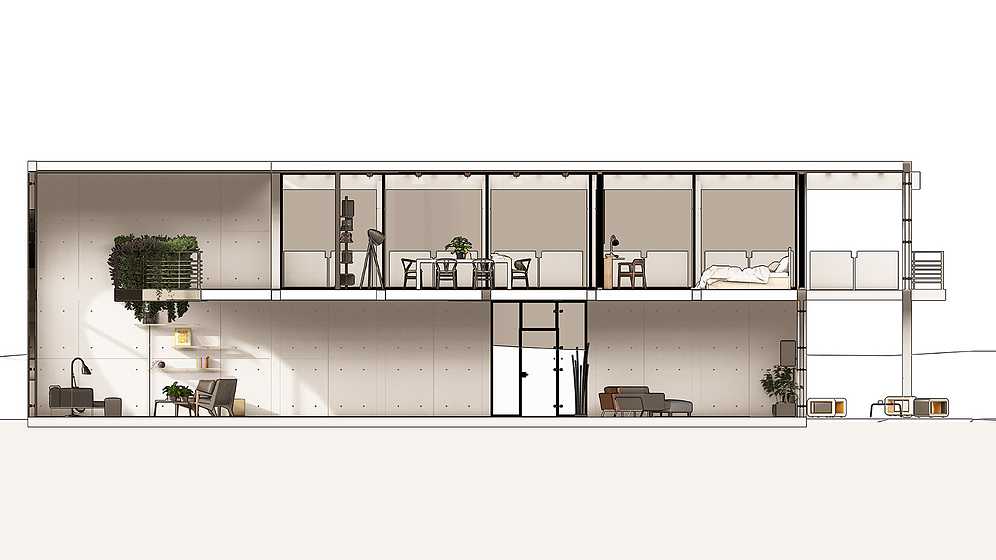
Creating a compelling visualization that communicates your design intent and gets stakeholders on board is no easy feat. While designers have plenty of visualization tools to deploy— from powerful rendering engines to the simplicity of pen and paper — there’s no one-size-fits-all approach to visualization. As your design evolves, you may need multiple renderings at various levels of detail.
According to Jim Kessler, Director of the Visual Media Group at Jacobs, "When a design is in flux and conversations with the clients are taking place, a photorealistic rendering signals completion of the project and that design changes are no longer possible. Whereas, a non-photorealistic rendering visual suggests a sense of flux and has a huge artistic element to it, which architects gravitate towards."

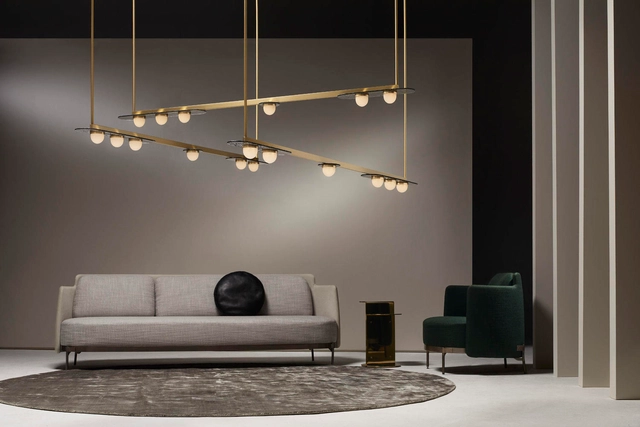
We know that lighting is probably one of the most powerful means of influencing the perception of a space in terms of its geometry. Only through light does color become color, and matter becomes relevant.