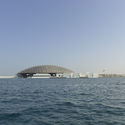
Earlier this month, Abu Dhabi’s much-awaited “universal museum,” the Louvre Abu Dhabi designed by Pritzker Prize-winner Jean Nouvel, was opened to the public. After several years of delays and problems including accusations of worker rights violations, revisions in economic strategies, and regional turmoil, the completion of the museum is a feat in itself. Critics, supporters, naysayers, artists, economists, and human rights agencies, have all closely followed its shaky progress, but now that it’s finally open, reviews of the building are steadily pouring in.
Read on to find out how critics have responded to Nouvel’s work so far.
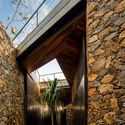
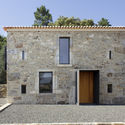
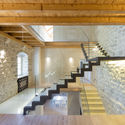
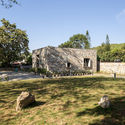
The use of stone is gaining popularity more and more in architectural design. Though it is an ancient construction technique, these days the texture that stone offers to spaces is having an undeniable impact on the many architects incorporating the material into their projects. For this reason, this week we present a second installment of stunning images of stone architecture, including 15 amazing images of this construction system by renowned photographers such as Hannes Henz, César Bejar, and Erieta Attali.
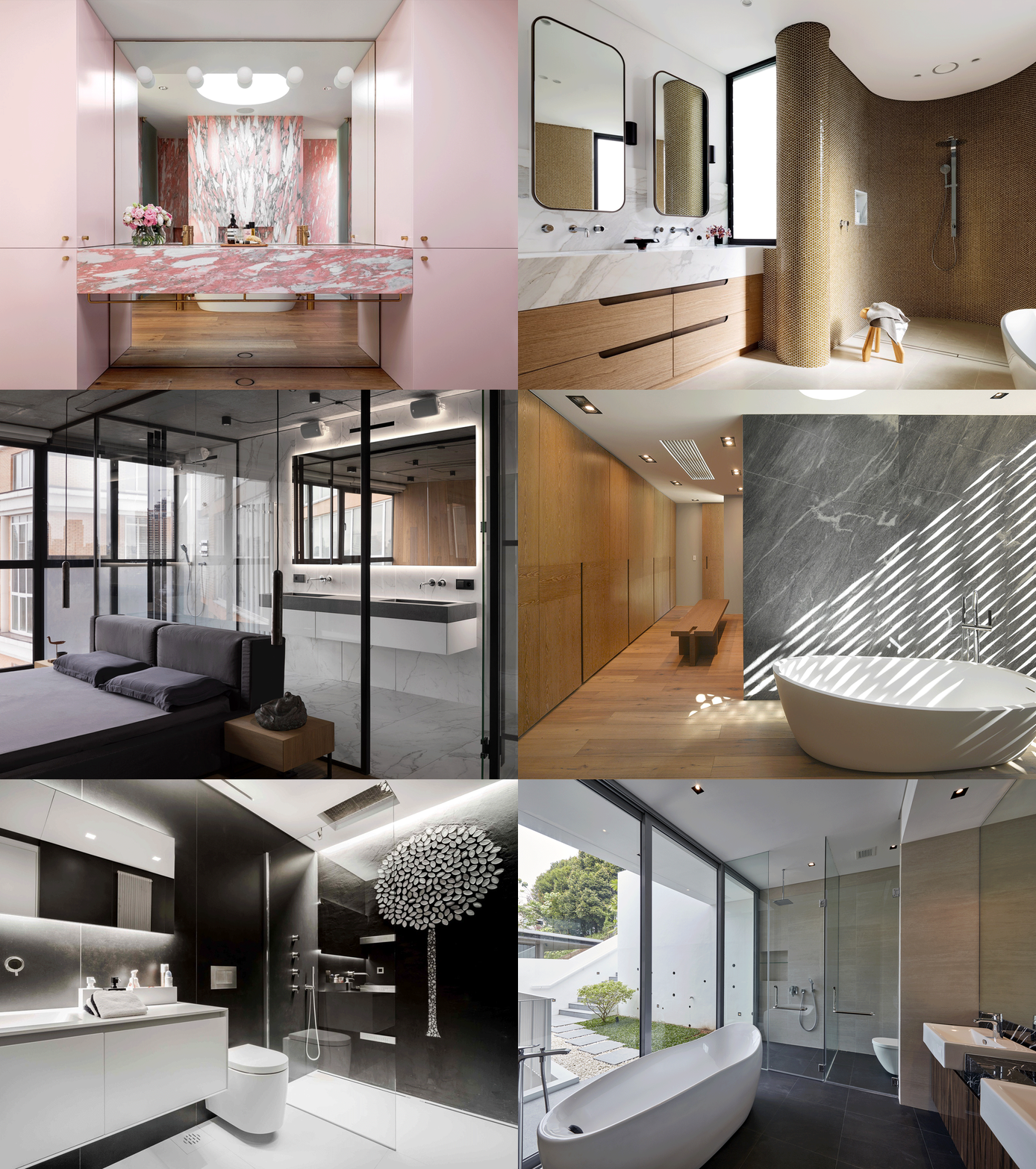
The bathroom is one of the most static and traditional spaces in any residence. However, in recent times, this space has gained an identity that relates directly to the interior and exterior design of the house. As architects, we strive to create a warm, dynamic and attractive space for users.
Today, bathrooms that include new technologies, clean projects, integrating new materials with an emphatic use of color are highlighted. Next, we compiled a selection of 34 toilets that reflect this trend.
In celebration of Paulo Mendes da Rocha's 89th birthday, we take a look at "PMR 29': Twenty-Nine Minutes with Paulo Mendes da Rocha", directed by Carolina Gimenez, Catherine Otondo, João Sodré, José Paulo Gouvêa and Juliana Braga.
The film is conducted through a conversation with Rocha, held in his office in 2010. In presenting some of his main works, the architect makes considerations about the understanding of architecture in its human and essentially cultural dimension.
https://www.archdaily.com/883183/paulo-mendes-da-rocha-and-the-understanding-of-architecture-in-its-human-and-cultural-dimensionEquipe ArchDaily Brasil
As a trailblazer of Brazilian Modernism, Oscar Niemeyer is celebrated for his bold, sinuous forms, and his use of the “the liberated, sensual curve.” Paul Goldberger described it best when he wrote that “Niemeyer didn’t compromise modernism’s utopian ideals, but when filtered through his sensibility, the stern, unforgiving rigor of so much European modernism became as smooth as Brazilian jazz.”
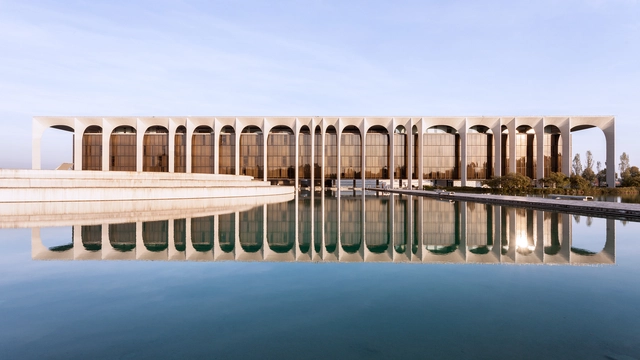
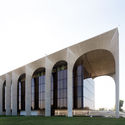
When Georgio Mondadori, chairman of the Italian publishing house Mondadori, commissioned Niemeyer to design the company’s new headquarters in 1968, he wanted the building to look like the Itamaraty Palace (also known as Palace of the Arches) in Brasília. Niemeyer agreed, but given his playful spirit, he deliberately deviated from the earlier design and proceeded to build what he would later identify as his favorite of the projects he completed in Europe. Read on to see a striking set of sixteen photographs of the Mondadori building by Milan-based photographer and visual artist Karina Castro, who was commissioned by Mondadori to capture their headquarters over 40 years after the building's completion.
“Beauty,” as Umberto Eco tells it, “has never been absolute and immutable but has taken on different aspects depending on the historical period and the country.” So how is beauty defined today in our increasingly globalized world? Perhaps a more interesting question to ask is whether arriving at such a conclusion remains relevant to our society.
The complications of war and violence demanded a bold piece of architecture to provoke the public's understanding of the impact it had on Germany. Daniel Libeskind chooses to engage with such events in his extension to Dresden's Military History Museum, by crashing a huge steel and concrete structure through the neoclassical facade, tearing apart the symmetry of the original building. Photographer Alexandra Timpau has captured the sharp edges and harsh angles of the museum's extension that convey the pain and the stark reality of war Libeskind and the museum refer to.
The main objective of the BambooU build and design course is to promote bamboo as a green building material, and to provide tools to architects, designers, builders, engineers, and carpenters from all over the world to value this material and increase its use.
The 2017 version of the course invited its participants to be part of a basic carpentry workshop, in which Indonesian artisans—led by I Ketut Mokoh Sumerta—taught them to build the base of a simple structure in Bamboo, without using other materials and by experimenting with the cutting and joining of different pieces.
See the process of this construction below.
https://www.archdaily.com/883566/learning-basic-bamboo-joinery-with-indonesian-carpentersAD Editorial Team
While the amount of information about architect salaries in specific countries and cities is abundant, there are many discrepancies between different sourced when it comes to country-to-country comparisons. Having a global overview of architect salaries is also tricky to get because of the many variables that go into the equation. You need to take into consideration the position, experience, size of firm, location, not to mention the relationship between earnings and living costs and various tax, insurance and legal differences among different countries.
https://www.archdaily.com/883722/which-countries-pay-the-highest-salaries-for-architectsLidija Grozdanic for Archipreneur.com
This short essay was written by Elizabeth Darling and Lynne Walker, the curators of AA XX 100– a multi-media project celebrating the centenary of women in London's Architectural Association (1917-2017).
Established in 2013, the AA XX 100 project was initiated to tell the story of women at the AA, with the aim of commemorating the centenary (this year) of their admission to the school with an exhibition, book, and international conference. When the project began we didn't know the names of the first students but, four years on, we do, and in telling their story—and that of the generations of women who followed them—we see that their history is at once a history of the AA and architectural education, as well as a history of British and world architecture across the 20th and 21st Centuries.
https://www.archdaily.com/883572/paving-the-way-celebrating-a-centenary-of-women-at-londons-architectural-associationArchitectural Association (AA)
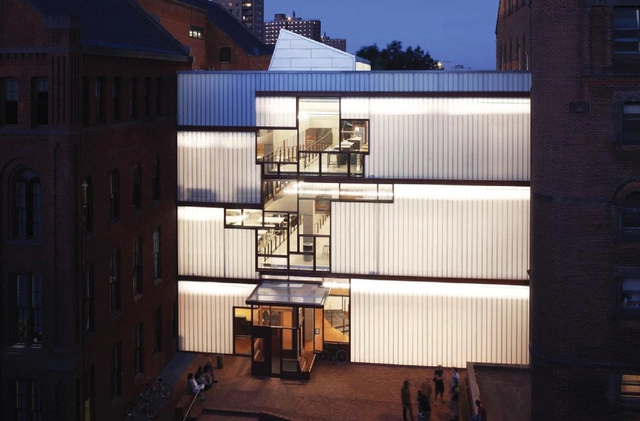
Pratt Institute School of Architecture - Designed by Steven Holl Architects
Since 1887, Pratt Institute has been at the forefront of creative activity in Brooklyn. As part of a leading design institute, the Graduate Architecture and Urban Design (GAUD) is committed to balancing knowledge with understanding. The curriculum is oriented towards integrative learning methodologies, immersing students in a combination of coursework in Design, Technology, Media, and History-Theory, before deepening their study with Directed Research-based Advanced Studios and Electives.
In a hilarious TED talk by world-famous blogger Tim Urban, the procrastinating brain is explained using three squiggly characters: Rational Decision Maker, Instant Gratification Monkey, and Panic Monster. For most of us who procrastinate without fail, the Monkey dominates while the Decision Maker suffers. Panic Monster enters the moment a deadline looms dangerously close—and that’s when all the actual work is done, amid much grumbling, self-loathing and lofty promises of never procrastinating again. But of course, we fail to keep our promises and the wheel keeps turning!
While the internet is full of lists and guides on how to stop procrastinating, for quite a lot of people, those somehow just don’t help at all. And while deadlines, as Urban points out, work for some in terms of getting the work done sooner or later, “long-term procrastination” affects those who must set their own deadlines—think business owners, PhD students, or freelancers. So, how do you get yourself to stop? You don’t! What you need to master is John Perry’s concept of “structured procrastination”—the same concept that Piers Steel earlier explained as “productive procrastination.” Read on for some advice gleaned from pro-procrastination literature.
https://www.archdaily.com/883297/how-to-use-structured-procrastination-to-get-the-best-out-of-your-bad-habitsZoya Gul Hasan
What better way to demonstrate America’s diverse architectural styles than through the country’s most infamous family — The Simpsons? HomeAdvisor has us covered by re-imagining one of TV's most recognizable family homes.
The Simpson family residence is instantly familiar to all, yet their dwelling could have been completely different if they’d embraced one of these popular housing styles.
Christian Weber, a 20-plus year veteran of the Burning Man festival has learned a few tricks on the Playa. Shelter from the harsh Black Rock Desert winds, heat, dust and cold nights are attributes of an experienced camp. “Every year we unload our camp out of the container and use our container as our kitchen. It literally has fold-down tables [and] air conditioning… and when we’re all done, we throw it back in the container and it’s ready to go for next year.”
In this essay British architect and academic Dr. Timothy Brittain-Catlin presents the work of Space Popular, an emerging practice exploring the meaning of and methods behind deploying virtual reality techniques in the architectural design process.
Architectural practice, especially in the UK, is moving fast into a realm where history plays as much a part as medium. But the ways in which architects work have been transformed entirely from those of the past, generating a fundamental conflict: how in practice does design through virtual reality use history? In the earliest days of fly-throughs we all realised that we could show our work to clients in a way that even the least plan-literate could understand. We could develop details three-dimensionally and from different angles, even representing different times of day. But what next? How do we engage historical knowledge and experience of buildings?
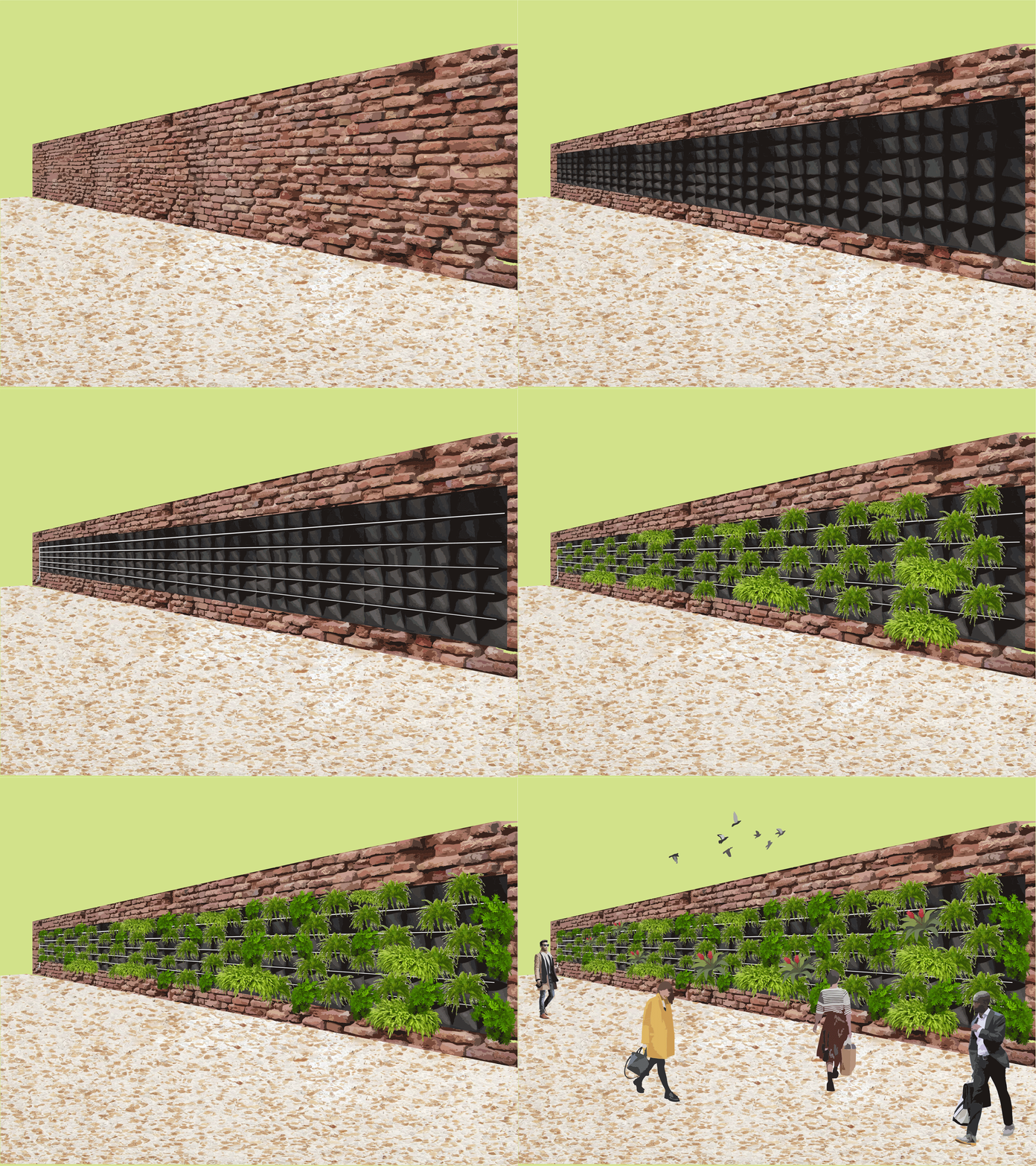
About thirty years ago, French landscape architect Patrick Blanc became a pioneer in the implementation of vertical gardens in Paris, and later in other cities around the world. Through the creation of vertical structures capable nourishing plant species, these systems allow species to grow on the facades of buildings, considerably reducing a structure's internal temperature and allowing the expansion of green areas to new (vertical) territories within the city.
Blanc's creation was part of a series of developments in understanding what nature adds to the city, recognizing the value of green spaces and their contribution to social, environmental and urban policies.
New technological developments in construction have given architects great freedom when designing. Innovations in construction materials and their properties allow for the creation of increasingly original and surprising facades. The buildings constructed as a result can even inspire people to travel thousands of kilometers just to see these masterpieces. This week, we present 15 of most ground-breaking facades through photos by prominent photographers such as Paul Ott, Peter Bennetts and Laurian Ghinitoiu.
Videos
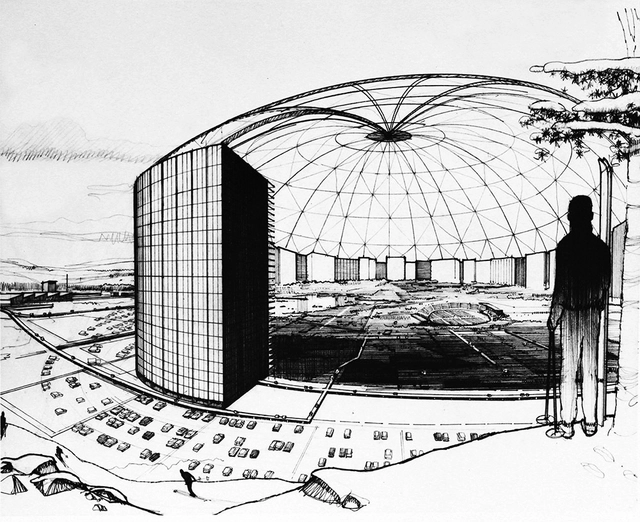
Conceptual drawing of MXC’s primary domed enclosure, proposed to be a mile wide in early discussions, but eventually scaled back. Image Courtesy of The Experimental City Documentary
The Minnesota Experimental City (MXC)—a utopian plan for the city of the future that was decades ahead of its time, and yet is surprisingly little-known—was the brainchild of the urban planner and technocrat Athelstan Spilhaus. Spilhaus was a man who saw science as the solution to the problems of the world, and became a public figure presenting his ideas of utopia in everyday life through his comic strip "Our New Age." During the mid-1960s, he conceived an ambitious plan to condense his ideas into a prototype for future cities that would be both noiseless and fumeless, accommodating America's growing population and their by-products.
A new documentary,The Experimental City, explores the development, and ultimately, failure of the MXC's vision for future settlements. Using retro film clips, it takes us back in time to a period where Spilhaus' predictions of computers that can fit into your home and remote banking appeared more of a fantasy than reality. The film is directed by Chad Freidrichs (known also for his 2011 film The Pruitt-Igoe Myth) and was premiered at the Chicago Film Festival, in conjunction with the Chicago Architecture Biennial. Several further screenings will be taking place across the country, including at DOC NYC on November 16th.


.jpg?1511265934&format=webp&width=640&height=580)
_%C2%A9_Louvre_Abu_Dhabi_-_Photography_Marc_Domage.jpg?1511018413 "© Marc Domage")
.jpg?1511018528 "© Roland Halbe")

.jpg?1511265934)












_(2).jpg?1510571993&format=webp&width=640&height=580)


.jpg?1510247252)