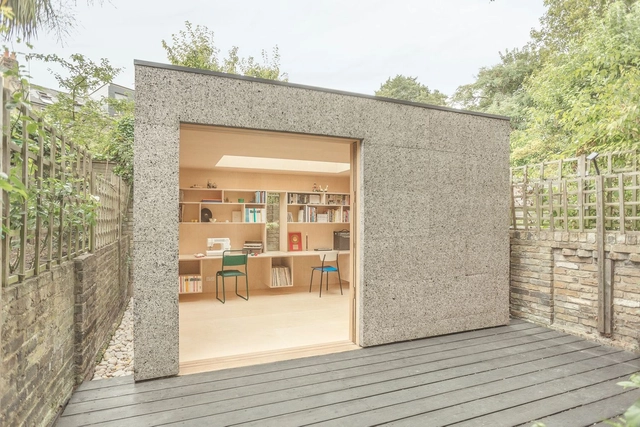
Unbeknown to many, cork is something of a dark horse when it comes to the environment—a model of a sustainable industry and building material. By its very nature, cork is both recyclable and renewable, as it is the only tree that regenerates its bark, while harvesting that bark causes the tree no harm.
Cork has been sneaking its way into our buildings for many years now; due to its hard-wearing properties it can be found, for example, in the checkerboard flooring of the Library of Congress. Even NASA has been wise to cork's light weight and insulation capacity, using it as an insulator for their space shuttles.
The architecture and manufacturing industries are about to undergo a radical shift in how they make things. In the near future, designers and engineers will be able to create products, buildings, and cities in real time, in virtual reality (VR).
In predicting VR’s dramatic evolution, an analogy to early cinematic history is apt: As one legend has it, when the motion-picture camera first came out, actors were filmed on a set, in front of fake trees. Then someone said, “Why don’t you just put the camera in the forest?” Simple, but game-changing. VR technology is already available, and it’s only a matter of time before it is used to its full potential.
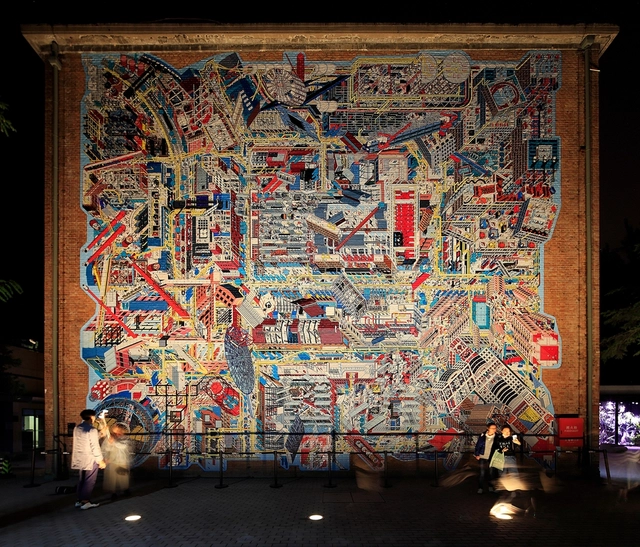
Established by Hyundai Group, Hyundai Motorstudio Beijing was opened in the 798 Art Zone in Beijing on November 1, 2017. The large-scale panoramic mural 798 commissioned by Hyundai and created by Drawing Architecture Studio was officially released at the same time.
Around 14.5 meters in width and 12.7 meters in height, the mural takes the 798 Art Zone as the representative to depict the status of today’s city in the context of information overload. The drawing is a narrative map: most architectural renderings in the panorama are based on actual prototypes at 798. The assemblages are shattered, fragmented and free-floating. Enormous power comes from the inherent vitality and energy of the city. Its shell is cracked and broken to reveal the exciting maze of life inside. 798 is an imaginary representation of the real world, a reconstruction of countless fragments of physical space and time, that constantly collide, align and rearrange.
https://www.archdaily.com/885157/798-panoramic-mural-by-drawing-architecture-studio罗靖琳 - Jinglin Luo
“The reason that highly designed contemporary architecture almost exclusively manifests in iconic structures is that it’s the only way that investing in design and aesthetic quality can turn a profit.” This is the central assertion of “The Politics of Architecture Are Not a Matter of Taste,” published in Common Edge a couple of weeks ago (and republished as “Hate Contemporary Architecture? Blame Economics, Not Architects” on ArchDaily). Marianela D’Aprile’s impassioned essay takes issue with a Current Affairs piece from October, “Why You Hate Contemporary Architecture,” in which the authors, staff writers Brianna Rennix and Nathan J. Robinson, hate on the current state of the design industry.
Both articles confuse me. “Good buildings recede seamlessly into their surroundings,” Rennix and Robinson claim, but the buildings they praise—figural structures such as London’s St. Paul’s Cathedral and the Moorish palace of The Alhambra—stand out prominently. D’Aprile criticizes the authors’ imprecise use of terminology, but, as the opening passage above shows, her own language can be vague, relying on words such as iconic, ubiquitous shorthand among architects. (If it’s intended to convey “distinctive,” the irony is that most buildings described with that term have a similar sculptural character, so in our mind’s eye they all sort of blend together—the opposite of distinction.) She defines architecture as “buildings that have been designed for construction in the physical world.” Aren’t all buildings constructed “in the physical world”? And are all unrealized designs necessarily relegated to something other than architecture?
Sometimes all your project needs is that little push or three. Travelling on public transport with a model you have spent hours painstakingly fussing over is one of the more stressful situations for an architecture student, especially when you must present it to your tutor. The violence that occurs on a busy bus inevitably predicts the end of your creation, your only hope left is to photoshop what remains.
However, the tutor’s response can be somewhat unpredictable (much like the demise of your model) and you can find yourself in a rare situation where they actually like it. Who knows what is going through their heads, but at the end of the day, they are the ones marking it so I wouldn’t argue.
The Leewardists have perfectly illustrated in their comic the pain that consumes us as we watch our most pride possession deteriorate in front of our eyes.
Molly Butcher, SVA MA Design Research class of 2015, researched the marketing of Martian and extraterrestrial settlements. Toroidal Colony, Cutaway view, exposing the interior. Art work: Rick Guidice. Image NASA Ames Research Center
Do you have a research project you’d like to take to the next level? Are you challenged by communicating your ideas in multiple formats? The rigorous one-year MA in Design Research, Writing & Criticism offers a high-impact, targeted program, well suited to the circumstances of established professionals, in addition to graduates wishing to continue their studies at an advanced level.
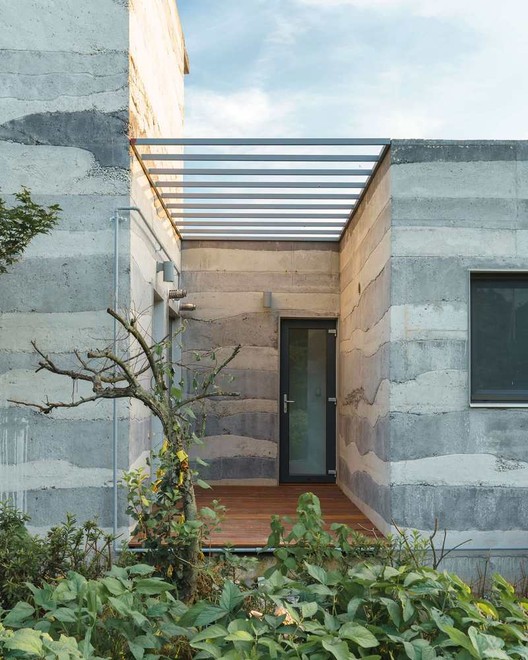
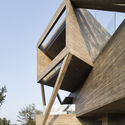
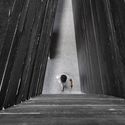
Of all construction materials, concrete is perhaps the one that allows the greatest diversity of finishes and textures. The mixture of its ingredients, the shape and texture of the formwork, and the pigmentation of the materials all offer the opportunity to achieve an interesting design. This week we've prepared a selection of 10 inspiring images of innovative concrete, taken by renowned photographers such as Gonzalo Viramonte, Song Yousub, and Ana Cecilia Garza Villarreal.
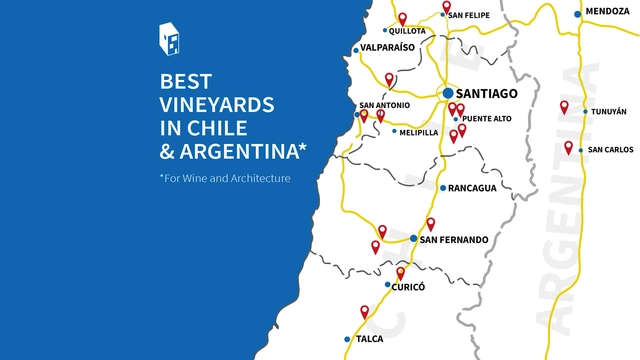
Each year millions of wine enthusiasts travel the globe in search of memorable tasting experiences. And architecture-loving Oenophiles (wine aficionados) are likely to seek vineyards that not only produce outstanding libations, but also those with impressive architecture. With world-famous wines and evergrowing international renown, the vineyards of South America accommodate thousands of wine tourists each year. Chile and Argentina currently sit in the top 10 wine-exporting countries; Chile exported $1.9 billion worth of wine in 2016 and Argentina exported $816.8 million in the same year.
Separated by the Andes, the valleys surrounding Argentina's Mendoza and Chile's central valley (including Elqui, Limarí, Aconcagua, Maipo, Casablanca, Colchagua, Cachapoal, Maule and Curicó valleys) attract a high number of enotourists. The wineries and vineyards featured below have moved away from the traditional image of the historic country house in both aesthetic terms and (sometimes) in the use of materials in the winemaking process. These properties also exist in natural harmony with the surrounding landscape to make the most of sunlight, air circulation and topography for the construction of wine cellars, hotels, tasting rooms, lookouts and viewing points, and research centers. The new and vibrant architectural designs serve as innovation inspiration in their production of the wines as well.
https://www.archdaily.com/881430/best-vineyards-in-chile-and-argentina-for-wine-and-architectureArchDaily Team
As part of their "Daily 360," The New York Times has released a series of immersive videos exploring the New Seven Wonders of the World, offering viewers the experience of visiting the architectural marvels themselves without having to fly 5000 miles. Back in 2007, the seven monuments were announced after a seven-year poll that included votes by 100 million people who recognized the structural and innovative significance of these masterpieces across the planet.
The Daily 360 is a collection of videos by The New York Times; rather than a 2d moving image, they give a real understanding of space, transporting you to the place. Over the last year, their videos have included the Guggenheim, Art Deco masterpieces and memorial architecture from different cultures. Experience the New Seven Wonders of the World for yourself below:
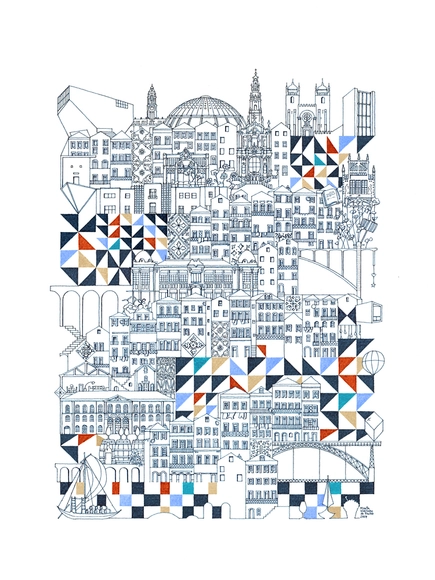
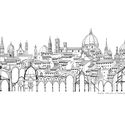
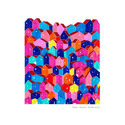
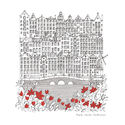
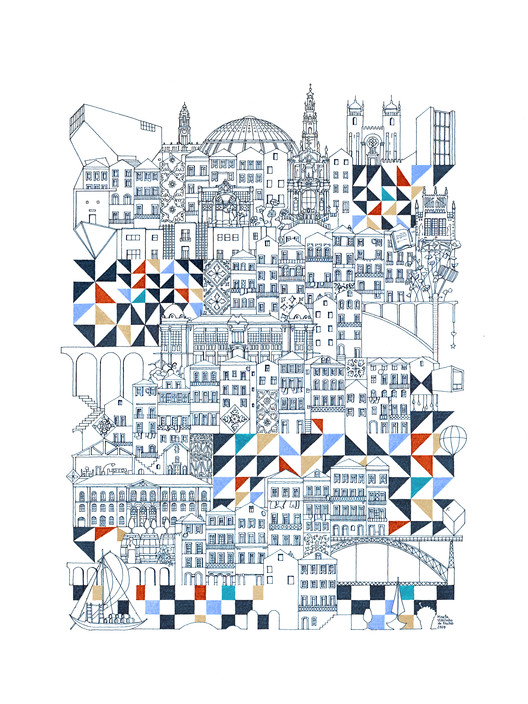
Architect and illustrator, Marta Vilarinho de Freitas has yet again enchanted us with her intricate drawings of cities in thin-line-pen on paper. The Portuguese architect has been exercising her passion in drawing through a series of drawings entitled, Cities and Memory - the Architecture and the City.
Fascinated by cities, Marta’s illustrations express her connection with architecture while still capturing the romantic and qualitative aspects of each city, its patterns, colors, atmosphere, and light.
Marta Vilarinho de Freitas combines fantasy with detailed accuracy in her compositions of stacked building facades, roof pitches, plans and sections along with elements distinct to the city depicted such as Dutch windmills, boats, books, and instruments.The process of creating these drawings is cyclical in that they continue to inform Marta of the spirit of each city as she draws each art piece.
The name Niemeyer stands for one thing above all: curves. Whether undulating lines, soaring domes, or swooping pillars that repeat in perfect rhythm, his designs reject “the straight line, hard and inflexible, created by man” in favor of “the curved Universe of Einstein,” as he wrote in his 2000 memoir The Curves of Time. Indeed, a late interview with him was headlined “the architect who eradicated the straight line.”
But what happens to an artist who becomes wedded to a certain philosophy of form and pursues it exclusively for decades; does it become restrictive? I wonder whether Niemeyer ever questioned his monogamous dedication to the curve. Perhaps a certain restlessness drove the uncharacteristically sharp-edged plan of the Tel Aviv house he designed for hotel magnate Yekutiel Federmann—or perhaps it reflects the political and personal upheaval of the moment.
The four hurricanes that slammed into heavily populated areas from the Caribbean to Texas this summer are inching toward a half-trillion-dollar price tag in damages—to say nothing of the work and wages missed by shutting down entire cities. Buildings are the most visible marker of a place’s resilience after a disaster strikes. Surveying the catastrophic damage forces a difficult question: How can it be rebuilt better?
While many architects have long clung to the old “form follows function” adage, form follows brain function might be the motto of today’s advertisers and automakers, who increasingly use high-tech tools to understand hidden human behaviors, and then design their products to meet them (without ever asking our permission!)
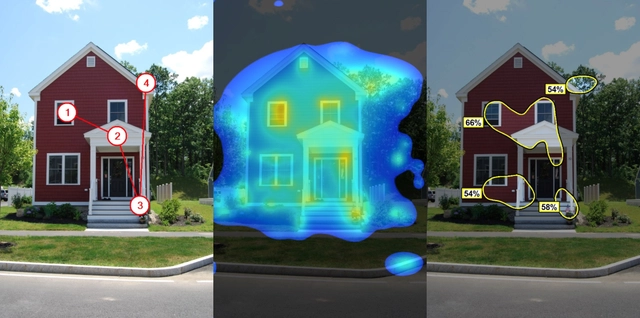
Biometric tools like an EEG (electroencephalogram) which measures brain waves; facial expression analysis software that follows our changing expressions; and eye-tracking, which allows us to record “unconscious” eye movements, are ubiquitous in all kinds of advertising and product development today—beyond the psychology or medical departments where you might expect to see them. These days you’ll also find them installed at the behavioral research and user experience labs in business schools such as American University in DC and Worcester Polytechnic Institute (WPI) in Massachusetts.
What happens when you apply a biometric measure like eye-tracking to architecture? More than we expected...
https://www.archdaily.com/884945/heres-what-you-can-learn-about-architecture-from-tracking-peoples-eye-movementsAnn Sussman & Janice M. Ward
In a previous article, 5 Reasons Why You Need Multiple Architecture Portfolios, I discussed the importance of creating a targeted employment application. This process begins with selecting the office(s) where you would like to work.
So with the thousands of architecture firms out there, how do you know where to apply? I am sure you can come up with a few companies off the top of your head or perhaps you have a specific firm in mind.
Regardless if you are targeting one employer or are simply looking for a “new job” these strategies will help you create your ideal architecture firm list.
CODE – Competitions for Designers- launches “Logo Against Alzheimer’s”, a design competition aiming to create a logo for the Italian Association “Affetti da” that is going to support the families of people suffering from Alzheimer’s. The initiative offers a cash prize of € 10.000 to winner projects that will be selected by a renowned jury made of Milo Manara, Milton Glaser, Federico Babina, Margherita Urbani, Pietro Corraini, Mario Trimarchi (AIAP), Roberta Pantieri (Affetti da).
University of Miami School of Architecture faculty, students, and leadership enjoyed an unforgettable night at AIA Miami’s Design Awards Gala, taking home nine awards.
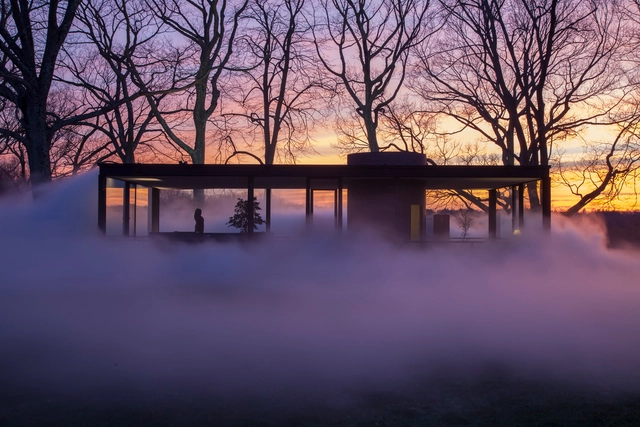
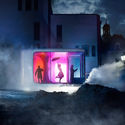
Taking photographs in fog can be an experience as chaotic as it is enchanting. Although working with this phenomenon can be risky, since fog dramatically modifies the available light and the atmosphere of a scene, if you know how to take advantage of it, the result can lead to perfect photographs. Below is a selection of 10 images from prominent photographers such as Kevin Scott, Richard Barnes, and Koichi Torimura.
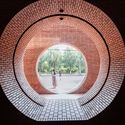
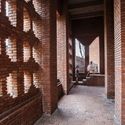
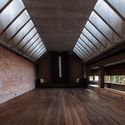
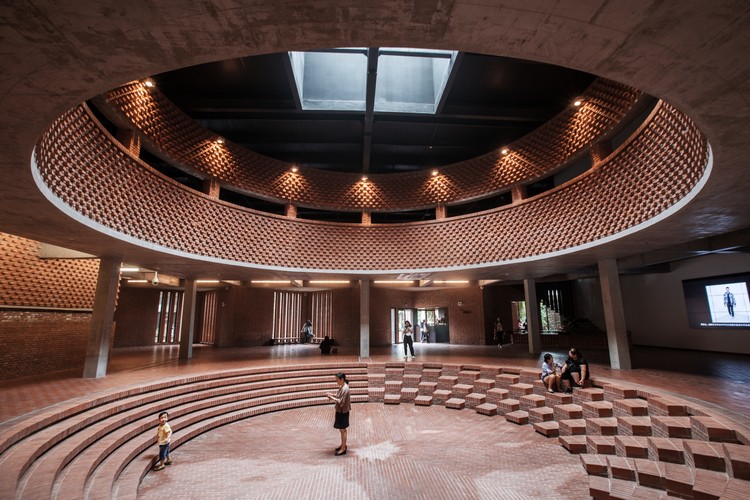
Founded by collectors Yan Shijie and Cao Mei, the Red Brick Art Museum opened in May 2014 in the Chaoyang District to showcase Chinese and world art, since then, it has become a haven for photographers. In this photo series, He Lian focuses his lens on the museum and captures the sculptural beauty of the punctured brick walls.
Architect Dong Yugen has created a structure that is a piece of art in itself; the perforations, skylights and narrow windows manipulate light into the spaces, casting dramatic shadows and offering short glimpses outside. The grey tones implemented in the entrance to greet visitors softens the transition between the inside and outside, whilst guiding you through the building into the main hall featuring a sunken circle that can also be used as an auditorium.