Videos
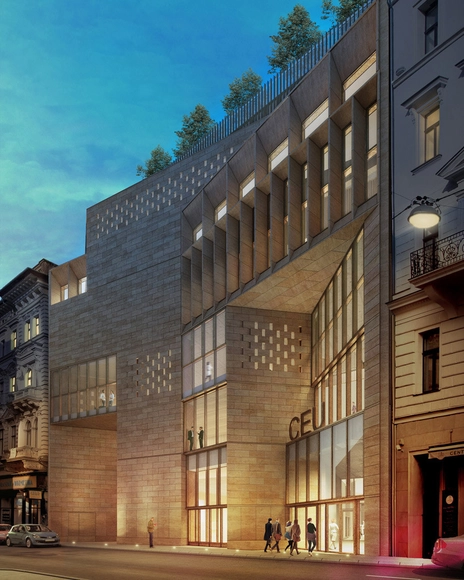
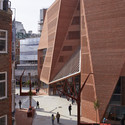
View from street. Image Courtesy of O'Donnell + Tuomey / Central European University
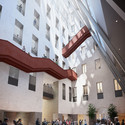
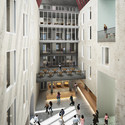
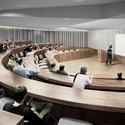
Work has begun on O'Donnell + Tuomey's first project in Hungary. The new collection of buildings and restoration projects for the Central European University in Budapest sits within existing courtyards in a dense area of the city. Bringing a total of 35,000m² of new space to the inner-city campus, the project consists of a new library spread across five floors, an auditorium, multiple public spaces, teaching and learning facilities, study rooms, and a café.
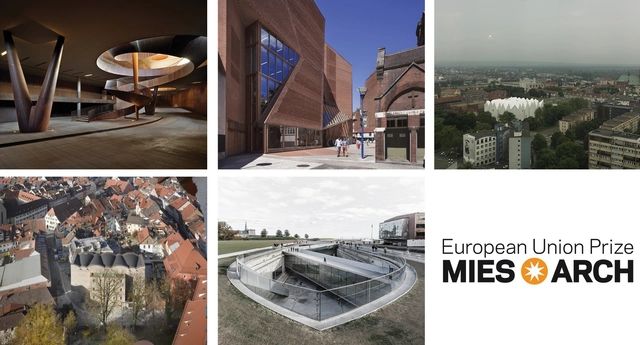
Five projects have been selected as finalists of the 2015 EU Prize for Contemporary Architecture- Mies van der Rohe Award. The finalists were selected from a shortlist of 40 projects, and over the next couple of months the jury members will visit each of the finalist projects to evaluate the buildings firsthand and gather information from the people who use them. On May 7, the architects will present their projects to the jury. The winner will be announced the following day at a ceremony at Mies van der Rohe’s Barcelona Pavilion.
With floor areas clocking in at as little as 260 square feet, My Micro NY housing units by nARCHITECTS are the latest singles-oriented housing option to enter the New York rental market. The modular units will be fabricated at the Brooklyn Navy Yard for stacking in Kips Bay this spring, and are projected to welcome their first inhabitants by the end of 2015.
Current New York city zoning and density rules set a minimum apartment floor area of 400 square feet, yet this regulation was waived for My Micro NY in the interests of creating more affordable housing. An inflated rental market has long posed issues for those seeking housing in the city, particularly singles and students with tight budgets. My Micro NY will create 9 stories and 55 individual apartments, whose features include 9 and 10 foot ceiling heights, Juliette balconies, and concealed storage space.
When BIG's proposal for Amager Bakke, a waste-to-energy plant in Copenhagen, was unveiled in 2011, there was a lot for skeptics to pick apart. Is it really possible to run a publicly accessible ski slope on the roof of an industrial building? Would they really be able to make it blow giant smoke (or rather, steam) rings? The whole idea seemed rather too good to be true. The project's ground breaking in 2013 may have silenced some critics, but the video above should convince the rest of the design's feasibility.
All 74 “wild designs” being considered to become London’s next “landmark” have been released to the public. As part of a two-stage competition, architects worldwide have submitted ideas for a new £40 million pedestrian and cycle bridge that will connect London’s Nine Elms and Pimlico communities over the River Thames.
The jury, chaired by Graham Stirk of Rogers Stirk Harbour, will choose four schemes to move onto the competition’s second and final round in March. These designs will be then shortlisted and further developed with input by the community and client before a winner is announced in July.
See a selection of the considered bridge designs, after the break.
Lateral Office'sArctic Adaptations exhibition, which was recognised with a Special Mention at the 2014 Venice Biennale, will travel make its debut in Canada at the Winnipeg Art Gallery this week before heading to Whitehouse, Vancouver, and Calgary. The exhibition "surveys a century of Arctic architecture, an urbanising present, and a projective near future of adaptive architecture in Nunavut" though interactive models, photography, and topographical maps of the twenty five communities of the area, as well as Inuit carvers’ scale models of some of the most recognised buildings in the territory. In addition, it proposes a future of adaptive and responsive architecture for Canada's northern territories.
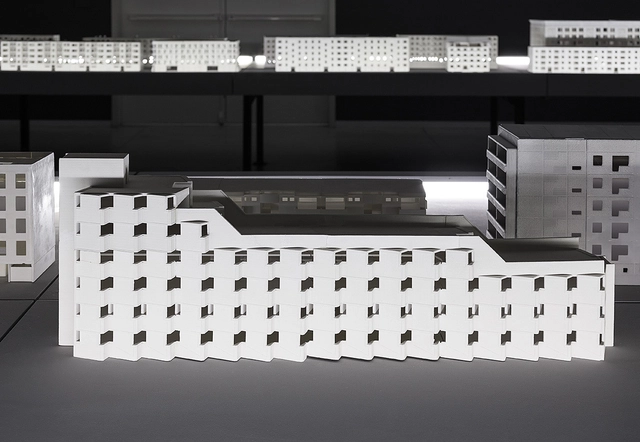
Between 1945 and 1981 around 170 million prefabricated (prefab) residential units were constructed worldwide. Now, as part of a study undertaken by Pedro Alonso and Hugo Palmarola of the Pontificia Universidad Católica de Chile between 2012 and 2014, an exhibition at the Tel Aviv Museum of Art features 28 large concrete panel systems from between 1931 and 1981.In so doing, it explores a transnational circulation of these objects of construction, "weaving them into a historical collage of ambitions and short-lived enthusiasm for utopian dreams."
This show, curated by Meira Yagid-Haimovici, is an attempt to reveal "how architecture and urbanism was charged with historical, social, and political narratives, and how the modernist vision promoted the fusion of aesthetics and politics." The models, which are being exhibited as part of the Production Routes exhibition, seek to highlight the richness embodied in 'generic' architecture through the lens of prefab construction methods.
Update: The five finalists for the 2015 Mies van der Rohe Award will be announced on February 25 at 12 UTC. 40 projects from 17 European countries have been shortlisted for the 2015 European Union Prize for Contemporary Architecture – Mies van der Rohe Award. Chosen from the 420 original nominees, five of the shortlisted projects will be chosen for the next round of selection, to be announced at the end of February in London. These selected architects will then present their projects before a committee on May 7, who will select one recipient of the highly esteemed international design award, as well as one recipient of the Emerging Architect Prize. The winners will be announced the following day at the Mies van der Rohe Pavilion in Barcelona.
Architects interested in proposing ideas for a new public space in Kristall City, a former territory of legendary Moscow distillery, have until Tuesday (February 24) to submit applications. Organized by KRAYS development and the CENTER Agency of Strategic Development, the competition is calling on all architects and designers to consider three sites to host the cities premier public space. The newly developed area aims to “share the future look of the quarter” and establish a “new type of public space made out of form industrial city territories. Learn more and apply, here.
The Boston Society of Architects (BSA) has announced the 2014 winners of its Design Awards. The BSA Design Awards are allocated annually at the BSA Design Awards Gala, and concentrate on design excellence throughout New England. Each award recognizes projects that excel both aesthetically and technically, making a positive impact in the field of architecture.
Read on after the break to see the honor award winners in each category.
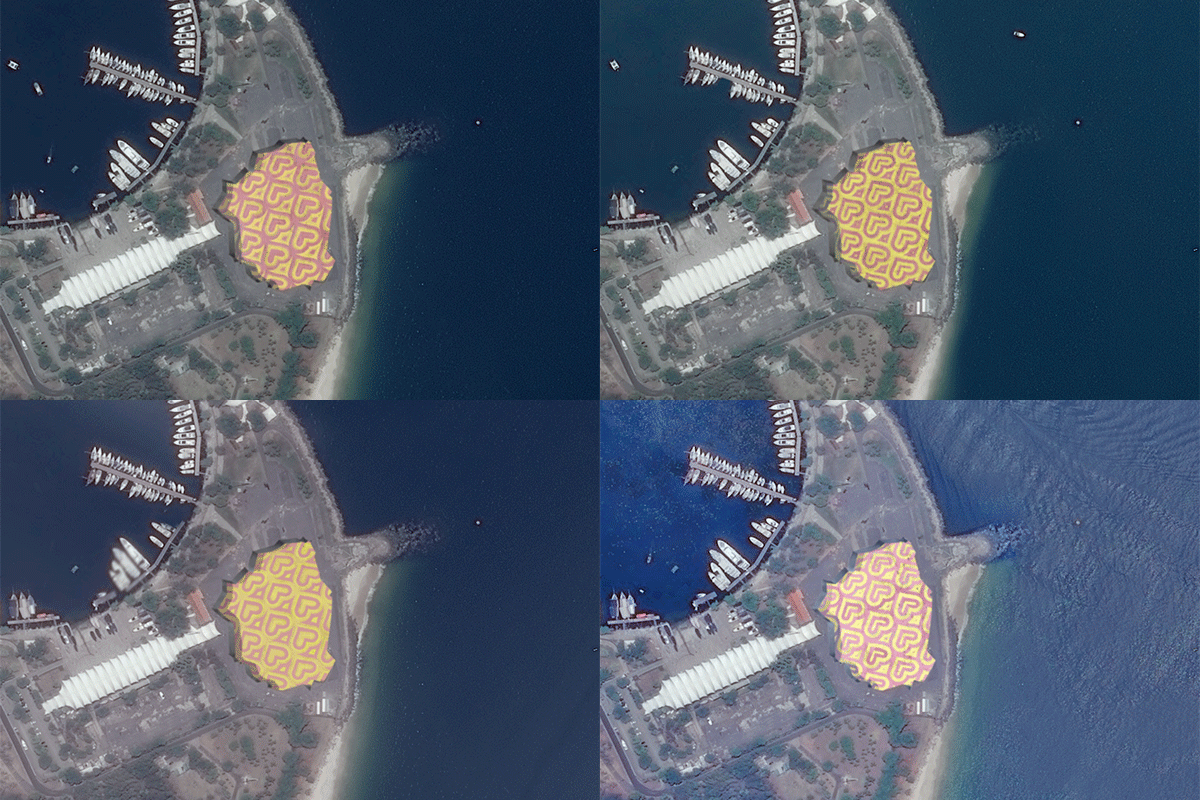
The Flamengo landfill in Rio de Janeiro was recently host the world's largest urban art GIF. Created by anonymous artist INSA, the work consisted of a huge floor painting that underwent minor changes recorded by the satellite 430 miles above the earth.
Sponsored by Scotch whiskey brand Ballantine, the painting - 619,000-square-feet of yellow and pink hearts - was produced by a 20-person team over the course of four days. With each new picture, the team altered the illustration so that, by the end of the process, the recorded images created an animated GIF (as seen above).
Daydreaming about a trip to Copenhagen? Now is your chance to go. As part of BIG’s HOT TO COLD exhibition on view at the National Building Museum, Visit Denmark is hosting a sweepstakes for two to see the architectural and cultural sights of Denmark’s capital. All you need to do is watch the video above, find out which seaside museum Bjarke Ingels believes to be one of the world’s greatest (hint: take a look after the break), and enter your answer here (click "Win a trip to Copenhagen!"). Only US residents are eligible.
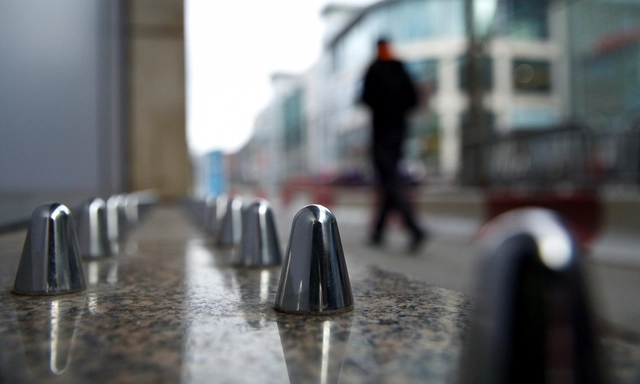
To many, the harsh turns the modern city has taken are not apparent. We see benches and bus stops that masquerade as shelters, but Guardian writer Alex Andreou's sudden plunge into homelessness opened his eyes to the hostile realities of these and other structures. In "Anti-Homeless spikes: 'Sleeping rough opened my eyes to the city's barbed cruelty'," he sheds some light on misconceptions about homelessness and explains the unfortunate trend of designing unlivable architecture to deter those affected.
The award, now in its eighth year, “celebrates design that promotes or delivers change, enables access, extends design practice or captures the spirit of the year.” 76 nominees over six categories have been selected. The jury, chaired by artist Anish Kapoor and includes architect Farshid Moussavi, will choose category winners on May 4. An overall winner will be revealed June 4.
This year the AA Athens Visiting School aims to challenge the phenomenon of perceptual constancy through the design of architectural prototypical families. In line with the basic Gestalt principles, a variety of models of different shapes and sizes will be designed through means of digital computation. Various morphologies will be derived through a bottom-up approach via various coding techniques. To bridge the gap between the digital and physical aspect of the design iterations, AA Athens will make use of digital fabricating machines to produce architectural prototypes and add mechanics to amplify their communicative characteristics. A complete 1:1 scale structure will be constructed, enabling interaction via sight, hearing and touch as a result of a series of initial testing models. These proposals will be formulated through the combination of different design software.
https://www.archdaily.com/600678/aa-visiting-school-athens-symmetry-sentienceSponsored Post
With almost half of the world’s wealth owned by 1% of the population, the spatial and physical effects of this inequality are becoming more pronounced in the world’s cities, and mitigating this polarization of society is an increasingly pressing issue. A new project led by the Royal Danish Academy of Fine Arts, in collaboration with Architects without Borders and Emergency Architecture & Human Rights.DK, is addressing this issue in Chile, with a development project proposal for Santiago’s largest unofficial settlement.
Videos
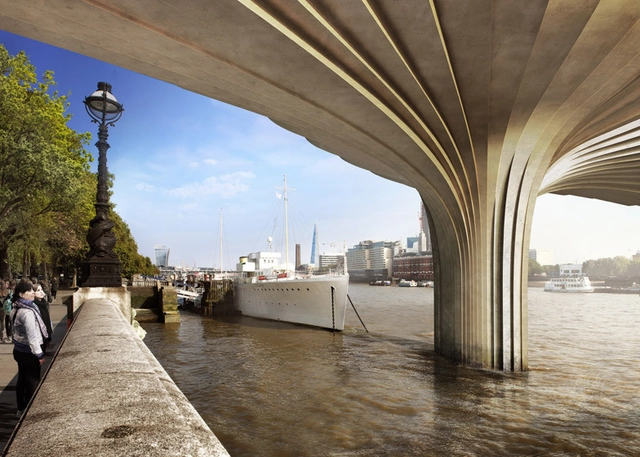
New image showing the copper-nickel (cupronickel) cladding. Image Courtesy of Arup
Arup have released a new image of the proposed copper-nickel alloy cladding that will adorn Heatherwick Studio's Garden Bridge in London. According to a report by the Architects' Journal, the "concrete structure will be coated in 'cupro-nickel', from its feet on the riverbed up to the base of the balustrades on the bridge deck." The copper will be donated from Glencore, a multi-national mining company, forming "a protective skin to the carbon steel structure giving it a maintenance free 120-year life, protecting the bridge from river and environmental corrosion." More than 240 tonnes of the metal alloy, which often finds use in medical equipment and ship propellers, will be used.
Speaking of the public image of the architect, Stephanie Garlock laments that it is often akin to "Ayn Rand's Howard Roark— arrogant, individualistic, and committed to the genius of artistic vision above all." In a feature piece for the March/April edition of Harvard Magazine, Garlock explores the potential for architects to affect wider social change and move "[b]eyond 'Design for Design's Sake'."
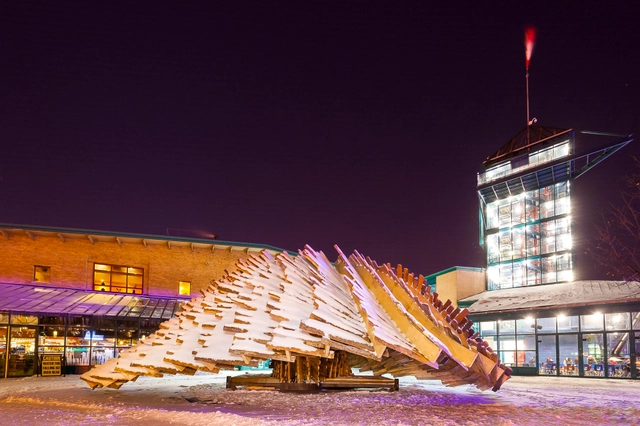
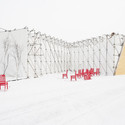
By Invitation: The Hybrid Hut / Rojkind Arquitectos (México D.F.). Image Courtesy of Warming Huts
Each year Winnipeg’s Red River Mutual Rivertrail is transformed by a series of site specific "Warming Huts" that bring life and refuge to what is the world's longest naturally frozen skating trail. The annual tradition’s popularity has grown exponentially, attracting participation from firm’s worldwide. This edition is offering visitors a highly acclaimed pop-up restaurant, a ski-through museum, and an eclectic collection of warm shelters, including a “hybrid” wood hut designed by Mexico’s Rojkind Arquitectos. You can see all eight completed installations, after the break.
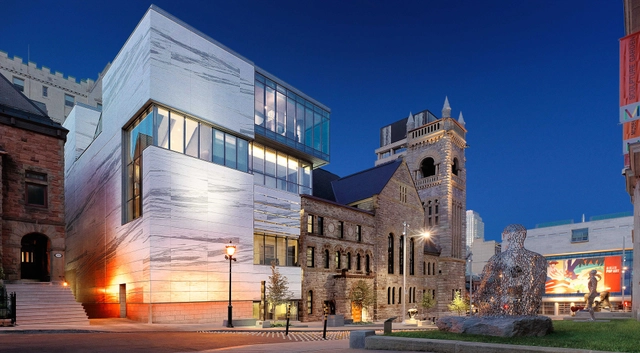
Claire and Marc Bourgie Pavillon of Quebec and Canadian Art at the Montreal Museum of Fine Arts - 2011; Montreal, Canada. ImageMarc Cramer
Montreal-based practice Provencher_Roy has been selected to receive the Royal Architectural Institute of Canada’s (RAIC) 2015 Architectural Firm Award. Chosen for their consistent, high quality work that spans 32 years, the 150-person firm was also praised by the jury for their dedication to mentorship.
“Provencher_Roy was chosen for the breadth and consistently high quality of work over many years,” said the five-member jury. “They have worked with a broad range of clients and project types. The firm is recognized for its collaborative work and the excellence of its working and peer-learning environment.”
This year WAF will be held from November 4-6. The festival features three days of conferences, exhibitions and lectures, during which the awards ceremony will take place. Last year’s theme was “Architects and the City” and featured Rocco Yim and Moshe Safdie as keynote speakers.
Videos
Winning Entry: Exhibition Space. Image Courtesy of UNESCO
UNESCO, in collaboration with the Afghan Ministry of Information and Culture, have announced the winning proposal for the Bamiyan Cultural Centre. An Argentina-based team, lead by Carlos Nahuel Recabarren alongside Manuel Alberto Martínez Catalán and Franco Morero, were selected from 1,070 design entries from 117 countries. Prepatory work on implementing their scheme, entitled Descriptive Memory: The Eternal Presence of Absence, "will start immediately" close to the boundaries of the Bamiyan World Heritage site.
See the winning entry and the four runners-up after the break.
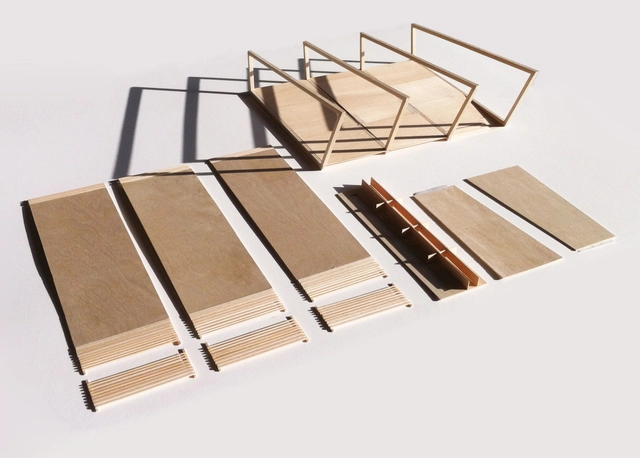
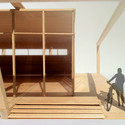
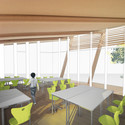
"A Kit of Parts" addresses what Studio Jantzen identifies as the four main shortcomings of mobile classrooms currently on the market: flexibility, sustainability, cost effectiveness, and creative construction. Read more about the project and view selected images after the break.








.jpg?1423515349&format=webp&width=640&height=580)
.jpg?1423515349)