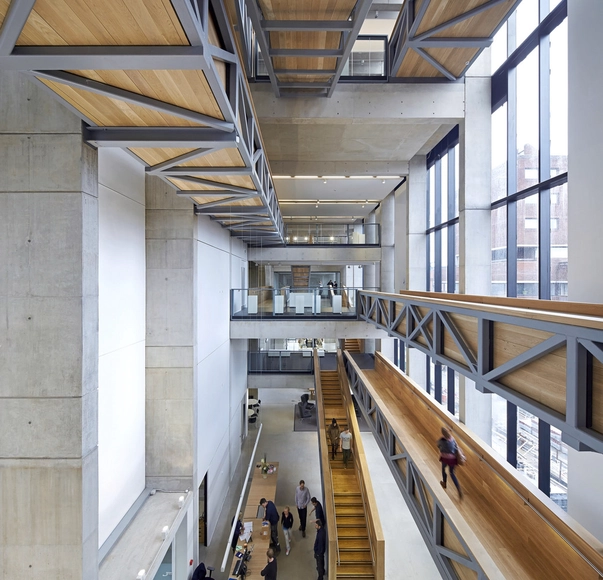
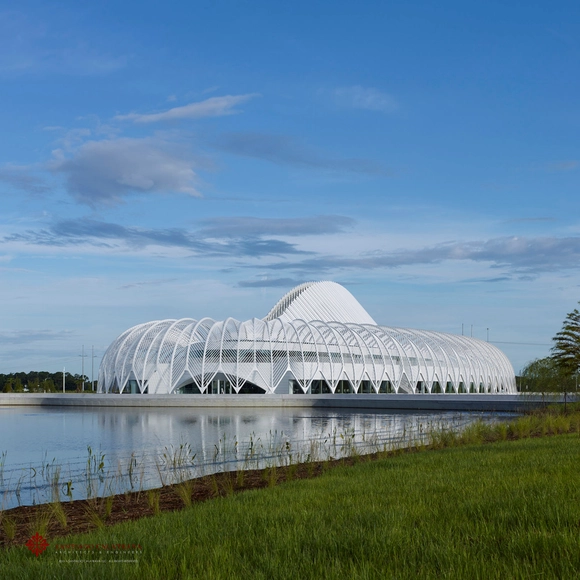
“Educating, particularly young people, is one of the most noble tasks that exist,” saidCalatrava in response to the award. “The Innovation, Science and Technology Building aims to be itself a tool to achieve the highest level of education for young people.
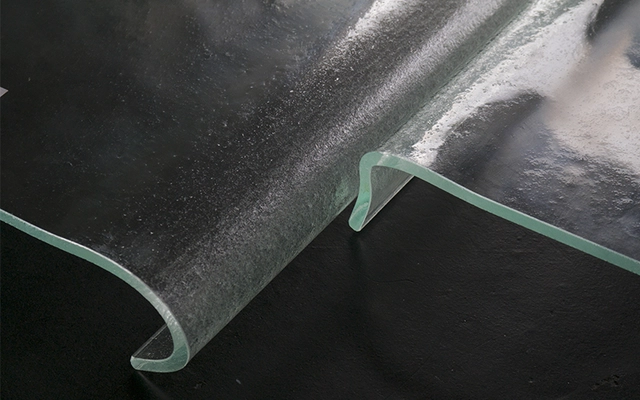
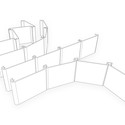
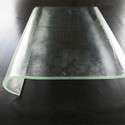
A lot of architects love glass. A lot of architects love curves too. The two can be combined, but in most cases this is a highly bespoke and expensive process, with individual sheets of glass being heated in a kiln over a mold created especially to fit the desired curve. Cheaper options are available though, and one common approach is to use smaller sections of flat glass - often a U-shaped channel section - angled to approximate a curve.
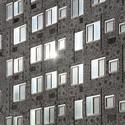
But this strategy also leads to a problem: as the desired curve gets tighter, the gaps between the glass segments get more and more apparent and less efficient as enclosure. To address this problem, German designer Holger Jahns has created "c--c," an update to standard U-shaped channel glass which can be fixed together at any angle and create any curve without gaps appearing between the panels.
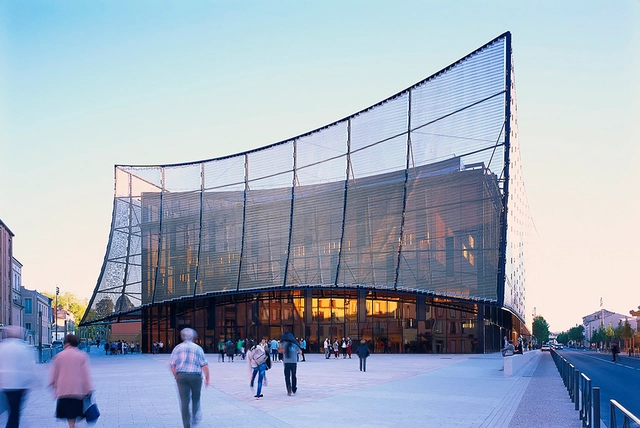
“Architecture should not be closed on itself, with its back to the context," says Perrault. "It should always be in resonance with the environment, whether natural or urban. We architects should always think about our buildings’ place in the urban design, and about the city itself as a whole.”
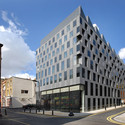
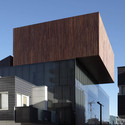
The Australian Institute of Architects’ International Chapter has announced the winners of its 2015 International Architecture Awards, which honors projects by Australian architects abroad.
Out of 26 entries, the jury, chaired by Grant Marani, awarded five projects, and commended four more in the interior, public, residential, and small project architecture categories.
Awarded projects are now also in the running for the 2015 Jørn Utzon Award for International Architecture, to be announced at the National Architecture Awards in November.
Read on for the full list of awards and commendations, after the break.
The Jewish Museum in Berlin opened its doors 14 years ago today. Inspired by a lecture given by Daniel Libeskind, Berlin-based photographer Laurian Ghinitoiu captured the building and its dramatic plays of light and texture in a series of 20 photographs.
https://www.archdaily.com/773361/daniel-libeskinds-jewish-museum-berlin-photographed-by-laurian-ghinitoiuAD Editorial Team
Introducing: The Apple PencilRead More: http://bzfd.it/1Fy4S1O
Posted by BuzzFeed Tech on Wednesday, September 9, 2015
Announced at their fall event today, Apple has unveiled “the biggest news for the iPad since the iPad”: the iPad Pro, the company’s largest ever tablet device with a 12.9” screen. As ever, technology websites were alight with live updates about the new iPad, sharing everything from the device specifications and capabilities to the price.
But what does the iPad Pro mean for architects? Here’s 4 ways the new device could change the way you work.
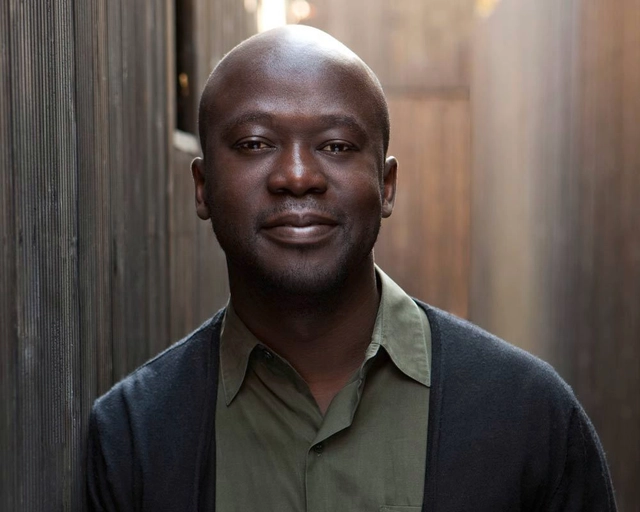
David Adjaye has been selected as the winner of MIT's 2016 Eugene McDermott Award in the Arts, which honors “individuals whose artistic trajectory reveals that they will achieve the highest distinction in their fields and continue to produce inspiring work for many years to come.” The award consists of $100,000 prize in addition to an artist residency at MIT in the spring of 2016. During the residency, Adjaye will participate in four different public events, including panels and symposia.
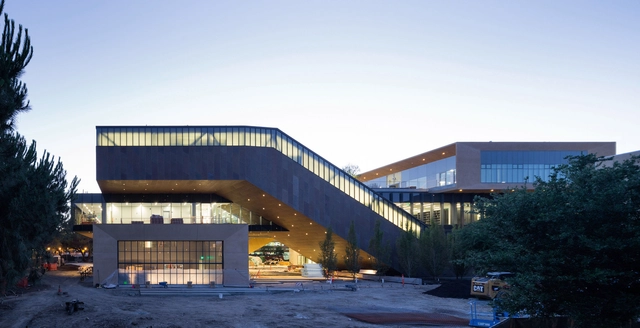
Diller Scofidio + Renfro (DS+R) has shared initial photos by Iwan Baan of their new McMurty Building for Art & Art History at Stanford University, which will be officially unveiled to the public on October 6. The 100,000 square foot building will open for the 2015 fall semester, and allow students studying art history and students practicing fine arts to work together under the same roof for the first time at Stanford. See and read more about the soon-to-be opened project after the break.
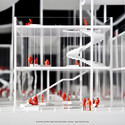
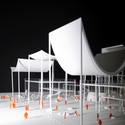
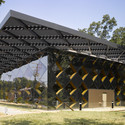
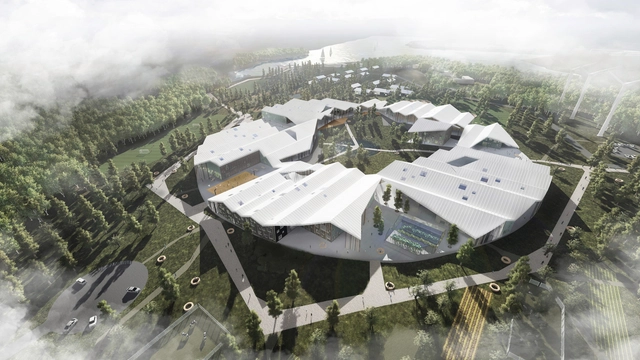
Denmark-based architectsCEBRA have won a competition to design a Smart School educational complex in Irkutsk, Russia. Their winning design, dubbed Smart School Meadow, fulfills the competition’s call for a new typology of school that combines architecture and landscaping into a learning environment and local community center.
The design integrates buildings and landscape together through a ring of individual structures connected by a large, ridged rooftop. With this roof, spaces between the buildings can be used as multifunctional, semi-covered learning spaces, activity zones, and flow areas, all of which diffuse into the central and outer landscaped areas.
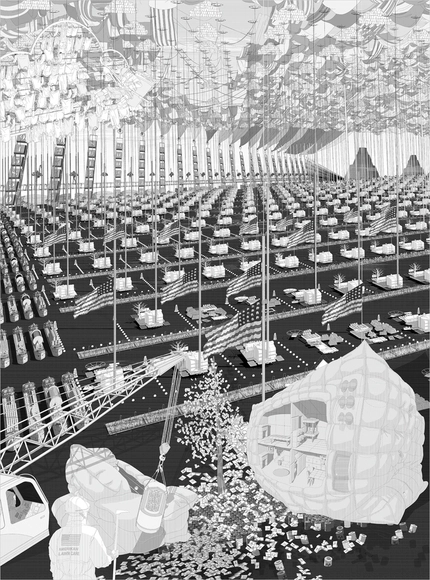
Marcin Chmura, a recent graduate from London's Bartlett School of Architecture, has developed a project which attempts to imagine a new future for the 'American Dream'. The United Suburbs of AmeriKa, named after Franz Kafka’s novel in which—despite never having visited America—he depicts the United States as a utopia offering eternal wealth and happiness for his foreign protagonist.
Architect Magazine has unveiled its list of the 50 best architecture firms in the US, with Adrian Smith + Gordon Gill Architecture, Skidmore, Owings & Merrill and Gensler taking the top three slots in the overall ranking, respectively. The rankings are based on scores from three categories: business, sustainability and design. This year the methodology was updated to include three new factors: percentage of women and minority designers; range and value of employee benefits and the rate of employee turnover. Adrian Smith + Gordon Gill Architecture also ranked first in the business category, followed by Kirksey Architecture and EYP Architecture & Engineering. EYP also headed the sustainability rankings, followed by Gensler and ZeroEnergy Design, while the design rankings were led by NADAAA, Skidmore, Owings & Merrill and Studio Gang Architects. Learn more about the methodology and view the full rankings here.
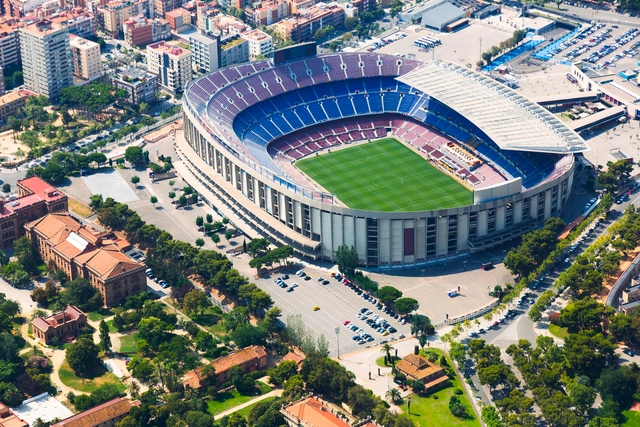
FC Barcelona has announced 14 teams in the running for two planned overhauls of their facilities at the Camp Nou in Barcelona, including alterations to their main stadium and the rebuilding of the Palau Blaugrana, the nearby arena owned by the club and used primarily for basketball and handball. The alterations to the two buildings are part of a larger €600 million project, known officially as "Nou Espai Barça," which seeks to improve the club's entire campus, also adding an ice skating rink, new offices, 5,000 parking spaces and improving the outdoor space surrounding the facilities. The Nou Espai Barça project was approved by the club's fanbase last April after a 72% vote in favor of the proposal.
The list names eight teams - including BIG, Populous, HKS and Arup Sport - in the running for the overhaul of the stadium itself, which will involve the addition of almost 6,000 seats to bring the stadium's total capacity to 105,000, increasing the stadium's lead as the largest football stadium in Europe. It will also include a complete redesign of the lowest seating tier to offer improved views, and the addition of a roof over the terraces. Also named are the six teams in the running to rebuild the Palau Blaugrana.
According to the Architects' Journal Jonathan Woolf, "the much-respected architect and academic" born and based in London, has died aged 54. His practice, Jonathan Woolf Architects, was established in 1990 and has completed more than thirty-five projects in Europe and Africa. Woolf was also a prolific educator, having taught at the British universities of Bath, Kingston (from which he received an honorary doctorate earlier this year), the Scott Sutherland School of Architecture, and the Architectural Association.
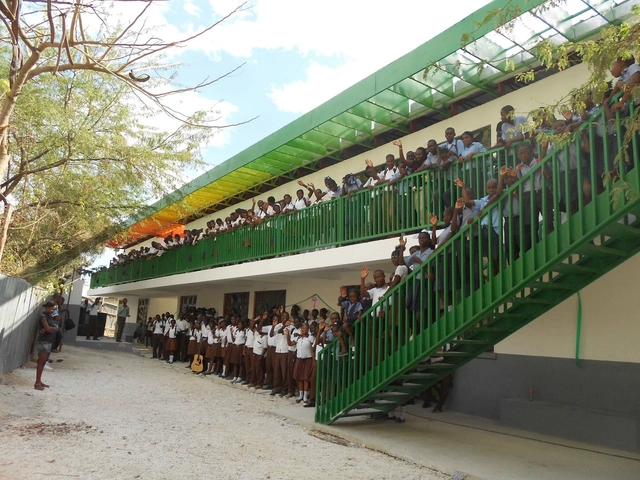
Collège Mixte Le Bon Berger – one of Architecture for Humanity’s completed projects in Haiti. Image Courtesy of Architecture for Humanity
Nonprofit organization Architecture for Humanity has launched a rebranding campaign, calling for public input to help create its new name. After working to transition “from a group of chapters to a collectively mobilized and collaboratively led network,” the new version of the organization has a similar mission, but with a focus on “consensus building, professional development, and support for local groups to develop innovative business models while driving humanitarian design services.” Thus, the rebranded AFH will utilize its new image as a “banner to rally under,” putting an emphasis on interdisciplinary collaboration and incorporating anyone outside the architectural profession who can help with the mission.
Herzog & de Meuron has revealed their plans for a new £500 million stadium for Chelsea Football Club, intended to built in place of their existing stadium at Stamford Bridge. As reported by BD, the images and a model of the stadium were not officially released to the press but were presented in a public consultation meeting held by the club.
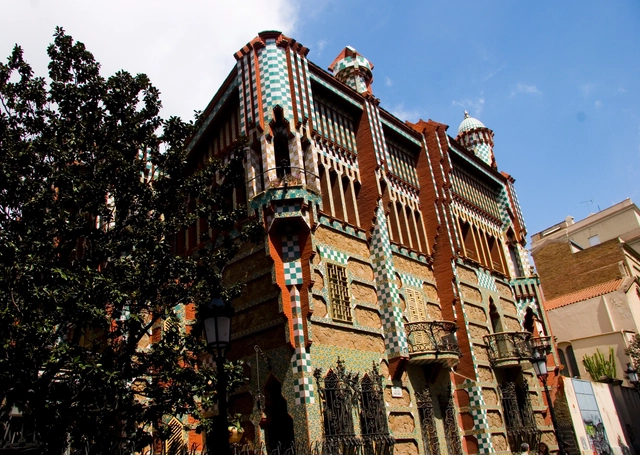
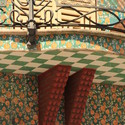
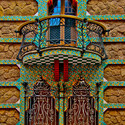
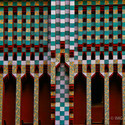
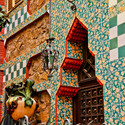
Designed by Antonio Gaudí in Barcelona when he was 30, and designated a World Heritage Site by UNESCO in 2005, Casa Vicens will be converted into a museum and open its doors to the public during the second half of 2016.
Built between 1883 and 1889, Casa Vicens was the first house designed by Gaudí. The building’s current owner, a subsidiary of the financial group Mora Banc Grup, is currently working on its restoration and the museum planning. “The mission of Casa Vicens as a house museum is to present the first Gaudí house, presenting it as an essential work to understand his unique architectural language and the development of Art Nouveau in Barcelona,” explained the executive manager of the project, Mercedes Mora, in a recent interview with Iconic Houses.
Update: On September 1st, the Japan Sport Council launched a new competition to find another design for Japan’s New National Stadium - this time for a design and build project with more stringent cost restrictions. Today, contractor Nikken Sekkei and Zaha Hadid Architects have confirmed that they will be re-entering the contest together, bringing forward work from their original design. “Our firm is certain that retaining the team of Design Supervisor and designers will deliver the best National Stadium, and we have invited Zaha Hadid Architects to join the design team” said Nikken Sekkei in a statement. “Applying this knowledge and experience of the project, this team can further develop the design to the new brief as a cost-effective proposal to realize the world’s best National Stadium.” The article below was originally published on August 26th.
In mid-July, Japanese prime minister Shinzo Abe declared that ZHA's design for a New National stadium would not be completed and that plans for the Tokyo Olympics-Paralympics stadium would "start from zero." In response Zaha Hadid Architects has just issued a press release and a link to a 23-minute video presentation. The video, ZHA explains, "outline[s] in detail the unique design for the New National Stadium which has been developed over two years to be the most compact and efficient stadium for this very special location in Tokyo. Zaha Hadid Architects welcomes a new contractor bidding process for the New National Stadium to reduce costs and ensure value for money in terms of quality, durability and long-term sustainability."
Watch the video - or if you haven't got 23 minutes, read our synopsis - after the break.
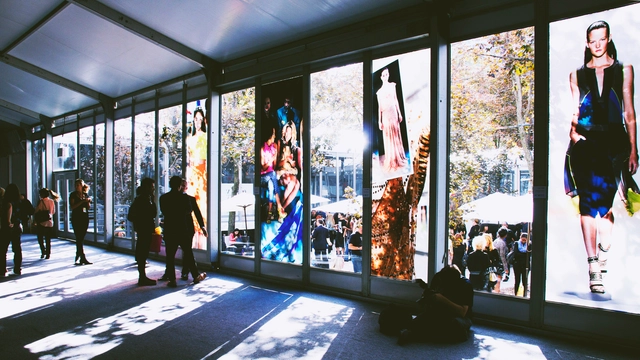
For this edition of The Urbanist, Monocle 24's weekly "guide to making better cities," the team examine how fashion is weaved into the very fabric of our cities. They visit New Delhi to explore the role of ethics within the industry, head to Paris to see how the French capital is benefitting from its status as the 'Fashion Capital', and spend time at the only Eco Fashion Week in Vancouver. The episode also asks whether it's possible to identify a city by what people wear.
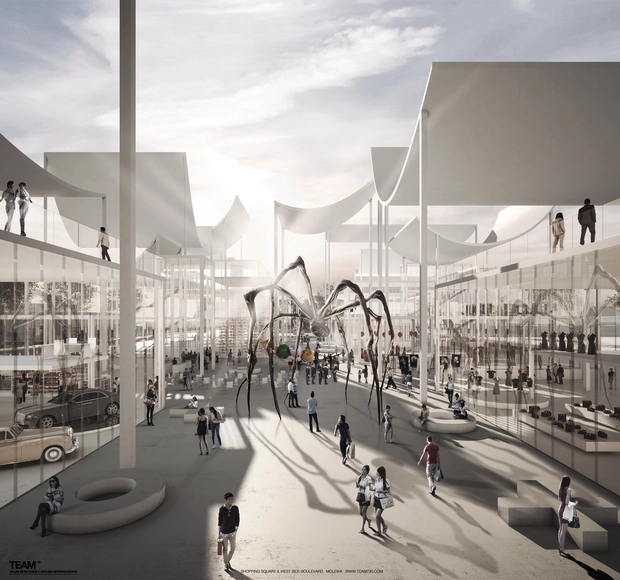
The international MOLEWA (Mount Lu Estate of World Architecture) competition, organized by the Chinese real estate group Huan Yan with the support of the UIA, sought proposals for urban development plans for small and medium cities in China and several of the winning projects will be carried out in the city of Ruichang next year.
Mexican office TEAM730 Taller de Estudios Y Análisis Metropolitanos, led by José Muñoz Villers and Carlos Marín, was awarded the silver medal in the competition’s Commercial/Cultural category, Plot 7: Shopping Street, for their design of a multi-functional pedestrian street along the entire complex.
More images and the project description after the break.
Across industrial North America, many small working class cities are faced with a plethora of abandoned property due to the downfall of the automotive industry. The prolific ruins of the largest abandoned factory in North America, Detroit's Packard Motor Plant, have served as an emblem for dozens of similar plants dotting the landscapes of cities across the continent. In 2010, shortly after the beginning of the global economic crisis, Chrysler closed a sprawling engine factory in Kenosha, Wisconsin. The factory has since been demolished and is now at the beginning of a five-year cleanup. Located adjacent to a densely populated suburban development, the 107-acre property begs the question: what can be done with such a massive piece of land?
In response to Kenosha's Chrysler problem, a team of urbanists, architects and researchers known as Urban Design for Everyone (UD4U) launched a global competition to reinvigorate the former industrial property. Proposals had to take the adjacent neighborhoods into consideration, with the ultimate goal of bridging gaps between disparate communities at opposite ends of the property. The winning proposals range widely from a stylized village of housing, to the creation of enormous urban farms, to the construction of an innovation park featuring a series of vast artificial lakes. After receiving 43 entries from 17 countries, a jury of local architects selected three exceptional proposals and five honorable mentions. Find out what the teams proposed after the break.
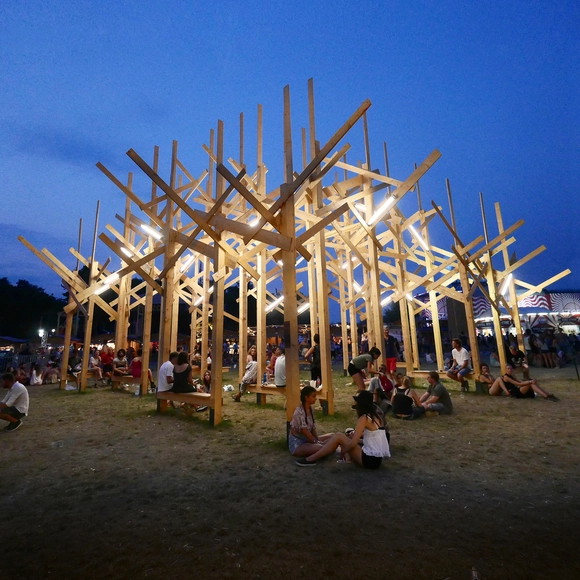
Atelier YokYok, in partnership with Sammode, created a temporary geometric forest called “TREEDOM” for the 2015 Sziget Festival in Budapest. Constructed in nine days before the festival, and then dismounted in two days afterwards, the installation was composed of 37 wood poles, and over 200 boards, with the highest point extending 10 meters.
Building projects are inherently complex: as projects progress, architects are joined by contractors, engineers, and myriad consultants. Architects, according to a recent report by RIBA, are considered the "spiritual leaders" of a building project. Cemented in this perception by a monopoly on design, architects continue to sit precariously atop project hierarchies despite a shifting landscape in building production. This begs the question: how can architects leverage this spiritual responsibility to translate into the best results for clients?
In their latest report Client & Architect: Developing the Essential Relationship, RIBA delves into the nuanced problem of connecting architecture to its owners, emphasizing the importance of a strong, functional and mutually educational relationship. Currently, architects have a tremendous opportunity to learn, improve and capitalize on understanding of clients, regardless of firm size, portfolio and established skills.
Read on to discover RIBA's findings from two years of client analysis
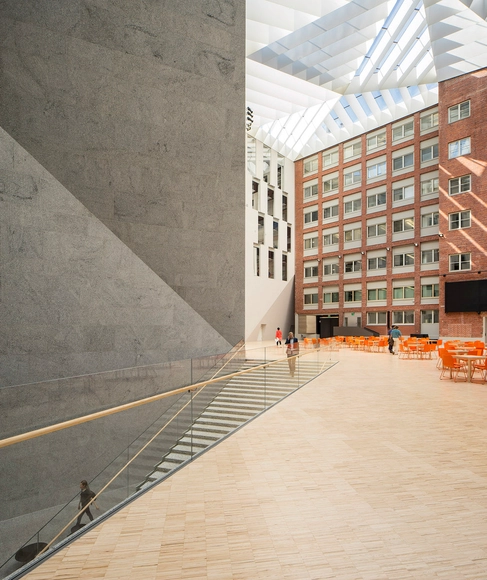
The Finnish Association of Architects SAFA has announced the five projects shortlisted for the 2015 Finlandia Prize for Architecture. After hosting the competition successfully for the first time last year, the Association has returned to “increase public awareness of high quality Finnish architecture and [to highlight] its benefits for our well-being.”
Similarly to last year, while the five shortlisted projects were selected by a jury of architects, the final winning design will be chosen by a non-architect. This year Kaija Saariaho, an internationally renowned Finnish composer, will select the 2015 winner. “I’ve always taken a keen interest in architecture and of course concert halls," said Saariaho. "When visiting the buildings now proposed for the prize, I gave much thought to how deeply architecture affects our lives on a daily basis."
Learn more about the five shortlisted projects, after the break.





.jpg?1441305574&format=webp&width=640&height=580)
.jpg?1441827111&format=webp&width=640&height=580)



_Keith_Collie_05.jpg?1441656171&format=webp&width=640&height=580)


.jpg?1440551337&format=webp&width=640&height=580)
.jpg?1440552361 "© Zaha Hadid Architects. Image by Methanoia")
.jpg?1440551737 "© Zaha Hadid Architects. Image by Methanoia")
.jpg?1440552179 "© Zaha Hadid Architects. Image by Methanoia")
.jpg?1440552139 "© Zaha Hadid Architects. Image by Methanoia")
.jpg?1440551337)