The American Institute of Architects (AIA) has selected four projects for its Upjohn Research Initiative, a joint program of the College of Fellows and the Board Knowledge Committee to support knowledge sharing between practitioners and academicians. "The purpose of this grant, now in its ninth year, is to provide base funds for applied research projects that advance professional knowledge and practice," says the AIA. "The 18-month long project grant qualifies recipients to have their findings and outcomes published both electronically and in a nationally distributed publication." Read on for more on each project.
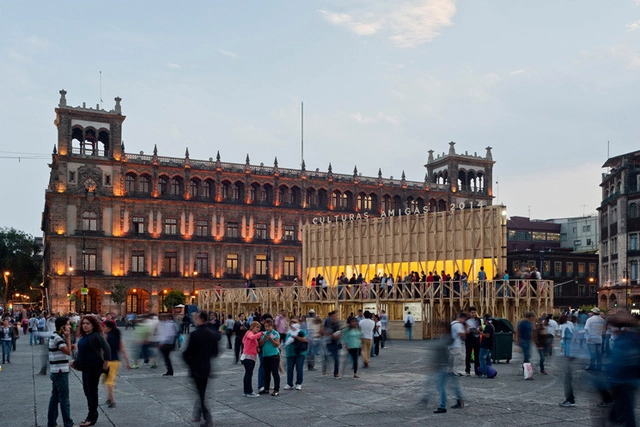
The MCHAP.emerge prize is awarded biennially by the College of Architecture at Illinois Institute of Technology (IIT). As winner, PRODUCTORA will be given the opportunity to lead a research studio in 2017 related to 'rethinking metropolis' along with $25,000 of funding.
PRODUCTORA was a finalist among practices from Canada, the United States, Chile and Paraguay. The decision was made by Jury President Stan Allen, architect and former Dean of Princeton University’s School of Architecture (New York); Florencia Rodriguez, editorial director of Piedra, Papel y Tijera publishers (Buenos Aires); Ila Berman, Professor of Architecture, University of Waterloo (Waterloo); Jean Pierre Crousse of Barclay & Crousse (Lima), and Dean Wiel Arets (Chicago).
The Danish Building & Property Agency with the Aarhus School of Architecture have announced the three winning teams of the open competition to design the NEW AARCH project. These designs include new buildings for the Aarhus School of Architecture and the development of the surrounding area in Aarhus known as Godsbanearealerne.
We are pleased to announce a new content partnership between ArchDaily and Moscow's Strelka Institute for Media, Architecture and Design in which we will share a collection of critical essays, interviews and articles on urban events, studies in urbanism, and urban technologies which are currently taking place in Russia. ArchDaily's Editors will be working closely with those of Strelka Magazine, which was launched in 2014, to translate and publish ideas and opinions from their expert team of local writers.
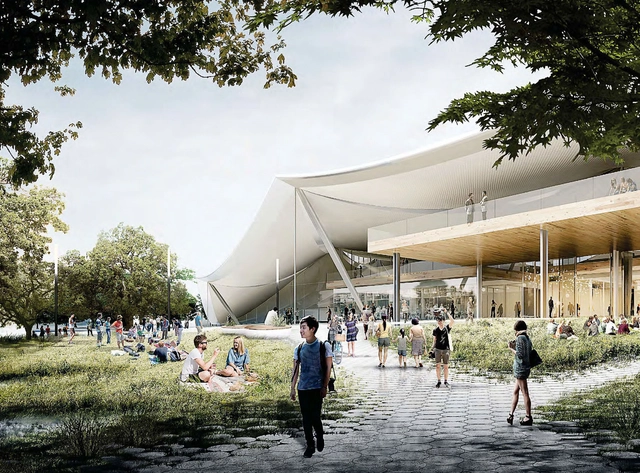
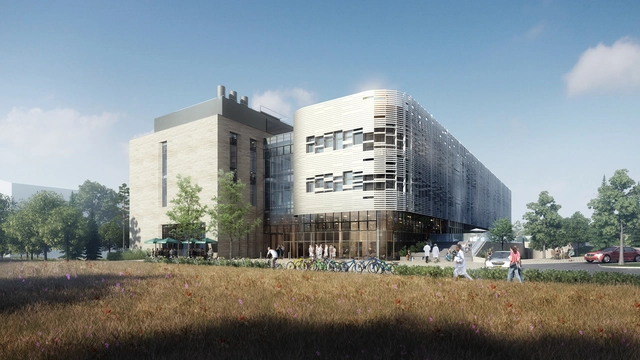
Construction has begun on the Quadram Institute, a new innovation hub for the advancement of food and heath research in Norfolk, in the United Kingdom. Designed by the London office of NBBJ, the 13,900 square meter center will bring scientists, clinical researchers, and a healthcare clinic together under one roof.
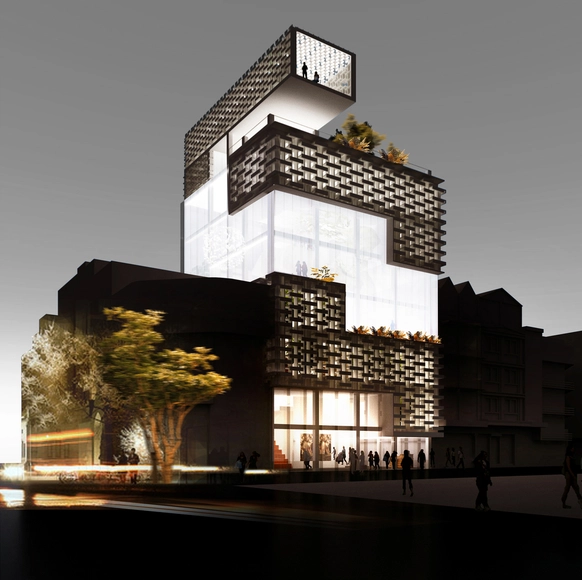
Prolific organizers of architecture competitions, Bee Breeders has revealed the winners of their latest challenge: repurposing a brutalist department store in Bangkok into an artists’ retreat. Competitors were expected to not only renovate the building, but also to engage the public in the surrounding city with the arts, as well as to “reflect on both the history and future” of the site. The program was loosely defined and open to interpretation, with entries evaluated primarily on the strength and clarity of their concept, originality, presentation quality, relevance to context and its possible presence as a strong community for artists in Bangkok. See all of the winners after the break.
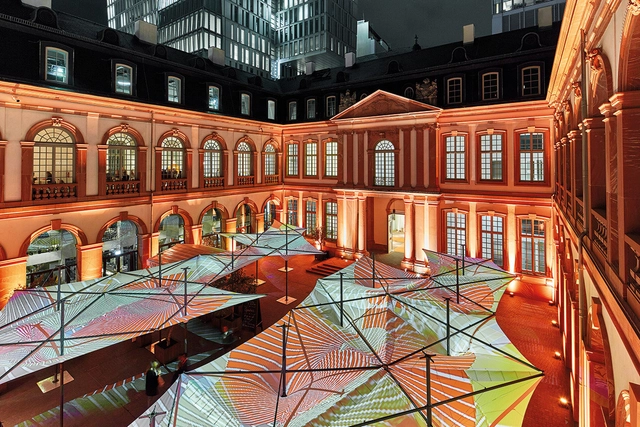
Grimshaw and MDT-tex have launched a tessellating canopy system at the Frankfurt Light + Building design festival and trade fair. The Tensilation Type EV canopy system is the result of a partnership that aimed to develop a product that not only offers the flexibility of modular canopy systems, but also has the engineering advantages of a unified structure.
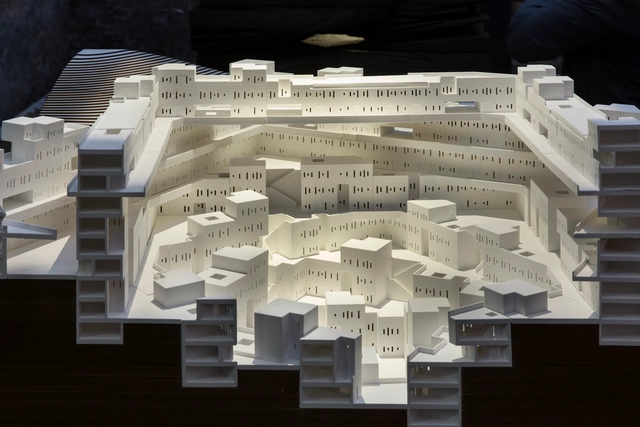
The winners of the latest Combo Competitions challenge, Prison Puzzle, have been announced. Based on the idea of utilizing architecture to reduce recidivism—the large number of criminals that relapse into crime and back behind bars—Prison Puzzle sought out proposals for the design of a medium-security prison with a capacity of 500 inmates. The design was to be sited in Arizona, in the United States, where the number of inmates per resident is high above the national average. Each design had to include elemental components like cells, exercise yards, and visiting rooms, and participants were encouraged to explore "how architecture can help in shaping environments that influence behaviors."
Lambert "is the conscience of modern and contemporary architecture, protecting its past and advocating for its future as a vital art form," said jury chairman Elizabeth Diller.
Zaha Hadid's sudden passing has led to an outpouring of heartfelt tributes from some of the profession's most prominent figures. A "brave and radical" trailblazer, and the first woman to win the Pritzker Prize, Hadid's significant impact on the world of architecture is undeniable. She will be missed.
"We are all shocked and devastated that we lost Zaha today, a most beautiful individual, talent, leader and friend," Patrik Schumacher, Director of Zaha Hadid Architects, wrote on Facebook.
We will continue to update this link as more tributes come in.
In the latest installation of NOWNESS’In Residence series, British architect Ian Simpson describes how was told by his careers teacher "not to set [his] sights too high" when he decided that he wanted to become an Architect. Here, he discusses the design intentions behind his home – the tallest residence in the United Kingdom's second city: Manchester. For Simpson, "home is [only] forty seconds away by lift."
The Iraqi-born British Architect Dame Zaha Hadid, DBE (1950-2016) has died aged 65, in Miami, Florida. According to reports from the BBC, Hadid was being treated in hospital for bronchitis when she suffered a heart attack. Earlier this year she became the first sole woman to receive the RIBA Royal Gold Medal at a ceremony in London.
Read on for the official statement from Zaha Hadid Architects:
A new cultural center designed by Mecanoo, located in the Longgang district of Shenzhen, China is currently under construction and is set to top out by end-April. With the goal of revitalizing an existing park-square, the new complex includes a variety of programs such as a bookshop, an art museum, a youth center, and a science center. The nearly 100,000 square-meter building is set to open to the public in 2018.
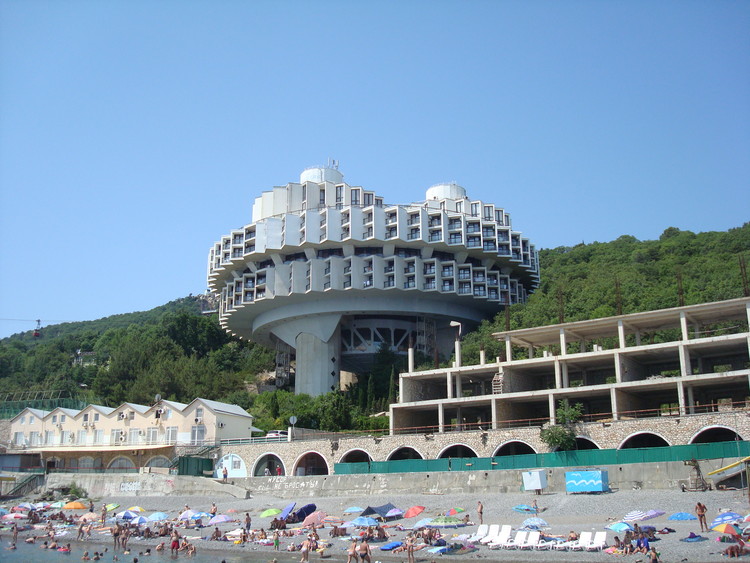
Khoja Obi Garm is a Soviet sanatorium nestled high in the mountains of Tajikistan – a place known for its curative, radon-rich waters. When Maryam Omidi, a former journalist, visited in 2015 she was "blown away" by both the architecture and landscape: a enormous concrete, Brutalist block at the peak of a snow-capped mountain. She has since launched a Kickstarter campaign to develop a book of photographs exploring "the best sanatoriums" across the former Soviet Union.
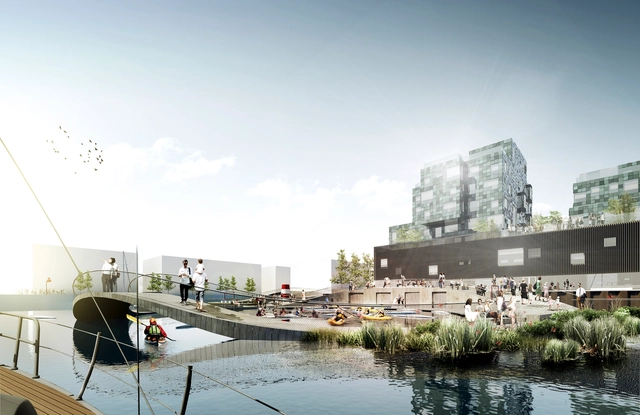
C.F. Møller Landscape's Nordhavn Islands project has won the international competition for an innovative learning, activity and water landscape in the harbor basin in front of the new Copenhagen International School in Nordhavn, Copenhagen. The new Nordhavn district is taking shape fast, and, having won the international Nordhavn Islands project competition, C.F. Møller Landscape will now create one of the first and most unique projects in, on and under the water in the quarter.
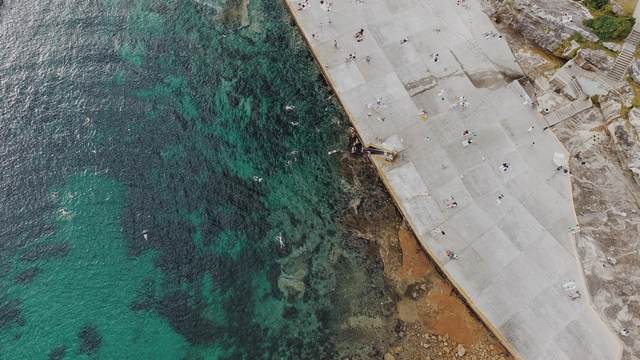
Following the announcement that the swimming pool—"one of Australia’s greatest cultural symbols—will form the foundation of the Australian Exhibition at the 2016 Venice Biennale, more information has been revealed about what will be presented.
According to the organisers, "eight prominent cultural leaders from various fields have been selected to share their personal stories, using the device of the pool as a platform to explore the relationship between architecture and Australian cultural identity." These include Olympic swimmers Ian Thorpe and Shane Gould, environmentalist Tim Flannery, fashion designers Romance was Born, authors Christos Tsiolkas and Anna Funder, Indigenous art curator Hetti Perkins and musician Paul Kelly.
A total of 34 countries will participate in the inaugural London Design Biennale, according to a press release from the organization. Set to open on September 7th, the Biennale will center on the theme Utopia by Design, looking at “sustainability, migration, pollution, water and social equality,” among other issues.
The theme was chosen in honor of the 500th anniversary of the publication of Thomas More’s “Utopia,” and the Biennale will be “the centerpiece” of the Somerset House’s year-long programme celebrating the text. “We chose the inaugural theme, Utopia by Design, to celebrate the 500th anniversary of the publication of Thomas More’s classic, and to reflect on the rich history of the modernist design it inspired,” said Christopher Turner, the Director of the London Design Biennale.
The Biennale “will present newly commissioned works in contemporary design, design-led innovation, creativity and research,” bringing together “designers, innovators and cultural bodies” to explore “the role of design in our collective futures.” A diverse group of countries from five continents are set to participate: Albania, Australia, Austria, Bahrain, Belgium, Chile, Croatia, France, Germany, Greece, India, Indonesia, Israel, Italy, Japan, Korea, Lebanon, Mexico, the Netherlands, Nigeria, Norway, Pakistan, Palestine, Poland, Portugal, Russia, Saudi Arabia, SouthAfrica, Sweden, Switzerland, Tunisia, Turkey, UK and the USA.
The four finalists, clockwise: Samuel Bravo, Matilde Cassani, Pier Paolo Tamburelli and Anna Puigjaner. Image via Wheelwright Prize
Harvard GSD has announced the four shortlisted architects for the 2016 Wheelwright Prize. Awarded annually, the $100,000 grant is for travel-based architectural research.
Selected from 200 applications from nearly 45 countries worldwide, the four finalists are from Italy, Spain and Chile. Each finalist will present their work and proposal on April 20. This year’s jury includes Eva Franch, Jeannie Kim, Kiel Moe, Rafael Moneo, Benjamin Prosky, Mohsen Mostafavi, and K. Michael Hays.
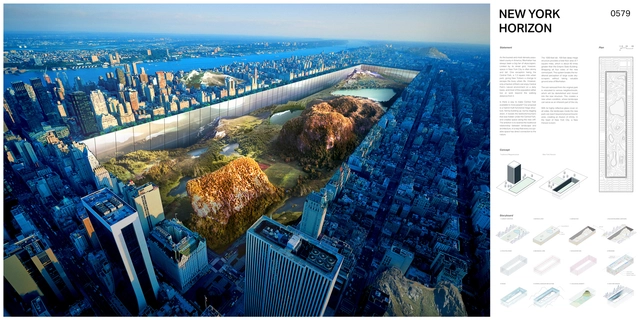
"New York Horizon" / Yitan Sun and Jianshi Wu. Image Courtesy of eVolo
A competition now in its 11th year, eVolo Magazine has announced the winners of its 2016 Skyscraper Competition: a group of three top prizes and 21 honorable mentions culled from 489 entries. The award annually recognizes the vanguard of high-rise construction "through [the] novel use of technology, materials, programs, aesthetics, and spatial organizations." Among this year's winners are a project that proposes digging down and creating a megastructure along the perimeter of Central Park, a skyscraper that acts as a hub for drones in future commercial applications, and a tower that takes advantage of the climate of Iceland as an ideal location for data servers.
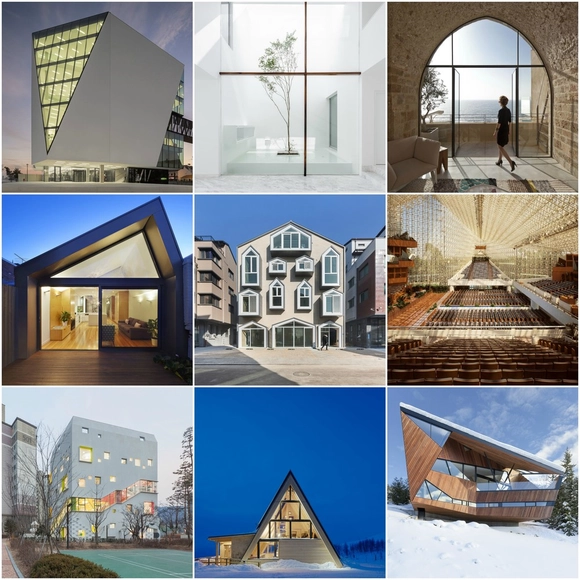
Some of the most integral parts of a building are related to light and air. Windows, for example, can help transform a project into a more liveable or better space, providing natural light or connecting the building’s users with their surroundings.
From windows inserted into historic structures, to windows meant to give the building a distinct, landmark look, these nine projects utilize windows as a primary feature. View the nine creative uses of windows after the break.
The Pavilion of Morocco at the 14th Venice Biennale, Fundamentals, focused on territorial speculations in the Sahara: Inhabiting the Uninhabitable. For the exhibition, which was the country's first representation at the Biennale, Paris-based practice OUALALOU+CHOI proposed an urban structure for this desert territory – "a means of putting down roots, implanting urbanity and civilization. The Sahara, with its extreme geography and climatic conditions, remains unexplored territory for architectural speculation."






_Prison_01.jpg?1459434961)


.jpg?1459371467 "© Nowness")
.jpg?1459371483 "© Nowness")
.jpg?1459371408 "© Nowness")
.jpg?1459371440 "© Nowness")
.jpg?1459371518)