As part of ArchDaily's coverage of the 2016 Venice Biennale, we are presenting a series of articles written by the curators of the exhibitions and installations on show.
The title relates to the processes of architecture, which can be slow to come to fruition and therefore one also refers to architecture and patience, and to the meaningful sustained existence of buildings in their fragile environments.
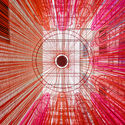
The installation is a glass labyrinth, which one crosses to reach an internal landscape. The glass is clear – therefore it is an alternate take on the architectural manifestation of the 'labyrinth': an age-old space of intrigue and discovery. It refers to the idea that although one is sure of one’s intentions - has a clear vision - the path to achieving that may not be straightforward but rather quite 'labyrinthine', in the economies and climatic zones that the architect operates in. That is, one can see clearly but cannot progress easily.
As part of ArchDaily's coverage of the 2016 Venice Biennale, we are presenting a series of articles written by the curators of the exhibitions and installations on show.
Commissioned by the Kuwaiti National Council of Culture Arts and Letters (NCCAL), Between East and West: A Gulf (BEWAG) began as series of questions - an exploration of points and territories that asks how the architect can imagine a scale beyond the national. The investigation of the hydrography of the Arabian/Persian Gulf and its islands reveals a realm forgotten between two coasts. Acting now as the liquid boundary between nations, the Gulf and its islands are the territories in which the identities of the coasts were initially formed. Prior to the discovery of oil, its waters were the source of livelihood for the region which was connected through trade, cultural exchange and commerce. The shallow body of water and the low sandbars that form its islands, create a shifting network of isolated and interconnected nodes. The Gulf island was inextricably linked to the movement of people and resources,yet of a scale and possible containment that allowed it to be planned and experimented upon throughout history. This meant that the island was the smallest plannable political and ecological space in the region.
https://www.archdaily.com/788537/between-east-and-west-a-gulf-inside-kuwaits-pavilion-at-the-2016-venice-biennaleHamed Bukhamseen & Ali Karimi
Courtesy of The Royal Institute of British Architects (RIBA)
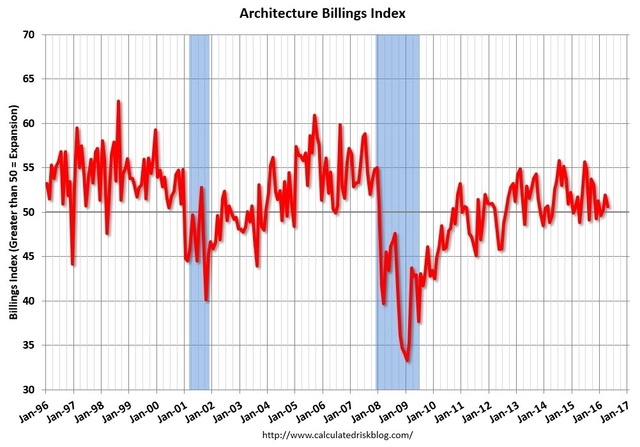
The Royal Institute of British Architects’ (RIBA)Future Trends Survey for May 2016 has reported modest changes from April results, with the private housing sector remaining the strongest driver of growth. While the public sector is yet to see improvement, practices showed an overall confidence for future workloads, with North England continuing to remain the most positive. The survey, established in 2009, uses a geographically representative sample of mixed-size practices “to monitor business and employment trends affecting the architects’ profession.”
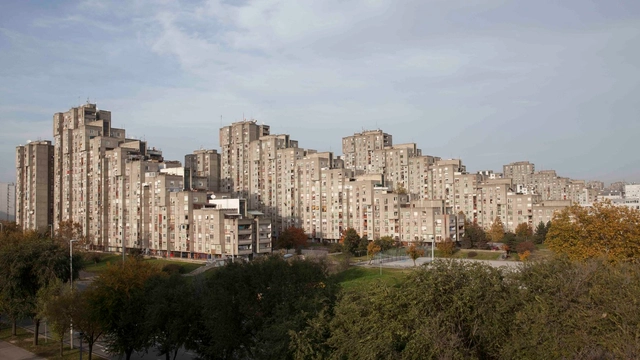
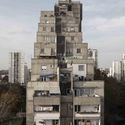
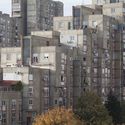
In the autumn of 2014, Piotr Bednarski, a Warsaw-based architectural photographer, visited the municipality of Novi Beograd (New Belgrade), a planned city built in 1948 which constitutes one of BelgradeSerbia’s 17 municipalities. There, he quickly fell in love with the gritty Communist-era architecture of the area. He writes:
In Warsaw, where I'm from, most of the residential buildings from the Communist era [have been] turned into kitschy, colorful blocks… Seeing the dense, raw and, desolate modernist architecture, and rediscovering the atmosphere of my childhood made me fall in love with Novi's neighborhood. I saw people from different social backgrounds living peacefully in one place.
Since that initial trip, Piotr has made multiple return visits to capture the city in a variety of thought-provoking ways, showing long span views of the city, the streetscape, and even the view from inside people’s apartments. He believes that there is much to uncover in Novi Beograd, and that his story with New Belgrade is not yet finished.
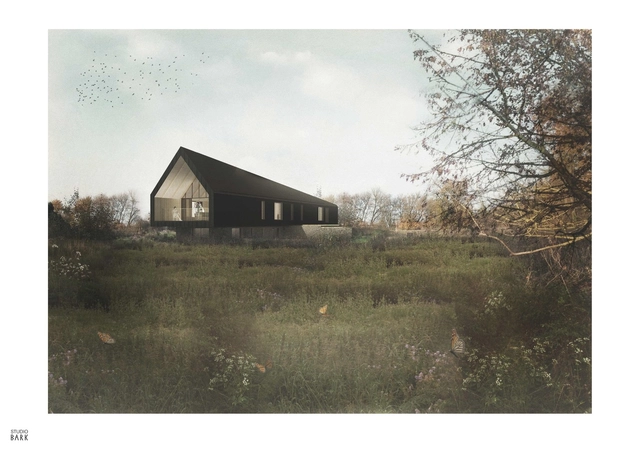
London-based Studio Bark has revealed its plans for Black Barn, an environmentally conscious family home in Dallinghoo, Suffolk.
Based on an interpretation of local black agricultural barns, the 300-square-meter house will be clad in charred timber, an ancient Japanese form of natural preservation as a way to enhance the longevity and beauty of wood.
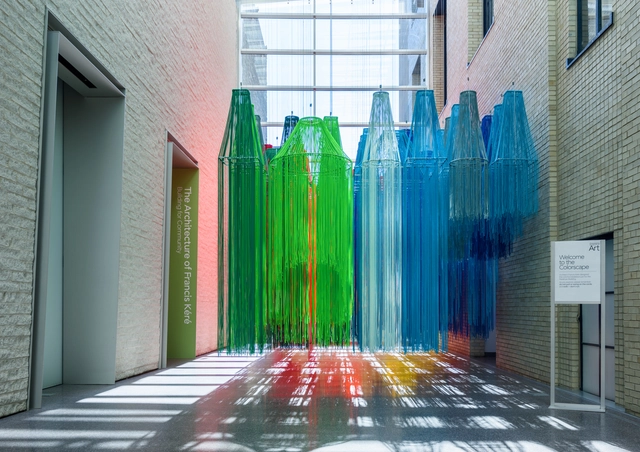
Currently on display at the Philadelphia Museum of Modern Art, Award-winning African architect Diébédo Francis Kéré has created Colorscape, a installation made from steel and brightly-colored fiber, to accompany his first solo show in the United States. The exhibition is titled The Architecture of Francis Kéré: Building with Community, and features of a retrospective of the architect’s career that includes material artifacts, tools and scale-models created for stand-out projects in both Africa and Europe.
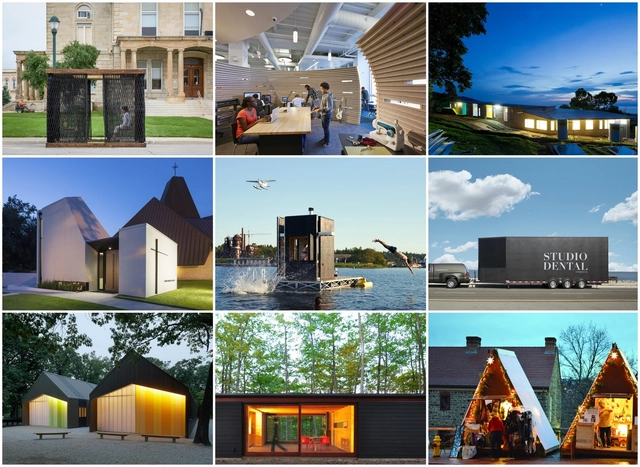
The American Institute of Architects (AIA) has selected seven recipients of the 2016 Small Project Awards. This is the 13th edition of the program, which was established to recognize firms for their excellence in small-project design. This year the winners have been placed into two categories: Category 1, which awards “a small project construction, object, work of environmental art or architectural design element up to $150,000 in construction cost,” and Category 2, given to “A small project construction, up to $1,500,000 in construction cost.”
This year’s winners include a wide variety of program types and sites. Continue after the break for the list and descriptions of the projects.
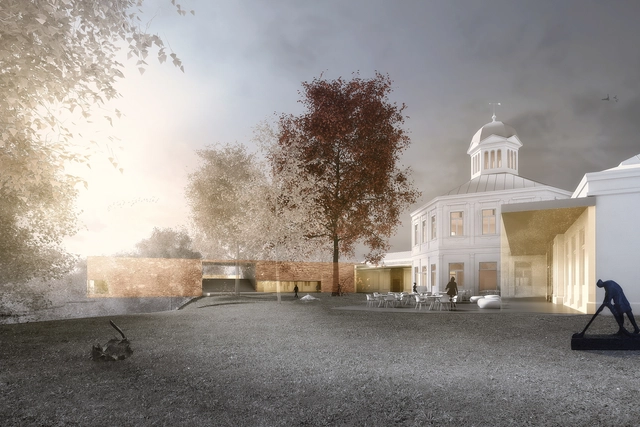
Dutch firm Benthem Crouwel Architects have won a competition to renovate and expand Museum Arnhem, a museum located in Arnhem, Netherlands housing a collection of modern and contemporary art. The winning proposal was selected by the jury from its “clarity and simplicity, the preservation of the centuries-old lateral moraine, and the brilliant idea of incorporating a publicly open veranda into the new extension.”
London-based Gilles Retsin Architecture has unveiled its entry for the Suncheon Art Platform competition, an arts center formed by a low, horizontal structure that frames a series of courtyards and squares in Suncheon, Korea.
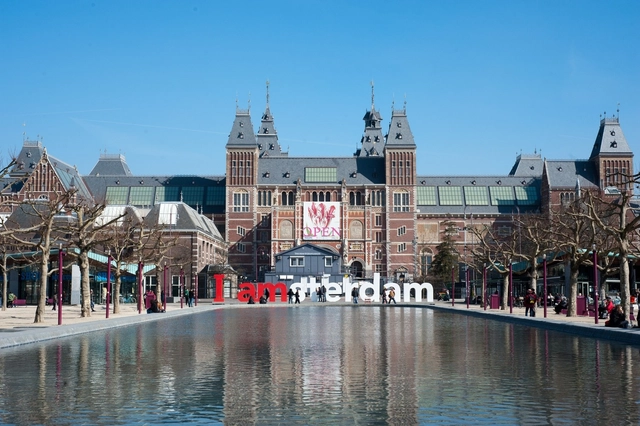
The Rijksmuseum, one of the largest museums in Europe dedicated to arts and history, made 250,000 works from its huge collection available for free online viewing or download.
During the golden age of sailing ships (roughly between 1584 and 1702), when Dutch ships dominated the trade routes of the world, the Netherlands became the first capitalist power in the west. The growing bourgeoisie class demanded a vast production of portraits and paintings, which enhanced trade, promoted the sciences and especially stimulated the arts. Few countries have such great quality artistic productions such as the Netherlands from that time.
"Making Heimat. Germany, Arrival Country" is a response to the fact that over a million refugees arrived in Germany during 2015. The expectations for 2016 are similar. The need for housing is urgent, but just as urgent is the need for new ideas and reliable approaches to integration. The exhibition therefore consists of three parts: the first part surveys physical refugee shelters - the actual solutions that have been built to cope with the acute need. The second part seeks to define the conditions that must be present in an Arrival City in order to turn refugees into immigrants. The third part of the exhibition is the spatial design concept of the German Pavilion, which will make a statement about the contemporary political situation. Something Fantastic will plan and stage the architectural presentation and graphic design.
The residence belonging to famed Postmodernist architect Michael Graves will be sold to Kean University, home to the new Michael Graves College for architecture and design, after receiving approval from its board of trustees. Following Graves’s death last year, the architect’s will stipulated that the residence, his studio, another property were to be donated to Princeton University, Graves’s neighbor and longtime employer. But Princeton University felt the buildings would be better served in another capacity and rejected the gift, allowing Kean to step in.
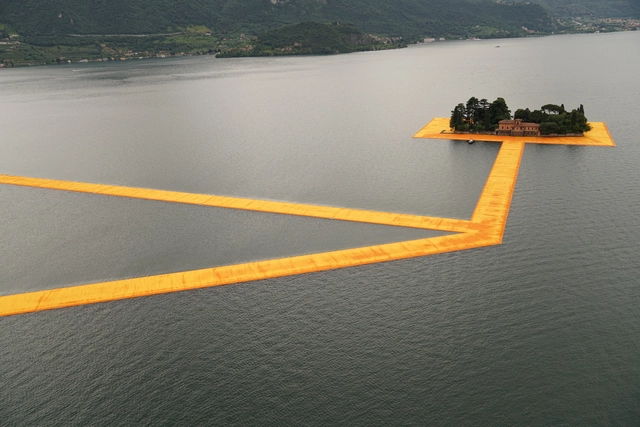
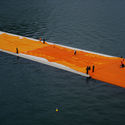
Until July 3rd, you can experience the latest and last work of artist duo Christo and Jean-Claude. Called The Floating Piers, the floating dock extends over the water of Italy's Lake Iseo.
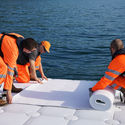
The work consists of a three kilometer walkway wrapped in 100,000 square meters of yellow cloth, which is supported by a floating dock system composed of 220,000 high-density polyethylene cubes. These elements naturally undulate with the movement of the waves at Lake Iseo, which is located 100 kilometers east of Milan and 200 kilometers west of Venice. The floating yellow roads extend from the pedestrian streets of Sulzano, connecting the islands of San Paolo and Monte Isola.
The Floating Piers is the first large-scale work of Christo for more than a decade after making The Gates in 2005 with Jeanne-Claude, who passed away four years later. Due to the importance of Christo and Jeanne-Claude's work and the inspiration they have given to many architects, we wanted to investigate the process of building this spectacular project, which makes the dream of walking on water a reality.
The Walmart Supercenter is generally considered one of the great antagonists of architecture around the world – the hulking behemoth who sold its integrity for the consumer convenience of having everything in one place. Though the first Walmart Supercenter didn’t open until 1988, big box stores have existed in some form since the 1960s, luring in shoppers with low prices and curbside loading lanes. For all the user psychology design that goes into them, the original designs of these buildings rarely pay much mind to their architectural or urban consequences, excluding a few notable exceptions.
Regardless, for the past 20 years big box stores have continued to prosper, prompting tenants to leave their homes and move on to even larger structures, leaving behind giant, open frameworks – for sale on the cheap. In a recent essay for 99% Invisible entitled Ghost Boxes: Reusing Abandoned Big-Box Superstores Across America, author Kurt Kohlstedt explores the architectural potential of these megastructures, drawing inspiration from the architects and communities that have successfully converted them into valuable assets.
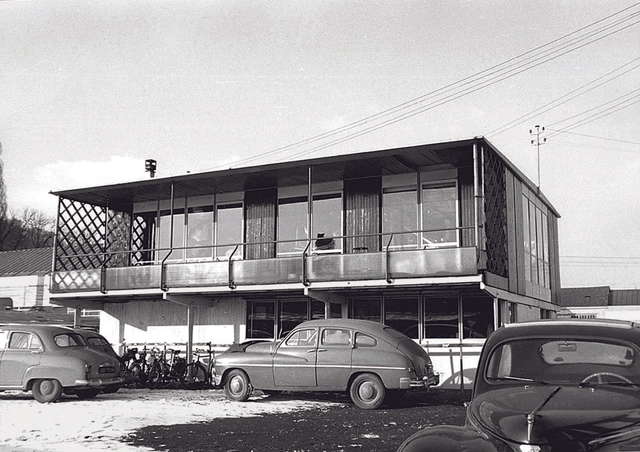
In 2015, Galerie Patrick Seguin disassembled and restored Jean Prouvé's "Maxéville Design Office," a 10x12 meter demountable house, which until that point had only been assembled once since its conception in 1948. The building withstood a colorful history in an industrial site, and presents a rare early example of successful prefabrication. The concept -- and specifically, Prouvé's work -- has gained popularity again in recent years, and Galerie Patrick Seguin presented the historic office to the public again as part of Design Miami/ Basel 2016.
Found in places as diverse as the Zhangjiajie Grand Canyon, Willis Tower, and Tokyo Skytree, glass bottom observation decks have become the favorite engineering marvel of thrill seekers looking for a new perspective on the world. Now, the U.S. Bank Tower in downtown Los Angeles has upped the ante for adrenaline-spiking structures – affixing a glass side to the building’s facade. Spanning from a window on the 70th story to a terrace on the 69th, the 45-foot-long chute opened to the public on Saturday, providing those brave enough to ride it with unprecedented views of the city.
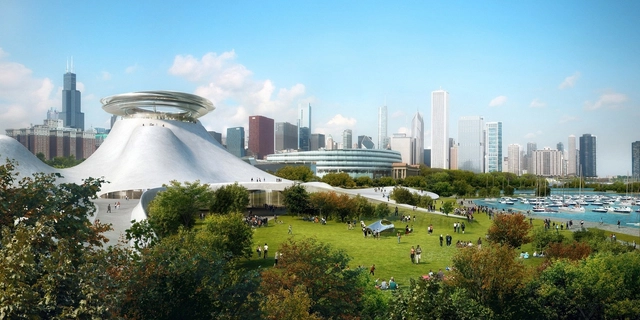
The Lucas Museum has been looking for a home in all the wrong places. Following months of fiery debate over the future of the museum’s proposed lakefront location, George Lucas announced that he is abandoning plans to build the project in Chicago and will instead return to looking for a site in California. This is the second failed location for the museum, after being rejected by San Francisco’s Presidio Trust in early 2014.
A new fencing system uses the same tried and tested hardware as a standard sliding gate, but with a twist; the vertically operable slats sink into the ground in less than five seconds, disappearing completely. The Fancy Fence was created to streamline accessibility, while also improving the visual bulk of traditional fences by removing all horizontal elements. The system can be installed in an infinite number of configurations and incorporates elegantly designed fixed slats, the retractable gate and an "invisible" walkway gate.
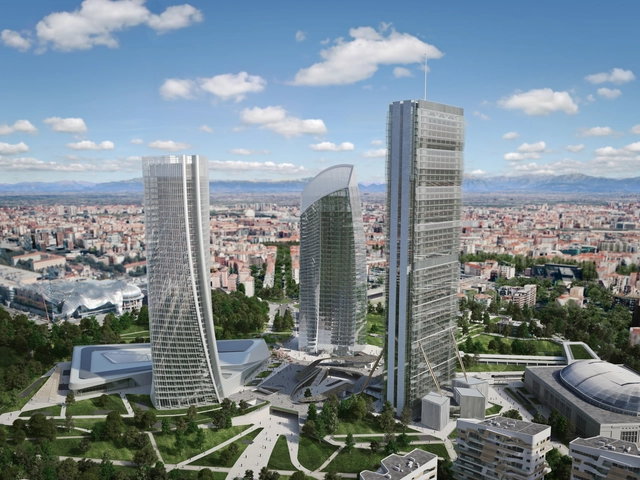
Zaha Hadid Architects’ (ZHA) 170-meter-tall Generali Tower has topped out at 44 stories in Milan, Italy. The Generali Tower, along with two other towers, forms the centerpiece for the CityLife masterplan to revitalize the old site of Milan’s International Fair, which closed in 2005.
Through the redevelopment, which began in 2004, the site will be open “to year-round public use, with the inclusion of new civic spaces, public parks, and residential buildings, in addition to shopping areas and corporate offices, all with direct transport connections via the Tre Torri station on the line 5 of the city’s metro system.”
Last month, the eleventh edition of the Moscow Urban Forum released the topic of the 2016 forum: "Fast-Growing Megacities: Technologies for Dynamic Development." The forum will seek to answer the following questions: Why is it so important to discuss growth and development of megacities at this time? What are the rules that determine their existence? With three days to go, organizers have announced this year’s program.


.jpg?1467068397&format=webp&width=640&height=580)
.jpg?1467068288 "© Laurian Ghinitoiu")
.jpg?1467068340 "© Laurian Ghinitoiu")
.jpg?1467068408 "© Laurian Ghinitoiu")
.jpg?1467068330 "© Laurian Ghinitoiu")
.jpg?1467068397)






.jpg?1467182432&format=webp&width=640&height=580)
.jpg?1464765319&format=webp&width=640&height=580)
.jpg?1464765813 "© Laurian Ghinitoiu")
.jpg?1464765878 "© Laurian Ghinitoiu")
.jpg?1464765694 "© Laurian Ghinitoiu")
.jpg?1464765337 "© Laurian Ghinitoiu")
.jpg?1464765319)


_12.jpg?1467207351&format=webp&width=640&height=580)