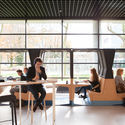
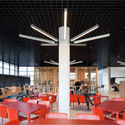
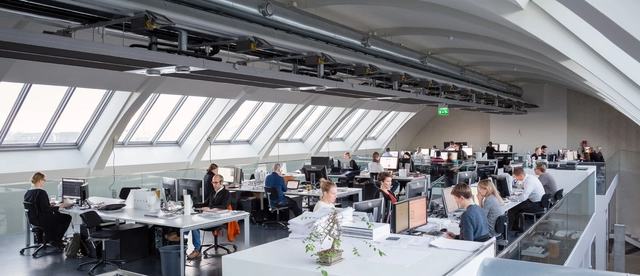
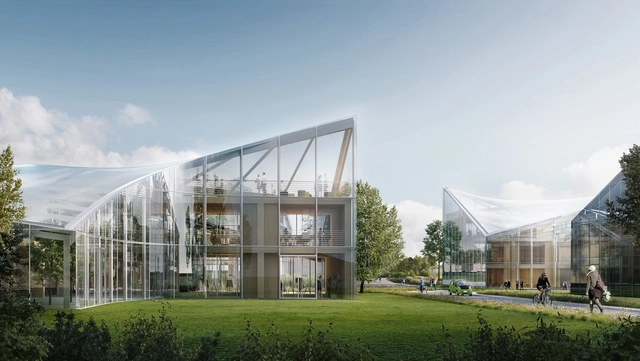
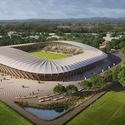
Planned as a center for local sports and sports science, the ECO park will provide state-of-the-art office space for environmentally-focused companies as well as public access to a wide range of health and leisure activities.
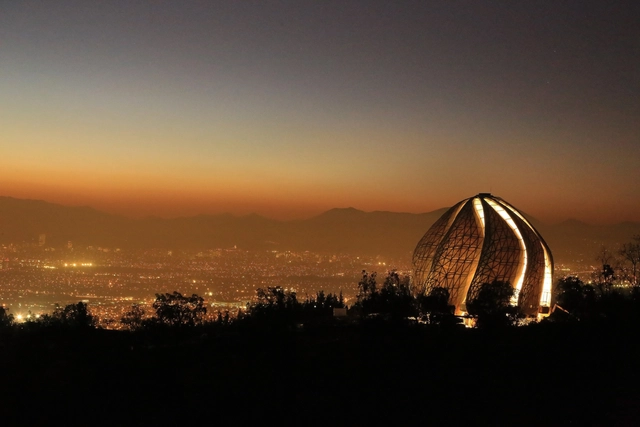
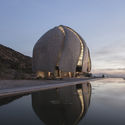
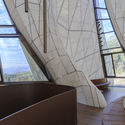
Located in the foothills of the Andes Mountains outside Santiago, Chile, the domed building was designed and built using computer modeling, measuring, and fabrication software, as well as custom glass, all of which culminated in nine monumental veils that frame an open worship space for up to 600 visitors. Completed in 2016, the project took 14 years to realize.
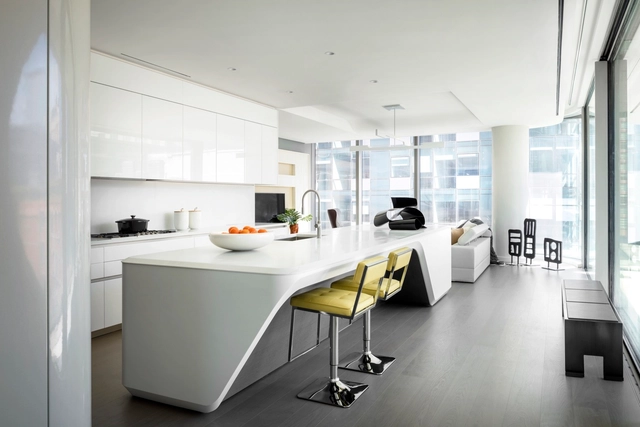
As Zaha Hadid’s 520 West 28th approaches completion, photos of the apartment interiors have been revealed for the first time. Shared by developer Related Companies, the images show two of the building’s first completed residences: the massive 4,500-square-foot Unit 20 and the more modest 1,700-square-foot Unit 12. The two units feature the interior built-ins and finishes designed by Hadid alongside interior design schemes envisioned by Jennifer Post and West Chin, respectively.
KPF’s Lotte World Tower in Seoul, South Korea is officially complete, according to criteria established by the the Council on Tall Buildings and Urban Habitat (CTBUH). At 555 meters tall, the building becomes the tallest building in Korea (250 meters taller than the previous tallest building, Northeast Asia Trade Tower) and the world’s new 5th tallest building.
The city of Copenhagen have announced the shortlist of 5 firms that will compete for the design of a new aquatics center to be located on a prominent site in the Copenhagen Harbor. Planned for completion in 2021, the project will feature a 5,000-square-meter facility offering both indoor and outdoor swimming areas with views across the water to the Henning Larsen-designed Copenhagen Opera House.
Courtesy of Flickr User Shashank Jain, licensed under CC BY 2.0
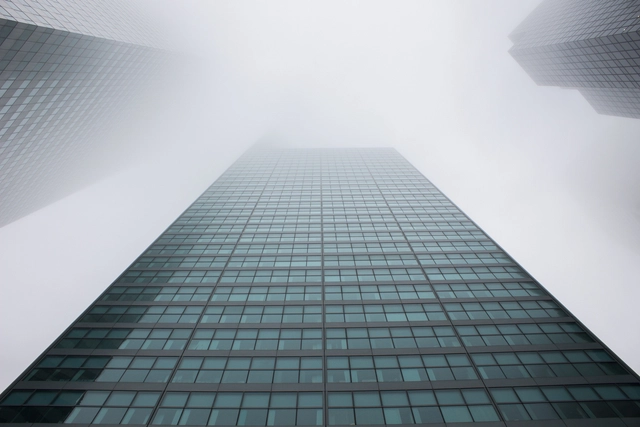
Have you been experiencing motion sickness, depression, sleepiness, and even fear, as you gaze out of your window from the 44th floor? If so, you may be prone to “Sick Building Syndrome” – the informal term for side effects caused by swaying skyscrapers, according to experts at the Universities of Bath and Exeter, who are launching a £7 million ($8.6 million) study into their causes and prevention through testing simulations.
“More and more people are living and working in high-rises and office blocks, but the true impact of vibrations on them is currently very poorly understood,” explained Alex Pavic, Professor of Vibration Engineering at the University of Exeter. “It will for the first time link structural motion, environmental conditions, and human body motion, psychology, and physiology in a fully controllable virtual environment.”
https://www.archdaily.com/868452/new-study-to-investigate-skyscraper-induced-depression-and-motion-sicknessesOsman Bari
It can sometimes feel as if the world is divided into two camps: those who do not listen to podcasts (probably because they don’t know what a podcast is) and those who listen to podcasts, love podcasts, and keep badgering their friends for recommendations so they can start listening to even more.
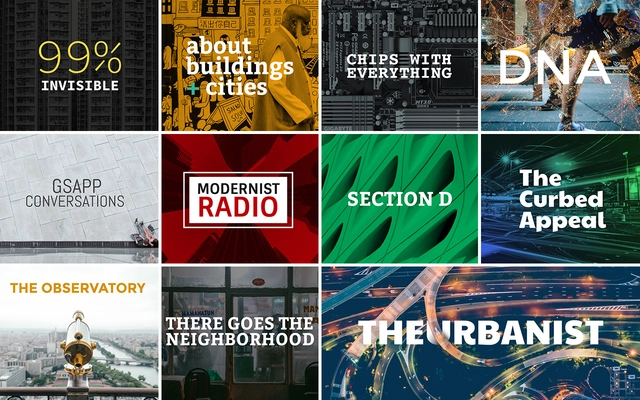
Unlike other media, it’s notoriously difficult to discover and share podcasts – even more so if you’re looking for a podcast on a niche subject like architecture, design or urbanism. To help you in your hour of need, Metropolis’Vanessa Quirk (author of Guide to Podcasting) and ArchDaily’sJames Taylor-Foster(whose silvery tones you may have heard on various architecture and design audio stories) have come together to compile this list of eleven podcasts you should subscribe to.
First Prize: The Table Top / Lap Chi Kwong, Alison Von Glinow . Image Courtesy of Bee Breeders
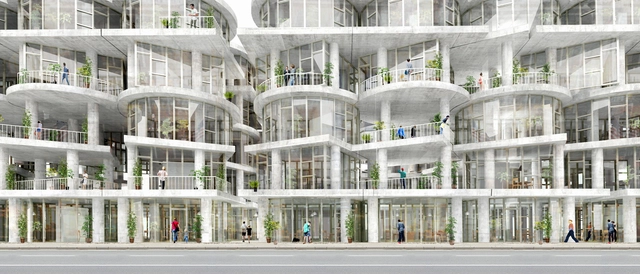
Bee Breeders have selected the winners of the New York Affordable Housing Challenge, inspired by barriers faced by the global population in our contemporary culture of housing scarcity and economic deprivation. The submissions provide various multifaceted architectural responses to scattered sites of various scales around New York City, “redefining the culture, economy, and experience of urban domesticity by means of space, material, morphology, or structure.”
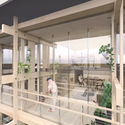
Cities around the world are facing a shortage of attractive housing options that use resources in a responsible, environmentally-positive manner. Looking to solve this challenge, New York-based firm SO-IL has teamed up with car manufacturer MINI to create MINI LIVING – Breathe, a “ forward-thinking interpretation of resource-conscious, shared city living within a compact footprint.
Now on display at the Milan Salone del Mobile 2017, the prototype structure is constructed of a translucent fabric membrane stretched across a modular metal frame that rises vertically from a previously unused 50-square-meter urban plot. Six rooms and a roof garden provide the space for flexible programmatic arrangements, adhering to the MINI LIVING principles of “Creative use of space” and “Minimal footprint.”
A fire has broken out at a construction site near the Dubai Mall and Burj Khalifa in the United Arab Emirates. At around 6:30 am (02:30 GMT), flames broke out in the lower levels of the Address Residences Fountain Views towers, a complex of three towers, each 60 floors in height, being built by Dubai developer Emaar Properties.
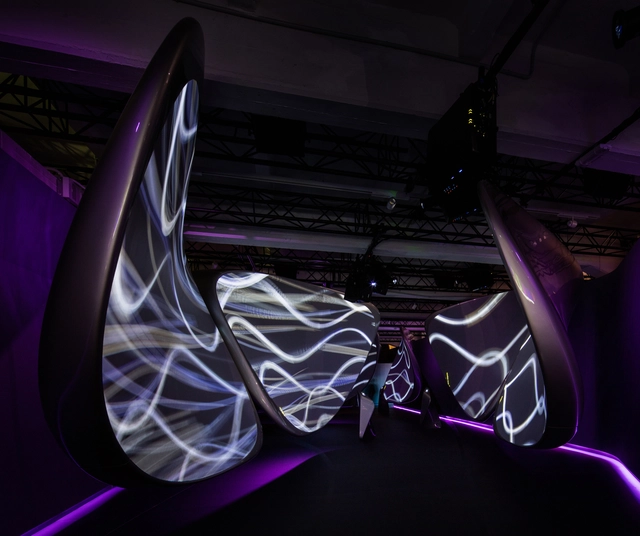
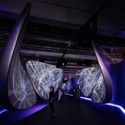
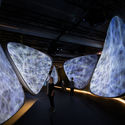
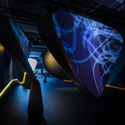
Zaha Hadid Architects has collaborated with Samsung and digital art and design collective Universal Everything to create an immersive technology installation at the 2017 Milan Design Week, taking place this week in the Italian city. Named ‘Unconfined,’ the pavilion will showcase Samsung’s new Galaxy S8 smartphone by leading visitors through an immersive environment inspired by the device.
The pavilion's new location adjacent to Shaw Tower in Vancouver. Image Courtesy of Westbank
BIG’s Serpentine Pavilion is headed to North America, with plans for stops in New York and Toronto on its way to a new permanent home in downtown Vancouver. Purchased by Canadian developer Westbank, who also sponsored the project in 2016, the pavilion will come to a rest on a site adjacent to the company’s headquarters in Shaw Tower, spitting distance from the waterfront plaza where the 2010 Olympic cauldron is located.
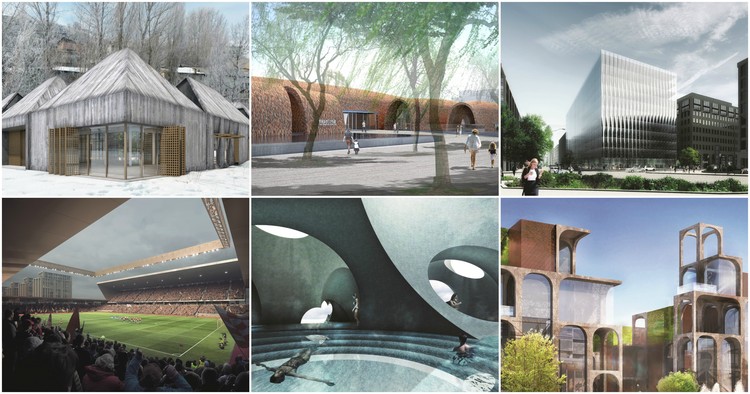
The winners of the 2017 Architectural Review MIPIM Future Project Awards have been announced. Prizes span across 11 categories and were awarded to projects from eight countries, from projects under construction to competition entries and conceptual designs.
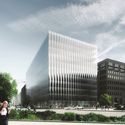
"Successful projects this year include a thermal bath and resort in the Baltic, a new ecclesiastical library for the Church of England, a rural women’s community center in Turkey and a ‘dematerializing’ office building in the US Capitol city, all demonstrating the dynamism and creativity at the heart of the architectural professional internationally," explained the awards organizers in a press release.
The winners of the 2017 Architectural Review MIPIM Future Project Awards are:
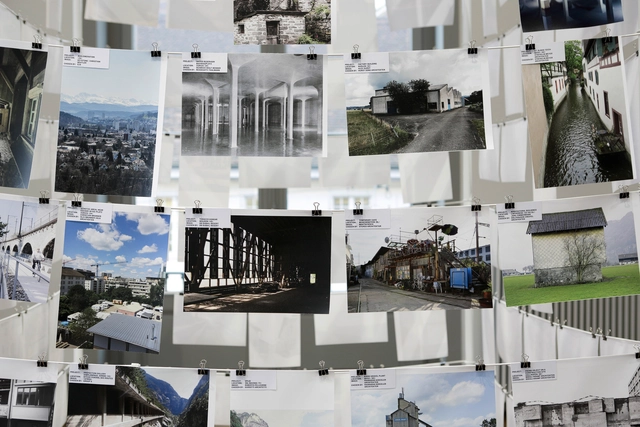
In one of his 1922 travel essays for the Toronto Star Ernest Hemingway wrote, in a typically thewy tone, of “a small, steep country, much more up and down than sideways and all stuck over with large brown hotels built [in] the cuckoo style of architecture.” This was his Switzerland: a country cornered in the heartland of Europe and yet distant from so much of its history. A nation which, for better or worse and particularly over the course of the 20th Century, has cultivated and become subject to a singularly one-dimensional reputation when it comes to architectural culture and the built environment.
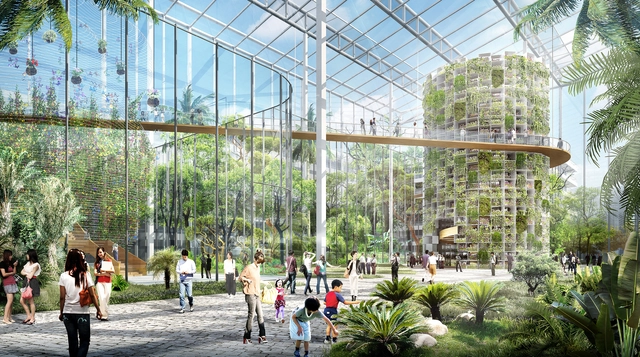
With nearly 24 million inhabitants to feed and a decline in the availability and quality of agricultural land, the Chinese megacity of Shanghai is set to realize the Sunqiao Urban Agricultural District, a 100-hectare masterplan designed by US-based firm Sasaki Associates. Situated between Shanghai’s main international airport and the city center, Sunqiao will introduce large-scale vertical farming to the city of soaring skyscrapers. While primarily responding to the growing agricultural demand in the region, Sasaki’s vision goes further, using urban farming as a dynamic living laboratory for innovation, interaction, and education.
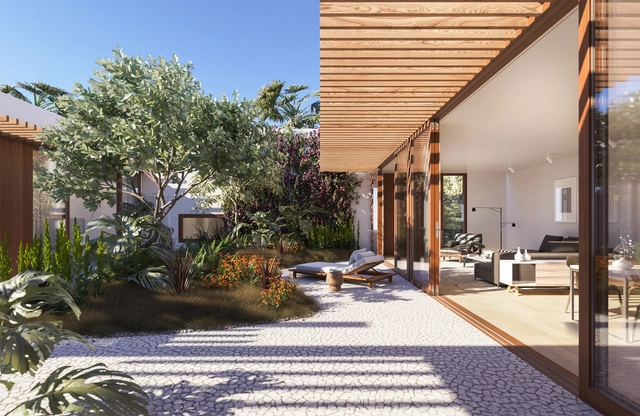
Renderings have been revealed for Herzog and de Meuron’s new luxury loft residences in Miami, designed in collaboration with local developer Robert Wennett. In contrast to the firm’s acclaimed parking garage located nearby, which capitalized on Miami’s surrounding views, 1111 Lincoln Residences will be a far more inwardly-focused endeavor, with the 2,115-square-foot lofts opening onto a series of rooftop courtyards.
Located near the city’s bustling intersection of Alton and Lincoln, the complex accommodates a multi-level parking garage, over 100,000 square feet of interior office space, dedicated event space on the seventh floor, as well as 11 selected retailers on the ground floor. Notable tenants include Alchemist, Jo Malone, Rosetta Bakery, and Chotto Matte, in addition to the various restaurants available to residents along Lincoln Road.
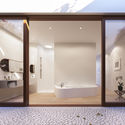
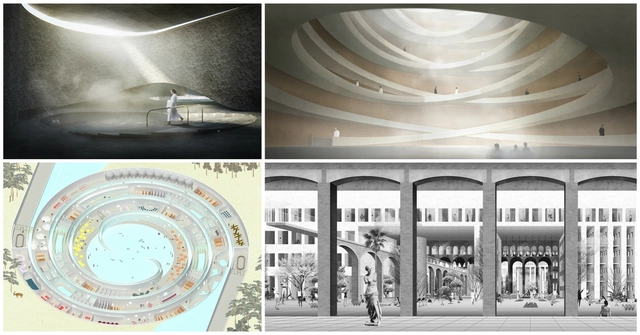
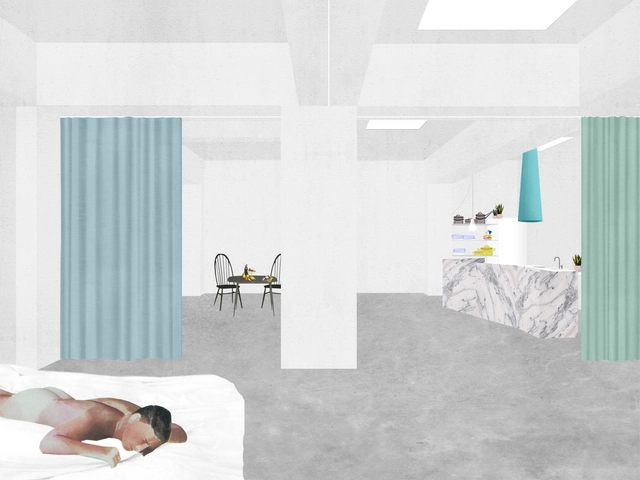
Architectural research initiative arch out loud has announced the winners of its DMZ Underground Bathhouse international open ideas competition. The brief challenged participants to create an underground bathhouse within the Korean Demilitarized Zone, responding to long-running geopolitical tensions between North and South Korea. Ultimately, nearly 300 proposals and 900 participants explored how architecture could position itself in the middle of these turbulent conditions, seeking out new forms of non-military architecture to improve relations between the two states.
The winning entries can be found below. Full results of the DMZ Underground Bathhouse Competition, including winners, honorable mentions and Director’s Choices can be found on the competition’s webpage here.
目前在纽约市的现代艺术博物馆(MoMA)展出的是建筑师扎哈哈迪德(Zaha Hadid)为她的开创性未建成项目香港太平山(The Peak in Hong Kong)所做的概念画作。本作品作于1991年,正处于3D CAD软件的普及为建筑制图的革命注入了一剂强心针的时期边缘。太平山(The Peak)画作出现于建筑制图因其自身原因的革新的末期,和旨在展示现实世界的可缩放,滚动,渲染时代的来临。只有这种新的图像创作软件在绘图功能上与以前的时代具有很大不同并且开创了新的制图风格,工具和过程通过对用户与他们的互动施加预定的议程来对设计进行约束。
在这个数字时代,像勒布贝斯·伍兹(Lebbeus Woods)和迈克尔·格雷夫斯(Michael Graves)这样的以手绘艺术而闻名的建筑师,推翻了建筑制图中占据主导地位的超级现实主义。 然而,根据 Sam Jacob 在“Metropolis”杂志上发布的最新文章,我们可能正在进入以“后数字”(post-digital)所代表的时代。 在后数字时期,建筑师重回传统制图时代,但是是通过创造新的方法论和重新评估过去数十年来最适合的数字工具。目前在建筑实践中还是大大倾向于拼贴技术,但是对于后数字制图的研究仍旧会在事务所和高等学府中继续。
Dutch firm Mecanoo has partnered with furniture manufacturer Gispen to create a new collection of modular and customizable furniture geared specifically towards creating variable working and learning environments. HUBB has been designed to adapt to a range of working requirements and scenarios, seamlessly accommodating different collaborative activities and individual work preferences.
Update:As anyone who clicked the "buy now" button discovered, this was of course a good-humored prank for April Fools' Day. ArchDaily has no plans to expand into print media, and we haven't been stalking Bjarke Ingels via his social media—honest! Our thanks to those who took it in good humor, including "the BIG man" himself for helping spread this "news" to his followers!
One year ago today the Editors of ArchDaily conceived of a project which has consumed a small and dedicated team ever since. After drawing the best talent following an international (and highly secretive) recruitment drive in 2016, a special task force was engaged with the challenge of developing our company’s first printed publication.
“The decision to break into print was not one we took lightly,” explains ArchDaily’s Managing Editor of Books, Lea Brary. “However, we are confident that this endeavor will please architecture fans and bibliophiles worldwide.”
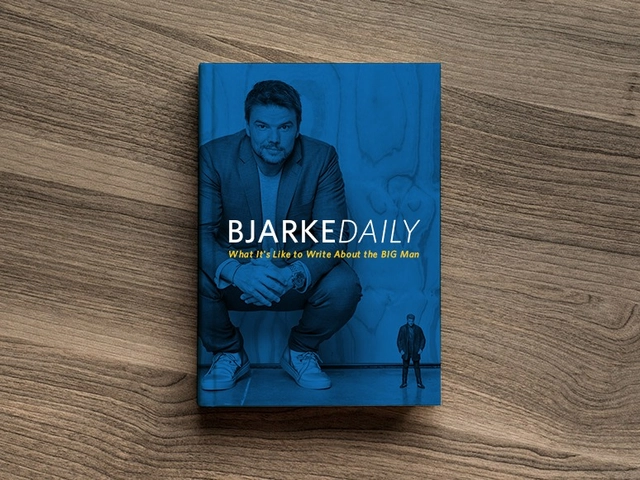
Following twelve months of intense work and production we are proud to reveal BjarkeDaily: What It's Like to Write About the BIG Man – the first comprehensive biographical study of Bjarke Ingels and BIG; an homage to the architect and practice who have become a quotidian feature of our platform for over half a decade.
https://www.archdaily.com/868270/announcing-first-comprehensive-biography-of-bjarke-ingelsAD Editorial Team
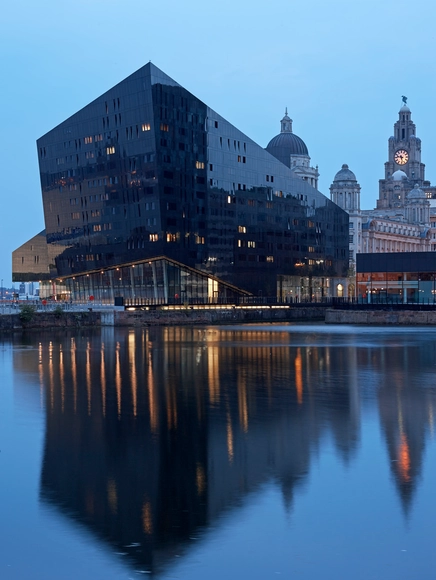
“At RIBA North, we have a building with museum conditions which will offer a magnificent opportunity to view RIBA’s world-renowned historic collections showing hundreds of years of the UK’s extraordinary architectural history,” explained RIBA President Jane Duncan. “We are particularly proud to strengthen our cultural and creative offering in the north of England, and to enable many more people to explore and understand the enormous impact that architecture and design has on all our lives.”
https://www.archdaily.com/868036/ribas-new-national-architecture-centre-will-celebrate-liverpools-architectural-historyOsman Bari
In recent years, timber construction has surpassed its previous limit of two or three stories to create buildings of much greater height. This is not only due to wood's intrinsic strength, stability, and flexibility, but also to a number of new technologies that have further increased its performance, including cross-laminated timber (CLT), nail laminated timber (NLT) and glued laminated timber (glulam).
In order to inform architects, engineers, developers, industry professionals, students, and other interested parties, reThink Wood has launched the reThink Wood Research Library, an online and open resource that will be updated frequently with information about the latest product and timber construction systems around the world, as well as showing where there are gaps that could be covered in the future.
https://www.archdaily.com/868328/learn-about-large-scale-timber-construction-with-rethink-woods-online-libraryArchDaily Team
The US News and World Report has released their 2017 list of “Best Jobs,” based on a variety of criteria including salary, employment rate, growth potential, future job prospects, stress level and work-life balance.
Despite describing the job outlook for architects as “very solid,” overall, architecture finished outside out of the top 100, coming in 7th (out of 8) in the “Engineering Jobs” category. Find out the expected salaries for architects and which cities pay their architects the best, after the break.
https://www.archdaily.com/868330/us-news-and-world-reports-best-job-ratings-find-very-solid-outlook-for-architectureAD Editorial Team
The Sony World Photography Awards has announced the winners of the architectural category of their 2017 Open Category awards program. Taking home the top prize was Tim Cornbill of the United Kingdom, for “Oculus,” his capture of a geometric concrete facade found along the River Spree in Berlin.
“As an architect, I’m passionate about capturing buildings, and I’m always on the lookout for photogenic designs. I was really struck by the sheer scale of this façade and the visual impact of the circle, which I hope I’ve been able to convey in this everyday street scene,” ,” said Cornbill of his winning image. “I am truly thrilled to have been recognised in the world’s largest photography competition and it will be amazing to see the photo exhibited in London.”
Available to enter for any photographer, the Open competition received more than 105,000 entries across ten categories ranging from wildlife to street photography. Check out all the shortlisted images for the architecture category after the break.











Lotte_Group.jpg?1491409215&format=webp&width=640&height=580)

.jpg?1491327845&format=webp&width=640&height=580)
.jpg?1491327852 "© Laurian Ghinitoiu")
.jpg?1491327860 "© Laurian Ghinitoiu")
.jpg?1491327869 "© Laurian Ghinitoiu")
.jpg?1491327876 "© Laurian Ghinitoiu")
.jpg?1491327845)


.jpg?1491249084&format=webp&width=640&height=580)
.jpg?1491249078 "The pavilion's new location adjacent to Shaw Tower in Vancouver. Image Courtesy of Westbank")
.jpg?1491249065 "The pavilion in its original location at Kensington Gardens. Image Courtesy of Westbank")
.jpg?1491249058 "The pavilion in its original location at Kensington Gardens. Image Courtesy of Westbank")
.jpg?1491249071 "The pavilion in its original location at Kensington Gardens. Image Courtesy of Westbank")
.jpg?1491249084)