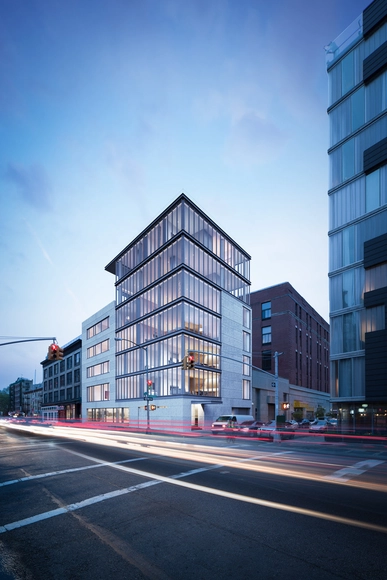
Conceived as an inner sanctuary within downtown Manhattan, the building highlights acoustics as a key consideration, with a façade system and exterior glass enabling a high OITC rating to “ensure a tranquil home environment in the center of this vibrant neighborhood.”
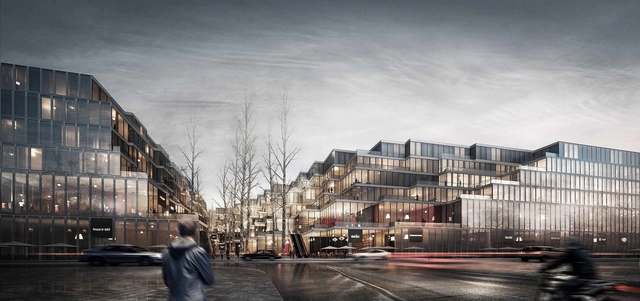
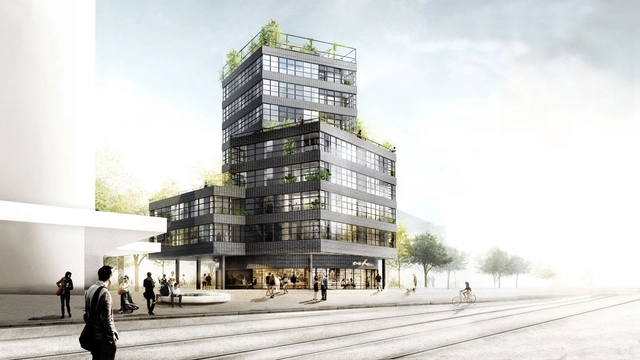
HHF Architects, in collaboration with landscape architects from Westpol, have won a competition with their design for Jardin Métropole, a 30-meter-tall apartment tower and neighboring green space. Located in Biel, Switzerland, the project is expected to become the symbol of the city and contribute to the area’s general enhancement through its angled cube massing and public element.
Based on the theme of a “city garden,” the building will constitute the beginning of a new, park-like passage to Rue du Moulin, and will feature access to gardens with private planting beds, a shared roof terrace, and landscaped loggains.
At Wednesday evening’s ceremony, the husband-wife team opened up about the conceptual ideas driving their yet-to-be-revealed design for the Obama Presidential Library. In a lively discussion with Vanity Fair architecture critic Paul Goldberger, the architects revealed the nature of their working relationship with the President and First Lady, and how their upcoming library may draw from what TWBT learned in designing the Barnes Foundation in Philadelphia.
Contrary to some beliefs, climate change is not simply some unidentifiable threat perpetually on the horizon, but a phenomenon that has already had real impact on real world places. To illustrate the effects of our changing environment, the New York Times has launched a new multi-media series called “Changing Climate, Changing Cities,” written by architecture critic Michael Kimmelman, that aims to expose how climate change is “challenging the world’s urban centers.
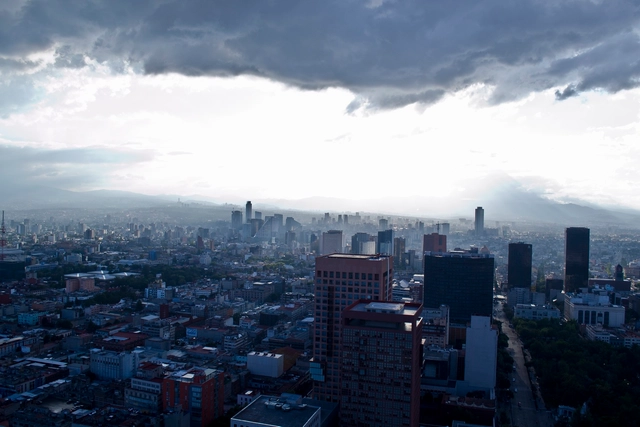
The first installment takes a look Mexico City, where environmental issues that have already wreaked havoc for centuries, such as water shortage and ground subsidence, are beginning to see their effects multiplied by the city’s changing climate. The piece explains the root of these problems, and their effect of an already fragile infrastructure and social fabric.
Videos
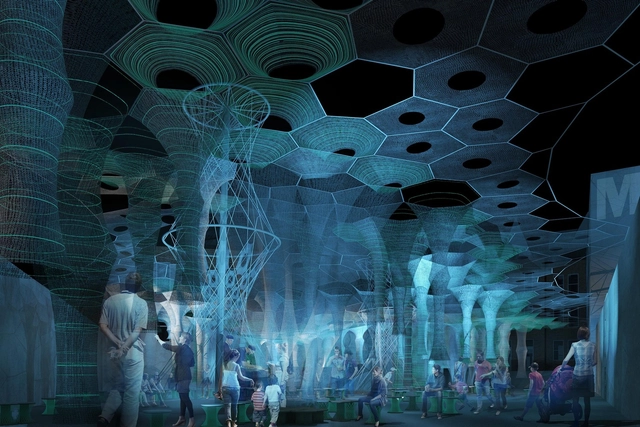
Jenny Sabin Studio. Lumen. 2017 (rendering). Winner of the Young Architects Program 2017, MoMA PS1, New York. Image Courtesy of Jenny Sabin Studio
Lumen by Jenny Sabin Studio has been named the winner of The Museum of Modern Art and MoMAPS1’s annual Young Architects Program. Opening on June 27 in the MoMA PS1 courtyard, this year’s construction is an immersive design that evolves over the course of a day, providing a cooling respite from the midday sun and a responsive glowing light after sundown. Drawn from among five finalists, Jenny Sabin Studio’s Lumen will serve as a temporary urban landscape for the 20th season of Warm Up, MoMA PS1’s pioneering outdoor music series. Lumen will remain on view through the summer.
Now in its 18th edition, the Young Architects Program at The Museum of Modern Art and MoMAPS1 has offered emerging architectural talent the opportunity to design and present innovative projects, challenging each year’s winners to develop creative designs for a temporary, outdoor installation that provides shade, seating, and water. The architects must also work within guidelines that address environmental issues, including sustainability and recycling.
Courtesy of Pixabay User Falco License Public Domain
Researchers at Princeton University’s Department of Civil and Environmental Engineering have discovered that hydroxyapatite, the primary compound found in human teeth and bones, can be used to help preserve the condition of marble, which is prone to cracking and deteriorating as a result of the effects of pollution and the weather.
https://www.archdaily.com/805307/new-type-of-marble-protection-derived-from-human-teeth-and-bonesOsman Bari
This article is part of our 'Innovative Materials' series where we ask architects about the creative process behind choosing the materials they use in their work.
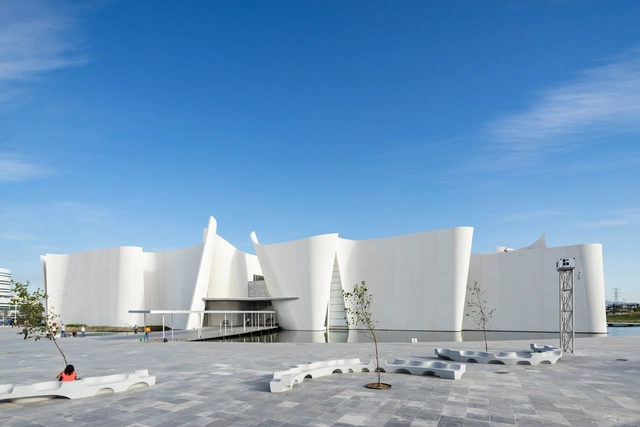
The Museo Internacional del Barroco (International Baroque Museum) by Toyo Ito is located 7km from Puebla, Mexico. The place is noted for its easy access, not only for cars, but also for being connected to a network of bike paths and public transport. In this interview we spoke with Alejandro Bribiesca Ortega and Miriam Carrada.
https://www.archdaily.com/805535/how-architects-realized-the-curving-twisted-slanted-walls-in-toyo-itos-mexican-museumArchDaily Team
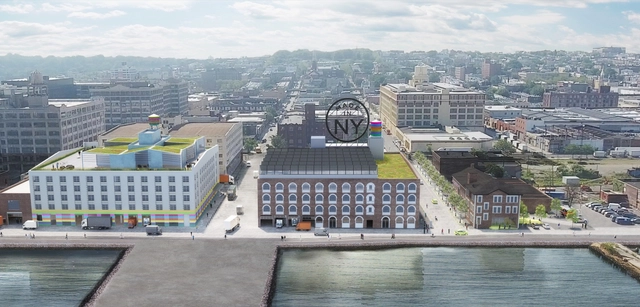
As rising rents have began to drive out historic garment companies from New York City’s storied Garment District in Midtown Manhattan, mayor Bill de Blasio has announced plans for a new development that would bring together the artistic fields into one creative hub in Brooklyn’s Sunset Park neighborhood. Conceived and designed by WXY architecture + urban design, the $136 million “Made in NY Campus” will provide the setting for film and television production, virtual reality tech offices, and a new home for New York’s fashion and garment manufacturing industry.
After two weeks of nominations and voting, last week we announced the 16 winners of the 2017 Building of the Year Awards. In addition to providing inspiration, information, and tools for architecture lovers from around the world, ArchDaily seeks to offer a platform for the many diverse and global voices in the architecture community. In this year's Building of the Year Awards that range of voices was once again on display, with 75,000 voters from around the world offering their selections to ultimately select 16 winners from over 3,000 published projects.
Behind each of those projects are years of research, design, and labor. In the spirit of the world's most democratic architecture award, we share the stories behind the 16 buildings that won over our global readership with their urban interventions, humanitarianism, playfulness, and grandeur.
Zaha Hadid Architects has released new images of Leeza SOHO, their mixed-use design in Beijing's Lize Financial Business District. The project is notable for its 190-meter tall atrium, which rises the full height of the building, uniting two twisting sections which contain 172,800 square meters of office and residential space. At the base of the tower, a new transit hub straddles a subway tunnel that is currently under construction.
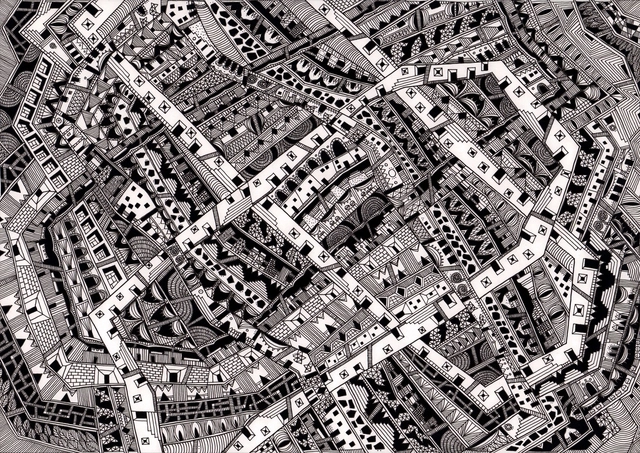
Lima-based architect Karina Puente has a personal project: to illustrate each and every "invisible" city from Italo Calvino's 1972 novel. Her initial collection, which ArchDailypublished in 2016, traced Cities and Memories. This latest series of mixed media collages, drawn mainly using ink on paper, brings together another sequence of imagined places – each referencing a city imagined in the book.
Invisible Cities, which imagines fictional conversations between the (real-life) Venetian explorer Marco Polo and the aged Mongol ruler Kublai Khan, has been instrumental in framing approaches to urban discourse and the form of the city. According to Puente, "each illustration has a conceptual process, some of which take more time than others." Usually "I research, think, and ideate over each city for three weeks before making sketches." The final drawings and cut-outs take around a week to produce.
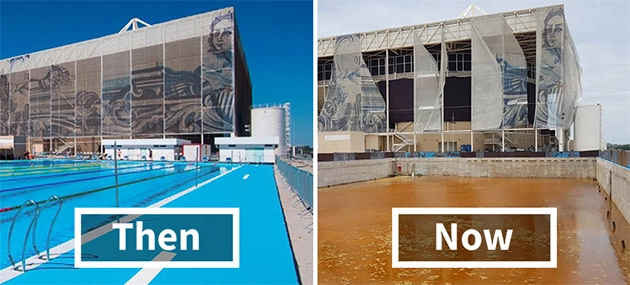
A mere six months after the torch was snuffed, the Brazilian Olympic sites that once hosted scores of locals, tourists, and athletes in a global celebration of athleticism and camaraderie now lie in ruin. This "ghost town" cost Brazil around $4.6 billion plus an estimated $1.6 billion in budget overages, according to reports by the Financial Times and Quartz.
Looking to add a beautiful piece of art to your render to really sell your project? Look no further.
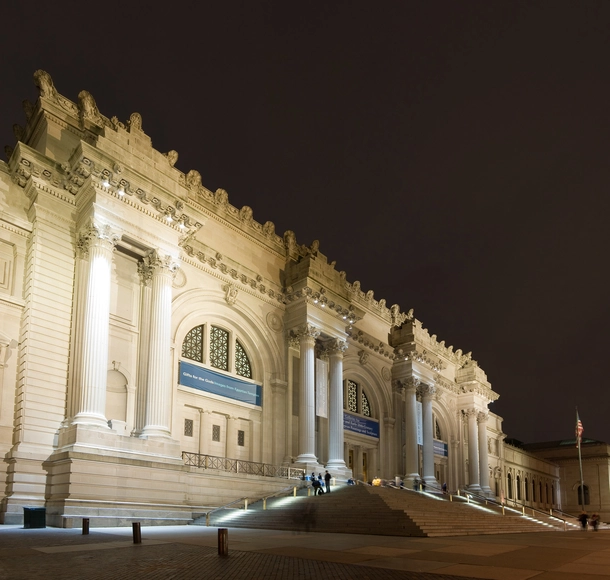
The Metropolitan Museum of Art has announced its new Open Access policy, which releases over 375,000 images of artworks from their expansive collection for free download, with absolutely no restrictions under copyright law – meaning you are completely free to copy, remix, or distribute any image for any use, including commercial.
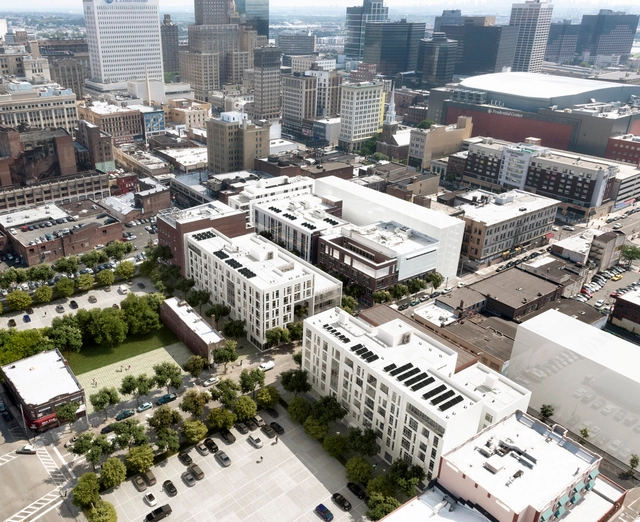
Richard Meier & Partners has completed 3 new mixed-use buildings as part of their “Teachers Village” master plan in downtown Newark, New Jersey. The development, led by RBH Group, centers around two Charter Schools completed by Meier & Partners in 2013, to provide a variety of retail spaces and 123 residential units marketed specifically at teachers.
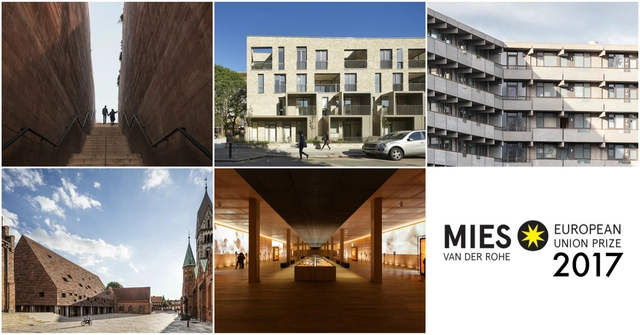
“Our instincts could be summed up by the words of Peter Smithson: ‘things need to be ordinary and heroic at the same time,’” said Jury Chairman Stephen Bates. “We were looking for an ordinariness whose understated lyricism is full of potential’.”
Through April, the jury members will visit each finalist project to evaluate the buildings firsthand and to see how they are used by the public. The Prize Winner will be announced in Brussels on May 16.
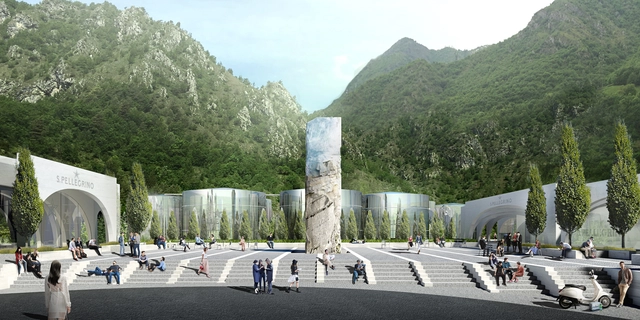
Bjarke Ingels Group (BIG) have been revealed as the winners of a competition to conceptualize and design a new headquarters and bottling plant for San Pellegrino, located in the terme of the same name in the Alps of northern Italy. Finalists included MVRDV, Snøhetta, and aMDL, each of whom presented their proposals in October last year.
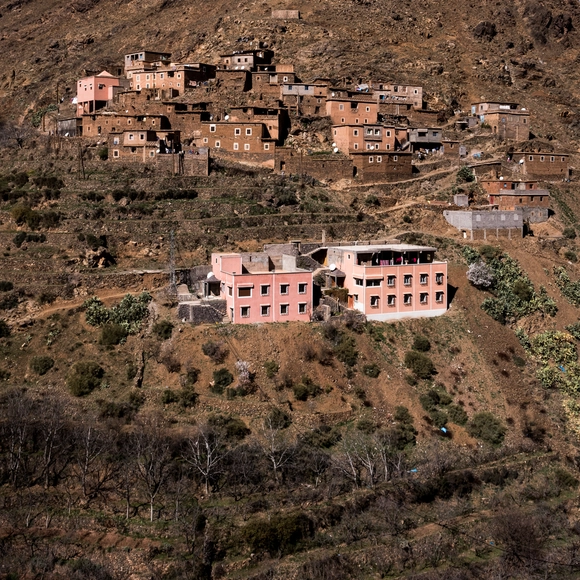
In this photo-essay, Norbert Juhász—a Hungarian photographer based in Budapest—presents a study of the Moroccan Berber villages (around Imlil and the surrounding valleys). Located in the High Atlas Mountains, these remote settlements are increasingly connected to the "outside world." In the words of Juhász, "many are now connected to the electrical grid and have some sort of road access." That said, "mules are still a popular form of transport."
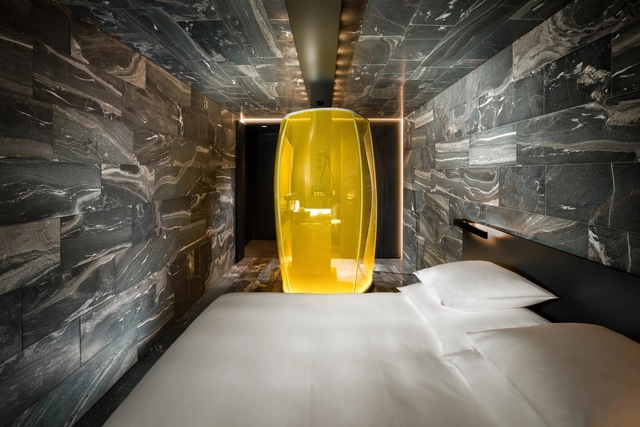
Four top architects – Thom Mayne (Morphosis), Tadao Ando, Kengo Kuma and Peter Zumthor – have been tapped to contribute designs for the new “House of Architects” at the 7132 Hotel in ValsSwitzerland. The latest addition to the hotel, The House of Architects features a lobby and entrance also designed by Morphosis Architects, and 7 room designs centered around a single material.
Yale Art + Architecture Building / Paul Rudolph + Gwathmey Siegel & Associates Architects. Image Courtesy of gwathmey siegel & associates architects
Architecture students have long groaned (or bragged) about the long hours and all-night work sessions demanded by their chosen major. Surely, we’ve all thought, no other major must be working this hard – right?
Now, thanks to the results of Indiana University's National 2016 Study of Student Engagement (NSSE), those assertions have been backed up with some numbers: architecture students were found to work an average of 22.2 hours per week, more than 2.5 hours more than any other major.
BAD. Built by Associative Data, in collaboration with MARZ Studio, has released the plans for its newest project, No. 5, a mixed-use space in the heart of Jonah in Beirut City, Lebanon. Designed with parametric studies in mind, the project takes into account view orientations, solar radiation, wind infiltration, and program through its various levels of massing.
Sited next to the prominent Camille Chamoun Sports City Stadium on one of the busiest corners in the area, the building is “very present and visible from the street level, hence the proposal’s pixelated massing.”
If there was ever a time when the world needed a bit of extra love, that time is now. And even though Valentine's Day is a celebration of romantic love, we know these uplifting messages of affection will resonate with peers, friends, and family members, alike.
ArchDaily's mission is to improve the quality of life of the world's inhabitants by publishing content for architects, designers, and decision-makers. We also realize how important tolerance, acceptance, and love are to the process of building a better world. So, from us to you, and from your fellow readers to the world, may you feel a wealth of love on this Valentine's Day.
Gif submitted by Vilma Picari
https://www.archdaily.com/805126/105-valentines-for-architects-and-architecture-loversAD Editorial Team
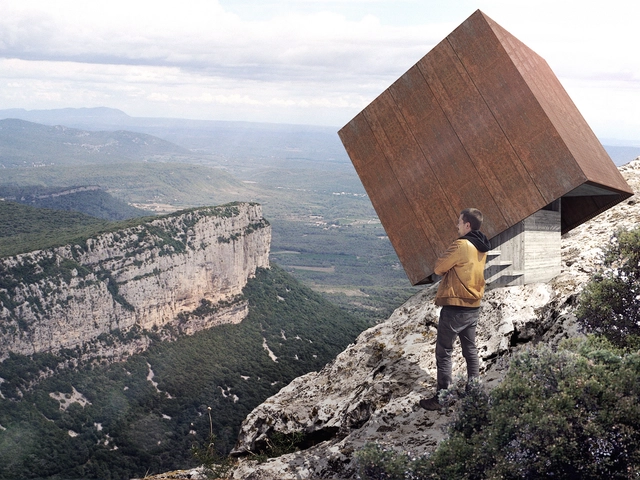
Have you ever felt yourself teetering on the edge of insanity? Or how about being this close to your tipping point? No? Well, it seems that architect Christophe Benichou has, and the result is a cubic small scale structure balancing upon the precipice of Pic-Saint-Loup.
Aptly named Tip-Box, the fictional project was originally conceived for a soon-to-be 30-year-old friend of Benichou’s. Perhaps realizing that presents should be restricted to more traditional boxes, the space is intended to serve as an outpost for contemplation and rest for hikers in the mountains of Montpellier.
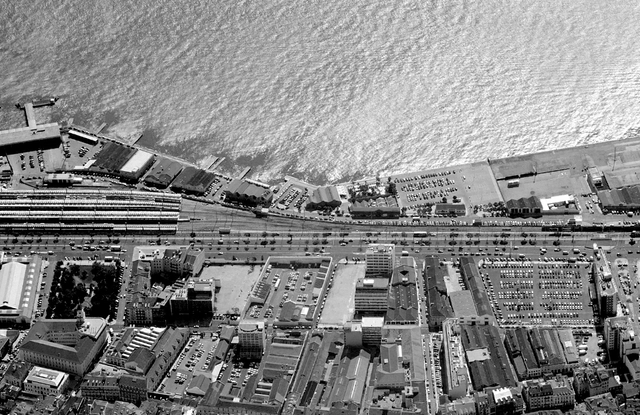
At the end of 2016 Portuguese architect João Luis Carrilho da Graça was invited to design a hotel to support the EDP's new facilities and refurbishment of its existing spaces. Carrilho da Graça is also responsible for the urban plan of the area in which the projects will be developed and built--the Zona da Boavista Nascente, between Santos and the Cais do Sodré






.jpg?1487368487&format=webp&width=640&height=580)

















.jpg?1487076478&format=webp&width=640&height=580)
.jpg?1487006071&format=webp&width=640&height=580)