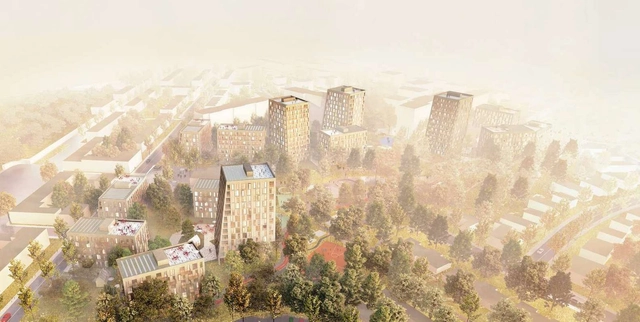
C.F. Møller Architects and BRUT have won a competition for the design of an ambitious urban development in Ostend, Belgium. The neighborhood of 500 houses demonstrates a method of using a human scale to improve the quality of life the residents and the urban realm.
The project centers on the De Nieuwe Stad quarter, where an existing social housing scheme from 1972 has become outdated. The competition for the site’s complete redevelopment attracted 54 firms, from which C.F. Møller Architects and BRUT.
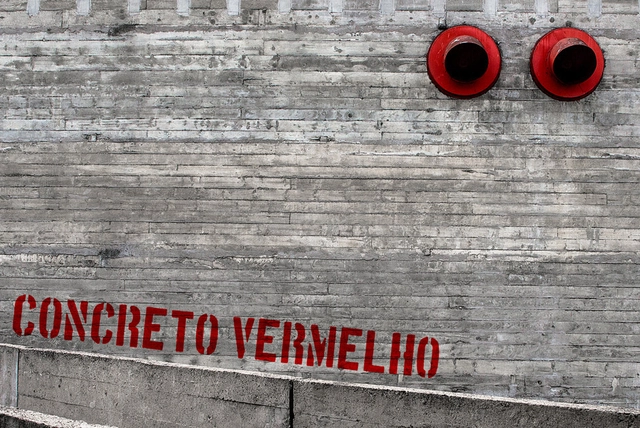
For thousands of years, concrete has been a foundation of the built environment: the most widely used man-made material on the planet. However, as architects, and the public alike, sharpen their focus on the causes and effects of climate change, the environmental damage caused by cement has become a subject of unease.
As exhibited in a recent in-depth article by Lucy Rodgers for BBC News, cement is the source of about 8% of global CO2 emissions. The piece was written off the back of the UN’s COP24 climate change conference in Poland and found that in order to meet the requirements of the 2015 Paris Climate Agreement, annual cement emissions must fall by 16% by 2030.
https://www.archdaily.com/909187/the-environmental-cost-of-cement-and-what-to-do-about-itNiall Patrick Walsh
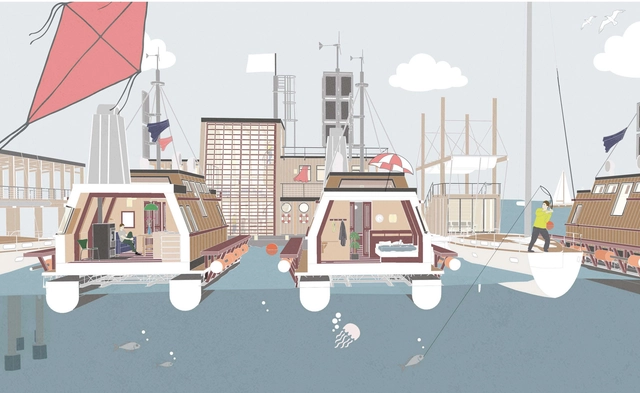
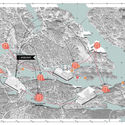
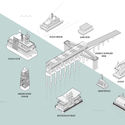
Architect Daniela Lamartine has designed a floating community to address Sweden's national housing crisis. Called Floathub, the project creates a new mobile lifestyle to achieve long-term economic and residential security. Floathub would be created with a co-operative trust where residents become developers and owners through collective action. The trust would manage and build the floating typologies using CNC technology to enable a self-sufficient mobile lifestyle on water.
Venice captured all architects' hearts and minds last year, but 2019 —a Venice-less year— will be still a year full of biennials and festivals around the world (many of which we're proud to be official partners of). The excitement is already building.
From Chicago's new approaches to the traditional practices to Shenzhen's future technology prospect; from Oslo's degrowth agenda to Brazil's focus on everyday architecture, it's time to start saving dates for the following biennials around the world!
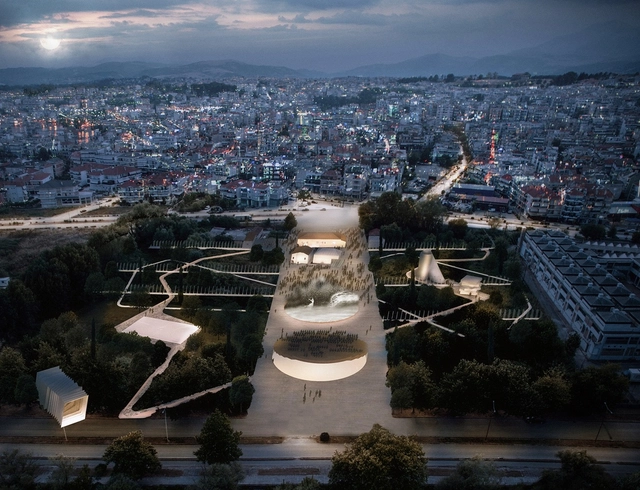
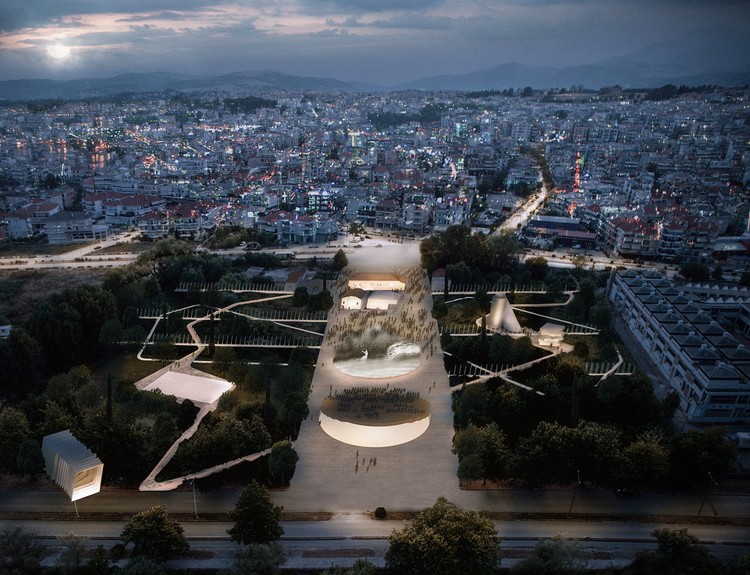
Urban Theater. Image Courtesy of Anagram Architecture & Urbanism
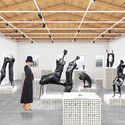
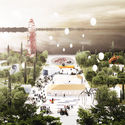
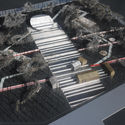
Rotterdam and Athens-based practice Anagram Architecture & Urbanism has designed an "Urban Theater" for the Ioannina Cultural Park National Competition in Greece. The proposal suggests an open and accessible public space that creates a new identity and captures the imaginary of the city. Connecting the city with the lake of Ioannina, the new public space presents a unified and flexible space for both everyday leisure time and large scale events to take place.
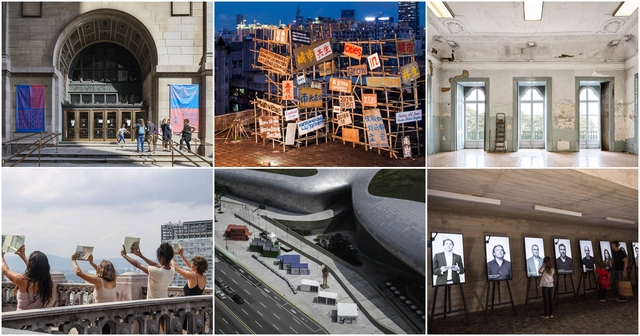
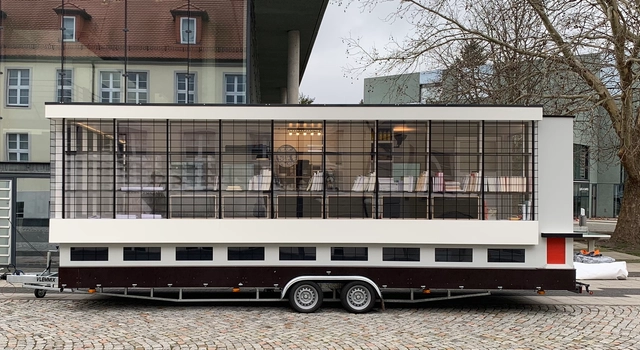
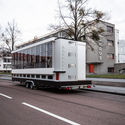
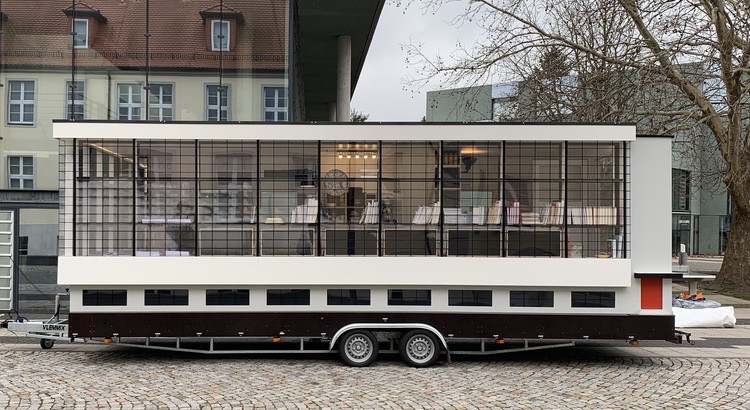
A bus inspired by the Bauhaus school in Dessau will take to the streets during the school's centenary year to visit four cities around the world. The bus is part of the larger SPINNING TRIANGLES project by SAVVY Contemporary that is curated by Elsa Westreicher. Marking the 100th anniversary of the Bauhaus, the project aims to investigate, challenge and act against the neocolonial power structures inherent in design practices, theory and teaching.
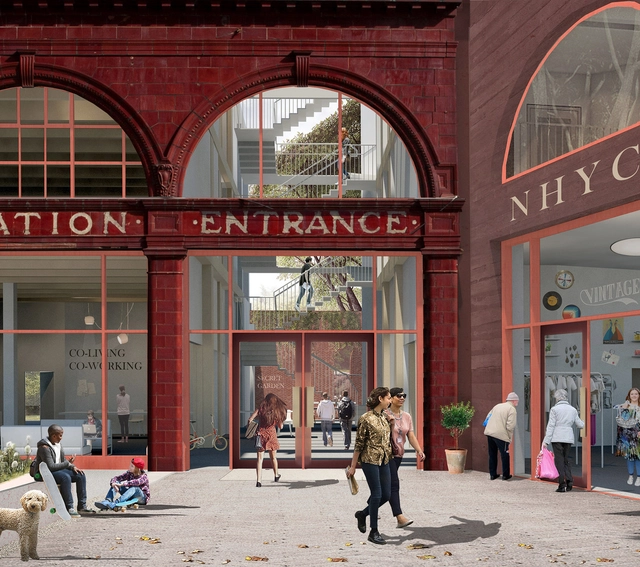
Morris + Company has unveiled images of their competition-winning vision addressing London’s homelessness crisis. The M+C scheme, produced for the New Horizon Youth Center and Mayor of London-led competition, repurposes the abandoned York Road tube station into a hostel and co-working space.
Titled “Stepping Stones”, the project seeks to provide “an inclusive, viable, and holistic site strategy that can support a managed and balanced community by providing homeless young residents with a sage, supporting stepping-stone into appropriate long-term housing solutions.”
https://www.archdaily.com/909115/morris-plus-company-imagines-london-tube-station-repurposed-for-the-homelessNiall Patrick Walsh
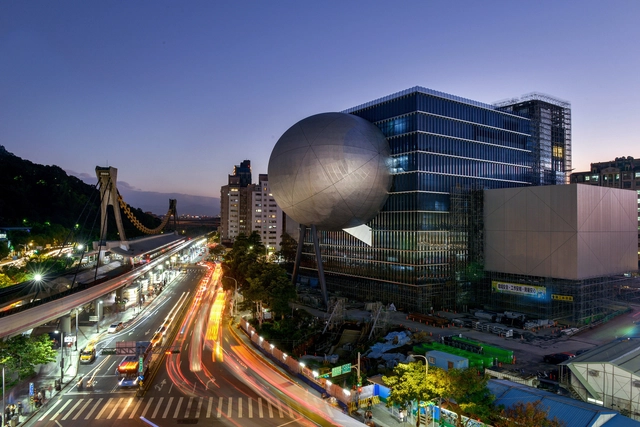
New photographs have been released of OMA’s Taipei Performing Arts Center (TPAC), as construction continues in Taiwan. Consisting of three theaters, each functioning autonomously of each other, the OMA scheme seeks to depart from the traditional consensus of performing arts centers as simply containing a large auditorium, medium-sized theater, and small-size black box.
OMA sees “no excuse for contemporary stagnation,” using the TPAC as an opportunity to experiment with the inner workings of theaters, leading to a dynamic external presence. Hence, the TPAC’s three theaters plug into a central cube combining stages, backstages, and support spaces into a single, efficient entity, allowing stages to be modified or merged for unforeseen scenarios.
The work of Brazilian architect Oscar Niemeyer is currently being featured by the city of Rio de Janeiro. Throughout the month of January, mock-ups and engravings signed by the architect can be seen in Barra da Tijuca, in the city’s West Side. There, visitors can discover the history of Brazilian architecture and see some of Niemeyer's most famous work. The RioCVB created the exhibition to celebrate Niemeyer's legacy and showcase Brazil's landmark buildings.
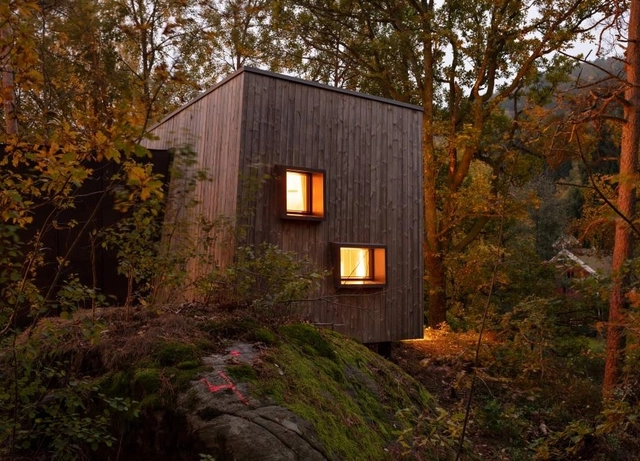
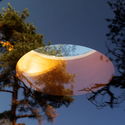
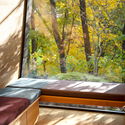
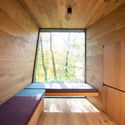
Design practice Snøhetta has created a series of secluded wooden shelters for Norway's largest hospitals. Sited in the forest, the shelters were created on behalf of the Friluftssykehuset Foundation. Designed to make hospitalization easier for patients and their families, the outdoor retreats offer a physical and psychological respite from treatments and the isolation that can follow long-term hospitalization.
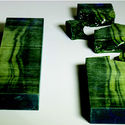
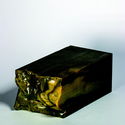
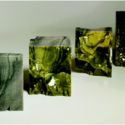
Researchers at New York’s Columbia University have unveiled a method of vibrantly replicating the external and internal structure of materials such as wood using a 3D printer and specialist scanning techniques. While conveying the external profile and patterns of natural objects is tried and tested, a major challenge in the 3D printing industry has been replicating an object’s internal texture.
In their recent study “Digital Wood: 3D Internal Color Texture Mapping” the research team describes how a system of “color and voxel mapping “led to the production of a 3D printed closely resembling the texture of olive wood, including a cut-through section.
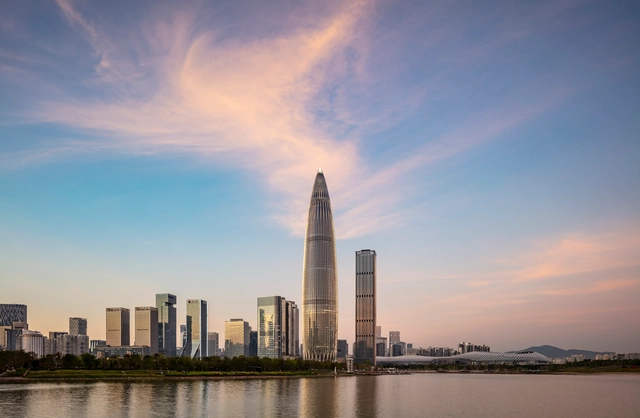
Kohn Pedersen Fox Associates (KPF) has announced the completion of the third-tallest building in Shenzhen. The China Resources Headquarters, a 400-meter-tall commercial office tower, stitches together retail, residential, and office functions surrounded by 2,000 square meters of public space.
The tower, inspired by the shape of winter bamboo shoots, seeks to “invigorate Shenzhen’s urban fabric while providing one of the country’s premier companies with a visual icon symbolizing its historic growth and prominent stature.”
https://www.archdaily.com/909026/kpf-completes-the-third-tallest-building-in-shenzhenNiall Patrick Walsh
As 2018 winds to a close, we've started to look ahead to the projects we're most looking forward to in 2019. Many of the projects listed here have been in the works for years, having experienced the frustrating false starts and lulls that come in a profession dependent on long-term and significant capital investment, not to mention changing politics.
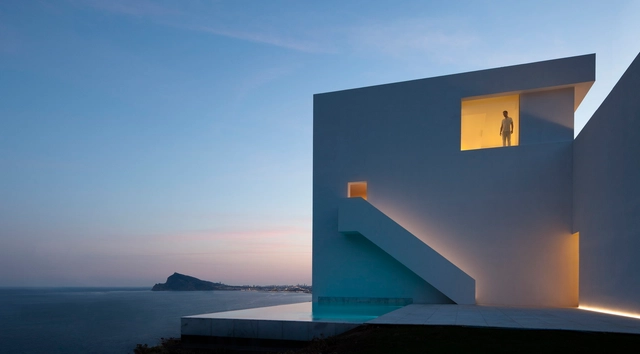
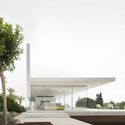
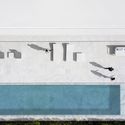
Spanish architect Fran Silvestre is well known for his portfolio of nuanced, clean, and decidedly modern works. Each project is as stunning as the next, the type of home that shows up in Bond films and populates the Pinterest boards of aspiring homeowners.
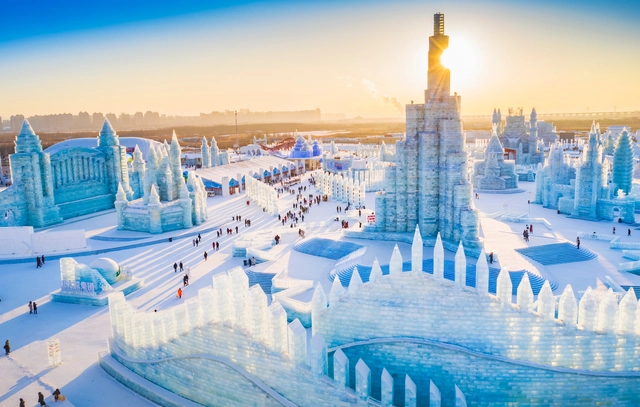
The world’s largest ice festival has opened to the public in China. The Harbin International Ice and Snow Festival in Heilongjiang, North-Eastern China draws 18 million visitors, marveling at the festival’s spectacular castles and sculptures. In total, the 2019 edition saw 120,000 cubic meters of ice and 111,000 cubic meters of snow crafted by thousands of artists in temperatures as low as -35C (-31F) using swing saws, chisels, and ice picks.
Having begun as an annual tradition in 1985, the festival has gained accolades such as the Guinness Record for the world’s largest snow sculpture (250 meters long and 8.5 meters high). The 2019 festival sees more than 100 landmarks, and ice sculptures by artists from 12 countries.
The Harbin Festival will be open for one month, closing on February 5th. Below, we have rounded up our favorite images of the festival so far, demonstrating that red hot architecture can be cold as ice.
https://www.archdaily.com/909000/worlds-largest-ice-sculpture-festival-opens-in-china-with-chillingly-cool-architectureNiall Patrick Walsh
The A’ Design Award is an international award whose aim is to provide designers, architects, and innovators from all architecture and design fields with a competitive platform to showcase their work and products to a global audience. Among the design world's many awards, the A' Design Award stands out for its exceptional scale and breadth; in 2015, over 1,000 different designs received awards, with all fields of design recognized by the award's 100 different categories.
The World Design Rankings (WDR) are sponsored by the A' Design Award and Competition, the world's leading international design accolade. The WDR ranks all the countries based on the number of designers that have been granted with the A' Design Award between the years 2010 and 2018. Highly competitive and influential, WDR is to design what the Olympics are to sports. It aims to provide additional data and insights to economists and journalists regarding the state-of-art in the design industry. The ultimate aim of the world design rankings is to contribute to global design culture through advocating and highlighting good design. The rankings aim to provide a snapshot of the state-of-art and design potentials of countries worldwide by highlighting their creative strengths and available opportunities.
The United States tops the list with 584 awards, followed by China (554), and Japan (215). Take a look at our favorite architectural projects below.
The submission period for the A' Design Award closes on February 28th. You can register here. After the winners are announced on April 15th, a selection of architecture-related winners will be featured in a post on ArchDaily.
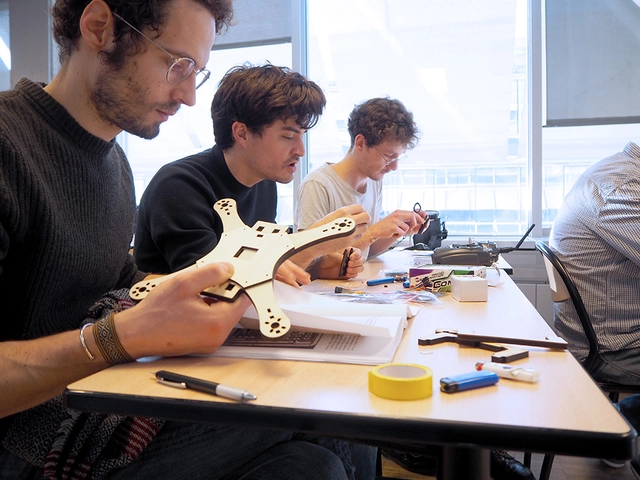
In 2016, Ecole des Ponts ParisTech has established an advanced masters program with a focus on digital fabrication and robotics. Currently recruiting for its fourth installment, the Design by Data Advanced Masters Program appeals to architects, engineers, and tech-oriented designers. Since its launch in 2016, the program’s director Francesco Cingolani has sought to shape the relationship between architecture and technology by creating a cross-disciplinary culture between the two.
As previously mentioned on Archdaily, students study the main components of the program - computational design, digital culture and design, and additive manufacturing and robotic fabrication - throughout the 12-month program to fulfill Design by Data’s main objectives while working with peers in a dynamic learning environment. While providing each participant with both technical skills and an aesthetic eye, the program ensures students will also gain critical knowledge of current innovative trends and ongoing research. By exposing them to technology through hands-on use of tools of digital fabrication, the program will teach students to approach design through a process-oriented lens.
After years of construction, the world's first underwater hotel has officially opened in the Maldives. The hotel, part of the Conrad Maldives Rangali Island, will allow guests to relax within the waters of the Indian Ocean and is touted by the developers as "an ambitious display of architecture, design, and technology."
https://www.archdaily.com/908998/worlds-first-underwater-hotel-to-open-in-the-maldivesAD Editorial Team
Shoraku-ji, Toru Kashihara Architects, Photo Takumi Ota
Religious architecture has long been one of the most exciting typologies, one has long paved the way for various design and structural innovations. Faith & Form magazine and Interfaith Forum on Religion, Art and Architecture (IFRAA) annually recognize the continued creativity defining the field.
This year's winners include 35 projects that span a variety of religious denominations, sizes, and location. Additionally, the award has recognized two trends defining contemporary religious architecture: "the preference for natural materials in worship environments, and inventive design solutions to address tight budgets."
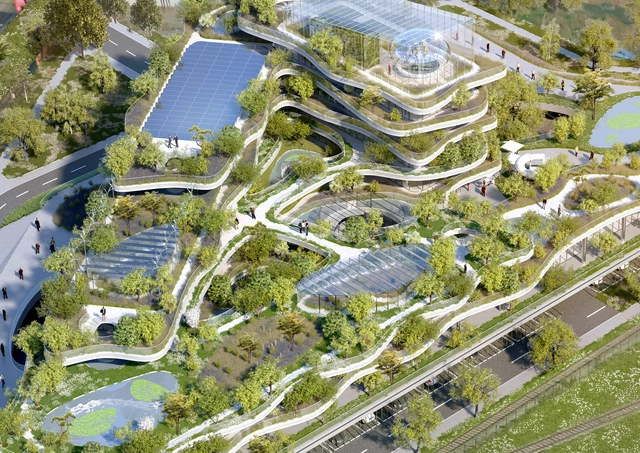
In a design proposal for Soprema’s new company headquarters in Strasbourg, France, Vincent Callebaut Architectures envisions an 8,225 square-meter ecological utopia. The building, called Semaphore, is described in the program as a “green flex office for nomad co-workers” and is dedicated to urban agriculture and employee well-being.
An eco-futuristic building, Semaphore is inspired by biomimicry and intended as a poetic landmark, as well as aiming to serve as a showcase for Soprema’s entire range of insulation, waterproofing, and greening products. The design is an ecological prototype of the green city of the future, working to achieve a symbiosis between humans and nature.
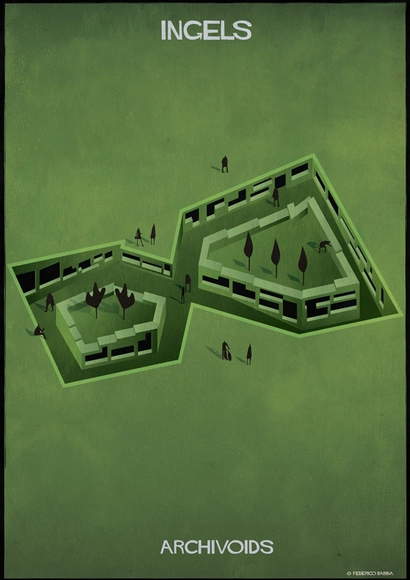
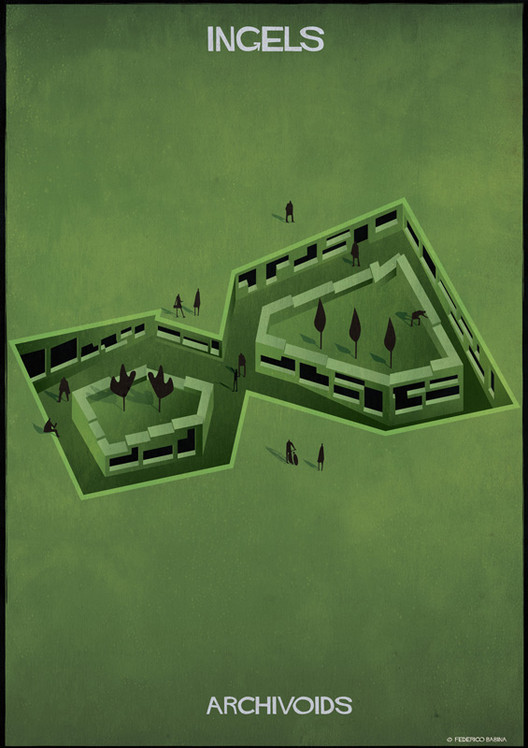
Babina’s images create an inverse point of view, a reversal of perception for an alternative reading of space, and reality itself. Making negative space his protagonist, Babina traces the “Architectural footprints” of famous architects, coupling mysterious geometries with a vibrant color scheme.
Tower of Twelve Stories. Image Courtesy of Bureau Spectacular
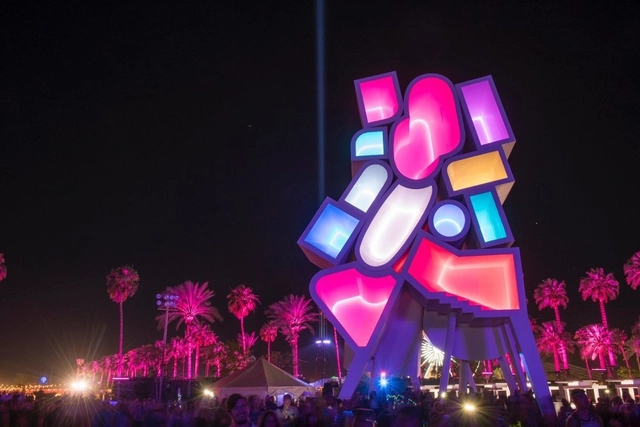
Francis Kéré, Office Kovacs, and NEWSUBSTANCE are among a set of designers selected to create art installations for the Coachella Arts and Music Festival in California. The 2019 lineup has been announced with Childish Gambino, Tame Impala, and Ariana Grande headlining the two-weekend experience. Over half a dozen large-scale installations will be built at Coachella, where over 100,000 people will experience the work of up-and-coming artists, designers and architects.
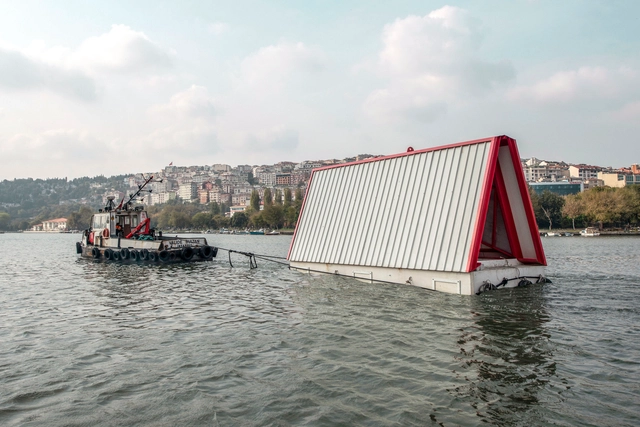
Istanbul-based practice SO? have designed and built a prototype floating structure for post-earthquake relief. “Fold&Float” is formed of a light, foldable steel structure specifically designed for emergency situations.
Developed off the back of emergency assembly points being designated by the authorities in 2001, SO? questioned where people could be housed in the event of an earthquake. The question has gained added significance in the last 20 years, with Istanbul having privatized 70% of the land set aside for emergency assembly. The result was a floating structure that depends not on vacant, stable land, but on managing water.
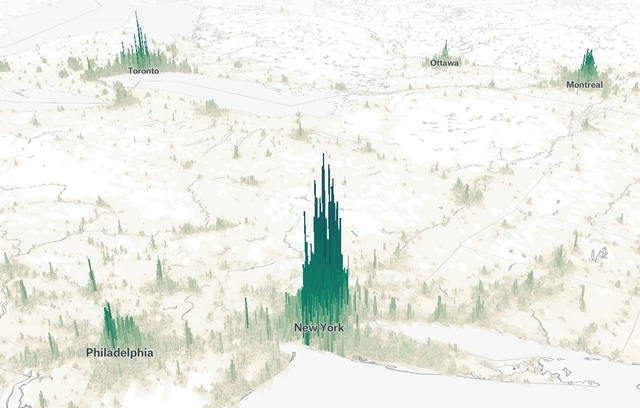
Engineer Matt Daniels has created a new interactive map to visualize the world's populations. Called 'Human Terrain', the project includes extruded block-by-block population data for cities across the world to give viewers fine-grain insight into population distribution. Daniels used data from the Global Human Settlement Layer and processed it using Google Earth Engine to create a mountainous digital landscape.





.jpg?1546979275 "Floathub. Image Courtesy of Daniela Lamartine")





















.jpg?1546802933&format=webp&width=640&height=580)