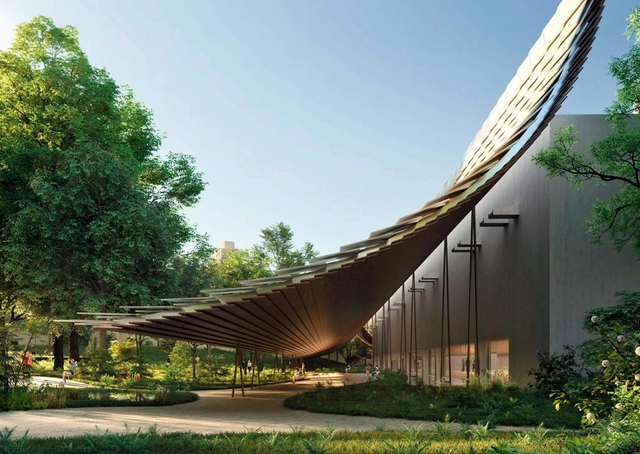
FCBStudios' redevelopment plans for St Mary le Port Bristol received planning approval, spearheading the transformation of the key site into a vibrant piece of the urban fabric. The scheme embraces the historical importance of St Mary le Port church tower and ruins, reinstates pre-WWII street patterns while reconnecting the area with the city centre. Featuring office and commercial spaces, the project is set to improve central Bristol's working and shopping experience.
Five finalists of the open call were announced on the 9th of December to determine the project that would be in charge of the XII BIAU: Ibero-American Biennale of Architecture and Urbanism 2021 - to be held in Mexico during September 2022 with the collaboration of the Architecture and City Festival, MEXTRÓPOLI.
On the 13th December, the winning project to curate the new edition was announced: 'Habitar al Margen' (Living on the Edge), presented by Anna Vergés and Guillem Augé (undo, Spain), and Raúl Cárdenas and Ana Martínez (ToroLab, Mexico).
The Ministry of Culture, Art, and Heritage, and the College of Architects of Chile have announced the results of the open call for two exhibitions that will house the 2022 Chile Architecture Biennial.
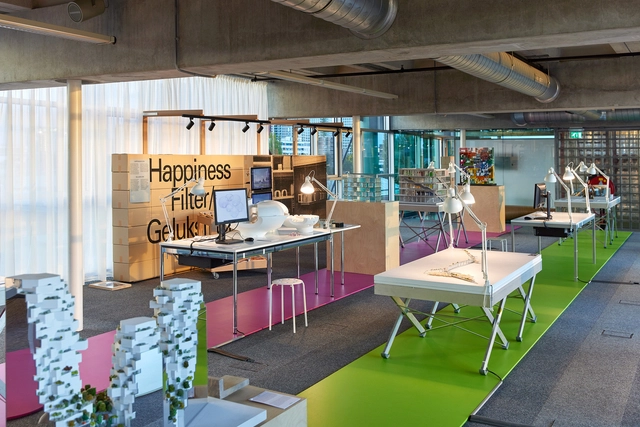
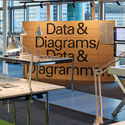
Hosted at the top floor of Het Nieuwe Instituut in Rotterdam, the Netherlands, the “MVRDVHNI: The Living Archive” exhibition showcases 30 years of MVRDV’s work, looking into the design philosophy of each project and future visions. The exhibition, which sits right next to the firm's latest project, the Depot Boijmans Van Beuningen, highlights the creative process behind each project, how they were developed, and the challenges of preserving their materials and approaches for future generations.
The city of Budapest, though Budapest Development Agency (BFK), launched an international design competition this autumn for the comprehensive renewal of the Budapest Nyugati Railway Station and its surroundings. The initiative seeks to expand the train station's capacity in order to reach Budapest's railway transport goals of doubling the number of trains on the suburban and metropolitan network. After an initial phase that attracted 36 participants, 12 practices were shortlisted for the second round of the competition, among which are Benthem Crouwel Architects, Grimshaw Architects, Zaha Hadid Architects, Foster + Partners, Kengo Kuma & Associates and Sweco.
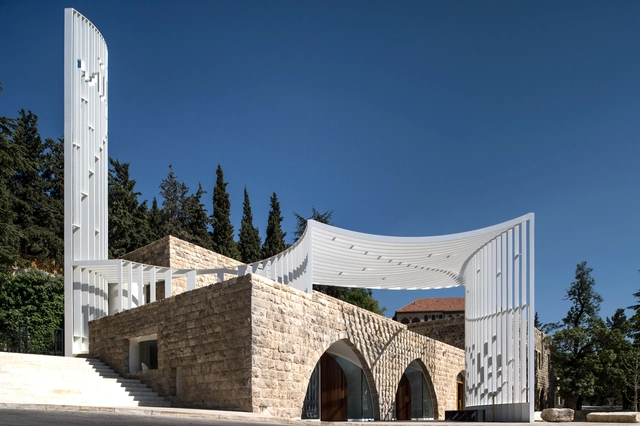
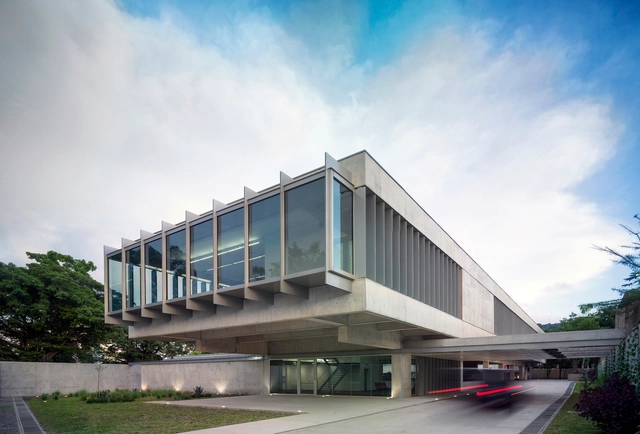
Amir Shakib Arslan Mosque / L.E.FT Architects. Image Courtesy of Abdullatif Alfozan Award for Mosque Architecture
The Abdullatif Alfozan Award for Mosque Architecture has honored seven awarded mosques in its third cycle under the theme "Mosque architecture in the twenty-first century", evaluating their unique architectural concepts as well its connectivity with local communities.
https://www.archdaily.com/974298/projects-in-saudi-arabia-lebanon-and-indonesia-among-the-winners-of-the-iii-abdullatif-alfozan-award-for-mosque-architectureArchDaily Team
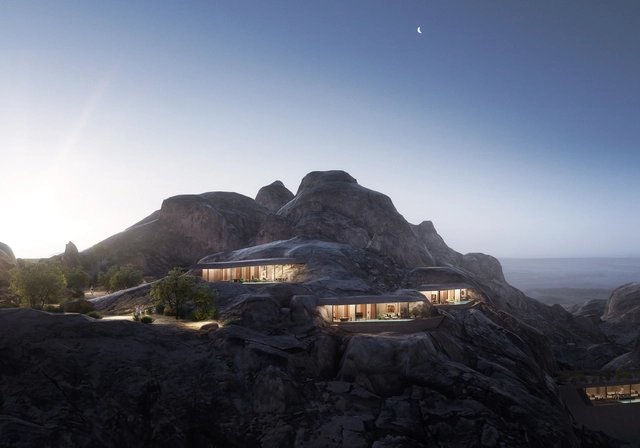
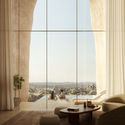
Oppenheim Architecture and Saudi developers The Red Sea Development Company (TRSDC) have unveiled the design of a new mountain resort nestled in the wadi vistas of western Saudi Arabia. Titled Desert Rock, the project draws inspiration from the surrounding geography, allowing guests to connect with the nature and the local culture of the region through a fully nature-integrated architecture.
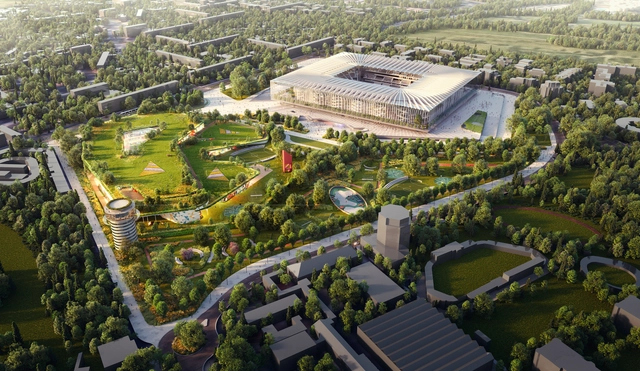
Football clubs AC Milan and FC Internazionale Milano will have a new home stadium designed by architecture practice Populous. “The Cathedral” takes inspiration from the city’s architectural landmarks -the Duomo di Milano and the Galleria Vittorio Emanuele – while incorporating technological and material innovation to create a carbon-neutral structure. The project, which replaces the Giuseppe Meazza Stadium, also known as San Siro, is set to revitalize a key urban area of Milan into a district dedicated to sports and leisure.
Five emerging architecture studio profiles from Slovenia, France, Spain, Italy, and the United Kingdom have been chosen by New Generations, a European platform that analyses the most innovative emerging practices at the European level, providing a new space for the exchange of knowledge and confrontation, theory, and production. Since 2013, New Generations has involved more than 300 practices in a diverse program of cultural activities, such as festivals, exhibitions, open calls, video-interviews, workshops, and experimental formats.
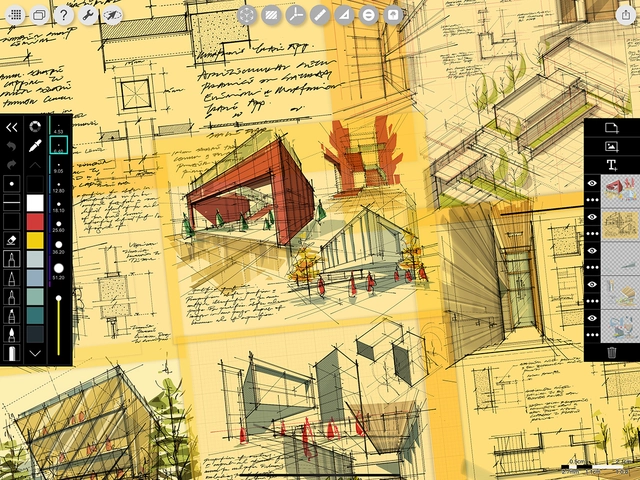
Amin Zakaria, Architectural Designer, Kuching, Malaysia. Image Courtesy of Morpholio
Morpholio Trace, the team who brought the architects’ canary yellow trace paper into the digital world, has been on a ten-year mission to help foster a drawing renaissance for Architects. “Drawing is a form of thought, and the iPad was crucial in re-centering sketching as a primary means of generating and sharing ideas,” says Mark Collins, Architectural Designer and Morpholio Co-Founder.
Today, ArchDaily celebrates this drawing resurgence with a look at those who have dedicated their careers to drawing exploration, advancement, and most importantly…education! To start drawing alongside these renowned architectural sketch educators, download Trace here.
Following news of Edelburg Development's plans to completely remodel the modernist facade of Dytiachyi Svit (Kids’ World), one of Kyiv's most notable modernist buildings from the Soviet era, and replace it with an "unrecognizable" vibrant and contemporary design, members of the community and activists protested against the intervention, forcing all parties to agree on a design competition to restore the historical facade. Dmytro Aranchii Architects was selected as the winner of the competition, with a proposal that "traces the transition from the original building to the new one" in a minimalistic and recognizable stylization, preserving the original facade and complimenting it with a contemporary intervention.
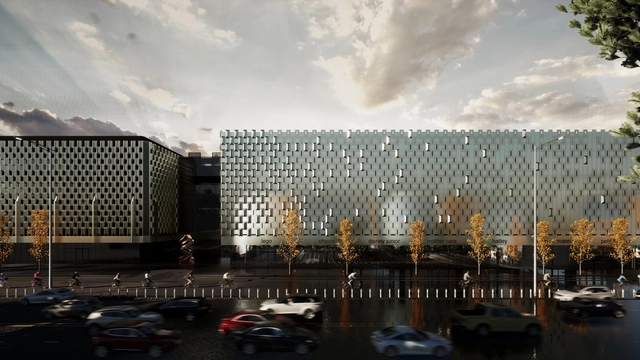
Czech practices UNIT Architekti, A69 - Architekti, and British firm Marko & Placemakersproposetransforming the largest brownfield site neighbouring Prague's historic city centre into a dynamic urban hub. The masterplan, selected within a 2-stage international competition comprising 57 entries, envisions "a multifunctional urban framework" that mediates the infrastructural complexity of the site, establishing a new identity for the area.
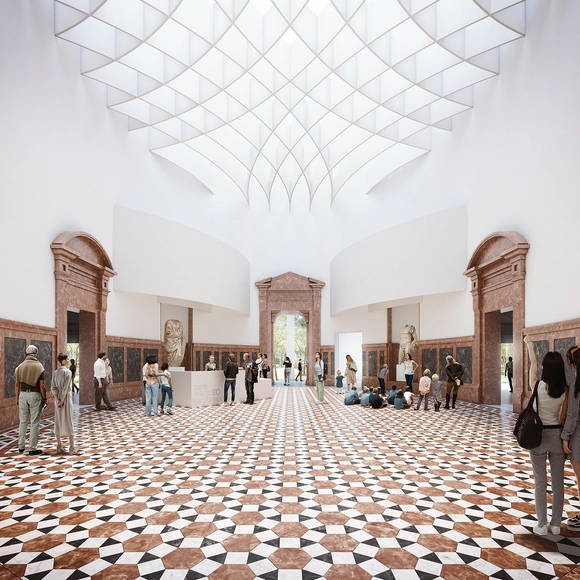
The remodeling project of the Archeological Museum of Seville, Spain, won in a national competition in 2009 by architectural firm Vázquez Consuegra, was finally presented to the authorities on Monday 29th November 2021. The start of the construction is scheduled for 2022 and has a budget of 20 million euros.
Snøhetta+Hassell were announced as the winners of an international competition to transform Sydney's Harbourside in Darling Harbour into a new mixed-use destination. The design was selected by the jury for how it envisioned a place that brings people together, featuring an all-inclusive shopping, hospitality, and entertainment center, an exclusive 42-storey residential tower, as well as a redesign of the public spaces on the waterfront.
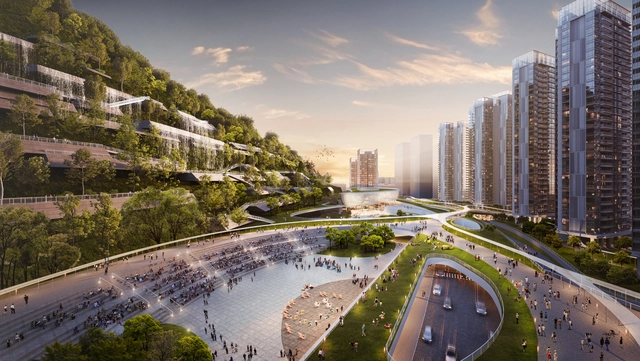
Ronald Lu & Partners designed a new transit-oriented development (TOD) in Shenzhen, reshaping a former industrial zone near Chiwan Port. The project builds on the firm's extensive experience with green architecture and TODs, proposing a biophilic development that restores nature in the area. Featuring a mixture of residential, business, commercial, and educational facilities, the design is set to become a key urban environment within the Greater Bay Area connecting Guangdong Province, Hong Kong and Macau.
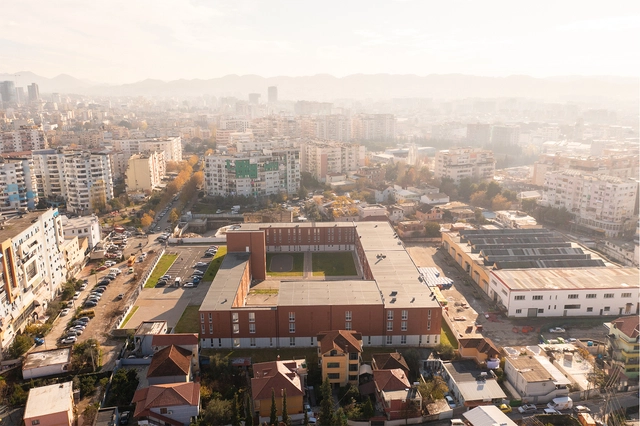
As part of the new Tirana 2030 master plan, Stefano Boeri Architetti has created a new model for schools, transforming them into a place for people of all ages, open every hour of the day and every day of the year. The newly-inaugurated project in Tirana serves as a "new epicenter for life in urban neighborhoods", used by students during the day as a school campus and by the whole community on weekends and public holidays as recreational and meeting places, as well as potential places for shelter during emergencies.
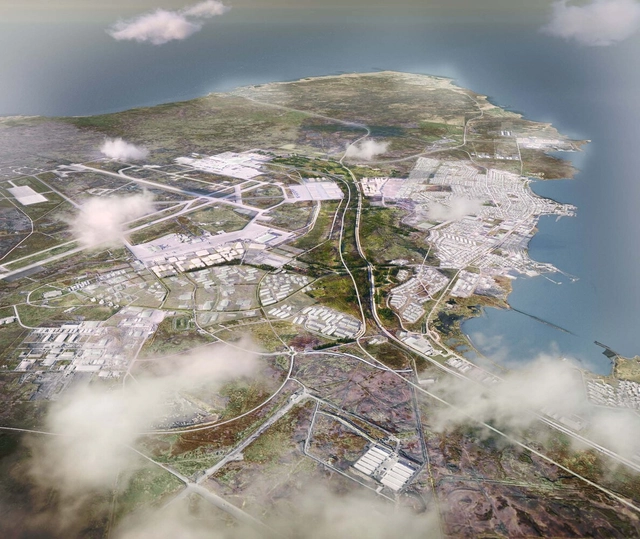
KCAP revealed its competition-winning design for the Keflavík Airport Area Strategic Masterplan in Iceland, comprising an area of 55 square kilometres around the country’s global aviation hub. Developed together with Felixx Landscape Architects & Planners, Kanon Arkitektar and a multidisciplinary team of professionals across a wide range of fields, the masterplan proposes a “collaborative development between public and private sectors”, seeking to transform specific areas around the airport into the hallmarks of the country’s sustainability and economic strategies.
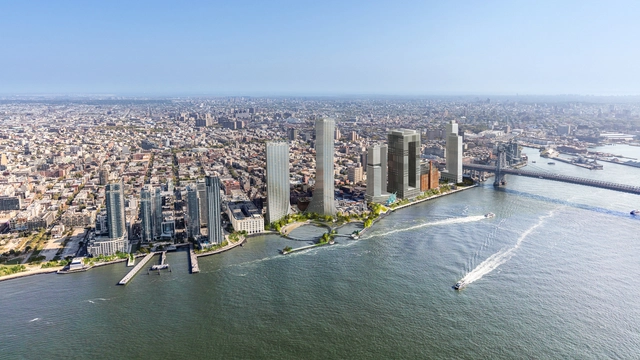
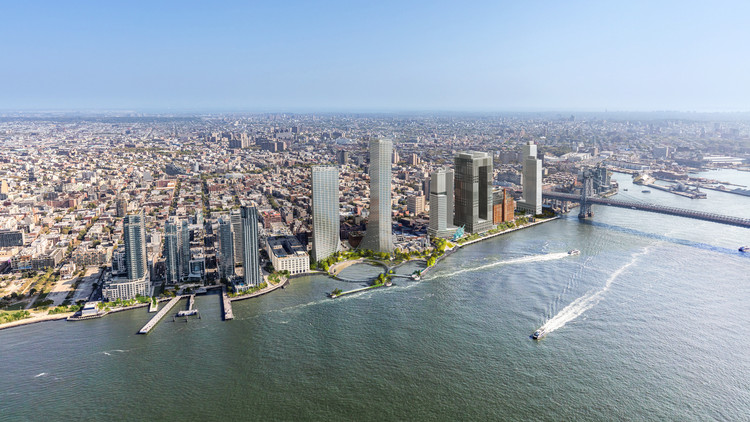
Courtesy of Bjarke Ingels Group and James Corner Field Operations
After more than two years of ongoing conversations with residents, stakeholders, and entrepreneurs, the New York City Council has finally approved the River Ring master plan of the Williamsburg waterfront project. The revised proposal, developed by Two Trees Management with designs by Bjarke Ingels Group and James Corner Field Operations, includes more than 150 additional units of affordable senior housing, an environmental benefits fund, and dedicated YMCA community space "to enhance the connectivity of the public waterfront, reinstate natural habitats, elevate the standard for urban waterfront resiliency, and transform the way New Yorkers interact with the East River".
MVRDV revealed its design for a temporary intervention that takes tourists and city dwellers on a walk across several rooftops in Rotterdam, highlighting an untapped potential for expanding the public realm. Created in collaboration with Rotterdam Rooftop Days, the project will feature an aerial bridge from the roof of The Bijenkorf department store to the top of the World Trade Centre plinth and will be available to the public from May 26 to June 24 2022, during Rotterdam Architecture Month.
Back in 2019, Japanese architect Kengo Kumawon the contest to design the expansion of the gardens of the Gulbenkian Foundation and the new entrance of the Modern Collection of the Museum in Lisbon, Portugal. According to the architect, the museum can be a "wise example of the future as coexistence with the Earth and us", taking inspiration from nature and its relationship with architecture. In a recent No País dos Arquitectos podcast, Sara Nunes interviews Kengo Kuma and Rita Topa, architect at Kengo Kuma Associates, to talk about the expansion of the gardens and museum, along with the mission of architecture and the role of the architect, processes, and work references developed for the project.
https://www.archdaily.com/973963/kengo-kuma-and-rita-topa-on-the-refurbishment-of-the-gulbenkian-modern-art-center-and-gardens-in-portugalNo País dos Arquitectos
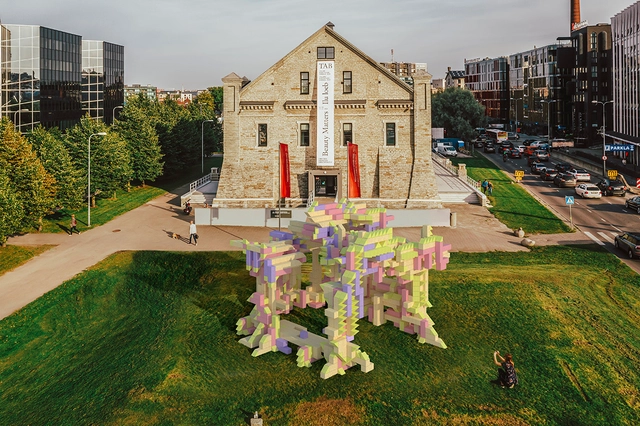
Due to unexpected circumstances, The Tallinn Architecture Biennale announced a new winning proposal for its Installation Programme Competition: Fungible Non-Fungible Pavilion by iheartblob, a new "decentralized and systematic" approach towards architectural design which allows the community to be both designers and investors, contributing to a structure that evolves over time. TAB 2022 will take place during September – October 2022, with the opening week on the 7th–11th of September.
Henning Larsen revealed its proposal for an International Conference Center in Pujiang, China, that would help define a vibrant city centre with sustainability as its hallmark. Featuring a circular structure with an urban park at its core, the project is articulated around ten design strategies to achieve carbon neutrality and meet high well-being standards. The proposal is one of the winning projects of an international competition whose shortlist includes designs by Zaha Hadid Architect, GMP Architects, MVRDV and Swooding Architects.
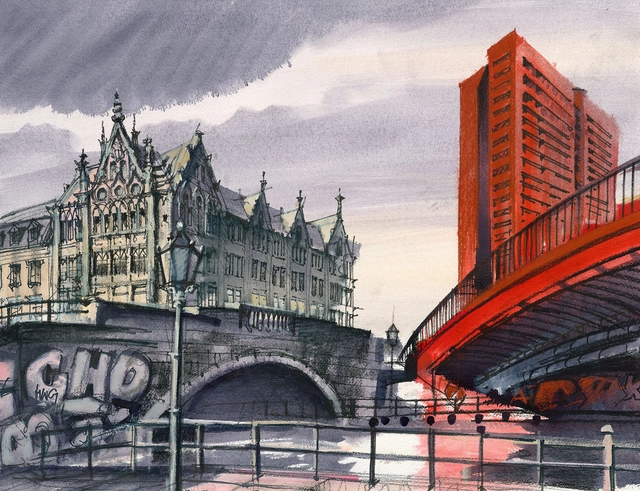
Sergei Tchoban (b. 1962, Saint Petersburg, Russia) graduated from the Repin Institute for Painting, Sculpture and Architecture at the Russian Academy of Arts in Saint Petersburg in 1986. He started his practicing career in Russia but left for Germany in 1991, becoming a managing partner of nps tchoban voss in Berlin in 1995. Since 2006, he also heads SPEECH, one of the leading architectural offices in Moscow. Apart from building his successful career of a practicing architect, he is a collector of architectural drawings, publisher, and museum owner.
This article was written by Julia Mingorance, Senior Workplace Consultant at CBRE and alumn from the Master in Strategic Interior Design at IE School of Architecture and Design.
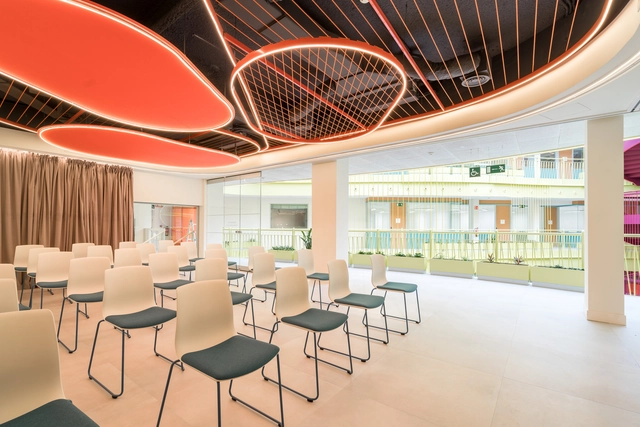
More than 500 days ago, our whole world was turned upside down and our way of life changed overnight. We were forced to stay at home and work away from the physical office, in a purely virtual collaboration. In general, companies were surprised to maintain the same levels of productivity and results during these months—many even predicted the end of the office. As the health situation has started improving, a lot of companies have returned to the office, experimenting with different flexible models combining remote work and in-office days. The normalization of remote work means that many organizations see it as an opportunity to reduce office space and therefore, save costs.
The classic concept of estimating m2 for an office is being challenged completely. New variables are appearing in the equation and these are increasing uncertainty about just how much office space is needed.





.jpg?1640769856 "© Florine van Rees")











.jpg?1640334099&format=webp&width=640&height=580)
.jpg?1640334099 "Courtesy of Wax")


.jpg?1640334099)









.jpg?1640166431 "Stairs of Kriterion, temporary rooftop intervention. Image © Laurian Ghinitoiu")