We celebrate movies demonstrating ancient, contemporary, and modern architecture, representing a blend of talent, idea, vision, as well as commitment. The 2A City – Architecture Movie Awards provide critics, theorists, and architectural philosophers with a new median for architectural expression as well as discussion.
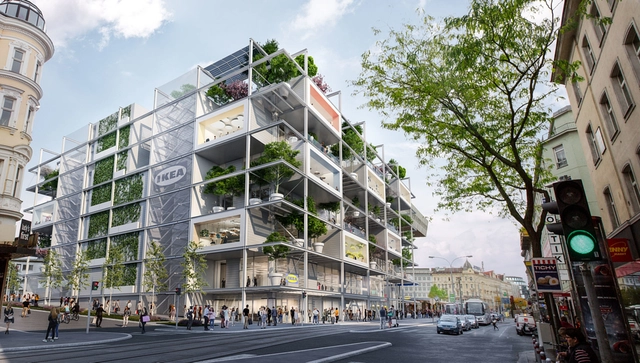
IKEA Austria is establishing a car-free city center store, in the heart of Vienna. Addressing global issues, IKEA’s newest building will cater to the changes in customer and mobility behaviors.
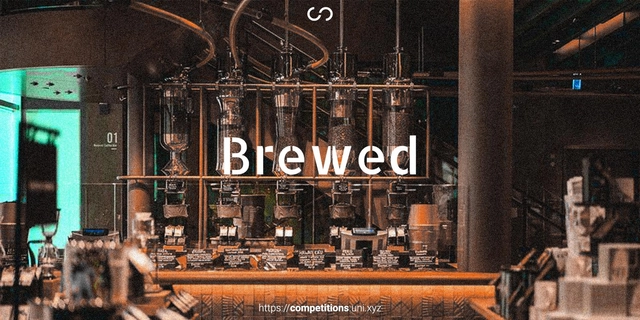
Coffee plants grew wild in Ethiopia and were used by nomadic tribes for thousands of years, only until the 1400s when people figured out that they could roast its seeds. By the 1500s, the drink had spread to coffee houses across the Arab world. Coffee houses first appeared in Turkey, Syria, and Egypt as early as 1530. Since they became a hotspot for political discussions, they were banned repeatedly.
Subsequently, throughout the 1600s coffee houses began popping up across Europe and North America. The French and American Revolutions were said to have brewed in coffeehouses.
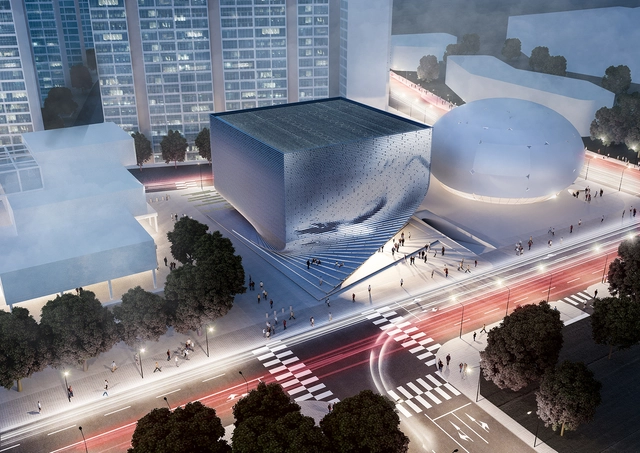
OMA's proposal won the competition for the new KaDeWe department store and hotel in Vienna’s Museumsquartier. Led by Ellen van Loon, Ippolito Pestellini Laparelli, and Laurence Bolhaar, the project will be OMA’s first venture in Vienna, upon its completion.
For ten consecutive years, Vienna ranks first in the Mercer survey on cities with the best quality of life in the world. In this edition to the global ranking, eight Western European cities join the top ten, even when "trade tensions and populist undercurrents continue to dominate the global economic climate", as Mercer points out in its report.
When you think of your favorite spot to grab a beer, what architectural features come to mind? Is it the swanky furniture, themed artwork, or the heavily designed cocktail menu? Today, the aesthetics of bars are now as much a draw as the drinks themselves. From movie set inspired spaces to rooftops that offer spectacular city views, we’ve compiled a list of nine bars and beer gardens that every architect needs to cross off their list.
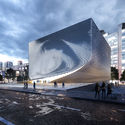
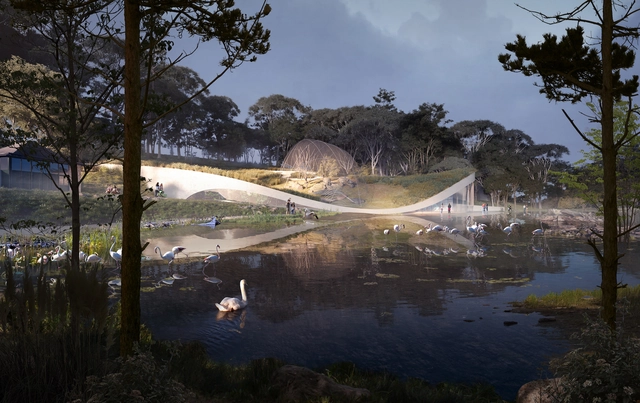
3XN and GERNER GERNER PLUS have released details of their competition entry for the design of a new aquarium in Schönbrunn Zoo, Vienna. Developed in collaboration with aquarium specialists ATT, “Poseidon’s Realm” was designed to be “elegant, simple and mysterious, lying across the landscape like a great veil.” The scheme was awarded second place in an international competition for the aquarium’s design, with the winner yet to be announced.
The “Poseidon’s Realm” scheme is defined by a spacious green roof landscape embedded in the zoo’s path network. The aquarium covers a total area of 65,000 square feet (6,000 square meters), divided across four levels, with a large, glazed, wave-shaped entrance enticing visitors to transition between outdoor greenery and a “softly undulating waterworld.”
In his latest photo series, "Viennametry," Hungarian photographer and printmaker Zsolt Hlinka captures the unexplored voids in Vienna’s patchwork of historical and contemporary architecture. After previously studying the symmetrical corner buildings of grandiose Budapest, Hlinka has moved north to Austria on his quest to find geometry and symmetry within the urban landscape.
Located on a hill in Mauer, on the outskirts of Vienna, the Wotruba Church was the culmination of sculptor Fritz Wotruba’s life (the project’s architect, Fritz G. Mayr, is often forgotten). Constructed in the mid-1970s, Mayr completed the project one year after Wotruba’s death, enlarging the artist’s clay model to create a functional walk-in concrete sculpture. As can be seen in these images by Denis Esakov, the result is a chaotic brutalist ensemble that toys with the boundaries between art and architecture.
In Zaha Hadid Architects' description of their Library and Learning Centre at the University of Economics Vienna, they describe the exterior of the building as "characterized by two elements of contrasting colors separated by a glass joint: shell and shadow." For that reason, the building was a perfect subject for architect and photographer Edwin Seda, who says he is fascinated by the effect light has on buildings. "Design is created to work with natural light but is never really in control of this aspect," says Seda. "This set of images therefore explores light as a medium for architectural transformation, a sort of fourth dimension, that only materializes once the building is complete and the seasons begin to change."
Seda's photoset captures the Library and Learning Centre throughout the course of a day: from the daytime when the building's light and dark elements are clearly distinguished; to sunset when one side of the building is closer to orange than the white or black planned by the architects; then to the evening, when the building's internal lights bring an entirely different dynamic to the building's composition. Read on to see the full set of images.