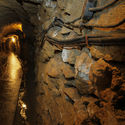
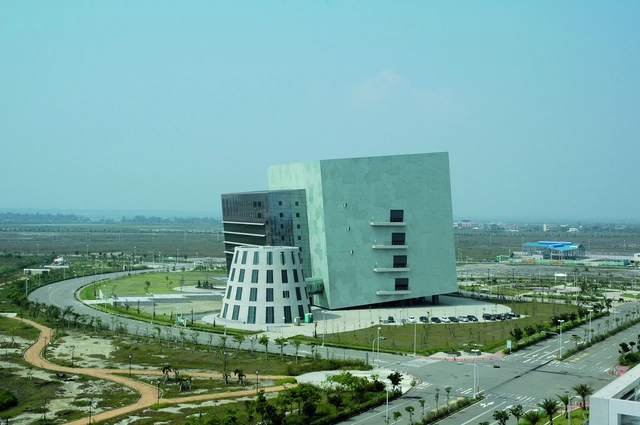
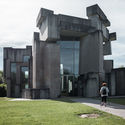
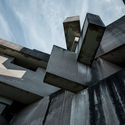
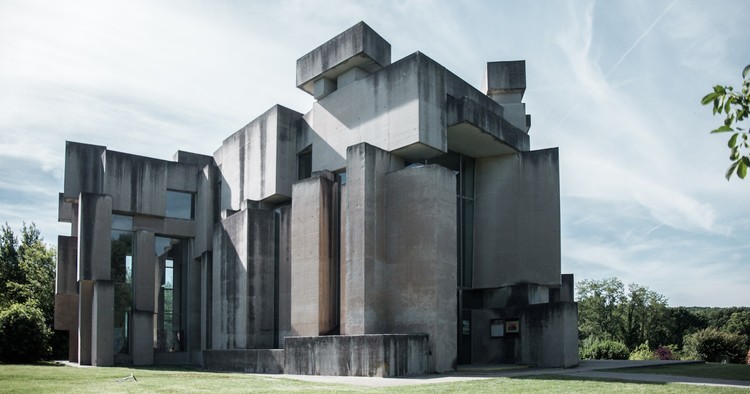
Located on a hill in Mauer, on the outskirts of Vienna, the Wotruba Church was the culmination of sculptor Fritz Wotruba’s life (the project’s architect, Fritz G. Mayr, is often forgotten). Constructed in the mid-1970s, Mayr completed the project one year after Wotruba’s death, enlarging the artist’s clay model to create a functional walk-in concrete sculpture. As can be seen in these images by Denis Esakov, the result is a chaotic brutalist ensemble that toys with the boundaries between art and architecture.
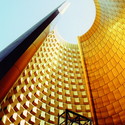
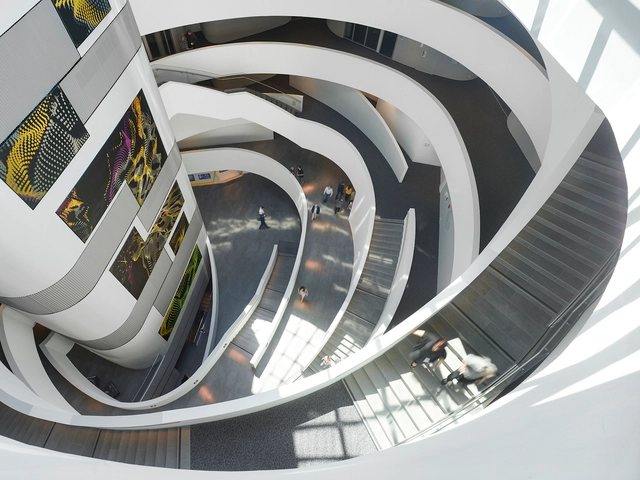
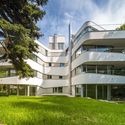
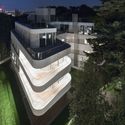
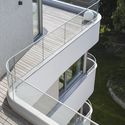
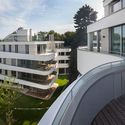
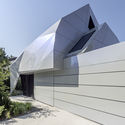
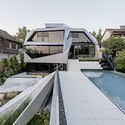
In Zaha Hadid Architects' description of their Library and Learning Centre at the University of Economics Vienna, they describe the exterior of the building as "characterized by two elements of contrasting colors separated by a glass joint: shell and shadow." For that reason, the building was a perfect subject for architect and photographer Edwin Seda, who says he is fascinated by the effect light has on buildings. "Design is created to work with natural light but is never really in control of this aspect," says Seda. "This set of images therefore explores light as a medium for architectural transformation, a sort of fourth dimension, that only materializes once the building is complete and the seasons begin to change."
Seda's photoset captures the Library and Learning Centre throughout the course of a day: from the daytime when the building's light and dark elements are clearly distinguished; to sunset when one side of the building is closer to orange than the white or black planned by the architects; then to the evening, when the building's internal lights bring an entirely different dynamic to the building's composition. Read on to see the full set of images.
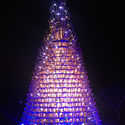
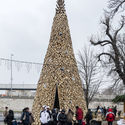
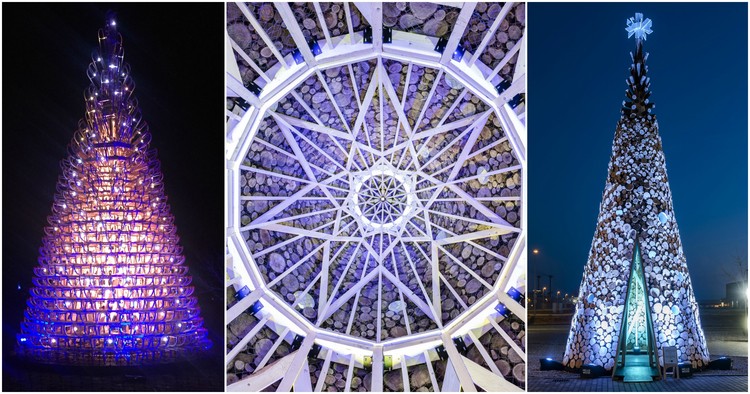
Budapest-based architectural firm Hello Wood has continued its annual tradition of constructing wooden Christmas trees, this year expanding the program with a total of 5 trees throughout Europe. In London and Vienna, trees made of sleds recall a design concept first used by Hello Wood in 2013; meanwhile, two locations in Budapest and in the Hungarian city of Kecskemét are witnessing the return of the firm's "charity trees," installations made of firewood which are later dismantled and distributed to families in need for the winter season.
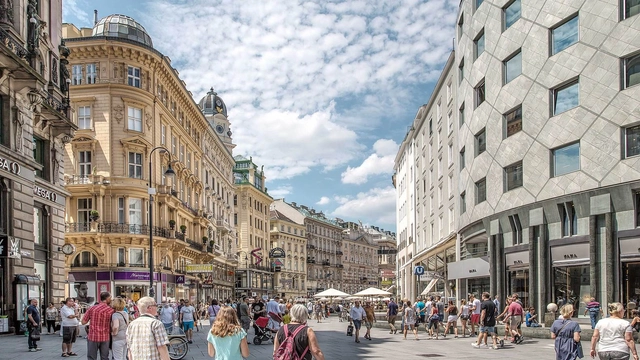
Brimming with architectural innovation, Vienna stands at the crossroads of Europe. Its location between north and south, east and west has always made it open to new ideas, even as the city carefully groomed its signature refinement and grace.
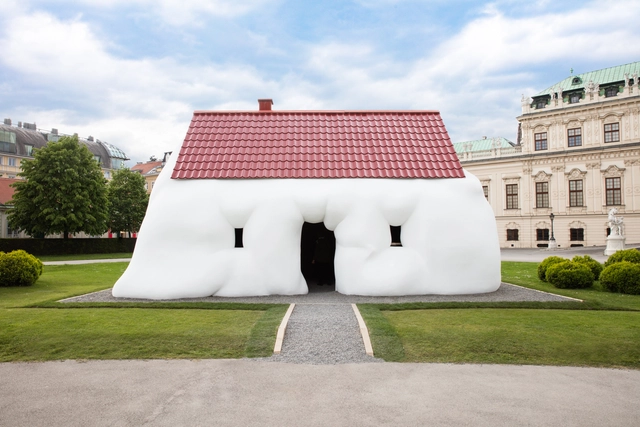
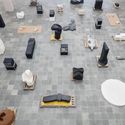
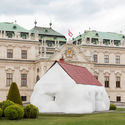
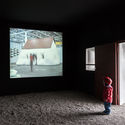
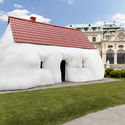
In a new solo exhibition of the work of Erwin Wurm in the artist's home city of Vienna, the "Fat House"—created in 2003—is being publicly displayed for the first time amid the baroque splendor of the Austrian capital's historic Upper Belvedere. The central exhibition of Wurm's work at 21er Hauscomprises over forty "performative sculptures" and statues, examining "extraordinary examples of architecture and objects of daily use."
Described by Richard Meier as an architect whose "groundbreaking ideas" have "had a major impact on the thinking of designers and architects," Austrian artist, architect, designer, theoretician and Pritzker Prize laureate Hans Hollein worked in all aspects of design, from architecture to furniture, jewelry, glasses, lamps—even door handles. Known in particular for his museum designs, from the Abteiberg Museum in Mönchengladbach to the Museum of Modern Art in Frankfurt to Vienna's Modernism.
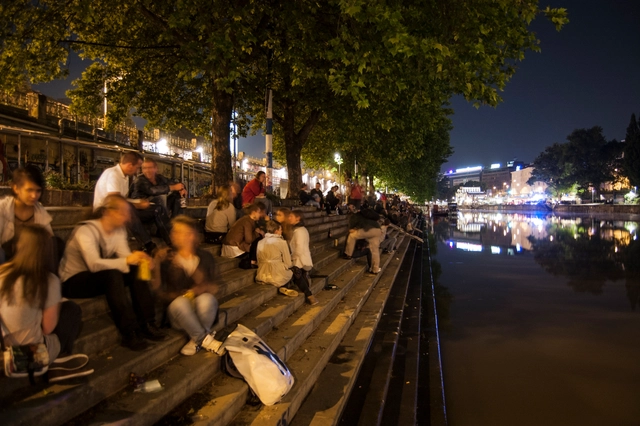
This article by Gabu Heindl, an Austrian architect and urbanist, was first published by Volumein their 50th issue, Beyond Beyond, the editorial of which is available to readhere. Here, Heindl introduces the concept of "powerfully (precariously) positioned planning propositions" (PPPP) based on the Donaukanal project in Vienna.
In a certain sense, looking at the beyond is something that we cannot do today, other than from the vantage point of a beyond the ‘beyond’. Looking at the connections between progressive political movements and planning/building practices in modernity and their ways of departing into ever new ‘beyonds’, beyond the boundaries of historically given urban and social formations – today, we are certainly beyond these dynamics. And it is not so much postmodernism that needs to be invoked here, but rather two reflections on politics, planning/building related and otherwise, that are bound for the beyond. One reflection concerns how progressive, modernist, avant-garde politics, even at their height, were compromised by, or even complicit in, affinities with paternalistic, top-down governance (Red Vienna) or even with totalitarian rule (fascism). The second reflection, more pertinent to our present moment, concerns the extent to which the dynamics of going beyond have, since the late 1970s, shifted to a regime of (self-)government and accumulation which is addressed and theorized under labels such as neoliberalism, Post-Fordism or new spirit of capitalism.
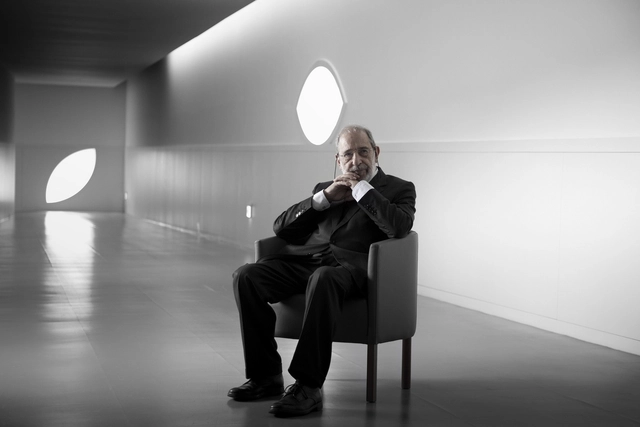
A new collection of five minute-long On Design stories—developed by the team behind Section D, Monocle 24's 24's weekly review of design, architecture and craft—profile a person, survey a place, or unpack an idea that’s changing or shaping design and architecture today. We've selected fourteen of our favorites from the ongoing series, examining issues as wide as Postmodernism and the architectural competition, to five-minute profiles of Alvaro Siza, Josef Hoffman, Kengo Kuma and Superstudio.
https://www.archdaily.com/802384/round-up-14-short-stories-architects-attitudes-odd-anecdotesAD Editorial Team
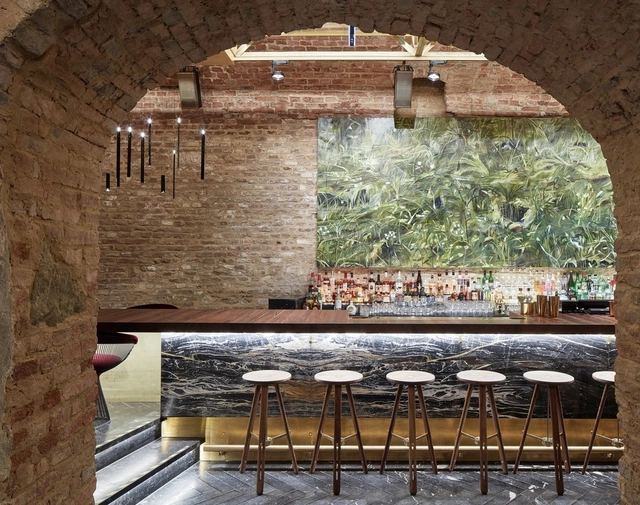
The November 2016 issue of a+u is a special issue dedicated to the Austrian architect Hermann Czech, who lives and works in Vienna, and was edited in cooperation with guest editor Professor Christian Kühn of the Technische Universität Wien. This issue explores the many facets of his architectural thought and practice through works that range from furniture design through to urban-scale infrastructure.



.jpg?1516392347)
.jpg?1516392338 "© Edwin Seda")
.jpg?1516392360 "© Edwin Seda")
.jpg?1516392312 "© Edwin Seda")
.jpg?1516392330 "© Edwin Seda")
.jpg?1516392301)











.jpg?1499781753 "Asmara. Image© <a href='https://commons.wikimedia.org/wiki/File:Asmara_(8351468351).jpg'>Wikimedia user David Stanley</a> licensed under <a href='https://creativecommons.org/licenses/by/2.0/deed.en'>CC BY 2.0</a>")