1. ArchDaily
  2. Venice Biennale

Venice Biennale: The Latest Architecture and News

The 2025 Venice Architecture Biennale Ends, Marking the Event’s Most Visited Edition

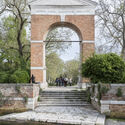
The 19th International Architecture Exhibition of La Biennale di Venezia, "Intelligens. Natural. Artificial. Collective.," curated by Carlo Ratti, closed on 23 November 2025 as the most visited Architecture Biennale to date. The exhibition recorded 298,000 visitors, in addition to 17,584 preview attendees, surpassing previous editions despite the temporary closure of the Central Pavilion for restoration. Bringing together 303 projects and 758 invited architects, along with 66 National Participations and 11 Collateral Events, the edition extended across the Giardini, Arsenale, and multiple sites throughout Venice.

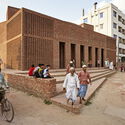
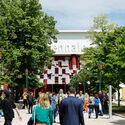
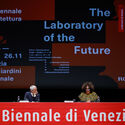
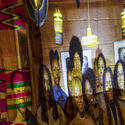
The 2025 Venice Architecture Biennale Ends, Marking the Event’s Most Visited Edition - Imagen 1 de 4The 2025 Venice Architecture Biennale Ends, Marking the Event’s Most Visited Edition - Imagen 2 de 4The 2025 Venice Architecture Biennale Ends, Marking the Event’s Most Visited Edition - Imagen 3 de 4The 2025 Venice Architecture Biennale Ends, Marking the Event’s Most Visited Edition - Imagen 4 de 4The 2025 Venice Architecture Biennale Ends, Marking the Event’s Most Visited Edition - More Images+ 3

Small-Scale Solutions to Climate Challenges: 13 Highlighted Projects from the 19th Venice Architecture Biennale

With just a few days left before the six-and-a-half-month 19th Venice Architecture Biennale comes to an end, it is possible to look back on some of the most notable contributions within its thematic framework. Marked by the largest call for participants to date, the Biennale's diversity of topics and the range of installations on display go beyond easy recapitulation. As part of that reflection, several initiatives can be highlighted as illustrative of the principles reflected in the curatorial theme, "Intelligens. Natural. Artificial. Collective." The concepts interwoven in Carlo Ratti's title form a call to address the urgent need for substantial solutions amid the accelerating climate crisis, positioning the Biennale as a platform for diverse design proposals and experiments organized around three forms of intelligence: natural, artificial, and collective. Beyond the national pavilions and numerous collateral events held throughout Venice over the past six months, among the more than 700 participants are projects that, through practice, embody four shared intentions: opening conversations about the future, proposing systemic responses to local realities, placing technology at the center of design innovation, and pursuing material research rooted in local sensitivity.

Small-Scale Solutions to Climate Challenges: 13 Highlighted Projects from the 19th Venice Architecture Biennale - Image 1 of 4Small-Scale Solutions to Climate Challenges: 13 Highlighted Projects from the 19th Venice Architecture Biennale - Image 2 of 4Small-Scale Solutions to Climate Challenges: 13 Highlighted Projects from the 19th Venice Architecture Biennale - Image 3 of 4Small-Scale Solutions to Climate Challenges: 13 Highlighted Projects from the 19th Venice Architecture Biennale - Image 4 of 4Small-Scale Solutions to Climate Challenges: 13 Highlighted Projects from the 19th Venice Architecture Biennale - More Images+ 52

The Final Weeks of the Venice Architecture Biennale and New Projects Breaking Ground: This Week’s Review

As the 19th Venice Architecture Biennale enters its concluding weeks, the global architecture scene continues to unveil significant projects and recognitions. This week's highlights include Studio Libeskind's residential complex in Prague; sauerbruch hutton's Panorama Constance exhibition building in Germany, and CRA–Carlo Ratti Associati's digitally fabricated bivouac for the upcoming Milano Cortina 2026 Winter Olympics. In New York, Venezuelan artist Miguel Braceli designed a major public artwork for the city's waterfront, addressing themes of migration, diversity, and the complexities of geopolitical identity. The week also brought recognition to sustainable and creative achievements, from the Holcim Foundation's regional awards for sustainable construction to the publication of Tadao Ando. Sketches, Drawings, and Architecture by Taschen, celebrating nearly five decades of the architect's design process.

The Final Weeks of the Venice Architecture Biennale and New Projects Breaking Ground: This Week’s Review - Image 1 of 4The Final Weeks of the Venice Architecture Biennale and New Projects Breaking Ground: This Week’s Review - Image 2 of 4The Final Weeks of the Venice Architecture Biennale and New Projects Breaking Ground: This Week’s Review - Image 3 of 4The Final Weeks of the Venice Architecture Biennale and New Projects Breaking Ground: This Week’s Review - Image 4 of 4The Final Weeks of the Venice Architecture Biennale and New Projects Breaking Ground: This Week’s Review - More Images+ 25

The Singapore Pavilion at the Venice Architecture Biennale Reimagines the City-State as a Dining Table

2025 marks the 60th anniversary of Singapore's independence, commemorating its separation from Malaysia on August 9, 1965. The occasion is celebrated in the country's national pavilion at the 19th Venice Architecture Biennale with a multisensory installation that honors Singapore's diversity and reimagines city-making through food, culture, and collective design. Titled RASA–TABULA–SINGAPURA, the installation invites visitors to take a seat at the Table of Superdiversity: an enticing reimagining of city-making and nation-building through the universal act of dining. According to the curatorial team from the Singapore University of Technology and Design (SUTD), the purpose of the installation is to showcase how the convergence of multicultural differences, collective histories, design, and new technology creates opportunities for more inclusive and adaptive urban futures.

The Singapore Pavilion at the Venice Architecture Biennale Reimagines the City-State as a Dining Table - Image 1 of 4The Singapore Pavilion at the Venice Architecture Biennale Reimagines the City-State as a Dining Table - Image 2 of 4The Singapore Pavilion at the Venice Architecture Biennale Reimagines the City-State as a Dining Table - Image 3 of 4The Singapore Pavilion at the Venice Architecture Biennale Reimagines the City-State as a Dining Table - Image 4 of 4The Singapore Pavilion at the Venice Architecture Biennale Reimagines the City-State as a Dining Table - More Images+ 20

Bridging Past and Future: Uzbekistan’s Expanding Cultural Landscape

Uzbekistan's architectural and artistic heritage reflects a layered history shaped by centuries of cultural exchange along the Silk Road. From the monumental ensembles of Samarkand and Bukhara to the scientific and educational institutions of the Timurid era, architecture has long been a vessel of identity and knowledge across the region. In the twentieth century, Tashkent emerged as a new urban laboratory, where modernist ideals met local craft traditions and environmental pragmatism. The city's reconstruction following the 1966 earthquake became a defining moment, fusing Soviet urbanism with regional aesthetics to produce a distinctly Central Asian expression of modernity, one that translated cultural continuity into concrete, glass, and light.

Bridging Past and Future: Uzbekistan’s Expanding Cultural Landscape - Image 1 of 4Bridging Past and Future: Uzbekistan’s Expanding Cultural Landscape - Image 2 of 4Bridging Past and Future: Uzbekistan’s Expanding Cultural Landscape - Image 3 of 4Bridging Past and Future: Uzbekistan’s Expanding Cultural Landscape - Image 4 of 4Bridging Past and Future: Uzbekistan’s Expanding Cultural Landscape - More Images+ 4

The Philippine Pavilion at the 2025 Venice Biennale Reimagines the Relationship Between Architecture and Soil

The Philippines' Pavilion at the 19th International Architecture Exhibition – La Biennale di Venezia presents Soil-beings (Lamánlupa), an exhibition curated by artistic director Renan Laru-an. Through interdisciplinary collaborations, the Pavilion brings together architects, technical experts, indigenous leaders, artists, policymakers, and local communities to explore the cultural, ecological, and technological dimensions of soil. Its objective is to challenge conventional architectural paradigms by shifting the focus from structure to soil, not as a passive material, but as a living force with agency, history, and power.

The Philippine Pavilion at the 2025 Venice Biennale Reimagines the Relationship Between Architecture and Soil - Imagen 1 de 4The Philippine Pavilion at the 2025 Venice Biennale Reimagines the Relationship Between Architecture and Soil - Imagen 2 de 4The Philippine Pavilion at the 2025 Venice Biennale Reimagines the Relationship Between Architecture and Soil - Imagen 3 de 4The Philippine Pavilion at the 2025 Venice Biennale Reimagines the Relationship Between Architecture and Soil - Imagen 4 de 4The Philippine Pavilion at the 2025 Venice Biennale Reimagines the Relationship Between Architecture and Soil - More Images+ 28