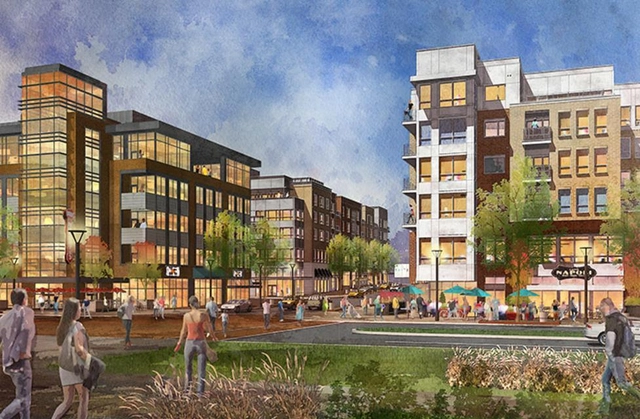
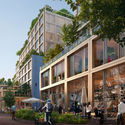
Dublin Bridge Park in Columbus, Ohio. Image via Dublin Bridge Park
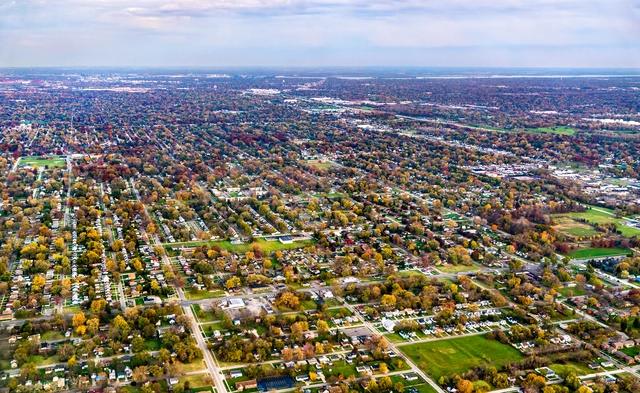
Suburbs as we know them are changing forever. Partially exacerbated by the effects of the pandemic, residents are leaving cities in droves in search of more favorable living conditions where more space, privacy, and affordability offers what some consider to be a more comfortable lifestyle. But as time goes on, and development sprawls, it’s harder to tell where cities end and suburbs begin.
I attended graduate school, in geography, in Tucson, Arizona, United States, in the late 1990s. Tucson draws fame from a number of things, including its Mexican-American heritage, its chimichangas, its sky islands, and its abundant population of saguaro cacti.
Cities would be nothing without the sense of experimentation and the future-forward push to always break the status quo in demand of a better urban life. As many successful urban designs and strategies as there have been, the world has also seen some not-so-successful ones, that have been pushed to the sidelines becoming a forgotten memory over time. While we look ahead and speculate about what the future of cities could and should be, maybe it’s time to take the lessons learned from these failed projects and pay homage to their misfortunes, so that history’s mistakes aren’t repeated in the present day.
Before the pandemic, the world was already facing a series of global transformations in the field of construction, where emerging countries were at the forefront of a powerful economic shift. As the world's population is expected to reach the 10-billion milestone before 2100, the construction sector should be able to understand and adapt to the megatrends that are reshaping the globe.
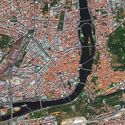
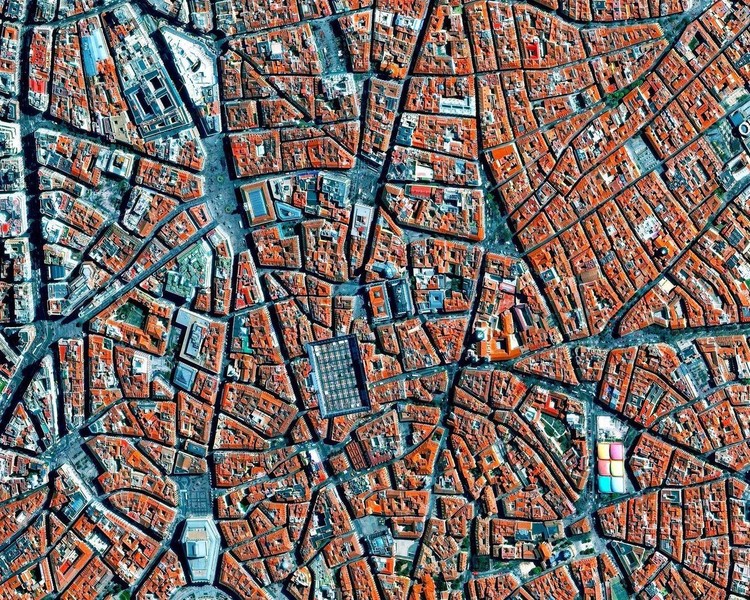
In his book Breve Historia del Urbanismo (Brief History of Urbanism), Fernando Chueca Goitia states that the medieval city appeared at the beginning of the 11th century and flourished only between the 12th and 13th centuries. According to the author, this growth was closely linked to the development of commerce that allowed permanent occupations, resulting in a city no longer composed mainly of travelers. In other words, the bourgeoisie was formed thanks to the most diverse activities - craftsmen, tradesmen, blacksmiths, longshoremen - which stimulated the development of the medieval city.
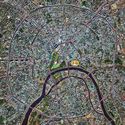
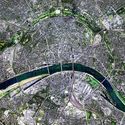
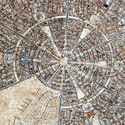
A radial concentric city plan is formed by streets that extend outward from a defined center and reach the outer edge of the city, together with concentrically arranged roads that connect the radial streets to the lots. This pattern traces back to ancient times and continues even to this day.
Depending on the historical context, location, or purpose of the city planning, the element found in the center may vary. Plazas, churches, or government buildings are among the most common elements and this is no accident, nor is the urban design pattern. Basically, the radial arrangement of streets is intended to highlight a particular element or location that has great political, religious, financial, or symbolic value to the city as a whole.
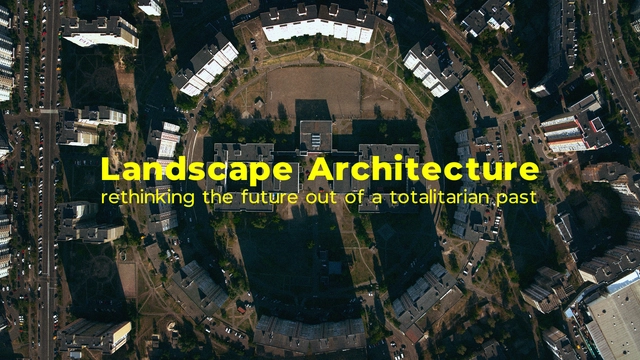
The built manifestation of an ideology, the urban landscape left behind by the socialist regimes around Europe are removed from the aspirations of contemporary urban living, thus trigger a unique process of re-appropriation of the post-soviet landscapes. The short film Landscape Architecture: Rethinking The Future out of a Totalitarian Past created by Minimal Movie invites a conversation around urban planning, cultural identity, and community building relating to the urbanism and architecture of Ukraine's Socialist Era.
Europe in the 1960s was an incubator for emerging provocative architecture radicals who defied traditional architecture dogma in favor of counterculture that transcended time and space. Coop Himmelb(l)au, a Vienna-based faction of this movement, questioned the clean lines, rigidity, and literal nature of modernist architects of the time. While the firm is known for their rebellious spirit and aggressive forms that are generated through state-of-the-art 3D software and technologies, it’s important to acknowledge the work that the firm did shortly after their inception in 1968, and how their early oeuvre still relentlessly breaks the status quo of modern-day practice and academic discourse.
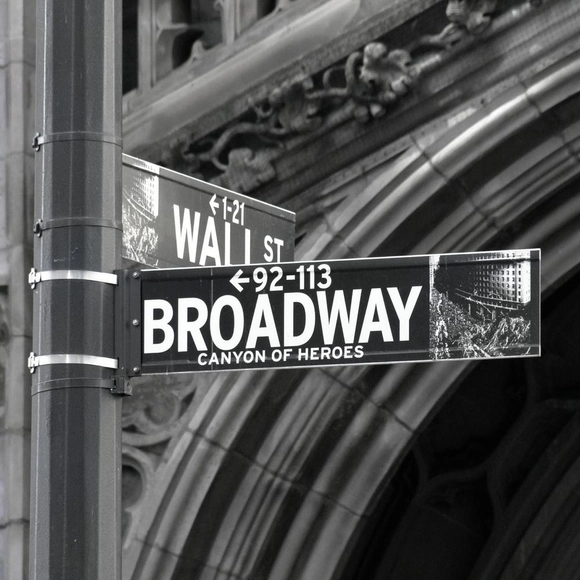
In cities across the United States, an address is more than just a street name or a building number- but a brand that translates directly into a symbol of wealth and prestige. Take the tallest residential tower in the country, 432 Park Avenue in New York City, which doesn't actually sit quite on park avenue. Instead, it’s neighboring lot to the east sits on Park Avenue, and this mega structure actually faces 56th avenue- a significantly less iconic street. However, this inflated valuation doesn’t happen everywhere. Cities in other countries don't place the same weight on an address and refer to buildings or locations as landmarks or by their appearances, which doesn't force a high monetary value based on an address or a marketing scheme alone. How do places in the world differ in how they brand buildings and streets in cities, and what does that tell us about their urban culture?
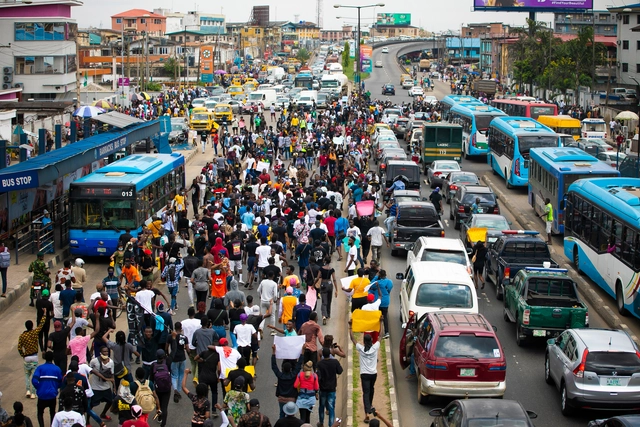
For the past two weeks, cities across Nigeria were hit by protests against the notorious Special Anti-Robbery Squad (SARS), a police unit setup in 1992 to fight armed robberies. The anti-SARS protesters are calling for the unit’s disbandment, due to its high-handedness, extra-judicial killings, extortion, and numerous human rights abuses.
Tragically, the protests came to a brutal climax on October 20, with the shooting of protesters at the Lekki Tollgate by gunmen believed to be agents of the Nigerian state. This led to casualties, which are currently a subject of controversy: the Lagos State government concedes that two persons lost their lives; groups like Amnesty International insist the figures are much higher.
https://www.archdaily.com/950764/public-protests-and-the-urban-legacies-of-colonialism-and-military-dictatorship-in-nigeriaMathias Agbo, Jr.
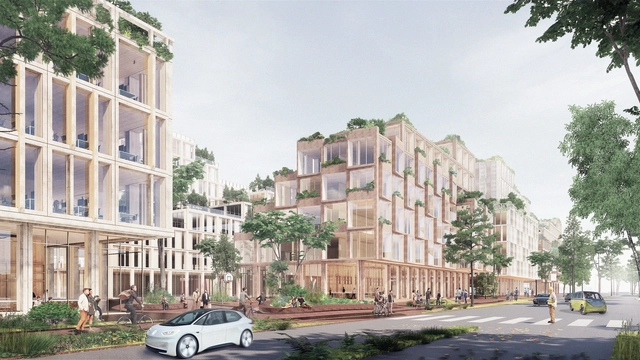
Creating new standards for a more connected and livable city, Henning Larsen has designed a New Masterplan for Wolfsburg, Germany. The new prototype for urbanism across the European continent diffuses new energy in the city center. Selected to design the project in a competition in 2019 that included competitors UNStudio and Bjarke Ingels Group, Henning Larsen’s proposal for phase 1 is expected to reach completion by 2023.
Resilience seems to be the topic of much discussion within circles of urbanism today. Though, there is a slight problem. We can’t quite agree on what the term means.
Two definitions seem to be floating about. The first rooted in material science. The second, in ecology.
Halloween is a holiday that centers on space and ritual. Most likely originating from Celtic harvest festivals, Halloween is tied to processions like trick-or-treating, as well as history and spatial stories. The holiday celebrates imagined settings, characters, and events. In similar celebrations like Mexico's Día de Muertos, people gather in unlikely places; cemeteries and graveyards become the backdrops to picnics and celebrations. There, families offer flowers and food to deceased relatives as they celebrate history and the lives of loved ones.
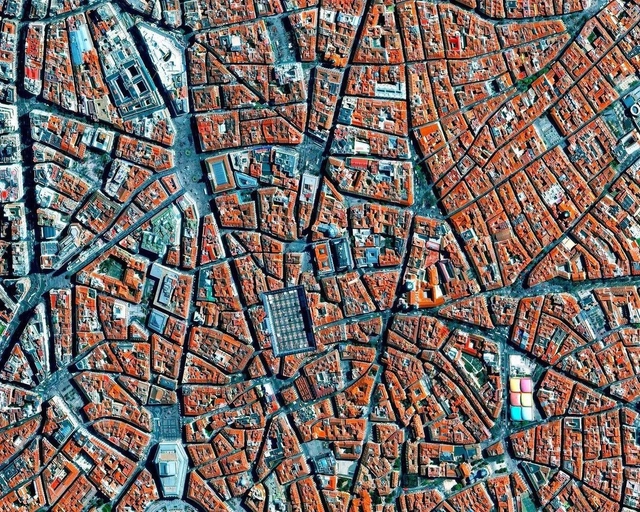
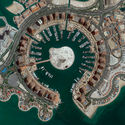
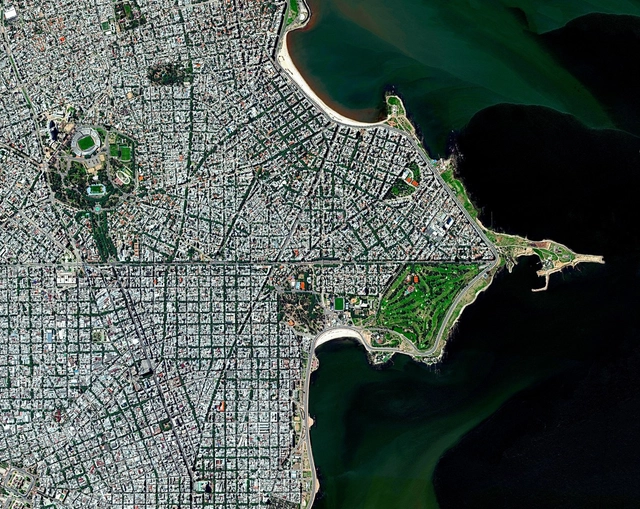
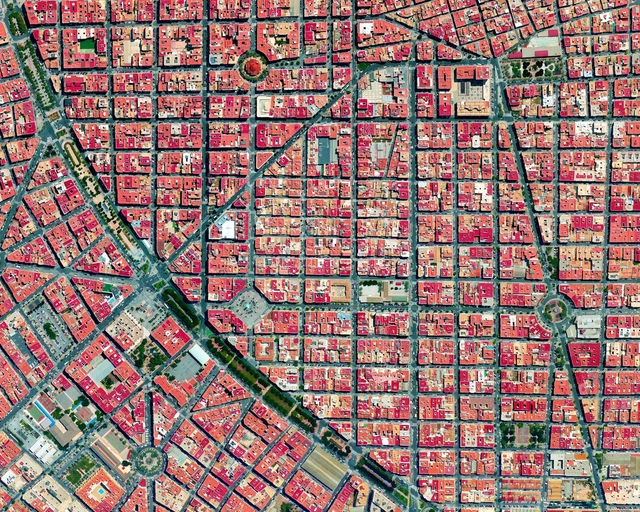
Elche, Spain. Created by @dailyoverview, source imagery: @maxartechnologies
There is evidence that the orthogonal grid plan, which is one of the most common types of urban planning today, dates back to antiquity. Streets intersect at right angles to each other, resulting in a grid composed of streets, avenues, blocks, squares, parks, among other urban spaces.
Approaching the context of widening political divides and growing economic inequalities. A new spatial contract. Learning how will we live together. These thoughts brought by Hashim Sarkis, curator of the 17th International Architecture Exhibition of Venice Biennale 2021, may raise important questions about how architecture crosses and materializes social and political conflicts. To understand a more decentralized point of view, which indicates possibilities other than those dictated by normative mindsets, we interviewed Tainá de Paula, a Brazilian architect and community mobilizer in poor suburban areas.
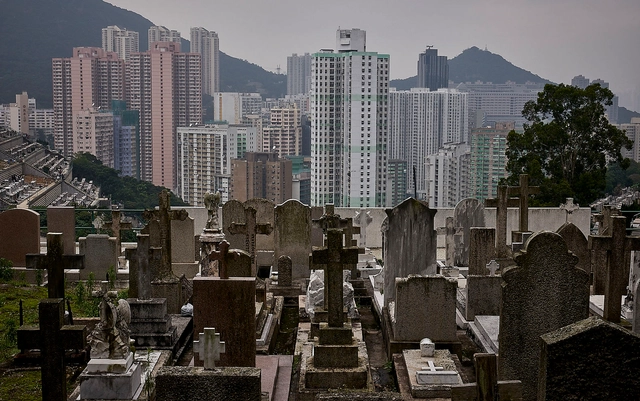
In some of the most dense cities around the world, it’s becoming an increasing challenge to find a comfortable space to live- and similar for when you die, too. It’s estimated that 55 million people pass away each year, and for every one living person today, there are 15 times the number of deceased. Yet urban planners and architectural developers are more interested in dealing with the living than dabbling in the business of death. As a result, it’s created tension in the two parallel worlds- and as time goes on, more questions are being raised about how we address public space that can be designed so that both the living and the dead can coexist.
Public space has always been a top priority in every city’s urban planning agenda and given today’s world context, these urban spaces have emerged as fundamental elements of cities and neighborhoods. Plazas, squares, and parks, undeniable necessities in the urban fabric, have become, today, more vital than ever.
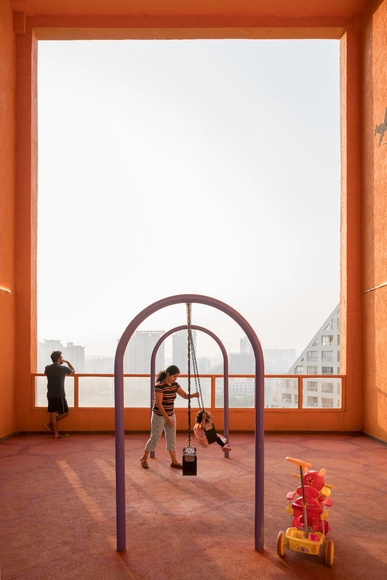
Density has long been an essential consideration for architects and urban planners, yet its importance has only increased as the world’s urban population skyrockets and cities become denser and denser. For much of the history of urban planning, this term has been plagued with negative associations: overcrowding, poverty, lack of safety, and so-called ‘slums.’ The garden city movement, initiated by Ebenezer Howard in 1898, sought to remedy these ills by advocating for greenbelts and anti-density planning. Le Corbusier’s Radiant City is one of the most well-known urban plans building from these ideals. Yet in the 1960’s, sociologist Jane Jacobs famously overturned these long influential urban planning concepts: she pointed out that density of buildings was not identical to overcrowding of people; suggested that some highly dense urban areas, like her neighborhood in Greenwich Village, were safer and more attractive than nearby garden city projects; and highlighted how America’s conception of ‘slums’ were often rooted in anti-immigrant and anti-Black ideologies. Density is not inherently bad, she suggested, but it has to be done well. Today, we continue to grapple with the question of how to design for our increasingly dense cities – how do we keep them open, but simultaneously private? Free, but controlled when necessary? In particular, how do we keep them safe – both from crime and, in the age of COVID-19, disease?
https://www.archdaily.com/945415/the-evolution-of-shared-space-privacy-versus-openness-in-an-increasingly-dense-architectureLilly Cao



.jpg?1608057697&format=webp&width=640&height=580)




















_Daria_Scagliola.jpg?1596665845&format=webp&width=640&height=580)
_Del_Rio_Bani.jpg?1596667310 "© Del Rio Bani")
_Evgeny_Evgrafov_02.jpg?1596665789 "© Evgeny Evgrafov")
_Norbert_Tukaj.jpg?1596666158 "© Norbert Tukaj")
_Chao_Zhang.jpg?1596666402 "© Chao Zhang")
_Daria_Scagliola.jpg?1596665845)