Today marks 10 years since Hurricane Katrina hit New Orleans, setting off what was among the most significant catastrophes to strike the United States in the 21st Century. New Orleans' flood defenses failed, causing the loss of over 1,400 lives and billions of dollars in property damage.
Naturally, such a disaster takes some time to recover from, for individuals but also for a city as a whole, and so for the past decade New Orleans has been a case study for cities to show them how to recover, rebuild and move on - at certain times serving as both an example of good practice and a warning of "what not to do." On the ten-year anniversary of Hurricane Katrina, here's a round-up of stories about the rebuilding of a city from around the web.
Correction Update:This article was first published on Sunday 16th August, and originally stated that "the Burning Man management team will ultimately select a winner" and that "the final design plan will be implemented for the 2017 event." However, since then it has been brought to our attention that this is not an official competition, and the Burning Man organization is not planning to update their current design.
ArchDaily would like to apologize for this grave error, which arose because we did not realize that the Black Rock City Ministry of Urban Planning (BRCMUP) had no official ties to the organizers behind Burning Man, and is therefore not a part of Burning Man's management team. For their part, Burning Man have stated "we love the ingenuity of Burners and are curious to see what they come up with through this competition. We will certainly take a look at all the top designs in this competition, not just the winner, out of curiosity and admiration... But there are no plans to redesign Black Rock City."
The article has been updated to correct our errors. If you wish to find out more, you can do so at the competition website or Burning Man's blog post about the competition.
As a founding partner of Gehl Architects and a consultant to cities such as Copenhagen, London and New York, Jan Gehl has been one of the most influential figures in the drive towards more liveable and healthier cities for over four decades. In this interview, first published by Metropolis Magazine as "Q&A: Jan Gehl on Making Cities Healthier and the Real Meaning of Architecture," Gehl discusses what makes a city healthy and why the need for healthy cities is a unifying worldwide phenomenon.
Mikki Brammer: You're often associated with the idea of making cities "healthier." What do you mean by the term?
Jan Gehl: I’m neither the first, nor the only one, to point out that in the past 50 years we have practiced city planning that invites people to be inactive in their lives. You can spend your entire life behind steering wheels, or computers, or on sofas, and in many cases you don’t have to move a muscle from morning to night. This, of course, has been identified as something that is very dangerous for mankind.
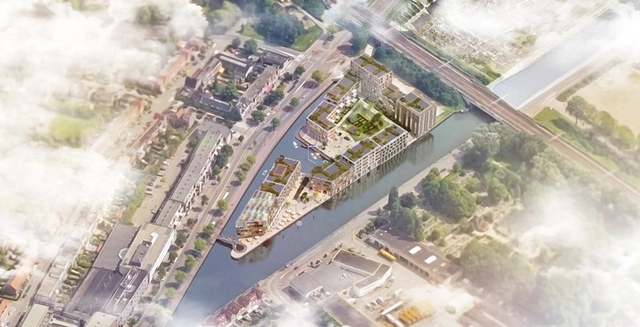
An oblique aerial view of the Goose Island proposal. Image Courtesy of PORT
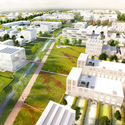
Hoping to reverse the fortunes of this small but distinctive area of Chicago, real estate development firm R2 Companies and urban planning group PORT Urbanism have teamed up to devise a plan to renew Goose Island. A man-made island with a long history of manufacturing, Goose Island lacks the revenue stream of many other Chicago regions, but the development team hopes to improve conditions by 2025 by enabling it to develop into a sustainable, high-tech neighborhood connected to Chicago’s urban grid.
A group of architects, designers and urban planners are working together in San Diego's Upper East Village to produce the Idea District. Started over four years ago, the project was introduced by Pete Garcia and David Malmuth as a way of revitalizing the area and creating a place for the convergence of innovative people. The Idea District, comprising an area surrounded by 11th St, C Street, Market St and Interstate-5, was originally an undeveloped parcel of land, “the last of its kind” in San Diego. Creators began gathering, seeing this no-man’s land as an opportunity to develop good urban planning.
After exiting bankruptcy at the end of last year, Detroit has suddenly become something of a boomtown in the eyes of the media. Discourse now talks about Detroit Rising, the "Post-Post-Apocalyptic Detroit". Rents are rising, private investment is flowing into the city, and institutions that left the city for the affluent suburbs are now relocating back into Detroit proper. Too long used only as a cautionary tale, the new focus on the reality of Detroit and free flowing money opens the door for architects and urban planners, not to mention the wider community, to begin thinking about how they want to rebuild Detroit, and who they want to rebuild it for.
It’s the perfect opportunity to formulate plans that will genuinely aid Detroit, involve the community and create a revival that really achieves something. But as it stands, the "revival" forming in Detroit, aided and abetted by media coverage, will not improve conditions for the vast majority of Detroiters and will not create a sustainable platform for future growth, instead benefiting only the private investors and those rich enough to benefit from what is currently classic, by-the-book gentrification.
São Paulo is the financial center and largest city of Brazil, and victim to a seemingly unending water crisis. The situation stems from over-populated neighborhoods lacking in a regulated infrastructure, with buildings that are uncoordinated in their development and maintenance leading to pollution in nearby water reservoirs. In 2009, the government of São Paulo sought to address this issue by expropriating the homes of 200 families, who were then moved back in 2012 to a new construction designed by Hector Vigliecca; the Novo Santo Amaro V Park Housing.
In this video from The Architectural Review - which supports their full building study - Vigliecca and current residents of the complex reflect on what the valley of unregulated infrastructure used to be like, and how it has developed to the present day.
With a high-density population and a history of internal armed conflict, the city of Medellín in Colombia lacked substantial public space, but had an overwhelming amount of industrial infrastructure in place. But as profiled by The Architectural Review, recently architects and urban planners of the EPM group saw this imbalance as an opportunity, and so in the uninhabited patches of land surrounding over one hundred fenced industrial lots, the UVA or Unidades de Vida Articulada (Units of Articulated Life) program was born. Including initiatives to build public classrooms, launderettes and cafés, the UVA projects were conceived together with the local population through a series of workshops, where every resident was invited to express their vision for the new public square through writing and drawing. Medellín, existing at the convergence of several hills, provides a wide variety of unique landscapes for architects to experiment on - and through the UVA projects, EPM Group demonstrates how architecture can empower a community from the first day of design. Read more about how this project will continue to instigate positive change at The Architectural Review.
Thousands of years ago, a small civilization of hunter gatherers migrated to the coastal regions of Southeast Asia. These people progressed into a widespread tribe of travelling sea dwellers. To this day, they remain a stateless people with no nationality and no consistent infrastructure, sometimes living miles away from land. Yet these people are one of the few civilizations whose collective life practices have survived so long through human history. They are called the Badjao, and they have a surprising amount to teach us about architecture.
The Metropolitan Regional Government of Santiago, Chile has launched a Two Stage International Public Competition for the development of the urban design and engineering of the urban axis Alameda Providencia. This axis is not only the main avenue of the city of Santiago de Chile, but is also considered to be the “heart of the metropolis” and the republic's most representative public space. The 12 km corridor integrates civic, symbolic and economic functions, represented by the highest concentration of retail, business and civic activities of the Metropolitan Region.
Based on the national relevance of this space, this competition not only aims to select the best team of professionals, but also the best comprehensive urban design, public space, landscape and urban mobility proposal, which considers the demands of the inhabitants of the city of Santiago for a better quality of life and the need for revitalized public spaces and public transport improvements. The Master Plan should take into account the surrounding buildings and natural heritage, land uses and existing and future social activities along this metropolitan axis.
The Conceptual Master Plan should consider that Santiago's Metropolitan Transit System is an open system. Therefore, the proposals should be functional for bus services entering or leaving at various points along its 12 kms and/or at its ends; that is, the infrastructure must allow for intermediate points where buses can enter and/or exit, in addition to at the ends. Due to this, bus courtyards are not required, yet spaces for frequency regulation are.
View competition details after the break.
https://www.archdaily.com/634573/open-call-santiago-launches-international-competition-for-nueva-alameda-providenciaSponsored Post
In the past century, the rise of globalism, of relatively cheap international transport, and above all, of the "world city" has fundamentally changed the way we think about citizenship and the nation state. To accommodate that change, we have also had to invent a new kind of "Transnational Urbanism": at the more esoteric end of this scale are ideas such as JG Ballard's "city of the 21st century," a geographically scattered "city" made up of the interconnected no-man's-land of international airports, which was recently exemplified by Eduardo Cassina and Liva Dudareva's hypothetical proposal for Moscow's Central Business district. At the other end of the scale are pragmatic choices that must be made by cities such as New York, London and Hong Kong that truly affect the lives of people not just living in the city, but around the world.
To probe this topic, MONU Magazine has dedicated their latest issue to the topic of Transnational Urbanism. In this extract from the magazine, MONU's Bernd Upmeyer and Beatriz Ramo interview French sociologist and Assistant Mayor of Paris Jean-Louis Missika to discover how the city is positioning itself as a 21st century global city, and how it is absorbing and adopting change in everything from the creative class to smart cities and 3D Printing.