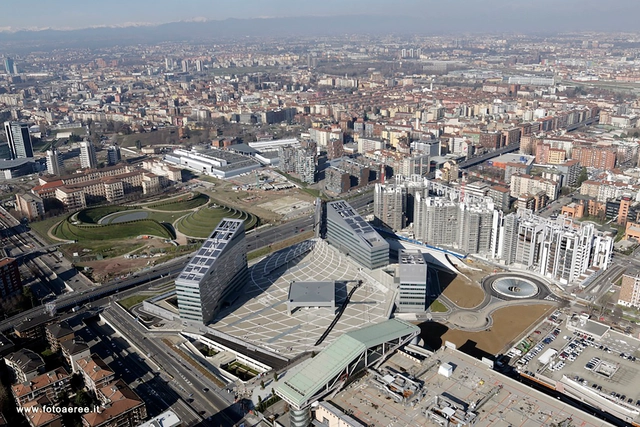
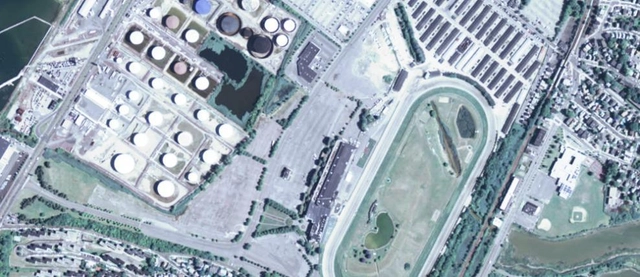
The Suffolk Downs Urban Design Workshop is the third in an ongoing series of Urban Design Workshops organized by the BSA Foundation. The workshops’ overall goal is to open up dialogue and stimulate thinking about the design potential of places with particularly significant and compelling opportunities.
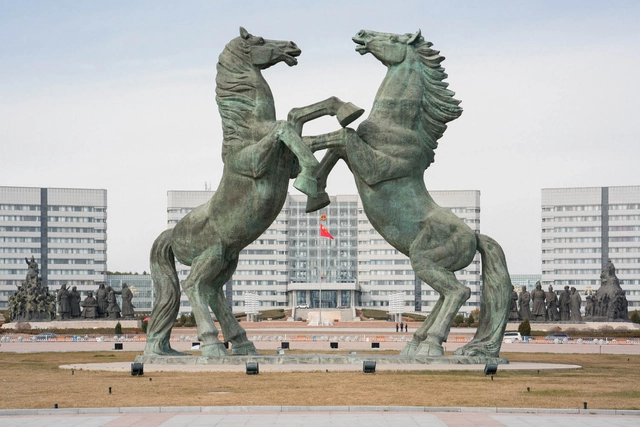
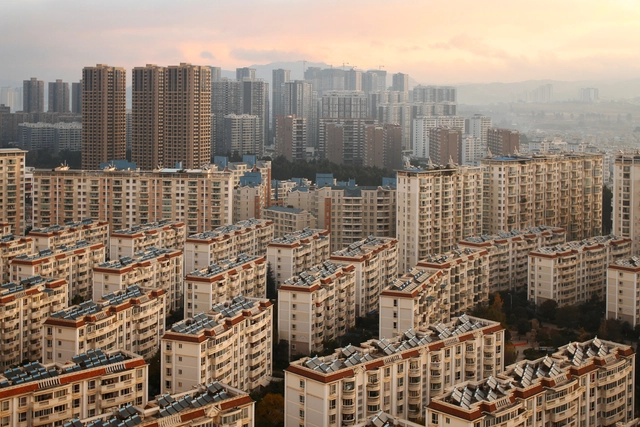
For the past quarter century, China’s rapidly expanding economy provided architects with an almost endless supply of building opportunities. Easy lending allowed for an exponential rise in infrastructure projects – China used more concrete in three years than the United States used in the entire twentieth century. But in a country where the number of cities with over a million inhabitants jumped from 16 in 1970 to 106 in 2015, the speed of development enabled high profile, but flawed, experiments alongside the many necessary building projects. There is perhaps no better example of this phenomenon than the city of Ordos. The Inner Mongolian metropolis – home to 100,000 – which sprang from the northern desert in the mid-2000s was designed for over a million inhabitants. The reality of the city came to public attention in 2009 when Al Jazeera wrote about an early uncertainty in the Chinese real estate market.
After living in China for a number of years, photographer Raphael Olivier finally gave in to the nagging urge to see Ordos for himself. Visiting last year, he found a well-maintained city that is still largely uninhabited. I interviewed Olivier about the project, his views on Ordos, Chinese prosperity, and what it means to photograph architecture.
The Buckminster Fuller Institue (BFI) has issued the Call for Proposals for the 2016 Fuller Challenge. Known as “socially-responsible design’s highest award,” the Fuller Challenge invites designers, architects, planners, entrepreneurs, scientists, artists, activists, and students worldwide to submit original solutions to some of humanity’s most pressing problems.
Dallas Architecture Forum, a non-profit organization dedicated to providing public education about architecture, design and the urban environment, will continue its 2015-2016 Panel Discussion Series on January 26, 2016 with “Making Fair Park Work.” Moderated by Mark Lamster, Dallas Morning News Architecture Critic, this panel is presented in partnership with the Dallas Festival of Ideas and the College of Architecture Planning and Public Affairs (CAPPA) at the University of Texas at Arlington.
Courtesy of KCAP Architects&Planners and ORANGE Architects
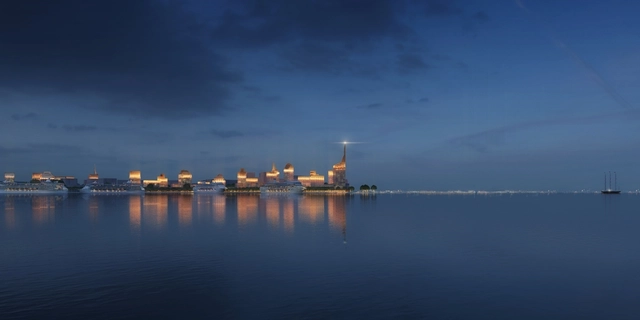
A team composed of KCAP Architects&Planners and ORANGE Architects has been awarded first place in a competition to design the western-most tip of Vasilievsky Island in St. Petersburg, Russia. The 15 hectare site will become a new part of the city of St. Petersburg, extending it into the Gulf of Finland through a new variety of urban functions. Thus, the project symbolizes the “new face of St. Petersburg as an entrance of the city from the water.”
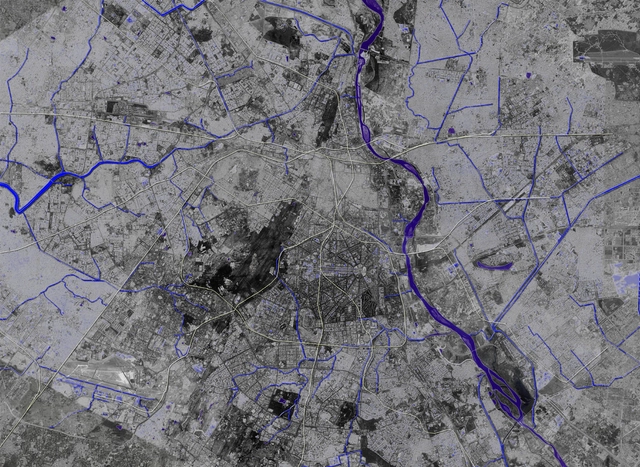
Map of Delhi's nullah network. Image Courtesy of Morphogenesis
The city of Delhi has a transportation problem. The streets are crowded and dangerous, and with 1,100 new vehicles being added to the roads each day the city is suffering from the consequences. Last year, New Delhi was rated the most polluted city in the world by the World Health Organization, with nearly 3 times the particulate matter of Beijing. Noise levels throughout the city consistently exceed regulations set by the Indian Central Pollution Control Board, and heavy traffic means increased travel times and perilous pedestrian conditions. Even walking the last mile from a bus stop to a destination has become a game of chance.
At the same time, the river upon which the city was founded, the Yamuna (a main tributary of the Ganges), has been polluted to the point where it has become little more than a glorified sewer drain. Illegal settlements without sewage systems pollute the river directly, and even within the regulated systems, 17 sewage drains empty directly into the Yamuna. For a city already struggling with water shortages, polluting a main water source is akin to throwing salt into a wound. However, a proposal by Dehli-based Morphogenesis Architects attempts to tackle all of these issues through the revitalization of the river and its canals, known as nullahs.
The Superscape 2016 title Future Urban Living – Functional Reduction with Maximum Space Gain opens a field for visionary design suggestions and space concepts which focus on building the urban residential space of the future. Innovative solutions are sought, combining high-quality residences with great space efficiency and the greatest functional flexibility possible. In this context, the changing needs and requirements of urban dwellers for their residences during the next 50 years shall be taken into consideration. The goal is to formulate forward-thinking concepts, to question familiar residential patterns and to risk experiments in design, but also to consider their feasibility, and to check the possibility of realising them within existing building substance and existing urban structures. Furthermore, the subject is highly relevant with regard to increasing mobility and urban traffic flow within the context of urban planning.
In recent decades, China has undergone the most dramatic urban migration in the history of the world, so you might be forgiven for thinking all that is required from urban planners is to "build it and they will come," so to speak. However, as the Western media often reports with much schadenfreude, China's unprecedented urban explosion has not come without a few missteps, and many new cities are widely claimed to be "ghost cities," empty of residents even as more gigantic apartment blocks are being built. Such stories are usually accompanied by anecdotes of empty public spaces and a rough count of the number of homes left in the dark at night, but little further empirical data. So exactly how underpopulated does a city have to be to be a "ghost city," and just how rife are such places in China?
As reported by MIT Technology Review, one Chinese web company has started looking for answers to just such questions. Baidu, effectively a Chinese version of Google, has used their "Big Data Lab" to investigate the commuting patterns of their 700 million users, establishing exactly which cities are dramatically underpopulated.
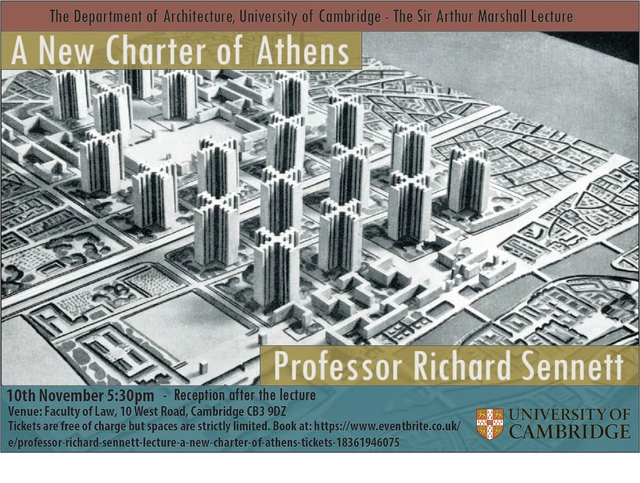
'Next year sees the opening of Habitat III, the environmental congress held every twenty years by the United Nations. For this event, a manifesto is being prepared about the design of cities. It aims to replace the guidance given by Le Corbusier and others nearly a century ago, in document they called "The Charter of Athens." The new Charter of Athens addresses issues emerging in the 21st Century about environmental crises, the uses of technology and big data, and the challenge of social inclusion. The lecture serves as an introduction to this modest proposal.'
While the term “ecosystem services” may sound like a corporate antithesis to the course of natural order, it is actually an umbrella term for the ways in which the human experience is favorably altered and enhanced by the environment. Ecosystem services are therefore an important factor in creating cities which provide the maximum benefit to their residents with the minimal harm to their environment.
Aiming to find out how city planning can affect the provision of these ecosystem services, a new study published in Frontiers in Ecology and Environment by researchers at the University of Exeter's Environment and Sustainability Institute and Hokkaido University's Division of Environmental Resources evaluates the repercussions of rapid and fragmented urbanization and the possible detriment to ecosystem services and human well-being. In particular, the study is concerned with approaches to land-use and the outcomes they yield on the environment. Studied are two opposing tactics: a “land-sharing,” sprawl model (think Atlanta or Houston), or “land-sparing,” tight-knit urbanism (think New York or Tokyo).
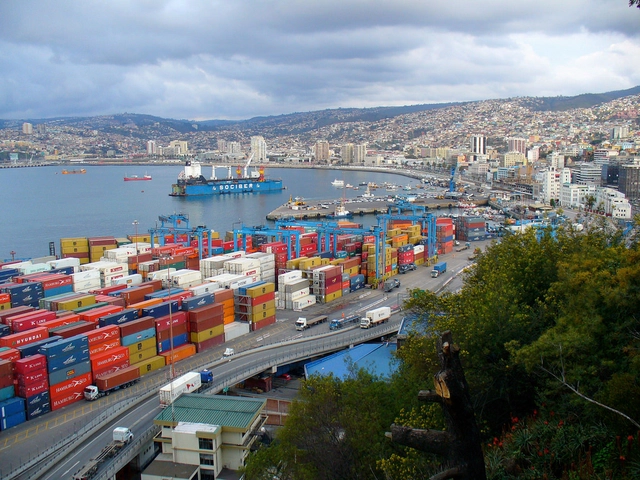
Restricted. Vast. Harsh. The image of a port calls to mind many words, but pedestrian-friendly and aesthetically-pleasing are rarely among them. With their precarious stacks of shipping containers and large pieces of machinery, ports are places that people tend to want to avoid. Yet for logistic and historical reasons, ports are often located near the heart of cities, taking away valuable urban space and desirable waterfront land from residents. This does not need to be the case.
A new report released by The Worldwide Network of Port Cities titled “Plan the City with the Port: Guide of Good Practices” offers strategies for cities to optimize the effectiveness of their harbors while reclaiming as much of the land as possible for the people. The guide uses case studies from urban designs in various stages of completeness to illustrate different techniques available to improve the environment of a port within its city. Although these approaches are designed with a specific program in mind, many architectural and urbanistic ideals can be derived from them to be used in variety of circumstances. Read on for our summary of the report’s recommendations.
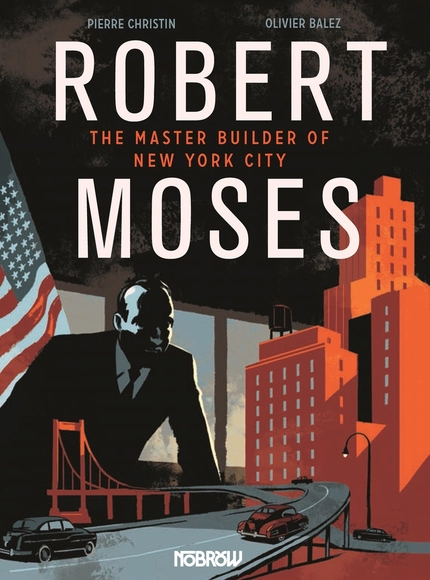
Robert Moses, the planner-politician-architect who infamously built overpasses too low for buses to bring New York’s urban poor to his beaches, is the subject of a new graphic novel by Pierre Christin and Olivier Balez titled Robert Moses: The Master Builder of New York City. Admirable for its candid rawness, their profile of perhaps the most polarizing and important figure in American planning history is no lionizing eulogy. The impressive triumphs of Moses’ tenure are juxtaposed with unsparing accounts of his regrettable social policies and the often-shortsighted consequences of his public infrastructure. For each groundbreaking feat of structural engineering and political mobilization, there is another story told of his callous social engineering, the consequences of which reshaped the lives of New Yorkers as much as his architecture.
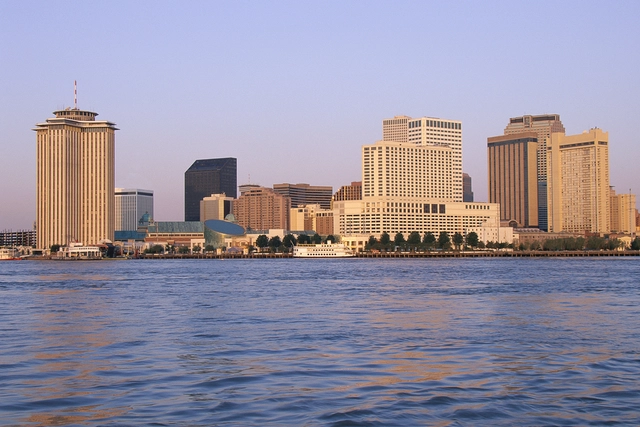
Today marks 10 years since Hurricane Katrina hit New Orleans, setting off what was among the most significant catastrophes to strike the United States in the 21st Century. New Orleans' flood defenses failed, causing the loss of over 1,400 lives and billions of dollars in property damage.
Naturally, such a disaster takes some time to recover from, for individuals but also for a city as a whole, and so for the past decade New Orleans has been a case study for cities to show them how to recover, rebuild and move on - at certain times serving as both an example of good practice and a warning of "what not to do." On the ten-year anniversary of Hurricane Katrina, here's a round-up of stories about the rebuilding of a city from around the web.
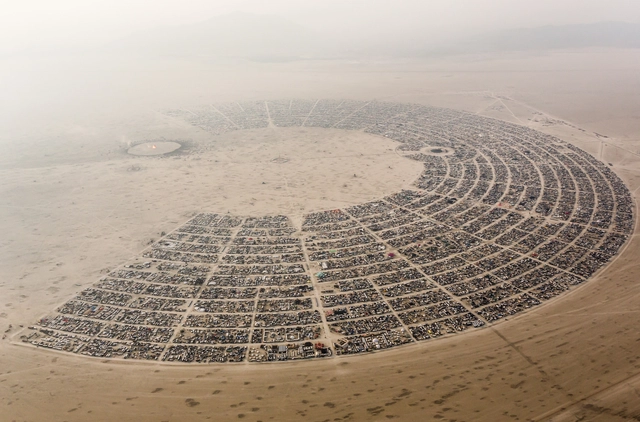
Correction Update:This article was first published on Sunday 16th August, and originally stated that "the Burning Man management team will ultimately select a winner" and that "the final design plan will be implemented for the 2017 event." However, since then it has been brought to our attention that this is not an official competition, and the Burning Man organization is not planning to update their current design.
ArchDaily would like to apologize for this grave error, which arose because we did not realize that the Black Rock City Ministry of Urban Planning (BRCMUP) had no official ties to the organizers behind Burning Man, and is therefore not a part of Burning Man's management team. For their part, Burning Man have stated "we love the ingenuity of Burners and are curious to see what they come up with through this competition. We will certainly take a look at all the top designs in this competition, not just the winner, out of curiosity and admiration... But there are no plans to redesign Black Rock City."
The article has been updated to correct our errors. If you wish to find out more, you can do so at the competition website or Burning Man's blog post about the competition.
As a founding partner of Gehl Architects and a consultant to cities such as Copenhagen, London and New York, Jan Gehl has been one of the most influential figures in the drive towards more liveable and healthier cities for over four decades. In this interview, first published by Metropolis Magazine as "Q&A: Jan Gehl on Making Cities Healthier and the Real Meaning of Architecture," Gehl discusses what makes a city healthy and why the need for healthy cities is a unifying worldwide phenomenon.
Mikki Brammer: You're often associated with the idea of making cities "healthier." What do you mean by the term?
Jan Gehl: I’m neither the first, nor the only one, to point out that in the past 50 years we have practiced city planning that invites people to be inactive in their lives. You can spend your entire life behind steering wheels, or computers, or on sofas, and in many cases you don’t have to move a muscle from morning to night. This, of course, has been identified as something that is very dangerous for mankind.
An oblique aerial view of the Goose Island proposal. Image Courtesy of PORT
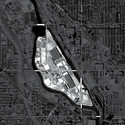
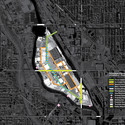
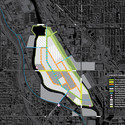
Hoping to reverse the fortunes of this small but distinctive area of Chicago, real estate development firm R2 Companies and urban planning group PORT Urbanism have teamed up to devise a plan to renew Goose Island. A man-made island with a long history of manufacturing, Goose Island lacks the revenue stream of many other Chicago regions, but the development team hopes to improve conditions by 2025 by enabling it to develop into a sustainable, high-tech neighborhood connected to Chicago’s urban grid.
A group of architects, designers and urban planners are working together in San Diego's Upper East Village to produce the Idea District. Started over four years ago, the project was introduced by Pete Garcia and David Malmuth as a way of revitalizing the area and creating a place for the convergence of innovative people. The Idea District, comprising an area surrounded by 11th St, C Street, Market St and Interstate-5, was originally an undeveloped parcel of land, “the last of its kind” in San Diego. Creators began gathering, seeing this no-man’s land as an opportunity to develop good urban planning.







-3.jpg?1435531329&format=webp&width=640&height=580)

-3.jpg?1435531329)